




Yellow leaves are one of the most common problems cannabis growers face, but they don't always mean your plant is in trouble. While cannabis leaves turning yellow are often linked to nutrient deficiencies, yellowing can also be caused by overwatering, underwatering, pH imbalance, nutrient lockout, environmental stress, pests, fungal diseases, or simply the natural aging process during late flowering.
The key to solving the problem is understanding where the yellowing starts, when it appears, and what other symptoms are present. For example, yellow leaves on a cannabis plant during late flowering may be completely normal, while yellow spots on cannabis leaves or marijuana leaves turning yellow during the vegetative stage usually indicate an issue that needs attention.
In this guide, you'll learn how to diagnose the most common causes of cannabis leaves turning yellow, understand why they're happening, and follow proven steps to fix them. Whether you're growing indoors or outdoors, this guide will help you identify problems early, protect your plants, and keep them healthy throughout every stage of growth.
Key Takeaways
- Cannabis leaves turning yellow don't always indicate a nutrient deficiency. Watering problems, pH imbalance, temperature stress, pests, fungal diseases, and natural aging during flowering can all cause yellow leaves.
- The location of the yellowing is one of the best diagnostic clues. Lower leaves often point to nitrogen deficiency, while yellowing on new growth or yellow spots on cannabis leaves may indicate pests, disease, or environmental stress.
- Always diagnose the cause before making changes. Many growers mistake nutrient lockout or overwatering for a nutrient deficiency. Check your watering routine, root-zone pH, and growing environment before adding more fertilizer.
- Healthy growing conditions prevent most problems. Maintaining proper pH, watering only when needed, providing good airflow, and keeping temperatures stable will reduce the risk of yellow leaves on a cannabis plant.
- Early action gives your plants the best chance of recovery. Regularly inspecting your cannabis plants allows you to identify why marijuana leaves are turning yellow before the problem affects growth, flowering, and final yields.
- What do yellow cannabis leaves mean?
- How to diagnose cannabis leaves turning yellow
- Overwatering and Underwatering
- pH Imbalance and Nutrient Lockout
- Overfeeding and Underfeeding
- Other Nutrient Deficiencies That Cause Cannabis Leaves Turning Yellow
- Light Burn
- Temperature Stress
- Root Rot
- Pests and Fungal Diseases
- Leaf Septoria (Yellow Leaf Spot)
- How to Prevent Cannabis Leaves From Turning Yellow
- Frequently Asked Questions
What do yellow cannabis leaves mean?
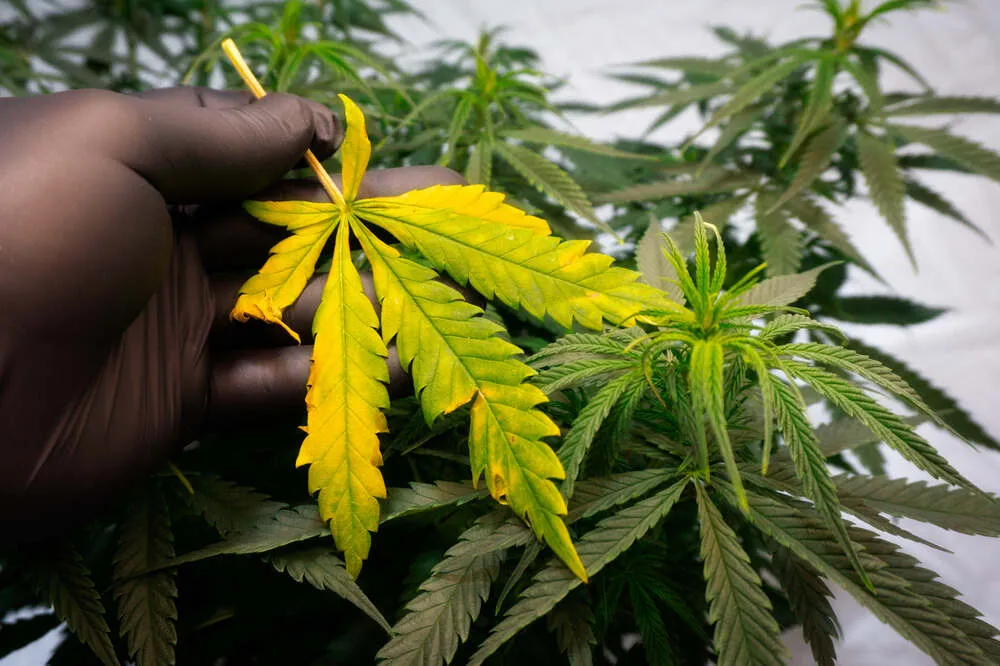
Yellow cannabis leaves are one of the earliest signs that your plant is under stress, but they do not always mean your crop is in serious trouble. While cannabis leaves turning yellow can indicate a nutrient deficiency, watering problem, pest infestation, or environmental stress, yellowing can also be a completely natural part of the plant's life cycle during late flowering.
Healthy cannabis plants produce chlorophyll, the green pigment responsible for capturing light and powering photosynthesis. When chlorophyll begins to break down or the plant is unable to produce enough of it, yellow leaves on a cannabis plant begin to appear. As chlorophyll levels fall, the plant becomes less efficient at converting light into energy, which can slow growth, reduce vigor, and ultimately affect yields if the underlying problem is not corrected.
The most common causes of cannabis leaves turning yellow include nutrient deficiencies, particularly nitrogen, incorrect watering practices, pH imbalances, root problems, temperature extremes, pests, and diseases. The key to solving the issue is identifying where the yellowing starts. For example, lower leaves turning yellow often point to a mobile nutrient deficiency such as nitrogen, while yellowing on new growth may indicate iron deficiency, light stress, or an incorrect root-zone pH.
In our experience, one of the biggest mistakes new growers make is treating the symptoms before identifying the cause. Adding more nutrients is not always the answer. In many cases, the nutrients are already present but the plant is unable to absorb them because of pH imbalance or root stress. Taking a few minutes to inspect your plant and growing environment before making changes can prevent the problem from becoming much worse.
Whether you are dealing with marijuana leaves turning yellow, yellow spots on cannabis leaves, or an entire plant that is beginning to fade, the good news is that most issues can be corrected if they are caught early. The guide below will help you diagnose the cause, understand why it is happening, and choose the right solution for healthy, vigorous growth.
Grower's Tip: Do not remove yellow leaves immediately. They can provide valuable clues about what is causing the problem. Identify the source of the yellowing first, then treat the underlying issue before pruning away damaged foliage.
How to diagnose cannabis leaves turning yellow
When cannabis leaves turning yellow become noticeable, resist the temptation to treat the symptoms immediately. The first step is to identify when the yellowing is occurring. A cannabis seedling, vegetative plant, and flowering plant all have different nutritional needs, so the same symptom can have a completely different cause depending on the stage of growth.
Once you've identified your plant's growth stage, inspect where the yellowing appears, the pattern of the discoloration, and any other symptoms. This systematic approach will help you diagnose the problem accurately and avoid making unnecessary changes to your feeding or watering routine.
Step 1: Identify Your Plant's Growth Stage
Seedling Stage
Young seedlings are particularly sensitive to environmental conditions. Yellow leaves at this stage are most commonly caused by overwatering, overfeeding, poor root development, incorrect pH, or transplant shock. It's also perfectly normal for the small rounded cotyledon leaves to turn yellow and die once the first true leaves have developed.
If the true leaves are turning yellow, however, the plant is signalling that something in its environment needs attention.
Vegetative Stage
During the vegetative stage, healthy cannabis plants should produce vigorous green growth. If cannabis leaves are turning yellow at this point, it almost always indicates an underlying issue that should be investigated.
Common causes include:
- Nitrogen deficiency
- pH imbalance and nutrient lockout
- Overwatering or underwatering
- Root problems
- Heat or light stress
- Pest infestations
Yellowing during vegetative growth should never be ignored, as it can slow development and reduce the plant's ability to produce healthy flowers later in the grow.
Flowering Stage
Yellow leaves are far more common during the flowering stage, but context is important.
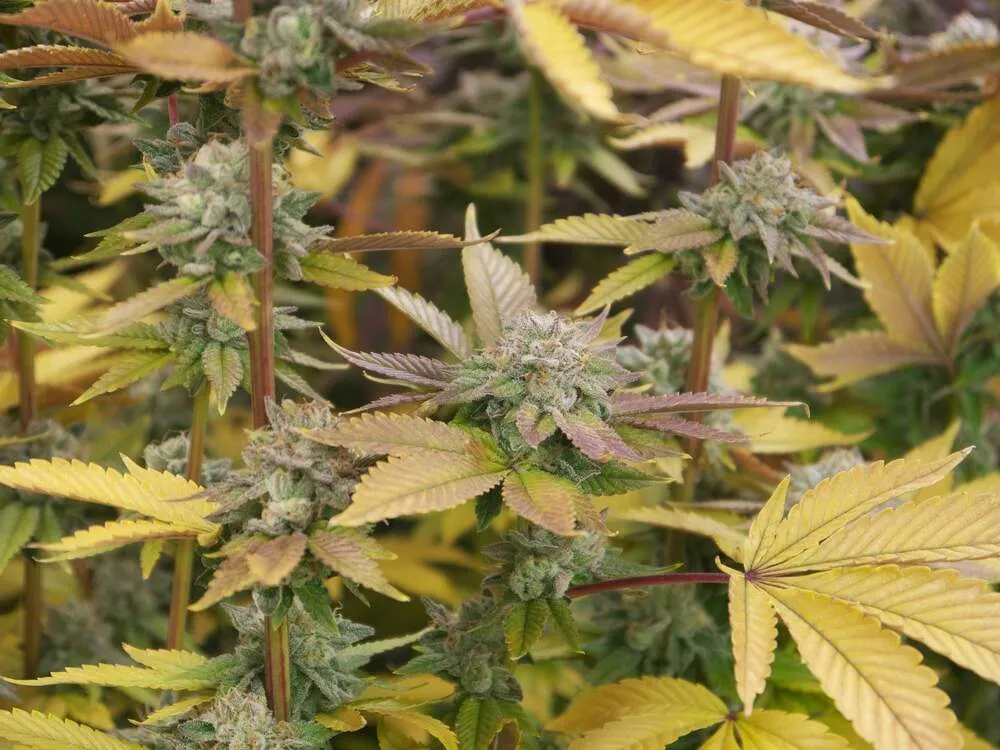
As harvest approaches, older fan leaves naturally begin to fade from green to yellow as the plant redirects stored nutrients into developing buds. This process, known as natural senescence, is completely normal during late flowering.
Growers using fast flowering cannabis seeds may notice this natural fade sooner because these varieties complete their life cycle more quickly than standard photoperiod plants.
However, rapid yellowing early in flowering, yellowing of new growth, or widespread discoloration accompanied by spotting, curling, or wilting usually indicates a nutrient deficiency, pH problem, disease, or environmental stress rather than a natural fade.
Step 2: Look Where the Yellowing Starts
The location of the yellowing provides one of the strongest clues.
| Yellowing Pattern | Most Likely Cause |
| Lower leaves | Nitrogen deficiency or natural ageing |
| Upper leaves or new growth | Iron deficiency, calcium deficiency, light stress or pH issues |
| Entire plant | Overwatering, root damage or severe nutrient lockout |
| Between the veins | Magnesium or iron deficiency |
| Yellow spots on cannabis leaves | Septoria, pests, calcium deficiency or nutrient splash |
| Yellow leaf edges | Potassium deficiency or nutrient burn |
Step 3: Check Your Growing Environment
Before adjusting your nutrients, inspect the conditions around your plant.
Ask yourself:
- Is the growing medium too wet or too dry?
- Is the pH within the correct range?
- Are temperatures too high or too low?
- Is the grow light too close to the canopy?
- Are there signs of insects, mould, or disease?
- Are roots healthy and white, or brown and unhealthy?
Many cases of marijuana leaves turning yellow are caused by environmental stress rather than a lack of nutrients.
Grower's Tip: Experienced growers rarely diagnose yellow leaves by color alone. They first consider the plant's age, then where the yellowing started, before checking environmental conditions. Following the same process will help you identify the real cause more quickly and avoid treatments that could make the problem worse.
Overwatering and Underwatering
Overwatering and underwatering are two of the most common reasons cannabis leaves turn yellow, especially during early growth. Although they are opposite issues, both interfere with the plant’s ability to absorb water, oxygen and nutrients. When this balance is disrupted, chlorophyll production slows, leading to yellow leaves on a cannabis plant.
Symptoms
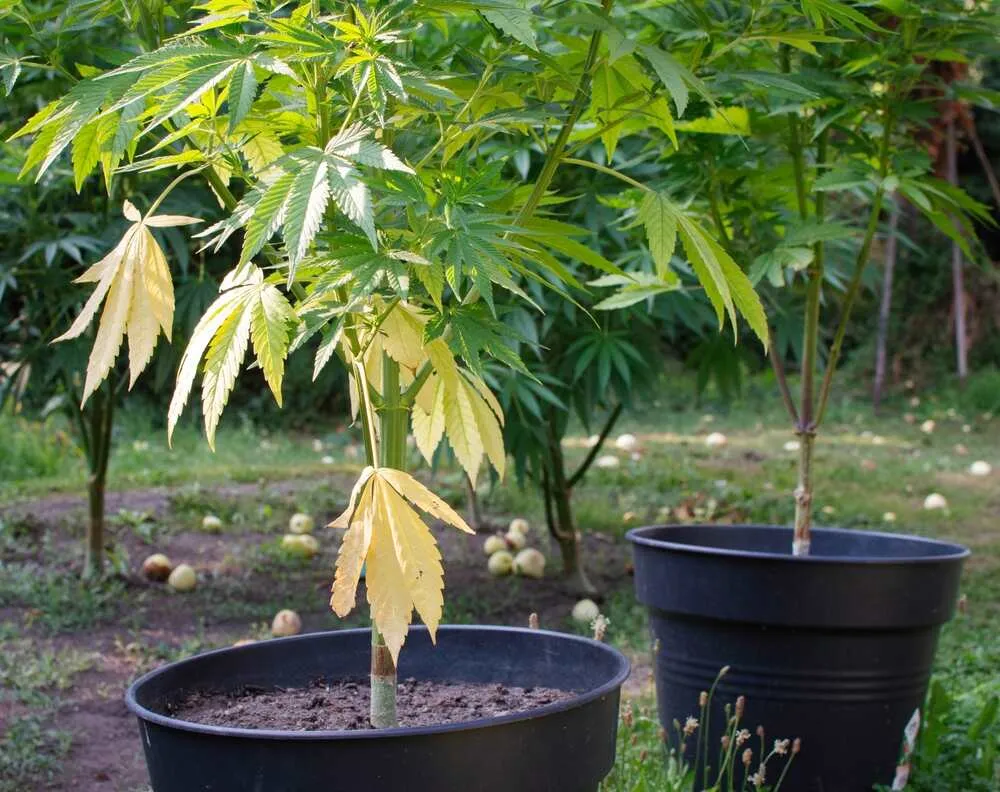
Overwatered and underwatered plants can look very similar. Both may show drooping leaves, slow growth and cannabis leaves turning yellow, which often leads to misdiagnosis.
The key difference lies in the growing medium.
An overwatered cannabis plant will have heavy pots and soil that stays wet for several days. Leaves often appear swollen, soft and droopy due to a lack of oxygen at the roots.
An underwatered cannabis plant will feel light when lifted, with dry soil several centimetres below the surface. Leaves lose firmness, wilt and may curl as the plant conserves moisture.
Why It Happens
Cannabis roots need both water and oxygen to function properly. When soil stays saturated, air pockets fill with water, preventing roots from breathing. This reduces nutrient uptake and chlorophyll production, causing marijuana leaves turning yellow even when nutrients are present.
Underwatering creates a different issue. Without enough moisture, nutrients cannot move efficiently through the plant. As a result, older leaves lose chlorophyll first, turning yellow before drying out.
How to Fix It
For overwatering, allow the top 2–5 cm (1–2 inches) of soil to dry before watering again. Ensure proper drainage and avoid watering on a fixed schedule.
For underwatering, water thoroughly until runoff appears, and increase frequency as plants grow.
Grower's Tip: Always lift your pots before watering. A heavy pot means enough moisture remains, while a light pot signals it’s time to water.
pH Imbalance and Nutrient Lockout
A pH imbalance is one of the most overlooked causes of cannabis leaves turning yellow. Many growers assume yellow leaves mean their plants need more nutrients, but in many cases the nutrients are already present in the growing medium. The real problem is that the roots are unable to absorb them because the pH has moved outside the ideal range. This is known as nutrient lockout.
Cannabis plants absorb each nutrient within a specific pH range. When the root zone becomes too acidic or too alkaline, essential nutrients such as nitrogen, magnesium, calcium, and iron become less available, even if they are present in sufficient quantities. As chlorophyll production slows, yellow leaves on a cannabis plant begin to appear, often leading growers to add even more fertilizer, which can make the problem worse.
Symptoms
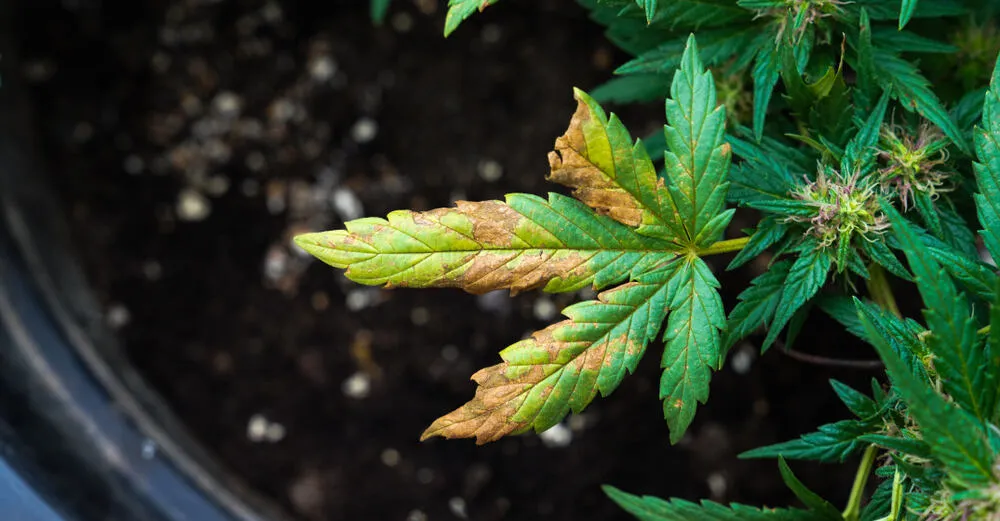
The first signs of nutrient lockout often resemble a nutrient deficiency. Leaves may begin yellowing at the tips or edges before spreading across the leaf blade. Plants may also show slow growth, pale foliage, or multiple deficiency symptoms at the same time despite being fed regularly. If your feeding schedule hasn't changed but marijuana leaves are turning yellow, a pH problem should be one of the first things you investigate.
How to Fix It
Start by testing both your nutrient solution and the runoff water from the bottom of the pot. For soil grows, aim for a root-zone pH between 6.0 and 7.0, while coco coir performs best between 5.8 and 6.5. If the runoff is significantly outside these ranges, flush the growing medium with pH-balanced water to remove excess salts before returning to your normal feeding schedule. Continue monitoring the runoff over the next few irrigations to ensure the pH has stabilized.
Grower's Tip: In our experience, nutrient lockout is one of the most commonly misdiagnosed causes of cannabis leaves turning yellow. Before increasing nutrients, always check your pH first. We've seen many plants recover simply by correcting the root-zone pH, without adding any extra fertilizer.
Overfeeding and Underfeeding
Finding the right feeding balance is essential for healthy cannabis growth. Giving your plants too much fertilizer can cause nutrient burn, while feeding too little leads to deficiencies. Both issues reduce chlorophyll production and can result in cannabis leaves turning yellow, though the symptoms appear differently.
Symptoms
Overfed cannabis plants typically show yellow or brown tips first, a classic sign of nutrient burn. As excess salts build up in the root zone, leaf edges may become dry, crispy, and scorched, while the rest of the plant often stays dark green. In more severe cases, growth slows and leaves may curl downward.
Underfed plants, on the other hand, appear pale across the entire canopy. Older fan leaves usually yellow first as the plant pulls stored nutrients to support new growth. If not corrected, yellow leaves on a cannabis plant will spread, and overall growth becomes weak and stunted.
Why It Happens
Cannabis plants need different nutrient levels throughout their life cycle. During the vegetative stage, they require more nitrogen for leaf development, while flowering plants need higher levels of phosphorus and potassium. Overfeeding floods the root zone with excess mineral salts, damaging roots and limiting water uptake. Underfeeding deprives the plant of essential nutrients, slowing growth and reducing chlorophyll production.
How to Fix It
If you suspect overfeeding, flush the growing medium with pH-balanced water to remove excess salts. Once the plant recovers, resume feeding at a lower strength. For underfed plants, gradually increase nutrient levels over several waterings instead of making sudden changes. Watch new growth closely healthy green leaves indicate your feeding schedule is back on track.
Grower’s Tip: It’s usually safer to slightly underfeed than overfeed. Many nutrient schedules are too strong for some strains. Start at half strength, observe your plants, and increase feeding only when needed.
Other Nutrient Deficiencies That Cause Cannabis Leaves Turning Yellow
Although nitrogen deficiency is the most common nutritional cause of cannabis leaves turning yellow, several other essential nutrients can produce similar symptoms. The location and pattern of the yellowing are often the best clues to identifying which nutrient is lacking. Before increasing your fertilizer, always check your root-zone pH, as many deficiencies are actually caused by nutrient lockout rather than a lack of nutrients.
Magnesium Deficiency
Magnesium is essential for chlorophyll production, making it one of the most common causes of yellow leaves on a cannabis plant. Magnesium deficiency symptoms usually begin on older fan leaves, with the tissue between the veins turning yellow while the veins remain green. If left untreated, affected leaves may develop rust-colored spots before dying. Correcting the pH and applying a magnesium supplement, such as Epsom salts or a Cal-Mag product, will usually resolve the problem.
Iron Deficiency
Iron is an immobile nutrient, so iron deficiency symptoms appear on the newest growth first. Young leaves become pale yellow while the veins remain green, whereas older leaves often stay healthy. Iron deficiencies are commonly caused by incorrect pH rather than a lack of iron in the growing medium, making pH testing an important first step before adding supplements.
Calcium Deficiency
Calcium supports healthy cell development and root growth. A calcium deficiency often causes distorted new growth, irregular yellow spots on cannabis leaves, and small brown lesions. It is most common in fast-growing plants, coco coir, or when pH falls outside the ideal range. Maintaining proper pH and using a balanced Cal-Mag supplement can help restore healthy growth.
Potassium Deficiency
Potassium helps regulate water movement, nutrient transport, and overall plant health. Early symptoms include yellowing along the edges of older leaves, followed by brown, scorched margins as the potassium deficiency progresses. Increasing potassium during flowering and maintaining a balanced feeding program usually prevents this issue.
Grower’s Tip: In our experience, multiple cannabis nutrient deficiencies appearing at the same time are often a sign of pH imbalance or root stress rather than several nutrients being absent from the growing medium. Always test your pH before increasing fertilizer, as correcting nutrient uptake is often more effective than simply feeding more.
Light Burn
Light burn is a common cause of cannabis leaves turning yellow, especially when using high-intensity LED grow lights. While cannabis needs strong light for healthy growth and high yields, placing lights too close to the canopy or running them at excessive intensity can overwhelm the upper leaves. This stress damages chlorophyll, causing leaves to fade and turn yellow.
Unlike nutrient deficiencies, which often start on lower leaves or spread evenly, light burn almost always affects the top of the plant first. If the upper canopy is yellowing while lower leaves remain green and healthy, excessive light is likely the issue.
Symptoms
Light burn typically appears on the highest leaves closest to the light source. Leaves may fade from deep green to pale or lime green before turning yellow. Edges can curl or become dry, and in more severe cases, yellow spots on cannabis leaves or scorched patches may develop. Buds directly under the light may also look bleached or unusually pale.
Excessive heat and light during late flowering can also contribute to foxtailing cannabis buds, particularly when the canopy is too close to high-intensity LED grow lights.
Why It Happens
Photosynthesis depends on chlorophyll to absorb light, but too much light causes photo-oxidative stress. This damages chlorophyll faster than the plant can replace it, leading to yellow leaves on a cannabis plant and reduced photosynthesis. High temperatures, poor airflow, and fans blowing directly on the canopy can worsen the problem by increasing heat and moisture loss.
How to Fix It
Raise your grow lights or reduce intensity using a dimmer. Most LED lights perform best at 12–24 inches (30–60 cm) above the canopy, depending on the model and growth stage. Improve airflow, but avoid directing fans straight at the leaves.
If plants were recently moved under stronger lighting, increase intensity gradually to prevent shock. During vegetative growth, training methods like topping or ScrOG can help maintain an even canopy and prevent plants from growing too close to the light.
Grower’s Tip: If only the top leaves are affected while lower growth stays green, the issue is likely light burn not a nutrient deficiency.
Temperature Stress
Temperature plays a key role in cannabis health. When conditions are too hot or too cold, the plant’s metabolism slows, reducing its ability to absorb water and nutrients. As chlorophyll production drops, cannabis leaves turning yellow are often one of the first signs your environment is out of balance.
Unlike nutrient deficiencies, temperature stress usually affects the entire plant rather than isolated leaves. It’s often paired with slow growth, reduced vigor, and changes in leaf shape, helping distinguish it from other causes of yellow leaves on a cannabis plant.
Learn the best temperature to grow cannabis to avoid heat and cold stress.
Heat Stress (Too Hot)
Symptoms
High temperatures can quickly stress cannabis plants. Leaves may fade, curl upward or downward, and begin to yellow as temperatures move outside the ideal range. Edges often curl upward (“tacoing”) as the plant tries to reduce moisture loss.
Other signs include:
- Dry, brittle leaves
- Wilting during peak heat (even when watered)
- Slowed growth
Why It Happens
Cannabis thrives between 68–85°F (20–29°C). Above this range, plants lose water faster than roots can replace it. This reduces photosynthesis and damages chlorophyll, leading to marijuana leaves turning yellow.
How to Fix It
Indoors:
- Improve airflow with fans and ventilation
- Use exhaust systems to remove hot air
- Add air conditioning if needed
Outdoors:
- Provide shade during peak sun
- Water early morning or evening
- Use fabric pots to keep roots cooler
Cold Stress (Too Cold)
Symptoms
Cold temperatures cause leaves to turn light green or yellow and begin drooping. Growth slows, and plants may appear weak.
You may also see:
- Stunted growth
- Drooping leaves
- Purple stems (in some strains)
Why It Happens
Below the ideal range, root activity slows, limiting nutrient uptake. Even with nutrients present, cannabis leaves turning yellow can occur due to reduced absorption.
How to Fix It
Indoors:
- Use heaters to maintain stable temps
- Avoid cold drafts
- Monitor with a thermometer
Outdoors:
- Use covers or heat mats during cold nights
- Insulate pots from cold ground
- Move plants to sheltered areas
Grower’s Tip: Sudden temperature swings often cause more stress than slightly imperfect conditions. Keeping your environment stable helps prevent yellow leaves on a cannabis plant and supports healthy growth.
Root Rot
Root rot is one of the most serious causes of cannabis leaves turning yellow because it starts below the soil before visible symptoms appear. As roots decay, they lose the ability to absorb water, oxygen, and nutrients, causing the entire plant to decline. If left untreated, root rot can spread quickly and may kill the plant.
The most common cause is overwatering or poorly drained growing media. Cannabis roots need oxygen as much as water. When soil stays saturated, oxygen levels drop and harmful fungi and bacteria begin attacking the roots.
Symptoms
Root rot is often mistaken for nutrient deficiencies or overwatering. One of the earliest signs is yellow leaves on a cannabis plant, even when the soil is moist and nutrients are present. Plants may wilt despite watering, growth slows, and leaves gradually lose their healthy green color.
If you inspect the roots, healthy ones should be firm and white. Infected roots appear brown or black, soft, slimy, and may give off a sour or rotten smell.
Why It Happens
Roots supply the plant with water and nutrients. When root rot develops, this system breaks down. As nutrient uptake declines, chlorophyll production slows, leading to marijuana leaves turning yellow even when nutrients are available. Because the issue starts underground, adding more fertilizer usually worsens the problem.
How to Fix It
Act quickly. Remove the plant from its container and gently rinse away old soil. Trim off any brown, soft, or decaying roots using sterilized scissors, leaving only healthy white roots. Repot in fresh, well-draining soil with added aeration, such as perlite, and ensure proper drainage.
After repotting, water less frequently and allow the soil to partially dry between waterings. Beneficial microbes like Trichoderma can help suppress harmful pathogens and support recovery.
Grower’s Tip: Healthy roots smell fresh and earthy. If your cannabis leaves are turning yellow, the soil stays wet, and the roots smell sour, root rot is likely the cause.
Pests and Fungal Diseases
Pests and fungal diseases are a common cause of cannabis leaves turning yellow, especially when environmental conditions allow infestations or mold to spread quickly. Unlike nutrient deficiencies, which typically affect the entire plant, pests and diseases often cause localized damage first, such as yellow spots on cannabis leaves, before spreading across the canopy.
Common cannabis pests include spider mites, aphids, thrips, and whiteflies. Fungal issues like powdery mildew can also weaken plants by damaging leaf tissue and reducing photosynthesis.
Symptoms
Symptoms vary depending on the issue, but yellow spots on cannabis leaves are often an early warning sign. Spider mites leave tiny speckles, while thrips create silvery streaks and irregular patches. Aphids and whiteflies feed on plant sap, causing leaves to yellow, curl, and distort.
Fungal infections present differently. Powdery mildew appears as white, powdery patches on leaves, while other fungi may cause yellowing, browning, or leaf drop. Always inspect both sides of leaves, as pests often hide underneath.
Why It Happens
Pests damage plants by feeding on sap, reducing chlorophyll production and limiting photosynthesis. Fungal diseases destroy healthy tissue and stress the plant, leading to yellow leaves on a cannabis plant and slowed growth. Warm temperatures, high humidity, poor airflow, and overcrowding all increase the risk.
How to Fix It
Inspect plants regularly, especially leaf undersides. Remove heavily affected leaves and isolate infected plants. Improve airflow, reduce humidity, and keep your grow space clean.
Use an integrated pest management (IPM) approach, including insecticidal soaps, horticultural oils, or beneficial insects like ladybugs and predatory mites. For fungal issues, remove infected leaves and apply a suitable fungicide. During flowering, maintain humidity between 40–50% and avoid wetting buds.
Grower’s Tip: Check plants every few days with a magnifying lens. Catching pests early is much easier than treating a full infestation.
Leaf Septoria (Yellow Leaf Spot)
Leaf Septoria, also known as yellow leaf spot, is a fungal disease that causes yellow spots on cannabis leaves. It thrives in warm, humid conditions and can spread quickly if left untreated. Unlike nutrient deficiencies, which affect entire leaves, Septoria creates small, circular lesions that gradually expand and spread across the plant.
This disease is more common outdoors but can also develop indoors when humidity is high, airflow is poor, or leaves stay wet after watering. If caught early, it can usually be controlled before causing serious damage.
Symptoms
Leaf Septoria typically begins on older, lower leaves where moisture and poor airflow create ideal conditions. Early signs include small, round yellow spots on cannabis leaves with darker brown or gray centers. As the infection progresses, spots enlarge and merge, causing leaves to yellow, dry out, and die. If you're unsure whether the damage is fungal or nutritional, compare it with our guide to brown spots on cannabis leaves.
Unlike pest damage, which creates tiny speckles, Septoria spots are larger, clearly defined, and circular. The infection will gradually move upward through the canopy if not addressed.
Why It Happens
Leaf Septoria spreads through fungal spores carried by water, tools, and infected plant debris. Warm temperatures, high humidity, and poor airflow allow the fungus to thrive. As it spreads, it damages leaf tissue, reducing chlorophyll and photosynthesis, leading to cannabis leaves turning yellow and weakened growth.
If you grow outdoors in humid climates where fungal diseases are common, mold resistant cannabis seeds can help reduce the risk of infections such as Leaf Septoria and powdery mildew.
How to Fix It
Remove infected leaves immediately using sterilized tools and dispose of them away from your grow area. Improve airflow by spacing plants properly, pruning dense growth, and using fans indoors. Always water the soil directly and avoid wetting the leaves.
If needed, apply a fungicide labeled for leaf spot diseases. During flowering, keep humidity between 40–50% and remove fallen debris regularly.
Growers Tip: Septoria is often mistaken for nutrient issues. Look for round spots with dark centers starting on lower leaves this pattern is a key sign of fungal infection.
How to Prevent Cannabis Leaves From Turning Yellow
Preventing cannabis leaves from turning yellow is easier than correcting a problem after it has spread. Follow these steps throughout the grow to keep plants healthy and catch stress early.
Step 1: Water Only When Needed
Check the growing medium before watering. In soil, allow the top 1–2 inches to dry and lift the pot to assess its weight. Avoid watering on a fixed schedule, as constantly wet roots can lead to nutrient problems and root rot.
Step 2: Monitor Root-Zone pH
Keep pH within the correct range for your growing medium so nutrients remain available. Aim for approximately 6.0–7.0 in soil and 5.8–6.5 in coco. Test both the nutrient solution and runoff regularly.
Step 3: Feed Gradually
Start nutrients at a moderate strength and increase only when plants show they need more. Overfeeding can burn leaf tips, while underfeeding can cause pale growth and yellow leaves on a cannabis plant.
Step 4: Maintain a Stable Environment
Monitor temperature, humidity, lighting, and airflow. Keep grow lights at the manufacturer’s recommended distance and avoid sudden changes that can stress plants.
Step 5: Inspect Plants Regularly
Check both sides of the leaves every few days for pests, webbing, powdery patches, or yellow spots on cannabis leaves. Examine the lower canopy first, where pests and fungal diseases often begin.
Regularly inspecting your plants for discoloration, curling, drooping, and spotting makes it much easier to diagnose leaf problems early.
Step 6: Keep the Grow Area Clean
Remove dead leaves, disinfect tools, provide adequate spacing, and avoid leaving standing water or plant debris around the grow space.
Grower’s Tip: Record pH, feeding strength, watering dates, temperature, and humidity. When cannabis leaves start turning yellow, accurate grow notes make it much easier to identify what changed and correct the cause before it affects the entire plant.
Frequently Asked Questions
Why are my cannabis leaves turning yellow during flowering?
Yellow leaves late in flowering are often normal. As plants approach harvest, they move stored nutrients from older fan leaves into developing buds a process called senescence. This causes lower leaves to fade from green to yellow. However, if yellowing appears early in flowering, affects new growth, or includes brown spots, curling, or wilting, it may indicate nutrient deficiencies, pH issues, pests, or environmental stress.
Why are my marijuana plant leaves turning yellow?
It depends on the cause and severity. If caught early such as a pH imbalance, overwatering, or a mild nutrient deficiency new growth should return to a healthy green once the issue is corrected. Leaves that are fully yellow have lost most of their chlorophyll and usually won’t recover. Focus on improving conditions and supporting new growth rather than trying to restore damaged leaves.
Should I remove yellow leaves from my cannabis plant?
Not right away. Yellow leaves can help you diagnose the issue. First identify and fix the underlying cause. Once resolved, remove leaves that are fully yellow, dry, or no longer contributing to photosynthesis. During late flowering, naturally fading fan leaves can be removed as they die off.
Why are only the lower cannabis leaves turning yellow?
If only older, lower leaves are turning yellow, it’s often due to nitrogen deficiency or natural aging. Nitrogen is a mobile nutrient, so the plant redirects it to new growth when supplies are low. In vegetative plants, also check watering habits and root-zone pH, as both can limit nutrient uptake.
What causes yellow spots on cannabis leaves?
Yellow spots can result from Leaf Septoria, spider mites, thrips, calcium deficiency, or light stress. The pattern of the spots can help identify the cause. Circular spots with dark centers suggest a fungal disease, while tiny speckles often indicate pest damage. Always inspect both sides of the leaves closely before applying any treatment.


