




Getting the temperature right when growing cannabis indoors can make a major difference in plant growth, root development, bud quality, and overall yields. Temperatures that are too high or too low may lead to slow growth, stretching, heat stress, mold risks, or reduced flower density, especially during flowering. Cannabis plants also respond differently during the seedling, vegetative, and flowering stages, meaning climate control should change as plants mature. In this guide, we explain the ideal temperature ranges for each stage of growth, how humidity and lighting work alongside temperature, and how to recognize and prevent common signs of temperature stress indoors.
Key Takeaways
- Cannabis seedlings typically grow best at temperatures between 22–25°C with humidity levels around 70–75%.
- Vegetative cannabis plants commonly perform well at 24–26°C during lights-on periods and 18–20°C during lights-off periods.
- Flowering cannabis plants are often kept slightly cooler at 22–24°C with lower humidity levels between 40–50%.
- Temperatures above 28°C during flowering can reduce bud density, terpene development, and overall plant vigor.
- Cold grow room temperatures below 18°C may slow root growth, nutrient uptake, and overall plant development.
- Stable airflow, extraction, and humidity control are important for maintaining a consistent indoor cannabis growing environment.
- Key Takeaways
- The Seedling Stage - 18/6
- The Vegetation Stage - 18/6
- The Flowering Stage - 12/12
- Why Temperature Matters When Growing Cannabis
- Temperature for Cannabis Seedlings
- Best Temperature for the Vegetative Stage of Cannabis
- Best Temperature for Flowering Stage Indoor
- Cannabis Climate Control for Indoor Grow Rooms
- Day vs Night Temperature Differences for Cannabis Plants
- Signs Your Cannabis Plants Are Experiencing Temperature Stress
- Tips for Maintaining the Best Temperature to Grow Cannabis
- Frequently Asked Questions
Maintaining the correct temperature is one of the most effective ways to support healthy cannabis growth, but it should always be considered alongside humidity and airflow. When temperatures fluctuate or humidity remains too high, growers may encounter issues such as slow growth, nutrient uptake problems, and an increased risk of mold and mildew. While environmental control is the first line of defense, selecting genetics with strong resistance to moisture-related issues can provide an additional layer of protection. If you're growing in humid conditions or want extra peace of mind, explore our mold resistant strains collection, featuring cannabis genetics bred to perform reliably in challenging environments.
The Seedling Stage - 18/6
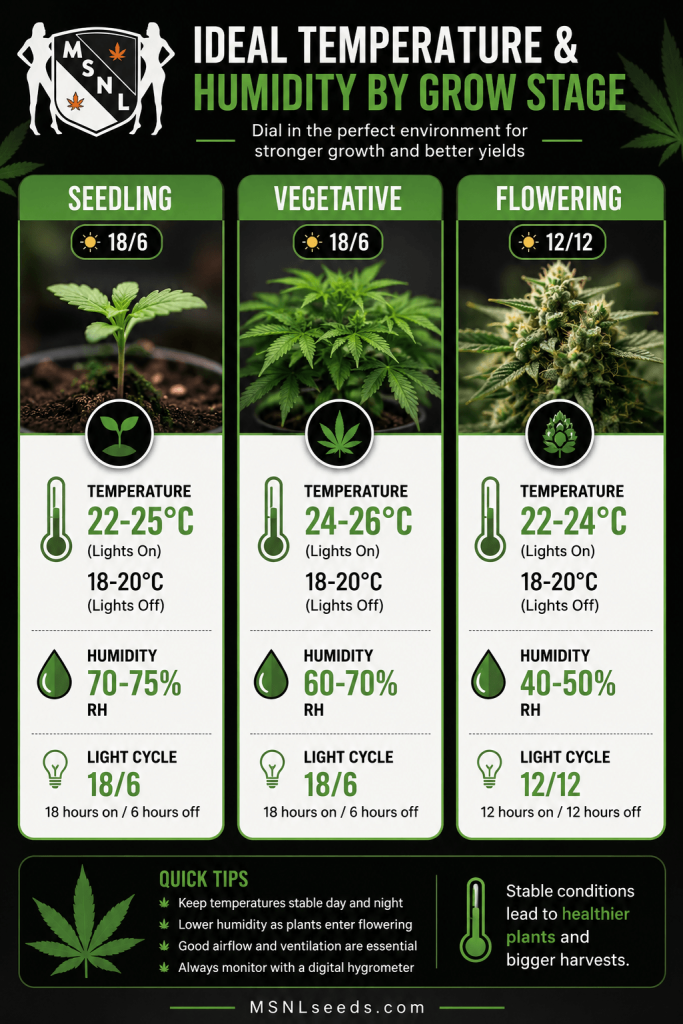
The seedling stage lasts for the first two weeks after your seeds germinate. During this time, the seedlings will focus their energy on root development and on anchoring the taproot in the growing medium for support. Once the first true leaves appear, cannabis seedlings enter the vegetative stage. The optimal temperature will be 22 - 25°C, combined with a relative humidity level between 70-75%
- Cannabis seedlings should be grown under an 18/6 light cycle
- Seedlings will be delicate and should be handled carefully
- You do not feed a nutrient solution during the seedling stage
- Low light intensity is best when using a CFL or low-powered LED
- The best temperature for cannabis seedlings will be 22 - 25°C
- Humidity levels should range between 70-75%
The Vegetation Stage - 18/6
The vegetation stage is when cannabis plants begin to develop fan leaves, side branches, nodes, and internodes, and to expand their root mass. You can keep your plants in a vegetative state for as long as you want by providing 18 hours of light and 6 hours of darkness.
Once a grower is happy with the size and structure of their plants, they can adjust their timers and prepare for the flowering stage. Keep the temperature between 24 and 26°C and the relative humidity between 60 and 70%.
- Cannabis plants can be vegetated for 2 - 10 weeks, depending on the grower
- Vegetating plants should be re-potted when the roots fill the bottom of the pot
- During this stage, the plant will only produce leaves and no flowers
- Growers can take cuttings from a photoperiod cannabis plant during this stage
- The best cannabis grow room temperature during vegetation will be 24- 26°C
- Humidity levels should range between 60-70%
The Flowering Stage - 12/12
This is the stage when all the magic happens, and you get to watch your plants transition from vegetation into flower production. At this point, set your timer to 12 hours of light and 12 hours of dark.
Doing so will induce flower production, resulting in your plants growing as tall and big as possible over the next 3-4 weeks. The flowering stage can vary based on the genetics being grown and the associated flowering time. The best temperature for growing weed under 12/12 is 22-24°C, with a lower humidity of 40-50%.
- The flowering stage typically lasts between 7 and 12 weeks, depending on the strain
- Flowering plants allocate all their energy to producing cannabinoids and terpenes.
- Do not re-pot flowering plants to avoid stress and stunted growth
- The best temperature for the flowering stage indoors will be 22- 24°C
- Humidity levels should range between 40-50%
| Stage | Temp (Lights On) | Temp (Lights Off) | Humidity |
| Seedling | 22–25°C | 18–20°C | 70–75% |
| Vegetative | 24–26°C | 18–20°C | 60–70% |
| Flowering | 22–24°C | 18–20°C | 40–50% |
| Late Flower | 20–22°C | 18–20°C | 40–45% |
Why Temperature Matters When Growing Cannabis
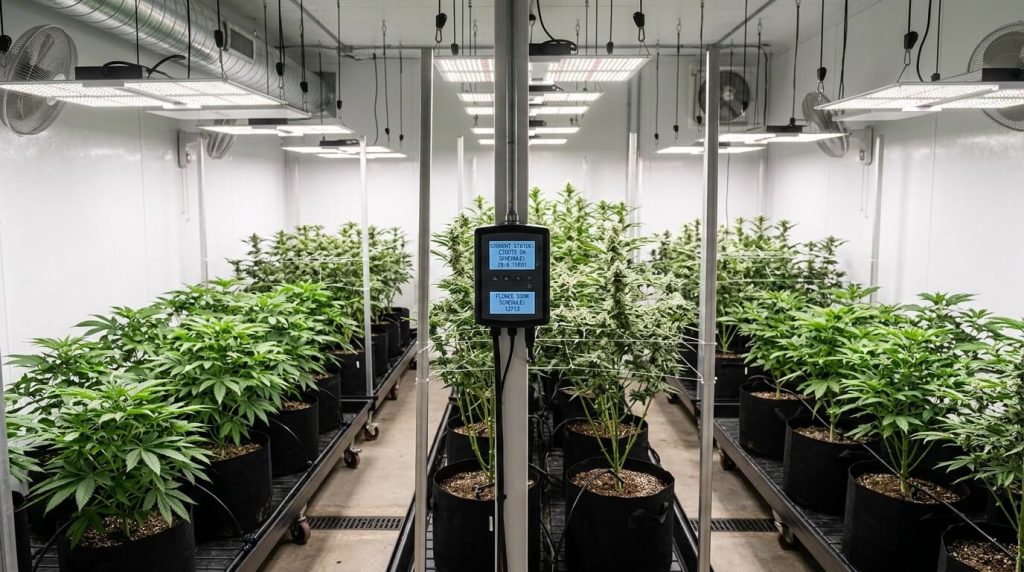
Knowing what the best temperature to grow weed indoors is will be advantageous for optimal growth, development, bud quality, yield and lowering the risk of pathogens such as mould or mildew.
Below breaks down how temperature affects cannabis plants, the ideal temperature range, the relationship between light, temperature and humidity when maintaining the ideal cannabis grow temperature and common problems that the wrong growing temperature for cannabis causes.
How Temperature Affects Cannabis Plant Growth and Development
The art of growing high-grade cannabis indoors involves environmental conditions that are not too cold or hot, or wet or dry. For a cannabis plant to mature with optimum health, vigour and have the best chances of a big yield, you need the perfect cannabis temperature range.
- Cold temperatures affect root growth and development
- A fluctuation in cannabis climate control can promote internodal stretching
- Heat-stressed plants will become dry due to excessive transpiration rates
- Hot soil temperatures can harm beneficial bacteria and microbes
- Flowering cannabis plants affected by heat stress will produce low-quality buds
- Cold conditions can cause stunted growth and affect nutrient uptake
- The leaves of a cannabis plant will curl inwards when the temperature is too high
The Ideal Temperature Range for Healthy Cannabis Plants
When trying to establish the ideal grow temperature for cannabis, all you need to know is that there are three important stages of a plant's lifecycle
- The best temperature for cannabis seedlings is 22 - 25°C
- The ideal cannabis grow room temperature during vegetation is 24- 26°C
- The best temperature for the flowering stage indoors is 22 - 24°C
How Light, Humidity and Temperature Work Together in a Grow Room
Whilst dialling in the optimal grow room climate control, it is also important to know how light, humidity and temperature work together. The advantages of growing your cannabis in a grow room are that you are in control of providing photosynthetically active radiation (PAR) mimicking the sun, whilst providing the same temperature and humidity levels that the outdoor seasons provide.
So, for example, during the seedling and vegetation stage, you are replicating Spring and summer. Then, when you are flowering your crop, you will want to increase the darkness period and lower the humidity to imitate The Fall season. Using high-intensity discharge (HID) lighting and providing the correct levels of PAR are major factors in growth and development.
Common Problems Caused by Incorrect Cannabis Growing Temperatures
On your quest to find the ideal growing temperature for cannabis, it is beneficial to understand the issue that can quickly arise if your cannabis grow room temperature is too low or too high. Below is a shortlist of issues a home grower may face.
Cold Temperature Exposure Under 18°C
- Seedling and vegetative growth will significantly reduce
- Plants cannot metabolise nutrients when the temperature drops below 12°C
- The roots are affected, causing nutrient lockout and reduced availability.
- The roots are more prone to pathogens and damp conditions
- Trichome development can be affected when the temperature is cold
- Cannabis plants may develop hermaphroditism during the flowering period
High Temperature Exposure over 25°C
- Cannabis plants can lose vigour and become weak
- The leaves of a heat-stressed plant will become dry and curl
- Yields are significantly affected, resulting in smaller buds
- Buds are more susceptible to mould during the final 4 weeks of 12/12
- Buds can become fluffy, light and lack density
- The leaves can change colour and become yellow or brown
- The roots are at risk of attack from pathogens due to the hot soil
Temperature for Cannabis Seedlings
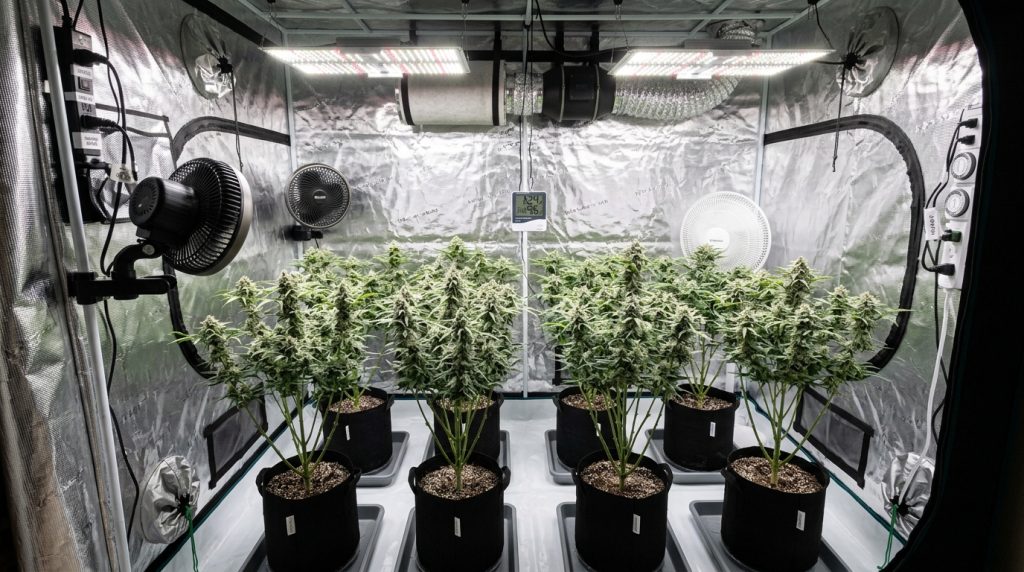
Cannabis seeds represent the first step of climbing the ladder as an indoor grower, so it is essential to provide the ideal temperature for cannabis seedlings. Your precious, delicate seedlings prefer a warm, humid environment. Below, I explain the ideal temperature range for seedlings, why they need warmer temperatures, how temperature plays a major role in root development, and my climate control tips.
Ideal Temperature Range for Cannabis Seedlings
Using a digital hygrometer, you will want to create a cannabis temperature range for seedlings between 22 - 25°C. Anything below this will cause seedlings to grow slowly and promote a small, undeveloped root zone. Anything over, and the seedlings will suffer from heat stress, transpire too quickly and become dry and lifeless.
Why Seedlings Need Warmer Temperatures Than Mature Plants
Warm temperatures are best suited for seedlings, as they aid their growth and development. You are also replicating the warm, humid conditions of spring indoors, which are essential for outdoor seedlings to thrive. Mature plants are far more resilient and better able to withstand fluctuations in cannabis climate control, and they also have a well-established root base and support system to help them adapt to their surroundings.
How Temperature Influences Root Development and Early Growth
When you have the ideal temperature for cannabis seedlings, you will notice several things. Not only will the roots be bright white, healthy, and fibrous, but the plant will be lush green with a strong stem. Seedlings do not require any nutrients or much intense light, and will transpire at a slow rate until they can produce more foliage and a greater root mass.
- Cold temperatures produce thin, weak and slow-developing root hairs
- High temperature can cause roots to become soft, mushy and discoloured
- Root rot thrives in cold and damp conditions
- Soil that becomes hot can be harmful to root health
- High temperatures can cause plants in vegetation to become tall and lanky
- Cold temperatures significantly slow down growth during 18/6 and 12/12
Climate Control Tips for Maintaining Stable Seedling Temperatures Indoors
Starting your seedlings indoors is an exciting time, and making sure they have the best start in life will pay off massively. Below are three tips to consider to help you dial in the ideal temperature for cannabis seedlings.
Tip #1 - Digital Hygrometer for Cannabis Climate Control
Buy yourself a digital hygrometer and keep it inside our grow room or grow tent to check the day and night temperatures. Doing so will help you find that sweet spot and let you know if your temperature for cannabis seedlings is on point or if you need to add a heater.
Tip #2 - High Quality Extraction Kit
The extractor kit in your grow room determines how much fresh air is allowed to enter and exit. If you find that your temperatures are getting too high, it may be due to an underperforming extractor kit. Invest your money wisely in an extraction kit that provides the ideal cannabis grow temperature when the lights are on.
Tip #3 - Grow Light Intensity and Distance
How far you keep your grow light from the seedlings can determine whether they are exposed to too much light and heat stress. On the other hand, lights that are too far away will encourage seedlings to become lanky and weak, and even to topple over the side of the pot. I would recommend using a CFL or LED and keeping the light 6-12 inches above the seedlings.
Best Temperature for the Vegetative Stage of Cannabis
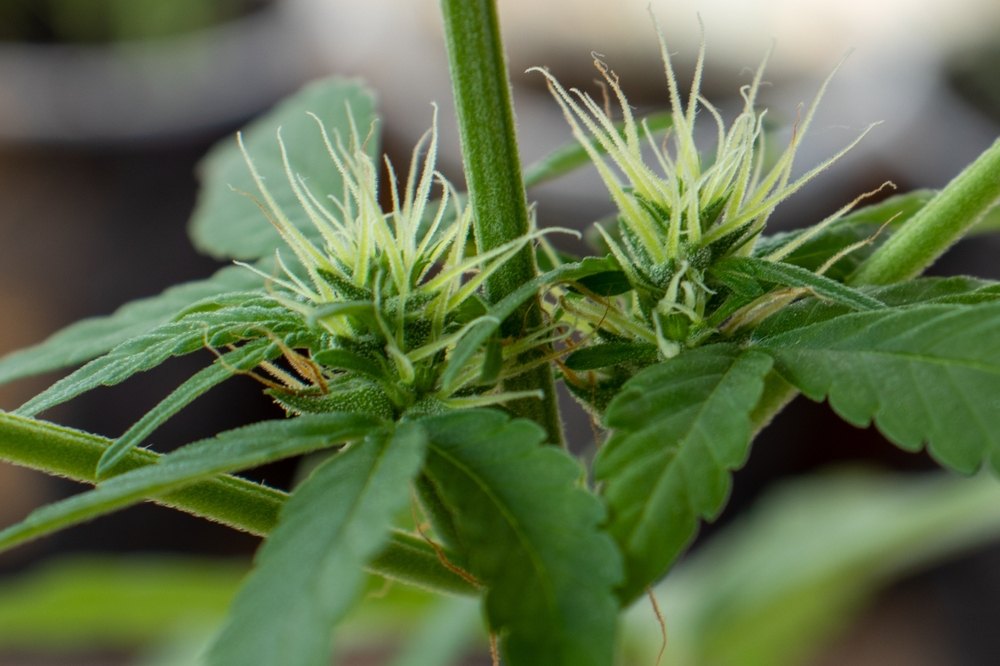
The vegetative stage is where your plants grow as bushy and dense as you want before flowering. Cold temperatures can stunt growth, whilst hot temperatures can cause plants to stretch, become leggy, and grow too tall. Below explains the best temperature for the vegetative stage of 18/6
Ideal Daytime and Nighttime Temperatures During the Vegetative Stage
- 18-20°C when the grow lights are off
- 22-24°C when the grow lights are on
How Temperature Impacts Photosynthesis and Plant Structure
Hot temperatures can dry out the leaves of a cannabis plant, cause it to transpire moisture too quickly, affect nutrient uptake and affect photosynthesis and metabolic processes. Heat-stressed plants will look tired, wilt, and lose the vibrancy and health they once had.
Cold temperatures affect photosynthesis by reducing enzyme production and energy transport, leading to stunted plant growth and delayed flower development.
Managing Temperature in Indoor Grow Tents During Vegetative Growth
- Use a top-quality extractor to recycle large volumes of air
- Hang ducting straight and avoid drooping
- Make sure the ducting has an air-tight fit
- Use an intake fan to pull cold, fresh air from outside
- Make sure the air from the exhaust fan is blown outside
- A digital hygrometer should be visible in the grow tent at all times
Signs Your Grow Room Temperature Is Too High or Too Low in Veg
- High temperatures will cause plants' leaves to curl downwards or taco
- Plants may be suffering from heat stress and wind burn with dry leaves
- Humidity builds, causing the grow room walls to become wet
- Interndoal spacing is much larger than usual in hot grow rooms
- Cold grow rooms result in cold pots and soil
- Plants exposed to the cold will grow slowly and use little nutrients
- Roots exposed to cold temperatures will develop with a weak structure
Best Temperature for Flowering Stage Indoor
The flowering stage is where all the good stuff happens; however, getting the temperature for flowering wrong can put you in a world of problems. Ensuring proper grow room climate control during 12/12 is essential to prevent oversized, lanky plants, prevent stunting, and produce the most abundant, high-quality yields possible.
Ideal Temperature Range During Early Flowering
The early flowering stage is when your plants have finished the vegetative cycle and are transitioning into flower production. If your temperatures are too hot or too cold, the plants will stretch too tall, resulting in long internodal spacing. The best grow tent or grow room temperature for the early flowering stage should be:
- 18-20°C when the grow lights are off
- 22-24°C when the grow lights are on
Why Slightly Cooler Temperatures Benefit Cannabis Bud Development
From my experience with flowering cannabis plants, lowering the temperature to 22°C during the last 4 weeks can improve bud density and compactness, increase resin production, and reduce the risk of bud rot.
Vegetating plants can handle much higher temperatures, especially when you are running carbon dioxide tanks and need a hot and humid environment. Cooler temperatures also help a grower maintain adequate indoor cannabis temperature control more easily.
Temperature Changes During Late Flowering and Ripening
As mentioned above, you can lower the temperature during the late flowering and ripening phase. This is especially useful if your temp for flowering is too high and you are worried about the buds becoming mouldy. Avoid hot temperatures during the flowering period, as mould can develop and spread quickly when the temperatures are between 21-25°C.
- Mould causes the buds to become soft, mushy and turn brown
- Buds infected with mould should be thrown away
- Humidity levels above 45% will encourage mould to spread
Temp for Flowering: Preventing Heat Stress and Reduced Yields
There are two things a home grower never wants to experience: heat-stressed plants and low yields. However, these two go hand in hand. They are a direct result of not maintaining the right temperature for growing weed. To stay as safe as possible, try to lower your flowering temperature to 22°C.
- Heat-stressed plants produce small, airy and fluffy buds
- Resin production is affected when flowering plants are heat-stressed
- Buds can become dry, crispy and lack much aroma or taste
- Heat stress affects how plants can uptake nutrients
Cannabis Climate Control for Indoor Grow Rooms
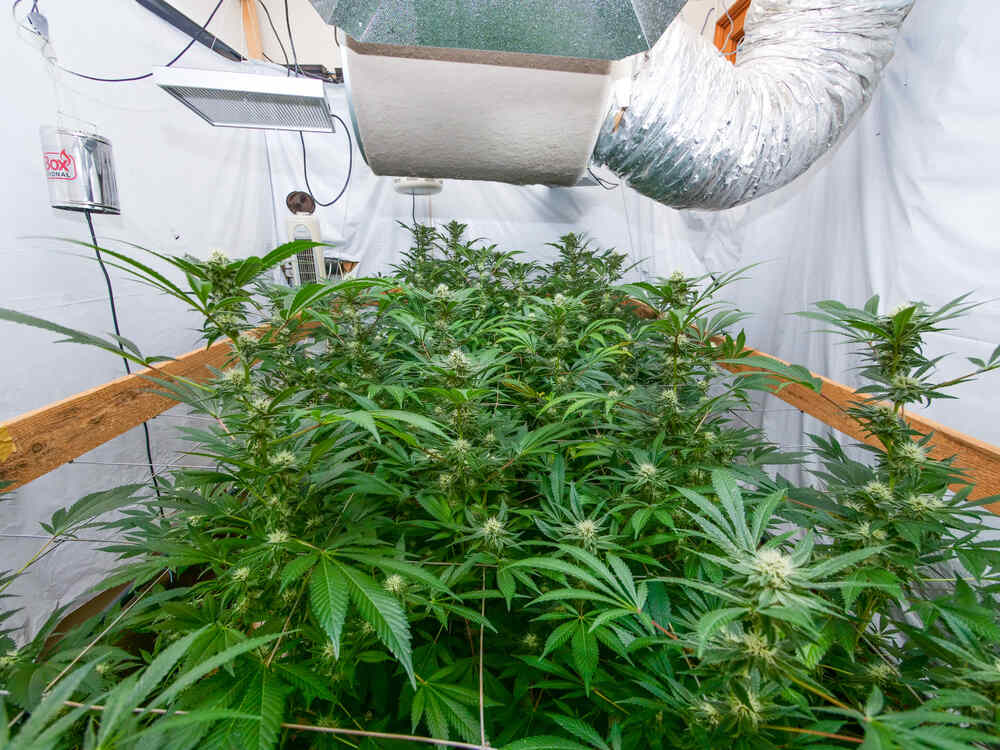
Maintaining stable temperatures and humidity levels is essential for healthy cannabis growth, especially in indoor environments where LED and HID lighting can influence climate conditions. While all cannabis plants benefit from a controlled environment, some genetics are naturally better adapted to warmer, more humid conditions than others. Tropical cannabis varieties, for example, often originate from regions with long growing seasons, high humidity, and consistent temperatures. If you're interested in cultivating these unique genetics, explore our tropical cannabis seeds collection, featuring strains selected for their vigorous growth, exotic terpene profiles, and adaptability to warm climates.
Cannabis climate control plays a crucial role in how your plants grow, the quality of the buds, yields, terpenes and cannabinoids. Ensuring you have the right equipment to achieve the best grow room climate control will be a game-changer, as covered below.
Essential Equipment for Cannabis Climate Control
Being a great indoor grower means knowing which equipment you need to achieve the optimal grow temperature for cannabis. Below is a short list of easy-to-source equipment that will ensure you always have the correct cannabis grow room temperature for every stage.
Extractor Kit - The extractor kit will consist of an outtake fan, aluminium ducting and a carbon filter. The extractor is responsible for ventilating the grow tent or grow room, ensuring the hot air created by the grow light exits the room.
Intake fan - This will be a smaller-sized fan that pulls in less air than the extractor fan mentioned above. The intake fan will draw cool, fresh air from an outside source.
Oscillating Fans - These fans oscillate from side to side, providing ample airflow and air movement. Fans will help circulate the air in the grow room and maintain the perfect temperature to grow weed.
Hygrometer - These small, battery-powered devices can be placed inside the grow room to let you see 24 hours a day what the temperature and humidity levels are. This low-cost device is a must-have when determining your cannabis grow room temperature.
Heater - Grow rooms that suffer from cold temperatures during winter can benefit greatly from a small heater. Indoor and outdoor growers can help remove the cold from the air with an electric or gas heater.
| Equipment | Main Purpose |
| Extractor Fan | Removes hot air |
| Intake Fan | Pulls in cool air |
| Oscillating Fans | Improves airflow |
| Hygrometer | Tracks temp and humidity |
| Heater | Prevents cold stress |
| Fan Controller | Automates climate control |
How Grow Lights Affect Grow Room Temperature
We have all been there as home growers, powering up our HID grow lights and noticing the temperature rise above the comfort zone of 24°C. Grow lights can seriously affect the temperature of the grow room.
- LED grow lights run much cooler and can be kept closer to the top of the canopy
- Dimmable LED lights can be lowered to help with indoor cannabis temperature control
- Small-sized CFL or T5 strip lights may not produce enough heat for seedlings
- HPS and Metal halide lights produce a great amount of heat from the bulb and ballast
Ventilation, Extraction and Air Circulation Strategies
Make sure you have plenty of room to hang each piece of equipment when installing your extraction kit. Ducting should be kept as short as possible and not allowed to droop or hang down, creating a bend. Use multiple oscillating fans turning at different times to create the maximum air currents and an ultimate cannabis climate control.
Automating Temperature Control in Modern Grow Setups
If you are worried that your cannabis climate control is out of your hands, you can always use a temperature fan controller. These devices work by programming the temperature and humidity levels you want for the on and off periods of the lights. The controller maintains this set cannabis temperature range.
Day vs Night Temperature Differences for Cannabis Plants
When your cannabis grow lights are on, then this is classed as the daytime, and when the lights are off, this is the night. The temperature difference can determine how short or tall cannabis plants can become, as well as the risk of creating a pathogen-rich environment.
Ideal Daytime Temperature for Cannabis Growth
- 24°C when the grow lights are on during 18/6
- 22-24°C when the grow lights are on during 12/12
Ideal Nighttime Temperature for Cannabis Plants
- 18-20°C when the grow lights are off during 18/6
- 18-20°C during the flowering period
Why Temperature Drops at Night Are Important for Plant Health
Cannabis plants require a subtle drop of 6-8°C during their dark period to mimic natural outdoor conditions. Cooler growing temperatures for cannabis during the lights off period are also beneficial for the transpiration rate of the plants, resin and terpene development, and to prevent stretching and long internodal growth.
Signs Your Cannabis Plants Are Experiencing Temperature Stress
Hot grow rooms can be stressful, especially when you see your plants suffering. Heat stress can really set a grower back in terms of growth, development, bud quality and yield. Below, explain the different symptoms of heat stress, cold exposure, and extreme temperatures to avoid, and how to recover plants after experiencing heat stress due to poor grow room climate control.
| Issue | Symptoms | Result |
| Heat Stress | Taco leaves, dry foliage | Lower yields |
| Cold Stress | Slow growth, drooping | Weak roots |
| High Humidity | Damp walls, moisture | Mold risk |
| Temp Swings | Stretching, instability | Plant stress |
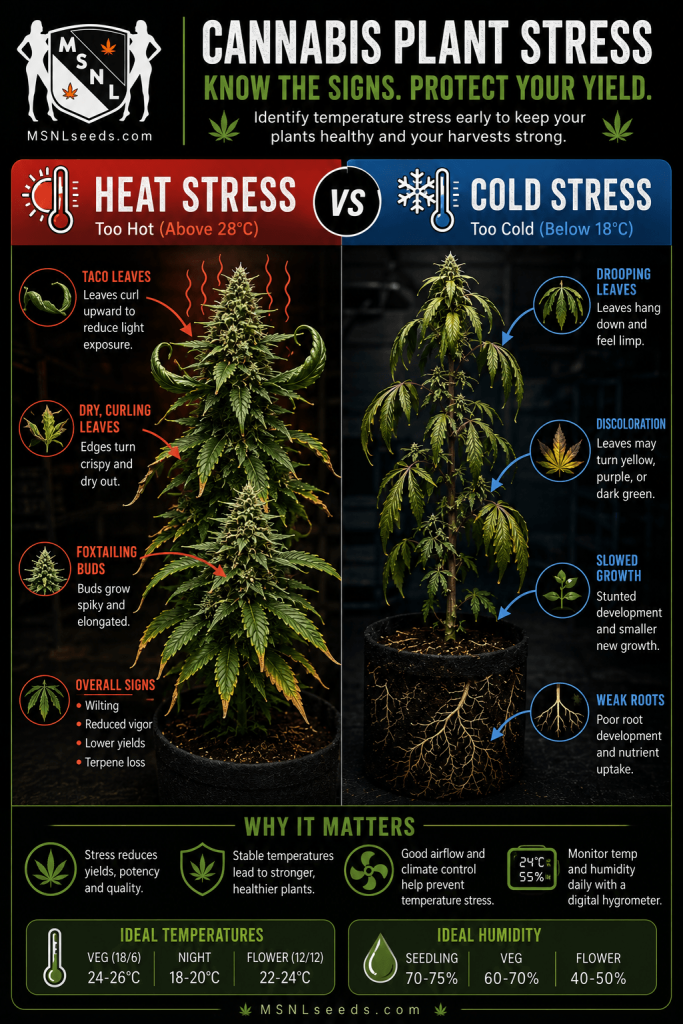
Symptoms of Heat Stress in Cannabis Plants
- Dry curling leaves, that may droop downwards or form a taco shape
- The vigour and structure of the plants appear weak
- The biggest leaves are thin, dry and crispy
- The developing buds have small bracts, little density
- Buds can begin to foxtail or become elongated
- There will be a significant reduction in yields
- The terpene profile will be less developed due to heat stress
Signs Cannabis Plants Are Too Cold
- The internodal spacing will be long and produce tall and lanky plants
- Buds will not pack much size or density
- The plants will droop downwards
- Leaf discoloration
- Slow-developing roots
How Extreme Temperatures Affect Yield and Cannabinoid Production
Extreme temperatures above 28 degrees during the flowering period will result in inferior-quality buds. This means not only are terpene and cannabinoid production affected, but also the size and thickness of the buds and the overall yield. Hot grow rooms are a breeding ground for spider mites and mould, which only adds to the stress of finding the optimal temperature to grow weed.
How to Recover Cannabis Plants from Temperature Stress
It depends on whether the plants are in the vegetative stage or the flowering period. Cannabis plants that are still in 18/6 will have a much better opportunity to bounce back and recover than a flowering plant. The only thing you can do to recover from temperature stress is allow the plants to grow with the correct growing temperature for cannabis.
Tips for Maintaining the Best Temperature to Grow Cannabis
Everyone loves a good tip, and here you will discover what to consider when maintaining the optimal temperature for growing cannabis!
Monitoring Grow Room Temperature with Sensors and Controllers
Sensors and controllers can help you raise your indoor grow game to the next level by enabling greater precision and clinical control. It takes the work out of second-guessing and is ideal for a grower who does not have time to check the grow room constantly and needs to be away for a day or two.
Adjusting Temperature Based on Grow Medium and Grow Setup
If you are growing cannabis using soil, then you must keep the soil at an ambient temperature to avoid killing beneficial bacteria and fungi present. Also, the roots prefer a temperature range of 20-25°C, which is why 24°C during the vegetation and flowering period is ideal!
Climate Control Strategies for Indoor Grow Tents
One of the easiest ways to maintain the best grow tent temperature is to ensure that the air from the exhaust fan is exhausted outside and away from the inline fan. The inline fan blows cool, fresh air into the bottom of the tent. Keeping the hot air from the exhaust fan well clear will allow you to maintain the best temperature for growing weed
Maintaining Stable Growing Temperature for Cannabis Year-Round
It can be tricky to achieve the perfect temperature for growing weed year-round. During winter, grow rooms can become much colder, whilst in summer, it can be a real challenge to keep the grow room cool.
- Temperature fan controllers are advantageous for optimal grow room climate control
- A small-sized heater for the nighttime can help keep the temperature close to 18°C
- Buy a new extractor fan after every 2-3 harvests to ensure you have optimal ventilation
- Run your lights from 9pm to 9am at night during the hottest part of the year
Best Conditions for Drying & Storing Cannabis
| Process | Temperature | Humidity |
| Drying | 18–21°C | 50–60% RH |
| Curing | 18–21°C | 58–62% RH |
| Storage | 15–21°C | 55–62% RH |
Now that you understand the best temperature ranges for seedlings, vegetation, flowering, drying, and storage, the next step is choosing cannabis genetics that match your grow space and experience level. From beginner autoflower strains to potent photoperiod cultivars, our collection includes options for growers looking to optimize quality, aroma, and overall plant performance indoors. Browse our beginner cannabis seeds to find the right genetics for your next grow.
Frequently Asked Questions
Can cannabis grow in cold temperatures?
Cannabis can survive in cooler conditions, but growth typically slows when temperatures drop below 18°C. Cold temperatures may affect root development, nutrient uptake, and overall plant vigor, especially during the seedling and vegetative stages.
Can cold temperatures kill cannabis seedlings?
Yes, cannabis seedlings are highly sensitive to cold temperatures. Prolonged exposure to cold or damp conditions may stunt growth, weaken stems, slow root development, or kill young seedlings.
What is the lowest temperature cannabis can survive?
Cannabis plants may survive short periods near 0°C, but freezing conditions can damage leaves, stems, and roots. Most growers try to avoid temperatures below 10°C to prevent stress and slowed growth.
Can cannabis survive freezing temperatures?
Cannabis may tolerate very brief exposure to frost, but freezing temperatures can quickly damage plant tissue and significantly reduce plant health and productivity.
What temperature is too cold for cannabis?
Temperatures below 18°C commonly slow plant growth and nutrient uptake, while prolonged exposure to near-freezing conditions may severely damage cannabis plants.
What temperature is too hot for cannabis?
Temperatures above 28°C may cause heat stress, reduced terpene production, weaker growth, and lower-quality flower development, particularly during flowering.
What temperature can cannabis plants tolerate?
Cannabis plants are commonly grown between 22–26°C during active growth, although some genetics may tolerate slightly warmer or cooler conditions for short periods.
What temperature does cannabis grow best at?
Most indoor growers maintain temperatures around 24–26°C during vegetation and 22–24°C during flowering for balanced growth and healthy flower development.
What temperature does cannabis need to grow?
Cannabis generally prefers stable temperatures between 22–26°C, depending on the growth stage, lighting intensity, humidity, and genetics.
What temperature should cannabis plants be kept at?
Indoor cannabis plants are typically kept between 22–26°C during lights-on periods and around 18–20°C during lights-off periods.
Can fluctuations in temperature stress cannabis?
Yes, sudden temperature swings or large day-to-night differences can stress cannabis plants and contribute to stretching, slowed growth, humidity issues, and inconsistent development.
Can indoor temperature swings damage cannabis?
Frequent indoor temperature fluctuations may negatively affect plant health, nutrient uptake, and overall environmental stability inside the grow room.
Can a negative temperature differential make cannabis plants sick?
Large differences between daytime and nighttime temperatures may increase plant stress and create conditions that encourage mold, stretching, or poor growth performance.
Does high temperature cause foxtailing in cannabis?
Yes, excessive heat during flowering is commonly linked to foxtailing, where buds develop elongated or irregular growth patterns. Genetics and light intensity may also contribute.
Does high temperature reduce THC, terpenes, and cannabinoids in cannabis?
High temperatures during flowering, drying, or storage may reduce terpene retention and affect cannabinoid stability over time, including THC content and overall flower quality.
What is the best temperature and humidity for drying cannabis?
Many growers dry cannabis at temperatures between 18–21°C with humidity levels around 50–60% to slow moisture loss and help preserve aroma and flower quality.
What is the best temperature for drying cannabis?
Cannabis is commonly dried at temperatures between 18–21°C with steady airflow and moderate humidity.
What temperature should cannabis be stored at?
Cannabis is typically stored in a cool, dark environment between 15–21°C with stable humidity to help preserve freshness, aroma, and potency.
What temperature do you decarb cannabis?
Cannabis is commonly decarboxylated at temperatures between 105–120°C, depending on the method and duration used.
What temperature does cannabis decarboxylate?
Cannabinoids such as THCA generally begin decarboxylating at temperatures around 105–120°C.
What temperature to decarb cannabis?
A commonly used decarboxylation range is approximately 105–120°C for controlled heating over time.
What temperature does cannabis burn or combust at?
Cannabis plant material commonly combusts at temperatures above 230°C, although exact combustion points may vary depending on moisture content and density.


