




Nutrient lockout in cannabis happens when nutrients are present in the growing medium but the roots cannot absorb them properly. To a beginner, it often looks like an ordinary deficiency because the plant may develop yellow leaves, brown spots, burnt edges, curling, or stunted growth.
The main risk is misdiagnosis. Adding more fertilizer to a locked-out plant can increase salt buildup and make nutrient uptake even more difficult. Before changing the feeding program, growers should check the root zone, pH, nutrient strength, watering habits, and drainage.
This guide explains how to recognize nutrient lockout, identify the cause, correct the problem, and prevent it from returning in soil, coco coir, and hydroponic systems.
Key Takeaways
- Nutrient lockout means nutrients are present but unavailable to the roots.
- Incorrect pH, excessive fertilizer salts, and unhealthy root conditions are common causes.
- Yellowing, leaf burn, curling, and slow growth are warning signs, but they do not confirm lockout on their own.
- Diagnose the root zone before adding more fertilizer or flushing the growing medium.
- Consistent pH, moderate feeding, good drainage, and regular monitoring help prevent nutrient lockout.
- What is Nutrient Lockout in Cannabis?
- Nutrient Lockout vs Nutrient Deficiency
- Signs of Nutrient Lockout in Cannabis
- How to Identify Nutrient Lockout in Cannabis
- Common Causes of Nutrient Lockout in Cannabis
- Correct pH Ranges for Cannabis
- How to Fix Nutrient Lockout in Cannabis
- How to Prevent Nutrient Lockout in Cannabis
- Conclusion
- Frequently Asked Questions
What is Nutrient Lockout in Cannabis?
Nutrient lockout is one of the most misunderstood problems cannabis growers face. Many beginners assume yellow leaves or slow growth mean the plant needs more fertilizer, but that is not always true. In many cases, nutrients are already present in the growing medium, they are just not available to the roots.
Cannabis plants need a steady supply of essential nutrients like nitrogen, phosphorus, potassium, calcium, magnesium, and trace minerals. These nutrients must dissolve in the root zone before the plant can absorb them. When something disrupts this process, the plant shows deficiency symptoms even though nutrients are still present in the soil, coco, or hydro system.
This is called nutrient lockout.
Unlike a true cannabis nutrient deficiency, where nutrients are actually missing, lockout happens when conditions in the root zone prevent uptake. Adding more nutrients usually does not help and can make things worse by increasing salt buildup.
Experienced growers do not rush to feed more when they see yellowing leaves. They first check what is happening in the root zone.
What Happens Inside the Root Zone?
Nutrient lockout starts below the surface, even though symptoms appear in the leaves.
The root zone is where water, oxygen, microbes, and nutrients interact. Healthy roots absorb nutrients in ionic form as water moves through the medium. This depends on stable pH, balanced feeding, proper moisture, good oxygen levels, and correct temperature.
When one or more of these factors is off, nutrient uptake slows down. Nutrients may still be present, but the plant cannot access them properly. Over time, the plant pulls nutrients from older leaves to support new growth, which creates deficiency-like symptoms.
| Healthy Root Zone | Nutrient Lockout Conditions |
| Nutrients are available for uptake | Nutrients are present but unavailable |
| Stable pH supports absorption | Incorrect pH blocks uptake |
| Balanced feeding levels | Excess salts interfere with roots |
| White, healthy roots | Stressed or damaged roots |
| Good drainage and oxygen | Poor drainage or low oxygen |
Nutrient lockout is often caused by multiple small issues rather than one major mistake. Slight pH drift, overfeeding, and poor watering habits can combine over time and reduce nutrient uptake.
Grower's Tip: Do not rely only on leaf symptoms. Always check the root zone first. Review pH, feeding history, watering habits, and root health before adding more nutrients.
Why Nutrients Become Unavailable
Cannabis roots can only absorb nutrients when the root zone is balanced.
The most common cause is incorrect pH. Each nutrient is absorbed best within a specific pH range. When pH moves too high or too low, some nutrients become unavailable while others may become excessive and create further imbalance.
Salt buildup is another major cause. Every feeding leaves behind mineral salts. If they accumulate faster than the plant uses them, they build up around the roots. This makes it harder for the plant to absorb both water and nutrients.
Poor root health can create the same symptoms. Overwatering, compacted soil, root disease, cold temperatures, and low oxygen all reduce root function. Even with correct feeding and pH, unhealthy roots cannot absorb nutrients properly.
Nutrients can also compete with each other. Too much of one element can block the uptake of another, creating imbalance. This is why experienced growers avoid overcorrecting with extra fertilizer.
Healthy roots in a stable environment rarely experience lockout. Problems usually come from instability in pH, feeding, or root conditions.
Nutrient Lockout vs Nutrient Deficiency
Nutrient lockout and nutrient deficiency can produce very similar symptoms, but they are not the same problem.
A nutrient deficiency means the plant is not receiving enough of a particular element. This may happen because the grower is feeding too lightly, the soil has become depleted, or the nutrient program is incomplete.
Nutrient lockout means the element is already present, but the plant cannot absorb it properly. The issue is not necessarily the amount of fertilizer being supplied. The problem is usually connected to pH, salt buildup, watering practices, or poor root health.
This distinction matters because the correct response is different. A genuine deficiency may improve after the missing nutrient is supplied. Lockout must be corrected by restoring suitable conditions around the roots.
| Nutrient Deficiency | Nutrient Lockout |
| One or more nutrients are missing or insufficient | Nutrients are present but cannot be absorbed properly |
| Often linked to underfeeding or depleted soil | Often linked to pH, salt buildup, or root stress |
| Symptoms may improve after appropriate feeding | Additional fertilizer may make symptoms worse |
| Feed levels may be lower than the plant requires | Feed levels may already be adequate or excessive |
| Correction involves supplying the missing nutrient | Correction involves restoring the root-zone balance |
The leaves alone cannot reliably tell you which problem is present. Yellowing, brown spots, burnt edges, curling, and slow growth can appear in both cases. The plant's recent feeding history and growing conditions provide the context needed to separate one problem from the other.
Signs of Nutrient Lockout in Cannabis
Nutrient lockout can be difficult to diagnose because its symptoms closely resemble common nutrient deficiencies. Yellowing leaves, brown spots, burnt edges, curling foliage, and slow growth all suggest the plant is struggling to absorb essential nutrients, but they do not confirm nutrient lockout on their own.
Experienced growers look beyond the leaves. They consider where symptoms first appear, how quickly they spread, and whether anything has recently changed, such as feeding strength, pH, watering habits, or environmental conditions.
| Symptom | What You May See | Other Causes to Rule Out |
| Yellowing leaves | Lower or upper leaves lose color | Underfeeding, overwatering, natural fade |
| Brown spots | Rust-colored or dead patches | Calcium deficiency, pests, disease |
| Burnt leaf edges | Brown, crispy tips or margins | Nutrient burn, heat stress |
| Leaf curling | Leaves curl upward or downward | Heat, excess light, overwatering |
| Stunted growth | Slow development and small leaves | Cold roots, poor lighting, root binding |
| Weak flowering | Small or slow-forming buds | Poor lighting, genetics, environmental stress |
Yellowing Cannabis Leaves
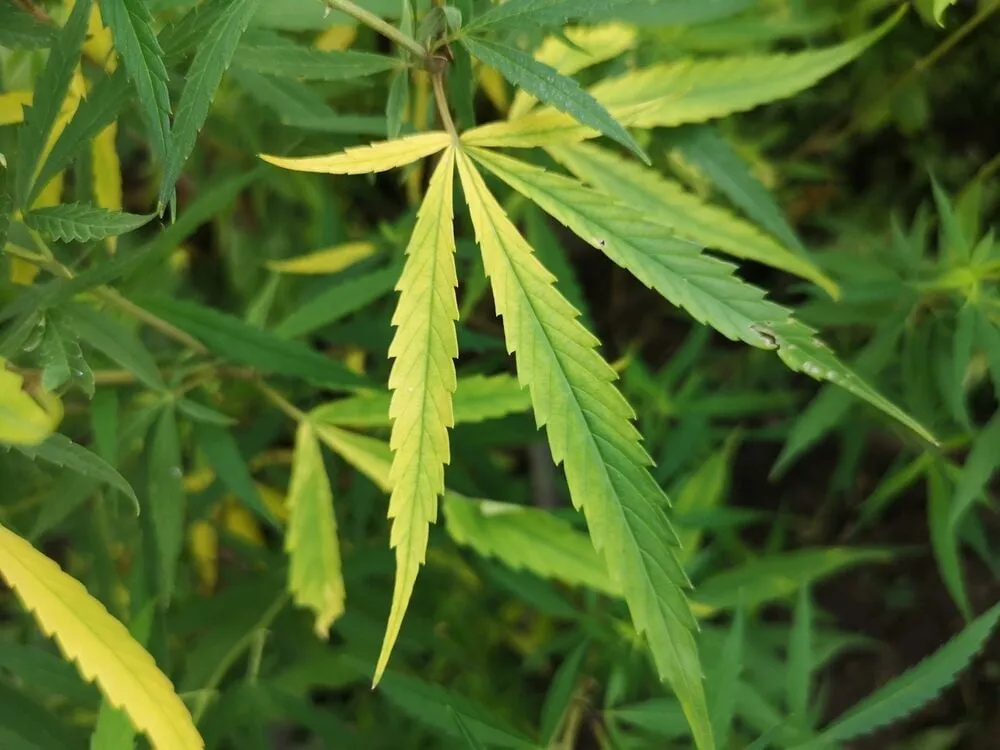
Yellowing leaves are often the first sign growers notice. Older leaves commonly yellow first when the plant struggles to absorb mobile nutrients, producing symptoms similar to nitrogen deficiency in cannabis or magnesium deficiency.
Although yellowing is a common symptom of nutrient lockout, it can also result from underfeeding, overwatering, or the natural aging of leaves during late flowering. Always consider the plant's feeding history and root-zone conditions before increasing nutrients.
Grower's Tip: Pay attention to where yellowing begins. The location often provides more useful information than the color itself.
Brown Spots and Burnt Leaf Edges
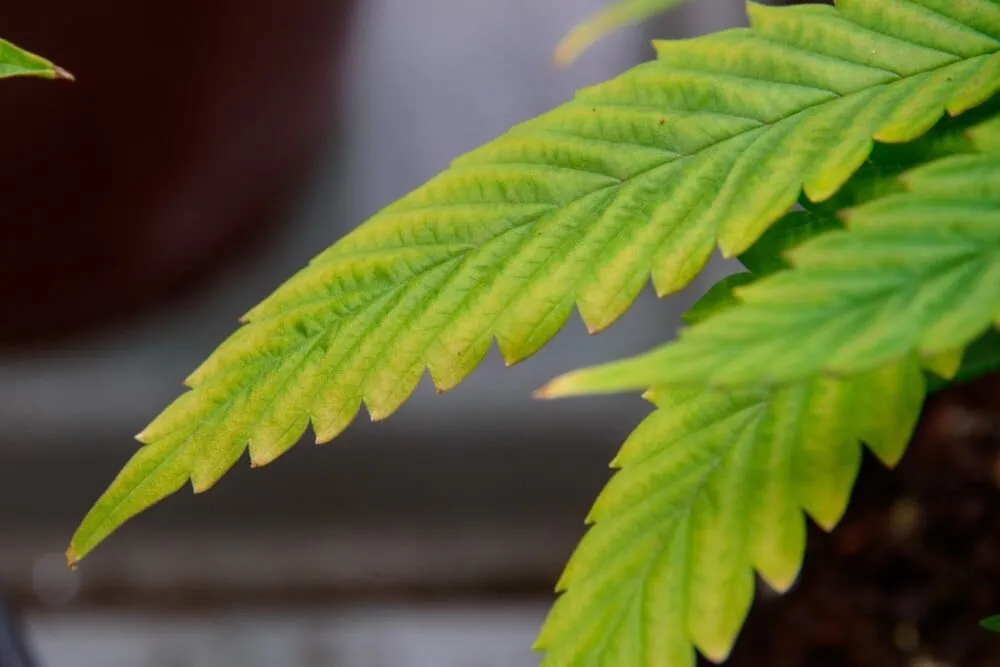
Brown spots on cannabis leaves and burnt leaf margins usually develop after nutrient uptake has been restricted for some time. Symptoms affecting newer leaves often resemble calcium deficiency in cannabis, while burnt leaf edges are commonly associated with potassium uptake problems.
Once leaf tissue becomes brown or necrotic, it will not recover. Instead, look for healthy new growth after correcting the underlying problem.
Expert Observation: If new leaves continue developing brown spots after adjusting pH or feeding, the root-zone problem has likely not been fully resolved.
Leaf Curling and Drooping
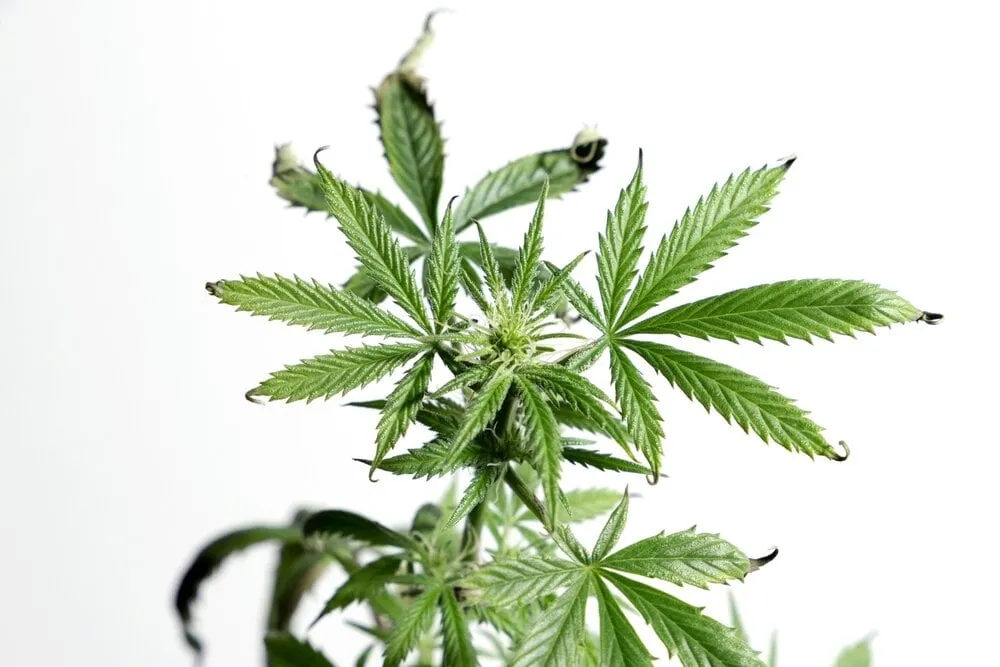
Leaf curling and drooping indicate plant stress rather than nutrient lockout specifically. Heat, excessive light, overwatering cannabis plants, underwatering, and root problems can all produce similar symptoms.
When nutrient lockout is involved, curling or drooping is usually accompanied by other signs such as yellowing leaves, burnt tips, or slow growth. Before changing the feeding program, check moisture levels, drainage, canopy temperature, and root health.
Grower's Tip: Always check the weight of the pot before watering a drooping plant. Overwatering is frequently mistaken for nutrient deficiency.
Stunted Cannabis Growth
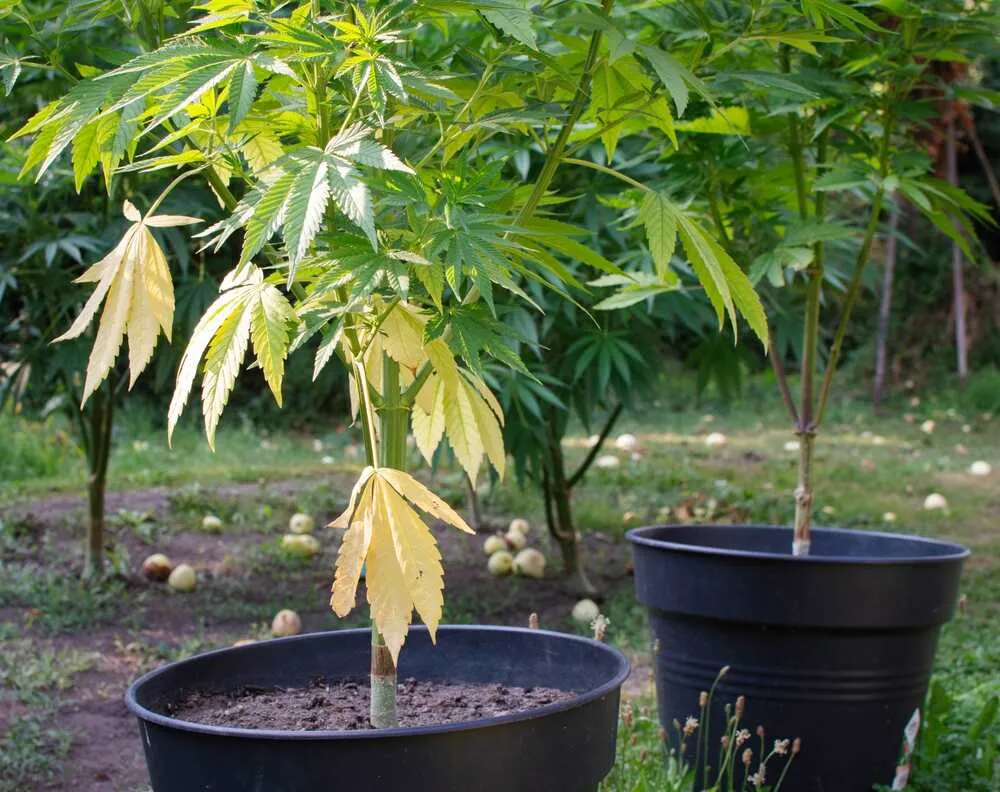
Healthy cannabis plants produce new leaves and stems continuously during vegetative growth. When nutrient uptake slows, new growth often becomes smaller, weaker, and develops more slowly.
Stunted growth is especially significant when growing autoflower cannabis seeds because they have limited time to recover before cannabis flowering begins. However, poor lighting, cold temperatures, root restriction, and pests should also be ruled out before assuming nutrient lockout.
Expert Observation: Growth often slows before severe leaf damage appears. Monitoring daily growth is one of the quickest ways to spot developing root-zone problems.
Slow or Weak Flower Development
Nutrient lockout during flowering can reduce bud development because the plant cannot absorb the nutrients needed to support flower production. Buds may remain smaller than expected, swell more slowly, or produce fewer fresh pistils.
These symptoms are not unique to nutrient lockout, as lighting, temperature, genetics, and environmental stress can all influence flower size. If the plant has been fed correctly but flower development suddenly slows alongside deficiency symptoms, investigate the root zone before increasing bloom nutrients.
Grower's Tip: Judge recovery by new flower growth rather than damaged fan leaves. Healthy pistil production and steady bud swelling are better indicators that the plant is improving.
How to Identify Nutrient Lockout in Cannabis
Nutrient lockout cannot be diagnosed from leaf symptoms alone. Yellowing, burnt tips, and slow growth can also result from underfeeding, overwatering, pests, or environmental stress.
Instead, work through the following checks before making any changes to your feeding program.
Step 1: Review Recent Feeding and Watering Changes
Start by looking at what changed before the symptoms appeared.
Ask yourself:
- Did you recently increase nutrient strength?
- Have you added a new fertilizer or additive?
- Has your watering routine changed?
- Has the water source changed?
- Did symptoms appear shortly after feeding?
If the plant was healthy before a change to your routine, that change is often the best place to begin your investigation.
Grower's Tip: Keeping a simple grow log makes it much easier to identify what triggered the problem.
Step 2: Check the Growing Medium and Drainage
Healthy roots need both water and oxygen.
Inspect the growing medium for:
- Constantly wet soil or coco
- Poor drainage
- Standing water in trays
- Compacted media
- White salt deposits
- Sour or stagnant odors
A heavy pot with drooping leaves usually needs more oxygen, not more water.
Expert Observation: Poor drainage and overwatering are among the most common causes of nutrient uptake problems in beginner grows.
Step 3: Test the Input pH
Test the pH after all nutrients and additives have been mixed.
| Growing Medium | Typical pH Range |
| Soil | 6.0 to 7.0 |
| Coco | 5.7 to 6.3 |
| Hydro | 5.5 to 6.5 |
Always use a clean, calibrated pH meter. An inaccurate reading can lead to unnecessary adjustments.
Step 4: Measure Nutrient Strength Using EC or PPM
An EC or PPM meter measures the concentration of dissolved nutrients in the solution. If you're unfamiliar with these measurements.
Compare:
- Source water
- Mixed nutrient solution
- Runoff where appropriate
- Hydro reservoir
Higher readings are not always better. Overly concentrated nutrient solutions can contribute to salt buildup and nutrient lockout.
| Reading | Possible Cause |
| High input EC | Feed may be too strong |
| Runoff EC higher than input | Salt buildup may be occurring |
| Very low EC with pale growth | Possible underfeeding |
Grower's Tip: Look for trends over several feeds rather than relying on a single EC reading.
Step 5: Check Runoff or Reservoir Readings
If growing in soil or coco, compare the runoff pH and EC with what went into the pot.
Large differences may indicate the root zone has drifted away from ideal conditions.
Hydroponic growers should monitor reservoir pH and EC daily. Sudden changes can indicate developing root zone problems.
Step 6: Inspect the Roots
Healthy roots are usually light-colored, firm, and free from unpleasant odors.
Check for:
- Brown or slimy roots
- Rotten smells
- Root-bound containers
- Poor root development
- Fungus gnats or root pests
Unhealthy roots often produce multiple deficiency symptoms at the same time because nutrient uptake is reduced.
Expert Observation: A plant that suddenly drinks less while showing several deficiency symptoms often has a root zone problem rather than a feeding problem.
Step 7: Rule Out Environmental Stress and Pests
Finally, check for other issues that can mimic nutrient lockout.
Inspect:
- Temperature
- Humidity
- Light intensity
- Air circulation
- Pests on leaves and stems
Heat stress, excessive light, cold roots, spider mites, thrips, and fungus gnats can all produce symptoms similar to nutrient lockout.
Before making any major changes, make sure the root zone, feeding program, and growing environment all support the same diagnosis.
Grower's Tip: Experienced growers diagnose the entire plant, not just the damaged leaves. Root health, pH, EC, watering habits, and the environment all tell part of the story.
Common Causes of Nutrient Lockout in Cannabis
Nutrient lockout rarely has a single cause. In most cases, it develops because conditions around the roots prevent nutrients from being absorbed efficiently. Identifying the underlying cause is the first step toward correcting the problem and preventing it from happening again.
Incorrect Root-Zone pH
Incorrect pH is the most common cause of nutrient lockout. When the root zone becomes too acidic or too alkaline, certain nutrients become less available even though they are still present in the growing medium.
Common causes of pH drift include poorly calibrated meters, highly alkaline water, excessive fertilizer salts, and repeated pH adjustments.
Grower's Tip: Always check pH after mixing nutrients, not before.
Excess Fertilizer and Salt Buildup
Every feeding leaves behind dissolved mineral salts. If nutrients are applied faster than the plant uses them, salts accumulate around the roots, making it harder to absorb water and nutrients.
Salt buildup is more likely when nutrient solutions are too strong, drainage is poor, or coco and soil are not watered correctly.
Overfeeding Cannabis Plants
Overfeeding is also one of the leading causes of nutrient burn in cannabis, which can eventually contribute to nutrient lockout. Many beginners assume more fertilizer means faster growth, but excessive feeding raises root-zone EC and increases the risk of salt buildup.
Feed charts provide general guidelines, but using the correct cannabis NPK ratio for each growth stage helps reduce the risk of overfeeding. Young plants, stressed plants, and many autoflowers often require lighter feeding than mature photoperiod plants.
Expert Observation: If symptoms appear shortly after increasing nutrient strength, reduce the feed before adding more supplements.
Overwatering and Poor Drainage
Healthy roots need oxygen as well as water. Constantly wet soil or poor drainage reduces oxygen around the roots, limiting nutrient uptake.
Common causes include watering too frequently, compacted soil, blocked drainage holes, and leaving pots sitting in runoff.
Poor Water Quality
Water quality can affect nutrient availability before fertilizer is even added, regardless of which cannabis nutrients you use.
High EC, excessive alkalinity, hard water, or sodium-softened water can all contribute to nutrient imbalances and unstable pH. Testing your source water helps you build a more accurate feeding program.
Incompatible Nutrients and Additives
Using multiple nutrient brands or unnecessary additives can increase nutrient strength and upset the balance of the solution.
Stick with a complete nutrient program designed for your growing medium, and always follow the recommended mixing order.
Nutrient Antagonism
Some nutrients compete with each other for uptake. Excessive levels of one element can reduce the availability of another, creating deficiency symptoms despite adequate feeding.
Correcting the imbalance is more effective than continually adding the nutrient that appears to be deficient.
Root Damage and Root Disease
Damaged roots cannot absorb nutrients efficiently. Root rot, fungus gnats, transplant damage, cold root temperatures, and root-bound containers can all reduce nutrient uptake.
Healthy roots should be firm and free from unpleasant odors. A sudden drop in water use is often an early sign that the root system is under stress.
Poorly Managed Coco Coir
If you're growing in coco coir, consistent irrigation and nutrients formulated specifically for coco are essential. Allowing it to dry excessively or failing to monitor runoff EC can concentrate salts around the roots and increase the risk of lockout.
Unstable Hydroponic Reservoir Conditions
In hydroponic systems, nutrient availability depends entirely on the reservoir. Rapid pH drift, high EC, warm water, low oxygen levels, or contaminated nutrient solution can all trigger nutrient lockout.
Grower's Tip: Whether you're growing in soil, coco, or hydro, consistency is the best defense against nutrient lockout. Monitoring pH, EC, watering habits, and root health regularly allows you to correct small problems before they affect plant growth.
Correct pH Ranges for Cannabis
Maintaining the correct pH helps cannabis roots absorb nutrients efficiently. When the root zone becomes too acidic or too alkaline, certain elements become less available, increasing the risk of nutrient lockout.
The correct range depends on the growing medium. Soil, coco coir, and hydroponic systems should not be managed at the same pH.
| Growing Method | Recommended pH Range | Common Target |
| Soil | 6.0 to 7.0 | 6.3 to 6.7 |
| Coco coir | 5.7 to 6.3 | 5.8 to 6.2 |
| Hydroponics | 5.5 to 6.5 | 5.8 to 6.2 |
These are working ranges rather than numbers that must remain perfectly fixed. Small movement within the correct range can help make different nutrients available over time. Persistent readings outside the range are more concerning than minor fluctuations.
Recommended pH Range for Soil
Cannabis grown in soil generally performs best between pH 6.0 and 7.0. Aiming for approximately 6.3 to 6.7 provides a useful middle range for most soil-based nutrient programs.
Soil contains organic matter, minerals, and microorganisms that help buffer small pH changes. However, repeated irrigation with highly acidic or alkaline water can gradually shift conditions around the roots.
| Soil pH | Likely Effect |
| Below 6.0 | Calcium, magnesium, and phosphorus uptake may become restricted |
| 6.0 to 7.0 | Suitable range for most essential nutrients |
| Above 7.0 | Iron, manganese, and other micronutrients may become less available |
Test the solution after mixing fertilizers and additives. If possible, also monitor the growing medium over time rather than relying only on the pH of the water entering the pot.
Grower's Tip: Do not react to one unusual runoff reading by making an extreme adjustment. Check your meter, feeding history, and the condition of the plant before changing the soil pH.
Recommended pH Range for Coco Coir
Coco coir is commonly managed between pH 5.7 and 6.3, with many growers targeting 5.8 to 6.2.
Although coco may look similar to soil, it behaves more like a hydroponic medium. Nutrients are supplied through the irrigation solution, and mistakes can affect the root zone quickly.
| Coco pH | Likely Effect |
| Below 5.7 | Calcium and magnesium availability may decline |
| 5.7 to 6.3 | Suitable range for balanced nutrient uptake |
| Above 6.3 | Iron, manganese, and other micronutrients may become less available |
Coco also interacts with calcium, magnesium, and potassium through its exchange sites. Using nutrients designed for coco and avoiding severe drybacks helps keep this balance stable.
Expert Observation: pH problems in coco are often connected to inconsistent irrigation or rising root-zone EC. Checking pH without reviewing runoff strength may only reveal part of the problem.
Recommended pH Range for Hydroponics
Hydroponic cannabis generally grows well between pH 5.5 and 6.5. A working target of approximately 5.8 to 6.2 suits many systems, although some movement within the wider range is normal.
Because the roots are directly exposed to the nutrient solution, changes in pH can affect nutrient availability faster than they would in soil.
| Hydroponic pH | Likely Effect |
| Below 5.5 | Calcium, magnesium, and phosphorus uptake may be reduced |
| 5.5 to 6.5 | Suitable range for most essential nutrients |
| Above 6.5 | Iron, manganese, and other micronutrients may become restricted |
Test the reservoir at the same time each day and record both pH and EC. Gradual movement is common as plants absorb water and nutrients, but rapid or repeated swings can indicate an unstable solution, warm reservoir, low oxygen, or declining root health.
Grower's Tip: Avoid repeatedly forcing the reservoir back to one exact number. A stable pH moving slowly within the acceptable range is usually safer than constant correction with large amounts of pH Up or Down.
How to Fix Nutrient Lockout in Cannabis
Once you've confirmed nutrient lockout, avoid the temptation to add more fertilizer immediately. The goal is to restore healthy root conditions so the plant can begin absorbing nutrients normally again.
Step 1: Identify What's Causing the Lockout
Before making any changes, identify the most likely cause.
| If You Find... | Do This |
| Incorrect pH | Adjust the nutrient solution into the correct range. |
| High EC or heavy feeding | Reduce nutrient strength and assess whether salts have built up. |
| Constantly wet soil | Improve drainage and allow the medium to dry before watering again. |
| Root problems | Correct the root issue before increasing nutrients. |
| A new additive was recently introduced | Remove it and return to your normal feeding program. |
Avoid making several changes at once. Correct one issue, then give the plant time to respond.
Step 2: Restore Healthy Root-Zone Conditions
Once you've identified the cause, restore conditions that allow the roots to function properly.
If the pH is incorrect
- Mix nutrients first, then test the solution.
- Adjust the pH gradually.
- Stay within the recommended range for your growing medium.
If nutrient strength is too high
- Reduce the nutrient concentration.
- Do not continue feeding at full strength while the plant is stressed.
If the medium is overwatered
- Wait until the container becomes noticeably lighter before watering again.
- Improve drainage if water is collecting around the roots.
If you're growing hydroponically
- Replace the reservoir with a fresh nutrient solution.
- Reset the pH and EC before restarting the system.
- Ensure the reservoir is well aerated and maintained at an appropriate temperature.
Step 3: Flush Only When Necessary
Flushing is useful when excess fertilizer salts are preventing nutrient uptake, but it is not the correct solution for every case.
| Situation | Flush? |
| High runoff EC after repeated feeding | Yes |
| Wrong nutrient mix was applied | Yes |
| Visible salt buildup in the medium | Usually |
| Soil is already waterlogged | No |
| Root rot or unhealthy roots | No |
| The plant is simply underfed | No |
If flushing is required:
- Soil: Flush slowly with correctly pH-adjusted water until the runoff begins to improve, then allow the medium to drain completely.
- Coco: Flush with a light nutrient solution designed for coco rather than plain water where appropriate, then resume normal feeding.
- Hydro: Replace the entire reservoir with a fresh, correctly balanced nutrient solution instead of flushing the roots.
Step 4: Reintroduce Nutrients Gradually
Once the root zone has recovered, begin feeding again at approximately 25 to 50 percent of your normal nutrient strength.
Monitor the plant over the next few irrigations before increasing the concentration. If new growth remains healthy, gradually return to your normal feeding schedule.
Avoid trying to replace every suspected deficiency with individual supplements. A balanced base nutrient is usually the best place to restart.
Step 5: Monitor New Growth and Recovery
Recovery should be judged by the condition of new growth, not damaged leaves.
| Recovery Sign | What It Means |
| Healthy green new leaves | The plant is recovering |
| No new burnt tips or spotting | Nutrient uptake has improved |
| Normal water use returns | Root function is improving |
| Old yellow leaves remain yellow | Normal, they rarely recover |
| New leaves continue showing symptoms | The underlying problem has not been fully corrected |
Give the plant several days to respond before making another adjustment. Constantly changing pH, nutrients, or watering often creates more problems than it solves.
How to Prevent Nutrient Lockout in Cannabis
Most cases of nutrient lockout can be prevented with a consistent routine rather than constant correction.
Monitor pH and Nutrient Strength
- Test pH after all nutrients have been mixed.
- Check EC or PPM regularly, especially in coco and hydro.
- Record your readings so gradual changes are easy to spot.
- Calibrate pH and EC meters regularly.
Feed According to Plant Size and Growth Stage
- Start new plants at around half-strength nutrients.
- Increase feed gradually as growth accelerates.
- Avoid feeding at maximum strength unless the plant clearly requires it.
- Do not add extra nutrients simply because older leaves begin yellowing.
Maintain Healthy Roots and Good Drainage
- Water according to the growing medium rather than on a fixed schedule.
- Lift the pot before watering to check its weight.
- Never leave containers sitting in runoff.
- Use a well-aerated growing medium with adequate drainage.
- Keep hydroponic reservoirs clean and well oxygenated.
Check Water Quality and Calibrate Meters
- Test your source water before building a feeding program.
- Be aware of hard water, high alkalinity, or sodium-softened water.
- Clean and calibrate pH and EC meters regularly to maintain accurate readings.
Watch for Early Warning Signs
Catching problems early is far easier than correcting severe nutrient lockout.
Watch for:
- Gradual pH drift
- Rising runoff or reservoir EC
- Burnt leaf tips
- Reduced water uptake
- Slower growth
- Multiple deficiency symptoms appearing together
Consistent monitoring prevents more nutrient problems than corrective flushing. Small adjustments made early are almost always easier than recovering a severely stressed plant.
Conclusion
Nutrient lockout is easier to correct when you diagnose the root-zone problem before changing the feeding program. Yellow leaves, burnt tips, curling, and slow growth are warning signs, but they do not reveal the cause by themselves.
Check pH, nutrient strength, watering habits, drainage, and root health before deciding how to respond. Flush only when salt buildup is likely, then reintroduce nutrients gradually and judge recovery by new growth.
The best prevention is consistency. Moderate feeding, accurate measurements, healthy drainage, and regular observation give cannabis roots the stable conditions they need to absorb nutrients throughout the grow.
Frequently Asked Questions
What Causes Nutrient Lockout in Cannabis?
Nutrient lockout is most often caused by incorrect root-zone pH, excess fertilizer salts, overfeeding, poor drainage, unhealthy roots, or unstable hydroponic conditions. More than one issue may be involved, so check the full growing environment rather than focusing on a single symptom.
How Can You Tell Nutrient Lockout From a Deficiency?
A deficiency means the plant is not receiving enough of a nutrient. Nutrient lockout means nutrients are present but cannot be absorbed effectively. Review pH, EC, feeding history, drainage, and root health before adding more fertilizer.
Should Nutrient Lockout Always Be Flushed?
No. Flushing is appropriate when salt buildup or an incorrect nutrient solution is causing the problem. It can make matters worse when the medium is already waterlogged or the roots are damaged. Confirm the cause before flushing.
Can Nutrient Lockout Happen When the pH Is Correct?
Yes. High EC, poor drainage, root disease, low oxygen, nutrient antagonism, and unstable reservoir conditions can all restrict uptake even when the input pH is within range.
Will Yellow Leaves Recover After Nutrient Lockout Is Fixed?
Mildly affected leaves may improve, but heavily yellowed or brown tissue usually will not recover. Judge progress by healthy new growth, stable water use, and the absence of fresh spotting or burnt tips.


