




Choosing the right cannabis growing medium is one of the first decisions you will make as a grower. The material surrounding the roots affects drainage, aeration, moisture retention, nutrient availability, and how often you need to water or feed the plant.
Soil remains the most familiar option, but it is only one of several cannabis growing media available. Coco coir, peat-based mixes, perlite, rockwool, and other cannabis substrates all manage water, oxygen, and nutrients differently. Some provide a forgiving root zone for beginners, while others offer greater control but require closer monitoring.
In this guide, I will explain how the main growing mediums work, compare their strengths and limitations, and show you what to consider before choosing one. The goal is not to identify a single “best” medium, but to help you select the right substrate for your setup, experience, and growing style.
Key Takeaways
- The right cannabis growing medium affects drainage, aeration, moisture retention, nutrient availability, and root health.
- Soil-based mixes are generally more forgiving, while coco coir and inert cannabis substrates require closer control over feeding and irrigation.
- No single growing medium is best for every setup; the ideal choice depends on your experience, watering habits, and cultivation method.
- Amendments such as perlite, vermiculite, compost, and worm castings should only be added when they solve a specific structural or nutritional need.
- pH, container type, and watering frequency must match the chosen medium to keep the root zone balanced and well oxygenated.
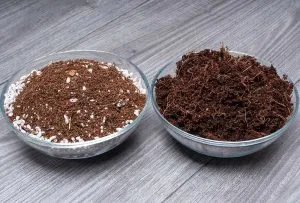
How Cannabis Soil Works as a Growing Medium
Cannabis soil is more than a material that holds the plant upright. It is one of several cannabis growing mediums, and it influences how roots receive water, oxygen, nutrients, and biological support. For a beginner, the simplest way to understand soil is to compare it with an inert growing medium such as rockwool, perlite, or expanded clay.
Soil can store nutrients, retain moisture, buffer changes in pH, and support microbial life. An inert cannabis substrate performs a different job. It primarily anchors the roots and creates space for water and air, while the grower supplies nearly all the plant’s nutrition through the irrigation solution.
This does not make one method better than the other. It means each growing medium requires a different level of control.
| Root-zone feature | Soil-based medium | Inert or low-nutrient medium |
| Nutrient supply | May contain organic matter and available nutrients | Usually depends on an added nutrient solution |
| pH buffering | Generally more forgiving | Changes can affect the roots more quickly |
| Biological activity | Can support bacteria, fungi, and other microorganisms | Usually managed with less biological activity |
| Watering approach | Often allows more time between irrigations | May require more frequent, controlled irrigation |
| Best suited to | Growers who want a buffered root zone | Growers who want direct control over feeding |
What Happens Inside Cannabis Soil?
A healthy soil-based cannabis growing medium contains mineral particles, organic matter, water, air, and living organisms. The area immediately surrounding the roots is called the rhizosphere. This is where roots, moisture, nutrients, and microbes interact.
Roots do not absorb chunks of compost or fertilizer directly. Nutrients must be present in forms the plant can take up through water. In biologically active soil, bacteria and fungi help break down organic material and release nutrients into the root zone. This process is central to growing organic cannabis, where the soil food web supports nutrient cycling around the roots. The plant also releases sugars and other compounds through its roots, which help support some of these microorganisms.
From a grower’s perspective, this biological activity matters because it can make the root zone more stable. A well-structured soil mix can hold nutrients and moisture while still leaving enough pore space for oxygen. That balance is one reason soil remains popular with first-time growers. Pairing a forgiving mix with beginner cannabis seeds can also reduce the number of variables you need to manage during your first grow.
Soil Still Needs the Right Structure
Natural soil is not automatically suitable for container-grown cannabis. I have seen beginners assume that dark, rich-looking soil must be ideal, only to find that it compacts after watering and stays wet for too long.
Roots need oxygen as much as they need moisture. When a growing medium becomes dense or waterlogged, root development slows and the risk of root problems increases.
A suitable cannabis soil should:
- drain excess water without drying immediately;
- retain enough moisture for the roots between waterings;
- remain loose enough for air to reach the root zone;
- contain a balanced amount of organic matter; and
- resist compaction after repeated irrigation.
This is why container mixes often include perlite, pumice, coco coir, or coarse organic matter. These materials improve the physical structure of the mix rather than simply adding nutrients. For more help choosing ingredients and ready-made mixes, read our guide to the best soil for cannabis plants.
Is Soil the Best Cannabis Growing Medium?
Soil is often a practical starting point because it provides a wider margin for error than many inert substrates. Small feeding or pH mistakes may develop more slowly, giving a beginner more time to identify and correct them. Soil can also require less daily monitoring than a highly controlled coco or hydroponic setup.
However, soil is not maintenance-free. A poor mix can retain too much water, contain excessive nutrients, or become compacted around the roots. The goal is not to find the richest-looking soil. It is to choose a cannabis growing medium with the right balance of:
- drainage;
- aeration;
- water retention;
- structural stability; and
- nutrient buffering.
The quality of the final harvest depends on genetics, environment, plant health, and grower management rather than the medium alone. Soil can support excellent results, but so can coco coir, rockwool, and other cannabis substrates when they are managed correctly.
Types of Cannabis Growing Mediums
Cannabis can grow in several solid and soilless media, but they do not all behave the same around the roots. Some hold water for longer, some drain quickly, and some buffer nutrients better than others. For a beginner, the key is understanding how the growing medium affects irrigation, feeding, aeration, and the margin for error.
The main cannabis growing mediums covered here are soil-based mixes, coco coir, peat-based mixes, and organic materials such as compost and humus.
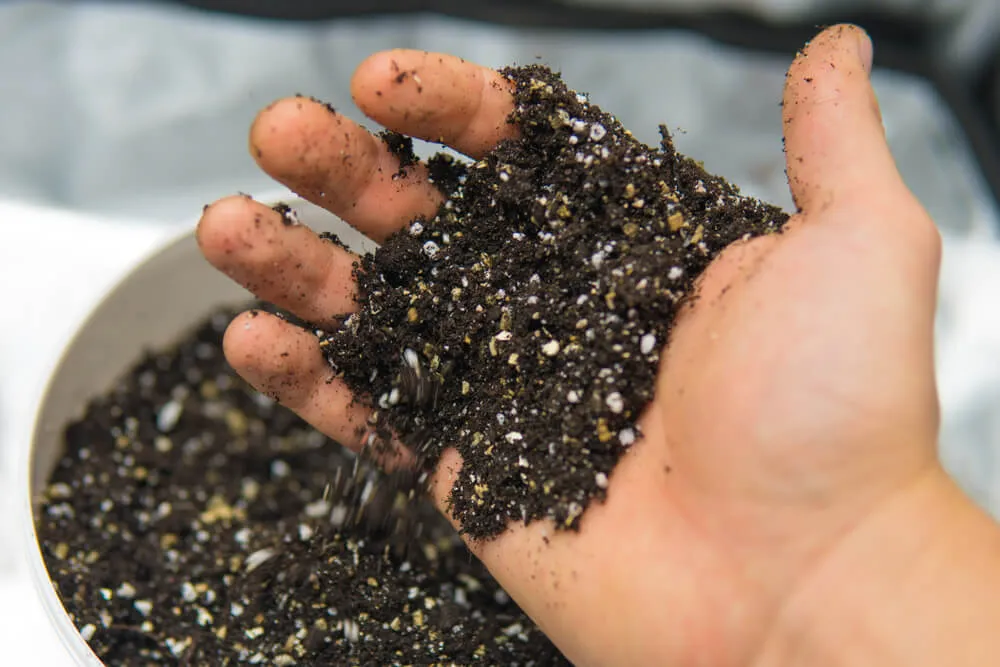
Soil-Based Cannabis Growing Mediums
Natural soil contains mineral particles, organic matter, water, air, and living organisms. Its texture is largely determined by the balance of sand, silt, and clay, which affects drainage, moisture retention, compaction, and oxygen availability.
| Soil type | Main characteristic | Potential benefit | Common limitation |
| Sandy soil | Large particles and fast drainage | Keeps the root zone well aerated | Dries quickly and holds fewer nutrients |
| Silty soil | Fine particles with good moisture retention | Holds more water and minerals than sand | Can compact and drain slowly |
| Clay soil | Very fine particles and high water retention | Can hold nutrients well | Often becomes dense and poorly aerated |
| Loam | Balanced mix of sand, silt, clay, and organic matter | Combines drainage, moisture retention, and buffering | Quality varies with the exact composition |
Loam is usually the most suitable starting point for cannabis because it offers a better balance between water and air than pure sand, silt, or clay. However, natural garden soil should not be placed straight into an indoor container without checking its structure. In practice, rich-looking soil can become heavy and airless after only a few waterings, slowing root growth and making overwatering much more likely.
A container mix needs to remain open after repeated irrigation. This is why commercial cannabis soil often includes perlite, pumice, bark, or coco coir. These materials create pore space, improve drainage, and reduce compaction.
Coco Coir
Coco coir is a soilless cannabis growing medium made from processed coconut husks. Products may contain fine coir pith, longer fibers, chips, or a blend. The particle size changes how much water the medium holds and how quickly it drains.
Coco looks similar to soil, but it should not be managed like ordinary potting soil. It contains little usable nutrition of its own, so nutrients are supplied through the irrigation water. When kept evenly moist and structurally open, it also provides plenty of oxygen around the roots.
From a grower’s perspective, coco sits between soil and fully inert substrates. It gives you more control over feeding than most soil-based mixes, but it requires more consistent management. Beginners often struggle when they let coco dry too far or use a feeding routine designed for soil.
Coco can also be blended with soil or peat to improve aeration and reduce compaction. In that case, it becomes one part of a mixed cannabis substrate rather than the entire medium.
Peat-Based Mixes
Peat moss is widely used in potting mixes because it is lightweight, fibrous, and good at retaining moisture. It is normally combined with perlite, bark, or coco coir rather than used alone.
Peat-based mixes are often easier for beginners to manage than pure coco because they dry more slowly and usually provide more buffering. The main risk is excessive moisture. A fine peat mix with poor drainage can stay wet for too long, limiting oxygen around the roots. Peat can also be difficult to re-wet evenly after it has dried out completely.
Peat is naturally acidic, so commercial mixes are commonly adjusted before sale. Check the label before adding lime or other pH-adjusting products, as a prepared mix may already contain them.
Compost and Humus
Compost and humus are useful ingredients in soil-based cannabis growing media, but they are not usually suitable as standalone substrates.
Well-finished compost adds decomposed organic matter and supports microorganisms that help cycle nutrients in the rhizosphere. It can also improve moisture retention and soil structure. However, too much compost can make a mix dense, slow-draining, or richer than young plants need.
Humus is the stable portion of organic matter left after most decomposition has taken place. It helps with nutrient buffering and moisture retention without behaving like fresh, undecomposed material.
For beginners, compost and humus work best as components of a balanced soil mix. They should support the structure and biology of the cannabis growing medium rather than dominate it.
Which Cannabis Growing Medium Should You Choose?
There is no single best medium for every grower.
- Choose a prepared soil or peat-based mix if you want a more forgiving root zone.
- Choose coco coir if you are comfortable feeding regularly and monitoring irrigation closely.
- Use compost or humus as part of a soil mix rather than as the entire medium.
- Avoid dense garden soil in containers unless its drainage and structure have been improved.
The best cannabis growing medium is the one that matches your irrigation habits, feeding method, and experience level. A medium that performs well in an automated setup may be frustrating when hand-watered, while a rich organic mix may not suit a grower who wants precise control over every feeding.
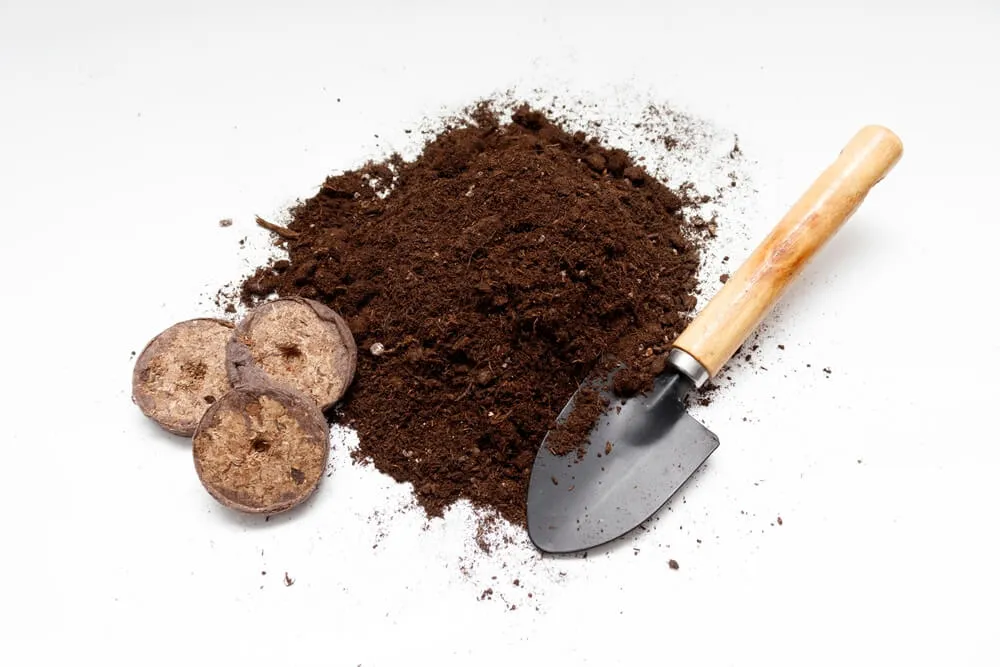
Cannabis Soil Amendments and Additives
A cannabis growing medium does not always need extra ingredients. Before adding anything, check what the base mix contains and how it behaves after watering. Every amendment should solve a specific problem, such as poor drainage, weak aeration, low water retention, limited biological activity, or insufficient nutrition.
Adding products without a clear reason can make the root zone harder to manage. Too much moisture-retaining material can keep roots wet, while excessive compost or fertilizer can make a young plant’s medium unnecessarily rich.

Physical Amendments for Structure
Physical amendments change how a cannabis growing medium holds air and water. Choose them according to the weakness of the original mix.
| Amendment | Main effect | Best use | Common mistake |
| Perlite | Improves drainage and aeration | Dense soil or peat mixes | Adding too little |
| Pumice | Adds stable pore space | Reusable or heavier mixes | Expecting nutrients |
| Vermiculite | Increases moisture and nutrient retention | Fast-drying substrates | Using too much |
| Coco coir | Lightens texture while holding moisture | Soil or peat blends | Treating it like soil |
Perlite is useful when a mix feels heavy or compacts after repeated watering. Its irregular particles create channels for excess water to drain and oxygen to remain around the roots. Vermiculite behaves differently. It holds more water and retains nutrients, making it better suited to a medium that dries too quickly.
Beginners often confuse these materials. Perlite generally makes a mix lighter and faster draining, while vermiculite makes it more moisture-retentive. Using the wrong one can worsen the problem.
Microbes in Cannabis Soil
Healthy soil can support bacteria, fungi, protozoa, and other organisms around the roots. This active area is called the rhizosphere. Some microbes help break down organic matter and convert nutrients into forms the plant can absorb.
Microbes are most useful in living or organically amended soil. They are less central in an inert substrate fed with a complete mineral nutrient solution. Adding microbial products does not automatically improve growth because the organisms still need suitable moisture, oxygen, temperature, and organic material.
Support microbes by maintaining a stable root zone. Avoid saturation, preserve good aeration, and do not overload the mix with unnecessary inputs.
Compost Tea
Compost tea is a water-based preparation made from finished compost, sometimes with aeration and added microbial food sources. Growers use it to introduce microorganisms and soluble compounds into organically managed cannabis soil.
It is not a guaranteed fertilizer, disease treatment, or replacement for a balanced growing medium. Its quality depends on the compost, water, temperature, and brewing method. Poorly prepared tea can become anaerobic, so cleanliness and oxygenation matter.
For beginners, compost tea is optional. A well-built soil mix can support microbial activity without regular brewing. Growers who want to experiment with it should follow a proven method for making organic compost tea for cannabis plants, keep the mixture aerated, and apply it promptly.
Worm Castings
Worm castings are processed organic material left after worms digest compost. They can add stable organic matter, microorganisms, and small amounts of plant-available nutrients.
Castings can improve nutrient buffering and moisture retention, but they work best as part of a balanced mix. Too much can make the medium dense and slow to dry. I prefer blending a modest amount into an aerated base rather than using castings as the main substrate.
Feeding an Amended Medium
The starting mix determines how much extra nutrition a plant needs. A lightly amended peat or coco blend may require feeding earlier, while rich organic soil can supply nutrients for longer. Our comparison of the best nutrients for cannabis plants explains how feeding differs between soil, coco coir, and hydroponic setups.
Before adding fertilizer, check whether the medium already contains starter nutrients, compost, castings, or other amendments. Also consider the plant’s age, growth rate, and overall health.
Cannabis nutrients are grouped into macronutrients and micronutrients. Nitrogen, phosphorus, and potassium are the primary macronutrients shown as N-P-K on fertilizer labels. The balance changes as plants mature, so use our guide to cannabis NPK ratios for a more detailed breakdown of seedling, vegetative, and flowering requirements.. Plants also require calcium, magnesium, sulfur, iron, manganese, zinc, copper, boron, and other elements in smaller amounts.
| Nutrient group | Examples | General role |
| Primary macronutrients | Nitrogen, phosphorus, potassium | Support foliage, roots, water regulation, and flowering |
| Secondary nutrients | Calcium, magnesium, sulfur | Support cell structure, chlorophyll, and metabolism |
| Micronutrients | Iron, manganese, zinc, copper, boron | Support enzymes and essential plant processes |
A cannabis nutrient feed chart should be treated as a starting point rather than a target. Feeding strength changes with cultivar, plant size, growth stage, water quality, environment, and fertility already present in the medium.
When introducing a new fertilizer, begin conservatively and monitor new growth. Very dark leaves, downward-curled tips, or brown leaf edges may indicate nutrient burn in cannabis rather than a need for more fertilizer. It is easier to correct a mild deficiency than recover from excessive feeding in nutrient-rich cannabis soil.

| Life-cycle stage | Nutrient demand | Feeding approach in amended soil | What to watch for |
| Seedling | Low | Avoid additional fertilizer if the mix already contains nutrients. Use a mild seedling mix when possible. | Dark leaves, burnt tips, or stalled growth can indicate that the medium is too rich. |
| Vegetative growth | Increasing | Begin feeding only when growth slows, lower leaves lose color, or the starter nutrients appear depleted. Increase strength gradually. | Healthy plants should produce steady new growth without overly dark, clawed leaves. |
| Flowering | Moderate to high | Adjust nutrition as flowering develops, accounting for any slow-release amendments still active in the soil. Avoid sudden increases. | Watch for burnt tips, fading leaves, weak flower development, or salt buildup. |
Managing pH, Watering, and Containers
The growing medium does not work alone. Its pH, moisture level, and container all affect how well cannabis roots receive oxygen and nutrients. For beginners, the easiest approach is to manage these factors together as one root-zone system.
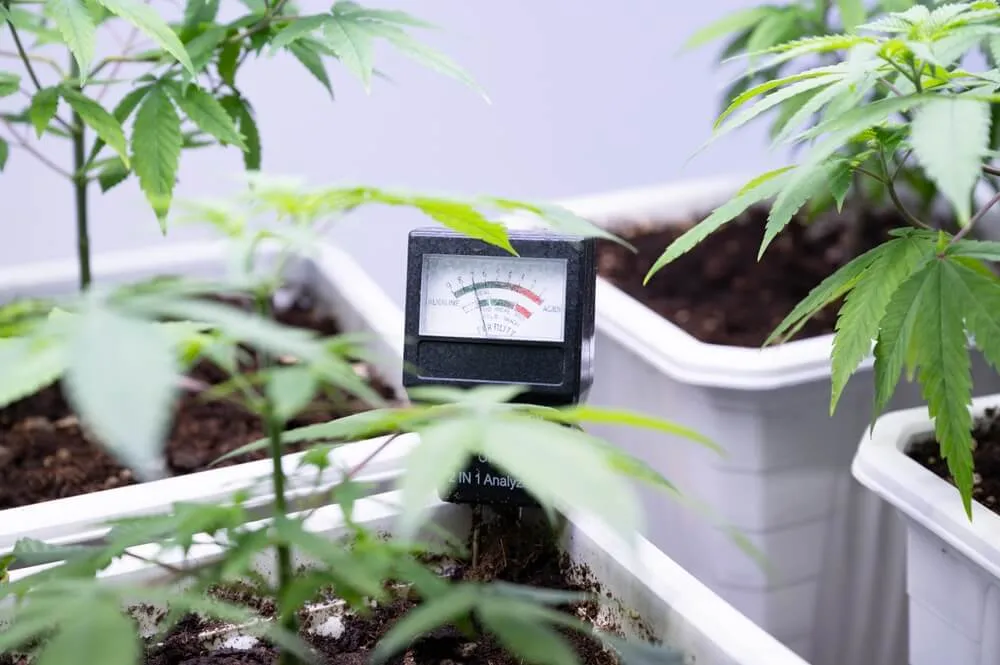
Understanding pH
pH measures how acidic or alkaline the root zone is. When it moves too far outside the suitable range, nutrients may remain in the growing medium but become difficult for the roots to absorb. This is known as nutrient lockout in cannabis.
| Growing medium | Practical pH range | Beginner guidance |
| Soil-based mixes | 6.0–6.8 | More forgiving because soil buffers changes |
| Coco coir | 5.7–6.3 | Requires closer monitoring |
| Inert media | 5.5–6.2 | Depends heavily on the nutrient solution |
These ranges are starting points rather than fixed targets. Water quality, fertilizer, and the medium itself can all influence pH. Use a calibrated digital meter to test water or nutrient solution before irrigation. In soil, avoid correcting every small fluctuation if the plant is healthy, as repeated adjustments can create more instability.
Water According to the Medium
There is no universal cannabis watering schedule. A dense soil mix may stay wet for several days, while coco or a perlite-heavy substrate may need irrigation more often. Plant size, container size, temperature, humidity, and root development all affect drying speed.
| Medium | Typical behavior | Best watering cue |
| Soil or peat mix | Retains moisture longer | Water when the pot feels lighter and the upper layer is dry |
| Coco coir | Performs best with consistent moisture | Irrigate before it dries completely |
| Inert mix | Drains quickly | Use smaller, more frequent irrigations |
When hand-watering soil, I rely more on container weight than surface appearance. The top inch can look dry while the lower root zone remains wet. Apply water slowly and evenly, then allow excess moisture to drain freely. Remember that drooping leaves can indicate either underwatering or an oxygen-starved, overwatered root zone.
Choosing a Container
The container affects drainage, aeration, and drying speed, so it should match the cannabis growing medium.
| Container | Advantage | Main consideration |
| Plastic pot | Affordable and easy to manage | Needs adequate drainage holes |
| Air-pruning pot | Encourages root branching and aeration | Dries faster |
| Hempy bucket | Provides a simple passive reservoir | Requires a soilless mix and controlled feeding |
Standard plastic pots suit most beginners, but avoid using a container that is much larger than the root system because the unused medium can remain wet too long. Air-pruning pots improve airflow but need more frequent watering.
A Hempy bucket is a passive hydroponic setup rather than a normal soil container. It uses perlite, coco coir, or a blend above a small reservoir. Since the medium contains little nutrition, the grower must supply a complete nutrient solution.
Always confirm that runoff can leave the container and that the pot is not sitting in standing water. Poor drainage can keep even a well-designed substrate saturated, reducing oxygen around the roots and increasing the risk of slow growth and root problems.
The best results come when the medium, container, and irrigation routine are chosen to work together.
Conclusion
Choosing the right cannabis growing medium comes down to understanding how each option manages water, air, nutrients, and root support. Soil-based mixes are usually the most forgiving for beginners, while coco coir, peat blends, and inert substrates give you more control but demand closer attention to feeding and irrigation.
Before choosing a medium, consider how often you can water, whether you plan to feed organically or with mineral nutrients, and how much control you want over the root zone. The container, pH range, and amendments should all support the medium rather than work against it.
There is no single best cannabis substrate for every grow. The best choice is the one that matches your setup and experience while maintaining good drainage, aeration, moisture retention, and nutrient availability. Start with a balanced medium, keep the root zone stable, and make changes only when the plant shows a clear need.
Frequently Asked Questions
What is the best cannabis growing medium for beginners?
A prepared soil or peat-based mix is usually the easiest place to start. These cannabis growing mediums hold moisture well, buffer nutrients, and give beginners more time to correct minor feeding or pH mistakes. Choose a light, aerated mix with good drainage rather than dense garden soil.
Is coco coir better than soil for growing cannabis?
Coco coir is not automatically better than soil. It provides strong aeration and gives growers more control over nutrients, but it needs regular feeding and closer irrigation management. Soil is generally more forgiving, while coco suits growers who are comfortable monitoring the root zone more frequently.
Can cannabis grow in ordinary potting soil?
Cannabis can grow in potting soil, but the mix must drain freely and remain aerated after repeated watering. Avoid products that are extremely dense or contain strong slow-release fertilizers. A suitable cannabis soil should hold some moisture without staying saturated around the roots.
What is an inert cannabis growing medium?
An inert growing medium contains little or no usable nutrition of its own. Materials such as perlite, rockwool, and expanded clay mainly support the roots while holding water and oxygen. The grower supplies the plant’s nutrients through the irrigation solution, so feeding and pH require closer control.
Can you mix coco coir with cannabis soil?
Yes. Coco coir can lighten a dense soil mix, improve aeration, and help balance moisture retention. The final blend should still drain properly and contain enough nutrition for the chosen feeding method. Avoid adding coco without considering how it will change watering frequency and nutrient management.


