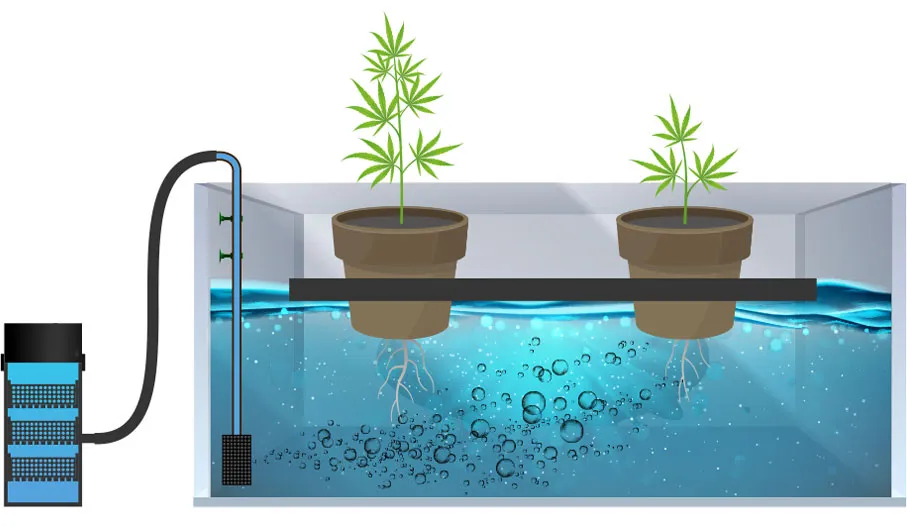




Growing cannabis hydroponically can produce faster growth and larger yields than soil, but beginners often struggle with pH swings, nutrient imbalances, and choosing the right setup. Hydroponics works by feeding plant roots directly with oxygenated nutrient-rich water instead of relying on soil, giving growers more control over feeding and root health. The trade-off is that plants react much faster to mistakes, so maintaining stable pH, water temperature, and nutrient strength is essential. This guide explains the basics of hydroponic weed growing, beginner-friendly systems like DWC, recommended growing mediums, and the key conditions needed to keep plants healthy from seedling to harvest.
Key Takeaways
- Hydroponic cannabis plants typically grow 30–50% faster than soil-grown plants when nutrients, pH, and oxygen levels remain stable.
- Deep water culture (DWC) is one of the simplest hydro systems for beginners because it uses an aerated nutrient reservoir and minimal equipment.
- The ideal pH range for hydroponic cannabis is usually between 5.5 and 6.5 to prevent nutrient lockout and root stress.
- Reservoir temperatures are commonly kept around 68–70°F (20–21°C) to maintain healthy oxygen levels and reduce the risk of root rot.
- Clay pebbles, coco coir, rockwool, and perlite mixes are among the most commonly used hydroponic growing mediums for cannabis.
- Hydroponic plants often require closer monitoring of EC/PPM levels because there is no soil buffer to absorb feeding mistakes.
- Key Takeaways
- What is hydroponics growing?
- What are the pros and cons of hydroponic weed growing?
- Is hydro or soil better for weed?
- What’s the difference between active and passive hydro systems?
- What are the best growing mediums for hydroponic grows?
- What is the best hydroponics system for beginners?
- What Should The pH Levels Be for Hydroponic Systems?
- How to grow weed using the DWC system
What is hydroponics growing?
Hydroponics is actually a growing method with a very long history particularly in the Ancient Far East and other areas where large civilizations have come and gone. Used mainly for growing rice, in its essence, it involves feeding and supplying plants with nutrients and a good amount of aeration to the roots without the use of an organic, living medium such as soil.
When using soil, nutrients are absorbed by the plant’s roots at a much slower rate, With hydroponics, you take out the middle-man and feed nutrients directly to plant roots through a water-based solution, combined with an inert (no nutrients) growing medium, thus making the feeding and growing process much faster.
For millennia this technique has been used for staple crops such as rice but also for fruits and vegetables (such as strawberries and tomatoes) as well as flowers of all kinds. With the explosion in home-growing popularity and technology, hydroponic gardening also quickly spread among growers in the cannabis community and remains a popular method around the globe to this day due to its ability to grow plants with impressive yields.
- The growing medium contains no nutrients giving you full control
- Hydroponic systems require a pump or air pump to oxygenate nutrients.
- Systems range from DWC, NFT, dripper, flood and drain and aeroponic
- Hydroponic plants only need 10-14 days vegetation time
- Hydro growers work in a sterile environment and without microbes
What are the pros and cons of hydroponic weed growing?
No system is perfect, and every grow method will have its pluses and minuses with respect to other techniques. This equally applies to hydroponics. So, what makes hydroponic gardening so popular among growers today?
The most common reasons for choosing hydroponics are speed and yields. On average, hydroponic gardens tend to grow 30-50% faster than soil gardens and yields are also typically two to three times more.
Since there is no organic medium for nutrients to filter through first, roots are fed immediately upon contact with water and plants take less time to bulk up. As they are getting regularly fed, plants can direct all of their energy towards growth.
In addition to faster and much bigger yields, hydroponic gardens are also a little easier to physically set up as they don’t require any heavy soil and plants can be grown in smaller pots/containers.
There is a bit of a trade-off with having a simpler setup however. In soil gardens, the organic medium will act as a buffer and will help regulate nutrient imbalances, whereas with hydroponics everything is in the grower’s hands. This means that the grower must regularly pay careful attention to the plant’s nutrient demands.
While things such as over-watering won’t occur in a hydro setup, pH and nutrient levels still must be monitored. With an automated system though, it is much easier to keep pH and nutrient levels in check, making the risk of things like nutrient lockup that much lower.
Is hydro or soil better for weed?
For years there has been a debate among growers; soil vs hydro, which is best for weed? Well the answer is that it is down to personal preference. Many connoisseurs and traditionalists prefer the organic soil method for its flavor profile as well as the effects, plus they are glad to know it was not grown using synthetic nutrients.
Terpenes play a vital role in terms of the flavor and aroma of cannabis and it is microbes in soil that drive terpene production. While terpenes are found in all cannabis plants, critics will usually say that hydroponically grown weed is usually lacking in terms of taste and effect compared to quality outdoor organic buds.
If you have an all-organic outdoor garden with living soil or some permaculture setup, your crop will definitely be different compared to a hydro setup. The contents of your outdoor garden (i.e. all the soil microbes, worms, insects, predators, etc.) will influence the way your plants interact with their surroundings.
This in turn will affect how the plant phenotypes (color, cannabinoid/terpene content, plant height, scent, etc.) will be expressed. If you are in an indoor setup where you control the lighting, the nutrients and any potential pests, your crop will also end up quite different.
For those interested in the phenotypes of a given variety, this might be an issue, however if you are growing for commercial purposes, in other words your goal is WEIGHT, this doesn’t play much of a role.
What’s the difference between active and passive hydro systems?
Passive vs. active in terms of hydroponics refers to the method of getting nutrient solution to the plants’ roots. In active systems which simply means any system that requires a pump and electricity,fresh nutrient solution is moved from a reservoir to the roots through the use of pumps and is usually oxygenated using air stones.
Over the years ambitious growers have developed many innovative methods of growing weed hydroponically, such as deep water culture (DWC), drip, ebb and flow, nutrient film technique (NFT) and aeroponics.
Passive systems are much simpler and low-tech in their design, do not require any pumps or electricity and will involve capillary action for getting nutrient solution to plant roots. The use of water creates tension, which pulls up as much water as needed to the roots, much like a paper towel draws towards the top.
There is also a third method that combines hydroponics with nutrient-less planting mixes known as fertigation. This is where an inorganic medium (such as peat moss and vermiculite/perlite mixes) is used to house the plant while the feeding is done either manually or automatically, though capillary mats are most commonly used.
What are the best growing mediums for hydroponic grows?
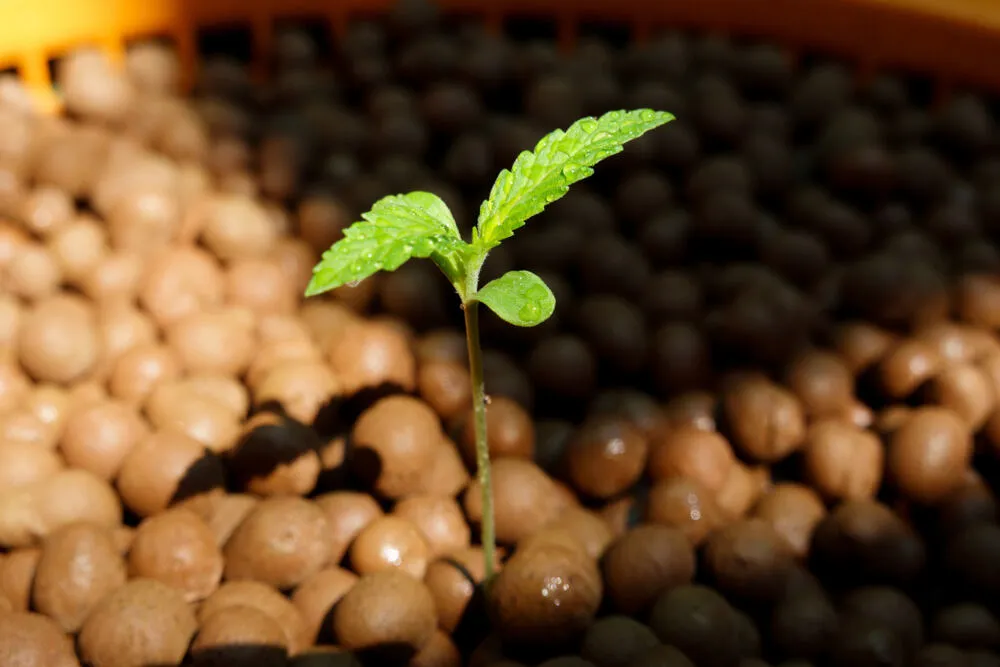
Just like the number of different cannabis growing techniques, the number of potential hydroponic growing media can seem overwhelming. The good news is that there is a short list of reliable yet simple (as well as cheap) media for your hydro grow to choose from.
Check out the different growing mediums and see which one you think may be most practical to your style of growing.
Hydroton Clay Pebbles
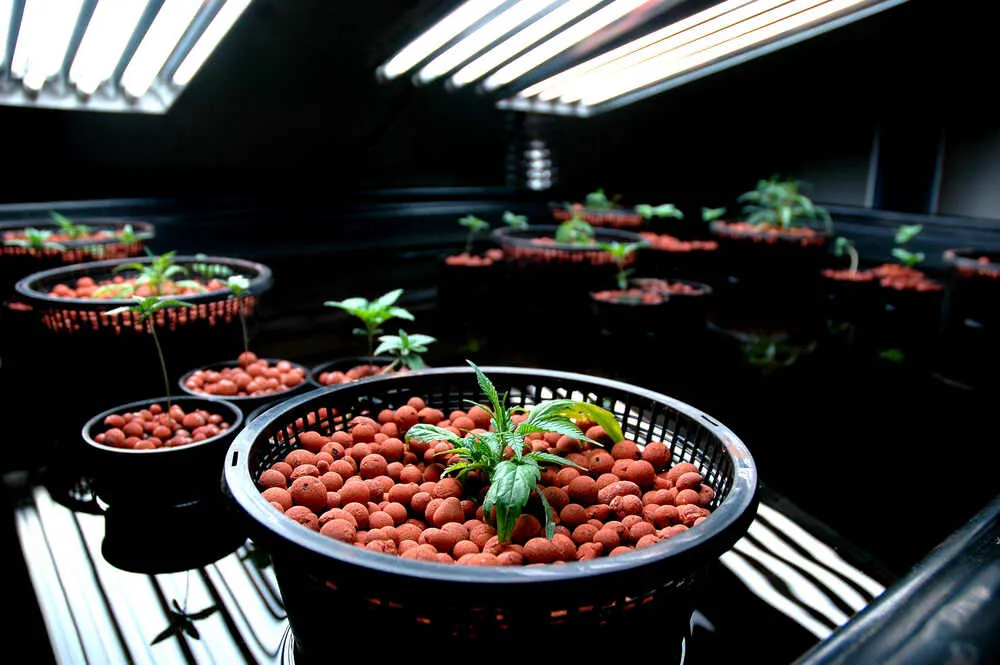
One of the most popular choices among hydro growers is something known as LECA (lightweight expanded clay aggregate) or clay pebbles. These clay pebbles don’t contain any nutrients (pH neutral) and are perfect for dripper systems, DWC and flood and drain set ups. They are a good option for beginners as they are not so expensive and can be found at any home & garden store. They are great for keeping your plant roots aerated, which means less chance of root rot and plant pests, and you are able to keep dripper rings or drip lines on for 24 hours a day using clay pebbles.
Coco Coir
Another popular option among hydro growers is coco coir (aka coco peat), which is made from the inner fibers and pith of coconuts. The fibers do a great job of absorbing water but they also provide a buffer against nutrient fluctuations and resist decomposition due to their high lignin content.
In addition to water retention and root aeration, coco coir also mixes well with other planting mediums and is relatively inexpensive. Coco coir works great for dripper systems and rooting clones.
Vermiculite
Perlite/vermiculite are both lightweight processed minerals that are used for holding water, buffering nutrients, and aerating roots. The minerals are heated until they expand, somewhat similar to popcorn, and take on their new forms, which provide oxygen to roots and promote drainage.
Both perlite and vermiculite mix well with other mediums such as coco, and a popular mix amongst growers is to mix 50% of perlite with 50% coco coir. Perlite is an excellent and low cost way to help aerate soil or coco coir.
Rockwool Cubes
Last but certainly not least are the ever-present rockwool cubes. Used not just for hydroponics (rockwool is also frequently used in cloning and for germination), they can be found in many different cannabis gardens as they are convenient, cheap and effective.
Basalt and chalk are melted and then spun to obtain hair-like fibers much like cotton candy and then are processed into a wide array of different shapes and sizes. They are arranged into rows on larger slabs and can be easily separated according to need. In addition to being sterile, rockwool also holds both air and water so your plants automatically get what they need.
What is the best hydroponics system for beginners?
This of course depends on the user and the available resources, skill and experience.. Some systems, such as passive wick systems, are easier to set up while others, such as fully automated ebb and flow rigs take considerable effort to put together but are easier to operate.
A good middle ground for a beginner growing cannabis seeds hydroponically would be to use a deep water culture system as they aren’t too difficult to construct, though some effort is involved, and aren’t terribly difficult to operate, though some maintenance is required. Dripper systems using hydroton are also easy to set up and are a low maintenance way to grow large yielding crops.
Deep water culture and aeroponics involves keeping the plant’s roots immersed in a nutrient solution that is constantly aerated/oxygenated. The root balls of the plants are started off in an inorganic medium such as rockwool cubes or clay pebbles suspended in baskets just above the water level in a reservoir containing nutrient solution.
As the plant grows, the roots reach further down into the dissolved oxygen-rich solution where they have direct and easy access to air, water and food. This turbo-charges plant growth resulting not just in huge crops, reduces vegetation time compared to soil, and also much faster harvest times.
The downside to DWC (or any other hydro system for that matter) is plant sensitivity to nutrient imbalances and/or diseases. Since hydroponic grow substrates such as rockwool or pellets do not have nutrient buffering properties, any imbalances will quickly affect the whole garden, which means growers have to keep a watchful eye on their plants in case any negative health effects need correcting.
What Should The pH Levels Be for Hydroponic Systems?
- Nutrient solution / reservoir pH level should be between 5.5 - 6.5
- It is important to check the pH and EC level of your system frequently
- The temperature of the reservoir should be 70° F (20° C).
- Incorrect pH causes nutrient lock so roots cannot access the nutrients
How Do I Check Nutrient Solution Strength with Hydro?
Unlike growing with soil, hydroponic systems are fast paced and mean you are in control every step of the way as far as nutrient management. It is vital that your pH and EC levels are optimal to avoid underfeeding or overfeeding.
- TDS meters and EC digital pens are used to check the PPM of the nutrient solution
- It is best to follow the feeding chart recommendations from the nutrient company
- Using an EC pens will allow to give precise measurements as your plants develop
How to grow weed using the DWC system
A step-by-step approach to growing using this hydro system. You can break it down as 1, 2, 3… or if you feel it fits better you can break it down by seedling stage, vegetative stage, flowering stage.
You may read this article and feel strongly about trying out a deep water culture.
DWC systems are relatively simple to set up and operate, require a lot of maintenance but the rewards will be more than satisfying if all goes well in the yield department. Below is a step-by-step guide to get your hydroponic career kick started with DWC , gather your materials. You will need:
- A large plastic bucket/reservoir (3-5 gallons/11-19 liters).
- A hard plastic lid/flowerpot drain to cover the reservoir.
- At least 1 hydro basket (or however many plants you will grow) 8” (20 cm) in diameter.
- Clay pebbles/LECA/rockwool cube to place in basket.
- An air stone/bubbler with pump and tubing.
- An aquarium heater to keep water at around 70° F (20° C).
- Cut a hole in the plastic lid/drainage tray large enough to fit your basket and drill a small hole (about 1/4 inch in size) to slide the air pump tubing through.
- Slide the tubing through the lid and attach a bubbler to one end placed inside the bucket/reservoir along with an aquarium heater. Attach the air pump to the other loose end outside of the reservoir.
- Fill the reservoir with water and pH-adjusted nutrient solution to just below the tray (4 inches/10 cm) so that roots aren’t fully submerged. Don’t forget to test the pH before submerging plant roots.
- Place the tray/lid over the reservoir and fit the basket(s) into the lid so that the planting medium is below the surface of the lid.
- Plug in and turn on the pump, bubbler and water heater.
Voila! You now have a basic DWC hydroponic feeding system that should produce a nice big harvest in record time. However, do not forget the other elements required for your grow,, specifically lighting, ventilation and odor control if necessary. As far as making adjustments based on the plant growth stage is concerned, you won’t have to make many changes to your setup overall.
Whether you are going to buy cannabis online or use clones, the process will remain the same throughout the seedling, veg and flowering stages, at least as far as your hydroponic setup is concerned. The only variations might come in the form of nutrient solution amendments.
Since your plant roots will have direct access to abundant amounts of nutrients, the growth stages will pass faster than with a soil garden. All you need to do is make sure your plants are getting the right amount of nutrients for the respective growth stage they are in.nly variations might come in the form of nutrient solution amendments. Since your plant roots will have direct access to abundant amounts of nutrients, the growth stages will pass faster than with a soil garden. All you need to do is make sure your plants are getting the right amount of nutes for the respective growth stage they are in.