




Foxtailing cannabis is a common flowering issue where buds develop an elongated, stacked, and pointy appearance instead of forming dense, compact flowers. This trait is often caused by environmental stress during late flower, especially excessive light intensity, high temperatures, or nutrient imbalances, although some sativa-dominant strains naturally display foxtailing characteristics. Stress-related foxtailing can reduce bud density, affect overall yield, and make plants harder to assess during ripening. Understanding what causes foxtailing buds, how to identify the signs early, and when it may simply be genetic can help growers make better decisions during the flowering stage and improve future harvests.
Key Takeaways
- Foxtailing cannabis buds commonly develop due to excessive PPFD, heat stress above 26°C, nutrient imbalances, or genetics during flowering.
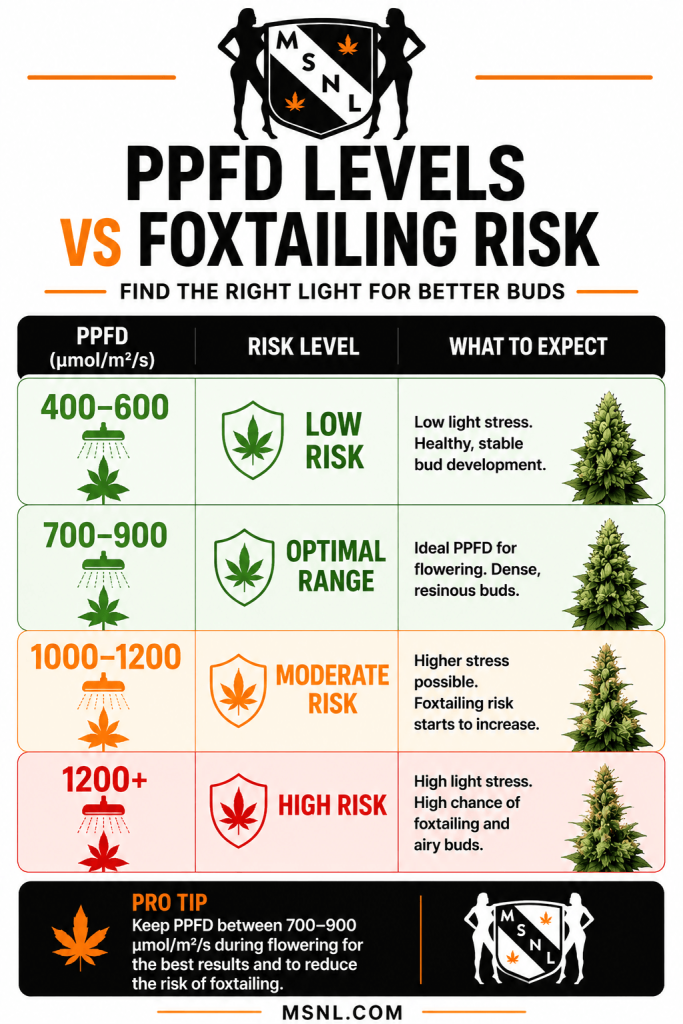
- Flowering cannabis plants typically perform best within a PPFD range of 700–1000 µmol/m²/s during bloom.
- Stress-induced foxtailing often creates airy, elongated buds with fresh white pistils appearing late in flower.
- Some sativa-dominant strains naturally produce stacked or pointed buds without negatively affecting potency or aroma.
- High canopy temperatures and grow lights positioned too close to the plants are among the most common causes of foxtailing.
- Checking trichome maturity instead of relying only on pistil color helps determine whether foxtailed buds are ready for harvest.
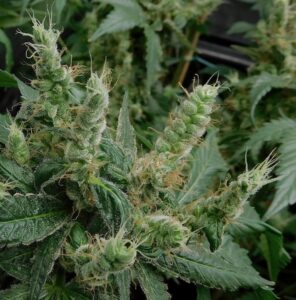
What is foxtailed cannabis and why do buds foxtail?
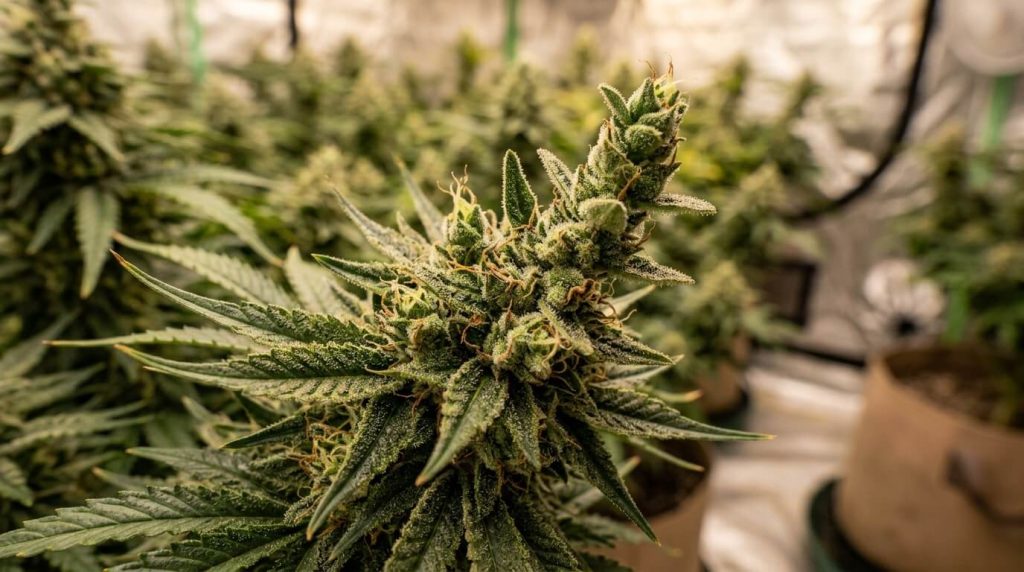
Cannabis buds that have foxtailing characteristics are quite odd to look at, and even more so during the final week of flowering. Below explains what foxtail buds look like, and how the bracts and calyx become stacked, and whether they are actually good or bad for yield.
- Light stress and excessive PPFD cause foxtailing
- Heat stress and high canopy temperatures cause foxtailing
- Nutrient imbalances can cause foxtailing
- Sativa-dominant strains can display foxtailing characteristics
What foxtailing cannabis buds look like during flowering
Foxtailing cannabis buds will have a tall, elongated and pointy structure. In some cases, the buds will become light, fluffy, and nearly devoid of density. In other cases, the buds can become thick and compact, but they stack up, creating a star-shaped formation of colas. To the untrained eye, buds with foxtailing traits may look natural and part of the plant's genetic expression.
How calyx stacking creates the “foxtail” bud structure
During the flowering period, cannabis plants produce pistils at the nodes and begin flowering. From week 4 onwards, small bracts begin to develop and form, increasing in size over time. The bracts and calyx of foxtailing buds elongate and narrow due to excessive heat, light, or both.
Is foxtailed cannabis good or bad for bud quality and yield?
Typically, plants that display foxtailing buds do not look anywhere near as impressive as a stress-free flowering plant. Buds can have an airy, fluffy and lightweight composition, which unfortunately has a serious impact on yield. Aesthetically, and for photos, foxtailing is not ideal; when consumed, the buds will still be fine to smoke.
Common causes of foxtailing buds during flowering
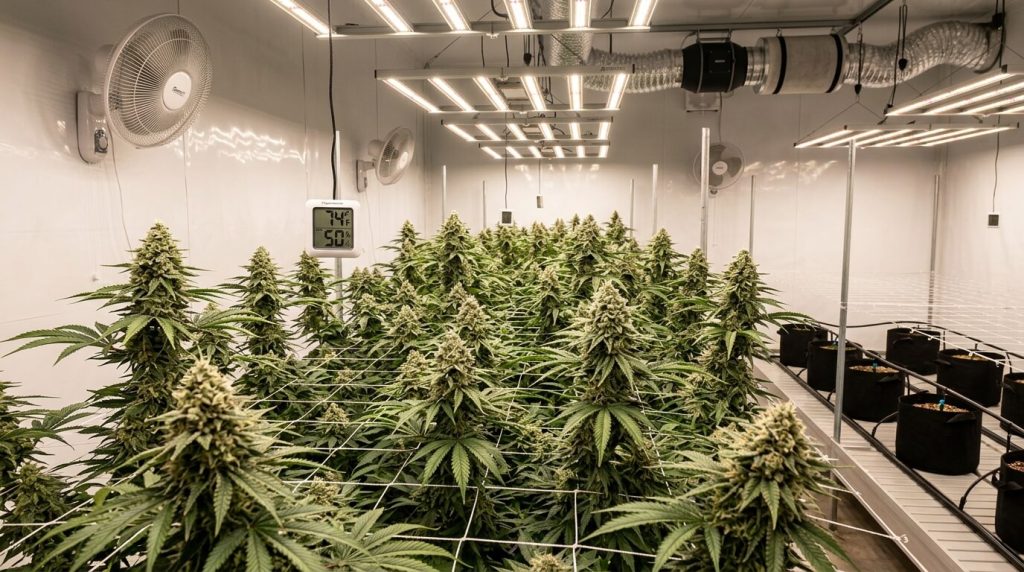
Several environmental and genetic factors can cause cannabis buds to foxtail during the flowering stage.
| Cause | Common Sign |
| Excessive PPFD | Bleached or stacked buds |
| Heat Stress | Airy and elongated flowers |
| Nutrient Imbalance | Irregular bud growth |
| Excess Nitrogen | Delayed ripening |
| Genetics | Naturally pointed buds |
Foxtailing is an issue that occurs only during the flowering period and is commonly caused by light or heat stress, nutrient imbalances, or overfeeding. Sativa plants are more prone to foxtailing than indica cannabis plants.
Light stress and excessive PPFD from grow lights
Cannabis plants rely on grow lights to provide the correct spectrum and PPFD levels. The most important factor is the amount of photosynthetically active radiation (PAR) your plants receive. The term PPFD refers to Photosynthetic Photon Flux Density, a measurement in µmol/m²/s of the amount of PAR-rich light the plants receive per second.
Some cannabis strains are naturally more sensitive to excessive PPFD and intense indoor lighting during flowering, particularly taller sativa-dominant plants. Many indoor growers prefer compact indica and hybrid genetics when growing under powerful LED setups, as these strains are often easier to manage in smaller grow rooms and controlled environments.
Flowering cannabis plants require PPFD levels between 700-1000 µmol/m²/s, and you can actually measure the PPFD levels using a light meter and calculating the PAR. When cannabis plants experience PPFD levels higher than 1000 µmol/m²/s, then plants will react to this stress by foxtailing and producing elongated bracts and calyxes.
- Excessive PPFD can be due to the distance of the light being too close
- 1000 µmol/m²/s or more of light can promote foxtailing
- Use a PAR meter to see precisely how much PPFD your plants receive
- Dimming LED grow lights will reduce the PPFD and prevent light stress
Heat stress and high canopy temperatures in late flower
Maintaining stable environmental conditions during flowering helps reduce the risk of foxtailing and poor bud development.
| Factor | Recommended Range |
| Temperature | 22–26°C (71–78°F) |
| PPFD | 700–1000 µmol/m²/s |
| Humidity | 40–50% RH |
| LED Distance | 24–36 inches |
| EC Levels | Strain dependent |
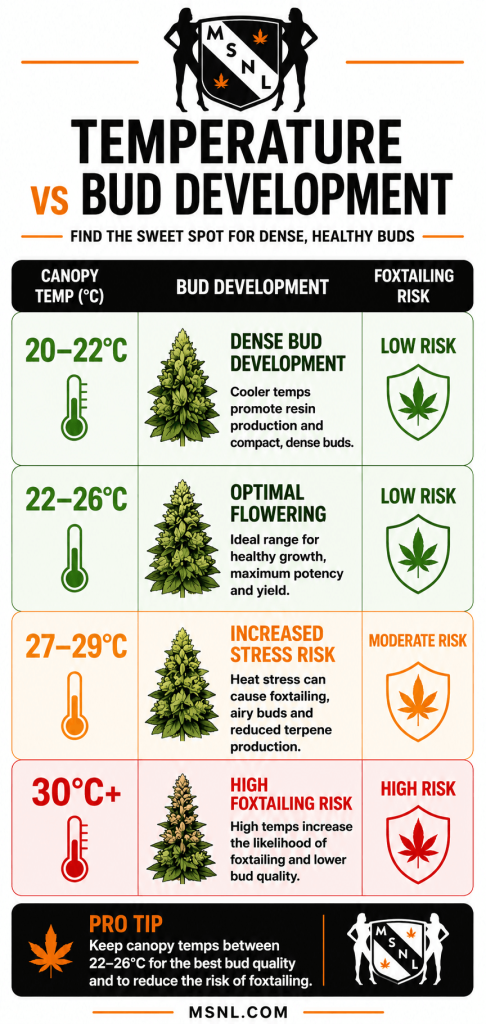
Maintaining the optimal climate for your plants during the lights-on and off periods can be challenging. When temperatures rise, flowering plants experience heat stress. The plants seem to adapt to this stress by developing pointy and jagged buds.
- Foxtailing is more prevalent when temperatures exceed 26°C
- Aim for a temperature of 22°C during the final 4 weeks
- Heat stress can also affect terpene and cannabinoid production
Nutrient imbalances and late-flower feeding mistakes
If you do not have any heat- or light-stress-related issues but notice your buds are still foxtailing, there is a good chance it is nutrient-related. It can be easy to make a mistake during the last 4 weeks of the flowering period, especially when using bud boosters.
- Nutrient lockout caused by a pH imbalance can create foxtailing buds
- Using high EC levels and giving plants too much can induce foxtailing
- High levels of nitrogen late into the flowering period can promote foxtailing
Genetics and sativa-dominant strains that tend to foxtail
There are some occasions when you will see a sativa learning strain with foxtailed buds; however, this is a natural trait. Genetics can play a big role in determining whether a strain is prone to foxtailing and whether it is a case of nature or nurture.
Foxtailing is sometimes a completely natural trait found in certain Haze, landrace, and sativa-dominant cannabis strains that produce elongated and stacked buds during late flower. Growers looking for these classic flowering characteristics often choose old-school sativa genetics known for their vigorous growth, longer flowering times, and unique bud structure.
- Trainwreck has naturally occurring foxtailing buds that stack tall and thin
- Dr Grinspoon's buds are also very jagged and pointy
Foxtailing late in flower: what growers should look for
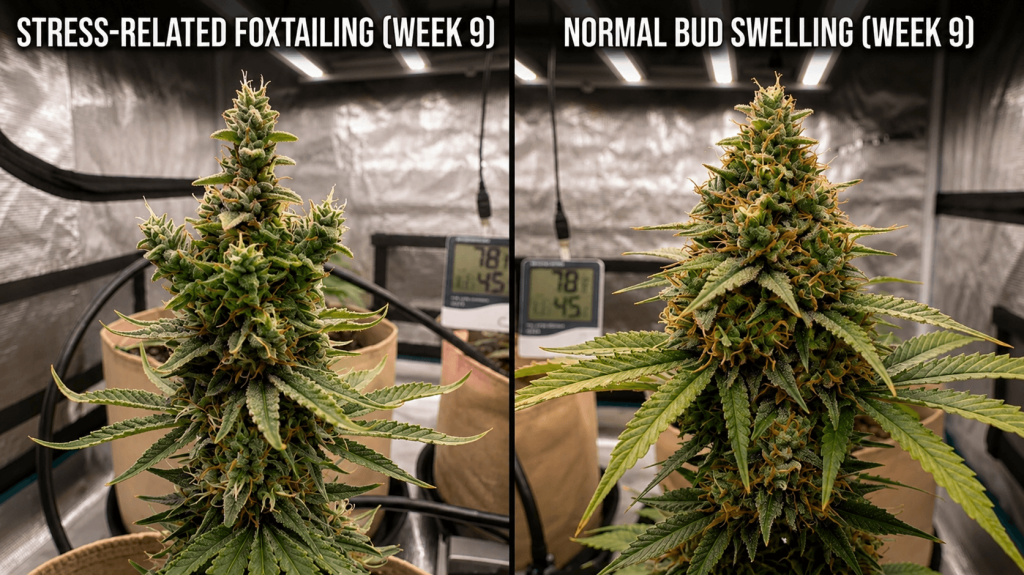
The table below compares normal late-flower bud swelling with stress-related foxtailing symptoms commonly seen during flowering.
| Normal Bud Swelling | Stress-Related Foxtailing |
| Dense and rounded buds | Pointed and stretched buds |
| Swollen calyxes | Stacked spire-like growth |
| Pistils darken gradually | New white pistils continue forming |
| Even bud development | Irregular or jagged growth |
| Typical late-flower ripening | Often linked to heat or light stress |
Even though everything may look great during the first 4-5 weeks after flowering, foxtailing can occur late in the flowering period. By then, there really is not much you can do, apart from making sure it does not happen again and that the environmental conditions are favourable to the plants.
explains why foxtailing appears in the final weeks of 12/12. How to tell if the foxtailing buds are ripe, and how to identify and be 100% sure.
Why does foxtailing often appear in the final weeks of flowering
There are two reasons why your plants will display foxtailing traits during the very last stages of bud development and ripeness.
Environmental Stress
On the basis that your flowering plants were exposed to higher PPFD levels than necessary, combined with high temperatures above 26°C, the buds will foxtail.
Genetic Influence
Sativa cannabis plants produce elongated, thin, and pointy buds that often form a foxtail. When a sativa is fully mature and is at the point of peak bud development, it can produce star-shaped clusters of buds that create strange-looking colas.
How to tell if foxtailing means the plant is still ripening
Foxtailing caused by genetics usually looks different from stress-induced foxtailing during late flower.
| Genetic Foxtailing | Stress-Induced Foxtailing |
| Common in sativa strains | Often develops suddenly |
| Even growth across the plant | Usually affects top colas |
| Buds stay resinous | Buds may become airy |
| Stable grow environment | Often linked to excess heat |
| Minimal impact on potency | Can reduce density and yield |
Whilst cannabis plants can foxtail and still produce brown pistils, in some cases, new white pistils can appear, as if the plant was in week 5 or 6. This trait can be common due to a spike in nutrient-rich boosters, especially phosphorus- and potassium-rich ones.
- If the pistils are brown, check the trichome ripeness using a magnification tool
- White pistils forming at the end of the flower cycle are signs of nutrient toxicity
Foxtailing late in flower pictures and visual identification tips
- The bracts and calyx can appear chunky and stack up, creating a long, thin bud
- Clusters of foxtailing buds can create pointy star formations
- The tops of the cola will have 2-3 inch-tall stretched bracts
- Buds can have a fluffy, stretched and airy appearance and feel
- The yield on the plant will be significantly lower when foxtailing happens
How to prevent and manage foxtailing in cannabis
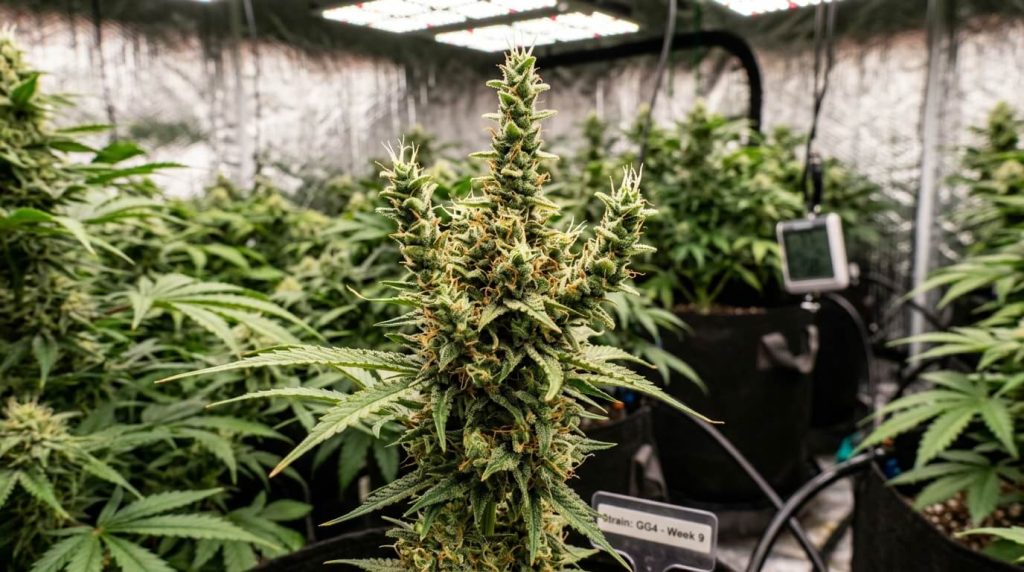
The checklist below highlights the most effective ways to reduce the risk of foxtailing during flowering.
| Prevention Method | Purpose |
| Monitor PPFD levels | Reduce light stress |
| Keep temps below 26°C | Prevent heat stress |
| Improve airflow | Disperse canopy heat |
| Avoid excess nitrogen | Support proper ripening |
| Check pH and EC | Prevent nutrient lockout |
Now you are fully aware of what foxtailing cannabis buds look like, and also what environmental stress causes it; now you are ready to prevent it from ever happening. Light distance, temperature and nutrients all play a role.
Adjusting light distance and intensity in the flowering stage
It does not matter whether you are growing with high-pressure sodium (HPS), metal halide (MH), or LED. When your lights become too close to the top of the canopy, then you run the risk of foxtailing.
- Keep the lights 24-36 inches away if you notice foxtailing
- Use the back of your hand and place it under the light to feel the heat
- Using the dimmer, lower the intensity, wattage and PPFD of LED lights
- Use a light meter to check the different PPFD levels in the grow room
Controlling temperature and airflow in the grow room
It is not always easy to achieve the perfect growing temperature and humidity during the flowering stage. High temperatures above 26°C will be problematic and the main cause of foxtailing characteristics.
Environmental control becomes especially important when growing large-yielding cannabis plants indoors under high-powered grow lights. Strains bred specifically for indoor strain seed cultivation are often better suited to stable canopy management, consistent flowering performance, and dense bud production during the final weeks of flower.
- Use a digital hygrometer to see how hot or cold the grow room is
- Increase the output of the extractor and recycle more air per hour
- Raise the grow lights to create space for the heat from the lights to disperse
- Use an outside source to provide cool, fresh air into the grow room
- Temperature fan controllers help maintain a safe temperature
Nutrient strategies for stable bud development
- Follow the recommended ratios provided by the nutrient companies
- Use an EC meter or TDS pen to determine the nutrient solution strength
- Flush your plants during the last two weeks to prevent salt buildup
- Do not use chemical boosters during the final 2 weeks
When to ignore foxtailing and let the plant finish naturally
If you are growing a sativa and the buds are elongated, stacked and pointy, then you can probably ignore foxtailing. Naturally occurring foxtailing traits will not harm potency, flavor or amora, however heat and light stress can be harmful to flowering plants.
Frequently asked questions
Is foxtailing cannabis always a bad sign?
Not always. Some cannabis strains, especially sativa-dominant genetics, naturally produce elongated or stacked buds during late flower. Stress-related foxtailing caused by excessive heat, light intensity, or nutrient issues is usually more problematic and can reduce bud density and yield.
What causes cannabis buds to foxtail?
Foxtailing is most commonly caused by excessive PPFD from grow lights, high canopy temperatures above 26°C, nutrient imbalances, or genetics. Environmental stress during the flowering stage is one of the leading causes of abnormal bud development.
Can LED grow lights cause foxtailing?
Yes. LED grow lights that are positioned too close to the canopy or run at excessive intensity can expose plants to very high PPFD levels, which may trigger foxtailing during flowering.
Does foxtailing reduce bud quality?
Stress-induced foxtailing can reduce bud density and create a lighter, airier structure. In many cases, potency and aroma remain acceptable, although overall bag appeal and final yield may be lower compared to properly developed dense buds.
How can I tell if foxtailing is genetic or stress-related?
Genetic foxtailing usually develops evenly across the plant and is common in some sativa strains. Stress-related foxtailing often appears suddenly during late flower alongside signs of heat stress, bleaching, excess white pistils, or unusually stretched bud growth.
Can foxtailed buds still be harvested normally?
Yes. Foxtailed buds can still be harvested and consumed normally. Growers should check trichome maturity with a magnification tool instead of relying only on pistil color when determining harvest readiness.
What temperature causes cannabis buds to foxtail?
Foxtailing becomes more common when flowering temperatures consistently rise above 26°C (78°F), especially when combined with strong light intensity and poor airflow around the canopy.
Will lowering light intensity stop foxtailing?
Reducing light intensity, increasing the distance between the grow lights and canopy, and improving airflow may help slow or prevent further foxtailing if caught early during flowering.
Can nutrient problems cause foxtailing?
Yes. Excessive feeding, high EC levels, nutrient lockout, or too much nitrogen late in flowering can contribute to foxtailing and abnormal bud development.
Do autoflower cannabis plants foxtail?
Autoflowering cannabis plants can also foxtail under environmental stress or due to genetics. High temperatures and excessive light exposure are common triggers in indoor autoflower grows.


