




Growing cannabis in winter is possible, but colder temperatures, shorter daylight hours and changing humidity levels can create challenges for both indoor and outdoor growers. Low temperatures can slow plant growth, affect root activity and increase the risk of damage during freezing conditions.
Growing weed indoors during winter offers greater control over lighting, temperature and humidity, while outdoor cultivation depends on local climate and frost exposure. Understanding these differences helps growers maintain suitable conditions and avoid common problems.
This guide explains how to grow cannabis in winter, recommended temperatures, indoor and outdoor growing considerations, and five cannabis strains worth considering for cooler conditions.
Key Takeaways
- Indoor winter growing: Provides greater control over temperature, lighting and humidity than outdoor cultivation.
- Suitable temperatures: Around 20–26°C is a common target for active growth, although requirements vary by growth stage.
- Cold stress: Low temperatures can slow growth, reduce root activity and affect water and nutrient uptake.
- Outdoor growing: Most practical in mild winter climates with sufficient sunlight and limited frost.
- Strain selection: Compact indoor varieties and fast-flowering outdoor strains can be useful, but neither guarantees resistance to freezing conditions.
- Can You Grow Cannabis in Winter?
- How Cold Is Too Cold for Cannabis Plants?
- How to Grow Weed Indoors During Winter
- Can You Grow Cannabis Outdoors During Winter?
- Five Cannabis Strains for Indoor Winter and Cooler Outdoor Growing Seasons
- Common Problems When Growing Cannabis in Winter
- Harvesting and Drying Cannabis During Winter
- Conclusion
- Frequently Asked Questions
- References
Can You Grow Cannabis in Winter?
Cannabis can grow throughout winter when it receives sufficient warmth, light and suitable environmental conditions.
Indoor cultivation is generally more reliable because growers can control these factors. Outdoor plants remain exposed to seasonal changes, making winter cultivation less predictable.
Is It Better to Grow Cannabis Indoors or Outdoors During Winter?
Indoor growing is usually preferable in colder regions, particularly where temperatures regularly fall below 10°C.
Outdoor cultivation may be possible in mild climates with limited frost. However, shorter days reduce available sunlight, and prolonged cold can restrict development.
Winter conditions also vary geographically. A mild coastal winter may support plant growth, while inland areas at the same latitude may experience damaging frost.
Winter occurs at different times in the Northern and Southern Hemispheres. Local weather and daylight are more important than the calendar month.
How Cold Is Too Cold for Cannabis Plants?
Cannabis is a warm-season plant, and prolonged exposure to low temperatures can affect its normal biological processes.
How Cold Temperatures Affect Cannabis Growth
Cold conditions can reduce photosynthesis, slow root activity and interfere with water and nutrient uptake.
Plants may develop more slowly, produce smaller leaves or show changes in pigmentation.
Research by Galic et al. (2022) examined cold stress in two hemp cultivars. The researchers found that temperature treatments influenced plant physiology, while prolonged cool acclimation reduced biomass and cannabinoid concentrations in the plants tested.
These findings demonstrate that cannabis responds to cold stress, although tolerance varies between cultivars and growing conditions.
What is the Best Temperature for Growing Cannabis in Winter?
For many indoor cannabis plants, temperatures around 20–26°C during the light period provide a useful starting point.
Temperatures may fall slightly during darkness, but substantial fluctuations can interfere with growth.
| Temperature | Growing conditions | Potential effects |
| 20–26°C | Common active growth range | Generally suitable under controlled conditions |
| 15–20°C | Cool | Slower growth and water use |
| 10–15°C | Cold | Reduced root activity and possible stress |
| 3–5°C | Very cold | Growth suppression and potential damage |
| 0°C or below | Freezing | Risk of freezing injury |
These ranges are general guidance, not universal tolerance limits. Plant maturity, genetics and exposure duration influence the response.
For detailed growth-stage requirements, see the best temperature for growing cannabis.
Can Cannabis Survive 38–40°F (3–4°C)?
Some cannabis plants may survive brief exposure to 38–40°F, approximately 3–4°C, but damage remains possible.
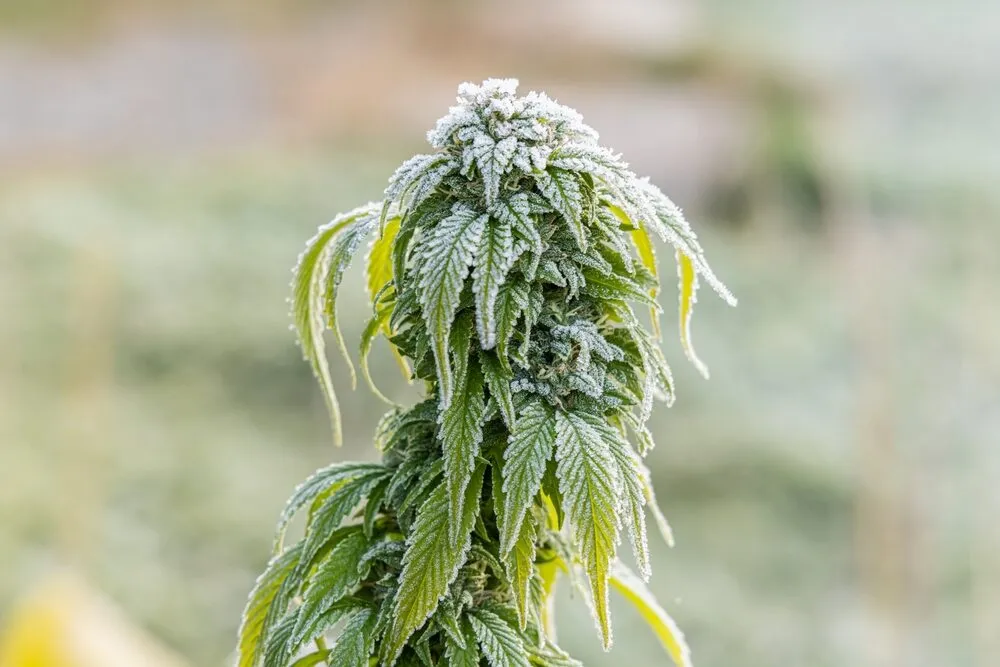
Growth becomes restricted at these temperatures, particularly in young plants. Frost may also develop on exposed leaves when surface temperatures fall below freezing, even if the surrounding air remains slightly warmer.
Grower Tip: Check root-zone temperatures alongside air temperatures. Containers placed directly on cold concrete may remain considerably cooler than the surrounding room.
How to Grow Weed Indoors During Winter
Successful indoor winter cultivation depends on maintaining a stable growing environment rather than making frequent adjustments.
Insulating Your Grow Room and Maintaining Temperatures
Poor insulation allows heat to escape, particularly when grow lights switch off.
Insulating walls, sealing gaps and raising containers away from cold floors can reduce temperature fluctuations.
A thermostat-controlled heating system may be necessary in colder buildings. Keep electrical equipment protected from moisture and use devices suitable for enclosed growing spaces.
Monitor temperatures during both the light and dark periods to identify unexpected changes.
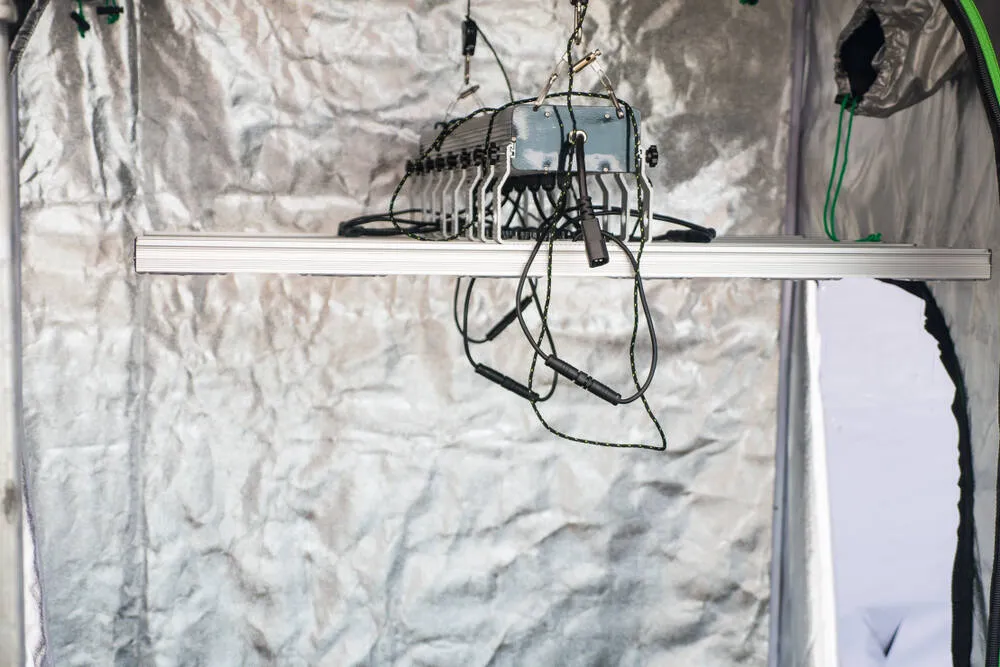
Choosing Grow Lights for Winter Cultivation
Indoor cannabis requires adequate artificial lighting regardless of the season.
LED grow lights provide suitable light efficiently, although they generally contribute less incidental room heating than older HID systems.
Rodriguez-Morrison et al. (2021) investigated cannabis responses to different light intensities. Higher light intensity increased flower yield under the controlled conditions studied, demonstrating the importance of adequate light availability.
However, the findings do not establish one ideal light intensity for every cultivar.
Lighting schedules depend on plant type:
- Photoperiod plants: Commonly receive 18 hours of light during vegetative growth and 12 hours during flowering.
- Autoflower plants: Flower independently of day length and are commonly grown under consistent schedules such as 18 hours of light.
Winter does not automatically require changing an established indoor lighting schedule.
Managing Humidity and Ventilation During Winter
Indoor humidity can vary depending on heating and ventilation.
Heated winter air may become dry, while poorly ventilated growing spaces can accumulate moisture and condensation.
Use a thermometer and hygrometer to monitor conditions. The grow room temperature and humidity chart provides guidance for different growth stages.
Temperature and humidity also influence how readily plants lose water through their leaves. The cannabis VPD guide explains this relationship.
Maintain gentle airflow and address persistent condensation, particularly during flowering.
Adjusting Watering and Nutrients in Cold Conditions
Cannabis may use less water when temperatures fall because growth and transpiration slow.
Following a watering schedule designed for warmer conditions can leave growing media saturated, restricting oxygen around the roots.
Check moisture below the surface before watering. Nutrient demand may also decline during slower growth, but avoid changing feeding concentrations without identifying the cause.
Grower Tip: Compare container weight immediately after watering and as the growing media dries. This provides a useful indication of moisture levels when colder conditions reduce water use.
Winter Grow Room Checklist
Before starting a winter grow, check that:
- Heating and electrical equipment are safely installed.
- Air and root-zone temperatures remain suitable during both light and dark periods.
- Grow lights provide adequate intensity and a consistent schedule.
- Humidity and ventilation can be monitored and adjusted.
- Growing media drains properly, without remaining saturated.
Can You Grow Cannabis Outdoors During Winter?
Outdoor winter cultivation depends on local temperatures, frost frequency and daylight availability.
Growing Cannabis in Mild Winter Climates
Regions with mild winters may support cannabis growth when temperatures remain suitable and sunlight is sufficient.
However, shorter days can limit photosynthesis. Photoperiod plants may also begin flowering before developing substantial vegetative growth.
For regional differences, see the guide to growing cannabis in subtropical and temperate climates.
Using Greenhouses and Cold Frames
Greenhouses and cold frames provide protection from rain, wind and some temperature fluctuations.
Sunlight can warm these structures during the day, but temperatures may fall rapidly after sunset.
An unheated greenhouse cannot reliably protect cannabis during prolonged freezing conditions.
Ventilation remains necessary to prevent condensation from accumulating around plants.
Protecting Cannabis from Frost and Wind
Frost cloth and windbreaks can provide temporary protection during brief cold periods.
Container-grown plants can sometimes be moved into sheltered locations before temperatures fall.
However, temporary coverings cannot compensate for extended freezing conditions or insufficient sunlight.
Five Cannabis Strains for Indoor Winter and Cooler Outdoor Growing Seasons
Selecting suitable genetics can make seasonal cultivation easier, but no strain should be assumed to survive freezing conditions.
Indoor growers can prioritise manageable height and flowering characteristics. Outdoor growers should consider shorter flowering periods and breeder-reported climate suitability.
These recommendations are based on breeder information, not independent winter performance trials.
| Cannabis strain | Recommended environment | Main advantage |
| Northern Lights Autoflower | Indoor winter | Compact structure |
| Blueberry Autoflower | Indoor winter | Short flowering period |
| White Widow Feminized | Indoor winter | Established photoperiod genetics |
| Holland's Hope Feminized | Cooler outdoor seasons | Outdoor breeding background |
| Bruce Banner Fast Flowering | Shorter outdoor seasons | Earlier flowering completion |
1. Northern Lights Autoflower — For Compact Indoor Grows
Northern Lights Autoflower combines indica-dominant Northern Lights genetics with autoflowering characteristics.
Its compact structure suits smaller indoor environments, while its advertised flowering period is approximately 8–10 weeks.
Why choose it: Manageable size and automatic flowering make it suitable for growers who want a straightforward indoor setup without changing the light schedule to trigger flowering.
2. Blueberry Autoflower — For Short Indoor Flowering Periods
Blueberry Autoflower combines Blueberry genetics with an autoflowering parent.
The breeder lists a flowering period of 6–8 weeks and describes a compact growth pattern.
Why choose it: Its relatively short flowering stage suits controlled indoor environments where growers want a quicker turnaround. However, this does not make it naturally cold-resistant.
3. White Widow Feminized — For Controlled Indoor Cultivation
White Widow Feminized is a photoperiod variety developed from Brazilian and South Indian cannabis genetics.
Its advertised flowering period is 8–10 weeks, with a balanced growth structure.
Why choose it: It offers an established photoperiod option for growers with sufficient indoor space and control over lighting and temperature.
4. Holland's Hope Feminized — For Cooler Outdoor Seasons
Holland's Hope Feminized combines Afghani and Skunk genetics and was developed with outdoor cultivation in mind.
Its advertised flowering period is approximately 8–10 weeks, with a breeding background associated with cooler northern European conditions.
Why choose it: Its outdoor breeding history makes it worth considering in temperate climates where autumn temperatures become unpredictable.
It is primarily suited to finishing before winter, not surviving sustained freezing conditions.
5. Bruce Banner Fast Flowering — For Shorter Outdoor Seasons
Bruce Banner Fast Flowering is a photoperiod variety bred for earlier flowering completion.
The breeder advertises a 6–8-week flowering period and suitability for temperate and cooler climates.
Why choose it: Its shorter flowering period may help outdoor growers complete flowering before autumn weather deteriorates.
For further comparisons, see the best outdoor cannabis strains for different climates.
Common Problems When Growing Cannabis in Winter
Winter growing problems can resemble nutrient deficiencies, watering issues or pest damage. Identify the likely cause before making changes.
Identifying Cold Stress and Root Problems
Cold-stressed plants may show slow growth, smaller leaves or changes in pigmentation.
Drooping leaves combined with persistently wet growing media may indicate insufficient oxygen around the roots. However, drooping can also result from dehydration or other environmental problems.
Identifying Fungal Diseases
Fungal risks depend on moisture, airflow, plant characteristics and growing conditions rather than winter itself.
Powdery mildew may appear as pale patches on leaves, while bud rot can develop inside dense flowers.
Punja et al. (2023) examined more than 2,000 cannabis flower samples and found that genotype, environmental conditions and post-harvest handling influenced fungal contamination.
Interestingly, their commercial greenhouse samples showed lower fungal counts during November–April than during warmer months. This demonstrates why winter should not automatically be described as a higher-risk season.
| Problem | Possible cause | What to check |
| Slow growth | Cold stress | Air and root temperatures |
| Drooping leaves | Water imbalance | Growing media moisture |
| Leaf pigmentation changes | Genetics, cold or nutrient issues | Temperature and feeding history |
| Condensation | Moist air contacting cold surfaces | Humidity and ventilation |
| Fungal growth | Persistent moisture | Leaves, flowers and airflow |
Grower Tip: Check environmental readings alongside visible symptoms. A single symptom rarely provides enough information to diagnose a growing problem accurately.
Harvesting and Drying Cannabis During Winter
When to Harvest Cannabis During Cold Weather
Cold temperatures do not automatically indicate harvest readiness.
Assess flower development and glandular trichomes using magnification. Mostly cloudy trichomes, sometimes with a proportion turning amber, are commonly used indicators, although the preferred stage varies.
Outdoor growers may also need to consider approaching frost or extended wet weather.
Drying Cannabis in Cold Winter Conditions
Winter drying requires stable conditions rather than simply using a cold room.
Excess moisture and inadequate airflow can encourage fungal contamination, while strong direct heating may cause uneven drying.
Use a dark, controlled space with monitored temperature, humidity and gentle air movement.
Conclusion
Growing cannabis in winter is possible, but success depends on suitable temperatures, sufficient light and careful environmental management. Indoor growing provides greater control, while outdoor cultivation is generally limited to mild climates or protected environments.
Choosing appropriate genetics can help with shorter growing seasons, but even cold-climate strains have their limits. Understanding these conditions and monitoring plant health will help growers make informed decisions throughout winter.
Frequently Asked Questions
Can Cannabis Seeds Germinate in Cold Conditions?
Cannabis seeds germinate more reliably at temperatures around 20–25°C. Colder conditions can delay germination and slow early root development. Excess moisture combined with low temperatures may also increase the risk of seed deterioration.
Can Cold Temperatures Cause Cannabis Leaves to Turn Purple?
Yes. Cold temperatures can influence anthocyanin production, resulting in purple or reddish pigmentation in some cannabis plants. However, genetics, light exposure and nutrient availability also affect pigmentation. Purple leaves alone do not confirm cold stress.
Do Cannabis Pests Remain Active Indoors During Winter?
Yes. Spider mites, fungus gnats and aphids can remain active in heated indoor environments. Controlled temperatures allow many pests to reproduce throughout winter, so regular plant inspections remain important regardless of outdoor weather.
Can Cannabis Plants Recover After Frost Damage?
Recovery depends on the severity of the damage and whether growing points and other living tissues remain healthy. Mild damage may affect individual leaves, while severe freezing can permanently injure stems and roots. Damaged tissue itself will not recover.
Do Cannabis Plants Need Less Light During Winter?
Indoor cannabis does not automatically require less light during winter. Lighting requirements depend on plant genetics and growth stage. Outdoors, shorter days and lower sunlight intensity can restrict growth, even when temperatures remain suitable.
References
- Galic, A., Grab, H., Kaczmar, N., Maser, K., Miller, W. B., & Smart, L. B. (2022). Effects of Cold Temperature and Acclimation on Cold Tolerance and Cannabinoid Profiles of Cannabis sativa L. (Hemp). Horticulturae, 8(6), 531. https://doi.org/10.3390/horticulturae8060531
- Rodriguez-Morrison, V., Llewellyn, D., & Zheng, Y. (2021). Cannabis Yield, Potency, and Leaf Photosynthesis Respond Differently to Increasing Light Levels in an Indoor Environment. Frontiers in Plant Science, 12, 646020. https://doi.org/10.3389/fpls.2021.646020
- Punja, Z. K., Ni, L., Lung, S., & Buirs, L. (2023). Total yeast and mold levels in high THC-containing cannabis (Cannabis sativa L.) inflorescences are influenced by genotype, environment, and pre- and post-harvest handling practices. Frontiers in Microbiology, 14, 1192035. https://doi.org/10.3389/fmicb.2023.1192035

