




Cannabis mold is one of the most damaging issues growers face, whether cultivating indoors, outdoors, or storing harvested buds. If left untreated, mold can spread quickly, ruin your harvest, and produce unsafe flower. Recognizing early warning signs is key to protecting your crop.
There are several types of cannabis mold, each with unique characteristics. Powdery mildew appears as a white coating on leaves, while Botrytis (bud rot) develops inside dense buds, often going unnoticed until damage is severe. Understanding these cannabis mold types helps you identify problems early and respond effectively.
This guide covers the most common types of mold on cannabis, including powdery mildew, Botrytis, Aspergillus, Cladosporium, White Mold, Fusarium, and root rot. You'll learn how to identify, prevent, and manage cannabis mold to protect your plants and harvest.
Key Takeaways
- Early identification is the best defense against cannabis mold. Learning to recognize the different types of cannabis mold, including powdery mildew, Botrytis, Aspergillus, Cladosporium, White Mold, Fusarium, and root rot, can help you stop an outbreak before it destroys your harvest.
- Most cannabis mold is caused by environmental conditions. High humidity, poor airflow, overcrowded plants, and overwatering create the perfect environment for fungal growth, making prevention more effective than treatment.
- Not all mold affects cannabis the same way. Some fungi attack leaves, others infect buds, stems, or roots, so correctly identifying the type of mold is essential for choosing the right control method.
- Never consume moldy cannabis. Smoking, vaping, eating, or extracting mold-contaminated flower can expose you to harmful fungal spores and should always be avoided, even if only a small portion of the bud appears affected.
- Proper cultivation and storage dramatically reduce mold risk. Maintaining 40–45% humidity during flowering, improving airflow, inspecting plants regularly, drying and curing correctly, and storing buds in airtight glass jars with humidity packs are the best ways to prevent cannabis mold from developing.
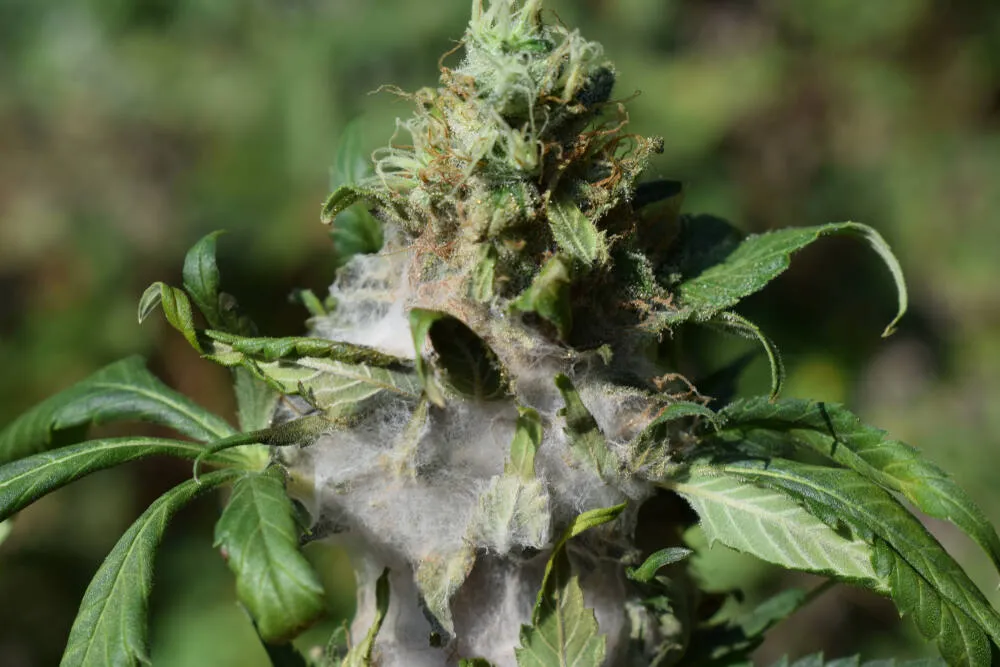
- What is cannabis mold?
- How to Identify the Type of Mold on Cannabis
- Powdery Mildew
- Botrytis (Bud Rot)
- Fusarium Wilt
- Root Rot
- Aspergillus
- White Mold (Sclerotinia)
- What to Do If You Find Mold on Cannabis
- Post-Removal Plant Care
- How to Detect Mold Before Consuming Cannabis
- How to Store Cannabis to Prevent Mold
- Conclusion
- Frequently Asked Questions
What is cannabis mold?
Cannabis mold is a group of fungi that can grow on marijuana plants when conditions are too damp and humid. Mold spreads by releasing tiny spores that float through the air and land on leaves, stems, buds, and even growing equipment. These spores are naturally found almost everywhere, both indoors and outdoors. As a grower, I've learned that you can't completely stop spores from entering your grow space, but you can prevent them from turning into a serious problem.
Although mold spores are everywhere, cannabis is especially vulnerable during flowering because its dense, resin-covered buds naturally trap moisture and restrict airflow. Growers in humid regions can also reduce their risk by choosing mold resistant strains that are naturally less susceptible to fungal diseases. Indoors, spores commonly enter through fresh air, contaminated tools, clothing, growing media, or infected plants, then spread quickly if ventilation or humidity isn't properly managed.
Outdoor growers face additional challenges from wind, rain, morning dew, nearby vegetation, and insects that can carry fungal spores from plant to plant, making it worthwhile to choose outdoor cannabis seeds suited to your local environment. Understanding where mold comes from helps growers focus on prevention before spores have a chance to establish themselves.
Many new growers think mold only happens to unhealthy plants, but that's not true. Even healthy cannabis plants can develop mold if the environment isn't properly controlled. I've seen strong, thriving plants develop bud rot after just a few humid days during late flowering. Once mold starts growing, it can spread quickly and damage your plants before you even notice it's there.
There are several types of cannabis mold, and each one affects plants differently. Some molds grow on the surface of leaves, making them fairly easy to spot during daily inspections. Others grow inside dense buds where they remain hidden until significant damage has already occurred. If you're unsure what an infected flower looks like, learn what moldy weed looks like before inspecting your harvest. Some infections mainly slow plant growth, while others can ruin flowers completely and make them unsafe to smoke. Learning the different cannabis mold types is one of the best ways to protect your harvest because the sooner you identify a problem, the easier it is to stop it from spreading.
What causes mold growth on cannabis plants?
Mold spores are always present, but they only begin growing when the environment is right. In my experience, high humidity, excess moisture, poor airflow, and overcrowded plants are the biggest reasons mold develops. Learning how to control grow room humidity is one of the best ways to prevent fungal outbreaks. During the cannabis flowering stage, large buds naturally trap moisture, making this the highest-risk period for mold infections such as bud rot.
| Cause | Description | Why It Leads to Mold |
| High Humidity | Relative humidity above 60% for extended periods | Creates the ideal environment for mold spores to germinate and spread |
| Poor Airflow | Lack of fresh air movement through the canopy | Traps moisture around leaves and buds, allowing mold to develop |
| Temperature Fluctuations | Warm air followed by sudden cooling | Causes condensation to form on plant surfaces, providing moisture for mold growth |
| Outdoor Weather | Rain, dew, fog, and prolonged humidity | Keeps buds wet for long periods, increasing infection risk |
| Overwatering | Soil stays wet for too long | Raises humidity around the plant and slows evaporation |
| Watering Late in the Day | Plants remain damp overnight | Cooler nighttime temperatures prevent moisture from drying quickly |
| Overcrowded Plants | Dense canopies with limited spacing | Restricts airflow and traps moisture inside buds |
| Lack of Pruning | Excess leaves and branches | Reduces airflow and increases humidity within the plant canopy |
I've found that simple habits make a big difference. Keeping plants properly spaced, pruning excess growth, maintaining good airflow with oscillating fans, and checking your plants every day during flowering can help you catch problems before they spread.
The good news is that most types of mold on cannabis are preventable. By controlling humidity, improving ventilation, watering correctly, and keeping your grow space clean, you'll greatly reduce the chances of mold damaging your crop.
In the next section, we'll look at the most common types of cannabis mold, when they usually appear, how to identify them, and what makes each one different.
How to Identify the Type of Mold on Cannabis
Identifying cannabis mold early is one of the most valuable skills you can develop as a grower. Most fungal infections spread quickly once they become established, and the longer they go unnoticed, the more difficult they are to control. In my experience, spending a few minutes inspecting your plants every day is far easier than trying to save an entire crop after mold has spread throughout the grow room.
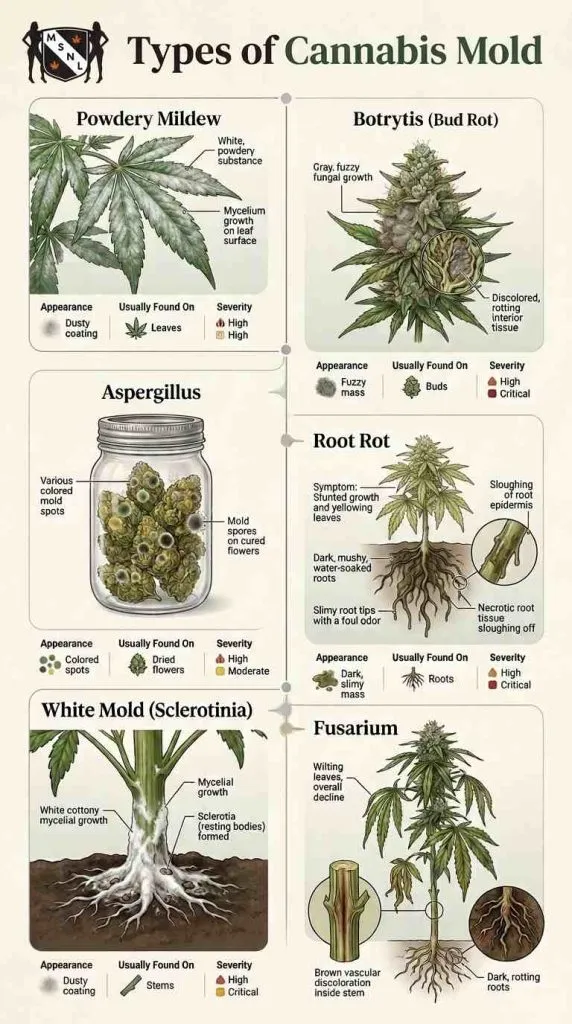
Not every type of cannabis mold looks the same. Some fungi grow on the surface of leaves where they're easy to spot, while others develop deep inside dense buds and remain hidden until significant damage has already occurred. The color, texture, location, smell, and stage of growth all provide clues. Many symptoms can resemble other cannabis leaf symptoms, making diagnosis difficult.
When Does Mold Usually Appear?
Although mold can develop at any stage of growth, the highest risk is during the flowering stage. As buds become larger and denser, they naturally trap moisture and reduce airflow between the flowers, creating the ideal environment for fungal spores to grow.
Indoor growers typically encounter mold when humidity remains too high, ventilation is poor, or plants become overcrowded. Choosing indoor cannabis seeds designed for controlled grow rooms can make environmental management easier. Outdoor growers are more likely to experience mold after prolonged rain, heavy morning dew, fog, or extended periods of humid weather. These conditions allow moisture to remain on leaves and buds long enough for fungal spores to germinate.
What to Look For
When inspecting your cannabis plants, pay attention to changes in appearance, texture, and even smell. Healthy cannabis should have vibrant leaves, firm flowers, and a fresh aroma that reflects its terpene profile. If a plant suddenly develops a musty, damp, or mildew-like odor, it's worth taking a closer look, even if you don't immediately see visible mold.
The table below highlights the most common symptoms associated with different cannabis mold types.
| Appearance | Most Likely Mold | Usually Found |
| White, powder-like coating | Powdery Mildew | Leaves and stems |
| Gray or brown fuzzy growth | Botrytis (Bud Rot) | Inside dense buds |
| Green or black fuzzy patches | Aspergillus | Buds and flowers |
| Dark brown or black spots | Cladosporium | Leaves and stems |
| Cotton-like white growth | White Mold (Sclerotinia) | Base of stems and branches |
While these symptoms provide a good starting point, mold often begins long before it's easy to recognize. Regular inspections are one of the best ways to catch problems before they spread throughout your crop.
Where to Check for Mold
Mold can develop almost anywhere on a cannabis plant, but some areas are much more susceptible than others.
Start by inspecting large fan leaves for white patches, discoloration, or unusual spotting. Next, examine stems and branches for fuzzy growth or lesions. Finally, gently separate dense buds and inspect the inside of each cola, as serious infections like Botrytis often begin deep within the flower where moisture becomes trapped. By the time mold becomes visible on the outside of a bud, the infection has often been developing internally for several days.
Don't Confuse Mold With Trichomes
One of the most common mistakes beginner growers make is confusing mold with healthy trichomes.
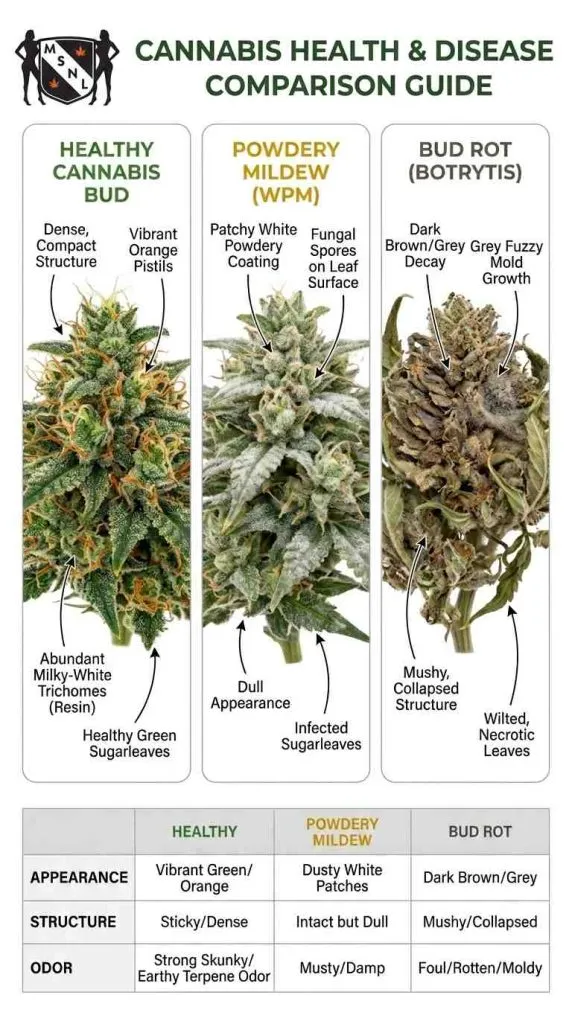
Trichomes are tiny resin glands that cover cannabis flowers and sugar leaves. They look crystal-like under light, feel sticky to the touch, and give buds their frosty appearance. Healthy trichomes are a sign that the plant is producing cannabinoids and terpenes.
Mold looks very different. Instead of sparkling, it usually appears fuzzy, dusty, cotton-like, or web-like. Powdery mildew resembles flour sprinkled across leaves, while bud rot causes flowers to become soft, brown, or gray from the inside out.
If you're ever unsure, use a jeweler's loupe (30x–60x) or a handheld digital microscope. These inexpensive tools make it much easier to distinguish healthy trichomes from fungal growth and can help you identify problems before they become severe.
Why Early Identification Matters
Every type of mold on cannabis spreads differently, but they all become harder to control as the infection progresses. Some fungi remain localized if caught early, while others can spread rapidly through an entire grow room under humid conditions.
I've found that consistent daily inspections during flowering are one of the simplest ways to protect a harvest. Catching mold early allows you to isolate affected plants, remove infected material, improve environmental conditions, and prevent spores from spreading to healthy cannabis.
In the sections below, we'll cover the most common types of cannabis mold, what each one does to the plant, when it usually appears, and how to identify it before significant damage occurs.
Powdery Mildew
Powdery mildew is one of the most common types of cannabis mold and is often the first fungal disease growers encounter. Unlike bud rot, which develops inside flowers, powdery mildew grows on the surface of leaves and stems, making it easier to spot during routine inspections. Although it doesn't usually kill a cannabis plant, it spreads rapidly under the right conditions and can weaken plants, reduce yields, and contaminate buds if left untreated.

| Symptom | What You'll Notice |
| Appearance | White or gray powder that looks like flour or powdered sugar |
| Usually Found On | Fan leaves, sugar leaves, stems, and occasionally buds |
| When It Appears | Vegetative growth through late flowering, especially in humid conditions |
| Primary Cause | High humidity, poor airflow, and overcrowded plants |
| Severity | Moderate to high if left untreated because it spreads quickly |
| Safe to Consume? | No. Buds affected by powdery mildew should be discarded. |
What It Does
Powdery mildew is an airborne fungus that grows across the surface of cannabis leaves and stems rather than inside the plant tissue. As the white fungal growth spreads, it blocks sunlight from reaching the leaves, reducing photosynthesis and forcing the plant to use energy fighting the infection instead of producing healthy flowers. Severe infections can slow growth, reduce yields, and eventually spread onto developing buds.
How to Identify It
The first sign of powdery mildew is usually a few small white spots on the upper surface of fan leaves. These spots gradually grow larger until they resemble a light dusting of flour. As the infection progresses, the fungus spreads across nearby leaves and stems, eventually covering large areas of the plant if environmental conditions remain favorable.
Unlike trichomes, powdery mildew appears dull, dusty, and flat rather than crystal-like or sticky. During flowering, I always inspect the upper leaves first because that's where powdery mildew usually appears before spreading deeper into the canopy.
How to Prevent It
Powdery mildew thrives in humid environments with poor air circulation. Maintaining relative humidity below 60%, pruning excess foliage, providing consistent airflow with oscillating fans, and avoiding overcrowded plants are the best ways to reduce the risk of infection. Daily inspections during both the vegetative and flowering stages allow you to catch small outbreaks before they spread throughout your grow.
Grower's Tip: Powdery mildew spreads through airborne spores. If you spot the first white patches, isolate the affected plant immediately and inspect nearby plants for early signs of infection.
Read our complete guide on Powdery Mildew on Cannabis for detailed treatment methods, prevention strategies, and recovery tips.
Botrytis (Bud Rot)
Botrytis, commonly known as bud rot, is one of the most destructive types of cannabis mold because it develops inside dense flowers where it's difficult to detect. Unlike powdery mildew, which grows on the surface of leaves, Botrytis infects the center of the bud first before spreading outward. By the time you notice symptoms on the outside, the infection has often destroyed much of the flower. If left untreated, bud rot can spread rapidly through neighboring colas and ruin an entire harvest.

| Symptom | What You'll Notice |
| Appearance | Gray or brown fuzzy mold with soft, rotting plant tissue |
| Usually Found On | Inside dense buds and large colas |
| When It Appears | Late flowering, especially during the final 2–4 weeks before harvest |
| Primary Cause | High humidity, trapped moisture, and poor airflow within dense flowers |
| Severity | High. Bud rot spreads quickly and can destroy entire buds or plants. |
| Safe to Consume? | No. Infected buds should be discarded immediately. |
What It Does
Botrytis is a fungal disease that attacks cannabis flowers from the inside out. As the fungus spreads, it breaks down plant tissue, causing buds to become soft, brown, and eventually covered in gray mold. Since the infection starts deep within the flower, healthy-looking buds can hide significant damage until harvest. Once established, Botrytis can spread to nearby buds through airborne spores, especially in humid growing conditions.
How to Identify It
One of the first warning signs is a single sugar leaf that suddenly turns yellow, brown, or wilted while the rest of the bud still appears healthy. Gently pull back the flower around the affected leaf and inspect the center of the bud. If you find soft, brown plant material or gray fuzzy growth, the bud has likely developed Botrytis.
During late flowering, I always inspect the largest colas by gently opening them to check for hidden moisture or discoloration. This simple habit has helped me catch bud rot before it spread to the rest of the plant.
How to Prevent It
Bud rot thrives in dense flowers where humidity becomes trapped and airflow is limited. Maintaining relative humidity between 40% and 50% during flowering, improving air circulation with oscillating fans, and avoiding overcrowded plants can significantly reduce the risk of infection. Indoor growers should also avoid watering late in the day, while outdoor growers should inspect plants after rain or periods of heavy morning dew.
Grower's Tip: If you discover bud rot, remove the entire infected bud immediately using sanitized pruning shears. Don't try to save partially infected flowers, as the fungus often extends beyond the visible damage.
Read our complete guide on Cannabis Bud Rot (Botrytis) to learn how to identify early symptoms, safely remove infected buds, and prevent future outbreaks.
Fusarium Wilt
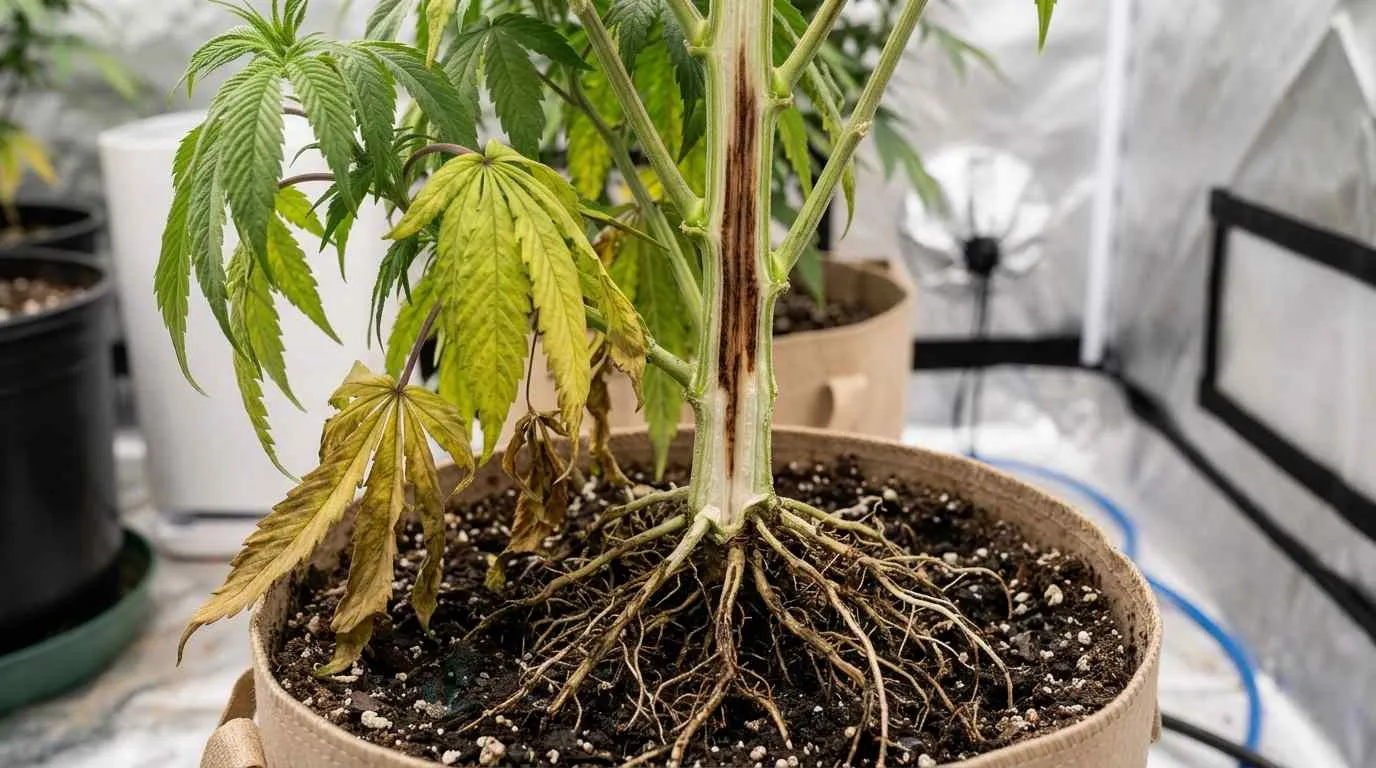
Fusarium is a soil-borne fungal disease that attacks the roots and vascular system of cannabis plants. Unlike powdery mildew or bud rot, Fusarium doesn't usually produce obvious mold on the surface of the plant. Instead, it blocks the movement of water and nutrients, causing the plant to wilt and decline from the inside out. Once established, Fusarium is extremely difficult to eliminate because it can survive in soil for years and spread through contaminated growing media, tools, water, and infected plant material.
| Symptom | What You'll Notice |
| Appearance | Wilting leaves, yellowing foliage, brown streaks inside stems, root discoloration |
| Usually Found On | Roots, lower stems, and the plant's vascular tissue |
| When It Appears | Any growth stage, but most common in warm, wet soil and stressed plants |
| Primary Cause | Contaminated soil, poor drainage, overwatering, and infected plant material |
| Severity | High. Fusarium can kill an entire plant and persist in the soil. |
| Safe to Consume? | No. Severely infected plants should be discarded. |
What It Does
Fusarium infects the root system before spreading into the plant's vascular tissue, where it blocks the flow of water and nutrients. As the disease progresses, Leaves often begin to yellow or wilt, symptoms that are frequently mistaken for cannabis nutrient deficiencies. The fungus gradually weakens the entire plant, stunts flower development, and can eventually cause complete plant death if left unmanaged.
How to Identify It
One of the earliest signs of Fusarium is unexplained wilting that doesn't improve after watering. Lower leaves often turn yellow first before the symptoms spread upward through the plant. If you cut open an infected stem, you may notice brown or reddish streaks running through the vascular tissue, which is a common indicator of Fusarium wilt. Because these symptoms resemble nutrient deficiencies or root problems, it's important to inspect the roots and stems carefully before making a diagnosis.
How to Prevent It
The best defense against Fusarium is prevention. Always use clean growing media, sterilize pots and pruning tools between grows, and avoid overwatering or allowing soil to remain saturated for long periods. Healthy roots are far less susceptible to infection, so maintaining good drainage and reducing plant stress can significantly lower the risk of disease.
Grower's Tip: If you suspect Fusarium, remove the entire plant, including its roots, and avoid reusing the same soil. The fungus can survive in contaminated growing media for years and quickly infect future crops.
Read our complete guide on Fusarium Wilt in Cannabis to learn how to recognize early symptoms, prevent soil contamination, and protect future harvests.
Root Rot
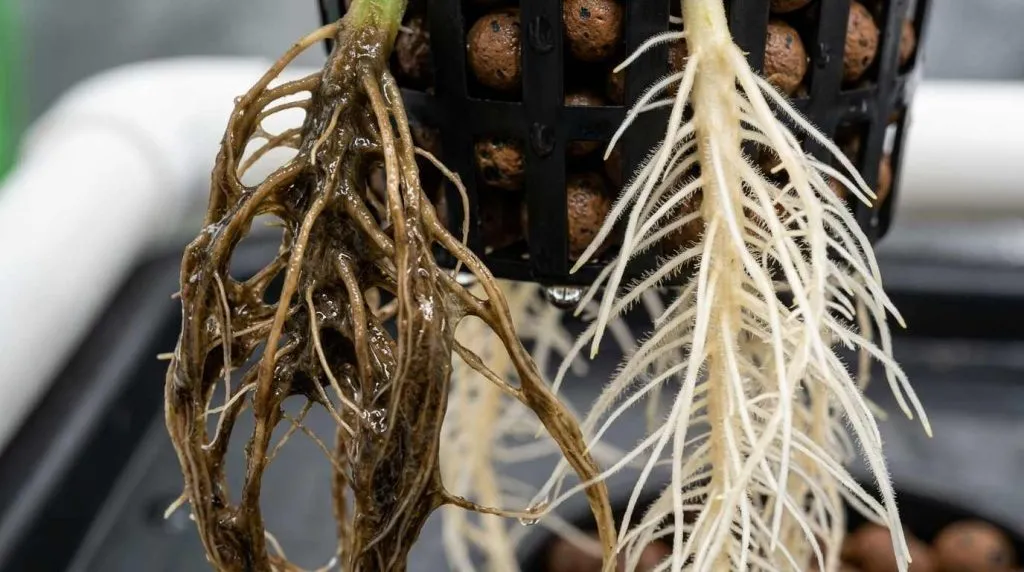
Root rot is one of the most damaging diseases affecting cannabis plants because it attacks the root system before symptoms become visible above the soil. Most cases are caused by water molds such as Pythium, although other fungal pathogens can produce similar symptoms. Once the roots begin to decay, the plant struggles to absorb water, oxygen, and nutrients, causing slow growth, wilting, and poor flower development. If left untreated, root rot can kill an entire plant.
| Symptom | What You'll Notice |
| Appearance | Brown, slimy, soft roots with a foul or sour smell |
| Usually Found On | Root system below the growing medium |
| When It Appears | Any growth stage, especially in overwatered plants or hydroponic systems |
| Primary Cause | Overwatering, poor drainage, low oxygen levels, and contaminated water or growing media |
| Severity | High. Severe infections can kill the entire plant. |
| Safe to Consume? | No. Plants with advanced root rot should be discarded. |
What It Does
Healthy cannabis roots are firm, white, and able to efficiently absorb water and nutrients. Root rot destroys this root tissue, reducing oxygen uptake and preventing the plant from transporting essential nutrients throughout its vascular system. As the disease progresses, plants become increasingly stressed, growth slows dramatically, leaves begin to yellow, and flower production declines. Because the damage starts below the surface, growers often mistake root rot for nutrient deficiencies or underwatering.
How to Identify It
The earliest signs usually appear above the soil, with plants that suddenly wilt despite having moist growing media. Leaves may turn yellow, droop, or curl downward while growth stalls. If you remove the plant from its container or inspect the roots in a hydroponic system, healthy white roots will instead appear brown, slimy, soft, and may have a foul, rotten odor. In severe cases, the roots easily break apart when handled.
How to Prevent It
Preventing root rot starts with maintaining a healthy root zone. Avoid overwatering, use well-draining growing media, and allow the roots to receive adequate oxygen between waterings. Hydroponic growers should keep nutrient solution temperatures below 70°F (21°C), maintain proper aeration, and regularly sanitize reservoirs, pumps, and irrigation equipment to reduce pathogen buildup.
Grower's Tip: If you notice unexplained wilting, always inspect the roots before adding more nutrients. Healthy roots should be bright white and firm anything brown, slimy, or foul-smelling should be treated as an early warning sign of root rot.
Read our complete guide on Cannabis Root Rot to learn how to identify early symptoms, recover infected plants, and prevent future outbreaks.
Aspergillus
Aspergillus is one of the most concerning molds found on cannabis because it can pose serious health risks in addition to damaging the plant. Unlike powdery mildew or bud rot, Aspergillus is more commonly associated with harvested, dried, and stored cannabis than actively growing plants. The fungus thrives in warm, humid environments and can develop when buds are improperly dried, cured, or stored. While healthy individuals may not experience symptoms from limited exposure, inhaling Aspergillus spores can be dangerous, particularly for people with weakened immune systems or respiratory conditions.

| Symptom | What You'll Notice |
| Appearance | Green, yellow, black, or gray fuzzy mold growing on buds |
| Usually Found On | Harvested flowers, drying buds, and improperly stored cannabis |
| When It Appears | During drying, curing, or long-term storage in humid conditions |
| Primary Cause | Excess moisture, poor drying, improper curing, and high storage humidity |
| Severity | High. Aspergillus can make cannabis unsafe to consume. |
| Safe to Consume? | No. Cannabis contaminated with Aspergillus should be discarded immediately. |
What It Does
Aspergillus colonizes cannabis flowers by feeding on organic plant material in humid environments. As the fungus spreads, it degrades the quality of the buds, produces visible mold growth, and releases microscopic spores into the surrounding air. Unlike some molds that primarily reduce yield, Aspergillus is a food safety concern because certain species can produce harmful toxins or cause respiratory infections when contaminated cannabis is smoked, vaporized, or otherwise inhaled.
How to Identify It
Aspergillus often appears as fuzzy patches that range from green and yellow to gray or black, depending on the species. The mold usually develops on harvested buds that have retained too much moisture during drying or have been stored in humid conditions. Infected flowers may also develop a musty, earthy, or stale odor and lose their normal aroma.
Because Aspergillus closely resembles other storage molds such as Penicillium, visual inspection alone isn't always enough to distinguish between them. Regardless of the exact species, any visible mold on cannabis flower should be treated as unsafe.
How to Prevent It
Proper drying, curing, and storage are the best ways to prevent Aspergillus. Dry harvested cannabis slowly in an environment with good airflow and moderate humidity, then cure buds in airtight containers while monitoring humidity levels. Store finished flower in a cool, dry location and inspect it regularly for signs of excess moisture or mold growth. Never store cannabis while it still feels damp.
Grower's Tip: If you discover mold on stored cannabis, discard the affected buds immediately. Don't try to remove the visible mold and save the rest, as microscopic spores can spread throughout the entire container.
Read our complete guide on Aspergillus Cannabis for detailed treatment methods, prevention strategies, and recovery tips.
White Mold (Sclerotinia)
White mold, also known as Sclerotinia stem rot, is a fungal disease that primarily attacks the stems and lower branches of cannabis plants. Unlike bud rot, which develops inside flowers, white mold begins around the base of the plant before spreading upward through the stems. It's most common in outdoor grows where prolonged rain, cool temperatures, and consistently damp soil create ideal conditions for fungal growth. If left untreated, white mold can girdle stems, restrict water movement, and eventually kill the entire plant.

| Symptom | What You'll Notice |
| Appearance | White, cotton-like fungal growth on stems with soft, rotting tissue |
| Usually Found On | Lower stems, branches, and the base of the plant |
| When It Appears | During cool, wet weather, particularly in late vegetative growth and flowering |
| Primary Cause | Prolonged moisture, poor airflow, and contaminated soil |
| Severity | High. Stem infections can cause branches or entire plants to collapse. |
| Safe to Consume? | No. Infected plant material should be discarded. |
What It Does
White mold infects the stem tissue of cannabis plants, gradually breaking down the structural support that transports water and nutrients throughout the plant. As the infection spreads, stems become soft and weakened, causing leaves to wilt and branches to collapse. In severe cases, the fungus can completely girdle the main stem, preventing water from reaching the upper portions of the plant and leading to rapid decline.
How to Identify It
The earliest symptom is often a white, fluffy, cotton-like growth developing around the base of a stem or where branches join the main stalk. As the infection progresses, the affected tissue becomes soft, water-soaked, and light brown before eventually rotting. Leaves above the infected area may suddenly wilt despite adequate soil moisture because the fungus has disrupted the plant's vascular system.
Unlike powdery mildew, which forms a thin coating on leaf surfaces, white mold produces dense, fuzzy growth concentrated around stems and damaged tissue. Regularly inspecting the lower portion of your plants, especially after periods of wet weather, can help you detect infections before they spread.
How to Prevent It
White mold thrives in cool, humid environments with poor airflow. Regular pruning and defoliating cannabis plants can help improve air circulation. Avoid overwatering and ensure soil drains well so the lower stems aren't exposed to constantly damp conditions. Removing infected plant material promptly also helps reduce the spread of fungal spores.
Grower's Tip: Pay close attention to the base of your cannabis plants after extended rain or heavy watering. Catching white mold early can prevent the infection from reaching the main stem and spreading throughout your grow.
Read our complete guide on White Mold on Cannabis for detailed treatment methods, prevention strategies, and recovery tips.
What to Do If You Find Mold on Cannabis
Finding mold on your cannabis plants is every grower's nightmare, but do not panic. The worst mistake you can make is ignoring it or trying to save obviously infected buds. Mold spreads through microscopic airborne spores, so one infected plant can quickly contaminate the rest of your grow if you do not act fast.
The good news is that early detection gives you the best chance of stopping the outbreak. Follow these steps as soon as you discover mold.

Step 1: Confirm That It's Actually Mold
Before you start cutting into your plants, make sure you are dealing with mold and not something harmless like trichomes, dust, or a nutrient issue.
Inspect the suspicious area closely using a jeweler's loupe or magnifying glass. Powdery mildew looks like white flour sitting on the surface of leaves, while bud rot usually reveals soft brown tissue hidden inside flowers. Storage molds such as Aspergillus often appear as fuzzy green, gray, or black growth on dried buds.
If you are unsure, assume it is mold until you can prove otherwise. Waiting another day gives fungal spores more time to spread.
Step 2: Isolate the Plant
If you are growing multiple plants, move the infected one away from the rest as soon as possible. Mold spores become airborne very easily, especially when plants are bumped, pruned, or exposed to strong airflow.
If you are growing in a tent and cannot move the plant, turn oscillating fans to their lowest setting or temporarily switch them off while you work. Strong airflow can spread spores throughout the entire grow room before you have removed the infected material.
Step 3: Prepare Your Tools
Before making your first cut, gather everything you will need:
- Sharp pruning shears or scissors
- Isopropyl alcohol (70% or higher)
- Paper towels or clean cloths
- Disposable gloves
- A sealable trash bag
Wipe the blades thoroughly with isopropyl alcohol before starting. I also keep a spray bottle of alcohol beside me so I can disinfect my scissors between every few cuts. It only takes a few seconds and greatly reduces the chance of spreading spores to healthy tissue.
Step 4: Remove the Infected Areas
This is where many new growers make their biggest mistake. They only remove the visible mold.
The fungus usually extends beyond what you can see, so always remove extra healthy tissue around the infected area.
If only a single fan leaf has powdery mildew, remove the entire leaf rather than trying to wipe it clean.
If a bud has developed bud rot, remove the entire flower, not just the brown section. I usually cut at least 2 to 3 inches (5 to 8 cm) below the visible infection because hidden fungal growth often extends into the stem.
Never shake infected branches while pruning, as this releases thousands of spores into the air.
As you remove infected material, place it directly into a sealed trash bag. Do not leave moldy leaves or buds lying on the floor or workbench.
Step 5: Decide Whether the Plant Can Be Saved
Not every infected cannabis plant is worth saving.
If you have caught powdery mildew early and it is limited to a few leaves, the plant usually recovers well after pruning and improving the environment.
If bud rot is limited to one cola, you can often save the remaining branches by removing the infected bud immediately.
However, if mold has spread throughout multiple buds, the main stem is infected, or the roots are severely diseased, it is usually better to discard the entire plant. It may feel painful to throw away weeks or months of work, but sacrificing one plant is far better than losing your entire grow.
Step 6: Treat the Remaining Plant
After pruning, inspect the rest of the plant carefully.
For surface molds like powdery mildew, many growers spray a diluted hydrogen peroxide solution onto the affected leaves to help kill remaining fungal spores. Organic fungicides labeled as safe for cannabis can also be effective when used according to the manufacturer's directions.
Some growers also use diluted milk sprays for powdery mildew, but these work best when humidity and airflow have already been corrected. No spray will solve a mold problem if the growing environment still favors fungal growth.
Avoid spraying mature flowering buds unless the product specifically states it is safe to use during late flowering.
Step 7: Fix the Environment That Caused the Mold
Removing mold without fixing the cause almost guarantees it will return.
Start by lowering humidity. During flowering, aim for 40 to 45% relative humidity, especially around dense buds.
Increase airflow by adding oscillating fans and pruning excess foliage so air can move freely through the canopy. Dense plants trap moisture, creating ideal conditions for fungal growth.
Check your watering routine as well. Overwatering keeps the growing medium damp and increases humidity inside the grow space. Water only when the growing medium needs it, and avoid watering late in the day if you are growing outdoors.
For indoor growers, maintaining proper temperatures alongside humidity is equally important. Learn the best temperature to grow cannabis for healthy plants.
Step 8: Clean Your Grow Room
Even after you have removed infected plants, mold spores remain throughout the grow space.
Remove all fallen leaves and plant debris from the floor and pots. Wipe down walls, trays, fans, pots, and work surfaces with a disinfectant or isopropyl alcohol. Wash reusable tools before storing them.
If root diseases such as Fusarium or severe root rot are involved, do not reuse contaminated soil or growing media. Starting with fresh media is much safer than risking another outbreak.
Step 9: Monitor Your Plants Every Day
The next week is critical.
Inspect every plant daily, paying close attention to dense buds, lower leaves, and shaded areas where moisture tends to linger. I always spend a few minutes gently opening large colas and checking deep inside because that is where mold often starts before becoming visible on the outside.
If you spot even one new patch of mold, remove it immediately and repeat the inspection process. Catching a second outbreak early is far easier than dealing with another widespread infection.
Grower's Tip: I have learned that mold is almost never the real problem. It is a symptom of an environment that is too humid, too crowded, or has poor airflow. Every time I have fixed those conditions, mold became much easier to control. Focus on creating the right environment first, and your plants will do the rest.
Post-Removal Plant Care
Removing the visible mold is only half the battle. The real goal is to create an environment where mold can't return while giving your cannabis plants the best chance to recover. In my experience, growers who focus only on removing infected leaves or buds often see the mold come back because the conditions that caused the outbreak haven't changed.
Restore the Right Growing Environment
The first thing I do after removing mold is check my grow room conditions. Mold thrives in humid, stagnant environments, so lowering the humidity is one of the quickest ways to slow or stop its spread.
During flowering, I aim to keep relative humidity between 40% and 45%, while maintaining daytime temperatures around 70-75°F (21-24°C). I also try to avoid large temperature swings at night because they create condensation on leaves and buds, giving fungal spores the moisture they need to grow.
Use a digital hygrometer to monitor humidity instead of guessing. Even a few hours of excessive humidity each day can be enough for mold to return.
Improve Airflow
Good airflow is one of the best defenses against mold. Air should move gently through the entire canopy, not just across the tops of the plants.
I position oscillating fans so they create constant air movement around the leaves and between dense branches without blowing directly at one spot all day. Indoor growers should also run an exhaust fan to continuously remove warm, humid air and replace it with fresh air. If you're growing in a tent, this is one of the most effective ways to reduce the risk of future mold outbreaks.
If the canopy is especially thick, remove a few large fan leaves to improve airflow through the middle of the plant. Better air circulation helps moisture evaporate more quickly after watering.
Inspect Your Plants Every Day
After a mold outbreak, I inspect my plants every day for at least the next two weeks. Mold rarely disappears overnight, and catching a second outbreak early is much easier than dealing with another widespread infection.
Pay close attention to dense buds, shaded areas, lower leaves, and the inside of large colas where moisture tends to linger. A jeweler's loupe or magnifying glass makes it much easier to spot early fungal growth before it becomes obvious.
Keep Everything Clean
Mold spores don't disappear when you remove infected plant material. They can remain on pots, trays, fans, tools, and other surfaces throughout the grow space.
Disinfect pruning shears, scissors, and other tools with isopropyl alcohol before and after every use. Remove fallen leaves and plant debris from the floor, wipe down grow room surfaces, and clean pots or trays before using them again. If the mold originated from contaminated soil or severe root disease, replace the growing medium rather than risking another infection.
Adjust Your Watering Routine
Overwatering is one of the most common reasons mold returns. Allow the top inch of soil to dry before watering again, and make sure excess water can drain freely from the container.
If you're growing outdoors, water early in the morning whenever possible. This gives the foliage and surrounding soil plenty of time to dry before temperatures drop in the evening.
Help Your Plants Recover
Removing infected leaves and buds naturally stresses the plant, so avoid creating additional stress during recovery. Don't perform heavy pruning, aggressive training, or other major changes while the plant is healing.
Continue feeding your plants as normal unless they're showing signs of nutrient stress. Some growers also use organic supplements such as seaweed extract or humic acids to support root development and overall plant health, although maintaining a healthy growing environment will have the biggest impact on recovery.
Prevent Future Mold Problems
Every mold outbreak is an opportunity to improve your growing practices. If you live in a humid climate, consider growing cannabis strains known for their resistance to mold and mildew. Give each plant enough space for air to circulate freely, avoid overcrowding your grow, and inspect your plants regularly throughout the growing season.
For growers in regions where mold is a recurring problem, preventative applications of cannabis-safe organic fungicides during the vegetative stage can provide an extra layer of protection before conditions become favorable for fungal growth.
Grower's Tip: Every time I've had mold, it wasn't because I missed a spray or treatment. It was because the environment was too humid or the canopy was too crowded. Fix those two problems, and you'll prevent far more mold than any fungicide ever will.
How to Detect Mold Before Consuming Cannabis
Even if cannabis looked healthy at harvest, mold can develop during drying, curing, or storage. That’s why it’s important to inspect your flower before use, especially if it’s been stored for a while.
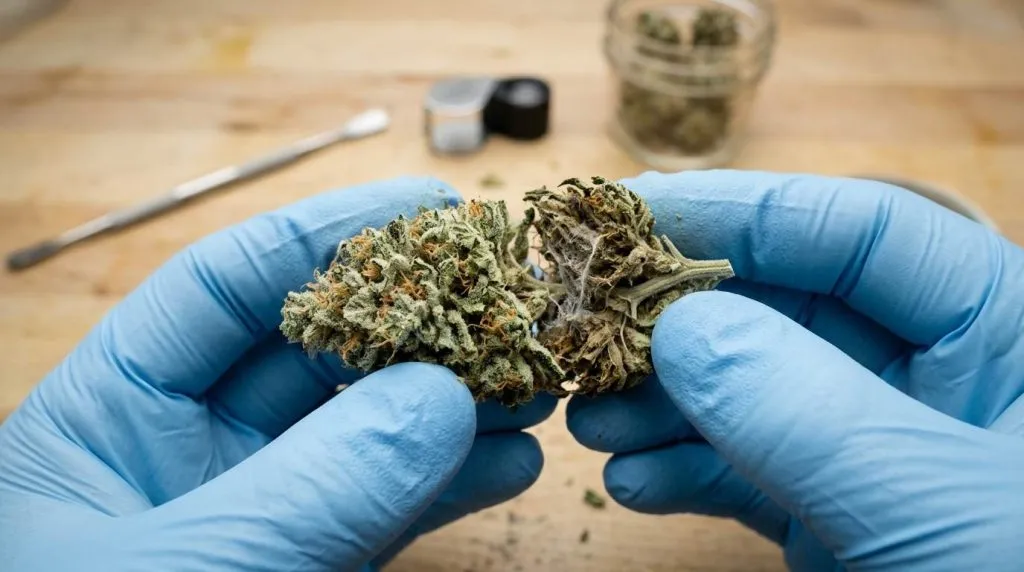
Start by examining buds under good lighting. Healthy cannabis should be covered in sparkling trichomes that resemble tiny crystals. Mold often appears as fuzzy white, gray, green, or black patches on the surface or inside dense buds. If anything looks dusty, cotton-like, or webby, inspect it more closely with a magnifying glass.
Next, gently break apart a larger bud. Mold like Botrytis (bud rot) often starts inside the flower before becoming visible outside. The interior should be evenly green and coated with trichomes. Brown, soft, gray, or fuzzy material is a clear warning sign.
Smell is another key indicator. Fresh cannabis should reflect its terpene profile—citrus, pine, diesel, or earthy notes. Moldy cannabis often smells musty, damp, or like a wet basement. If the aroma seems off, don’t take the risk.
Never smoke, vape, or process moldy cannabis into concentrates. Even if only part of the bud looks affected, microscopic spores can spread throughout, making it unsafe.
How to Store Cannabis to Prevent Mold
Proper storage helps prevent mold after harvest. Even well-dried cannabis can develop mold if stored in warm, humid conditions.
Use airtight glass jars instead of plastic containers, which can cause moisture fluctuations. Store jars in a cool, dark place away from heat and sunlight. These factors degrade cannabinoids and create conditions for mold growth.
Store your cannabis in airtight glass jars and follow best practices to keep weed fresh for longer while preventing mold growth.
For long-term storage, use humidity packs to maintain stable moisture levels. This prevents buds from becoming too dry or too moist.
Check stored cannabis every week or two. Open jars briefly to inspect for unusual smells, moisture, or mold. If you see condensation or feel dampness, remove the buds and let them dry before storing again.
Grower's Tip: Most storage mold happens when cannabis is jarred too early. When in doubt, dry it a little longer.

Conclusion
Cannabis mold is one of the few problems that can destroy an otherwise healthy harvest in just a matter of days. Fortunately, nearly every type of cannabis mold can be prevented by maintaining proper humidity, improving airflow, inspecting plants regularly, and acting quickly when symptoms appear.
Whether you're dealing with powdery mildew, bud rot, Fusarium, or Storage molds such as Aspergillus often appear on cannabis that wasn't properly dried or cured. Following a proper cannabis drying and curing process dramatically reduces the risk. The more familiar you become with the different cannabis mold types, the easier it is to protect both your plants and your harvest.
Frequently Asked Questions
What causes mold to grow on cannabis plants?
Mold develops when environmental conditions favor fungal growth. The most common causes are high humidity, poor airflow, overcrowded plants, overwatering, and moisture trapped inside dense buds. Mold is especially common during late flowering, after heavy rain outdoors, or during improper drying and curing.
How can I tell if my cannabis plant has mold?
Look for white, gray, green, or black fuzzy growth on leaves, stems, or buds. Powdery mildew appears as a white powder on leaf surfaces, while bud rot often starts inside dense flowers and causes brown, soft, dying tissue. A musty or damp smell is another common warning sign.
What are the most common types of mold found on cannabis?
The most common cannabis molds include:
- Powdery mildew
- Botrytis (bud rot)
- Aspergillus
- Cladosporium
- White mold (Sclerotinia)
- Fusarium (primarily a root and vascular disease)
Each affects cannabis differently and requires slightly different management strategies.
Is it safe to smoke or consume moldy cannabis?
No. Moldy cannabis should never be smoked, vaped, eaten, or processed into concentrates. Mold spores can survive throughout the flower even if only a small area appears contaminated. Consuming moldy cannabis may cause respiratory irritation, allergic reactions, or more serious infections, particularly in people with asthma or weakened immune systems.
Can you remove mold from cannabis buds?
No. Once mold has infected a cannabis bud, it should be discarded. Cutting away the visible mold does not remove microscopic fungal spores that have already spread throughout the flower. Trying to salvage moldy buds is not worth the health risk.
Can a cannabis plant recover after mold?
Yes, but only if the problem is caught early. Powdery mildew on a few leaves or a single bud affected by bud rot can often be managed by removing infected tissue and correcting the environmental conditions that caused the outbreak. Plants with severe mold infections throughout the canopy or root system are often beyond saving.
How do I prevent mold from growing on cannabis plants?
The best prevention is maintaining the proper growing environment. Keep humidity between 40% and 45% during flowering, provide constant airflow with oscillating fans, avoid overcrowding plants, water appropriately, and inspect your plants regularly. Keeping your grow room clean and removing dead plant material also helps reduce mold pressure.
Does mold spread from one cannabis plant to another?
Yes. Most cannabis molds reproduce by releasing microscopic airborne spores that can spread throughout a grow room or outdoor garden. That's why infected plants should be isolated immediately, and all pruning tools should be sterilized before being used on healthy plants.
Can cannabis mold grow after harvest?
Yes. Mold commonly develops during drying, curing, or storage if buds are put into jars before they're fully dry or are stored in overly humid conditions. Proper drying, curing, and storage are just as important as preventing mold during cultivation.
What humidity prevents mold on cannabis?
During flowering, most growers aim to maintain a relative humidity of 40% to 45% to reduce the risk of mold. During drying, humidity is typically kept around 60%, while long-term storage should use humidity packs that maintain the ideal moisture level without allowing excess humidity to build up.
Does freezing cannabis kill mold?
No. Freezing may stop mold from actively growing, but it does not reliably kill fungal spores or make contaminated cannabis safe to consume. If cannabis is moldy before freezing, it should still be discarded.
Can moldy cannabis make you sick?
Yes. Inhaling or consuming moldy cannabis may cause coughing, wheezing, sinus irritation, allergic reactions, or respiratory infections. People with asthma, allergies, or weakened immune systems are at an even greater risk of serious health complications.


