




Powdery mildew is one of the most common fungal problems cannabis growers encounter, and it can spread surprisingly quickly if left unchecked. It appears as white, powdery patches on leaves and stems, reducing plant vigor and potentially affecting flower quality as the infection progresses. The good news is that early detection and proper environmental control can often help limit its spread. This guide explains how to identify powdery mildew, what causes it, the treatment options available, and the practical steps growers can take to reduce the risk of future outbreaks.
Key Takeaways
- Powdery mildew typically appears as white, dusty patches on leaf surfaces and stems that can often be wiped away.
- High humidity, poor airflow, overcrowded plants, and environmental fluctuations are among the most common causes of outbreaks.
- Early treatment is important, as powdery mildew can spread rapidly across leaves, stems, and flowers under favorable conditions.
- Keeping humidity below 50% during flowering and maintaining consistent airflow can significantly reduce the risk of infection.
- Removing affected plant material and improving grow room conditions are usually the first steps in controlling an outbreak.
- Cannabis flowers affected by powdery mildew are generally considered unsuitable for smoking or consumption.
- Key Takeaways
- Quick diagnosis: is this powdery mildew?
- What is powdery mildew on cannabis?
- Causes of powdery mildew on cannabis
- How to identify powdery mildew on cannabis plants
- How to treat powdery mildew on cannabis
- Preventing powdery mildew in future cannabis grows
- How powdery mildew affects cannabis yield and quality
- What are the most common types of cannabis mold
- FAQs:
Quick diagnosis: is this powdery mildew?
Powdery mildew can appear overnight under the right circumstances, so If you're not 100% sure what you're looking at, run through this quick check before jumping to conclusions:
- White, dusty patches on leaves (looks like flour or powder)
Most likely powdery mildew - Spots appear on the surface first, not inside buds
Points to powdery mildew, not bud rot - Spreads across leaves and stems quickly
Classic fungal spread pattern - Leaves may yellow or die off, where patches form
Infection is progressing - Appears in warm, humid conditions with poor airflow
Ideal environment for powdery mildew
If you’re still not totally sure, then have a look at the table below, and If your plant ticks most of these boxes, you’re almost certainly dealing with powdery mildew.
| Issue | Key Symptoms | Where It Appears | Texture/Look | Main Cause | Key Difference |
|---|---|---|---|---|---|
| Powdery Mildew | White powdery spots, spreading patches | Leaf surface, stems, sometimes buds | Dusty, flour-like coating | High humidity, poor airflow | Sits on surface and wipes off easily |
| Bud Rot (Botrytis) | Brown/grey mushy buds, collapsing colas | Inside buds | Wet, rotting, moldy | Trapped moisture in dense buds | Starts inside buds, not on leaf surface |
| Nutrient Deficiency | Yellowing, spots, discoloration | Leaves (pattern depends on nutrient) | Dry, no coating | pH issues, feeding problems | No white powder present |
| Pest Damage | Speckling, holes, silvery streaks | Leaves | Physical damage, not coating | Insects feeding | Often see bugs or larvae |
| Light Burn | Bleached tops, crispy patches | Top canopy | Dry, scorched look | Lights too close/intense | Only affects areas closest to light |
What is powdery mildew on cannabis?
Powdery Mildew is a fungal disease that travels in the air and is caused by the pathogen Podosphaera Xanthii. It's also referred to as Oidiopsis Taurica, but they both are different species of the same pathogen.
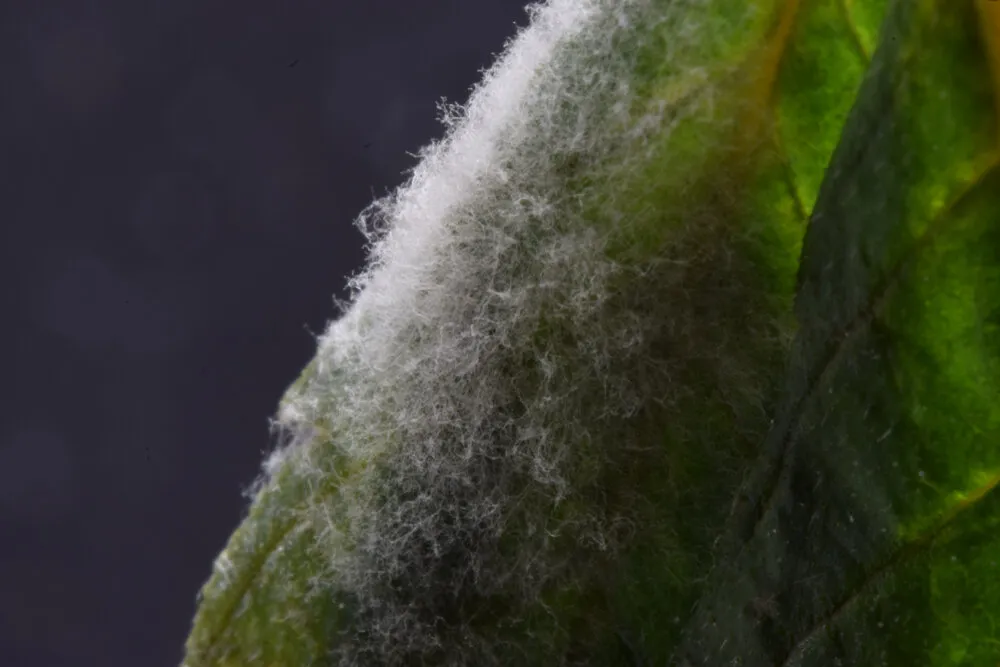
The fungus grows on the surface of plants attaching itself like a host to the leaf tissue and buds, forming fuzzy white patches that resemble a powdery coating, or little patches of cooking flour, hence its name. You can try to spray and wipe it away, but will only find it returns once the leaf has become dry again.
How powdery mildew forms on cannabis plants
There are really only two things that Powdery Mildew likes to do. Reproduce (by producing spores) and eat your plants, with cannabis being the equivalent of a Michelin-starred meal for it.
The fungus feeds on the plant's nutrients and moisture, weakening the leaves and eventually causing them to die off. If left untreated, it can spread rapidly throughout the plant, affecting flowers, stems, and even roots.
I have seen powdery mildew issues in grow rooms that were in the flowering stage progress so fast, that every leaf was covered in white within a few weeks. During the winter season, home growers can experience a mildew issue much more frequently.
Why cannabis plants are susceptible to powdery mildew
Most types of fungus love warm, damp environments, and Powdery Mildew is no exception. Indoor cannabis grows check off both of those boxes, making it an ideal breeding ground for this pesky fungus.
But even outdoor grows are not immune to Powdery Mildew. If you are growing in an area with high heat and humidity or just experiencing a little more rain than usual, then the chance of your plants developing Powdery Mildew jumps up pretty quickly.
Causes of powdery mildew on cannabis
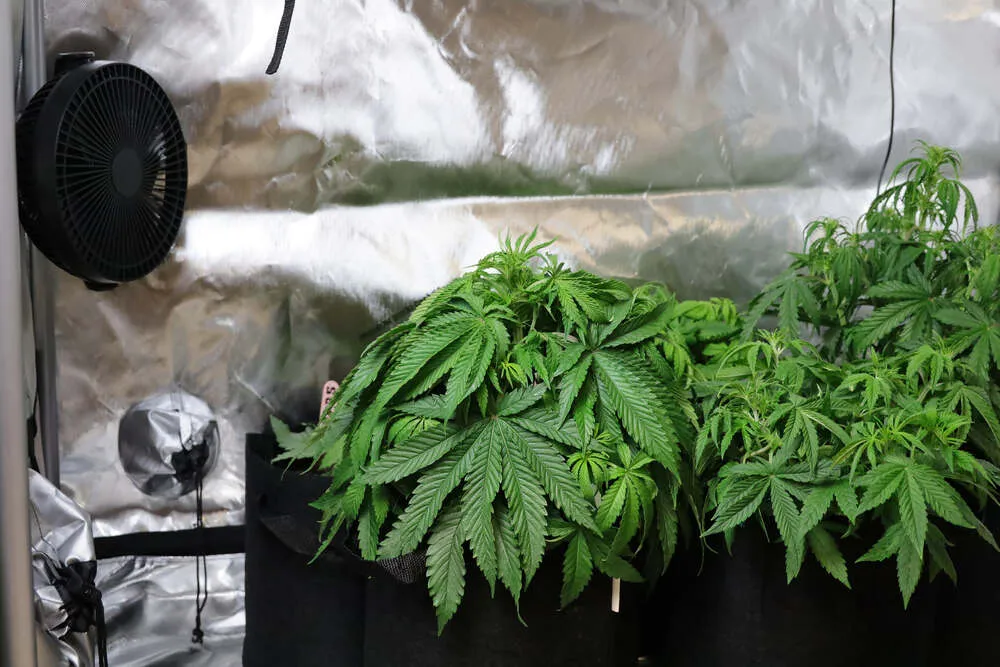
As mentioned, powdery mildew thrives in warm, humid conditions. But more often than not, it’s not just the environment, it’s how the grow is set up that allows those conditions to develop.
Here are the most common causes:
- Poor airflow and ventilation
If air isn’t moving properly around your plants and buds, humidity builds up where the air is more stagnant and creates the perfect environment for powdery mildew. This is especially common in grow tents or rooms without adequate fans or extraction systems.
- Overcrowded plants
When plants are packed too closely together, they create humid microclimates between leaves and branches. This not only encourages mildew to form but also makes it much easier for spores to spread from plant to plant. Overcrowded grow rooms have a higher chance of mildew.
- Overwatering or overly wet growing media
Constantly wet soil or high moisture levels around the root zone increase humidity in your grow space. This excess moisture lingers in the air and on plant surfaces, giving mildew exactly what it needs to take hold. Especially if the grow room ventilation is not adequate.
- Humidity spikes and temperature fluctuations
Powdery mildew often shows up when temperatures drop slightly and humidity rises, and is common during late veg or early flower. Sudden environmental swings can quickly create ideal conditions for fungal growth.
- Lack of environmental control (especially indoors)
Without proper monitoring (hygrometer, airflow, extraction), it’s easy for humidity and temperature to drift into the danger zone without you noticing. It is best to keep a digital hygrometer in the grow room to allow you to see the temperature and humidity at all times.
Actionable Tip: Keep humidity below 50%, avoid overcrowding, and ensure constant airflow to stop mildew forming in the first place.
How to identify powdery mildew on cannabis plants
Unlike many of the common issues that can plague cannabis plants and can moonlight as each other, Powdery Mildew stands alone and is relatively easy to identify. The telltale signs are the white, powdery patches that appear on leaves and other parts of the plant. Some growers may even mistake it for resin production on their leaves, due to its clear white characteristic.
Early signs and symptoms of powdery mildew
At first, Powdery Mildew may look like a light dusting of flour or baby powder on your plants. Before the patches fully form, it's more of a sparse white growth that looks like tiny spider webs. It also tends to start on the tops of biggest leaves but can quickly spread to the underside as well.
Visual indicators: what powdery mildew looks like on cannabis leaves
Once it really gets going, it's pretty unmistakable. The white patches will become denser and tightly packed, while also spreading to the point where the entire leaf may eventually be covered. You may also see the affected area yellowing or browning as the fungus continues to feed on the plant, slowly killing the areas it's attached to.
Actionable Tip: Inspect leaves daily and act immediately if you see white, powdery patches forming.
How to treat powdery mildew on cannabis
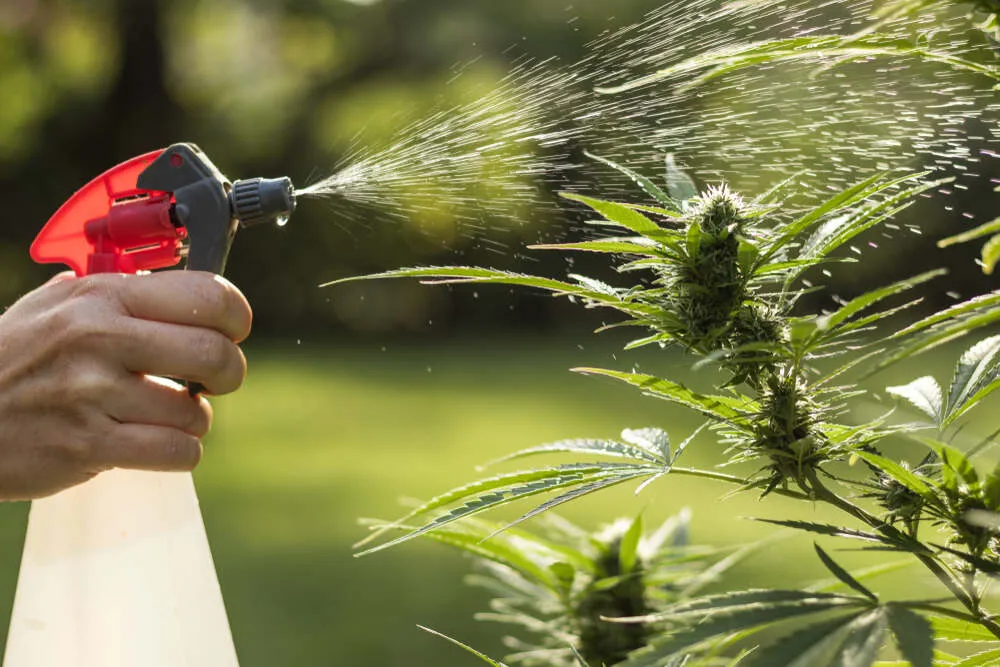
A quick Google search will show page after page of businesses trying to sell their "super-duper" cure for Powdery Mildew. But the reality is that you probably have everything you need at home right now. Below explains both organic and chemical based solutions as well as a guide to follow for the best course of action.
Organic treatments for powdery mildew (neem oil, milk sprays, probiotic bacteria)
Neem oil is an organic method to killing insects and their larvae, and works as a fungicide and a repellent. When used on powdery mildew infected plant material. Using neem oil as a spray and coating the white spots or covered leaves, will prevent the spread of mildew as well as reduce spore production. Be careful if using neem oil for flowering cannabis plants, and try not to spray the buds.
Surprisingly, milk is your best option. The fat content of milk creates a layer on the leaves that prevents the spores from attaching and growing. To use, mix 1 part of cow's milk (whole or skimmed) with 3 parts of water in a spray bottle and apply directly to the affected areas. Repeat every few days until the white patches disappear. There are different types of bacteria that are popular for cannabis growers, and one of them can be used for fighting off powdery mildew. Probiotic bacteria, just the likes in our gut, are a natural biocontrol agent for fungus. Using Lactobacillus as a foliar spray will benefit the plants by creating antifungal compounds.
Chemical treatments for powdery mildew (fungicides)
Can you use fungicides to treat Powdery Mildew? Yes. Should you use them? If you want to try and tackle the issue as fast as possible and do not want to try the organic methods covered above, then chemical solutions are advantageous.If Neem oil is overkill, then a full-on synthetic fungicide (which is designed to kill the fungus on contact) is all-out war.
While it will get rid of the problem in the short term, it can also damage your plants and potentially reduce your yield, and the last thing you want to be doing is smoking anything with traces of fungicide on it, and you may not even know at the time.
The best course of action
I got a little complacent with my most recent outdoor grow (I live in the tropics, and we had a particularly wet few weeks, during which I was not vigilant enough), and I let powdery mildew get a solid hold on two of my plants.
I hadn't had to deal with it for about a decade, but during my first few years growing, I learned a few things that thankfully stuck with me. There are just five simple steps to follow:
- Remove the affected fan leaves: If it's only a few leaves, you can pinch them off with your fingers (be sure to wash your hands well after). If there is widespread infection, then trim and dispose of the entire affected area. You can also use a wet paper towel to rub off the white patches but be gentle as you don't want to damage the leaves further or spread the spores.
- Use milk spray: As mentioned earlier, mix 1 part cow's milk with 3 parts water in a spray bottle and apply directly to the affected areas. You can use this pretty liberally and make sure to wet both sides of the leaves.
- Increase air circulation: Set up at least one oscillating fan inside the grow area, to help keep the air moving and prevent stagnant pockets where humidity can build up. Make sure your extraction fan is also doing its job. Placing fans at a different height from each other and making sure they oscillate at different times, will produce a great amount of air currents.
- Monitor humidity: Invest in a hygrometer to monitor the humidity levels inside your grow space. If it's consistently above 50% during the indoor flowering period, then you may need to invest in a dehumidifier or other measures to lower it.
- Remove any affected buds: This one is hard, but if you see any buds with Powdery Mildew on them, they need to go. It's better to lose a few than risk contaminating your entire harvest.
You may need to spray and scrub/remove affected areas a few times before the Powdery Mildew is completely eradicated.
Preventing powdery mildew in future cannabis grows
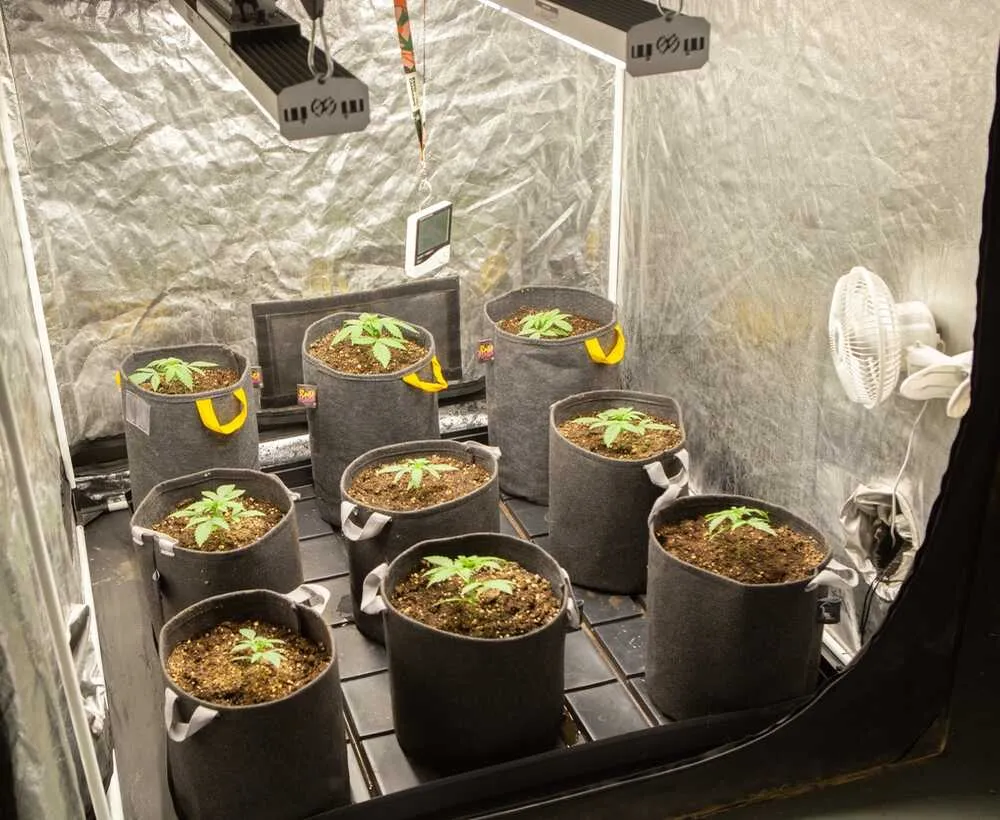
Growing great ganja is all about learning from mistakes. Now that you've dealt with and (hopefully) eradicated powdery mildew from your current grow, here are some tips to prevent it in the future.
Best practices for airflow and humidity control
Airflow, both inside your grow space and in/out of it, is crucial in preventing powdery mildew. Make sure you have adequate ventilation and fans to keep the air moving.
If growing indoors, invest in a dehumidifier to keep humidity levels down if needed, as well as a hygrometer to monitor them.
Actionable Tip: Use fans and a dehumidifier together to keep air moving and humidity at safe levels.
The role of regular pruning and plant spacing
Regular pruning can help with airflow and prevent powdery mildew. Removing any dead or dying leaves, as well as trimming excess foliage to allow for better air circulation, can go a long way in reducing the chances of infection. Pruning also helps plants focus their energy on the top growth, so has many benefits.
Proper plant spacing is also important - if plants are crowded together, it's easier for spores to spread between them, and much more likely that the heat and humidity will rise to unsafe levels.
Keep your grow space clean and sanitize regularly for best results.
Preventive sprays and fungicides for ongoing mildew control
I don't use any preventive sprays, but if you're concerned about future outbreaks or have a history of recurring powdery mildew, there are some organic options available for ongoing control.
Sulfur-based fungicides, potassium bicarbonate, and baking soda are all commonly used in the cannabis industry to prevent mildew growth. As always, do your research and use caution when introducing any chemicals or substances into your grow space.
How powdery mildew affects cannabis yield and quality
The impact of mildew on cannabis bud quality
You shouldn't smoke, vape, cook with, or extract from buds that have Powdery Mildew - simple.
Not only can it cause respiratory issues, but it also affects the taste and overall quality of your bud. The fungus changes the chemical composition of the plant, resulting in a bitter and harsh smoke, and a pretty horrible aftertaste. Never smoke buds or use leaves that have been infected with mold or mildew and throw them in the garbage.
What are the most common types of cannabis mold
- Powdery Mildew: A common fungal mold that looks like white powder on leaves and stems, thriving in high humidity and low airflow conditions.
- Botrytis (Gray Mold): Causes bud rot, turning cannabis flowers into a mushy, gray mass, especially in dense or overwatered buds.
- Sooty Mold: Black mold that grows on leaves, often as a result of honeydew secreted by pests like aphids or whiteflies.
- Cladosporium: A dark mold that can develop on leaves and stems, reducing photosynthesis and plant vigor.
- Aspergillus: A potentially harmful mold that can grow on dried cannabis, posing health risks when inhaled.
- Fusarium: A soil-borne fungal pathogen causing vascular wilt, root rot, and stem discoloration, often leading to severe yield losses in cannabis plants.
- Root Rot: Root rot is a pathogen that is isolated to the roots of a cannabis plant, if left untreated this can kill your plants. It is quite common if you grow in hydroponics.
FAQs:
Can powdery mildew on cannabis spread to other plants?
Yes, powdery mildew spreads very easily. The spores travel through the air and can quickly infect nearby plants. If you spot it on one plant, it’s important to act fast and check the rest of your grow to prevent it spreading further.
Is powdery mildew harmful to humans?
Powdery mildew is generally not highly dangerous, but it can cause respiratory irritation, especially for people with asthma or weakened immune systems. It’s best to avoid handling or inhaling spores whenever possible.
Can you smoke cannabis with powdery mildew?
No, it’s not recommended. Smoking or consuming cannabis affected by powdery mildew can irritate your lungs and may pose health risks. Any infected buds should be removed and discarded.
What causes powdery mildew on cannabis plants?
Powdery mildew is usually caused by high humidity, poor airflow, overcrowded plants, or inconsistent environmental conditions. These factors create the ideal environment for fungal spores to grow and spread.
How do you get rid of powdery mildew on cannabis?
Remove affected leaves, improve airflow, lower humidity, and apply treatments such as diluted milk sprays or other organic solutions. Acting early is key to stopping it from spreading across the plant.
What humidity level prevents powdery mildew?
Keeping humidity below 50% during the later stages of growth significantly reduces the risk. Good airflow and stable environmental conditions are just as important as humidity control.


