




Knowing how often to water cannabis is one of the most important parts of growing healthy, productive plants. Both overwatering and underwatering can lead to slow growth, nutrient deficiencies, poor root development, and reduced yields. The right watering schedule depends on several factors, including plant size, pot size, growing medium, temperature, and humidity. Instead of following a strict routine, it's important to understand what your plants need at each stage of growth. In this guide, you'll learn how often to water cannabis plants, how much water they need, proper watering techniques, and how to avoid common mistakes for healthier plants and bigger harvests.
Key Takeaways
- Most cannabis plants need watering every 2-4 days, but the ideal schedule depends on plant size, pot size, growing medium, temperature, and humidity.
- Water only when the top 1-2 inches (2.5-5 cm) of the growing medium feels dry or the pot becomes noticeably lighter.
- The amount of water your cannabis plant needs increases as it grows. Water thoroughly until you achieve 10-20% runoff to promote healthy roots and prevent salt buildup.
- Use a well-draining growing medium and containers with drainage holes to reduce the risk of overwatering and root rot.
- Maintain the correct water pH for your growing medium. Aim for 6.3-6.8 in soil and 5.5-6.2 in coco coir or hydroponic systems.
- Regularly checking soil moisture, watering slowly, and monitoring your plants will help prevent overwatering, underwatering, and nutrient lockout while supporting vigorous growth from seedling to harvest.
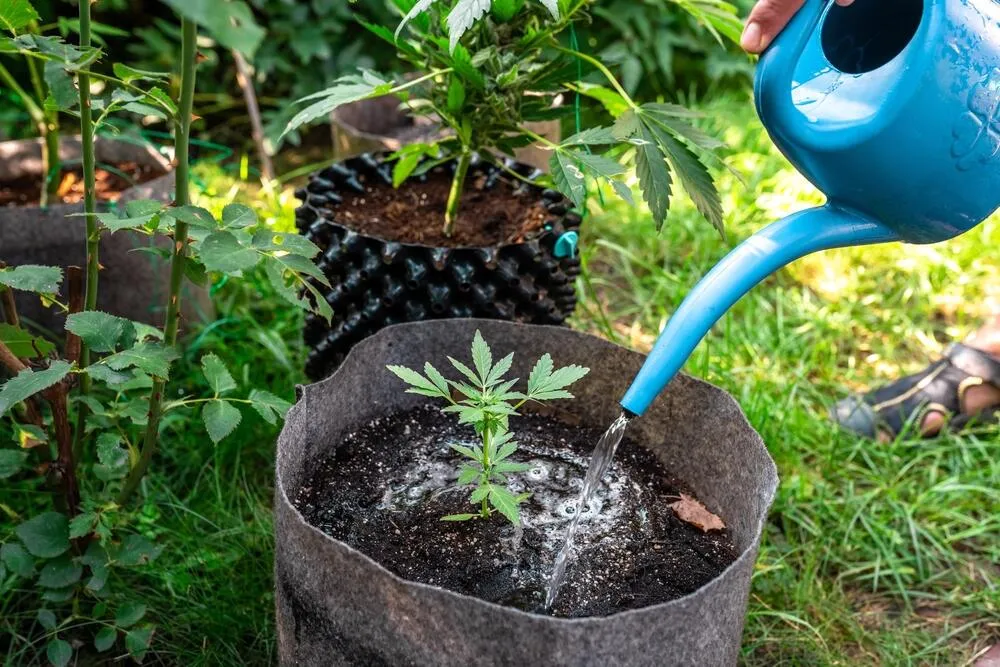
Watering Schedules & Timing: How Often Should You Water Cannabis?
If you're growing beginner cannabis seeds for the first time, learning how often to water is one of the quickest ways to avoid common mistakes and encourage healthy growth.
One of the most common questions new growers ask is how often should you water cannabis plants? The truth is that there isn't a universal schedule. The ideal watering frequency depends on your plant's age, pot size, growing medium, temperature, humidity, and airflow.
Instead of watering on a fixed schedule, check your plants regularly and only water when the growing medium begins to dry out. This encourages healthy root development and helps prevent common problems such as overwatering and root rot.
Watering Frequency by Growth Stage
As your cannabis plant moves through its different growth stages, its root system expands and its water requirements increase. Use the table below as a general guide rather than a strict schedule.
| Growth Stage | Recommended Watering Frequency | Notes |
| Seedlings & Clones | Every 2–3 days | Keep the growing medium lightly moist but never saturated. Young roots require both moisture and oxygen. |
| Vegetative Stage | Every 2–4 days | During the vegetative stage, water thoroughly once the top 1–2 inches (2.5–5 cm) of soil have dried. Plants develop rapidly during this period and require consistent moisture to support healthy growth. |
| Flowering Stage | Every 2–4 days | During the flowering stage, cannabis plants consume more water as they focus their energy on producing buds. Monitor the growing medium closely, especially during warm weather. |
Pro Tip: Healthy growers water according to the plant's needs, not the calendar.
How to Tell When Your Cannabis Plant Needs Water
The best watering schedule comes from observing your plants rather than following fixed dates.
| Method | What to Look For |
| Lift the Pot | A lightweight pot usually means the growing medium has dried sufficiently and it's time to water. |
| Finger Test | Insert your finger 1–2 inches (2.5–5 cm) into the soil. If it feels dry, it's time to water. If it's still moist, wait another day. |
| Leaf Appearance | Slight drooping combined with dry soil often indicates thirst. Drooping leaves with wet soil usually suggest overwatering. |
Using all three methods together provides a reliable way to determine how often to water cannabis without risking stress to your plants.
Grower's Tip: Lift the pot immediately after watering to get a feel for its weight. After a few watering cycles, you'll instinctively recognise when the growing medium has dried enough without relying on a strict schedule.
Factors That Affect How Often You Should Water Cannabis
No two grow rooms are identical. Several environmental factors determine how quickly your growing medium dries out.
Growers raising indoor cannabis seeds usually have more control over temperature and humidity, making it easier to maintain a consistent watering routine. Those growing outdoor cannabis seeds need to adjust watering more frequently as weather conditions change throughout the season.
| Factor | Effect on Watering |
| Temperature | Higher temperatures increase water consumption. |
| Humidity | Low humidity causes plants and soil to dry more quickly. |
| Airflow | Strong airflow speeds up evaporation from the growing medium. |
| Plant Size | Larger plants absorb significantly more water than seedlings. |
| Pot Size | Smaller pots dry out faster, while larger containers retain moisture for longer. |
| Growing Medium | Coco coir and airy soil mixes dry faster than dense soil. |
If you move your plants into larger containers during the grow cycle, watering requirements will change as the root system expands.
Soil Type and Pot Size Matter
Your choice of growing medium and container has a major impact on watering frequency.
Well-aerated soil containing perlite, compost, or coco coir improves drainage while retaining enough moisture for healthy root development. Dense soils stay wet for longer and require less frequent watering but can increase the risk of overwatering if drainage is poor.
Fabric pots are particularly popular because they improve airflow around the root zone and allow excess moisture to evaporate more quickly.
| Pot Type | Watering Characteristics |
| Fabric Pots | Dry out faster, increase oxygen around the roots, and reduce the risk of waterlogging. |
| Plastic Pots | Retain moisture longer and require less frequent watering. |
| Small Pots | Hold less growing medium and dry out quickly. |
| Large Pots | Stay moist for longer but require a greater volume of water during each irrigation. |
Always choose containers with adequate drainage holes to prevent standing water and reduce the risk of nutrient lockout and root diseases.
Grower's Tip: If you're switching from plastic pots to fabric pots, expect to water more often. Fabric containers improve airflow around the roots but also allow moisture to evaporate more quickly, especially in warm grow rooms.
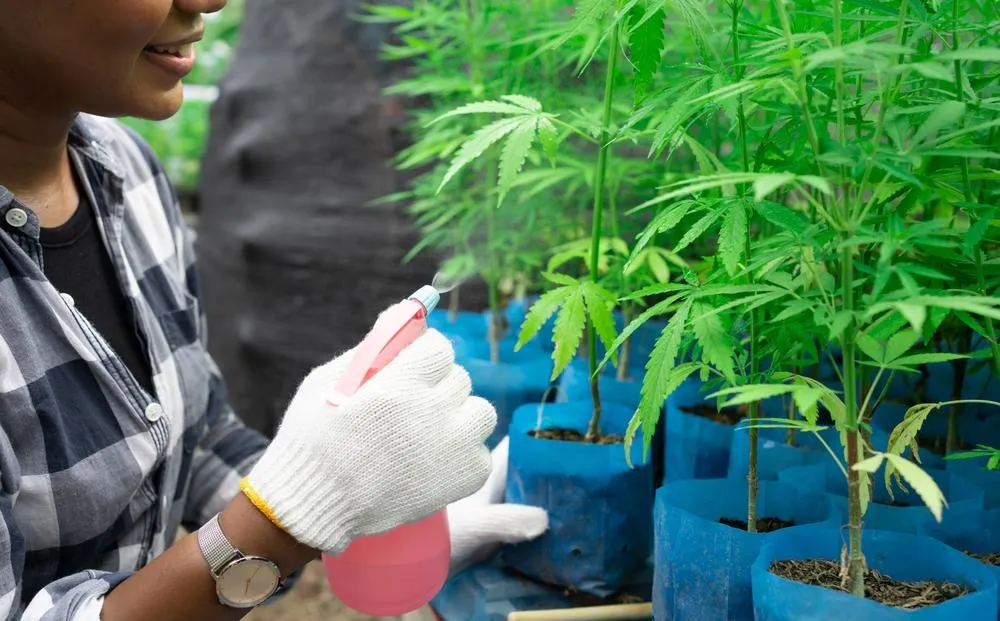
Properly Watering Cannabis Plants: Best Techniques for Healthy Growth
Knowing how often to water cannabis is only part of the process. How you water is just as important. Using the right technique helps roots grow deeper, improves nutrient uptake, and reduces the risk of overwatering or nutrient lockout.
Instead of pouring water quickly into the centre of the pot, water slowly and evenly around the base of the plant. This allows the growing medium to absorb moisture properly and encourages the roots to spread throughout the container.
Water Slowly for Better Root Development
Watering too quickly can cause the water to run straight through the pot without fully soaking the growing medium. As a result, parts of the root system may remain dry while nutrients are washed away.
For the best results:
- Water slowly around the edge of the pot rather than directly against the stem.
- Pause briefly if water starts pooling on the surface before continuing.
- Continue watering until the entire root zone is evenly moist.
During the cannabis seedling stage, young plants and freshly rooted clones only need a small amount of water because their root systems are still developing. Using a measuring jug or watering can with volume markings makes it easier to stay consistent every time you water.
How Much Water Does a Cannabis Plant Need?
One of the most common questions growers ask is how much water does a cannabis plant need? There isn't one exact answer because every grow is different. Plant size, pot size, temperature, humidity, and the growing medium all affect how much water is required.
As a general guideline, apply enough water to fully moisten the growing medium without leaving it waterlogged.
| Pot Size | Approximate Water Volume |
| 1 L | 250–350 ml |
| 3 L | 700–900 ml |
| 5 L | 1–1.5 L |
| 10 L | 2–3 L |
| 20 L | 3–5 L |
These are starting points rather than fixed amounts. A large flowering plant growing in warm conditions will naturally use more water than a young seedling in a cool room.
Grower's Tip: Avoid watering the same amount every time simply because the pot size stays the same. As your plants grow, their water requirements increase, so always adjust the amount based on plant size and how quickly the growing medium dries.
Water Until You See Runoff
When growing in soil or coco coir, it's good practice to water until around 10 to 20% of the water drains from the bottom of the pot.
Runoff helps remove excess salts, reduces nutrient buildup, and keeps the root zone healthy. During the final weeks before harvesting cannabis, many growers also choose to flush cannabis plants to remove excess nutrients from the growing medium. It also lowers the chance of nutrient lockout developing over time.
If you use trays or saucers beneath your pots, empty them after watering. Leaving roots sitting in stagnant water reduces oxygen levels and can encourage root diseases.
Why Water pH Matters
Even if you're using high-quality nutrients, your plants won't be able to absorb them properly if the water's pH is outside the correct range.
When the pH is too high or too low, nutrients become unavailable to the roots. This is known as nutrient lockout and can cause slow growth, yellowing leaves, and poor yields despite regular feeding.
Use the following pH ranges as a guide:
| Growing Medium | Ideal pH |
| Soil | 6.3-6.8 |
| Coco Coir | 5.8-6.2 |
| Hydroponics | 5.5-6.1 |
A digital pH meter is the easiest way to check your water before feeding. If necessary, adjust it using pH Up or pH Down until it falls within the correct range for your growing medium.
Quick Checklist for Watering Cannabis Correctly
| Best Practice | Why It Matters |
| Water slowly and evenly. | Allows the entire root zone to absorb moisture. |
| Water until you achieve 10-20% runoff. | Helps prevent salt buildup and nutrient lockout. |
| Empty runoff trays after watering. | Reduces the risk of root problems and mould. |
| Check your water's pH regularly. | Ensures nutrients remain available to the roots. |
| Increase water volume as plants grow. | Larger plants naturally consume more water than seedlings. |
Frequently Asked Questions
How often should you water cannabis plants?
Most cannabis plants need watering every 2-4 days, but there isn't a fixed schedule that suits every grow. Factors such as plant size, pot size, temperature, humidity, and the growing medium all affect how quickly the soil dries out. Instead of watering by the calendar, check the moisture level before watering.
How much water does a cannabis plant need?
The amount of water depends on the size of the plant and its container. As a general guide, water until the growing medium is evenly saturated and around 10-20% runoff drains from the bottom of the pot. Larger plants in bigger pots naturally require more water than seedlings or clones.
Can you overwater cannabis plants?
Yes. Overwatering is one of the most common mistakes made by new growers. Constantly wet soil reduces oxygen around the roots, slowing growth and increasing the risk of root rot. Always allow the growing medium to dry slightly before watering again.
How do you know when cannabis needs water?
The easiest way is to lift the pot. If it feels noticeably lighter than after watering, it's usually time to water again. You can also check the top 1-2 inches (2.5-5 cm) of the growing medium with your finger. If it feels dry, your plant is likely ready for watering.
Should you water cannabis every day?
No. Most cannabis plants do not need daily watering. Watering every day can keep the growing medium too wet and limit oxygen to the roots. In very hot weather or when growing in small containers, plants may need more frequent watering, so always check the soil before watering.
What is the best pH for watering cannabis?
The ideal pH depends on your growing medium. Soil-grown cannabis performs best with a pH between 6.3 and 6.8, while coco coir and hydroponic systems generally require a pH between 5.5 and 6.2 for optimal nutrient uptake.
Should you soak cannabis seeds in water before planting?
Soaking cannabis seeds in clean, room-temperature water for 12-24 hours can help speed up germination by softening the seed coat. Remove the seeds once they crack or after 24 hours, then transfer them to your preferred germination method. Avoid leaving seeds submerged for longer, as this can reduce oxygen and increase the risk of rot.
Is tap water safe for cannabis plants?
In most areas, tap water is suitable for growing cannabis, provided the pH is adjusted if necessary. If your water contains high levels of chlorine, chloramine, or dissolved minerals, using filtered or reverse osmosis (RO) water may produce better results.
Should you water until there is runoff?
Yes. When growing in soil or coco coir, watering until approximately 10-20% runoff helps flush excess salts from the growing medium and ensures the entire root zone is evenly saturated. Remember to empty runoff trays after watering so the roots are not left sitting in stagnant water.
What happens if cannabis plants don't get enough water?
Underwatered cannabis plants often develop drooping, brittle leaves, dry soil, and slower growth. If caught early, most plants recover quickly after being watered. Repeated underwatering, however, can reduce plant health and negatively affect flower development and final yields.


