




Knowing when to stop feeding cannabis nutrients is just as important as knowing when to start. Cannabis plants need a steady supply of nutrients throughout most of their life cycle, but feeding too heavily, stopping too early, or using the same schedule for every growing medium can affect plant health and late-stage flower development.
The right time to stop nutrients before harvest depends on several factors, including whether you grow in soil, coco coir, or hydroponics, how mature the flowers are, and whether the plant is showing signs of nutrient burn, salt buildup, or lockout. It is also important to understand that cannabis plants always need mineral nutrition, although they may not require bottled nutrients if they are growing in fertile or amended soil.
In this complete guide, I will explain how often to feed nutrients for cannabis plants, whether you should feed every time you water, how nutrient needs change throughout the growing cycle, and when to stop feeding cannabis plants before harvest. You will also learn how to check trichomes, monitor pH and EC, recognize when your plants no longer need more fertilizer, and decide whether flushing cannabis before harvest is suitable for your grow.
Key Takeaways
- Cannabis plants need nutrients throughout most of their life cycle, but they do not always need bottled nutrients at every watering.
- The best time to stop feeding cannabis nutrients depends on flower maturity, plant health, root conditions, and the growing medium.
- Soil, coco coir, hydroponics, and living soil should be managed differently because each system stores and delivers nutrients in its own way.
- Trichomes, pistils, calyx development, water uptake, pH, and EC are more reliable than following a fixed calendar date.
- Reduce nutrients gradually when possible, but act sooner if you see nutrient burn, salt buildup, lockout, or declining root health.
- Signs Your Cannabis Plants No Longer Need Nutrients
- Should You Feed Cannabis Plants Every Time You Water?
- How Nutrient Needs Change During the Cannabis Life Cycle
- When Should You Stop Feeding Cannabis Nutrients?
- How to Tell When Your Cannabis Plant Is Close to Harvest
- Do You Need to Flush Cannabis Before Harvest?
- Conclusion
- Frequently Asked Questions
Signs Your Cannabis Plants No Longer Need Nutrients
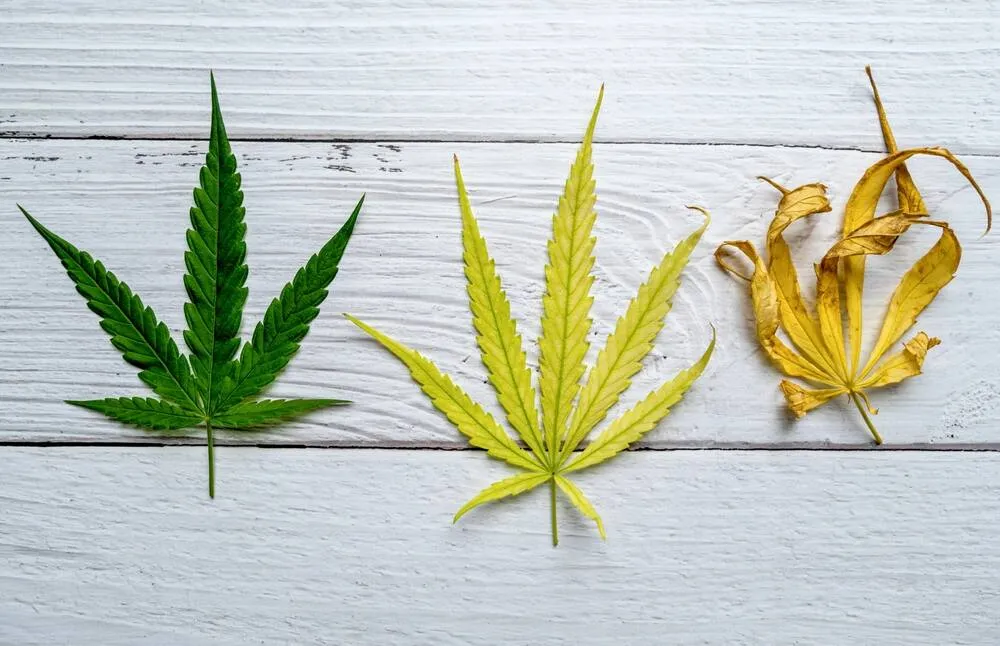
Cannabis plants do not always need more fertilizer when their leaves begin changing color or growth starts slowing. Depending on the stage of the grow, these signs may indicate that the plant is naturally approaching harvest, receiving too many nutrients, or unable to absorb what is already available in the root zone.
Reading the plant early can prevent minor feeding problems from developing into cannabis nutrient deficiencies, nutrient burn, severe lockout, or stalled flower growth. Before stopping cannabis nutrients, consider the timing, recent feeding history, pH, EC, and condition of the roots.
| What you notice | Likely cause | Recommended response |
| Gradual yellowing close to harvest | Natural late-flower fade | Confirm flower maturity before reducing nutrients |
| Brown, crispy leaf tips and dark foliage | Nutrient burn | Reduce feed strength and check root-zone EC |
| Deficiency symptoms despite regular feeding | Nutrient lockout | Check pH, EC, irrigation, and root health |
| Rising runoff EC | Salt accumulation | Reduce nutrient input and correct the root zone |
| Slow growth in wet media | Root stress or poor oxygenation | Allow proper drying and inspect root conditions |
Natural Fading Near Harvest
As cannabis plants approach maturity, nutrient uptake may slow and older lower leaves can gradually lose their green color. This natural late-flower fade occurs as the plant reallocates stored nutrients while the buds complete their final development.
A normal fade should happen close to harvest and progress gradually. The flowers should continue swelling, trichomes should be maturing, and the plant should not suddenly appear weak or damaged. Do not stop feeding simply because one or two lower leaves turn yellow. First confirm that the plant is genuinely within its harvest window.
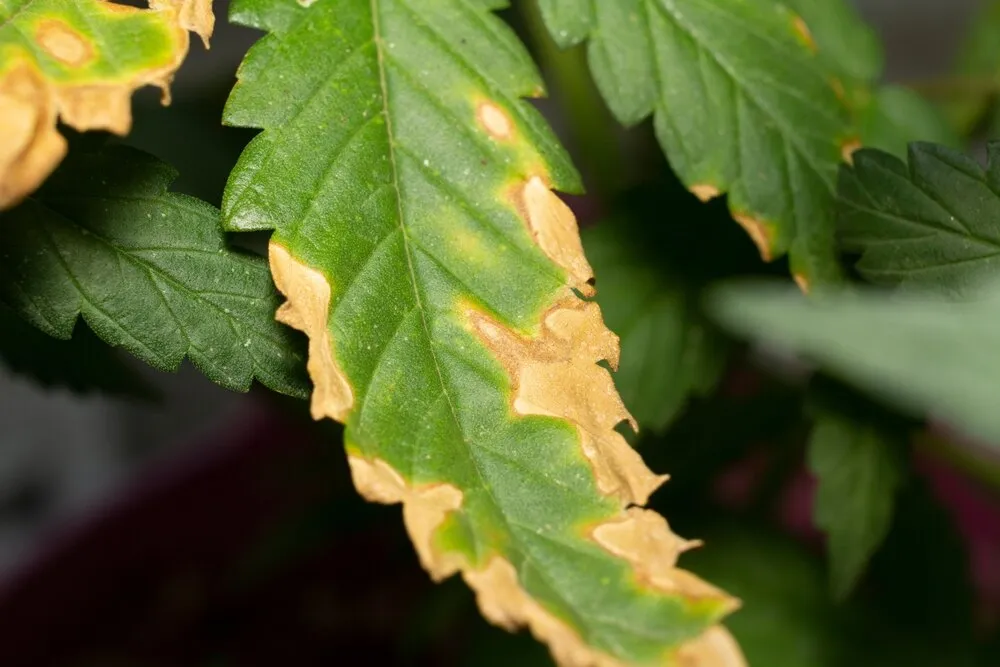
Signs of Nutrient Burn
Burnt leaf tips are often the first clear sign that a cannabis plant is receiving more nutrients than it can use. Other symptoms include very dark green foliage, downward-clawing leaves, scorched margins, and slow or restricted growth.
When I see tip burn beginning across several leaves, I check the nutrient concentration and runoff EC before making another feed. Mild tip burn does not always require a heavy flush, but it usually means the feeding strength should be reduced. Continuing with full-strength cannabis nutrients can allow salts to accumulate and cause more serious root-zone damage.
Signs of Nutrient Lockout
Nutrient lockout in cannabis occurs when minerals are present in the root zone but the plant cannot absorb them effectively. It can resemble underfeeding, with yellowing, spotting, weak growth, or discolored stems appearing even though the plant has been fed regularly.
Incorrect pH, excessive root-zone EC, nutrient imbalance, poor drainage, and damaged roots are common causes. Adding more fertilizer without diagnosing the problem can make the symptoms worse. Check the pH and EC of the nutrient solution and runoff, then examine watering habits and root health before resuming normal feeding.
Reduced Water and Nutrient Uptake
Mature cannabis plants may begin drinking less as flower development slows, but reduced water use can also indicate cold conditions, excessive humidity, overwatering, or root problems.
If the growing medium remains wet for much longer than usual, do not continue feeding on the normal schedule. Wait until the root zone is ready for irrigation and identify why water consumption has changed. Experienced growers adjust cannabis nutrients according to what the plant is using, rather than feeding automatically because a certain number of days have passed.
Should You Feed Cannabis Plants Every Time You Water?
Cannabis plants need a steady supply of nutrients, but that does not always mean adding cannabis nutrients every time you water. The right feeding frequency depends on the growing medium, nutrient strength, plant size, and stage of growth. Beginners should avoid following a feeding schedule blindly, as plants often need less fertilizer than the maximum amount listed on the bottle. Starting with beginner cannabis seeds that have predictable growth habits can also make it easier to recognize how plants respond to feeding.
Feeding Cannabis Plants in Soil
Pre-fertilized mixes can supply nutrients for the first few weeks, but choosing the best soil for growing cannabis depends on its fertility, drainage, texture, and pH. Adding strong bottled nutrients too early may cause burnt leaf tips, unusually dark foliage, or slow development.
Once the nutrients in the soil begin to run low, alternating between nutrient solution and plain, pH-appropriate water can be a useful starting point. Growers comparing different substrates should also understand how cannabis soil and growing mediums store and release nutrients. However, this is not a strict rule. Always check the plant’s appearance and growth rate before the next feed. Applying full-strength nutrients at every watering without monitoring plant health can cause excess salts to build up around the roots.
| Soil Feeding Stage | Recommended Approach | What to Watch For |
| Early Growth | Use plain water if soil is pre-fertilized | Healthy green leaves, steady growth |
| Mid Growth | Alternate feed and water | Slight tip burn = reduce nutrients |
| Late Flowering | Adjust feed according to maturity, pH, EC, and plant response | Premature yellowing, rising EC, slowing uptake, or natural fade |
Feeding Cannabis Plants in Coco Coir
Coco coir contains very little available nutrition, so the grower must supply a complete feed. Our guide to the best nutrients for cannabis plants in coco, soil, and hydro explains how nutrient programs differ between these systems. Cannabis plants in coco are commonly fed a diluted nutrient solution more consistently than plants grown in soil.
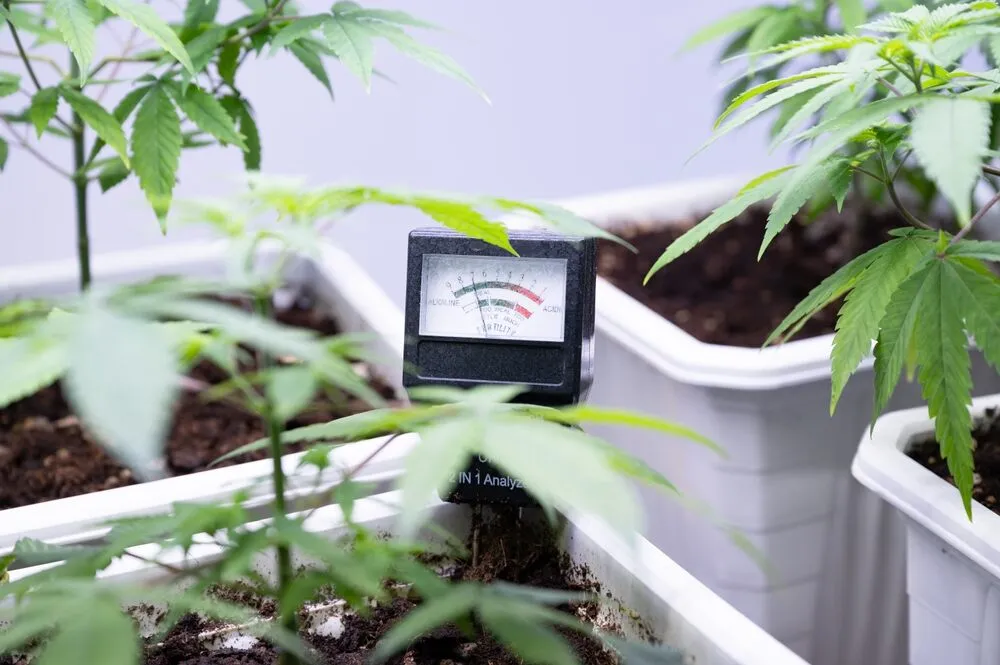
For beginners, runoff EC is one of the most useful measurements. If the runoff EC rises well above the nutrient solution going in, salts may be accumulating in the root zone. In that case, reduce the feed strength or correct the irrigation routine rather than adding more fertilizer.
| Coco Feeding Factor | Recommendation | Warning Signs |
| Nutrient Frequency | Feed more consistently than soil | Salt buildup (high runoff EC) |
| EC Monitoring | Check runoff regularly | Rising EC indicates overfeeding |
| Watering Routine | Maintain consistent moisture | Dry coco can cause nutrient imbalance |
Feeding Cannabis Plants in Hydroponic Systems
In hydroponics, nutrients are delivered directly through the reservoir. Monitor EC, pH, reservoir level, and daily water consumption to understand how actively the plants are feeding.
| Hydroponic Metric | Ideal Practice | Issue Indicator |
| EC Levels | Keep stable and within range | Sudden spikes or drops |
| pH Levels | Maintain approximately 5.5–6.5, with many growers targeting around 5.8–6.2. | Nutrient lockout |
| Water Consumption | Track daily usage | Low uptake may signal stress |
How an Experienced Grower Adjusts Feeding
I treat manufacturer feeding charts as starting points, not fixed instructions. Healthy plants should show steady growth and balanced green foliage. Burnt tips, clawing, very dark leaves, slow growth, or rising runoff EC usually indicate that nutrient strength should be reduced. Small, gradual adjustments are safer than waiting for severe nutrient burn to appear.
| Plant Signal | Likely Cause | Adjustment |
| Burnt leaf tips | Overfeeding | Reduce nutrient strength |
| Dark green leaves | Excess nitrogen | Lower nitrogen levels |
| Slow growth | Underfeeding or stress | Increase nutrients slightly |
| Rising runoff EC | Salt buildup | Flush or reduce feeding |
How Nutrient Needs Change During the Cannabis Life Cycle
Cannabis nutrient requirements change as the plant moves from early growth into flowering, which is why the correct cannabis NPK ratio changes at each stage. Understanding these changes helps beginners avoid feeding too heavily during sensitive stages or stopping nutrients before the plant has finished developing.
Seedling Stage
Cannabis seedlings need very little added nutrition because their small root systems cannot process strong fertilizer concentrations. Seeds also contain stored energy that supports the earliest stages of development, while pre-fertilized soil may provide enough nutrients for the first few weeks.
Applying full-strength cannabis nutrients too early can damage young roots, stunt growth, and cause burnt leaf tips. In nutrient-rich soil, plain pH-appropriate water is often sufficient. Seedlings grown in coco or hydroponics may need a mild nutrient solution because these growing media provide little available nutrition.
Vegetative Stage
Nutrient demand increases during the vegetative stage as the plant develops roots, stems, branches, and foliage. Nitrogen becomes particularly important, but healthy growth also depends on phosphorus, potassium, calcium, magnesium, and trace minerals.
A healthy vegetative plant should produce steady new growth, strong branches, and evenly colored green leaves. Very dark foliage, downward-clawing leaves, or burnt tips may indicate excess nitrogen or excessive nutrient strength. Pale leaves and slow development may suggest underfeeding, although pH and root health should be checked before adding more fertilizer.
Flowering Stage
As the cannabis flowering stage begins, cannabis plants shift their energy toward bud production. Nitrogen demand usually decreases, while phosphorus and potassium become more important for flowering, energy transfer, and overall plant function.
However, flowering plants still require some nitrogen alongside calcium, magnesium, sulfur, and other micronutrients. Removing nitrogen too early can cause premature yellowing and reduce the plant’s ability to maintain healthy leaves during bud development.
Final Weeks of Flowering
Nutrient uptake may gradually slow as cannabis plants approach maturity. Older lower leaves may begin to yellow as stored nutrients are redistributed, which can be a normal part of late flowering.
Natural fading usually develops gradually near harvest while buds continue maturing. Yellowing that begins too early, spreads rapidly, or appears alongside spots, curling, weak growth, or stalled flower development is more likely to indicate a deficiency, nutrient lockout, or root-zone problem. Before changing the feeding schedule, check the plant’s maturity, pH, EC, and recent nutrient history.
When Should You Stop Feeding Cannabis Nutrients?
Knowing when to stop feeding cannabis nutrients depends on how close the plant is to harvest, the growing medium, and the condition of the root zone. Rather than following a fixed date, experienced growers assess flower maturity, nutrient strength, runoff readings, and plant health before changing the feeding schedule.
The Short Answer
A common approach is to stop mineral nutrients around 5–14 days before harvest, depending on the growing medium. Soil usually requires the longest transition, while coco and hydroponic systems respond more quickly when nutrients are removed.
This range should be treated as a starting point rather than a strict rule. Breeder flowering times are estimates, and plants may finish earlier or later depending on the phenotype and growing environment. Check trichomes, pistils, calyx development, and overall flower maturity before beginning a water-only period. Stopping too early can deprive the plant of nutrition while buds are still developing.
When to Stop Nutrients in Soil
For cannabis grown in mineral-fed soil, growers commonly stop bottled nutrients around 7–14 days before harvest. Soil retains moisture and dissolved mineral salts longer than inert growing media, so changes in feeding are not reflected immediately around the roots.
Continue watering only when the soil needs it. Do not repeatedly saturate the container in an attempt to remove nutrients faster, as this can reduce root-zone oxygen and cause additional stress.
Growing organic cannabis in amended or living soil requires a different approach because nutrients are released gradually through organic matter and microbial activity. These systems contain slow-release ingredients and microorganisms that make nutrients available over time, sometimes supported by inputs such as organic compost tea for cannabis plants. Growers may finish with plain water, but aggressively flushing the soil can disturb its biological balance and wash out useful compounds.
When to Stop Nutrients in Coco Coir
Coco coir holds little available nutrition and responds quickly to changes in the nutrient solution. A water-only or reduced-feed period of around 5–7 days is a common starting point.
Maintain the plant’s normal irrigation frequency rather than allowing coco to dry excessively. Check runoff EC to confirm whether salts are decreasing and avoid replacing overfeeding with inconsistent watering.
When to Stop Nutrients in Hydroponics
In hydroponic systems, changing or diluting the reservoir immediately changes what the roots can access. Growers commonly stop nutrients around 3–7 days before harvest.
Continue monitoring pH, water temperature, and reservoir cleanliness. Leaving roots in poorly managed plain water for too long can cause stress and nutrient deficiency without improving the final harvest.
Why Strain Type Is Not the Best Guide
Indica, sativa, hybrid, and autoflower seeds do not have one universal nutrient stopping date. Growing medium, flower maturity, root-zone EC, plant health, and nutrient concentration provide more useful guidance than broad strain classifications.
How to Tell When Your Cannabis Plant Is Close to Harvest
Before deciding when to stop feeding cannabis nutrients, confirm that the plant is genuinely approaching harvest. Breeder dates can help you estimate the finish, but the flowers provide more reliable evidence. As an experienced grower, I use several maturity signs together rather than relying on a single visual clue.
Quick Harvest Readiness Reference
| Indicator | Early Stage (Not Ready) | Mid Stage (Approaching) | Late Stage (Ready) |
| Trichomes | Clear | Cloudy / Milky | Amber (some present) |
| Pistils | White, upright | Darkening, curling inward | Mostly dark, few new white pistils |
| Calyxes | Small, undeveloped | Swelling | Fully swollen, dense buds |
| Flower Growth | Rapid growth | Slowing | Minimal new growth |
| Overall Appearance | Bright green, vigorous | Slight fade beginning | Mature, dense, nearing senescence |
Checking Trichome Maturity
Trichomes are the resin glands covering cannabis flowers. Inspect them with a jeweler’s loupe or handheld microscope:
- Clear trichomes: The flowers are still immature and usually need more time.
- Cloudy or milky trichomes: Cannabinoid production is near its peak, and the main harvest window is approaching.
- Amber trichomes: Indicate further flower maturity. Some growers associate a greater amber percentage with heavier effects, although genetics and the flower’s overall chemical profile remain major influences..
Check trichomes on the flower calyxes rather than the sugar leaves. Sugar-leaf trichomes often turn amber earlier and can make a beginner think the plant is ready before the buds have fully matured.
Watching Pistil Development
Pistils usually begin white and upright before darkening, curling inward, and receding into the flowers. When most pistils have changed color and fewer fresh white pistils are appearing, harvest may be getting close.
However, pistils alone cannot confirm maturity. Heat, pollination, physical contact, and some genetics can cause them to darken early. Always compare pistil development with trichomes and flower structure.
Looking for Swollen Calyxes and Mature Flowers
As the plant finishes, calyxes become visibly swollen, buds appear denser, and flower growth begins to slow. The plant may also stop producing large numbers of fresh pistils. These signs suggest that the final stage of bud development is underway.
Using Breeder Flowering Times Correctly
Breeder flowering times are estimates, not guaranteed harvest dates. Plant phenotype, lighting, temperature, stress, and growing conditions can all affect finishing time.
Stopping nutrients solely because the calendar says harvest is two weeks away can leave the plant underfed while flowers are still developing. Use the estimated date as a reminder to begin checking maturity, then let the trichomes, calyxes, pistils, and overall plant condition guide your final decision.
Should You Reduce Nutrients Gradually or Stop All at Once?
Whether you taper cannabis nutrients or stop them immediately depends on plant health, root-zone conditions, and how close the crop is to harvest. Healthy plants approaching maturity should be treated differently from plants showing nutrient burn or excessive salt buildup.
Nutrient Strategy Overview
| Situation | Recommended Action | Reasoning |
| Healthy plant, still developing | Continue normal feeding | Supports ongoing bud growth |
| Healthy plant, nearing harvest | Gradually reduce nutrients | Prevents excess buildup while finishing |
| Rising EC or slowing uptake | Taper nutrient strength | Reduces salt accumulation |
| Severe nutrient burn or imbalance | Stop or sharply reduce feeding | Prevents further damage |
| Incorrect nutrient mix or root issues | Correct issue, then resume light feed | Stabilizes plant before continuing |
Continuing Normal Feed Until the Final Stage
If the plant is healthy, flowering strongly, and showing stable pH and EC readings, you can maintain an appropriate nutrient strength until the planned final water-only or reduced-feed period.
In my experience, reducing nutrients several weeks too early often causes premature yellowing while the buds are still gaining size. I prefer to maintain controlled feeding until flower maturity confirms that harvest is close, rather than forcing the plant to fade according to a calendar date.
Gradually Reducing Nutrient Strength
Tapering may be helpful when nutrient uptake begins to slow or runoff EC starts rising late in flowering. Reduce the concentration gradually instead of suddenly removing all nutrition.
For example, lower the nutrient solution in small stages while continuing to monitor leaf color, water use, runoff EC, and flower development. This reduces salt input without starving a plant that is still actively maturing.
Stopping Nutrients Immediately
Stop or sharply reduce feeding when severe nutrient burn is progressing, root-zone EC is excessively high, or a nutrient solution has been mixed incorrectly.
Do not simply switch to plain water and assume the problem is solved. Check pH, EC, irrigation frequency, and root health to identify the cause. Once conditions stabilize, resume feeding at a lower concentration if the plant is not yet close to harvest. Correcting the root-zone problem is more important than following a fixed cannabis nutrient schedule.
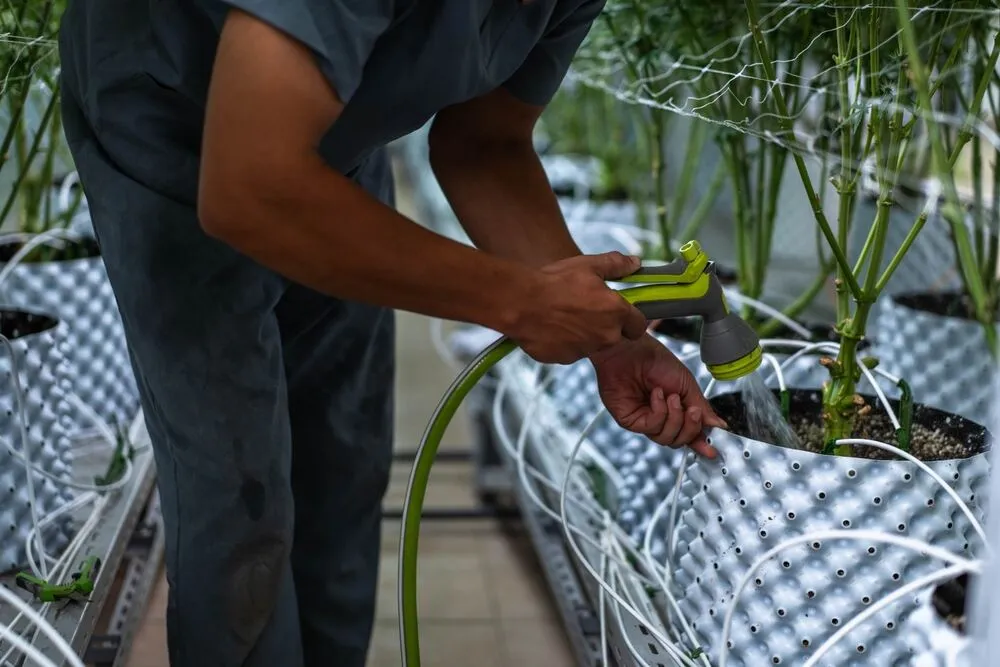
Do You Need to Flush Cannabis Before Harvest?
Flushing cannabis before harvest is a common practice, but it is not an absolute requirement for every grow. The correct approach depends on your growing medium, nutrient program, root-zone EC, and plant health. Beginners should understand what flushing involves before replacing cannabis nutrients with plain water.
What Flushing Actually Means
Growers often use the word “flushing” to describe two different techniques:
| Type of flush | Purpose | When it is used |
| Preharvest water-only period | Stops adding bottled nutrients as harvest approaches | During the final days before harvest |
| Corrective flush | Reduces excessive mineral salts in the root zone | When EC is too high or nutrient burn is progressing |
A preharvest water-only period involves continuing normal irrigation without adding mineral nutrients. A corrective flush may involve applying more water to reduce salt buildup, but it should only be used when root-zone readings and plant symptoms indicate that it is necessary.
Is Flushing Necessary?
You can harvest cannabis without flushing. Some growers stop feeding cannabis nutrients shortly before harvest, while others continue using a reduced nutrient solution until the crop is ready.
Flushing is often claimed to improve flavor, aroma, smoothness, or potency, but these results are not guaranteed. In my experience, the priority should be maintaining a healthy root zone and avoiding excessive fertilizer buildup throughout the grow. A heavily overfed plant cannot always be corrected by giving it plain water during the final week.
Finishing Cannabis by Growing Medium
| Growing medium | Recommended approach | What to monitor |
| Mineral-fed soil | Use plain, pH-appropriate water when the soil needs irrigation | Soil moisture, drainage and plant health |
| Coco coir | Maintain normal irrigation while gradually reducing nutrient concentration | Input and runoff EC |
| Hydroponics | Dilute or replace the nutrient reservoir | Reservoir EC, pH, temperature and cleanliness |
| Living soil | Continue normal watering without aggressive runoff flushing | Soil moisture and overall plant maturity |
How to Finish Cannabis Plants in Soil
When finishing mineral-fed soil, water only when the container has dried sufficiently. Do not repeatedly soak the soil to force nutrients out, as saturated media can reduce oxygen around the roots.
How to Finish Cannabis Plants in Coco
Coco should remain evenly irrigated. Reduce nutrient concentration gradually while checking runoff EC to confirm that salts are not accumulating. Do not allow coco to dry out simply because feeding has stopped.
How to Finish Cannabis Plants in Hydro
Reservoir changes affect hydroponic plants immediately. Dilute or replace the nutrient solution while continuing to manage pH, temperature, oxygenation, and water quality.
How to Avoid Overwatering During the Final Stage
Stopping nutrients does not mean the roots need more water. Cannabis roots still require oxygen, and excessive irrigation can cause drooping, slow nutrient uptake, and root problems. Maintain the normal watering frequency for your growing medium and allow the plant’s water use—not the flushing schedule—to determine when you irrigate.
Conclusion
Knowing when to stop feeding cannabis nutrients depends on reading the plant rather than following a fixed schedule. While many growers reduce or stop nutrients before harvest, the ideal timing varies based on the growing medium, flower maturity, plant health, and root conditions.
Before adjusting feeding, observe key indicators such as trichomes, pistils, calyx development, water uptake, pH, and EC levels. Plants still actively developing flowers may benefit from continued feeding, while signs of nutrient burn, salt buildup, or lockout may call for earlier reduction.
Different growing systems—soil, coco coir, hydroponics, and living soil—handle nutrients differently, influencing how plants respond to changes in feeding.
The most effective approach is gradual, evidence-based adjustment. Use feeding charts and breeder timelines as general guides, but prioritize plant response. Avoid forcing an early fade, and instead align nutrient levels with the plant’s needs to support healthy late-stage development and a controlled, successful harvest.
Frequently Asked Questions
When should I stop feeding cannabis nutrients before harvest?
Most growers reduce or stop mineral nutrients around 5–14 days before harvest, depending on the growing medium and plant maturity. Soil usually takes longer to respond than coco coir or hydroponics. Rather than relying only on the calendar, check trichomes, pistils, calyx development, EC levels, and overall plant health.
Should I feed cannabis plants every time I water?
Not always. Plants grown in soil may benefit from alternating nutrient solution with plain, pH-appropriate water, especially if the soil already contains fertilizer. Coco and hydroponic plants usually need nutrients more consistently because these systems provide little or no nutrition on their own. Feed strength should always be adjusted according to plant response.
Should I stop nutrients when cannabis leaves turn yellow?
Do not stop feeding based on yellow leaves alone. Gradual yellowing of older lower leaves near harvest can be a normal late-flower fade. Yellowing that starts early, spreads rapidly, or appears with spots, curling, burnt edges, or stalled growth may indicate deficiency, nutrient lockout, or root stress.
Can cannabis plants be harvested without flushing?
Yes. Preharvest flushing is a grower choice rather than a universal requirement. Some growers use plain water during the final days before harvest, while others continue with a reduced nutrient solution. Claims that flushing always improves flavor, smoothness, aroma, or potency should not be treated as guaranteed results.
Can you grow cannabis without bottled nutrients?
Cannabis can grow without bottled nutrients when fertile, amended, or living soil already provides the minerals it needs. However, cannabis cannot grow without nutrients altogether. Inert growing media such as coco coir, rockwool, and most hydroponic systems require the grower to supply a complete nutrient solution.


