




Veganic weed is cannabis grown without animal-derived fertilizers or soil amendments such as manure, blood meal, bone meal, fish products, bat guano, or worm castings. Instead, growers rely on plant-based composts, crop meals, seaweed extracts, microbial inoculants, and carefully selected mineral amendments to support healthy plant growth.
For beginners, veganic cultivation offers greater control over ingredient sourcing and aligns with plant-based or vegan principles, but it also requires more planning than conventional growing. Many veganic nutrients release slowly and depend on active soil biology, so preparing and conditioning the growing medium well in advance is essential for success.
This guide explains how veganic cannabis differs from standard organic cannabis, which plant-based nutrients can be used, and how to set up a simple, beginner-friendly system. It also explores common claims about veganic weed, including whether it improves flavor, increases THC levels, or offers more sustainable cultivation outcomes.
Key Takeaways
- Veganic weed is cannabis grown without animal-derived inputs such as manure, bone meal, blood meal, fish products, bat guano, or worm castings.
- Veganic growing differs from standard organic cultivation because organic fertilizers may still contain animal-derived ingredients.
- Plant-based composts, crop meals, seaweed products, microbial inoculants, and selected mineral amendments can supply nutrients, but many release slowly and depend on active soil biology.
- Veganic cannabis is not automatically stronger, safer, cleaner, better tasting, or more sustainable. Genetics, plant health, environmental control, harvesting, drying, and curing remain major influences.
- Beginners should keep their first veganic grow simple by using a proven base mix, preparing the soil in advance, checking every ingredient, monitoring plant health, and recording each amendment.
- What Is Veganic Weed?
- Veganic vs. Organic Cannabis
- What Are Veganic Nutrients?
- How to Grow Veganic Cannabis
- Potential Benefits of Veganic Growing
- Challenges and Limitations of Veganic Growing
- Environmental and Health Considerations of Veganic Weed
- Are There Health Benefits to Veganic Cannabis?
- Does Veganic Cannabis Taste Better or Contain More THC?
- Is Veganic Growing Worth Trying?
- Frequently Asked Questions
What Is Veganic Weed?
Veganic weed is cannabis grown without animal-derived fertilizers, soil amendments, or pest-control products. Instead of manure, blood meal, bone meal, fish emulsion, bat guano, or worm castings, growers rely on plant-based composts, meals, fermented extracts, seaweed products, and suitable mineral amendments to feed their plants.
In practice, veganic growing sits within the wider philosophy of organic cannabis cultivation, but the two methods are not identical. Organic systems may use animal-derived ingredients, while a strict veganic system excludes them completely. Organic cannabis can still be grown with animal-derived ingredients, while a strict veganic system excludes them completely. The term describes the cultivation method, not a special type of cannabis seed or strain.
From a grower’s perspective, the most important part of a veganic setup is nutrient timing. Many plant-based amendments must be broken down by soil microbes before roots can absorb the nutrients. This means the soil should be prepared in advance and kept evenly moist, well aerated, and biologically active.
Veganic cultivation may suit growers who want an animal-free approach and greater control over ingredient sourcing. However, it does not automatically produce stronger, cleaner, safer, or better-tasting cannabis. Genetics, lighting, root health, nutrient balance, harvest timing, drying, and curing still have a much greater influence on the final quality of the flower than the cultivation label alone suggests.
Veganic vs. Organic Cannabis
Veganic cultivation sits within the wider organic-growing philosophy, but the two methods are not interchangeable. Both aim to support healthy soil and reduce reliance on synthetic fertilizers. The main difference is the source of the ingredients used to feed the plant.
Organic cannabis can be grown with animal-derived amendments such as manure, bat guano, fish emulsion, blood meal, and bone meal. Veganic growing excludes these materials completely, relying instead on plant compost, crop meals, seaweed products, microbial activity, and suitable mineral amendments.
| Feature | Veganic growing | Organic growing |
| Animal-derived fertilizer | Excluded | May be used |
| Plant compost | Used | Used |
| Mineral amendments | May be used | May be used |
| Synthetic fertilizer | Usually excluded | Usually excluded |
| Manure | Excluded | May be used |
| Blood and bone meal | Excluded | May be used |
| Fish products | Excluded | May be used |
| Certification | Limited and inconsistent | Depends on local standards |
| Main motivation | Animal-free cultivation and soil health | Natural inputs and soil health |
From a grower’s perspective, the label alone tells you very little about the finished flower. Neither method automatically guarantees pesticide-free or contaminant-free cannabis, higher potency, improved flavor, or better environmental performance. Those results depend on the complete cultivation system, including ingredient quality, pest management, energy use, plant health, harvesting, drying, and curing.
What Are Veganic Nutrients?
Veganic nutrients are fertilizers and soil amendments that contain no animal-derived ingredients. They can come from plants, minerals, seaweed, or microbial fermentation. Our comparison of the best nutrients for cannabis plants explains how nutrient delivery differs between soil, coco, and hydro, although every product still needs to be checked for animal-derived ingredients. Unlike immediately available bottled mineral feeds, many organic amendments must first be broken down by soil microorganisms before their nutrients can be absorbed by the roots. This process can take days or weeks, so timing matters.
Plant-Based Nitrogen Sources
Alfalfa meal, soybean meal, cottonseed meal, legume cover crops, plant-based compost, and fermented plant extracts can all contribute nitrogen to a veganic soil. Because the plant’s requirements change as it matures, understanding the correct cannabis NPK ratio for each growth stage can help you avoid supplying too much nitrogen or too little phosphorus and potassium. However, their nutrient content and release speed vary. I would never treat a plant meal like an instant liquid feed, especially when correcting a deficiency. The soil needs suitable moisture, oxygen, warmth, and microbial activity for mineralization to take place.
Phosphorus and Potassium Sources
Possible phosphorus and potassium inputs include rock phosphate, kelp meal, langbeinite, composted plant matter, and small amounts of plant or wood ash. Rock phosphate and langbeinite are mined mineral amendments rather than plant-based nutrients. Rock phosphate releases slowly, so it is better used as part of a prepared soil mix than as an immediate treatment for phosphorus deficiency in cannabis plants. Kelp and compost may release nutrients gradually, while ash can raise soil pH quickly and should be used cautiously.
Calcium, Magnesium and Micronutrients
Calcium, magnesium, sulfur, and trace elements can be harder to balance after familiar animal-derived inputs are removed. Agricultural lime, dolomitic lime, gypsum, basalt, volcanic rock dust, and other suitable mineral amendments may help fill these gaps. Their effects differ: lime changes soil pH, while gypsum supplies calcium and sulfur without acting as a liming material.
Grower Note: More ingredients do not automatically create better soil. A simple, balanced recipe is easier for a beginner to monitor than a heavily amended mix containing overlapping nutrient sources. Test the soil where possible and only add an amendment when you understand what it supplies and how it may affect pH.
How to Grow Veganic Cannabis
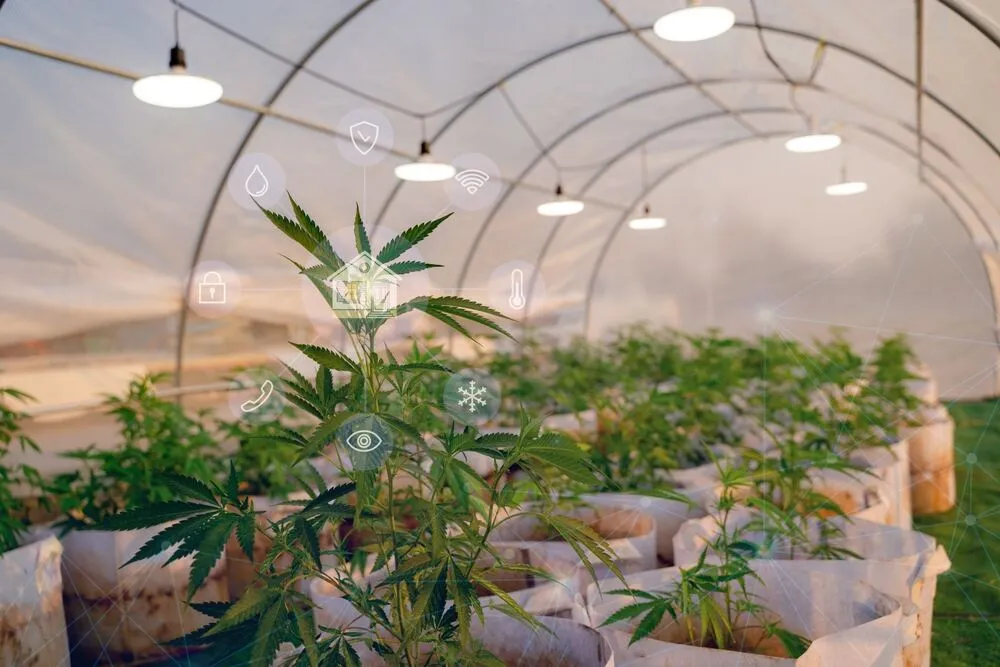
Veganic cannabis is easiest to grow when the soil is prepared before the plant needs feeding. The aim is to create an aerated, biologically active medium that releases nutrients gradually throughout the grow.
Your feeding system is only one part of the setup. Starting with beginner cannabis seeds can give you a more manageable plant while you learn how moisture, soil biology, and slow-release nutrients work together.
1. Check Every Ingredient
Read the full ingredient list on potting mixes, composts, liquid nutrients, bloom boosters, microbial products, and pest-control sprays. Products labeled natural or organic may still contain manure, worm castings, fish hydrolysate, bat guano, blood meal, or bone meal.
When the ingredients are unclear, ask the manufacturer whether the product contains anything derived from animals.
2. Prepare a Beginner-Friendly Growing Medium
Start with a lightly fertilized soil or peat-based potting mix that has been confirmed free from animal-derived ingredients. Our guide to cannabis soil and solid growing mediums explains how drainage, aeration, moisture retention, and root support differ between common options. Add enough perlite, pumice, or another aeration material to keep the medium loose and well drained.
Mix in approximately 10–20% fully matured, manure-free plant compost by volume. Seedlings should begin in a lighter mix with fewer amendments, as young roots can be damaged by excessive nutrient levels.
For most beginners, a final container of at least 5–10 gallons gives the soil more room to hold water, nutrients, roots, and microbial life.
3. Add Veganic Nutrients Carefully
Use plant-based amendments such as alfalfa meal, kelp meal, or another balanced veganic fertilizer. Mineral amendments may be added where needed, but follow the product rate rather than estimating quantities.
Do not combine several fertilizers that supply the same nutrients. Excessive amendment rates can cause nutrient burn, alter soil pH, or create calcium, magnesium, and potassium imbalances.
4. Prepare the Soil Before Planting
Moisten the amended soil until it feels evenly damp but not saturated. Leave it for around two weeks before transplanting, turning or mixing it occasionally if necessary.
This gives microorganisms time to begin breaking down the organic ingredients. A freshly mixed soil may contain nutrients but still be unable to release them quickly enough for a rapidly growing plant.
5. Transplant and Water Correctly
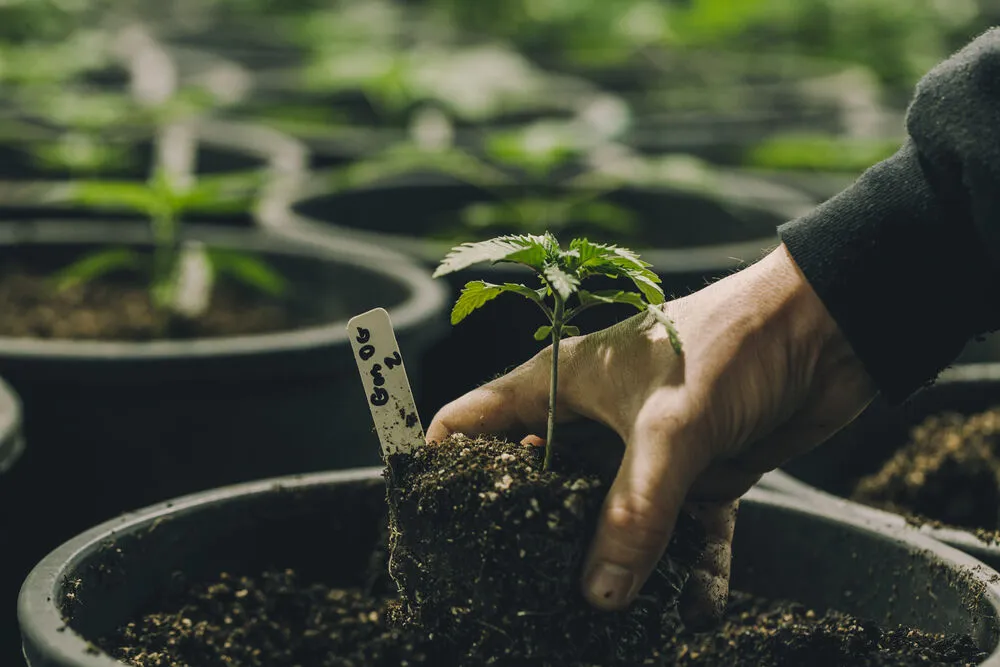
Move the seedling into the prepared medium once it has developed a healthy root system. Water slowly around the root zone rather than soaking the entire container immediately.
Allow the upper layer to begin drying between waterings, but do not let the whole container dry out repeatedly. Organic soil microbes perform best when moisture remains reasonably stable. Keep soil pH within approximately 6.0–7.0, with 6.2–6.8 providing a useful target for most soil grows.
Mulch can help reduce evaporation. Organic compost tea for cannabis plants is optional rather than essential, and any recipe used in a strict veganic system must exclude worm castings, fish hydrolysate, guano, and other animal-derived ingredients.
6. Feed According to the Growth Stage
| Growth stage | Beginner approach |
| Seedling stage | Use a light medium and avoid heavy feeding |
| Vegetative growth | Monitor color and growth before adding nitrogen-rich plant amendments |
| Early flowering | Apply a suitable veganic bloom top dressing before deficiencies appear |
| Mid flowering | Monitor plant response and avoid unnecessary amendments |
| Late flowering | Reduce feeding as growth slows and the plant approaches maturity |
Slow-release amendments should be applied before the plant becomes deficient. Because these products can continue releasing nutrients for several weeks, deciding when to stop feeding cannabis nutrients depends on the amendment, application timing, existing soil fertility, and condition of the plant rather than a fixed date.
7. Monitor the Plant Before Adding More Nutrients
Watch leaf color, growth rate, new growth, burnt leaf tips, interveinal discoloration, soil moisture, and pH trends.
Yellowing does not always mean the plant needs more fertilizer. Similar symptoms can result from overwatering, unsuitable pH, damaged roots, poor aeration, low root-zone temperatures, or limited microbial activity. Check the growing conditions before adding another amendment.
8. Prevent Pest Problems
Keep the growing area clean, inspect both sides of the leaves regularly, maintain airflow, remove damaged plant matter, and use physical barriers where appropriate. Beneficial insects and companion plants can also support an integrated pest-management plan.
Natural pest-control products are not automatically veganic or harmless. Check both the active and inactive ingredients before applying them.
What I Would Do on a First Veganic Grow: I would start with one or two plants in a proven, lightly amended base mix. I would record every product and application, avoid changing several inputs at once, and keep a compatible veganic liquid nutrient available for deficiencies that need a faster response. Most importantly, I would judge the system by steady growth and plant health rather than claims printed on a fertilizer label.
Potential Benefits of Veganic Growing
Veganic growing can give beginners greater control over what enters their soil. By checking labels and avoiding manure, bone meal, fish products, bat guano, and other animal-derived ingredients, growers learn where each nutrient comes from and why it is being added.
Using a simple selection of plant compost, crop meals, seaweed products, and mineral amendments can also make the feeding plan easier to understand. Instead of adding products automatically, beginners learn how moisture, aeration, microbial activity, and nutrient release work together around the roots.
Clean plant material may also be recycled into animal-free compost or homemade cannabis fertilizer, but each recipe must be checked carefully because many common homemade feeds contain animal-derived ingredients. Preparing a living soil in advance can mean fewer feed applications once plants are established, provided the original mix remains balanced.
These benefits are not guaranteed, and veganic growing is not always the easiest option for a first crop. Slow nutrient release can make deficiencies harder to correct, while ready-made veganic products may be less widely available.
The wider setup matters too. Replacing animal-based fertilizer does not make an indoor grow sustainable if it still uses excessive electricity, water, disposable materials, or climate-control equipment.
Challenges and Limitations of Veganic Growing
Veganic growing requires more planning than simply following a bottled feeding schedule. Beginners may find fewer ready-made nutrient options, while products labeled natural or organic can still contain hidden animal-derived ingredients. Checking labels and keeping accurate records are therefore important throughout the grow.
Nutrient timing is often the biggest challenge. Alfalfa, soybean, or other plant meals may contain the nutrient a plant needs, but that does not mean it is immediately available to the roots. Release depends on soil temperature, moisture, microbial activity, particle size, aeration, and soil chemistry. When these conditions are unsuitable, deficiencies can develop even in an amended soil.
Slow nutrient release also makes problems harder to correct quickly. Calcium, phosphorus, magnesium, and micronutrients can be particularly difficult to balance when familiar animal-based amendments are removed. Adding several products without testing the soil may create further imbalances.
Veganic standards are not applied consistently, and controlled cannabis research remains limited. However, the method does not inherently reduce yield. Plants can produce competitive harvests when the root zone is prepared in advance and nutrients remain available throughout vegetative growth and flowering.
Environmental and Health Considerations of Veganic Weed
Veganic weed can reduce a grower’s reliance on manure, blood meal, bone meal, fish products, and other animal-derived agricultural by-products. For growers following vegan principles, this aligns cultivation choices with their ethics. Plant compost, crop residues, cover crops, and mulches can also return organic matter to the soil and support nutrient cycling when managed correctly.
Environmental Advantages and Disadvantages of Veganic Growing
The potential soil benefits come from the practices used, not from the veganic label alone. Cover crops, living roots, plant diversity, limited soil disturbance, and consistent moisture can improve soil structure and support microbial activity. Simply replacing bone meal with a mined mineral will not automatically increase biodiversity or improve the soil. Some mineral amendments must also be extracted, processed, packaged, and transported.
Indoor veganic cannabis can still carry a large environmental footprint. Lighting, heating, cooling, ventilation, dehumidification, water use, disposable growing media, and waste may have more influence than the origin of one fertilizer. Research into indoor cannabis production has found that environmental controls and grow lights are major contributors to greenhouse-gas emissions. As a grower, I would assess the complete setup: use efficient lighting, avoid unnecessary climate-control demands, reuse suitable containers, prevent runoff, and irrigate according to the plant’s needs.
Key Environmental Factors in Veganic Cannabis Production
| Factor | Potential Impact | Practical Consideration |
| Lighting (LED/HID) | High energy use and emissions | Use efficient LEDs and optimize light schedules |
| Heating & Cooling | Major energy demand in indoor grows | Improve insulation and passive airflow where possible |
| Water Use | Can contribute to waste and runoff | Irrigate based on plant demand, not fixed schedules |
| Soil Inputs | Varies depending on sourcing | Prefer local, minimally processed plant-based inputs |
| Waste Management | Packaging and substrate disposal | Reuse containers and compost plant material responsibly |
Are There Health Benefits to Veganic Cannabis?
Veganic cannabis is not automatically healthier, safer, cleaner, or pesticide-free. The term mainly tells you that animal-derived cultivation inputs were excluded. It does not confirm how pests were controlled, whether the soil contained heavy metals, or whether the flowers were dried and stored safely.
Cannabis can be affected by pesticide residues, microbes, mold, and heavy metals regardless of the fertilizer philosophy. For a health-conscious consumer, verified testing and transparent cultivation records are more meaningful than a veganic claim alone. Smoking also exposes the lungs to harmful substances, so an animal-free nutrient program does not remove the health risks associated with consumption.
Health Risk Comparison in Cannabis Products
| Risk Factor | Veganic Cannabis | Non-Veganic Cannabis | Key Insight |
| Pesticide Residues | Possible | Possible | Depends on grower practices, not nutrient type |
| Heavy Metals | Possible (soil-dependent) | Possible | Linked to soil and water quality |
| Mold/Microbes | Possible | Possible | Influenced by drying and storage conditions |
| Smoke Inhalation Risk | Present | Present | Unchanged by cultivation method |
Does Veganic Cannabis Taste Better or Contain More THC?
Some growers report stronger aromas, smoother smoke, or more expressive flavors from well-managed veganic soil. These observations are useful, but they do not prove that excluding animal inputs caused the difference. There is no strong controlled evidence showing that veganic weed consistently contains more THC or terpenes than cannabis grown successfully with other nutrient systems.
Genetics sets much of the plant’s potential, while light, temperature, root health, nutrient balance, harvest timing, drying, curing, and storage influence the finished flower. Research shows that nutrient regimes and root-zone microbes can affect cannabinoid development, but this does not establish a unique advantage for veganic nutrients. I would judge a veganic grow by measurable plant health and properly dried flower rather than expecting an automatic increase in potency.
Putting Veganic Growing Into Practice
Choose traceable inputs and document every product used. Recycle clean plant material through a properly managed, animal-free compost system, use mulch or cover crops where practical, and prevent nutrient-rich water from leaving the grow area.
Monitor energy and water use alongside soil health. This gives beginners a realistic goal: not a perfectly sustainable crop, but a veganic growing system whose environmental choices can be explained, measured, and improved.
Is Veganic Growing Worth Trying?
Veganic growing can be a rewarding option for cultivators who want to avoid animal-derived inputs and take greater control over what enters their soil. It encourages attention to compost quality, microbial activity, nutrient timing, water use, and the wider environmental impact of the grow.
For beginners, the key is to keep the system simple. Start with a suitable growing medium, choose clearly labeled veganic nutrients, prepare the soil in advance, and observe how each amendment affects plant growth. A heavily amended mix is not necessarily better, and extra fertilizer will not fix poor pH, overwatering, weak aeration, or unhealthy roots.
Veganic cannabis is not automatically stronger, cleaner, or more sustainable than other methods. Final quality still depends on genetics, plant health, environmental control, harvest timing, drying, curing, and storage.
When managed carefully, veganic cultivation can still produce healthy plants and competitive harvests while supporting an animal-free philosophy.
Frequently Asked Questions
What is veganic weed?
Veganic weed is cannabis grown without animal-derived fertilizers or soil amendments. Growers avoid ingredients such as manure, blood meal, bone meal, fish products, bat guano, and worm castings, replacing them with plant-based compost, crop meals, seaweed products, microbial inputs, and suitable mineral amendments.
Is veganic cannabis the same as organic cannabis?
No. Veganic cultivation generally follows organic principles, but organic cannabis may still be grown with animal-derived ingredients. A product labeled organic could contain manure, fish emulsion, bone meal, or bat guano, while a strict veganic system excludes them.
What nutrients are used for veganic cannabis?
Common veganic nutrients include alfalfa meal, soybean meal, cottonseed meal, kelp meal, fermented plant extracts, legume cover crops, and manure-free plant compost. Mineral amendments such as gypsum, agricultural lime, rock phosphate, and basalt may also be used where the soil requires them.
Are worm castings considered veganic?
Most strict veganic growers do not use worm castings because worms are animals and the castings are produced through their digestive activity. Standards are not applied consistently, however, so growers should decide which definition they are following before choosing products.
Can veganic cannabis be grown indoors?
Yes. Veganic growing can be used indoors, outdoors, or in a greenhouse. Indoor growers need a suitable medium, clearly labeled nutrients, stable root-zone conditions, and enough container space to support microbial activity and gradual nutrient release.
Does veganic cannabis contain more THC?
There is no strong evidence that veganic nutrients automatically increase THC. Potency is influenced more directly by genetics, lighting, plant health, environmental conditions, harvest timing, drying, curing, and storage. A poorly managed veganic plant may be less potent than a healthy plant grown with another feeding system.
Does veganic weed taste better?
Some growers report stronger aromas, smoother smoke, or more expressive flavors from veganic living soil. These reports are subjective and do not prove that removing animal-derived amendments caused the improvement. Genetics, terpene development, harvest timing, drying, and curing all affect flavor.
Is veganic cannabis healthier or safer?
Veganic cannabis is not automatically safer, pesticide-free, or contaminant-free. Excluding animal inputs does not prevent mold, microbes, pesticide residues, or heavy-metal contamination. Product testing, pest-management practices, drying, handling, and storage provide more useful information about safety.
Can veganic growing produce high yields?
Yes. Veganic cannabis can produce competitive yields when the soil is prepared correctly and nutrients remain available throughout the crop cycle. Yield is not determined by the veganic label alone. Root health, light intensity, genetics, container size, plant training, and environmental control remain important.
Is veganic growing suitable for beginners?
It can be, but beginners should keep the system simple. Start with a proven base mix, use a small number of clearly identified amendments, prepare the soil before planting, and record every application. Slow nutrient release can make deficiencies harder to correct, so regular monitoring is essential.


