




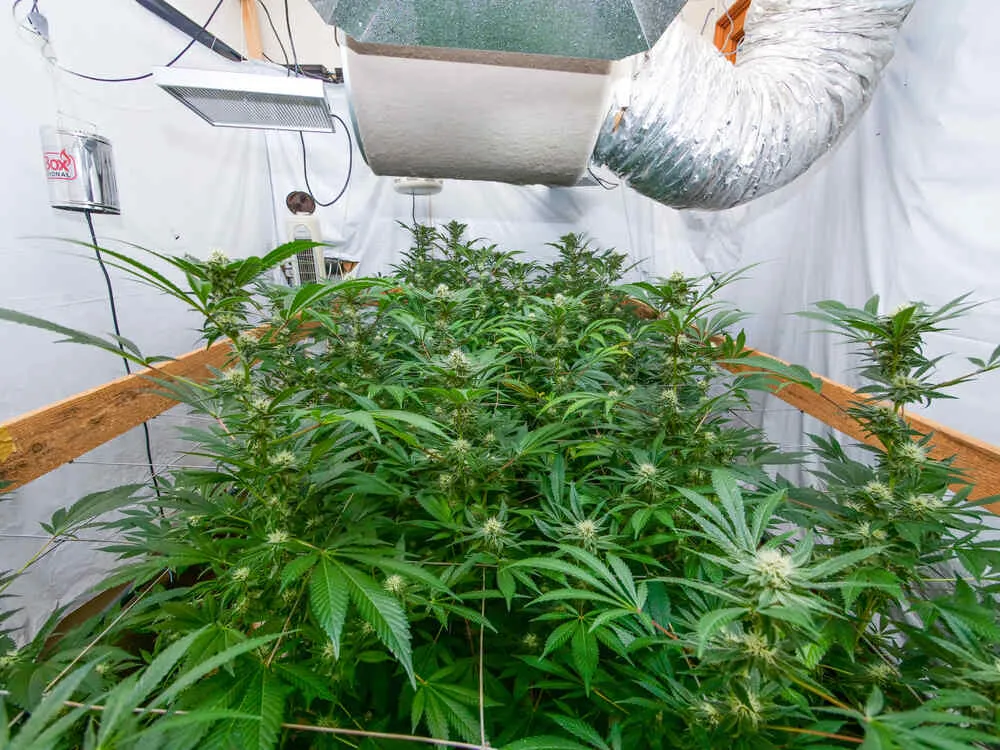
Setting up a cannabis grow room starts with choosing the right space, equipment and growing conditions. Whether you use a grow tent or build a dedicated indoor weed grow room, proper lighting, ventilation and temperature control all play a part in maintaining a suitable environment for your plants.
For beginners, the challenge is knowing what equipment is necessary, how much space is required and how to put everything together without overspending.
This guide explains how to plan a cannabis grow room, compare setup costs in the US, UK and Australia, choose suitable equipment and build a DIY growing space. It also covers common mistakes and the safety checks to complete before introducing plants.
Key Takeaways
- Grow room planning: Choose a suitable space with enough headroom, safe electricity access and ventilation.
- Essential equipment: A weed grow room needs suitable lighting, airflow, environmental monitoring and growing containers.
- Setup costs: Cannabis grow room costs vary by size, equipment and location, with different budgets for the US, UK and Australia.
- Environmental control: Monitor temperature, humidity and airflow to identify problems before they affect your plants.
- DIY setup: Measure, prepare, install and test your indoor cannabis grow room before introducing plants.
What is a Cannabis Grow Room?
A cannabis grow room is an enclosed space where a grower manages lighting, airflow, temperature and humidity rather than relying on outdoor conditions. If you are new to the plant itself, start with the basics of growing cannabis before choosing equipment.
Grow Tent vs Dedicated Room
| Feature | Grow tent | Dedicated room |
| Setup | Enclosure is ready-made | Space needs preparation |
| Light control | Usually built in | Openings need checking |
| Floor area | Limited to tent dimensions | Flexible layout |
| Initial cost | Often lower | Depends on the room |
| Maintenance | Compact working area | More space to inspect and clean |
For most beginners, a tent removes several construction decisions. The separate guide to setting up a cannabis grow tent covers that option in more detail. A dedicated room requires more preparation.
Planning Your Cannabis Grow Room
Choose a Suitable Location
Look for a clean, dry space with electricity, a safe exhaust route and enough room to reach every plant. Avoid carpets, damaged walls and areas with persistent condensation. A nearby water source is convenient, but water should never be carried or stored where it can reach electrical connections.
Measure the width, length and height. Leave enough room to work around the plants.
How Much Space Do You Need?
Plant numbers are only a rough starting point. Mature canopy size and containers matter more than the number of pots that fit. Even beginner cannabis strains can vary considerably in their final dimensions.
| Floor area | Illustrative use | Main limitation |
| 60 × 60 cm | One compact plant | Limited access and headroom |
| 90 × 90 cm | One or two plants | Canopy needs managing |
| 120 × 120 cm | Two to four plants | Air movement around plants |
| Larger room | Depends on layout | Equipment placement and access |
These are examples, not fixed rules. Allow for containers, fixtures and required clearance.
Grower Tip: When measuring height, subtract the container, hanging hardware and light clearance from the total. The space left is what the plant can actually occupy. Beginners often plan around the ceiling height and discover too late that the usable space is much smaller.
Choose the Growing Medium
Soil is often a practical first choice because it is familiar and relatively forgiving. Coco coir needs a consistent feeding approach, while hydroponic systems require closer attention to the water and nutrient solution.
Compare the options in this guide to cannabis growing media. Use containers with suitable drainage and allow space for trays underneath.

How Much Does a Cannabis Grow Room Cost?
The largest purchases are commonly lighting, extraction equipment and the enclosure. Converting a room may also involve repairs, moisture protection or professional electrical work. A cheap light may cost more to operate if it produces excess heat.
| Setup | Illustrative initial cost (USD) | What changes the cost |
| Compact tent | $300–$650 | Light quality and included accessories |
| Medium tent | $650–$1,300 | Lighting coverage and fan capacity |
| Converted room | $1,000–$2,500+ | Building work and climate control |
These broad estimates are for planning, not quotations. Prices vary by location, supplier and the condition of the space. A separate guide to keeping growing costs down can help distinguish essentials from optional extras.
Remember running costs. A 200 W fixture operating for 18 hours uses 3.6 kWh in one day: 0.2 kW × 18 hours. Multiply that figure by your electricity tariff, then add fans and any heating or cooling equipment. Include these costs in your budget.
What Equipment Do You Need for a Weed Grow Room?
Lighting
Choose a fixture by the area it can illuminate, not simply its wattage. Check the manufacturer's coverage chart and PPFD map. PPFD describes light reaching a surface; a map shows coverage differences.
Adjustable LED fixtures are common because their output can be changed as plants develop.
Research by Rodriguez-Morrison and colleagues (2021) found increased flower yield with higher light intensity under the conditions tested, but did not find a matching increase in cannabinoid potency. Maximum output is not suitable for every room; heat and cost matter.
The explanation of cannabis grow lights is useful if terms such as PPFD, light spectrum and fixture efficiency are unfamiliar.
Extraction and Air Movement
An inline fan removes air from the growing space. Replacement air enters through an intake; a separate circulation fan moves air within the room.
A carbon filter reduces smells but does not replace air exchange. The guide to controlling smells in indoor grow rooms explains filtration in more detail.
A common exhaust arrangement draws room air through a carbon filter, then through an inline fan and out through ducting.
Choose a fan using room volume, heat load and the resistance created by filters and bends.
For example, a room measuring 1.2 × 1.2 × 2 m contains 2.88 m³ of air. This volume is a starting point, not a complete fan specification. Equipment heat and duct resistance also affect the airflow required.
A manufacturer's maximum airflow figure may be higher than the airflow achieved once the complete system is installed.
Grower Tip: Keep ducting as direct as the room allows. Every sharp bend increases resistance, so a powerful fan with a poor duct route may move less air than expected. Check its performance specifications for use with filters and ducting.
Other Essentials
Use a timer for lighting, a thermometer and hygrometer for conditions, drip trays for runoff and mounting hardware rated for the equipment's weight.
Reflective walls can improve the use of available light, but reflective material alone does not make a room lightproof. Keep equipment accessible for inspection.

Temperature, Humidity and Light Control
Temperature and humidity change when lights switch off. Measure near canopy height, away from doors and fixtures.
| Stage | Example lights-on temperature | Example relative humidity |
| Seedling | 22–26°C | 60–75% |
| Vegetative growth | 22–28°C | 50–70% |
| Flowering | 20–26°C | 40–55% |
These are broad starting ranges, not targets suitable for every cultivar or setup.
Read the grow room humidity guide alongside the explanation of cannabis temperature requirements.
Temperature and humidity also determine VPD, a measure of the air's drying demand; the cannabis VPD guide explains this relationship.
In a controlled study of one CBD-dominant cultivar, Corredor-Perilla and colleagues (2025) found that very high relative humidity reduced plant biomass and delayed flowering compared with the lower-humidity treatment. This does not establish a universal humidity target.
Light schedules also depend on plant type. Photoperiod-sensitive cannabis responds to changes in day length, while autoflowering plants behave differently.
Ahrens and colleagues (2023) observed different flowering responses across ten cultivars exposed to several day lengths.
The comparison of autoflower and photoperiod plants and the guide to cannabis lighting schedules provide further context.

How to Build a DIY Cannabis Grow Room
Step 1: Prepare the Space
Empty the room and inspect the ceiling, walls and floor. Repair leaks and deal with dampness before installing equipment.
Measure the growing footprint and mark where containers, lights and access routes will be. Check the proposed exhaust outlet and whether it can be used safely and lawfully.
Step 2: Prepare Walls and Flooring
Use smooth, cleanable surfaces and moisture-resistant flooring.
Secure reflective lining so it cannot sag onto equipment or block ventilation. Seal unwanted openings if the room needs dark periods, but do not block the intended intake or exhaust.
Step 3: Mount the Lights
Follow fixture weight and clearance requirements, using secure structural mounting points.
Position the light above the planned growing area, then check the manufacturer's PPFD map for the expected hanging height. Leave enough adjustment range for changing plant height.
Step 4: Fit the Extraction System
Choose a direct exhaust route.
Secure the filter and fan using rated fittings, connect the ducting and check for leaks at the joints. Ensure replacement air has a clear path into the room.
Switch on the fan and check for obvious restrictions rather than assuming the system works because the motor is running.
Step 5: Arrange the Growing Area
Set containers on trays so excess water cannot reach cables or sockets. Leave an accessible route to the back of the space.
Put the thermometer and hygrometer around the height of the future canopy, away from direct fan airflow.
Position circulation fans to move air gently through the area instead of directing a constant strong stream at one point.
Step 6: Test Everything
Run equipment under normal conditions.
Read temperature and humidity after the room has been operating, then check again during the dark period.
Confirm that the timer works, lights remain secure, air can enter and leave, and the floor stays dry.
Grower Tip: Give a new room a full light-and-dark test cycle before introducing plants. Record the highest and lowest temperature and humidity readings. The night-time reading can reveal moisture problems that are easy to miss while the lights are on.
Cannabis Grow Room Safety
Water and electrical equipment need clear separation. Keep connections above floor level, use suitable ground-fault protection where required and do not overload an electrical circuit.
Have a qualified electrician assess new wiring, uncertain electrical capacity or fixed installations.
Make sure the room has suitable fire detection, accessible exits and fixtures secured against falling. Do not rely on improvised wiring or unverified fire suppression products.
Regular cleaning also matters: remove spilled growing medium, plant waste and standing water.
A guide to cannabis pests and diseases explains why inspections matter, while information on Aspergillus contamination adds context to moisture-related fungal risks.
Conclusion
Setting up a cannabis grow room starts with choosing a suitable space, selecting compatible equipment and understanding how to manage the growing environment. Whether you use a grow tent or convert an existing room, reliable lighting, ventilation and safe electrical installations are essential.
Before introducing plants, test the equipment and check that temperature, humidity and airflow remain manageable. A simple, well-planned setup is easier for a new grower to maintain than a larger room filled with unnecessary equipment.
Frequently Asked Questions
What Size Cannabis Grow Room Is Suitable for Beginners?
A 60 × 60 cm or 90 × 90 cm grow tent is a practical starting point for a small setup. Consider the expected plant size, container dimensions and available headroom before choosing.
Can You Use a Spare Room to Grow Cannabis?
Yes, provided cultivation is permitted locally and the room has suitable ventilation, electrical capacity and moisture protection. Avoid spaces with existing dampness or inadequate access.
Does a Cannabis Grow Room Need Air Conditioning?
Not always. Some rooms can maintain suitable temperatures through ventilation alone. In warmer climates or spaces with significant equipment heat, additional cooling may be necessary.
How Can You Tell if a Grow Room Has Enough Ventilation?
Monitor temperature and humidity while the equipment operates. Persistent heat, condensation or excessive moisture can indicate insufficient airflow, although outdoor conditions and equipment heat also affect the readings.
How Often Should You Check Your Grow Room Equipment?
Check environmental readings regularly and inspect fans, filters, timers and electrical connections for damage or unusual operation. Clean equipment according to the manufacturer's instructions and replace worn components when necessary.
References
- Rodriguez-Morrison, V., Llewellyn, D., & Zheng, Y. (2021). Cannabis Yield, Potency, and Leaf Photosynthesis Respond Differently to Increasing Light Levels in an Indoor Environment. Frontiers in Plant Science, 12, 646020.
- Ahrens, A., Llewellyn, D., & Zheng, Y. (2023). Is Twelve Hours Really the Optimum Photoperiod for Promoting Flowering in Indoor-Grown Cultivars of Cannabis sativa? Plants, 12(14), 2605.
- Corredor-Perilla, I. C., Kwon, T.-H., & Park, S.-H. (2025). Elevated Relative Humidity Significantly Decreases Cannabinoid Concentrations While Delaying Flowering Development in Cannabis sativa L. Frontiers in Plant Science, 16, 1678142.


