




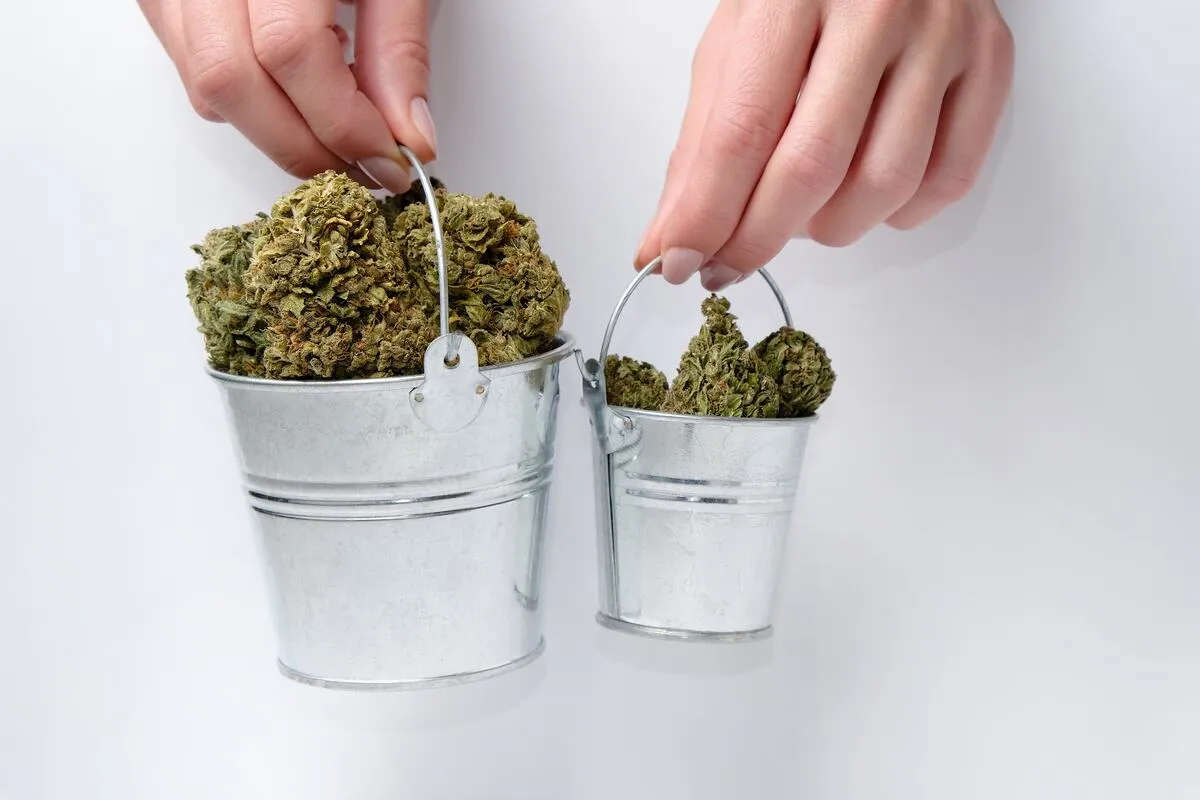
Choosing between autoflower and photoperiod cannabis is an important decision when planning your cannabis cultivation setup. Both types can produce healthy plants and productive harvests, but they differ in flowering time, light requirements, plant size and cultivation practices.
Autoflowers generally have shorter growing cycles and flower without changes to the light schedule, while photoperiod plants give growers greater control over vegetative growth and training. Whether you're new to marijuana cultivation or looking to improve your current growing method, understanding these differences will help you choose the right genetics for your space, climate and experience.
Key Takeaways
- Flowering requirements: Autoflowers flower according to plant maturity, while photoperiod cannabis responds to changes in day length.
- Growing time: Autoflowers typically reach harvest faster, while photoperiod plants allow growers to control the length of the vegetative stage indoors.
- Plant size and yields: Photoperiod plants can grow larger with extended vegetation, but harvest results depend on genetics and growing conditions.
- Cultivation practices: Both require suitable light, water and nutrients, although photoperiod plants generally offer more flexibility for training and recovery.
- Choosing the right method: Autoflowers may suit shorter growing seasons and limited spaces, while photoperiod plants offer greater control over plant development.
- What is the Difference Between Autoflower and Photoperiod Cannabis?
- How Do Growing Requirements Differ?
- Which Type Reaches Harvest Faster?
- Which Produces Bigger Plants, Higher Yields and Stronger Flowers?
- Is Plant Training Different?
- Does the Growing Environment Change the Choice?
- What About Cost, Cloning and Maintenance?
- Which Style is Better for Beginners?
- What Do Breeders Say About Modern Autoflowers?
- Conclusion
- Frequently Asked Questions
- References
What is the Difference Between Autoflower and Photoperiod Cannabis?
The distinction is what signals the change from vegetative growth to flowering. Understanding that one point makes the other cultivation differences easier to follow.
Autoflowering Cannabis
Autoflowers usually begin flowering as they mature, without needing shorter days. Their history is associated with Cannabis ruderalis, although modern cultivars come from many generations of breeding.
Dowling et al. (2024) identified a genetic region associated with flowering independent of day length in hemp. The study also found evidence of different genetic routes to this trait; it does not establish that every commercial autoflower has the same mechanism.
An autoflower's vegetative period is relatively limited. Poor early development can reduce its eventual size because the plant will not simply wait for better conditions before flowering.
Photoperiod Cannabis
Photoperiod plants initiate flowering in response to sufficiently short days and long nights. Indoors, a grower can maintain vegetation under longer days, then change the schedule to encourage flowering. Outdoors, seasonal daylight provides the signal, with differences between cultivars and locations.
| Feature | Autoflower | Photoperiod |
| Flowering trigger | Mainly developmental maturity | Day length |
| Vegetative period | Limited by genetics | Adjustable indoors |
| Typical lifecycle | Often 8–12 weeks from germination; some take longer | Vegetation plus cultivar-dependent flowering |
| Plant size | Often compact, but variable | Can become larger with longer vegetation |
| Cloning | Limited value for repeat crops | Can maintain mother plants |
| Main advantage | No required flowering light change | More control over development |
Flowering type is not seed sex. Both autoflower and photoperiod seeds can be sold as regular seeds, which may produce male or female plants, or as seeds bred predominantly to produce female plants. Do not confuse these separate characteristics when selecting genetics.
How Do Growing Requirements Differ?
Both types need suitable environmental conditions. What changes is the time available to manage them before flowering.
Light and Flowering Schedules
An indoor autoflower can flower under a consistent daily schedule. Eighteen hours of light and six hours of darkness is commonly used, but it is not compulsory. The appropriate autoflower light schedule depends on the equipment, the growing environment and electricity use.
For photoperiod plants, 12 hours of light followed by 12 hours of uninterrupted darkness is a conventional indoor flowering schedule. It is not an exact biological threshold for every cultivar. Ahrens et al. (2023) tested ten cultivars and observed flowering initiation with light periods of up to 14 hours. Responses and later flower development differed, so the findings do not establish a better universal schedule.
Light intensity matters separately from day length. Increasing hours under weak light does not necessarily provide the same daily light exposure as an effective lamp used for fewer hours.
Water, Nutrients and Root Health
Autoflowers and photoperiod plants require the same essential nutrients. The amount they use depends on plant size, development, growing medium and environmental conditions. Autoflowers do not automatically need weaker feeding simply because their lifecycle is shorter.
Water use also changes as roots and foliage develop. A small seedling may use moisture slowly, while a larger plant in warm, moving air may use it quickly. Understanding how much water autoflowers need is more useful than following a rigid daily timetable.
Grower Tip: Check the growing medium before watering. Soil that stays saturated can restrict oxygen around roots; repeated severe drying can also slow growth. An autoflower has less time to recover if this happens during its early development.
Vegetative Growth and Recovery
During the cannabis vegetative stage, the plant develops roots, leaves and branches. Photoperiod growers can extend this phase indoors to allow more growth or recovery. An autoflower generally moves into flowering regardless of whether it has reached the size the grower hoped for.
That makes stable conditions early in the lifecycle particularly important for autoflowers, without making photoperiod plants immune to poor care.
Which Type Reaches Harvest Faster?
Many autoflower cultivars are described as taking around 8–12 weeks from germination to harvest. Some finish outside this range. Photoperiod plants have a more variable total timeline because their indoor vegetative period can be short or extended, followed by cultivar-dependent flowering.
| Stage | Autoflower | Photoperiod |
| Seedling | First weeks after germination | First weeks after germination |
| Vegetation | Usually short; may overlap early flowering | Adjustable indoors |
| Flowering | Begins mainly with maturity | Begins when day length is suitable |
| Harvest | Often relatively predictable by cultivar | Depends on vegetation and flowering duration |
These stages overlap and should not be added together as fixed blocks. The autoflower week-by-week guide explains the physical changes to look for. Harvest readiness should be judged by the plant's maturity, not a breeder's date alone.
Which Produces Bigger Plants, Higher Yields and Stronger Flowers?
Plant Size and Yield
Photoperiod plants can develop larger canopies when given more vegetative time. Autoflowers are frequently smaller, although their final height and structure depend on genetics and conditions. Neither label guarantees a particular yield.
Always check what a yield comparison measures: per plant, per unit of growing area, per harvest or across a year. A large photoperiod harvest from one plant does not directly answer whether several shorter autoflower cycles could make better use of the same space. The guide to how much an autoflower can yield explains why maximum advertised weights are not reliable expectations.
Potency
There is no sound rule that photoperiod plants always produce more THC. The question of whether autoflowers are less potent depends on which cultivars are compared, their genetics and the conditions used.
Rodriguez-Morrison et al. (2021) found that higher light intensity increased dried flower yield in an indoor experiment, while cannabinoid concentration was not significantly affected across the tested light treatments. This was not a direct autoflower-versus-photoperiod trial. It supports discussing harvest weight and cannabinoid concentration as different measures.
Is Plant Training Different?
Both flowering types can be managed to influence canopy shape and light distribution. The main consideration is whether the plant has enough time and healthy growth to recover from intervention.
Low-stress training for autoflowers changes branch positions without removing the main growing tip. Topping cannabis plants removes a growing tip and is generally more flexible during photoperiod vegetation, when recovery time can be extended.
| Practice | Autoflower | Photoperiod |
| Gentle branch positioning | Can suit healthy plants; limited recovery window | Flexible during vegetation |
| Topping or heavy pruning | Greater risk of losing valuable growing time | More opportunity to recover |
| Canopy planning | Must fit the plant's short development period | Can be planned before flowering |
Grower Tip: Look for active, healthy new growth before training. If a plant is already slow, drooping or recovering from root problems, additional intervention is unlikely to help.
Does the Growing Environment Change the Choice?
Indoor Cultivation
Indoor growing provides more control over light, temperature and airflow but requires equipment and electricity. Autoflowers remove the need for a planned flowering light change and can be useful in small spaces when the cultivar is compact. Photoperiod plants allow growers to manage height before flowering and keep separate areas for vegetation and flowering if desired.
Outdoor Cultivation
For outdoor cannabis cultivation, consider the length of suitable weather, changing day length and the likely harvest period. Autoflowers may finish before late-season rain or cold because their flowering is not tied to shortening days. Photoperiod cultivars follow a seasonal pattern that varies by latitude and genetics.
Neither type is naturally protected from frost, prolonged wet weather or fungal disease. Choose outdoor cannabis strains for local conditions rather than the flowering label alone.
Greenhouse Cultivation
A greenhouse uses natural daylight while offering some protection from wind and rain. Both types can grow in it; temperature, humidity and ventilation still require attention. Greenhouses do not remove the genetic difference in flowering behaviour.
Soil, Coco Coir and Hydroponics
Growing medium is a separate choice from flowering type. Either can be grown in soil, coco coir or a managed hydroponic system. Soil often provides some buffering against rapid changes; coco and many hydroponic systems require closer monitoring of irrigation and nutrient delivery. A complex system does not automatically produce a better plant. For beginners, dependable root conditions matter more than choosing fashionable equipment.
What About Cost, Cloning and Maintenance?
There is no universally cheaper cultivation style. Autoflowers may occupy the growing space for fewer weeks, but an indoor crop might receive more light hours each day. Photoperiod crops can take longer, yet allow greater control over when flowering starts. Compare the whole crop: electricity, equipment, seed costs, time and the amount harvested.
Photoperiod plants can be maintained as mother plants and used for repeat cuttings. Although autoflowers can be cloned, the cuttings retain the plant's developmental schedule, making this impractical for conventional mother-plant production.
Which Style is Better for Beginners?
Neither flowering type guarantees an easy first crop. Autoflowers simplify the transition to flowering; photoperiod plants give the grower more opportunity to recover from setbacks and develop the desired canopy.
| Your circumstances | Often a practical choice | Reason |
| Short outdoor season | Fast-finishing autoflower | Flowering is less dependent on seasonal days |
| Want to adjust size before flowering | Photoperiod | Vegetation can be extended indoors |
| Prefer a consistent light schedule | Autoflower | No deliberate flowering switch |
| Want to preserve genetics through cuttings | Photoperiod | Mother plants can be maintained |
| Unsure about early growing conditions | Either, with care | Choose manageable genetics and stable conditions |
Grower Tip: When comparing cannabis strains for beginners, check expected size, growing time and suitability for your environment before looking at advertised THC or maximum yield.
What Do Breeders Say About Modern Autoflowers?
In the original version of this guide, specialist breeder Auto Seeds described how long-term selection had expanded the range of autoflower plant sizes, yields and cannabinoid profiles compared with early commercial varieties. This provides industry experience, not independent proof of advertised results. Breeder figures describe potential performance under particular conditions and should not be presented as guaranteed harvests.
Conclusion
Choosing between autoflowering and photoperiod cannabis depends on your growing conditions, experience and available time. Autoflowers offer a shorter lifecycle and simpler flowering light management, while photoperiod plants provide greater control over vegetation, training and cloning.
Neither guarantees better yields or higher potency. Both require suitable light, nutrients and environmental conditions. For new growers, the best cultivation style is one that matches their growing space, climate and ability to maintain healthy plants.
Frequently Asked Questions
Are Autoflower Seeds Always Feminized?
No. Autoflowering refers to how a plant begins flowering, not its sex. Both autoflower and photoperiod seeds are available as regular or feminized varieties.
Can Autoflowers and Photoperiod Plants Grow Together?
Yes, provided their environmental requirements are compatible. However, a 12/12 flowering schedule for photoperiod plants may reduce the daily light exposure available to autoflowers.
Can Both Types Grow in Soil or Hydroponics?
Yes. Both can grow in soil, coco coir or hydroponic systems. Successful cultivation depends on maintaining suitable water, nutrient and root conditions.
Are Autoflowers More Resistant to Cold Weather?
Not necessarily. Autoflowers may finish before colder seasonal weather arrives, but cold tolerance depends on genetics and growing conditions.
Can You Change an Autoflower into a Photoperiod Plant?
No. Autoflowering is an inherited characteristic. Changing the light schedule will not convert an established autoflower into a photoperiod plant.
References
- Dowling, C. A., et al. (2024). A FLOWERING LOCUS T ortholog is associated with photoperiod-insensitive flowering in hemp (Cannabis sativa L.). The Plant Journal, 119(1), 383–403. https://doi.org/10.1111/tpj.16769
- Ahrens, A., Llewellyn, D., & Zheng, Y. (2023). Is Twelve Hours Really the Optimum Photoperiod for Promoting Flowering in Indoor-Grown Cultivars of Cannabis sativa? Plants, 12(14), 2605. https://doi.org/10.3390/plants12142605
- Rodriguez-Morrison, V., Llewellyn, D., & Zheng, Y. (2021). Cannabis Yield, Potency, and Leaf Photosynthesis Respond Differently to Increasing Light Levels in an Indoor Environment. Frontiers in Plant Science, 12, 646020. https://doi.org/10.3389/fpls.2021.646020

