




Autoflowering cannabis plants are popular because they flower based on age rather than changes in light cycles, making them easier to manage than traditional photoperiod strains. Many growers struggle to decide which light schedule produces the best balance of growth, yield, and energy efficiency, especially indoors where lighting directly affects plant health and running costs. Autos typically begin flowering around 3–4 weeks after germination regardless of the light schedule, but they still rely heavily on consistent, high-quality light for strong growth and healthy yields. Understanding how autoflowers respond to different light cycles, grow lights, and environmental conditions can help growers avoid common mistakes and get more reliable results throughout the grow.
Key Takeaways
- Autoflowering cannabis plants typically begin flowering 3–4 weeks after germination regardless of light schedule.
- Most autoflowers perform best under 18–22 hours of daily light, with many growers commonly using 18/6, 20/4, or 22/2 schedules.
- Consistent light schedules help reduce plant stress and support more stable growth throughout the full life cycle.
- LED grow lights are generally more energy-efficient and produce less heat than HID lighting while still providing strong PAR output.
- Temperatures are commonly kept around 72–79°F during lights-on periods and slightly cooler during darkness for healthy development.
- Low-stress training (LST) is often preferred for autoflowers because their short vegetative stage leaves less recovery time for heavy training methods.
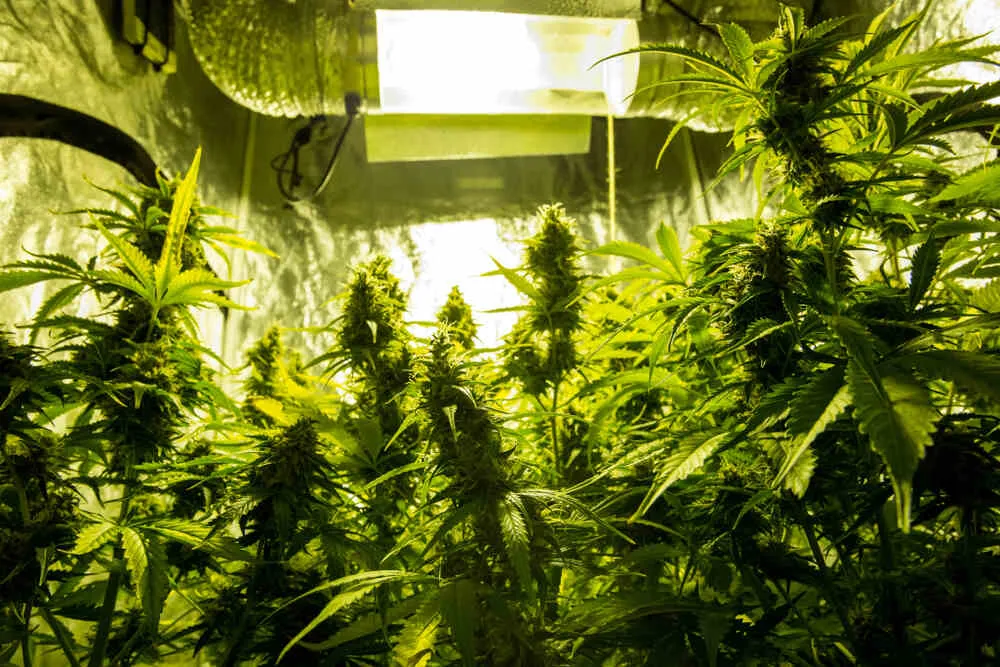
Understanding Autoflowering Cannabis Plants
What makes autoflowers different from photoperiod strains
To fully explain, photoperiod strains need a specific amount of darkness to trigger the flowering process. This is usually around 12 hours of uninterrupted darkness, followed by 12 hours of sunlight. Think about how it works in nature - when the days start to get shorter, and nights become longer. Summer is waning, and photoperiod plants get the signal to start flowering.
Autoflowers, on the other hand, will start flowering after a predetermined period of time - usually around 3 to 4 weeks after germination. This means that they will continue to grow and flower no matter the light schedule - as long as there is some light available. But how much light do they really need to smash their yield potential?
So what makes autoflowers different from photoperiods? It all comes down to Cannabis Ruderalis. This special little sub-species of the weed genus is native to Central and Eastern Europe, Russia, and Siberia.
This area generally has extremely harsh weather conditions, short summers, long winters, and very little sunlight. To adapt to these conditions, Cannabis Ruderalis has evolved the ability to flower automatically based on age and not light cycles, contrary to classic photoperiod strains.
Actionable Tip: Expect autoflowers to begin flowering automatically around 3–4 weeks after germination regardless of your light schedule.
Benefits of autoflowers in indoor and outdoor growing
Autoflowers come with a few huge benefits, as shown below
For indoor growers, this means:
- No light schedule changes: Autos can flower under consistent light, so no stress over switching schedules.
- No issues with light leaks: Light leaks can spell disaster for photoperiod plants, and are the number one cause of indoor plants turning hermie. Autoflowers can handle light leaks without a problem.
- Faster harvests: Short grow cycles mean multiple harvests a year, keeping your supply steady.
- Perpetual grows made easy: With staggered planting, you can enjoy a constant rotation of harvest-ready buds in a single space (as long as you have the room)
Actionable Tip: Use a consistent light schedule from start to finish to simplify your grow and avoid the need for timing adjustments.
For outdoor growers, this means:
- Multiple harvests per season: In the same time that it takes for a photoperiod plant to go from seed to harvest, you could potentially have 2-3 autoflower harvests outdoors.
- Discreet size: Autos stay a little smaller (although the newer genetics are bucking this trend), making them easy to hide in gardens or guerrilla grow spots.
- Resilient to outdoor conditions: Autos' genetic lineage is tough, coming from a plant that can survive the wilds of Siberia. They are more resistant to the cold, pests, and challenging weather.
Actionable Tip: Plan staggered planting to achieve multiple autoflower harvests within a single outdoor growing season.
The Importance of Light Cycles for Autoflowers
Just because autoflowering cannabis plants don’t rely on specific light schedules to flower doesn’t mean light isn’t important. The amount of light you give them still plays a huge role in their growth, overall health, and the size of the final yield.
Why light matters for plant health
Okay, let's go very basic here. We have all heard of photosynthesis, yeah?
It’s how plants turn light into energy, essentially making their own food. During this process, plants absorb light through their leaves and use it to produce glucose (a type of sugar) from water and carbon dioxide. As a bonus, they release oxygen - great news for us.
But not all light is equal.
The type, intensity, and duration of light all play a crucial role in how well plants can photosynthesize. Getting the right balance is one of the first jobs you have as a grower, and it might take a little experimentation to get it right.
How light cycles impact growth and yield
Most autos do best with around 18–20 hours of darkness each day (from start to finish), leaving 4–6 hours for rest. Some growers swear by 24/0 light schedules, arguing that more light means faster growth, but I have always found that giving the plants even just 2-4 hours of darkness a day does help boost the yield very slightly.
The key is finding a schedule that works best for your plants and set up, but as long as you provide at least 18 hours of high-quality, decent-intensity light, your autos should be capable of impressive yields and top quality buds.
Actionable Tip: Provide at least 18 hours of consistent, high-intensity light daily to support strong growth and maximise yield potential.
The Best Light Schedules for Autoflowering Strains
Overview of the 18/6 light cycle and its effects
Overview of the 18/6 light cycle and its effects
The 18/6 cycle is a classic for a reason. It's what photoperiod growers use for the vegetative growth stage, and so it makes sense to treat autos the same, at least to start. But maybe not...
Plants get 18 hours of light to grow and 6 hours of darkness to recover. It's a balanced, energy-efficient schedule that supports healthy growth without overdoing it. You will get impressive results with 18/6 - it's a good starting point for beginners or anyone wanting reliable results with minimal hassle. 18/6 will also result in the lowest energy bill compared to any light cycle greater than 18 hours of light.
The pros and cons of a 20/4 light cycle
A 20/4 cycle gives your plants extra light, which can result in faster growth and bigger yields. The shorter dark period is enough for some recovery, but if you are running HID lights, keep energy costs in mind. I used a 20/4 light cycle for years and found that it increased yields over 18/6, but the gains were not huge.
When and why to consider a 24-hour light cycle
With 24/0, your plants get non-stop light, which can mean faster growth and big yields. However, constant light can stress plants, spike electricity bills and make the grow room hot I didn't find that running these lights all day and all night made any real difference to my plants compared to 18/6 or 20/4.
Why 22/2 is now my preferred choice
I have tried out all the above, but in the last 2 years, 22/2 has become my favourite. It gives plants almost constant light for rapid growth while still allowing a short rest period to recover. I’ve noticed healthier plants and slightly better yields compared to 24/0 cycles. Just be prepared to anticipate a larger electricity bill using this light cycle.
Choosing the Right Grow Lights for Autoflowers
The age-old debate over which grow light is best for indoor weed plants rages on, and the truth is, there are two main options: HID or LED.
Key features of effective grow lights
Intensity, spread, spectrum, and efficiency are the four most critical factors when choosing a grow light.
Understanding light spectrum and its role in growth stages
For more than 50 years, high intensity discharge (HID) lighting was the only real option for a grower looking for a grow light. Most growers would use one spectrum specific bulb for the vegetative stage and another for flowering. This is because plants in vegetative growth prefer a slightly more blue-leaning spectrum, and those in flower require a red dominant spectrum.
LED lights have only really started to take over as the most popular choice in recent years. The last 8 or so years have seen huge leaps made in the technology and light output, and most grow lights these days use full spectrum, high-quality diodes.
Energy costs and efficiency
The rise of LED has brought with it huge drops in energy consumption. LED lights are incredibly efficient, usually pulling around half the power or less of an equivalent 600w - 1000w HID light. But before you get too excited, there are a few things to consider.
The initial cost of an LED light is usually much higher than an HID light such as metal halide or high pressure sodium (although this is also changing). However LED grow lights are built with photosynthetically active radiation (PAR) in mind, and are capable of providing a well balanced spectrum during the entire plant’s lifecycle. Check the manufacturer's PPFD rating,and do not pay attention to lumens to determine the efficacy of your grow light.
Best types of grow lights for indoor cultivation
So, LED or HID?
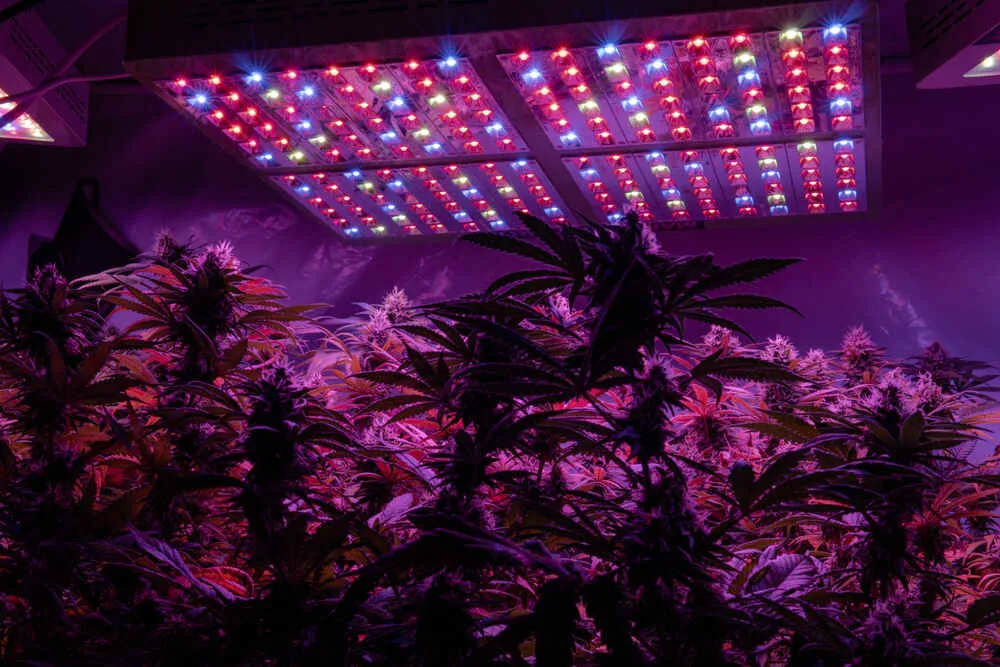
For most home growers, a decent LED panel will be the better choice these days. Commercial set-ups still often use HID lighting due to the massive power of some of the fixtures, but for a 1.2 x 1.2m tent, a good quality LED panel with optimal PPFD levels is a more efficient and cost-effective option.
You will have to fork out a little more upfront, but that money will be quickly recouped in electricity savings. LEDs have a much longer lifespan than HID bulbs and run much cooler, so as long as you buy from a reputable brand, you can expect to get several years out of them before noticing any real drop in performance.
Actionable Tip: Choose LED lighting over HID to reduce energy consumption and heat output while maintaining strong light intensity.
Common Mistakes to Avoid with Autoflower Light Cycles
Overexposing or underexposing plants
Honestly, overexposing isn't really much of an issue. The difference in yield between a plant grown under 18,6. 22/2 and 24/0 is negligible, if there's any difference at all. But, for the love of your plants, please don't underexpose them! Autoflowers require a minimum of 18 hours of good quality PAR rich light to thrive. Sure, they will do okay with 16 per day, but why do it?
Neglecting the impact of temperature and humidity
Now this is one thing that new growers often neglect, or at least struggle to get right. Some strains will be more sensitive than others, but as a general rule, you want the temperature to be around 22°C to 26°C during lights on and 18-20°C during the lights off period. (seedlings like a more even 25°C if possible). Humidity should sit at 65% for seedlings, 55-60% during veg and about 45-50% in flower.
HID lights can have a huge impact on temperature and humidity, so it's vital to monitor these closely if you are using them. LEDs run much cooler which makes regulating temperature and humidity much easier.
Tips for Maximizing Autoflower Yields
Balancing light intensity and duration
Too much light can stress plants, while too little stunts growth. As long as you are using a good quality light, and one that suits the size of your grow space, you should be fine. For autos, I recommend 22/2 for the entire grow, but you can experiment with light schedules and see what works best for your specific strains.
Optimizing light cycles to reduce stress on plants
Autoflowers thrive on steady light schedules, so avoid constant changes. The last thing you want to do is constantly switch between 18/6 and 20/4 or other variations. Choose a schedule, stick to it, and if you want to change things up, do so with your next grow.
Light coverage and training your plants
Make sure your grow space has even light coverage, so all parts of your plants thrive. Techniques like low-stress training (LST) can help maximise light exposure to lower branches, but keep in mind that autos only have 4 weeks of veg growth, so keep the heavy handed training such as topping, and super cropping to a minimum.
Fine-tuning grow light positioning for best results
Keeping grow lights at the right distance is crucial—too close can burn your plants, while too far reduces energy absorption. HID options will need to be kept at least 60cm from the top of your plants, while LEDs can be as little as 30cm away. You will need to adjust this throughout the grow as your plants grow taller, stronger, and can handle more intense light.
FAQs
Can autoflowers grow under 12/12 light schedules?
Yes, but. they will never get close to producing their full potential under a 12/12 light schedule. Stick to at least 18 hours of light per day for the best results.
What happens if autoflowers get too much light?
Light stress is real and can cause a range of issues for your plants, including stunted growth and burnt leaves. Make sure to monitor your light intensity and keep it at a proper distance from the top of the canopy.
Do you need to switch to bloom lighting?
If you are growing with a HID ballast using a metal halide lightbulb (MH) for vegetative growth, then yes, you will need to switch it out for a high pressure sodium bulb (HPS) once the plants start to flower,
How far should your lights be from your autoflowers?
That depends on the light. A general rule is to start at a distance of 60cm for HID lights and 30cm for LEDs, and adjust as needed throughout the grow. Make sure to check with the manufacturer's recommendations for your specific light model, and use the back of your hand to see how hot the air feels close to the canopy.


