




SCROG cannabis training is a simple way to control plant shape, spread growth across a screen, and create a more even canopy. Short for Screen of Green, SCROG works by guiding branches sideways so more flowering sites can sit within a similar distance of the grow light.
For new growers learning how to SCROG cannabis, the key is timing. The screen should be installed early, branches should be trained while they are still flexible, and enough space should be left for the flowering stretch.
This guide explains when to SCROG cannabis, how to set up and fill the screen, and how training cannabis during SCROG changes as plants move from vegetative growth into flowering. It also covers pruning, additional training methods, common mistakes, and the plant characteristics that make SCROG easier to manage.
Key Takeaways
- SCROG creates a flatter canopy: Branches are spread horizontally across a screen instead of being allowed to grow mainly upward.
- Start training when shoots reach the screen: The best time to begin active SCROG training is while branches are young and flexible enough to redirect safely.
- Leave room for flowering stretch: When deciding when to SCROG cannabis and switch to flowering, account for how much the cultivar is expected to stretch.
- Keep training gradual: Effective training cannabis during SCROG means regularly guiding new shoots into open sections rather than forcing stiff branches into position.
- Canopy management matters more than filling every square: A successful SCROG should remain even, accessible, and well ventilated rather than becoming overcrowded.

- What is the SCROG Technique?
- Advantages and Disadvantages of Growing Cannabis in a SCROG
- When to SCROG Cannabis
- How to SCROG Cannabis: Major Considerations Before You Start
- How to SCROG Cannabis: Step-by-Step
- Pruning and Training Cannabis During SCROG
- Common SCROG Mistakes to Avoid
- Cannabis Strains Suited to SCROG
- Conclusion
- Frequently Asked Questions
What is the SCROG Technique?
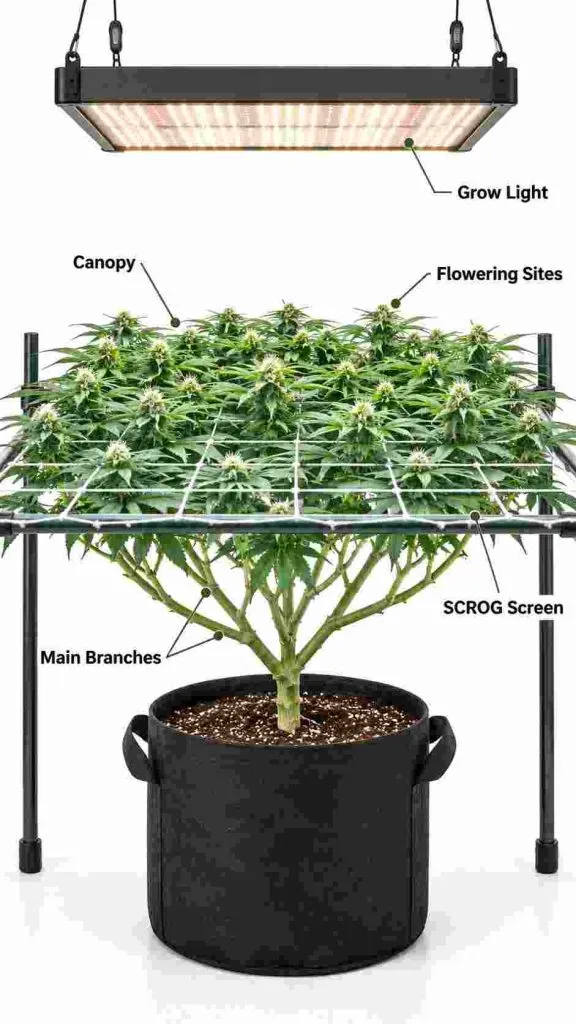
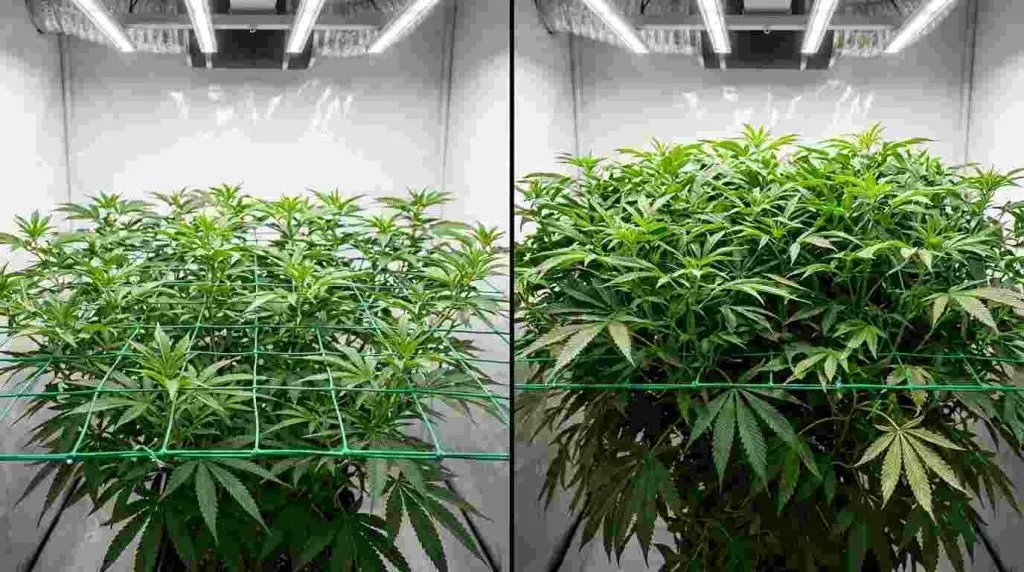
SCROG cannabis training, short for Screen of Green, is a method used to create a flatter, more even plant canopy. A screen or net is positioned above the plants, and growing branches are gradually guided across it instead of being allowed to grow mainly upward.
As shoots reach the screen, they are directed toward open sections of the mesh. This spreads growth across the available horizontal space and helps prevent a few taller branches from dominating the canopy. The goal is to create an even layer of growth where more flowering sites sit at a similar height beneath the grow lights.
SCROG is often combined with other cannabis training techniques, such as topping cannabis plants or low-stress training, although neither is required for the basic technique. The defining feature of SCROG is the screen used to position and support branches across the canopy.
How SCROG Changes Cannabis Growth
Cannabis naturally tends to prioritize upward growth, with the main stem often extending above lower side branches. SCROG changes the plant's canopy structure by redirecting suitable branches horizontally through or beneath the screen rather than simply allowing them to continue vertically.
This does not change the plant's genetics or guarantee equal growth at every flower site. Instead, it helps the grower control where branches are positioned and how the available growing area is used.
| Untrained Cannabis | ScrOG-Trained Cannabis |
| More vertical growth | More horizontal canopy growth |
| Taller shoots can dominate | Branches are spread across the screen |
| Lower sites may receive less direct light | More sites can be positioned nearer the light |
| Canopy height can vary considerably | Canopy can be kept more even |
A flatter canopy can be particularly useful under fixed overhead lighting because fewer tall shoots sit much closer to the light than the rest of the plant. Royal Queen Seeds similarly describes SCROG as a way of spreading branches across an even horizontal plane.
Grower Tip: Don't try to force every branch into a perfectly flat position in one session. Redirect flexible new growth gradually as it reaches the screen. If a stem resists bending, guide it toward another opening rather than risking a split.
Can SCROG Increase Cannabis Yield?
SCROG can help growers make more effective use of available light and canopy space, particularly when paired with high-yield cannabis strains selected for productive growth. However, SCROG itself does not guarantee a specific increase in yield.
The current article overstates this by suggesting SCROG can come close to doubling the harvest of an unmanaged plant. There is no universal percentage that can be applied reliably to every SCROG grow.
Final yield still depends on factors including:
- cultivar and growth characteristics
- plant health
- light intensity and coverage
- environmental conditions
- available grow space
- length of vegetative growth
- canopy density
- how successfully branches are trained and maintained
The main advantage is therefore canopy efficiency rather than a guaranteed yield increase. By spreading growth across the screen, growers can expose more productive sites to useful light and make better use of the footprint beneath their grow lights.
A well-managed SCROG can also help keep growth organized and improve airflow through the canopy, but overcrowding the screen can have the opposite effect. The aim should be an even, accessible canopy, not simply fitting as many branches as possible into the available space.
Advantages and Disadvantages of Growing Cannabis in a SCROG
SCROG can be an effective way to control plant shape and make better use of a limited grow area, especially indoors. However, it also requires more hands-on training than simply allowing plants to grow naturally.
Understanding both sides helps you decide whether SCROG suits your grow space, plant count, and available time.
| Advantages of SCROG | Disadvantages of SCROG |
| Creates a more even canopy | Requires regular branch training |
| Uses horizontal grow space efficiently | Plants become harder to move |
| Helps distribute light across more growth sites | Access to pots and rear plants can be restricted |
| Makes plant height easier to control | Overcrowding can reduce airflow |
| Can improve airflow when the canopy is managed well | Different cultivars may stretch at different rates |
More Even Canopy and Better Light Distribution
One of the main advantages of SCROG cannabis training is the ability to spread branches across a wider, flatter canopy. Instead of allowing a few shoots to grow well above the rest, branches can be guided into open sections of the screen.
This makes it easier to position more flowering sites within a similar distance of an overhead grow light. It does not guarantee identical light levels across every branch, but it can reduce the difference between tall dominant shoots and lower shaded growth.
Better Use of Grow Space and Plant Height
SCROG is particularly useful where vertical space is limited. Redirecting branches sideways allows growers to use more of the available horizontal footprint while keeping the canopy relatively low.
This can be particularly useful in grow tents or rooms with limited vertical space, where choosing suitable indoor cannabis seeds can also make plant height easier to manage. The screen also provides a clear structure for spreading growth into unused areas instead of allowing branches to bunch together.
Potentially Better Airflow
An evenly spaced SCROG canopy can allow air to move more freely between branches and flowering sites. However, this benefit depends on how well the screen is managed.
Allowing too many shoots and leaves to crowd the same area can create dense sections where air movement is restricted. SCROG does not automatically improve airflow; the canopy still needs to be spaced, pruned, and monitored as it develops.
Grower Tip: Aim to fill the screen evenly rather than completely packing every opening. Leaving some space between branches makes the canopy easier to manage and helps maintain airflow as plants stretch.
SCROG Requires Regular Training
The main drawback of SCROG is that it is not a set-and-forget training method. Growing shoots need to be checked and redirected as the canopy develops, particularly during rapid vegetative growth and the early flowering stretch.
Missing this stage can allow individual branches to grow well above the screen, making the canopy more difficult to level later.
Plants Become Harder to Move and Access
Once several branches have been trained through a fixed screen, moving individual plants becomes difficult without damaging growth.
This can also make it harder to:
- reach pots for watering
- inspect growth beneath the canopy
- remove runoff trays
- work on plants positioned toward the back of the grow
For this reason, access should be planned before installing the screen.
Different Cultivars Can Stretch Unevenly
Growing several cultivars under one SCROG can be more challenging if they have very different growth habits. One plant may stretch much faster than another after flowering begins, creating an uneven canopy despite earlier training.
Where possible, plants sharing the same screen should have reasonably similar height, branching, and stretch characteristics. If different cultivars are used, expect to adjust training and flowering timing around the fastest-growing plants.
SCROG is therefore best suited to growers who are comfortable checking their canopy regularly and who can access the plants once the screen is fixed in place. When properly managed, it gives much greater control over plant shape and available space, but that control comes with additional hands-on work.
When to SCROG Cannabis
If you are new to SCROG, the easiest way to think about timing is this:
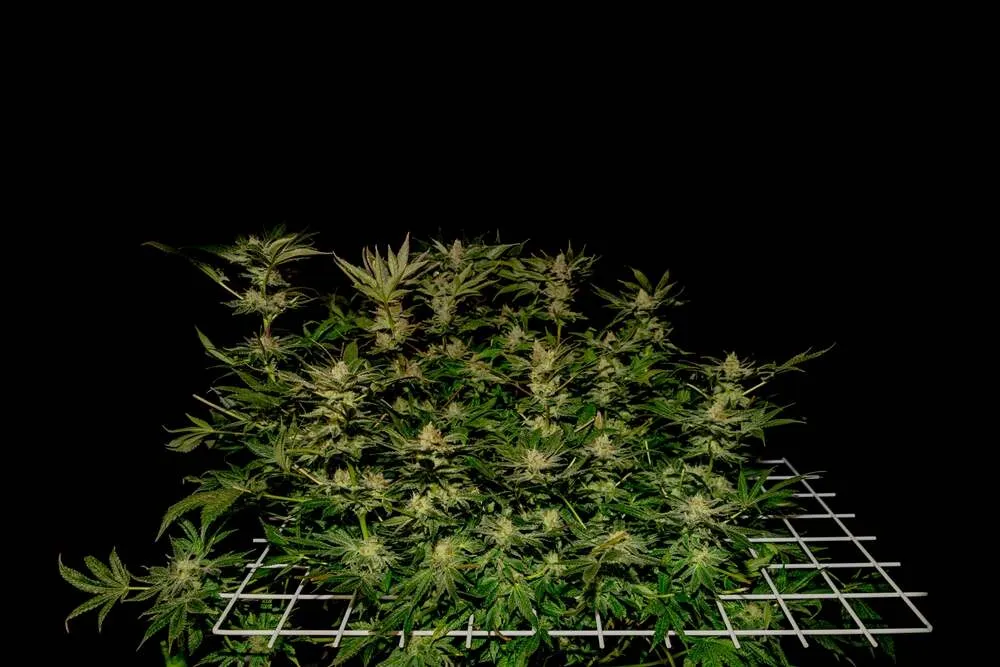
Install the screen early, start training when the branches reach it, keep spreading new growth across the screen, then allow the main shoots to grow upward once the flowering stretch starts to slow down.
There is no single plant age or number of days that works for every grow. Different cultivars grow and stretch at different rates, so it is better to watch the plant and use its growth as your guide.
When to Install the SCROG Screen
Set up the SCROG screen before the plant becomes tall or difficult to work around.
The screen can sit above the plant while it is still growing toward it. Installing it early gives you more space to work and avoids having to lower a net over long branches later.
Before fixing the screen in place, check that you can still:
- reach every pot
- water the plants easily
- access runoff trays
- inspect growth below the screen
- reach the back of the grow space
Once several branches are trained through the screen, moving the plants becomes much harder.
Grower Tip: Do a quick access test before you start training. If you cannot comfortably reach the pots and back corners now, it will be even harder once the screen is full.
When to Start Training
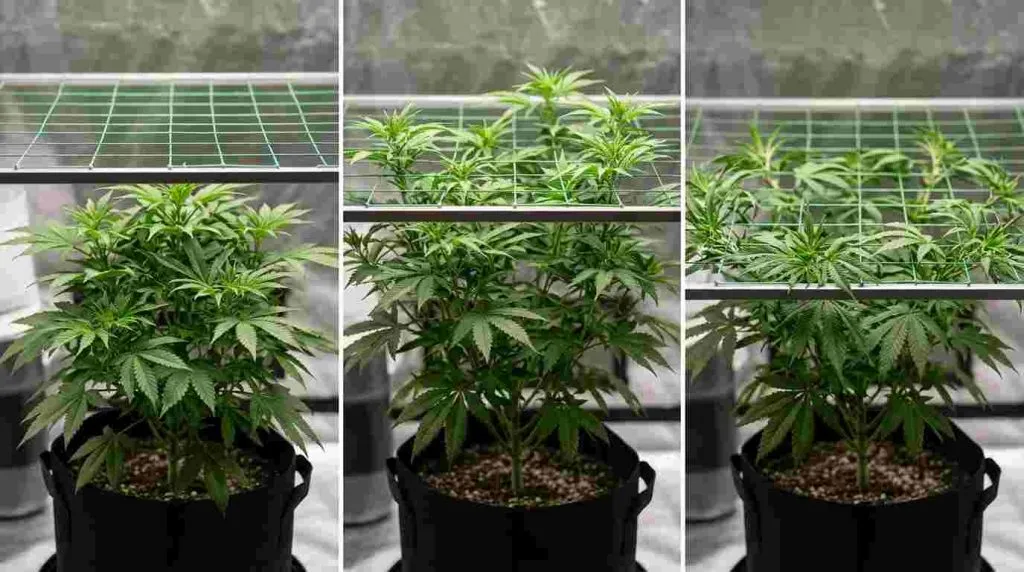
Start active SCROG training when the growing shoots reach the screen or begin growing through it.
You do not need to pull short branches up to the net. Let them grow naturally until they reach it.
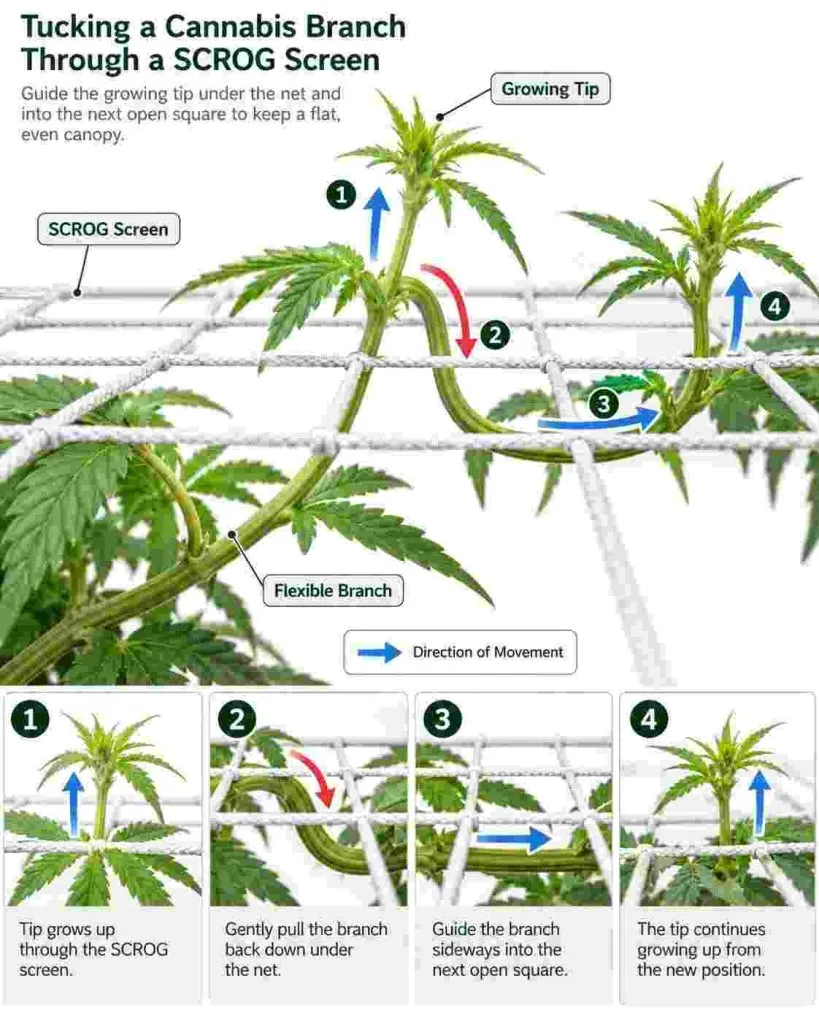
Once a shoot grows through the screen:
- Gently pull it back below the mesh.
- Guide it sideways toward an empty square.
- Let the growing tip continue upward from its new position.
- Repeat the process as new growth reaches the screen.
The aim is to gradually spread the branches across the available space rather than allowing a few shoots to grow much taller than the rest.
Young, flexible stems are much easier to train than older, woody branches.
When to Switch to Flowering
If you are growing feminized photoperiod cannabis seeds indoors, you will need to decide when to change the cannabis light schedule and trigger flowering.
Do not wait for the screen to become completely packed.
Plants usually continue growing taller after flowering begins. This is known as the flowering stretch. How much they stretch depends heavily on the cultivar.
A useful beginner approach is:
| Plant Growth | What to Do |
| Plant stretches a lot | Switch to flowering while more screen space is still open |
| Moderate stretch | Fill more of the screen before switching |
| Limited stretch | Give the plant more vegetative time to fill the screen |
This is why knowing how your cultivar normally grows can make SCROG easier.
If you do not know its stretch characteristics, it is usually safer to leave some open space rather than completely filling the screen before flowering.
When to Stop Tucking
Do not stop training immediately when flowering begins.
During the early flowering stretch, shoots can continue growing quickly. Keep guiding flexible branches sideways into open sections of the screen so the canopy stays even.
As the stretch begins to slow, stop pulling the main flowering shoots back under the screen and allow them to grow upward.
A simple rule for beginners is:
Tuck while the stems are flexible and actively stretching. Stop once vertical growth slows and flowers begin developing more noticeably.
Avoid forcing older stems to bend. If a branch has become stiff or woody, leave it in place rather than risking a split.
When Not to SCROG
SCROG is useful, but it is not always the easiest training method for a new grower.
You may want to avoid it if:
- you need to move your plants regularly
- you cannot easily reach the back of your grow space
- you have several cultivars that grow to very different heights
- you do not have time to check the canopy regularly
- your plants are already tall and difficult to bend
- you want a simple, low-maintenance grow
Different cultivars can be particularly difficult under one shared screen. If one plant stretches much faster than another, keeping the canopy level takes more work.
For a first SCROG grow, using plants with similar growth habits and keeping the setup easy to access can make the whole process much easier to manage.
How to SCROG Cannabis: Major Considerations Before You Start
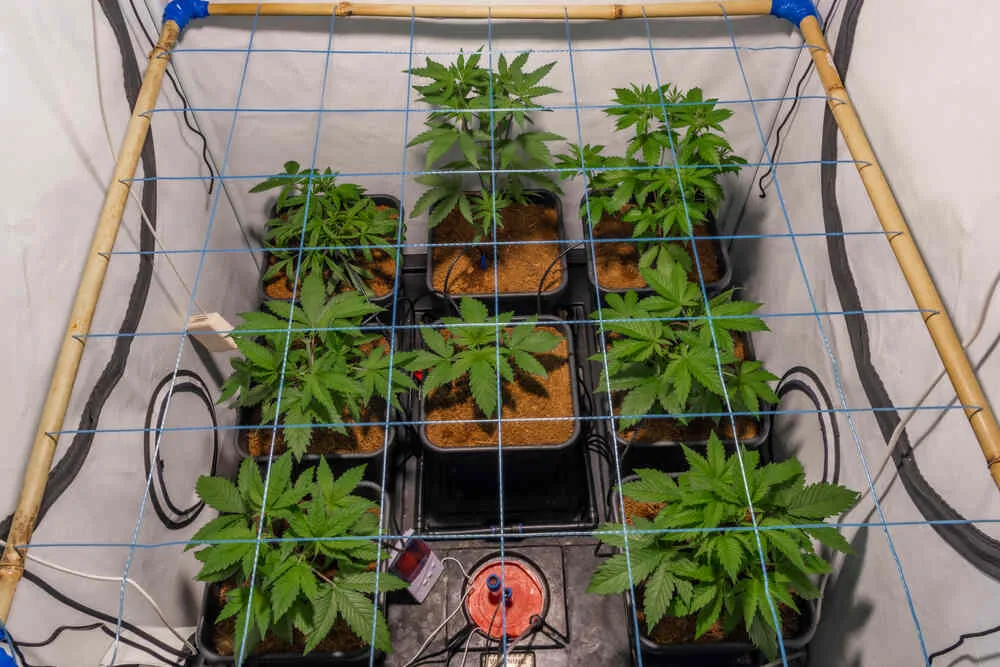
Before learning how to SCROG cannabis, plan your setup carefully. Once branches are trained through the screen, moving plants, pots, or equipment becomes much harder.
Select the Right Cannabis Strains
Cultivars with predictable branching and stretch are generally easier to manage in a SCROG.
Taller plants that stretch heavily after flowering begins may need to be switched to flowering earlier so they do not overcrowd the screen. More compact cultivars may need a longer vegetative period to spread across the available space.
If several plants share one screen, choosing cultivars with similar height and stretch can make it much easier to maintain an even canopy.
Choose the Right Pots
Use containers that provide enough root space for the size of plant you plan to grow.
More importantly, make sure you can still reach each pot once the screen is installed. Watering, checking the growing medium, and dealing with runoff can become awkward if the pots are trapped behind a fixed net.
Space Plants Appropriately
Avoid placing too many plants beneath one screen.
Each plant needs enough horizontal room for its branches to spread without overlapping heavily with neighboring plants. Crowding may create shaded areas and restrict airflow through the canopy.
| Setup Factor | What to Consider |
| Plant spacing | Leave room for sideways branch growth |
| Pot position | Keep watering and runoff access clear |
| Cultivar stretch | Allow more open screen space for stretchier plants |
| Screen size | Match the usable grow area |
SCROG Screen Height, Size, and Materials
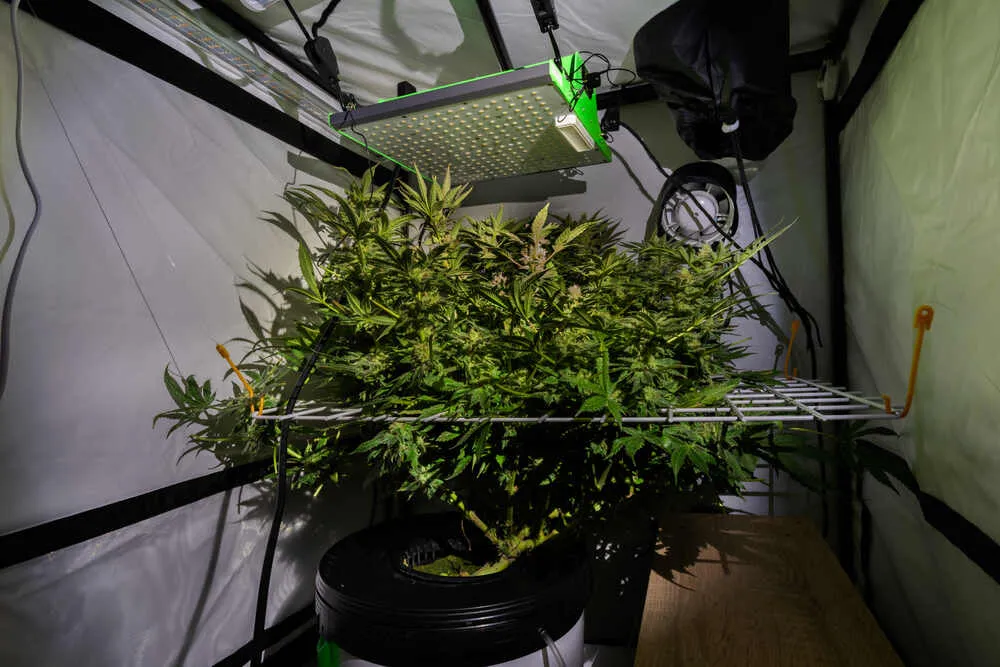
The screen should sit high enough for plants to develop some branching before they reach it, while still leaving enough vertical space for flowering.
For many indoor setups, roughly 8–16 inches above the growing medium can be a useful starting range, but the best height depends on cultivar, pot size, and available headroom.
Use netting with openings large enough to guide branches through without tightly gripping the stems. The screen should cover the usable canopy area and remain firm enough to support trained growth.
Tent-mounted nets are simple for fixed indoor setups, while freestanding frames can provide more flexibility. A basic DIY frame made from PVC or similar lightweight material can also work well.
Grower Tip: Before attaching the screen permanently, make sure you can reach every pot, corner, and section below the canopy. Good access becomes increasingly important as the SCROG fills.
How to SCROG Cannabis: Step-by-Step
Once your screen and plants are ready, SCROG training is mainly about guiding new growth sideways to create an even canopy. For a first grow, work gradually. Young branches are much easier to position than older, woody stems.
Step 1: Prepare and Train the Plant
Let the plant establish healthy vegetative growth and several strong side branches before you begin SCROG training.
You can top the plant before it reaches the screen to encourage more side branching, although topping is optional. If you do top, give the plant time to recover and resume healthy growth before continuing with more training.
The aim at this stage is to create several branches that can eventually be spread across different areas of the screen.
Step 2: Position the SCROG Screen
Install the screen at your planned height before the plant grows through it.
Make sure the screen is secure and level. It should not sag significantly when branches begin resting against it.
Check one last time that you can still reach the pots, growing medium, and areas underneath the canopy.
Step 3: Guide Shoots Into the Screen
Allow the shoots to grow naturally until they reach or pass slightly through the screen.
Instead of letting each shoot continue straight upward, gently redirect it toward an empty section of mesh. The growing tip should then continue developing from its new position.
Try to give each main branch its own area rather than bunching several shoots into the same opening.
Step 4: Keep Tucking and Spreading New Growth
Continue checking the canopy as the plant grows.
When a shoot rises above the screen:
- Gently bring it back below the net.
- Move it sideways toward an empty opening.
- Position the growing tip so it can continue upward.
- Repeat as the branch extends.
During fast vegetative growth, check the canopy regularly because shoots can quickly become taller than their neighbors.
Avoid making sharp bends. Young stems should flex relatively easily, but thicker stems can split if they are forced.
Grower Tip: If a branch feels stiff or resists bending, do not force it into the next square. Use a closer opening or leave it where it is. A slightly uneven canopy is better than a broken main branch.
Step 5: Fill the Canopy
Continue spreading branches until the screen is filling evenly.
Do not assume that every square needs to be occupied before flowering. The plant will continue growing after flowering begins, so you need to leave room for the flowering stretch.
| Expected Stretch | Before Flowering |
| High | Leave more open screen space |
| Moderate | Allow more of the screen to fill |
| Low | Give the plant more vegetative time |
The exact amount of screen coverage will depend on the cultivar and your available space.
Step 6: Switch to Flowering
For photoperiod plants grown indoors, switch the light schedule once you have enough canopy coverage while still leaving space for further growth.
A cultivar known for considerable stretch should generally be switched earlier than a shorter, more compact plant.
This is why SCROG timing should be based on plant behavior rather than one fixed screen-fill percentage.
Step 7: Manage the Flowering Stretch
Plants can continue producing rapid vertical growth during the early part of flowering.
Keep redirecting flexible shoots into open areas while this stretch continues. This helps prevent a few branches from rising well above the rest of the canopy.
At the same time, watch for overcrowding. Do not keep forcing new growth into sections that are already dense.
Step 8: Stop Tucking and Maintain the Canopy
As the flowering stretch slows, stop pulling the main shoots sideways and allow the flowering sites to rise above the screen.
From this point, focus on maintaining an open, manageable canopy. Check beneath the screen for crowded or weak growth, and use careful cannabis pruning where necessary to keep the lower canopy manageable.
Avoid unnecessary training once stems become stiff and flowers are developing more noticeably.
The finished SCROG does not need to look perfectly uniform. For a new grower, the priority should be a reasonably level, well-spaced canopy with good light exposure, airflow, and access to the plants.
Pruning and Training Cannabis During SCROG
SCROG can be combined with other training methods to shape the plant before and during canopy development. For a first grow, keep things simple and only use techniques that solve a clear problem.
LST
Low-stress training (LST) works well with SCROG because both methods redirect branches gradually. Soft ties can help spread shoots before they reach the screen, after which the net becomes the main training tool.
Lollipopping
Lollipopping removes weak, shaded growth from beneath the productive canopy. In a SCROG, this can improve access below the screen and reduce unnecessary lower growth.
Topping and Main-Lining
Topping encourages more side branches before the screen fills, giving growers more shoots to spread across the canopy.
Main-lining uses repeated topping and training to create a more symmetrical branch structure. It can work with SCROG but usually requires more vegetative time and is less necessary for beginners.
Super Cropping
Super cropping cannabis can help control an individual shoot that grows much taller than the rest of the SCROG canopy. It is more stressful than normal SCROG tucking, so it should be used carefully rather than as a routine part of training.
Defoliation
Selective cannabis defoliation can remove leaves that heavily shade growth or restrict airflow, although aggressive stripping is unnecessary. Avoid aggressive leaf removal; healthy leaves still support photosynthesis.
Grower Tip: For a first SCROG, basic topping or LST followed by regular tucking is usually enough. Adding too many training techniques can make the grow harder to manage.
Common SCROG Mistakes to Avoid
Most SCROG problems come from starting too late, overcrowding the screen, or making the canopy difficult to manage.
| SCROG Mistake | Why It Causes Problems |
| Starting too late | Older stems are harder to reposition safely |
| Overcrowding the screen | Reduces light penetration and airflow |
| Forcing stiff branches | Can split or damage stems |
| Mixing very different cultivars | Uneven stretch makes the canopy harder to level |
| Poor access below the screen | Makes watering, pruning, and inspection difficult |
| Tucking too late into flowering | Developing stems and flowers are easier to damage |
Begin training while shoots are still flexible and leave enough space for flowering stretch. If several plants share one screen, cultivars with similar growth habits are easier to manage.
Do not try to fill every opening in the net. If your main goal is a dense canopy using several smaller plants rather than spreading branches across a screen, the Sea of Green method uses a different approach. A slightly more open canopy is usually easier to maintain than one packed with overlapping branches.
Grower Tip: Fix uneven growth early. Moving a young shoot is much easier than correcting an established branch later.
Cannabis Strains Suited to SCROG
Most cannabis cultivars can be trained with SCROG, but some growth traits make the process easier.
Look for plants with:
- good lateral branching
- manageable internodal spacing
- predictable flowering stretch
- flexible branches
- similar growth habits when several plants share one screen
Stretchier cultivars may need to be switched to flowering earlier, while compact plants may need more vegetative time to fill the screen.
Green Gelato
Green Gelato is one example often used for SCROG because its branching can be spread across a wider canopy. Growers should still plan around the plant's actual stretch and growth pattern rather than relying on the strain name alone.
Grower Tip: For your first SCROG, matching plant height and stretch is usually more important than choosing a specific strain.
Conclusion
Learning how to SCROG cannabis is mainly about controlling the canopy as the plant grows. Install the screen early, guide flexible shoots into open spaces, and leave enough room for the flowering stretch rather than trying to completely fill the net.
For new growers, simple SCROG training is usually enough. Topping or LST can help create additional branches, but the priority should be maintaining an even, accessible canopy with good light exposure and airflow.
The best results come from watching how your plants respond and adjusting your training accordingly. Cultivar, stretch, grow space, and plant health all influence when to train, when to switch to flowering, and when to stop tucking.
Frequently Asked Questions
How High Should a SCROG Net Be?
Around 8–16 inches above the growing medium can be a useful starting range for many indoor setups. The best height depends on plant structure, pot size, available vertical space, and how much vegetative growth you want before the branches reach the screen.
How Full Should a SCROG Screen Be Before Flowering?
There is no percentage that works for every plant. Cultivars that stretch heavily during early flowering generally need more empty screen space when flowering begins, while compact plants may need longer in vegetative growth to fill the canopy.
When Should You Stop Tucking Cannabis in a SCROG?
Continue tucking while shoots are actively stretching and flexible. As the flowering stretch slows and flowers become more established, stop redirecting the main shoots and allow them to grow upward above the screen.
Can You SCROG Autoflower Cannabis Plants?
Yes, autoflowers can be trained with a SCROG, but their shorter, predetermined growth cycle leaves less time to recover from stress. Gentle branch positioning is generally easier to manage than combining SCROG with repeated high-stress training.
How Many Cannabis Plants Do You Need for a SCROG?
There is no fixed number. A SCROG can be created with one plant or several plants depending on the size of the screen, grow space, cultivar, and amount of vegetative growth. The important factor is giving each plant enough horizontal space to develop without overcrowding the canopy.


