




Pruning cannabis is one of the simplest ways to control plant shape, remove unwanted growth, and improve light and airflow through the canopy. Done carefully, it can help growers keep plants more manageable and reduce weak lower growth that is unlikely to develop well.
If you are learning how to prune cannabis plants, the most important thing is knowing what to remove, when to make the cut, and when to leave healthy growth alone. Pruning too much or at the wrong stage can slow development and add unnecessary stress.
In this guide, we explain how to prune cannabis step by step, the difference between common pruning techniques, when pruning cannabis is most effective, and how the approach changes between autoflower and photoperiod plants. We will also cover common mistakes, recovery, and what growers should realistically expect pruning to do for plant structure and yield.
Key Takeaways
- Prune cannabis plants when they are healthy and actively growing, with most structural pruning best done during the vegetative stage.
- Focus on weak, damaged, crowded, or heavily shaded growth rather than removing a fixed percentage of healthy foliage.
- Photoperiod plants can usually handle more pruning because growers can extend the vegetative stage, while autoflowers need a lighter approach.
- Use clean, sharp tools and make precise cuts to reduce unnecessary damage and lower the risk of spreading pests or pathogens.
- Pruning cannabis can improve canopy structure, airflow, and light distribution, but it does not guarantee bigger buds or higher yields.
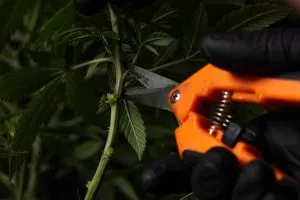
What Is Cannabis Pruning and Why Prune Cannabis Plants?
Cannabis pruning is the selective removal of leaves, shoots, or branches to control how a plant develops. Growers use pruning to open up crowded growth, improve airflow through the canopy, and remove weak lower shoots that receive little light.
Pruning cannabis plants is not about cutting away as much growth as possible. Every healthy leaf contributes to photosynthesis, so removing too much at once can slow growth and increase stress. The aim is to remove growth that is damaged, overcrowded, poorly positioned, or unlikely to contribute much to the final canopy.
How much pruning a plant can tolerate depends on its health, genetics, stage of growth, and growing conditions. A healthy photoperiod plant with time to recover can usually tolerate more structural work than a young, stressed, or fast-growing autoflower.
Pruning vs Defoliation, Topping and Fimming
Pruning is a broad term, and several cannabis training techniques fall within or overlap with it. Understanding the difference helps you choose the right approach rather than removing growth without a clear reason.
| Technique | What Is Removed? | Main Purpose |
| Pruning | Selected shoots, branches, or leaves | Shape the plant and remove unwanted growth |
| Defoliation | Fan leaves | Improve airflow and light exposure |
| Topping | Main growing tip | Encourage more than one dominant branch |
| Fimming | Part of the growing tip | Encourage several new shoots from the same area |
Topping cannabis plants and fimming cannabis are more targeted than general pruning because both focus on the plant's growing tip. Defoliation, by comparison, deals specifically with removing leaves.
Grower tip: Before making any cut, ask what problem it solves. If a branch is healthy, well lit, and positioned correctly, removing it may offer little benefit.
Benefits of Pruning Cannabis for Light, Airflow and Plant Structure
The main benefit of pruning weed plants is better control over the canopy. Removing crowded or weak growth can create more space between branches, helping air move around leaves and developing flowers.
Pruning can also improve light distribution by preventing unnecessary lower growth from competing for space beneath a dense canopy. This is particularly useful indoors, where light comes mainly from fixtures positioned above the plants.
A well-pruned cannabis plant can also be easier to inspect, train, water, and manage. However, pruning does not automatically increase yield or produce larger buds. Genetics, lighting, plant health, environment, and overall growing conditions still play major roles in the final result.
The best approach is selective pruning: remove growth for a clear reason, then give the plant time to respond before making further changes.
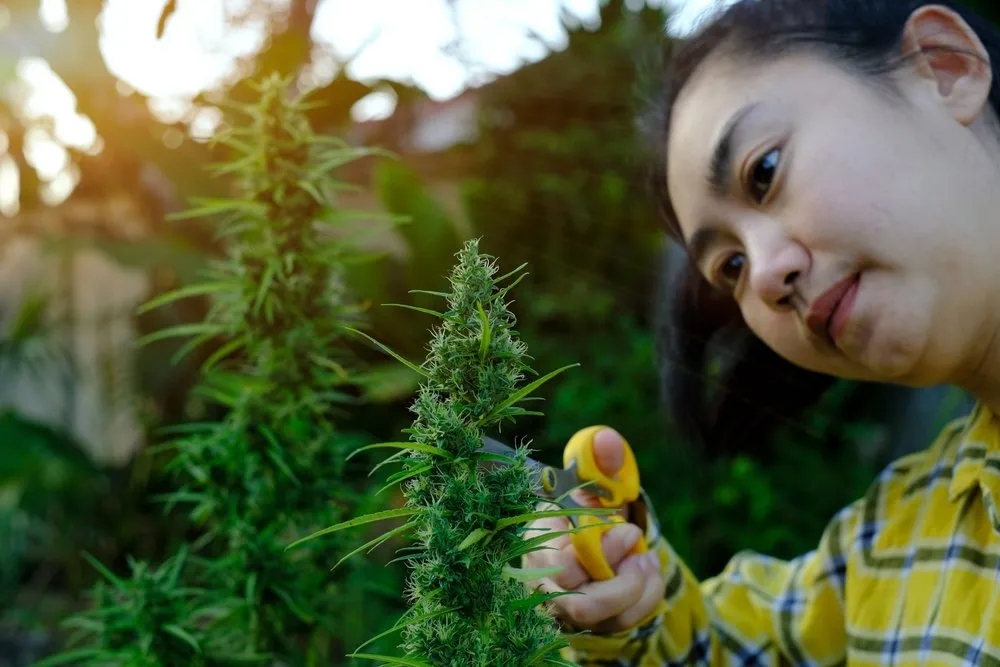
When Should You Prune Cannabis Plants?
Timing matters just as much as knowing what to remove. Pruning a healthy plant at the right stage gives it time to recover and continue growing, while cutting too much growth during flowering or when a plant is already stressed can slow development.
For most cannabis plants, the vegetative stage is the safest time for structural pruning. Once flowering begins, pruning should become lighter and more selective.
Best Time to Prune During the Vegetative Stage
The cannabis vegetative stage gives plants the best chance to recover from pruning because they are still focused on producing leaves, branches, and roots.
Wait until the plant is established and growing well before removing healthy growth. Young seedlings and recently transplanted plants should be left alone until they have developed a stronger root system and several healthy nodes.
With photoperiod cannabis seeds, indoor growers have more control because the plants can remain in vegetative growth until the light schedule is changed. This gives you time to prune unwanted lower branches, reshape the canopy, and allow new growth to develop before flowering. If you are growing indoors, understanding the correct cannabis light schedule also helps you decide when to move a photoperiod plant into flower.
If you are planning heavier pruning or lollipopping, finish the main work before switching to flowering and allow the plant time to recover.
Grower tip: Do not prune simply because the calendar says it is time. Look at the plant first. Healthy color, active new growth, and sturdy branches are better signs that a plant is ready.
Can You Prune Cannabis During Flowering?
You can carry out some light pruning during early flowering, but this is not the time for major changes to the plant's structure.
Growers may remove weak lower shoots during the early stretch if they are clearly shaded and unlikely to reach the main canopy. Dead, damaged, or diseased leaves should also be removed when necessary.
Once flowers are developing properly, avoid heavy pruning. Removing large branches or too much healthy foliage at this stage can add unnecessary stress when the plant is putting most of its resources into flower production.
Try to complete topping, heavy lollipopping, and other major pruning before flowering whenever possible.
Pruning Weed Plants Indoors vs Outdoors
Indoor growers often use pruning to manage limited space and create a more even canopy beneath fixed grow lights. Lower branches that remain far from the light may receive much less usable light than the top of the plant, making selective pruning useful in crowded indoor setups.
Outdoor cannabis receives sunlight from changing angles throughout the day and usually has more room to spread. This means lower branches may still receive useful light, so they should not automatically be removed.
Outdoors, pruning may instead focus on improving access through a dense plant, removing damaged growth, and keeping crowded branches from restricting airflow.
In either setting, prune according to the plant in front of you rather than following a fixed percentage or schedule.
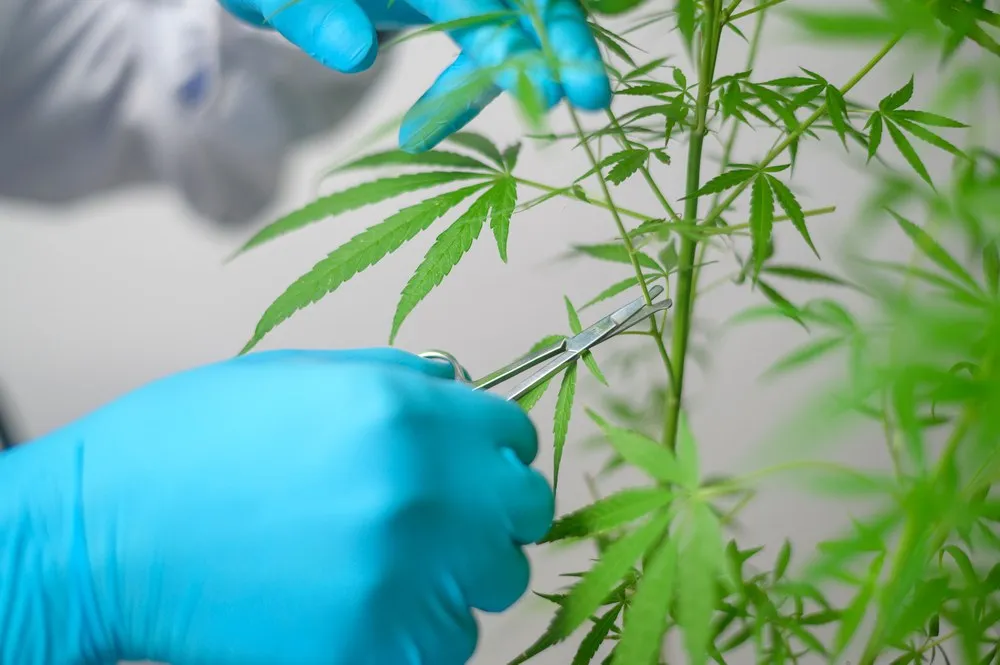
How to Prune Cannabis Plants Step by Step
When pruning cannabis, work from the bottom upward and remove growth for a clear reason. Focus on weak, damaged, crowded, or heavily shaded shoots rather than stripping healthy foliage unnecessarily.
Tools and Hygiene Before You Start Pruning
Step 1: Check the plant.
Prune when the plant is healthy and actively growing. If it is wilting, showing nutrient stress, or dealing with pests, address the problem first.
Step 2: Prepare clean, sharp tools.
Use pruning scissors, small shears, or a sharp scalpel. Disinfect the blades with isopropyl alcohol before you start and between plants to reduce the risk of spreading pests or pathogens.
What Parts of a Cannabis Plant Should You Prune?
Step 3: Inspect the lower growth.
Start with shoots and branches beneath the main canopy. Look at how the nodes and internodes are developing, then identify growth that is weak, damaged, growing inward, overcrowded, or receiving very little light.
Do not remove every lower branch automatically. A healthy branch that reaches good light can still be productive.
Grower tip: Follow each shoot upward before cutting it. This helps you see whether it is likely to reach the canopy or remain shaded below it.
Where to Make Clean Cuts
Step 4: Trace the unwanted shoot back to its base.
Identify where it joins the main stem or larger branch before making the cut.
Step 5: Cut cleanly.
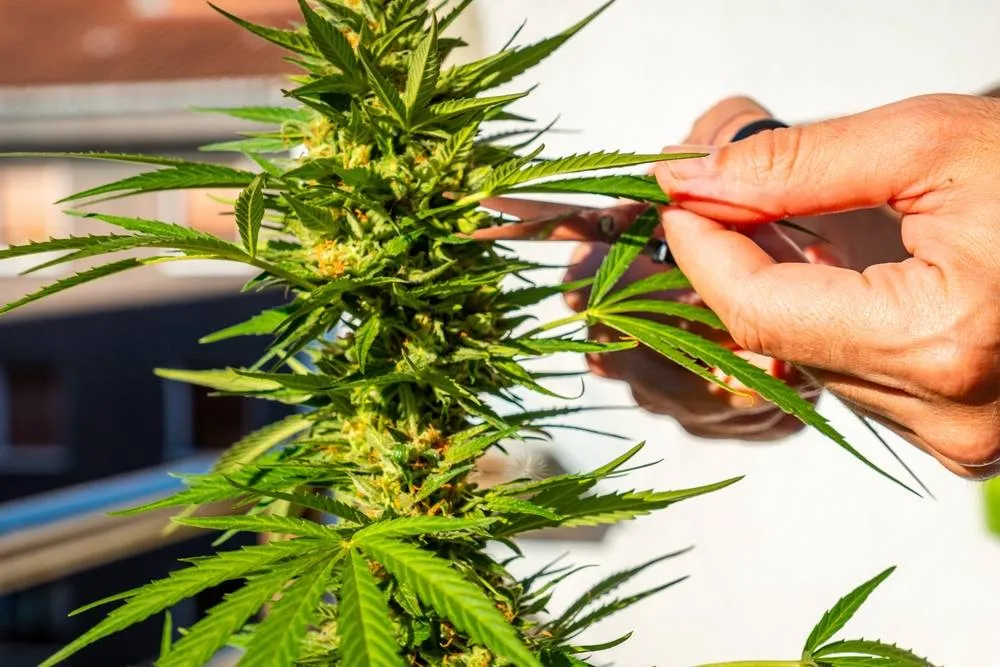
Make one clean cut close to the base without damaging the larger stem. Do not tear or twist branches off by hand.
If removing a cannabis fan leaf, cut through the petiole, the stalk connecting the leaf to the stem or branch.
How Much of a Cannabis Plant Should You Prune?
Step 6: Prune selectively.
There is no fixed percentage that is right for every cannabis plant. How much you remove depends on the plant's health, genetics, size, growth stage, and the pruning method being used.
Begin with obvious unwanted growth, then step back and inspect the canopy before cutting more.
Healthy photoperiod plants that still have time in vegetative growth generally give growers more room for structural pruning than autoflowers or plants already entering flower.
Grower tip: If you are unsure whether a healthy branch needs removing, leave it and reassess later.
What to Do After Pruning Weed Plants
Step 7: Clear away the cut material.
Remove discarded leaves and branches from the grow area, especially if they show signs of pests or disease.
Step 8: Keep conditions steady.
Avoid making several major changes at once. Keep watering, lighting, temperature, humidity, and airflow consistent while the plant responds.
Step 9: Watch the new growth.
Healthy plants should continue producing new leaves and shoots. If growth slows or the plant remains wilted, allow it more recovery time before carrying out further pruning or training.
Good cannabis pruning is less about how much you remove and more about choosing the right growth to cut.
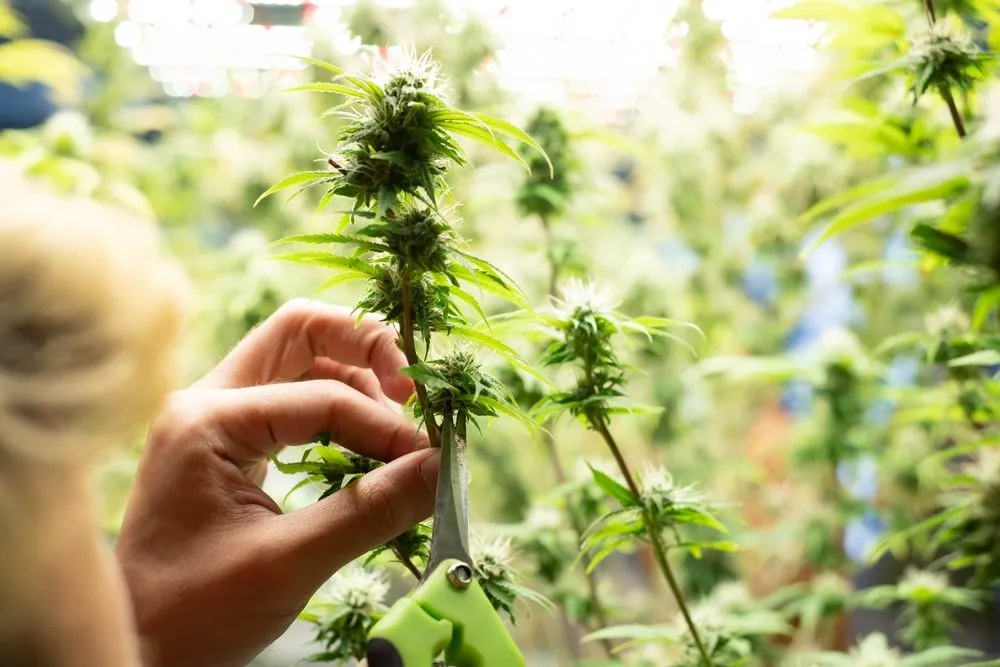
Common Cannabis Pruning Techniques
Cannabis pruning can be as simple as removing one weak branch or as structured as shaping an entire canopy before flowering. The right method depends on plant health, available space, and how much recovery time the plant has.
| Technique | What It Does | Best Suited To |
| Selective pruning | Removes individual unwanted shoots or branches | General canopy management |
| Lollipopping | Clears weak growth from the lower plant | Dense indoor canopies |
| Topping | Removes the main growing tip | Creating more dominant branches |
| Fimming | Partially removes the growing tip | Encouraging several new shoots |
| LST | Bends and ties branches without cutting | Spreading the canopy |
| SCROG | Trains branches across a screen | Creating an even indoor canopy |
Selective Pruning and Structural Shaping
Selective pruning means removing individual shoots, branches, or leaves that have a clear reason to go. This may include damaged growth, thin lower shoots, inward-growing branches, or areas that make the center of the plant too crowded.
It is one of the easiest ways to shape a cannabis plant because you can make small adjustments without heavily cutting it back.
Grower tip: Look at the whole plant before cutting. Removing one poorly positioned branch may open enough space without needing to prune several others.
Lollipopping Lower Growth
Lollipopping removes weak lower shoots and branches that sit beneath the productive canopy. The aim is to stop the plant carrying growth that receives little useful light and is unlikely to develop as well as the tops.
Growers often use this technique before flowering, particularly indoors where light intensity drops farther below the canopy.
Avoid treating lollipopping as a fixed percentage. How far up the plant you clean depends on canopy depth, lighting, plant size, and genetics.
Topping and Fimming Cannabis Plants
Topping and fimming both target the growing tip rather than clearing lower growth.
Topping removes the main tip cleanly, allowing the shoots below it to take over as dominant branches. Fimming removes only part of the growing tip and may produce several new shoots from the same area.
Both techniques change the plant's natural growth pattern and should be carried out while a healthy plant still has enough vegetative time to recover.
These methods are usually better suited to photoperiod plants than autoflowers because photoperiod growers can extend the vegetative stage if more recovery time is needed.
Combining Pruning With LST or SCROG
Pruning can also be combined with low-stress training (LST) or a Screen of Green (SCROG) setup.
LST bends and secures branches outward to spread growth across a wider area. SCROG uses a horizontal screen to guide branches into an even canopy.
Selective pruning can then remove weak shoots beneath that canopy while LST or the screen helps position the stronger branches where they receive more light.
Avoid doing several stressful techniques at once. Prune first, watch how the plant responds, and give it time to continue growing before making another major adjustment.
Pruning Autoflower vs Photoperiod Cannabis
Plants grown from autoflower cannabis seeds and photoperiod seeds can both be pruned, but they give growers very different recovery windows. Photoperiod plants can stay in vegetative growth until the light cycle is changed, while autoflowers begin flowering according to age. This makes timing much more important when pruning autos.
| Plant Type | Pruning Approach | Main Consideration |
| Autoflower | Light, selective pruning | Limited time to recover before flowering |
| Photoperiod | Can tolerate more structural pruning when healthy | Vegetative growth can be extended before flowering |
Why Autoflowers Are More Sensitive to Pruning
Autoflowers contain ruderalis genetics, which allow them to flower without a change in the light schedule. Their vegetative stage is much shorter than that of photoperiod plants, leaving less time to recover from heavy pruning.
For this reason, I prefer to keep pruning on autos light. Selective defoliation of autoflowers can remove damaged or badly positioned leaves, but avoid stripping away large amounts of healthy growth at once.
Safe Pruning Limits for Autoflowers
There is no single day or week when every autoflower must be pruned. Growth rate and flowering time vary between strains.
Use the plant itself as your guide. If it is healthy and still producing vegetative growth, light selective pruning may be suitable. Once pre-flowers and pistils appear, avoid heavy structural pruning and concentrate on keeping the plant healthy.
Grower tip: With autos, if you are unsure whether a healthy branch needs removing, leave it. Their short lifecycle gives you less room to recover from aggressive pruning or other high-stress training techniques.
Why Photoperiod Plants Tolerate Heavier Pruning
Photoperiod cannabis gives growers more control over timing. Indoors, plants can remain in vegetative growth under a long-day light schedule before flowering is triggered by reducing the daylight period.
That extra time makes it easier to prune lower branches, shape the canopy, and allow the plant to recover before flowering. I often carry out the main structural pruning toward the end of vegetative growth, then give the plant time to respond before changing the light cycle.
The key difference is not that photoperiod plants are automatically tougher. Growers simply have more control over how long they remain in vegetative growth, which gives them a larger recovery window.
Common Pruning Mistakes and How to Avoid Them
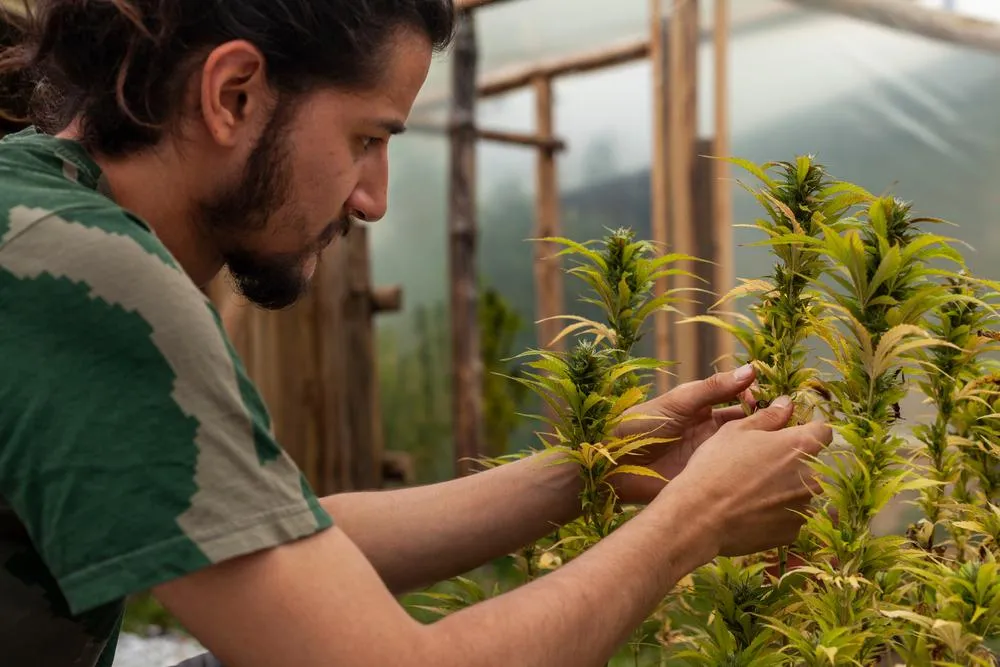
A careful approach helps reduce stress and prevents you from removing productive growth unnecessarily.
Step 1: Check Plant Health First
Before pruning, inspect the plant for pests, heat stress, watering problems, nutrient issues, or transplant shock.
If the plant is already struggling, fix the underlying problem first and wait until healthy new growth resumes.
Step 2: Remove Only What Needs to Go
Start with damaged, weak, crowded, or heavily shaded growth.
Avoid pruning to a fixed percentage or cutting healthy branches simply because they are low on the plant. If a branch is reaching good light and has room to develop, leave it in place.
Grower tip: Make a few cuts, then step back and inspect the whole plant before removing more.
Step 3: Avoid Heavy Pruning Late in Flower
Carry out major structural pruning during vegetative growth or early in the transition to flowering.
Once flowers are well established, avoid removing large branches or significant amounts of healthy foliage. At this stage, focus on dead, damaged, or diseased growth.
Step 4: Give the Plant Time to Recover
After pruning, keep growing conditions stable and avoid stacking several stressful techniques together. Wait for healthy new growth before pruning or training again.
Conclusion
Pruning cannabis plants can help growers control plant shape, open up crowded growth, and make better use of available light and airflow. The key is to prune with a clear purpose rather than removing healthy growth simply because it is there.
Most structural pruning is best carried out while plants are healthy and actively growing, giving them time to recover before flowering. Photoperiod plants offer more flexibility because their vegetative stage can be extended, while autoflowers usually benefit from a lighter approach because they have less recovery time.
Use clean, sharp tools, remove weak or damaged growth first, and avoid pruning plants that are already stressed. There is no fixed percentage of foliage that every cannabis plant should lose.
Pruning can support better canopy management, but it does not guarantee larger buds or higher yields. Genetics, lighting, plant health, and growing conditions still play the biggest roles in the final result.
Frequently Asked Questions
Is Pruning Necessary for Every Cannabis Plant?
No. Cannabis plants can grow and flower without being pruned. Pruning is mainly used when growers want to control plant shape, remove unwanted growth, improve access through a dense canopy, or manage limited indoor space.
Can You Prune Cannabis Plants More Than Once?
Yes, provided the plant is healthy and has enough time to recover. Avoid carrying out several heavy pruning sessions close together. Allow active growth to resume before deciding whether more material needs to be removed.
Should You Remove Fan Leaves When Pruning Cannabis?
Only when there is a clear reason. Healthy fan leaves support photosynthesis, so they should not be removed automatically. Consider removing leaves that are damaged, diseased, heavily overcrowded, or blocking access to important growth.
Can You Prune Outdoor Cannabis Plants?
Yes. Outdoor cannabis can be pruned to remove damaged growth, improve access through large plants, or reduce overcrowding. However, outdoor branches may receive useful sunlight from different angles throughout the day, so lower growth should not automatically be removed.
Should You Prune Cannabis With Scissors or by Hand?
Use clean, sharp pruning scissors, shears, or a suitable cutting blade for most pruning. Clean cuts cause less unnecessary tissue damage than tearing or twisting branches and leaves off by hand. Disinfect tools before moving between plants.


