




Fimming cannabis is a high-stress training technique used to control plant shape and encourage several growing shoots from the main stem. If you are wondering when to FIM cannabis, the best time is usually during vegetative growth once a healthy plant has around 4–6 established nodes.
Unlike topping, FIMming weed removes only part of the newest growing tip rather than cutting it off completely. Done at the right time, it can help create a wider, more even canopy, but the plant still needs enough time to recover before flowering.
This guide explains when to start FIMming, how to make the cut, how long recovery takes, and whether FIMming is suitable for autoflowers.
Key Takeaways
- Be cautious with autoflowers: Their shorter vegetative period gives them less time to recover, so low-stress training (LST) is often the safer option for beginners.
- Start during vegetative growth: FIM cannabis when a healthy plant has around 4–6 established nodes and is growing strongly.
- Do not remove the whole tip: A FIM cut removes roughly 70–80% of the newest growth, leaving part of the developing tip intact.
- Expect variation: FIMming can produce several new shoots, but the exact number and growth pattern can differ between plants.
- Allow time for recovery: Wait for healthy new growth to resume before applying more high-stress training.
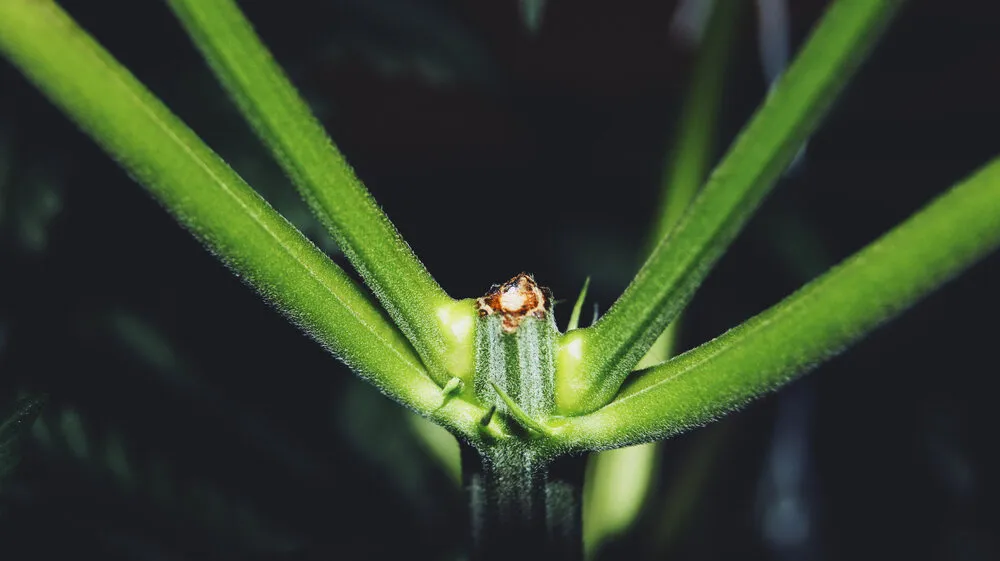
What is Fimming Cannabis?
Fimming cannabis is a high-stress training (HST) technique used to change how a plant develops during vegetative growth. The term FIM is commonly said to mean “F*ck, I Missed,” referring to a cut that resembles an incomplete topping attempt.
Unlike topping, where the entire growing tip is removed, FIMming cuts away roughly 70–80% of the newest growth while leaving part of the tip intact. If the plant responds well, the damaged growth point can develop into several competing shoots instead of one dominant stem.
How Does FIMming Work?
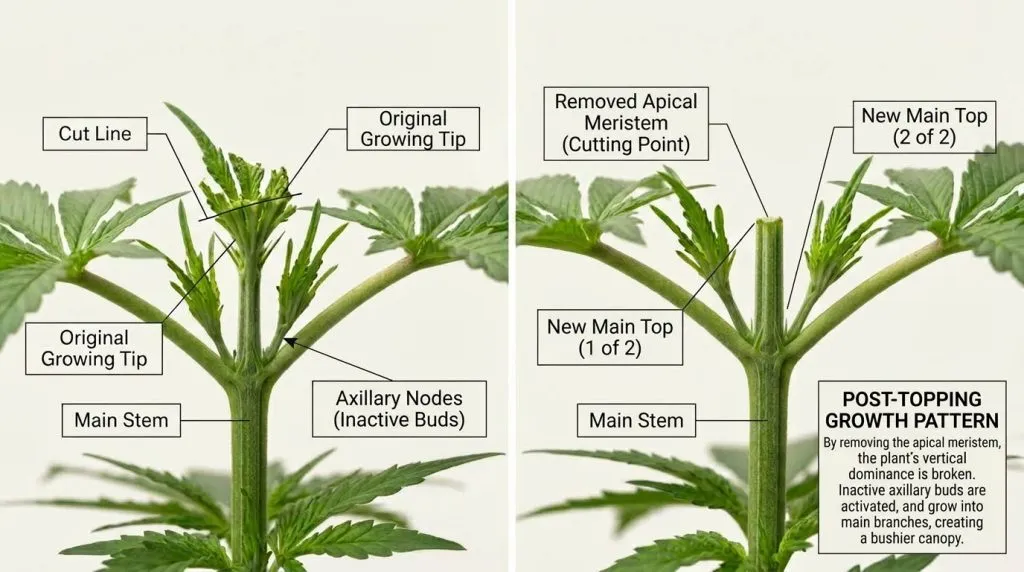
Cannabis naturally shows apical dominance, meaning the main growing tip receives growth priority over lower branches. Damaging that tip reduces its dominance, allowing nearby side shoots to develop more strongly and helping create a broader, more even canopy.
Grower Tip: Only FIM healthy, actively growing plants that have enough vegetative time left to recover.
What Are the Benefits and Downsides of FIMming?
FIMming gives growers another way to shape cannabis plants during vegetative growth, but the response is not always predictable. Because it involves cutting fresh growth, plant health and timing matter.
| Potential Benefit | Possible Downside |
| Encourages several growing tips | Causes temporary plant stress |
| Creates a wider, bushier canopy | Results can be less predictable than topping |
| Helps control excessive vertical growth | An inaccurate cut can produce uneven growth |
| Improves light distribution across the canopy | Plants need recovery time before further training |
FIMming can help growers spread branches across the available growing space and expose more of the canopy to direct light. However, it does not guarantee a larger harvest or more potent buds. Results vary according to genetics, plant health, lighting, environment, and how effectively the new growth is managed.
Grower Tip: Give new shoots enough room to develop rather than crowding the center of the canopy.
When Should You Start Fimming Cannabis?
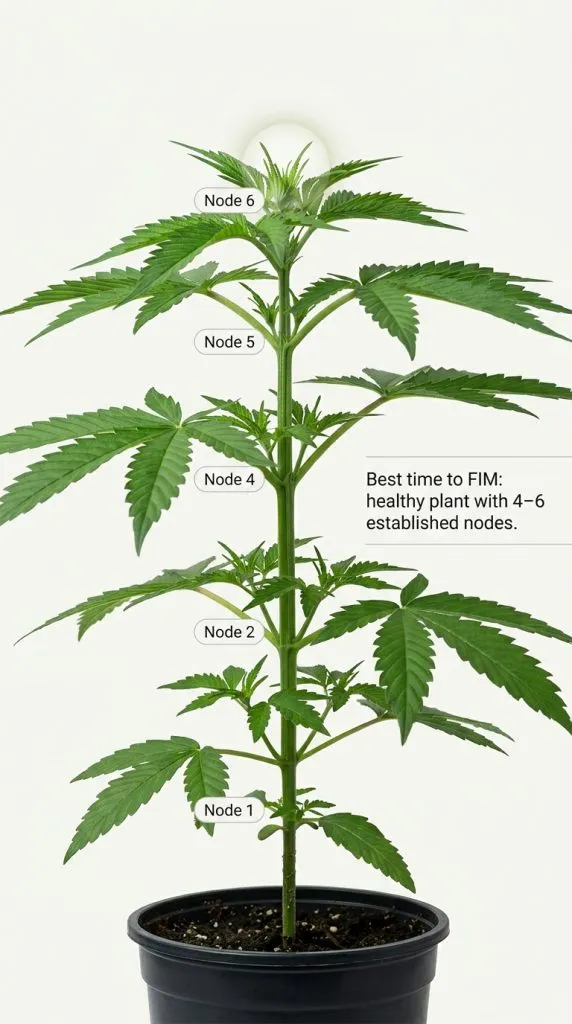
The best time to start fimming cannabis is during early-to-mid vegetative growth, once a healthy plant has around 4–6 established nodes. Node count is a useful guide, but plant condition is more important than reaching a specific number.
A plant is generally ready to FIM when it:
- is growing quickly and consistently
- has healthy leaves and sturdy stems
- has established side branches
- shows no signs of nutrient, pest, watering, or transplant stress
- has enough vegetative time remaining to recover before flowering
When Should You Avoid FIMming?
Avoid FIMming during flowering, immediately after transplanting, or when a plant is unhealthy or growing slowly. You should also skip the technique if flowering is approaching and there is limited time for recovery.
Grower Tip: If new growth has slowed or leaves are drooping, curling, or discolored, address the underlying problem before applying high-stress training.
How to FIM a Cannabis Plant Step by Step
If you are new to FIMming, the most important thing is to make the cut on a healthy plant and avoid removing the entire growing tip. Follow these steps carefully.
Step 1: Make Sure the Plant Is Ready
Wait until the plant is in vegetative growth and has around 4–6 established nodes. A node is the point where leaves and side branches meet the main stem.
Choose a plant that is growing well, with healthy leaves and no obvious signs of stress.
Step 2: Clean Your Tools
Use a pair of sharp scissors or pruning snips. Wipe the blades with isopropyl alcohol before cutting to reduce the risk of contamination.
Step 3: Find the Main Growing Tip
Look at the very top of the main stem. You should see a tight cluster of small, new leaves developing from the center.
This fresh growth is the part you will cut.
Step 4: Make the FIM Cut
Hold the new growth steady and remove approximately 70–80% of the developing tip.
Do not cut the whole tip off. Leaving a small amount of the newest growth behind is what separates FIMming from topping.
Step 5: Leave the Plant Alone to Recover
After cutting, avoid topping, heavy pruning, transplanting, or applying another high-stress technique straight away.
Keep the plant's light, watering, and environment stable while it recovers.
Step 6: Watch for New Shoots
Over the following days, new shoots should begin developing around the damaged growth tip. The exact number can vary, so do not worry if the plant does not produce the same number of shoots as another plant.
Step 7: Shape the New Growth
Once the new shoots are longer and growing strongly, gentle low-stress training (LST) can help spread them outward and create a flatter, more even canopy.
Grower Tip: Do not make another cut just because the FIM looks untidy at first. Give the plant time to respond and wait for healthy new growth before deciding whether it needs more training.
How Long Does Cannabis Take to Recover From FIMming?
Most healthy cannabis plants should begin showing active new growth within several days after FIMming, although full recovery can take around a week or longer depending on plant health and growing conditions.
Instead of relying on a fixed number of days, look for signs that the plant is growing normally again:
- upright, healthy leaves
- continued stem growth
- new shoots developing around the cut
- no persistent wilting or discoloration
Only consider additional training once strong, healthy growth has resumed.
Grower Tip: If the plant still looks stressed, give it more recovery time rather than training it again on a set schedule.
FIMming vs Topping Cannabis
FIMming and topping are both high-stress training methods, but the amount of the growing tip removed is different.
| FIMming | Topping |
| Removes most of the newest growth | Removes the entire growing tip |
| May produce several new shoots | Usually produces two dominant shoots |
| Growth response is less predictable | Branching is more predictable |
| Can create a bushier canopy | Encourages strong lateral branching |
| Used during vegetative growth | Used during vegetative growth |
Neither technique is automatically better. Topping offers more predictable branching, while FIMming can produce several competing shoots from one cut. Beginners who want greater control over plant structure may prefer to learn how to top cannabis plants before experimenting with FIMming.
Can You FIM Autoflowers?
You can FIM autoflowering cannabis plants, but it carries more risk than FIMming photoperiod plants. Autoflowers begin flowering according to age, so growers have less control over how long the plant remains in vegetative growth and recovers from high-stress training.
For beginners, low-stress training autoflowers is generally the safer option because it shapes the canopy without cutting the main growing tip. Check our guide on how to fim autoflowers.
If you decide to FIM an autoflower, only consider a plant that is:
- healthy and growing quickly
- still in very early vegetative growth
- showing no signs of stress
Grower Tip: If an autoflower has already started showing pre-flowers or has slowed down, avoid FIMming and use gentler canopy management instead.
Does FIMming Cannabis Increase Yield?
FIMming cannabis can create more growing tips and improve how branches are distributed across the canopy. This may help a grower use available light and growing space more efficiently.
However, more tops do not automatically mean a bigger yield. Final harvest weight depends on genetics, lighting, plant health, nutrition, environmental conditions, recovery time, and how effectively the canopy is managed.
FIMming should therefore be viewed as a canopy-management technique that may support yield potential rather than a guaranteed way to increase harvest weight.
Conclusion
FIMming cannabis can be a useful way to create a wider canopy and encourage several growing shoots from the main stem. For the best chance of a good response, FIM a healthy plant during vegetative growth, make a clean partial cut, and allow enough time for recovery.
For new growers, plant health matters more than following an exact schedule. Watch how the plant responds, avoid stacking high-stress techniques too quickly, and use gentler methods such as LST when extra recovery time is limited.
Frequently Asked Questions
What Does FIM Mean in Cannabis Growing?
FIM is commonly said to stand for “F*ck, I Missed.” The name refers to the technique's resemblance to an incomplete topping cut, where most of the newest growth is removed but part of the growing tip is left behind.
How Many Nodes Should a Cannabis Plant Have Before FIMming?
A healthy cannabis plant is generally ready for FIMming once it has around 4–6 established nodes and is growing strongly. Node count should only be used as a guide. Avoid FIMming plants that are small, slow-growing, or showing signs of stress.
How Much of the Plant Should You Cut When FIMming?
Growers typically remove around 70–80% of the newest growing tip. The goal is to leave a small portion of the developing growth intact rather than removing the whole growth point as you would when topping.
How Many New Shoots Does FIMming Produce?
A successful FIM can encourage several shoots to compete for dominance, but there is no guaranteed number. The plant's genetics, the position of the cut, and its overall health can all affect how the new growth develops.
Can You FIM a Cannabis Plant More Than Once?
Yes, healthy photoperiod plants can be FIMmed more than once during vegetative growth. However, wait until the plant has fully recovered and is producing strong new growth before considering another cut. Repeated FIMming is not necessary for every plant, and excessive training can slow development.


