




Can you FIM an autoflower? Yes, but because autoflowering cannabis plants have a short vegetative stage, timing and plant health are especially important. FIMming an autoflower can help control vertical growth, create a bushier canopy, and encourage more even development across the plant, but making the cut too late or training a stressed plant can slow growth before flowering.
In this guide, you’ll learn how to FIM an autoflower step by step, when to FIM autoflower plants, how FIMming differs from topping, and the potential benefits and risks of this plant training technique. We’ll also cover recovery time and the most common autoflower FIMming mistakes to avoid.
Key Takeaways
- You can FIM an autoflower, but the plant should be healthy, actively growing, and still have enough time to recover before flowering.
- Timing is critical with autoflowers because their vegetative stage is short, so FIMming too late can slow growth and reduce the plant’s potential.
- A proper FIM cut removes around 75% of the newest top growth, leaving part of the growing tip attached instead of removing it completely.
- Recovery usually takes around 5–7 days, and it is best to avoid additional training until normal growth has resumed.
- FIMming can help create a shorter, bushier canopy, but it is not essential and should be avoided on stressed, unhealthy, or slow-growing autoflowers.
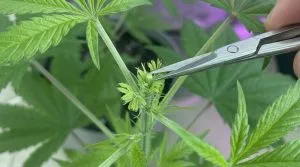
What is FIMming?
If you’re new to growing autoflower seeds, it’s worth understanding how their shorter vegetative period affects the way you use high-stress techniques such as FIMming.” This term applied if a grower accidentally failed to remove the top node of a plant when attempting topping/pinching out.
Vertical growth will temporarily cease for 5-7 days. In that time, the plants have put all their energy into the rest of the foliage. Plants grow back thicker with a compact structure, and when flowering, will produce one central primary cola, surrounded by shorter secondary colas from side branches.
What are the benefits of FIMming an autoflower?
Autoflowers can benefit greatly from plant training performed at the right time. FIMming is one of the easiest ways to produce bushy and stocky plants, and below are all the benefits associated with autoflower FIMming.
- FIMming encourages compact and bushy lower growth
- FIMming is ideal for growers with limited height
- FIMming works especially well with sativa hybrids
- Plants grow back with more vigour
- Lower buds are well developed and uniform
- When the plant responds well, FIMming can improve canopy structure and form part of a broader strategy to maximize autoflower yields.
| Potential Benefits | Possible Risks |
| Encourages a shorter, bushier plant structure | Poor timing can slow growth |
| Can help growers manage limited vertical space | The plant may not have enough time to recover before flowering |
| Encourages more even development across lower growth | Cutting too much can unintentionally top the plant |
| Can help create a more balanced canopy | FIMming an unhealthy plant can cause additional stress |
| May improve the development of lower bud sites | Slow recovery can leave the plant smaller than expected |
| Works particularly well when the plant is healthy and actively growing | Training too late may interfere with the transition into flowering |
How FIMming an autoflower can be risky
FIMming is a form of high-stress training for autoflowers, so timing, plant health, and recovery time all need to be considered before making the cut. When I have grown autos indoors and plan to train, I always wait until weeks 3-4 before getting hands-on. Autos have a limited amount of time to recover before transitioning to flowering.
- FIMming autos at the wrong time can result in short plants
- Plants may grow back slowly with stunted growth
- Applying the FIM technique too late can cause stress
- Cutting off too much can result in stunted growth later
How FIMming differs from topping
Topping autoflower plants works differently from FIMming because the entire main growing tip is removed rather than only part of the newest growth. The topping technique, also known as pinching out, refers to cleaning and removing the top node, exposing the two axillary shoots either side of the stem and internode.
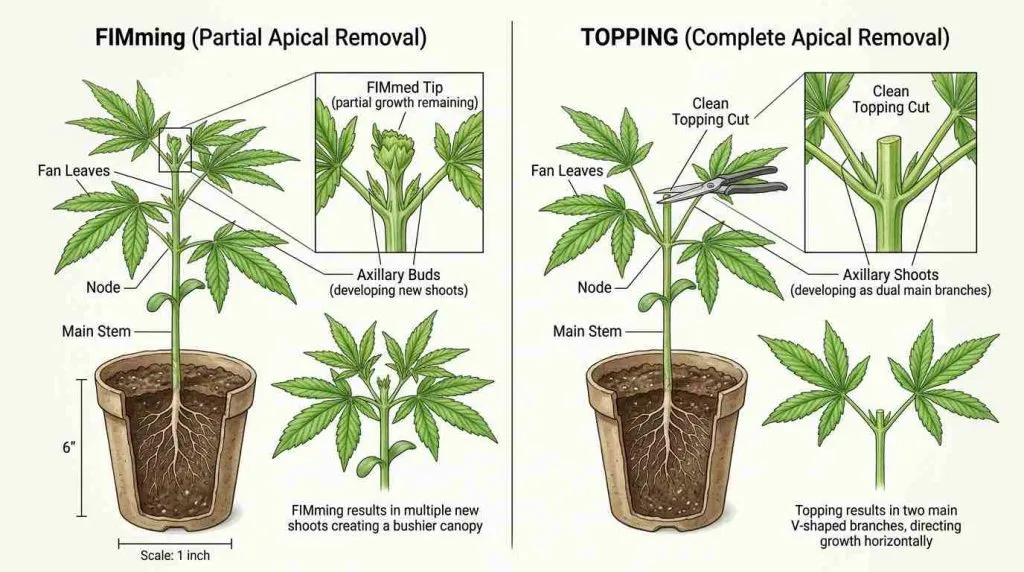
The FIM technique works differently, by stopping vertical growth for a short time, and allowing the plant to send all of its nutrients and energy into the lower growth beneath the top node. When I have FIMmed my autos, they typically bounce back within 5-7 days, and during this time I do not perform any other type of training.
| FIMming | Topping |
| Removes roughly 75% of the newest top growth | Removes the entire top growth point |
| Leaves part of the newest growth attached | Completely removes the top node |
| Temporarily slows vertical growth | Removes the main growing tip |
| Allows growth below the cut to develop while the top recovers | Exposes the two shoots directly below the removed tip |
| Requires careful cutting to avoid accidentally topping the plant | Uses a cleaner, more complete cut |
| Recovery time needs to be considered carefully with autoflowers | Recovery time also needs to be considered before flowering begins |
How to FIM an Autoflower Step by Step
FIMming an autoflower is all about timing and making a controlled cut. Because autos have a limited vegetative period, only use this technique on a healthy plant that is growing well and has enough time to recover before flowering. For most healthy plants, FIMming is best considered during early vegetative growth rather than during the seedling stage. If you’re unsure what development should look like at this point, our week-by-week autoflower growing guide explains each stage from germination through harvest.
The process itself is straightforward: prepare clean tools, identify the newest growth at the top of the plant, remove roughly 75% of that growth, and then give the plant time to recover.
Preparation and Tools to Use
You do not need much equipment to FIM an autoflower, but using sharp, clean scissors is important. Before making the cut, clean the blades with isopropyl alcohol and a cotton wipe. A sharp pair of scissors will make a cleaner cut and reduce unnecessary damage to the young growth.
Just as important is the condition of the plant. Avoid FIMming seedlings or autos that are already struggling with slow growth or other signs of stress. The best candidate is an established, healthy autoflower that is actively growing.
| What You Need | Why It Matters |
| Sharp scissors | A clean cut reduces unnecessary damage to the new growth |
| Isopropyl alcohol | Helps clean the scissors before making the cut |
| Cotton wipe | Makes it easier to clean the cutting blades |
| Healthy autoflower | A healthy plant is better positioned to recover from training |
| Established growth | The plant should be beyond the seedling stage before FIMming |
| Stable growing environment | Consistent conditions give the plant a better opportunity to recover |
Where and How to FIM Your Autoflower
Once your plant is ready, follow these steps:
1. Find the newest growth at the top of the plant.
Look at the main growing tip where the newest leaves are developing. This is the area you will cut. Unlike topping, you are not trying to remove the entire growing tip.
2. Hold the new growth steady.
Gently position the growing tip so you can clearly see where you are cutting. Avoid pulling or twisting the young leaves.
3. Remove around 75% of the newest growth.
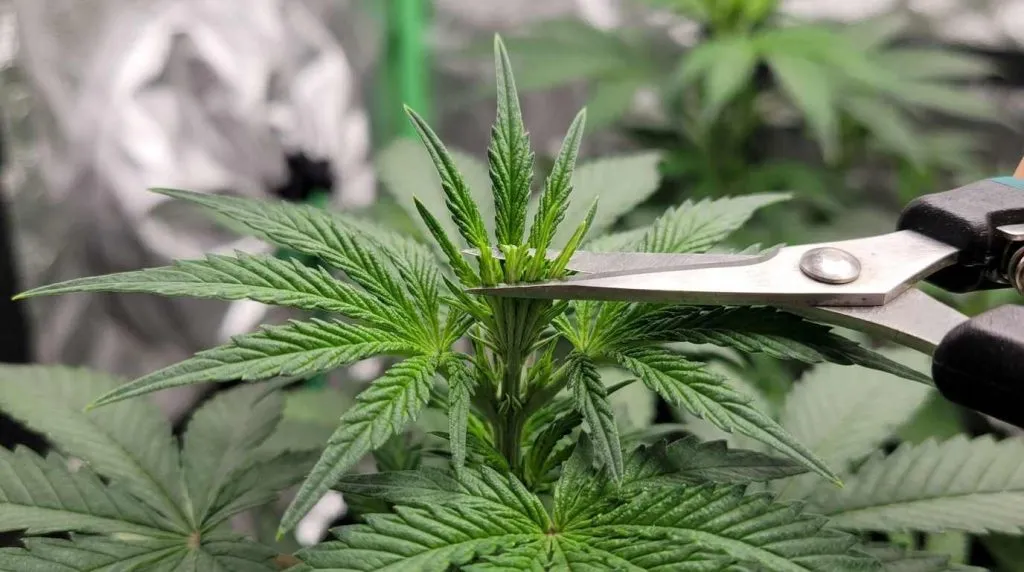
Using your clean, sharp scissors, cut through roughly the upper three-quarters of the new leaves and crown growth. Leave approximately 25% attached. The aim is to partially remove the growing tip rather than cut it off completely.
4. Check the cut.
Once the cut is made, leave the remaining growth in place. Do not keep trimming in an attempt to make the cut look perfect. Taking off too much can turn a FIM into a topping cut, while removing too little may not produce the response you were aiming for.
5. Leave the plant alone to recover.
Dispose of the removed foliage and return the plant to its normal growing environment. Avoid making additional cuts or performing other high-stress training immediately afterward.
For autoflowers, it is better to keep the process simple. FIM the main growing tip first and see how the plant responds rather than making several cuts at the same time.
Recovery After FIMming an Autoflower
After FIMming, the plant needs time to recover and develop new top growth. Based on the experience described in this article, recovery typically takes around 5–7 days.
During this period, avoid topping, super cropping, further FIMming, or other training that could add unnecessary stress. Even low stress training autoflowers should be left until the plant has recovered and normal growth has resumed.
Keep the growing environment stable while the plant recovers, paying particular attention to the temperature and humidity for autoflowers rather than making sudden environmental changes. The important thing is to watch the new growth rather than automatically start training again after a set number of days. Once the plant is actively growing and the cut area has developed normally, you can reassess whether any further training is necessary.
The main points to remember are simple: FIM only a healthy, established autoflower, make one controlled cut through roughly 75% of the newest top growth, and give the plant several days to recover before doing anything else.
Common mistakes to avoid when FIMing an autoflower
Over the years, I have tried all types of plant training techniques on autos to see which ones are most practical and work best. So, below are the most common mistakes a home grower may face when training their autos, ranging from FIMming too late to cutting off too much or too little foliage, and why training unhealthy plants will be disadvantageous.
| Mistake | What Can Happen | Better Approach |
| FIMming too early | A young plant may struggle to recover | Wait until the plant is established and growing strongly |
| FIMming too late | Recovery may overlap with the transition into flowering | Perform the technique while there is still enough time for recovery |
| Cutting off too much | You may accidentally top the plant | Leave part of the newest growth attached |
| Cutting off too little | The intended FIM response may not develop as expected | Aim to remove approximately 75% of the newest top growth |
| Training an unhealthy plant | Existing stress may become worse | Only FIM plants that are healthy and actively growing |
| Performing more training immediately afterward | Additional stress may slow recovery | Leave the plant alone for about a week before further training |
FIMming your autoflower too late
I would say that, out of all the plant training techniques available to a home grower, FIMming may be the riskiest in terms of recovery time and transitioning to flower. FIMming too late can slow development and leave you dealing with a stunted autoflower that has limited time to recover before flowering progresses. I recommend FIMming your autos on day 25 to be on the safe side!
Cutting too much or too little
Even I can make mistakes when FIMming my autos, and I will be the first to admit there are times when I have taken off either too much or too little. When this happens, you will either end up topping your plants, or simply cutting off half the foliage. I always keep 25% of the growth attached, and this works a treat on autos.
FIMming an unhealthy autoflower
Healthy and robust autoflower cannabis plants will always be the best candidates for the FIM technique. Unhealthy plants may struggle to recover and fully bounce back. Over the years, I have seen how attempting to train an unhealthy plant actually does more harm than good! A healthy plant will have a well-developed root zone, a bright green and metallic shine, and a strong stem with flexible side branches.
My Top Tips for FIMming Autos
Even though FIM can be tricky for a beginner or first-time grower, I've developed some tips over the years of growing autos indoors that may help.
Tip #1 - The Right Timing
The key to success when training autos is to find the perfect window between vegetation and pre-flowering. This will usually be around week 3-5 and is your best chance of performing the technique and accommodating recovery and healing time.
Tip #2 - Do Not Use Blunt Scissors
I have known many growers over the years that have been too lazy to buy a new pair of sharp scissors, and instead used blunt scissors. This resulted in the leaves becoming damaged and needing cutting several times, causing excessive stress. My tip is to always use sharp scissors and if you don’t have any..buy some!
Tip #3 - Leave Plants Alone
Once you have FIMmed your autos, do not touch the plants for the next week, and refrain from touching the recently cut top growth. The less you touch your plants and leave them to recover and bounce back, the better. This rule applies for any other style of training from topping, super cropping, LST and heavy pruning.
Tip #4 - Throw Away Stunted Plants
Everyone is capable of making mistakes, and when a failed FIM attempt ends up in stressed and stunted plants that do not seem to be growing or producing many buds, it is best to throw the plant out. This is the main risk in my eyes when it comes to the FIM techniques and autoflowering cannabis plants; however, when you get the FIM technique right, it is well worth the risk.
Conclusion
So, can you FIM an autoflower? Yes, but timing and plant health matter more with autos than with photoperiod plants. Autoflowers have a limited vegetative period, which means a poorly timed cut can leave the plant with too little time to recover before flowering.
For the best chance of a good response, only FIM a healthy, actively growing plant that is well beyond the seedling stage. Make a controlled cut through roughly 75% of the newest top growth, then leave the plant alone while it recovers. Avoid stacking other training techniques on top of FIMming until normal growth has resumed.
FIMming can help produce a shorter, bushier plant with a more even canopy, but it is not essential for growing productive autoflowers. If your plant is already stressed, growing slowly, or beginning to flower, leaving it alone is usually the better option.
Frequently Asked Questions
Can you FIM an autoflower?
Yes, you can FIM an autoflower, provided the plant is healthy and has enough time to recover before flowering. Because autos move through their vegetative stage quickly, timing is more important than it is with photoperiod plants. Avoid FIMming seedlings, stressed plants, or autos that are already transitioning into flower.
When is the best time to FIM an autoflower?
The article recommends FIMming around weeks 3–4, once the plant is established and actively growing. Plant development is more important than following an exact day, however. Look for healthy new growth and make sure the plant has moved beyond the seedling stage before making the cut.
How much should I cut when FIMming an autoflower?
Aim to remove roughly 75% of the newest growth at the main growing tip while leaving approximately 25% attached. Unlike topping, where the entire growing tip is removed, FIMming leaves part of the new growth in place. Use sharp, clean scissors to make one controlled cut.
How long does an autoflower take to recover from FIMming?
Based on the experience covered in this article, an autoflower will typically need around 5–7 days to recover and begin producing normal new growth. Avoid topping, super cropping, further FIMming, or other training during this period. Rather than relying only on the number of days, wait until the plant is actively growing again before considering additional training.
Is FIMming or topping better for autoflowers?
Both techniques can be used on healthy autoflowers, but they affect the growing tip differently. Topping removes the main growing tip completely, while FIMming removes only part of the newest growth. Whichever technique you choose, the main consideration with an autoflower is recovery time. If the plant is unhealthy, growing slowly, or close to flowering, avoiding high-stress training may be the safer choice.


