




Pruning cannabis plants is a straightforward plant-training technique used to manage structure, airflow, and light exposure, helping growers guide how their plants develop before and during flowering. By selectively removing lower leaves and smaller growth shoots, growers can reduce overcrowding and encourage more uniform top growth, though results vary depending on genetics and environment. Done at the right time, pruning can help minimize underdeveloped buds and improve canopy efficiency, while poor timing or excessive removal may stress plants. Understanding when and how to prune is key to getting consistent results, which we’ll break down step by step below.
Key Takeaways
- Pruning typically involves removing 75–90% of lower foliage and side growth to focus development on the top canopy.
- The best time to prune is usually the final week of the vegetative stage, allowing about 7 days for recovery before flowering.
- Pruning after week 3 of flowering is generally avoided, as it may stress plants during a critical development phase.
- Removing lower growth can improve airflow and light penetration, which may reduce the risk of issues in dense canopies.
- Autoflowering plants are more sensitive and are often pruned lightly, usually before day 35 from germination.
- Clean, precise cuts with sterile tools help reduce stress and support faster recovery after pruning.
- Key Takeaways
- What is cannabis pruning and why It’s important
- When to prune cannabis plants
- What parts of a cannabis plant should be pruned
- A step-by-step guide on pruning cannabis plants
- Common cannabis pruning techniques
- Pruning during vegetative vs flowering stages
- Pruning autoflower vs photoperiod cannabis
- How pruning affects yield and bud development
- Common pruning mistakes and how to avoid them
- Aftercare and recovery after pruning
What is cannabis pruning and why It’s important
Pruning is the art of removing certain leaves and growth shoots to allow plants to focus their energy on a top heavy harvest. Below is an explanation of what pruning actually means, how it differs from other plant-training techniques such as topping and defoliation, and the benefits it offers.
What pruning means in cannabis cultivation
Pruning is a term to describe an advanced form of defoliation. Cannabis plants will naturally grow bushy during vegetative growth and, when flowering, produce small buds low down on the plant. With pruning, you eliminate the vegetative growth before it has a chance to ever flower and become a bud. You should leave one internode after pruning, a week before inducing flowering. Many growers have their own preferences.
How pruning differs from topping and defoliation
Topping cannabis plants is a plant-training technique that removes the top node's growth tip, leaving two smaller axillary buds. These two small shoots will grow as a pair and take over, meaning the plant has two crown shoots instead of one. Pruning is vastly different because you are removing a large amount of leaves and thin side branches, around 80-90% of the foliage.
Defoliation is the removal of leaves to enhance light penetration and improve airflow around the plant. Indica cannabis plants are often in need of defoliation due to the fan leaves size and structure, and short internodal spacing.
Pruning and defoliation are technically the same; however, pruning involves not only removing fan leaves but also side branches, regardless of whether they are blocking light and shading lower growth sites.
Benefits of pruning for structure, airflow, and light
The great part about pruning cannabis plants is that the structure immediately changes. Apart from the top few internodes, everything underneath the plant is stripped clean. There are no signs of any leaves or small shoots, nothing but hard wood side branches.
Airflow around the plants is significantly enhanced, which helps maintain optimal airflow, temperature, and humidity. Improved airflow around the plants also allows the buds to be exposed to more air from floor fans during the flowering stage, helping prevent Botrytis (a type of mould).
Pruning allows a grower to control the amount of foliage left on the plant before flowering. Some growers prefer to lollipop their plants, stripping 75% away, whilst others, like me, prefer to go up to 90%. Either way, the remaining top foliage is exposed to intense light. It has the opportunity to produce 60-100cm tall colas without any small, underdeveloped popcorn buds.
When to prune cannabis plants
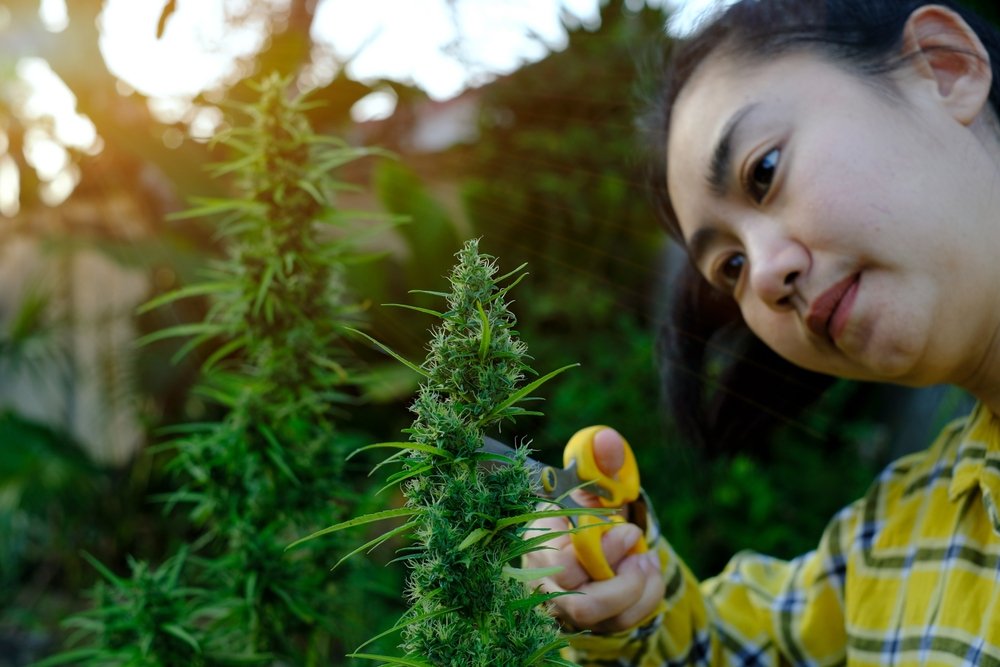
I always tell growers to use all their plant-training techniques during the vegetative stage, and pruning counts too! It may seem strange, and even counterproductive, to remove all of that lush, healthy green growth that you have been watching develop over the last few months. However, pruning will produce a top-heavy canopy, and plants should be pruned at the right time, as explained below.
Best time to prune during the vegetative stage
You should wait until the final week of the vegetative stage before pruning and removing everything beneath the top nodes. Now is also an excellent time to take cuttings from your plant and let them root in preparation for your next grow project. The reason I recommend a week before is to allow the plants to fully recover from the pruning session before they focus all their energy on bud production.
Can cannabis be pruned during flowering
It can do, and has been, a technique many home growers have applied in their grow rooms for years. Most likely to wait for the plants to start stretching, meaning that during weeks 2-3 of the flowering period, they will prune away the lower growth.
Mostly because part of the plant receives little light. When you wait until 12/12 to prune, you do not need to prune them again or risk stressing them during bloom.
When pruning should be avoided
You do not want to prune your cannabis plants once they have passed week 4 of the flowering period. The reason is that doing so will cause the plants stress during a pivotal stage and may result in stunted growth or the development of hermaphrodite plants.
What parts of a cannabis plant should be pruned
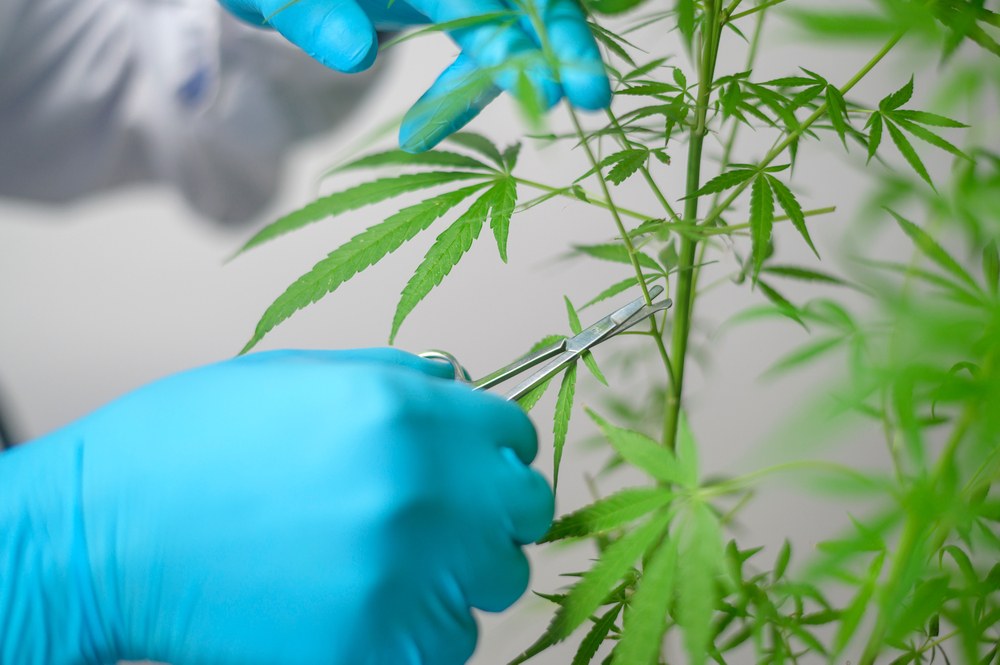
The goal when pruning plants is to carefully strip away any leaves and softwood growth shoots that could develop into buds. This means that once you have decided which internode you will strip downwards from, you will cut away leaves, and small and thin axillary shoots.
How to prune cannabis plants properly
Pruning is an easy-to-perform technique that is ideal for beginner or first-time growers. Knowing how to prune will be advantageous, so below I explain how much of the plant can be safely pruned, where to cut, and the necessary tools required.
How much of the plant can be safely pruned
You will be happy to know that you can remove 80-90% of the plant's foliage with no issues. I recommend giving the plant a week to fully recover before you change your grow timer to 12/12.
Where to make clean cuts
When pruning cannabis plants, you will want to make all of the cuts as clean and stress-free as possible for the plant’s sake. The leaf petiole attached to the stem needs to be clinically sliced away using a sharp razor or scalpel for best results.
The same rule applies to the base of the axillary shoot that attaches to the stem at each node. Avoid hacking away with blunt tools and make sure everything is clean and sterile.
Tools and hygiene for pruning
- A scalpel or razor blade works perfectly for pruning
- Wear latex gloves or wash your hands with alcohol before
- Make sure the scalpel or razor is sharp and sterile
- Throw any leaves or shoots away and keep the grow room clean
- Examine leaves to check for signs of insect damage or larvae
A step-by-step guide on pruning cannabis plants
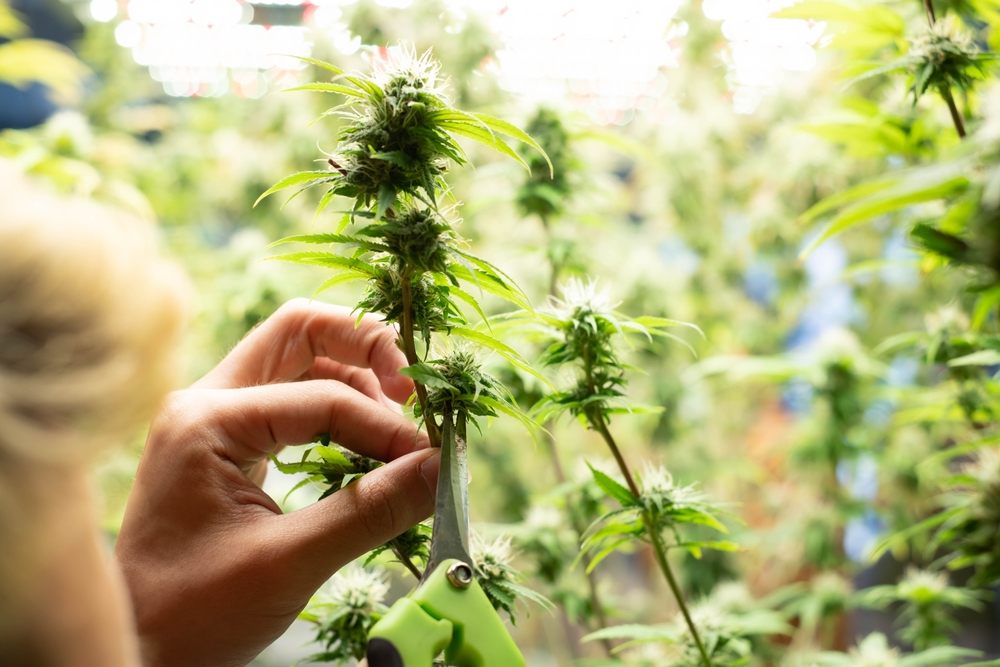
Cutting away most of the foliage on your plants can be an overwhelming experience, but you really do not have anything to worry about. Below is a step-by-step guide on how to correctly prune your plants. I recommend that you prune 1 week before the flowering stage and using isopropyl alcohol to wash your tools before and after pruning.
Step 1: Make sure that you have plenty of space to work with your plant.
Step 2: Prepare your scalpel or razor blade making sure they are sharp and clean.
Step 3: Count how many internodes are on your cannabis plant.
Step 4: Cut away the leaves and growth shoots beneath the top 2-3 internodes.
Step 5: Throw away the stripped away foilage if not taking cuttings.
Step 6: Foliar spray your plants on the tops and undersides of the remaining foilage.
Step 7: Allow the plant to recover before applying any other training techniques.
Pruning is a great opportunity to take clones off your plants. If you do not plan to keep any cuttings, then discard the removed foliage and throw away into your compost pile or a bin away from the grow room.
Common cannabis pruning techniques
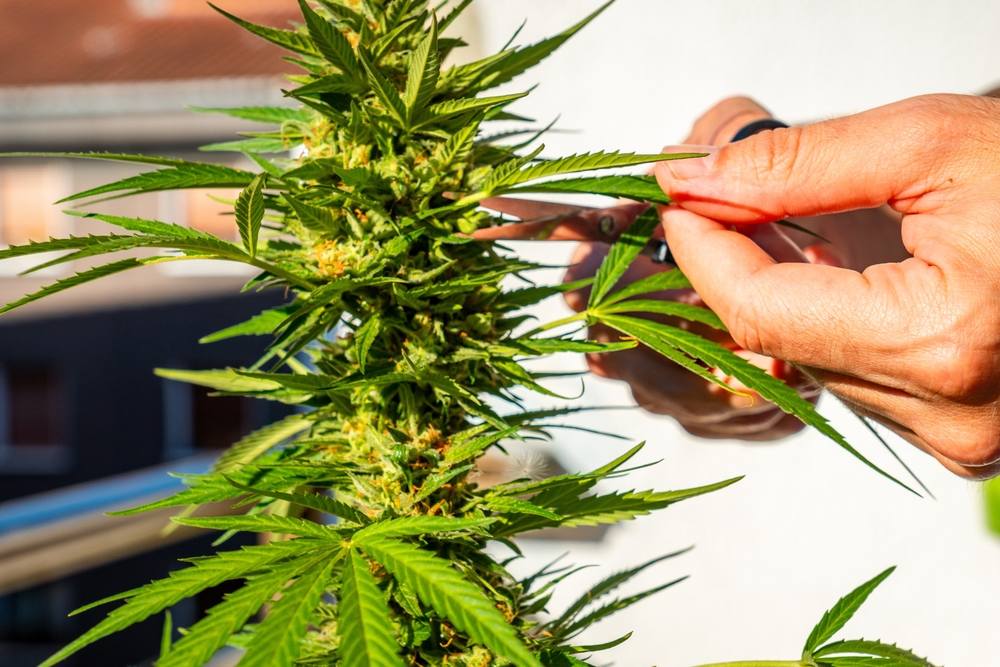
There is no right or wrong answer when it comes to pruning, as every grower has their own preferences and timing, and many old-school growers use the lollipopping technique. Below is a breakdown of different ways pruning can be used.
Selective pruning and structural shaping
What I love the most about pruning cannabis plants is the fact that you have hands-on control of structurally shaping your plant. Due to the large amount of foliage that is cleanly removed from the plant, the shape and appearance of a pruned cannabis plant immediately change.
Lollipopping explained
If you are new to growing, then you may have heard the term lollipopping. As the name suggests, you are aiming to create a plant that has been pruned, and 25% of the top of the plant and side branches have been left behind. After lollipopping the plant, it should resemble a lollipop stick with the ball on top. Lollipopping is a perfect example of the pruning method.
Pruning combined with low stress training
Low-Stress training requires tying the tallest part of the plant downward with gardening wire to manipulate the canopy's shape and structure. LST is an excellent way to produce a bushy and uniform plant and is one of the best ways to enhance yields.
If you want to maximise light spread and penetration and improve air flow when growing cannabis, then pruning combined with LST is well recommended. It is one of my favourite ways to grow large plants in small spaces and ensure they receive optimal light.
Pruning during vegetative vs flowering stages
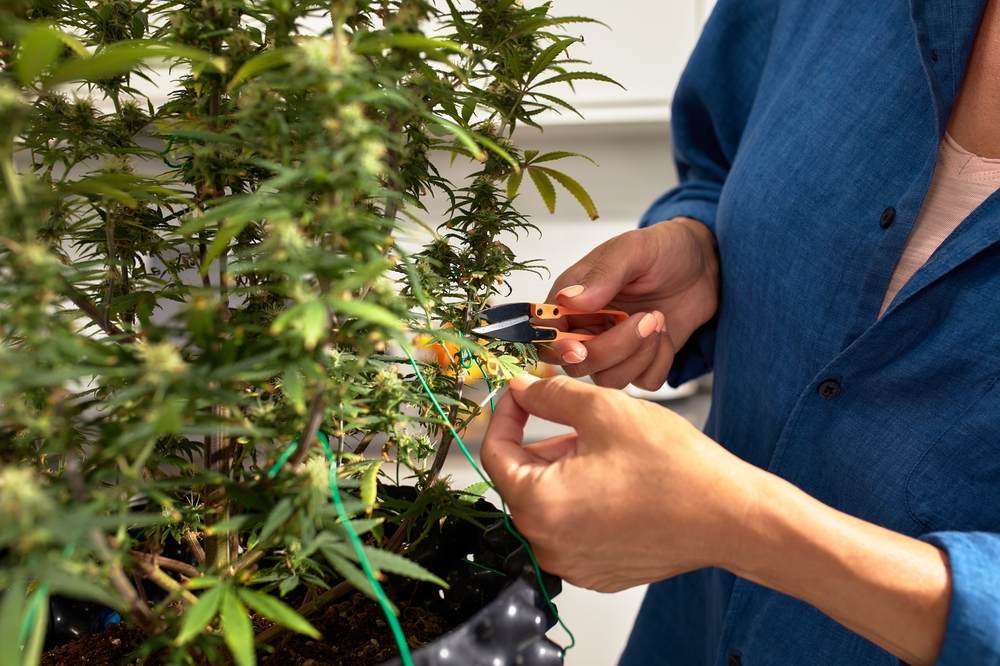
Pruning can be applied to your plants at any time; however, there is a balance between when it may be too early and harm growth and development, and when it is too late during flower production. Below, I explain the differences between pruning during 18/6 and 12/12 and what to consider.
How plants respond to pruning in veg
The vegetative period is when cannabis plants focus on growing as many leaves, side branches, and internodes as possible. It is during vegetation that a cannabis plant develops a large root system and is capable of producing a great harvest for a grower. Plants pruned during vegetation will respond immediately, without showing any signs of stunted growth. Pruning during vegetation is also the best time to take cuttings.
Risks and limitations of pruning in flower
When a cannabis plant enters the flowering stage, it will undergo a series of hormonal changes that allow it to produce buds, terpenes and resin. Inflicting any stress after your plants have adapted to 12 hours of darkness can result in hermaphrodite plants due to the high levels of stress or in slow, stunted growth.
When to stop pruning altogether
If you can prune your plants one week before flowering, you will not need to prune again. For growers who like to clean their plants up during the first 3 weeks of flowering, stop pruning after day 21 and do your best to prune them much earlier.
Pruning autoflower vs photoperiod cannabis
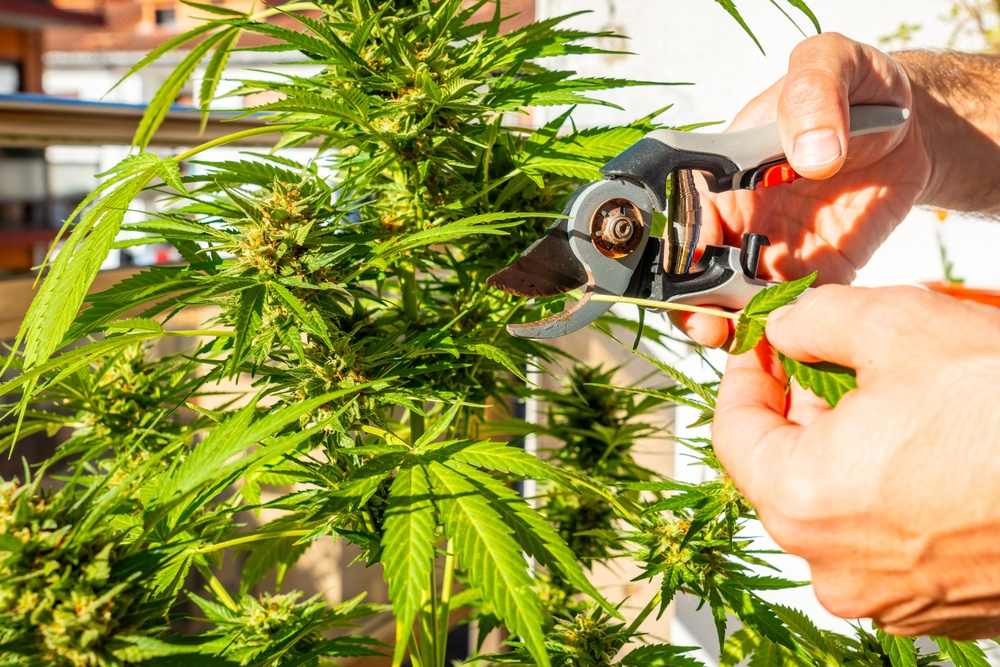
The pruning technique can be applied to all types of cannabis plants, from indica, sativa, to autoflowers. Whilst photoperiods and autos both benefit from pruning, you do have to take extra precautions with autos, as covered below.
Why autoflowers are more sensitive to pruning
If you are not sure what a ruderalis cannabis plant is, then basically all you need to know is that they have a short vegetative period of 30 days before flowering. They can also be grown under any light regime, allowing plants to receive up to 20 hours of light per day. Autos can experience stress during the early stages of their lifecycle.
- Over-pruning may cause autos to become stunted or slow growth
- Autos will begin flowering 30 days after germination
- Autoflowering plants may be smaller and less sturdy than photoperiods
- Autos are sensitive to high stress training techniques
Safe pruning limits for autoflowers
With such a short vegetative phase, you have to apply the pruning technique around week 5. Once pruned, you should not prune cannabis plants again to avoid causing too much stress, slowing down flower production or causing autos to become stunted and dwarfed in size.
- Avoid pruning once the plants are producing pre-flowers and pistils
- Do not prune any later than 35 days from the germination date
- Make precise and careful cuts to avoid stressing the autos
Why photoperiod plants tolerate heavier pruning
The reason photoperiod cannabis plants are more tolerant of large-scale pruning is that they are likely older than 28 days when pruning is applied. You can also keep photoperiod plants in a vegetative state with 18 hours of light, giving you much more room and opportunity to prune before flowering is induced. I often prune my plants around week 7-8 of vegetation, allowing me to prune away a large amount of foliage.
How pruning affects yield and bud development
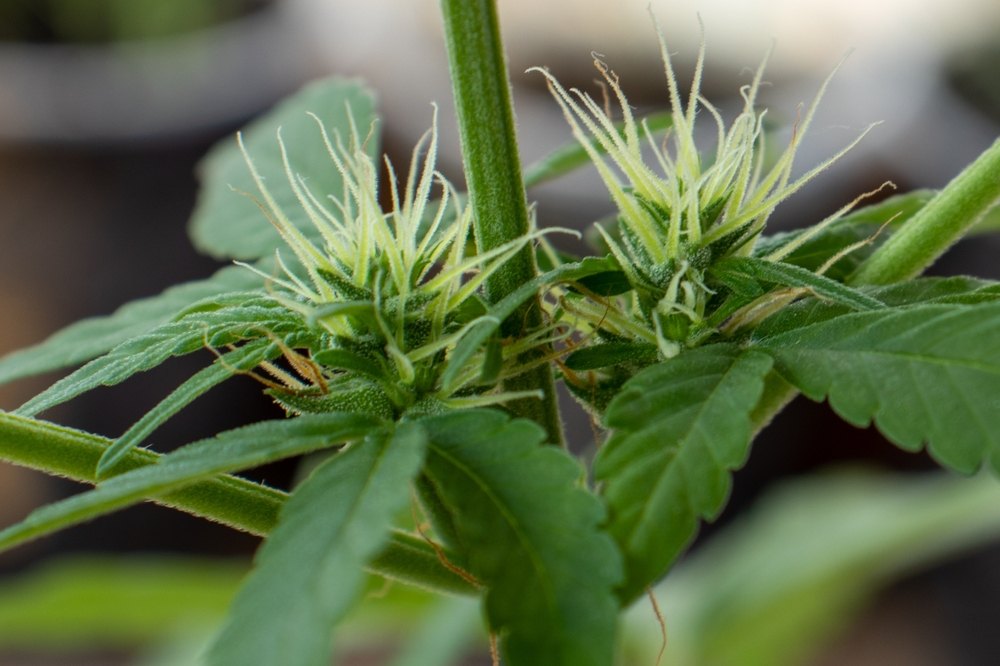
Nobody likes harvesting the lowest buds, which are often small and take longer to trim, and most end up in the trim pile for making hash. Pruning cannabis plants affects energy distribution, enables canopy management, and influences bud size and density, as explained below.
Energy redistribution and canopy management
If you think about how every leaf on your plant is like a solar panel absorbing light, that requires the plant's energy to function. Then imagine how much energy the plants have left in the remaining foliage after pruning a large amount.
Pruning allows you to improve canopy management, since all buds that grow during the flowering stage will be uniform in size, typically resulting in 75-100 cm primary and secondary colas.
Growers who prefer to SCROG their plants will find that pruning is a necessary and important step to ensure that all growth beneath the screen uses none of the plant's energy, which is then redistributed to the top growth.
Impact on bud size and density
Pruning your cannabis plants may not increase the size of the buds, however there will a large ratio of thick and dense buds developing on the plants. When a cannabis plant has been pruned properly, all of the side branches and top colas should be uniform in size and shape.
- Cannabis buds will be much denser
- There will be no smaller-sized and undeveloped buds
- Buds will be uniform in size and more compact
Yield expectations and common myths
One thing pruning ensures is that all the buds you harvest will be large and compact. Your yield will consist of top buds only, so you do not need to waste time trimming the lower popcorn buds. Below is a list of common myths associated with pruning.
- Pruning away the foliage lowers yields and stresses plants out
- The plants cannot photosynthesise once pruned
- Pruning only works for tomato plants and not cannabis
- Plants will become hermaphrodite after pruning due to stress
- Pruning should only be done once the plants are in week 3 of 12/12
Common pruning mistakes and how to avoid them
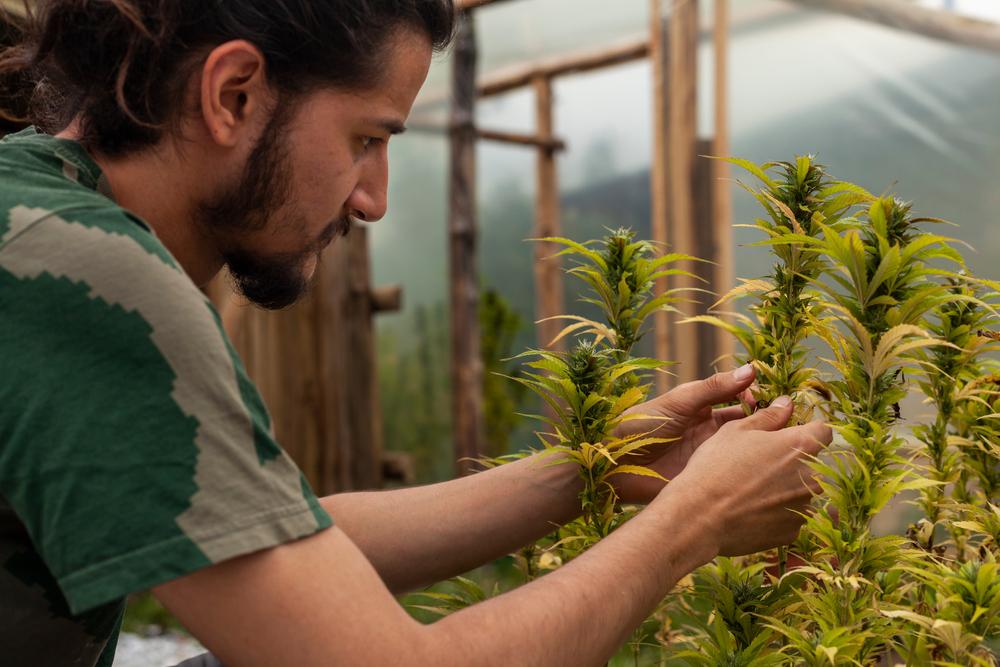
Whilst pruning is relatively easy, it is still possible to make mistakes. These can range from over-pruning and stressing the plants out, leaving it too late, and accidentally removing productive growth. Below highlights the most common mistakes to avoid when successfully pruning your cannabis plants.
Over-pruning and excessive stress
When you are told that you need to remove at least 75% of the foliage beneath the top nodes, it can be difficult to know exactly what needs to be stripped away. Over-pruning can cause plants stress, especially if you prune early in the flowering stage. The rule for pruning is to leave 2-3 internodes on the top of the plant and cut away everything else.
Pruning too late in the grow cycle
One of the worst things you can do to your plants during the flowering period is to apply any training techniques, such as topping, super cropping, or pruning. Your plants have grown so tall that the lower buds receive little of the intense light, and you prefer to cut off the side branches. Do not stress your plants during the flowering period, and try to do all your pruning a week before flowering.
Removing productive growth unnecessarily
As long as you can leave behind 1-3 internodes on your plants before flowering, then you will not need to worry about removing productive growth unnecessarily. It is usually when pruning too late that growers experience this problem, removing well-established hardwood side branches capable of producing top-quality secondary colas.
Aftercare and recovery after pruning
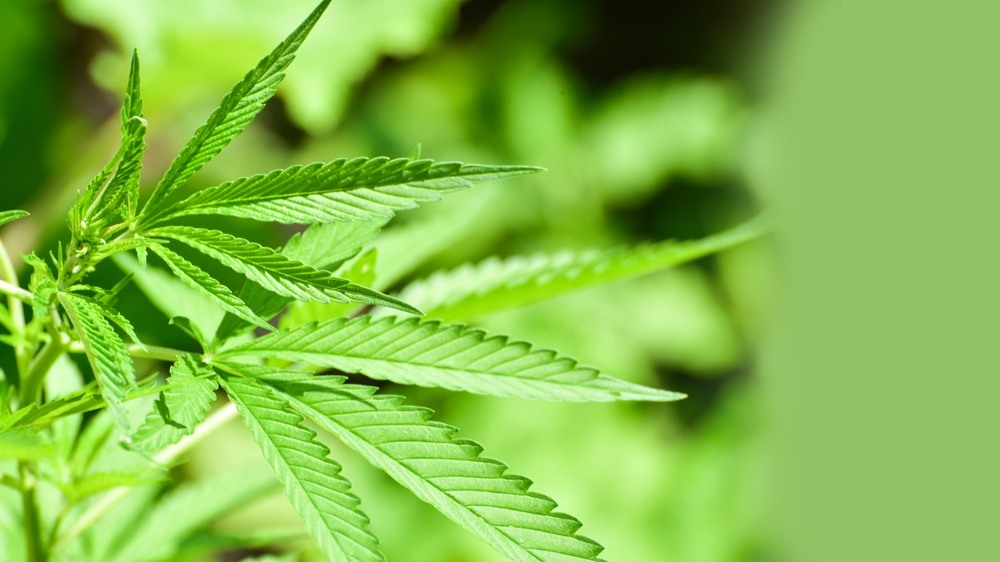
One of the most important factors in pruning your plants is to ensure they have time to recover and remain stress-free. Cannabis plant recovery time and environmental stability play a major role when pruning cannabis plants, as covered below.
How long cannabis plants take to recover
Unlike topping, fimming, LST or super cropping, you do not need to let the plants physically heal. With pruning, cannabis plants adapt quickly to their new structure and energy distribution. Give your plants 7 days after heavy pruning before flowering.
Environmental stability after pruning
As your cannabis plants adapt to losing a large amount of foliage, you need to make sure that your grow room environment is optimal. This means that the temperature remains as close to 24 degrees Celsius with the lights on, between 18 - 22 degrees Celsius when the lights are off, and your humidity levels are between 65 - 75%. There should be a gentle breeze blowing on the plants created by an oscillating fan.
- Do not let the grow room drop below 18 degrees Celsius
- Hot grow rooms above 28 degrees will cause heat stress
- Grow rooms should be clean and sterile
- Use a digital hygrometer to monitor the environment
Signs of healthy regrowth vs stress
Healthy cannabis plants will bounce back within 24 hours after pruning, resulting in angled leaves that point symmetrically up toward the grow light. Once your plants resume growing, they will produce new internodes that later develop into stacked, elongated colas ranging in length from 75 - 100 cm. Stressed cannabis plants may show signs of wilting as well as slow and stunted growth, and take a longer period of time before they bounce back and fully recover.


