




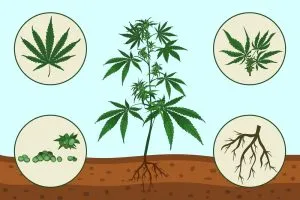
Understanding cannabis anatomy gives growers a clearer picture of how a plant develops and what each structure does throughout the growing cycle. While flowers often receive the most attention, the roots, stems, branches, nodes, leaves, and reproductive structures all contribute to plant health and bud development.
Learning the parts of a cannabis plant makes it easier to train plants, take cuttings, identify male and female growth, and recognize problems before they become more serious. It also helps growers understand cannabis bud structure, from the bracts and stigmas that form female flowers to the trichomes covering mature buds.
This guide breaks down the anatomy of cannabis from roots to flowers, with a cannabis anatomy diagram to show where each structure is located and practical guidance on what growers should look for throughout development.
Key Takeaways
- Roots support the entire plant: They anchor the plant and absorb the water, oxygen, and nutrients needed for healthy growth.
- Stems and branches provide structure: They support leaves and flowers while transporting water, nutrients, and sugars throughout the plant.
- Nodes are important growth points: Leaves, branches, and reproductive structures develop around nodes, making them important for training, cloning, and identifying plant sex.
- Leaves power plant growth: Fan leaves provide much of the surface area for photosynthesis, while smaller sugar leaves develop around the flowers.
- Reproductive structures and buds reveal plant development: Male plants produce pollen, while female plants develop resinous flowers made up of bracts, stigmas, sugar leaves, and trichomes. Observing these structures helps growers identify plant sex and assess flower maturity.
- Cannabis Anatomy Diagram: Parts of a Cannabis Plant
- Roots
- Stems
- Stipules
- Fan Leaves
- Female and Male Marijuana Plants
- Cannabis Bud Structure: Anatomy of the Female Flower
- Bract and Calyx
- Stigma and Pistil
- Colas
- Trichomes
- Pollen Sacs
- Hermaphrodite Plants
- Final Summary
- Frequently Asked Questions About Cannabis Plant Anatomy
Cannabis Anatomy Diagram: Parts of a Cannabis Plant
A cannabis anatomy diagram helps growers understand where each major structure is located and what role it plays throughout the plant’s life cycle. From the roots below the growing medium to the flowers at the top of the canopy, each part has a specific function that supports growth, reproduction, and bud development.
Understanding the parts of a cannabis plant also makes it easier to spot healthy development, identify potential problems, and know where to look when training, pruning, sexing, or checking flowers for maturity.
| Part of the Cannabis Plant | Where It Is Found | Main Function |
| Roots | Below the growing medium | Anchor the plant and absorb water, oxygen, and nutrients |
| Main stem | Runs vertically through the center of the plant | Supports the plant and transports water, nutrients, and sugars |
| Branches | Extend outward from the main stem | Support leaves and flowering sites |
| Nodes | Where leaves and branches meet a stem | Produce branches, leaves, and reproductive growth |
| Internodes | Sections of stem between nodes | Determine spacing between growth sites |
| Stipules | At the base of nodes | Small vegetative structures often mistaken for preflowers |
| Fan leaves | Along stems and branches | Carry out most of the plant’s photosynthesis |
| Sugar leaves | Within and around developing buds | Support photosynthesis and often become coated in trichomes |
| Colas | At flowering sites along branches and the main stem | Clusters of female flowers that form mature buds |
| Bracts | Within female flowers | Surround and protect reproductive structures |
| Stigmas | Extend from female flowers | Receive pollen during reproduction |
| Trichomes | Most concentrated on flowers and nearby leaves | Produce and store cannabinoids and aromatic compounds |
| Pollen-producing flowers | Primarily around the nodes of male plants | Produce and release pollen for reproduction |
The anatomy of cannabis changes as the plant matures. Seedlings begin with a simple root system, stem, and cotyledons before developing true leaves, branches, and additional nodes. During flowering, female plants form bracts, stigmas, colas, and increasing numbers of glandular trichomes, creating the recognizable cannabis bud structure seen at harvest.
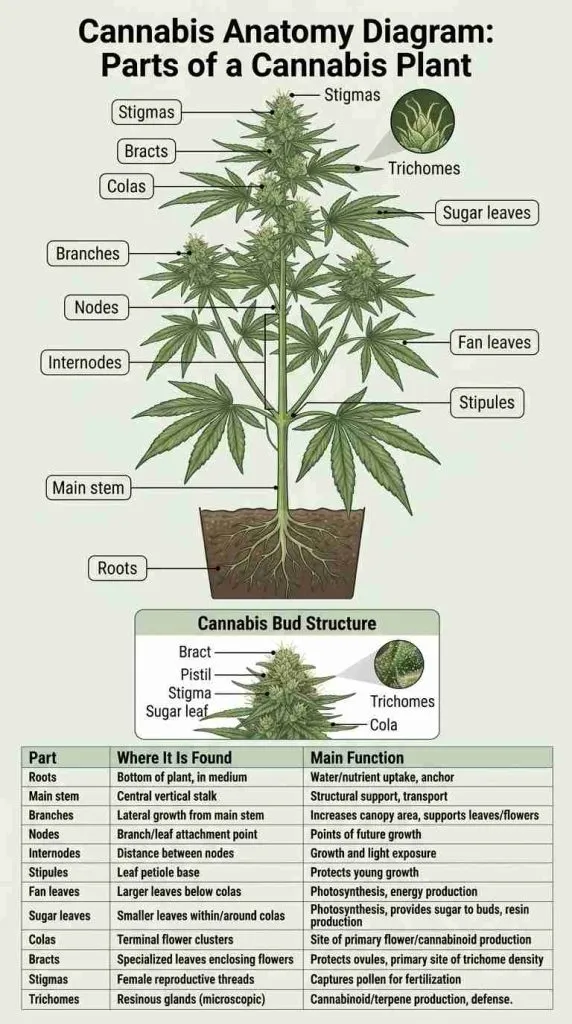
Grower tip: Use a cannabis anatomy diagram alongside the live plant when inspecting nodes, leaves, and developing flowers. Knowing exactly where each structure should appear makes it much easier to distinguish normal growth from male flowers, intersex growth, pests, damage, or other problems.
Roots
Roots anchor the cannabis plant and absorb the water, oxygen, and nutrients needed for growth, regardless of whether it’s male or female.
Poor root health often appears above the growing medium as drooping leaves, slow growth, or recurring nutrient deficiencies.
After germination, a primary taproot grows downward before secondary roots spread outward to form a branched root system. Healthy roots continue expanding when they have sufficient moisture, oxygen, drainage, and space.
Cannabis can also produce adventitious roots from stem tissue under suitable conditions, which is important when rooting clones.
Grower tip: Handle roots gently when transplanting and avoid letting plants become severely root-bound. Good drainage and airflow around the root zone encourage healthy development.
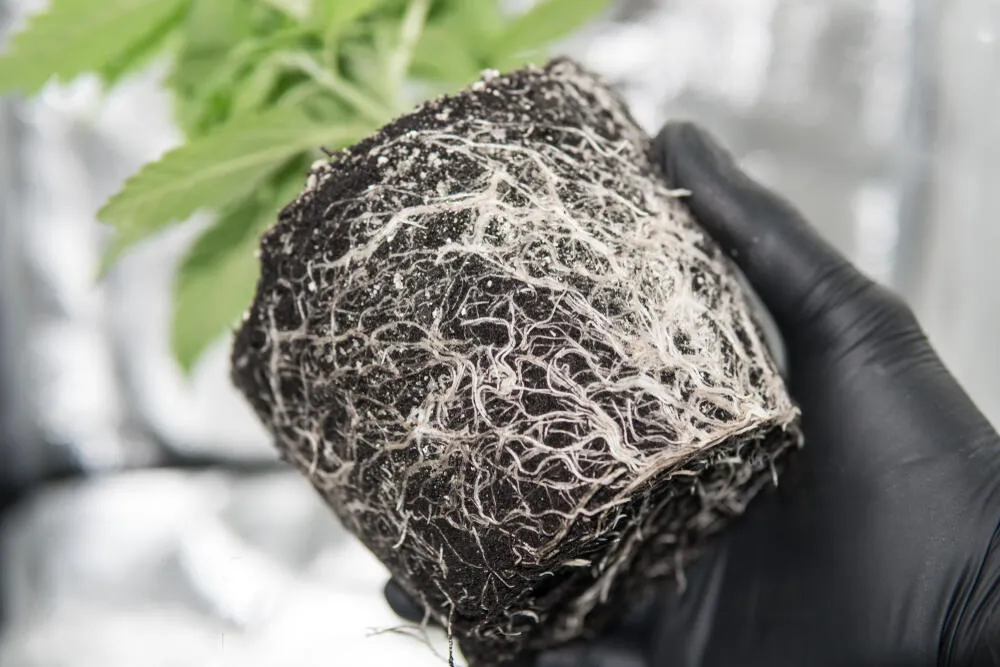
Best practice tip: Avoid damaging roots during transplanting. Handle seedlings gently, transplant early rather than late, and choose containers that allow good drainage and airflow to support healthy root expansion.
Stems
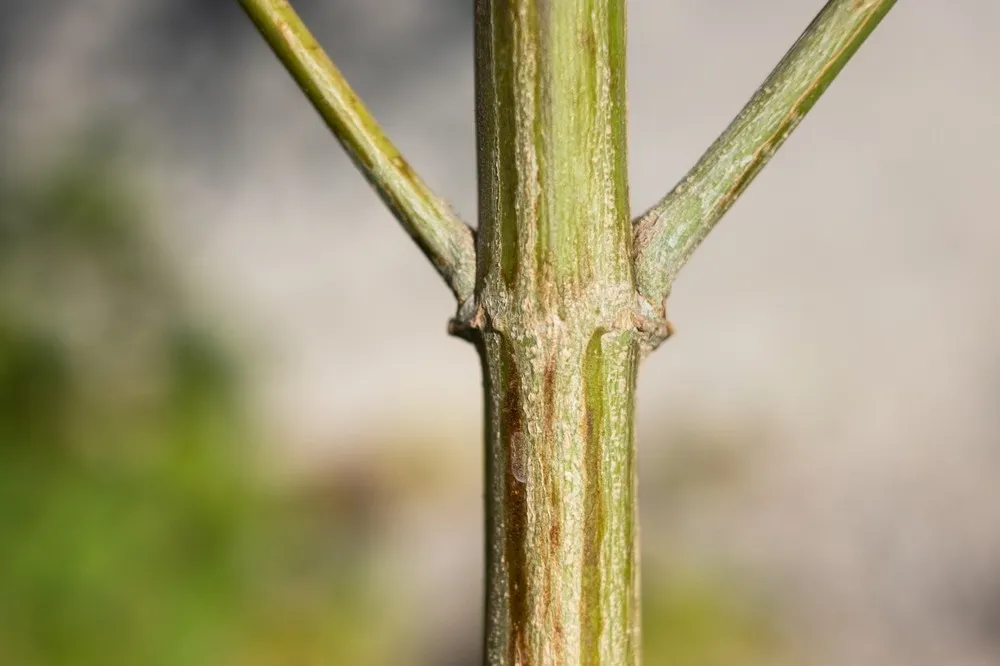
The main stem provides structural support while transporting water and nutrients from the roots and distributing sugars produced by the leaves.
Young stems are flexible, but they become thicker, more fibrous, and increasingly lignified as the plant matures, helping support developing branches and flowers.
Stems are also central to plant training techniques. Bending, tying, and topping can reduce apical dominance and create a wider, more evenly lit canopy.
Grower tip: Train stems while they are still flexible and make gradual adjustments to reduce the risk of splitting or damaging them.
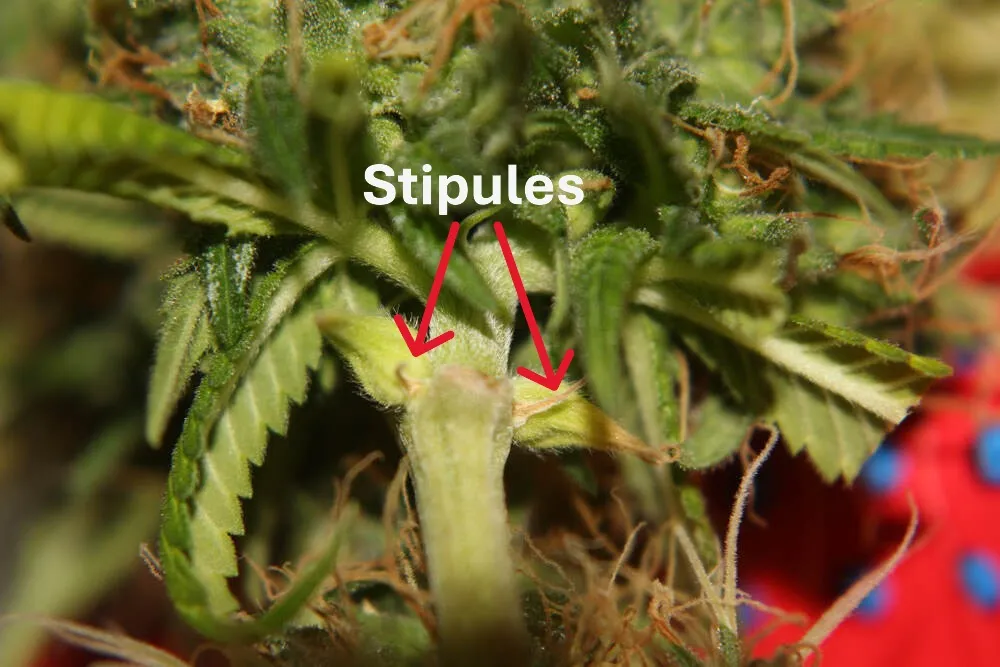
Stipules
Stipules are small, pointed structures found at the nodes where leaves and branches meet the main stem. They appear on both male and female plants and often become visible during vegetative growth.
They can be mistaken for female preflowers, but stipules are not reproductive structures and cannot be used to determine plant sex.
Their exact function in cannabis is not fully established, although similar structures in other plants can help protect developing tissue.
Grower tip: When sexing a plant, inspect the reproductive growth beside the stipule rather than the stipule itself.
Fan Leaves
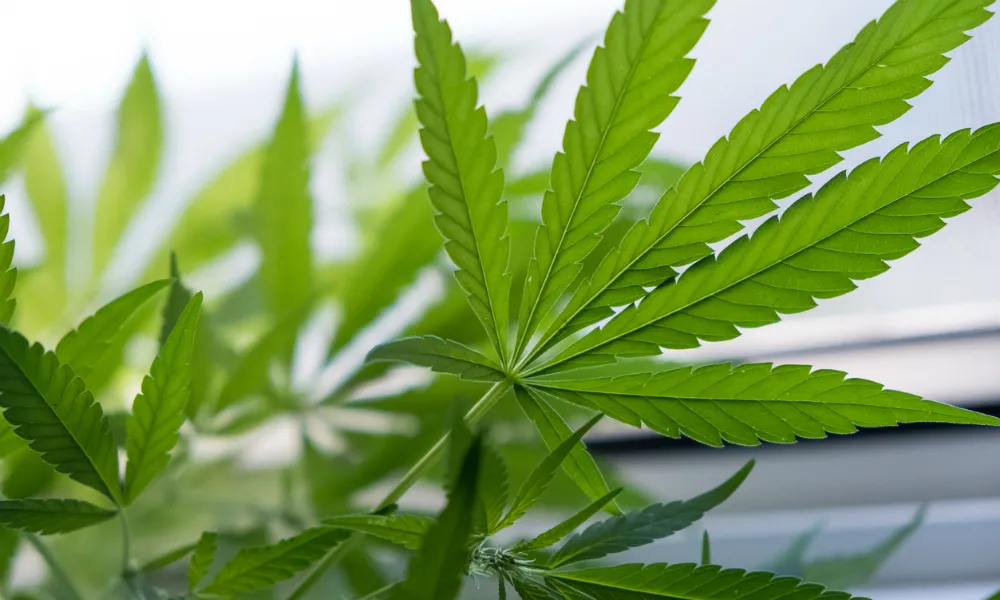
Fan leaves are some of the most recognizable parts of a cannabis plant and provide much of the surface area used for photosynthesis.
They capture light to produce sugars that support root, branch, and flower development. Tiny openings called stomata also regulate gas exchange and water loss.
Selective defoliation can improve airflow and expose shaded growth sites, but excessive leaf removal reduces photosynthetic capacity and can stress the plant.
Broad-leaf cultivars generally develop wider leaflets, while narrow-leaf cultivars tend to produce longer, slimmer leaves. Modern genetics can vary considerably, so leaf shape alone should not be used to identify genetic background.
Grower tip: Remove healthy fan leaves only when they are genuinely restricting airflow, overcrowding the canopy, or heavily shading important growth sites.
Female and Male Marijuana Plants
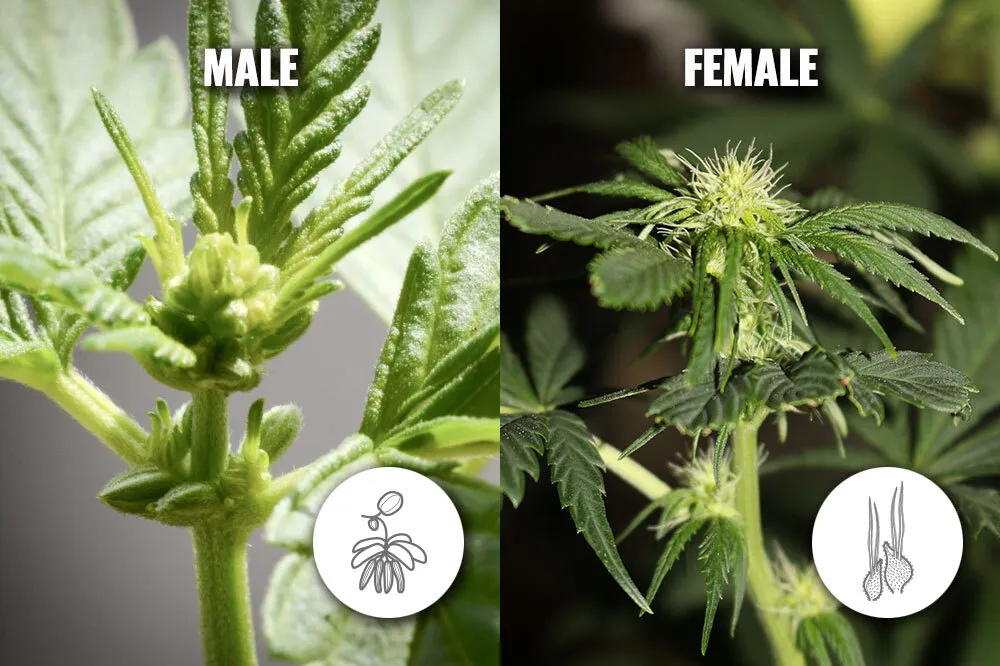
Male and female marijuana plants share similar anatomy during early development, so they generally cannot be reliably sexed during the seedling stage.
Differences become easier to identify as reproductive structures form at the nodes during late vegetative growth or around the beginning of the flowering phase.
Female plants develop flowers that can form resinous buds, while male plants produce pollen. Identifying males early helps prevent unwanted pollination or allows them to be isolated for breeding.
| Feature | Female Plant | Male Plant |
| Reproductive structures | Bracts and stigmas | Male flowers and anthers |
| Hair-like stigmas | Yes | No |
| Produces pollen | Normally no | Yes |
| Produces resinous buds | Yes | No |
| Common grower action | Keep | Remove or isolate |
Cannabis Bud Structure: Anatomy of the Female Flower
Understanding cannabis bud structure helps growers identify how female flowers develop and which parts are responsible for reproduction, resin production, and forming the buds seen at harvest. A mature cannabis bud is not a single flower but a dense cluster of female flowers made up of bracts, pistils, stigmas, trichomes, and small leaves.
As flowering progresses, these structures become more compact and resinous, creating the characteristic appearance of a mature female cannabis flower.
Bracts and Calyxes
Bracts are small, teardrop-shaped structures that surround the reproductive parts of the female flower. They develop closely together along flowering sites and become increasingly covered in glandular trichomes as buds mature.
Growers often use the term calyx when referring to the swollen, resinous structures visible within cannabis buds. Botanically, however, the visible structure is primarily the bract surrounding the female flower, while the true floral tissue is much smaller and largely hidden.
As flowering advances, bracts become fuller and stack closely together, contributing heavily to the density and shape of the finished bud.
Grower tip: Swollen bracts can indicate that flowers are reaching later stages of development, but they should not be used alone to determine harvest time.
Pistils and Stigmas
The pistil is the female reproductive structure of the cannabis flower. Its most visible parts are the stigmas, which appear as fine, hair-like strands extending from the bracts.
Young stigmas are commonly white or cream before gradually changing to orange, red, or brown as the flower matures. Their biological purpose is to capture pollen released by male plants.
If pollination occurs, fertilization can lead to seed development. If flowers remain unpollinated, they continue developing as the seedless buds most growers aim to produce.
Grower tip: Darkened or curled stigmas indicate flower development, but stigma color alone is not a reliable harvest indicator. Check trichomes and overall flower maturity as well.
Colas
A cola is a cluster of female flowers that develops along a stem or branch. The largest usually forms at the top of the main stem and is known as the main cola, while smaller secondary colas develop along side branches.
Each cola contains many tightly packed flowers, including bracts, stigmas, trichomes, and sugar leaves. Genetics, light exposure, plant structure, and training all influence their final size and density.
Dense colas can retain moisture as they mature, particularly where airflow is limited.
Grower tip: Maintain good airflow around large colas during flowering and inspect dense buds regularly for trapped moisture or signs of mold.
Trichomes
Trichomes are tiny structures found across the surface of cannabis flowers and nearby sugar leaves. Glandular trichomes contain resin rich in cannabinoids and aromatic compounds and give mature buds their frosted appearance.
Their density and appearance vary between cultivars and throughout flowering. Under magnification, glandular trichome heads commonly progress from clear toward cloudy or opaque, with some developing amber coloration as flowers mature.
Because trichome development can differ between the flowers and surrounding leaves, growers should focus primarily on trichomes located on the bracts when assessing flower maturity.
Grower tip: Use a jeweler's loupe or similar magnification tool to inspect trichomes on several areas of the plant rather than judging harvest readiness from a single bud.
Bract and Calyx
Bracts are an important part of cannabis bud structure. On female plants, the visible teardrop-shaped bracts surround the flower and become increasingly covered in glandular trichomes as flowering progresses.
What growers call cannabis buds are clusters of female flowers containing bracts, stigmas, trichomes, and small leaves.
The terms bract and calyx are often used interchangeably by growers, although they are botanically different. The visible resinous structure commonly called a calyx is generally the bract surrounding the female flower.
As flowering continues, bracts become more prominent and contribute to the shape and density of the developing bud.
Grower tip: Do not judge harvest maturity from swollen bracts alone. Use trichome appearance and overall flower development alongside the cultivar's expected flowering time.
Stigma and Pistil
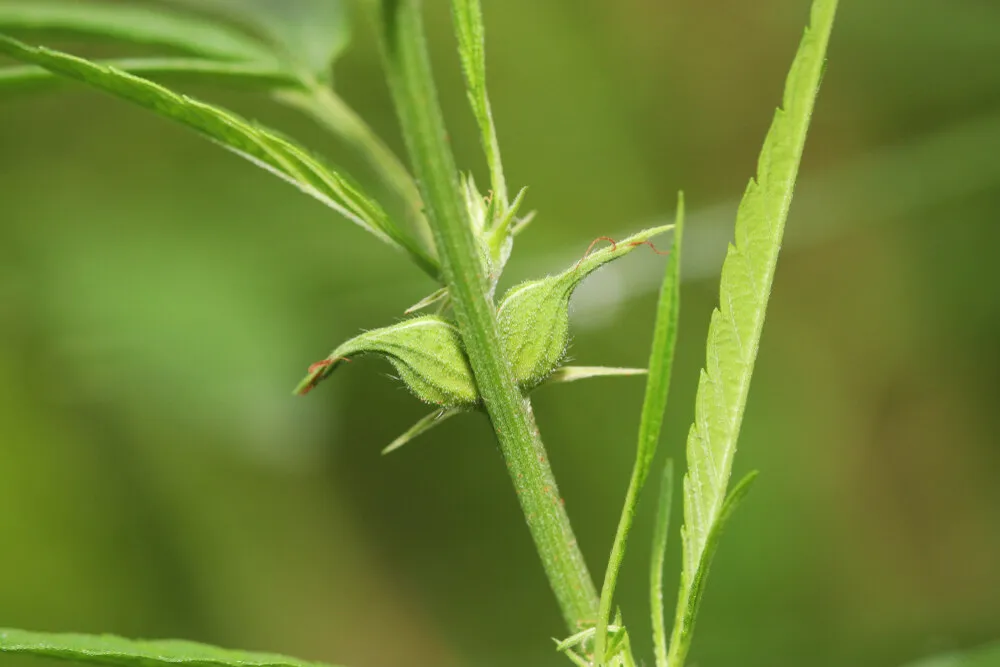
The pistil is the primary reproductive structure of the female cannabis plant. Its most visible parts are the stigmas, which appear as fine hairs extending from female flowers.
Stigmas are usually pale when they first emerge and often darken or curl as flowering progresses.
Their role is to receive pollen. If fertilization occurs, the plant begins producing seeds. This is why growers aiming for unseeded flowers usually separate male plants and why feminized cannabis seeds are widely used.
Grower tip: Stigma color can indicate flower development, but it should not be used as the only harvest signal. Check trichomes as well.
Colas
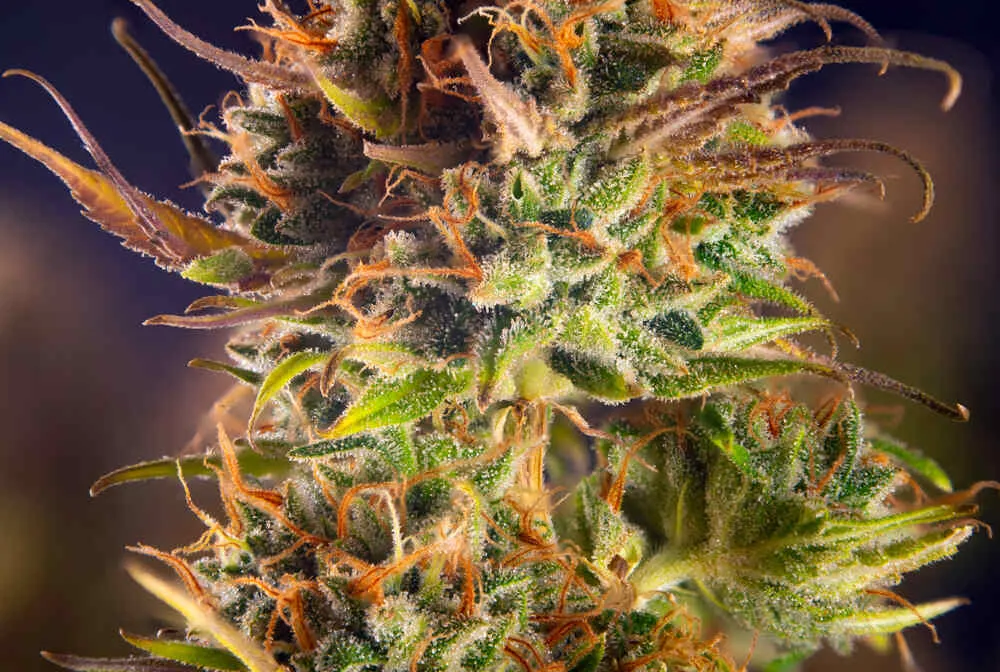
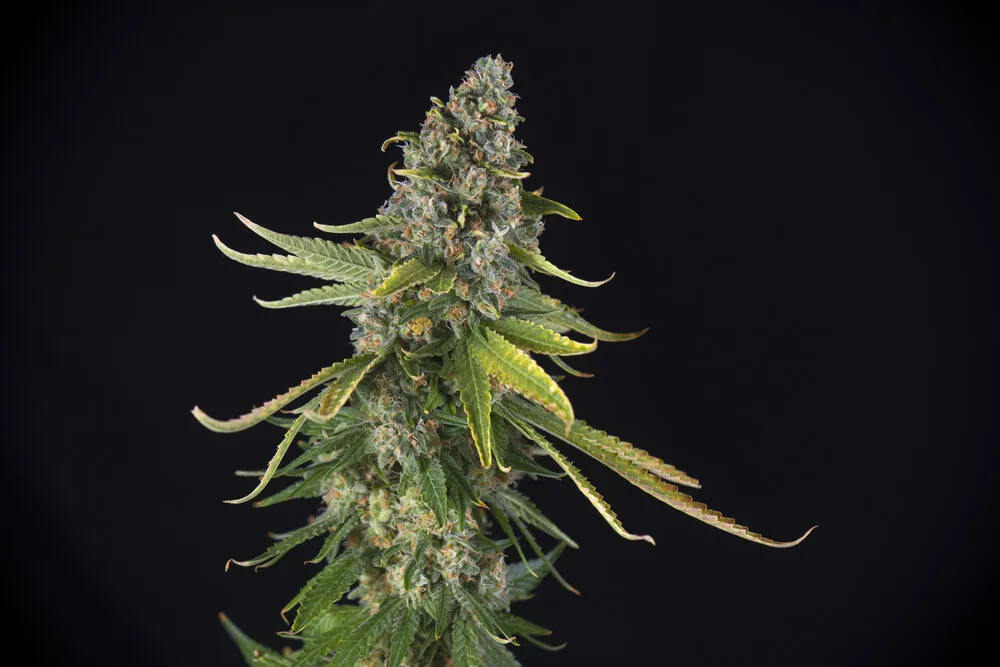
As female flowers develop, individual bud sites cluster together along the branches to form colas. The largest usually develops at the top of the main stem and is known as the main cola.
Cola size and structure depend on genetics, light distribution, and training. Topping and low-stress training can spread growth across the canopy and encourage more evenly developed flowering sites.
A cola is not one flower. It consists of many female flowers, bracts, stigmas, trichomes, and small leaves, making it an important part of cannabis bud structure.
Dense colas can trap moisture, so good spacing and airflow become increasingly important later in flowering.
Grower tip: Separate very large colas into smaller buds after harvest to encourage even drying and check inside dense flowers for mold.
Trichomes
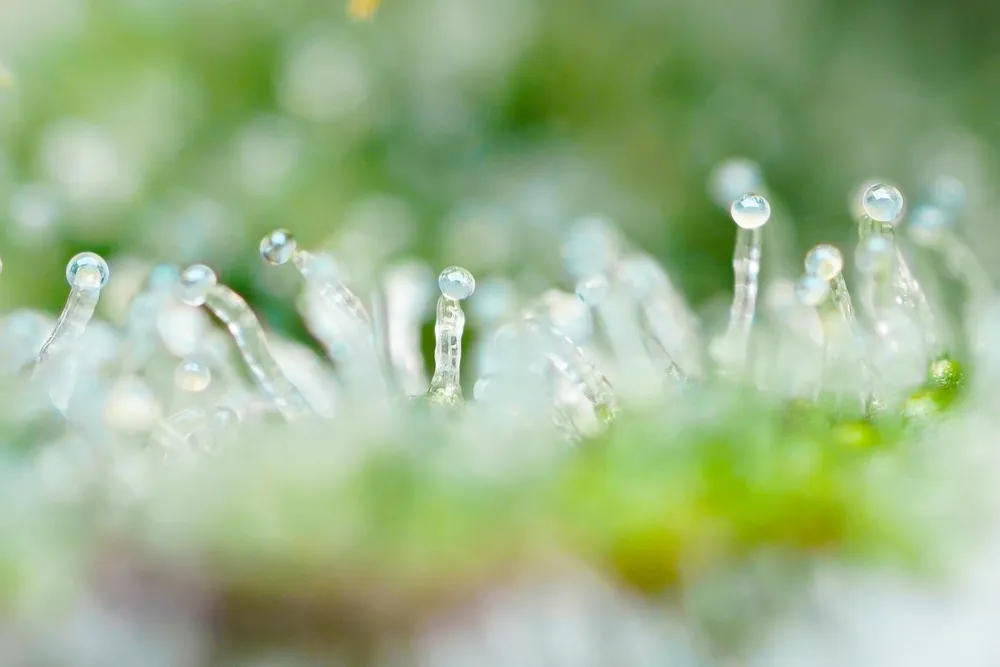
Trichomes are tiny structures found across the cannabis plant, with glandular trichomes especially abundant on female flowers and surrounding bracts.
These glands produce and store many of the cannabinoids and aromatic compounds associated with cannabis while also contributing to the plant's natural defenses.
Trichome appearance changes as flowers mature. Growers commonly observe the gland heads progressing from clear toward cloudy or opaque, with some developing amber coloration later.
Their development varies between cultivars, so trichomes should be assessed alongside overall flower maturity rather than treated as a fixed timetable.
Grower tip: Inspect trichomes on the flower bracts rather than relying mainly on sugar leaves, as leaf trichomes may mature at a different rate.
Pollen Sacs
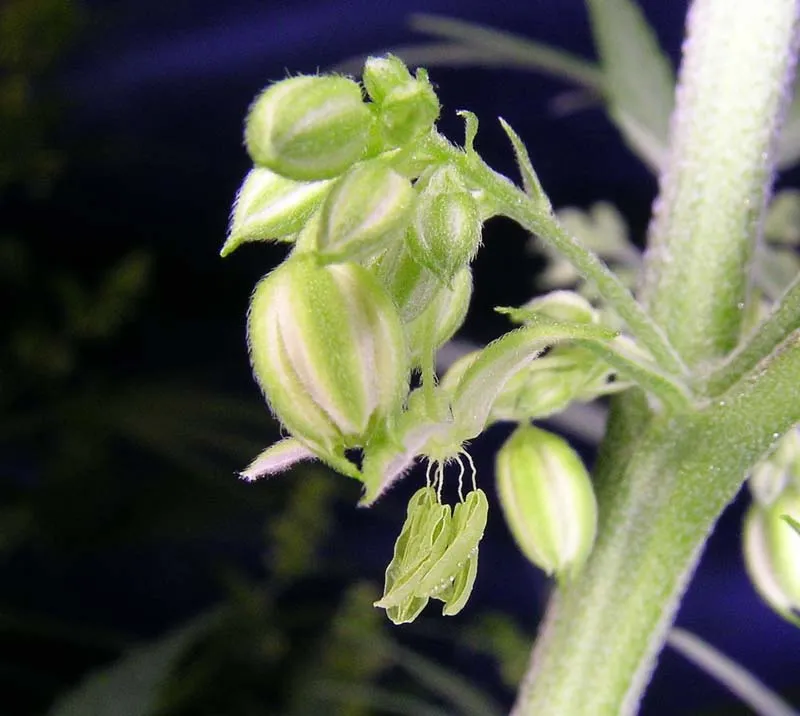
Pollen-producing structures are characteristic of male cannabis plants, although they can also appear on intersex or hermaphroditic plants.
Male flowers develop around the nodes and contain stamens with pollen-producing anthers. Before opening, they often appear as small rounded structures commonly called pollen sacs.
Unlike female preflowers, they do not produce protruding stigmas. Once mature, male flowers open and release pollen that can fertilize nearby female plants.
Growers producing unseeded flowers usually remove or isolate males before this happens.
Grower tip: Inspect nodes regularly as plants approach reproductive maturity because pollen can spread quickly once male flowers begin opening.
Hermaphrodite Plants
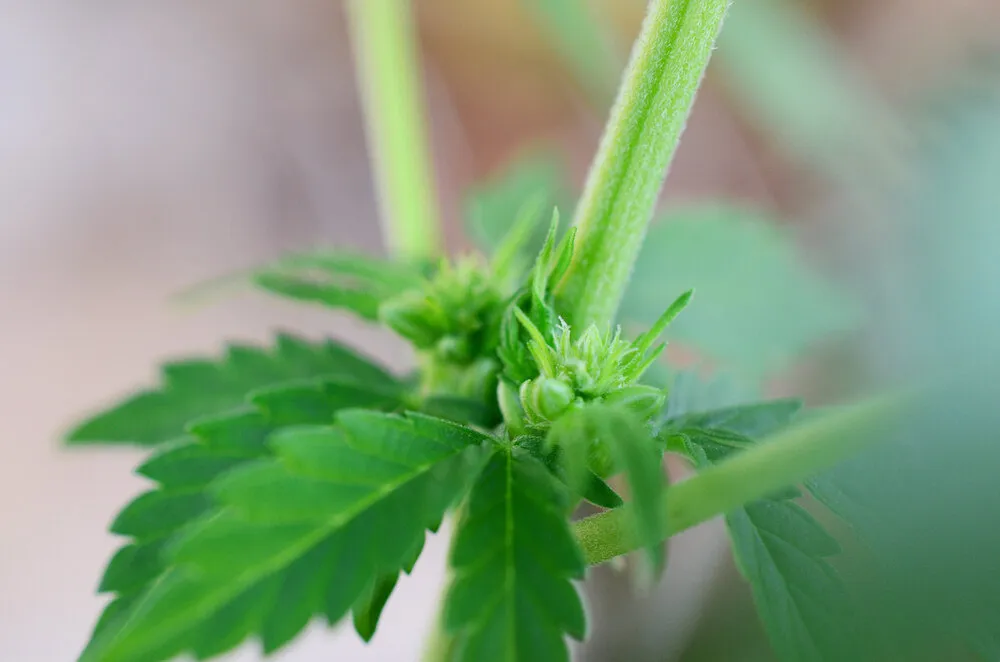
Hermaphroditic or intersex cannabis plants develop both female and male reproductive structures. Recognizing these unexpected pollen-producing parts is important when learning the parts of a weed plant.
Intersex expression can be influenced by genetics and may also occur following environmental or physical stress, such as disrupted dark periods, extreme temperatures, damage, or unstable growing conditions.
The main risk is unintended pollination, as viable pollen can fertilize nearby female flowers and lead to seed production.
Growers should therefore inspect flowering plants regularly and learn how to spot hermaphrodite plants early.
Grower tip: If you find one male structure on a flowering female plant, inspect the entire plant carefully because additional pollen-producing growth may be present.
Best practice guidance:
- Inspect plants regularly: Check flowering plants carefully, especially around the nodes and lower branches where male structures may first appear.
- Act early: If pollen-producing structures develop, remove or isolate the affected plant before pollen is released and reaches nearby females.
- Reduce unnecessary stress: Keep light schedules, temperature, humidity, and airflow as stable as possible throughout flowering.
Final Summary
Understanding cannabis anatomy helps growers recognize how each part of the plant contributes to growth, reproduction, and flower development. Roots absorb water and nutrients, stems and branches provide support, leaves drive photosynthesis, while nodes act as key points for new growth and reproductive structures.
Knowing the parts of a cannabis plant also makes practical growing tasks easier. Growers can identify plant sex earlier, choose suitable locations for training or cuttings, monitor flower development, and spot unusual growth before it becomes a larger problem.
Learning the anatomy of cannabis, from the root system to the final bud structure, gives growers a better understanding of what healthy development should look like throughout the growing cycle.
Frequently Asked Questions About Cannabis Plant Anatomy
What part of the cannabis plant produces buds?
Buds develop on female cannabis plants at flowering sites along the branches and main stem. A mature bud consists of tightly grouped female flowers containing bracts, stigmas, trichomes, and sugar leaves.
Can you tell the sex of a cannabis plant from its leaves?
No. Leaf shape does not reliably indicate plant sex. Growers should instead inspect the nodes for male or female preflowers as the plant reaches reproductive maturity.
Why are nodes important when cloning cannabis?
Nodes are important because they are active growth points where leaves and branches develop. When taking a cutting, growers commonly make the cut just below a healthy node, as this area can readily produce adventitious roots under suitable cloning conditions.
Do male cannabis plants produce buds?
Male plants do not produce the resinous buds associated with female cannabis plants. Instead, they develop clusters of male flowers containing pollen-producing anthers, commonly referred to by growers as pollen sacs.
What causes a cannabis plant to become hermaphroditic?
Intersex or hermaphroditic growth can be influenced by genetics and environmental stress. Potential triggers include heat stress, interrupted dark periods, physical damage, and unstable flowering conditions. Regular inspection helps growers identify pollen-producing structures before they open.


