




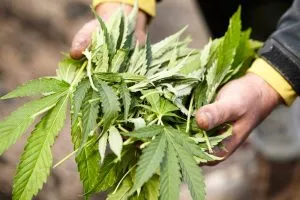
Whilst most growers are focused on the flowering period because it's when plants produce buds that will smoke, the vegetative stage is just as important. After all, it is during this stage when seedlings or clones develop into green, bushy plants that produce fan leaves, stems and branches. The fan leaves are a major player in how your plants absorb light, store energy and nutrients and overall plant health and vitality.
In this article, I am going to cover in depth all you need to know about cannabis fan leaves. Their biological role, why they are so crucial for plant health, how to manage fan leaves, and what you can do with them post-harvest.
What are fan leaves?
When we see a cannabis leaf on a poster or Dutch coffeeshop sign, we instantly recognize it as a symbol for cannabis. Cannabis plants typically have 9-13 serrated leaflets per fan leaf. Without fan leaves, our plants would not be able to photosynthesise and develop into the plants we all love to have around us.
Fan leaves come in all shapes and sizes, depending on whether the plants are indica, sativa, hybrids or autoflowering plants, and are one of the most essential parts of a cannabis plant. Below is a breakdown of the anatomy and biological role of cannabis fan leaves.
- Fan leaves are connected to the main stem of a cannabis plant
- They have tiny openings on their underside known as stomata
- The stomata are responsible for consuming carbon dioxide
- Plants photosynthesise using fan leaves, allowing them to store energy
- Chlorophyll is the pigment within the leaves that makes them green
- Fan leaves store Nitrogen, which can be used when they are deficient
- The fan leaves allow different strains to be recognizable based on size and shape
- Growers will use fan leaves as an indicator of plant health and vitality.
- Fan leaves are solar panels that rely on photosynthetically active radiation (PAR)
- Aphids and thrips will use fan leaves to lay eggs and stay shaded
Anatomy and locations of fan leaves on the cannabis plant
Nodes are the points on the stem of a cannabis plant where fan leaves are produced. Cannabis plants can produce up to 12 nodes, so this means there will be 12 12 pairs of fan leaves at every node. Fan leaves are found growing next to the stipules, which appear as a thin, singular blade of grass, and should not be mistaken for pre-flowers.
Fan leaves begin growing as soon as the seedling passes the seedling stage, which takes 14 days. Once a cannabis seedling has developed a small root system and thrown out its first set of true leaves, the plant will start producing fan leaves. The larger the fan leaves become, the faster the plants will grow, as photosynthesis increases.
Petiole
The lead petiole is the thin, flexible stalk that connects the leaf tissue to the rest of the leaf and controls water and nutrient uptake. Indica cannabis plants will tend to have shorter and thicker petioles compared to sativas, which are typically longer and thinner.
Leaflets
Growers will use different names for leaflets depending on whom you speak with. Some growers refer to them as fingers or blades. A leaflet represents the single serrated part of each leaf. As cannabis plants mature during vegetation, the number of leaflets increases from 3 to 12, depending on the variety.
Chlorophyll
This is what gives cannabis plants their lush, vibrant green color and is a pigment found in leaf tissue. Chlorophyll and chloroplasts are essential for capturing light energy and converting it into plant sugar (glucose) and oxygen.
Stomata
The best way to think about stomata is like pores on our skin. They are tiny mouths open and closed, and their function is to intake carbon dioxide from the air. It is also the stomata that regulate how much water the leaves emit, otherwise known as transpiration.
Indica Fan Leaves Characteristics
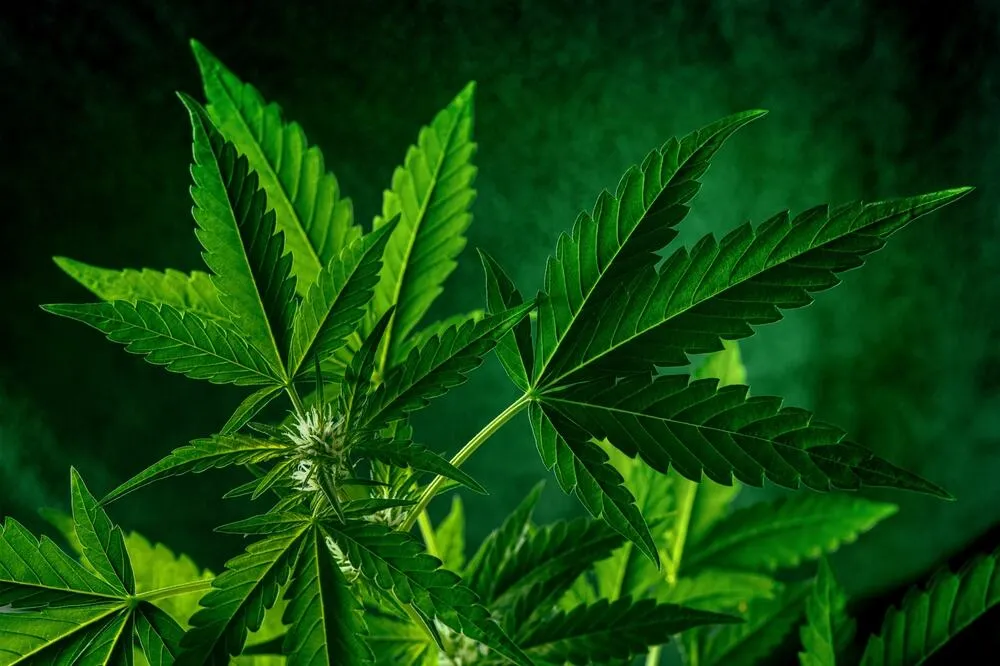
- The leaflets are thick, wide and compact compared to sativa
- Indica leaves have a large surface area for collecting light
- They will usually have between 7 and 9 leaflets
- Indica leaves will produce a dark green color
- Their broad leaves allow them to adapt to mountainous conditions
Sativa Fan Leaf Characteristics
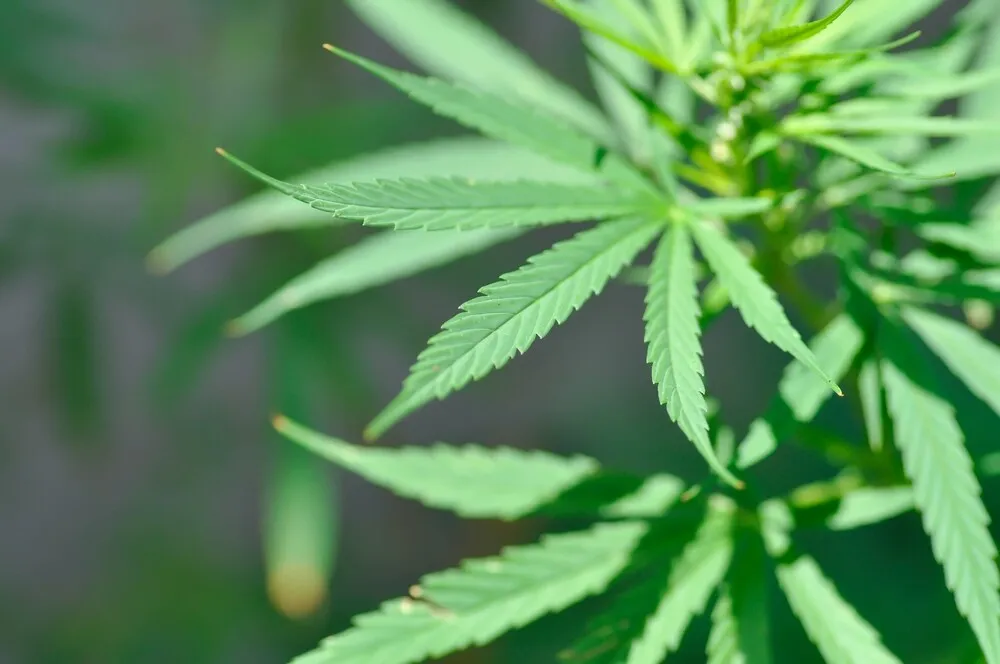
- These leaflets will have a thin, narrow and serrated appearance.
- The petiole will be much longer in length compared to the indica plants
- Sativa leaves are bigger in size to adjust to higher temperatures and humidity
- Sativa plants will have a much larger leaf-to-bud ratio compared to indica plants
- There will usually be up to 12 leaflets on a single sativa fan leaf
The biological role of fan leaves (photosynthesis, transpiration, nutrient storage)
Nature is incredible when you think about how complex a cannabis fan leaf really is. The biological role of a cannabis fan leaf covers photosynthesis, transpiration and nutrient storage. Photosynthesis is how plants breathe and produce glucose, which helps roots attract beneficial soil microorganisms.
Photosynthesis Explained
Photosynthesis takes place when a plant converts sunlight energy into what is known as adenosine triphosphate (ATP) and nicotinamide adenine dinucleotide phosphate (NADPH). Photosynthesis occurs during both the light and dark periods, allowing cannabis plants to convert carbon dioxide into glucose.
Transpiration Explained
Transpiration is the term to describe how much water the leaf of a cannabis plant releases or absorbs. Healthy plants should be able to grow without excessive pressure on their leaves, which can lead to dry, thin, and brittle foliage.
It is via the stomata that water is released from leaf tissue and turned into vapor. When the air around the leaf is drier, the stomata release vapor. You may be familiar with the term vapor pressure deficit (VPD), which is a formula used to determine the optimal amount of water plants transpire based on humidity and temperature.
Nutrient Storage Explained
Large fan leaves can store Nitrogen within their leaves and act as a reserve bank in the event the plant does not have optimal soil levels. Nitrogen can be passed from fan leaves into new growth, which is what turns a lush green fan leaf into a yellow and lifeless leaf within a short time frame. Cannabis fan leaves can also absorb nutrients and micro nutrients from the air, which is why foliar feeding has so many benefits and advantages to a home grower.
Why fan leaves matter for plant health
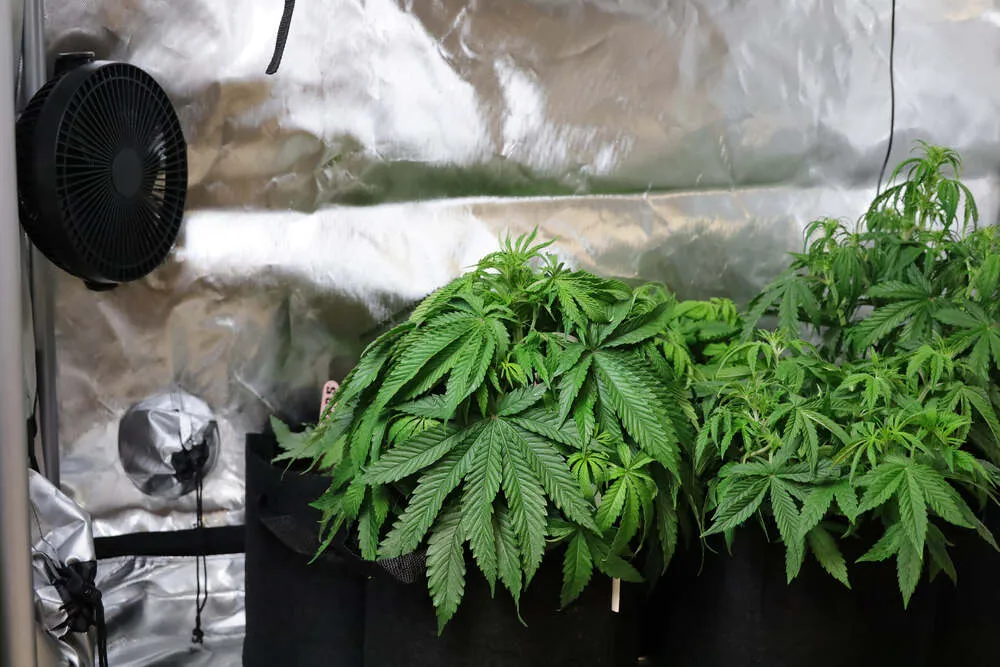
Over my time as a home grower, I have visited countless indoor gardens and could also tell the health status of other growers' plants by their leaves. Fan leaves are a significant indicator of plant health, will be the tell-tale signs of an issue, and will help us determine whether our growing environment needs to change.
How healthy fan leaves indicate plant vitality
Have you ever noticed that one day your healthy, smooth and soft leaves are leaning closer to being dry, thin and discolored? The reason this happens is that your plants are telling you to do something that is not right in terms of watering, nutrients, pH, EC, pest problems, temperature, or humidity.
Common issues shown via fan leaves (yellowing, curling, spotting)
Yellowing
Cannabis plants require Nitrogen to produce light or dark green leaves. When a leaf begins to turn yellow and then later pale, this means the leaf is distributing the stored Nitrogen to newer growth. Leaf chlorosis is a term for when a leaf is deficient in chlorophyll. Nitrogen deficiency means supplementing plants with more feed, such as worm castings, as a slow-release organic solution.
Curling
Several factors can cause your leaves to start curling at the tips of the leaflets or curling inwards. These factors include heat stress, underwatering, overwatering, a pH issue disrupting nutrient uptake and availability, and too much light. Other reasons cannabis leaves can begin to curl include pest infestations from thrips or aphids, transpiration issues, and root problems.
Spotting
When leaves begin to develop spots on the top and underside surfaces, you will need to be prepared to diagnose the problem. Nutrient deficiencies, such as Calcium, powdery mildew, spider mites, thrips, heat stress, and overwatering, can cause spotting.
Tip Burn
When the salt content in leaf tissue is too high, as plants transpire, the leaf tips will burn and appear crispy and brown. In some cases, tip burn can be minute, whilst in severe cases, it can cause the leaflets to become dry and brittle.
Brittle Petioles
When a cannabis fan leaf is suffering from leaf chlorosis, or is coping with a nutrient deficiency, environmental stress, the petioles connecting the leaf to the stem will be brittle and fall off the stem with very little pressure. Brittle petioles are a strong indication that your plants are in poor health.
What fan leaves reveal about environmental stress, nutrient deficiency, or pests
Whilst leaves act as solar panels for capturing light and carbon dioxide, they are also indicators of potential problems. It may be tricky to precisely diagnose the issue, as there are often multiple causes that create a ripple effect; however, the primary causes will be one of the following.
- Root health
- Aphids
- Thrips
- Spider Mites
- Nutrient deficiency
- Nutrient toxicity
- Heat stress
- Light intensity
- Humidity
When and how to manage fan leaves
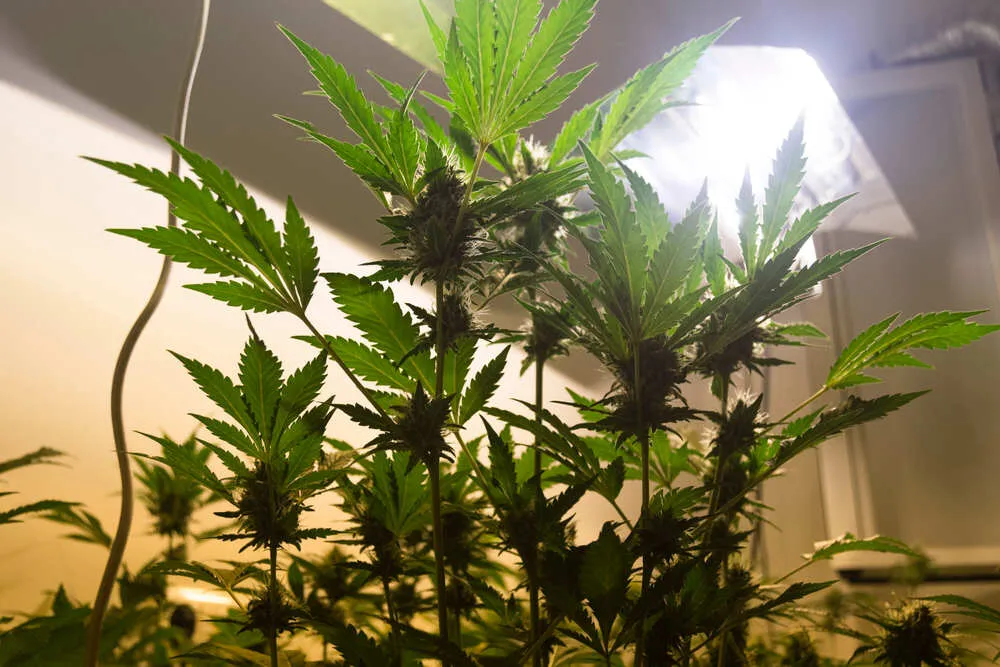
Fan leaves are the solar panels that allow plants to absorb light and metabolise, which is why cannabis plants produce a large number of fan leaves that determine their shape and structure. In some cases, fans need to be managed to prevent shading, improve airflow, and allow the lower canopy to flourish. Pruning away and defoliating fan leaves is an advantageous technique that can be done during the vegetative and flowering stages, as explained below.
Best timing and techniques for trimming fan leaves (veg vs flower stage)
Carefully and selectively removing fan leaves allows more light to penetrate to the lower canopy. This is why timing your defoliation correctly can make a huge difference as a home grower. The best way to remove a fan leaf is to apply pressure at the base of the petiole that connects the fan leaf to the stem. You can do this using your thumb and finger and pressing down until the petiole cleanly breaks away. Be careful not to tear the stem, and throw away the fan leaves after removal.
During Vegetation
- Remove large-sized fan leaves that block side branches and axillary shoots from light
- Fan leaves should be removed during vegetation once LST has been performed
- Remove fan leaves from the top and middle section of the canopy during 18/6
- Indica fan leaves tend to block more light than sativa and hybrids
- Throw away any fan leaves that show signs of insect larvae
During Flowering
- Remove fan leaves during the first 4 weeks once plants have started flowering
- Avoid defoliating fan leaves after week 4 onwards to avoid stress
- Fan leaves can be removed in the final week before harvesting to save time
- Save any fan leaves that have trichomes on and use them for making hash
How much to remove, which leaves to remove, tools and safety considerations
Carefully removing fan leaves is a balancing act. You do not want to take too many off, as the plants rely on them for energy and photosynthesis; however, you don’t want to cause shading. My advice is to remove indica fan leaves after week 3 onwards, as they tend to block more light due to their structure. Sativa fan leaves have wider spacing between leaflets, so they may not be as problematic for light penetration.
As far as tools are concerned, an experienced grower will have no problems creating enough pressure on the base of the petiole to cleanly break the leaf away from the stem. If you want to take precautions, using a sharp scalpel will let you achieve a perfect cut directly at the stem. Avoid tearing the petiole away as this can cause the stem to pull, creating unwanted stress.
What can you do with fan leaves after harvest?
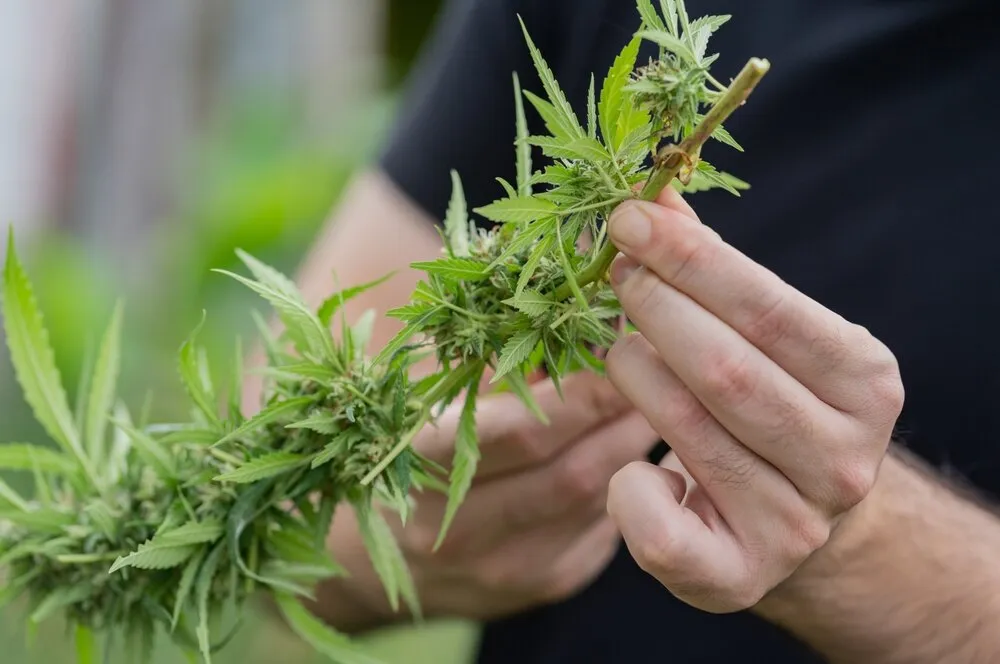
When harvesting and meticulously trimming your plants, you will end up with a large pile of fan leaves on the floor. If the fan leaves you have trimmed are coated in trichomes, then these should be saved along with the smaller leaves that contain trichomes for making hash or extracts. You will be happy to hear that you can still use the fan leaves that do not contain resin, as these can be used for nutritional purposes or composting purposes.
Nutritional uses – raw salads, smoothies, teas
- Fan leaves can be washed and used for making raw salads
- Washed fan leaves can be placed in a blender to make smoothies
- Boiling water and fan leaves produce a powerful antioxidant tea
Craft, extraction and topical uses – balms, oils, compost, DIY crafts
- Fan leaves can be used for the outer layer of cannagars
- Skin balms can be made from the plant matter from fan leaves
- Fan leaves free of insects and larvae make excellent compost


