




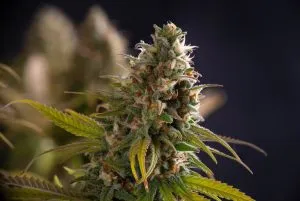
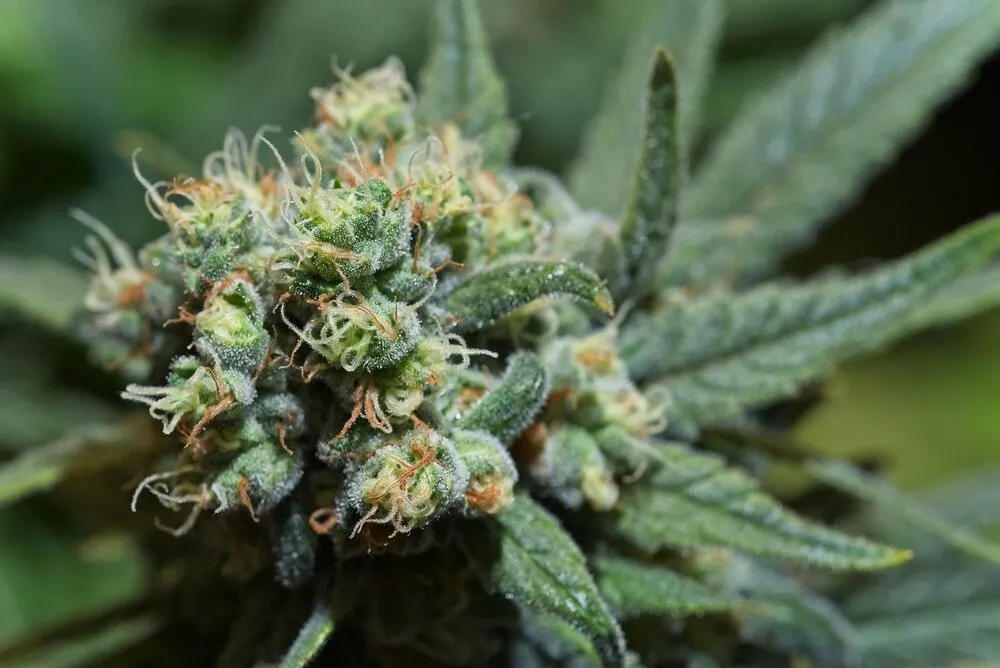
Everyone loves to see buds growing on their plants during the flowering period, and especially when they form big, long and dense colas. The cola of a cannabis plant refers to a cluster of smaller-sized buds tightly packed together in a compact structure.
The bigger the cola, the bigger the yield! You will find colas at the top of the plant and along the side branches; depending on the strain you are growing, their characteristics will vary.
- Cannabis plants produce one main central cola surrounded by side branches
- Colas grow vertically and can grow as large as a fist in some cases
- The bigger the plant, the larger the cola will be when harvesting
- The cola on outdoor plants can be massive compared to the indoor cultivated plants
Understanding the Cola: Definition & Anatomy
You may have heard the term cola and thought of a famous fizzy drink; however, in cannabis cultivation, it describes the most valuable collection of buds. There will be certain parts of your plant that produce bigger colas than others, and knowing this in advance can help you achieve the highest possible yield and create the most resinous, dense buds, as covered below.
What exactly is a cola in cannabis cultivation?
Most growers refer to the flowers on their plants as buds, which is true, but in plant biology, the correct term is cola. Whether you are growing indica, sativa, hybrids, or autos, your plants will typically produce one central cola, with smaller colas surrounding it.
Anatomy of a cola: main cola vs secondary colas
When a cannabis plant is left to grow without any special cannabis plant training techniques applied, such as topping, Screen of Green or mainlining, the plant will produce a main cola and then an abundance of secondary colas.
The Main Cola
- This will produce the biggest cola since it is closest to the light source
- The main cola will be made up form a collection of smaller sized buds
- The resin production on the leaves surrounding the main cola will be prolific
- Sativa cannabis plants produce a much bigger and taller cola than Indicas
- The main cola will be the most likely to have issues with mold due to the air flow
Secondary Colas
- These will receive less light than the main cola, resulting in a smaller size
- The ratio of buds on secondary colas will be lower compared to the main cola
- Resin production on the leaves surrounding secondary colas will be less superior
- Potency of the lower colas will often be the same as the top cola
- Secondary colas make up a significant amount of the overall weight when harvesting
- They can be found beneath the top of the canopy, beneath the main central cola
Why the cola matters: trichomes, buds and resin-rich structure
Achieving thick, dense, and long-shaped colas is vital for several reasons. Not only do they reflect how successful the harvest has been in terms of weight, but they also play a significant role in the quantity of buds and the amount of trichomes on those buds.
How and When the Cola Forms
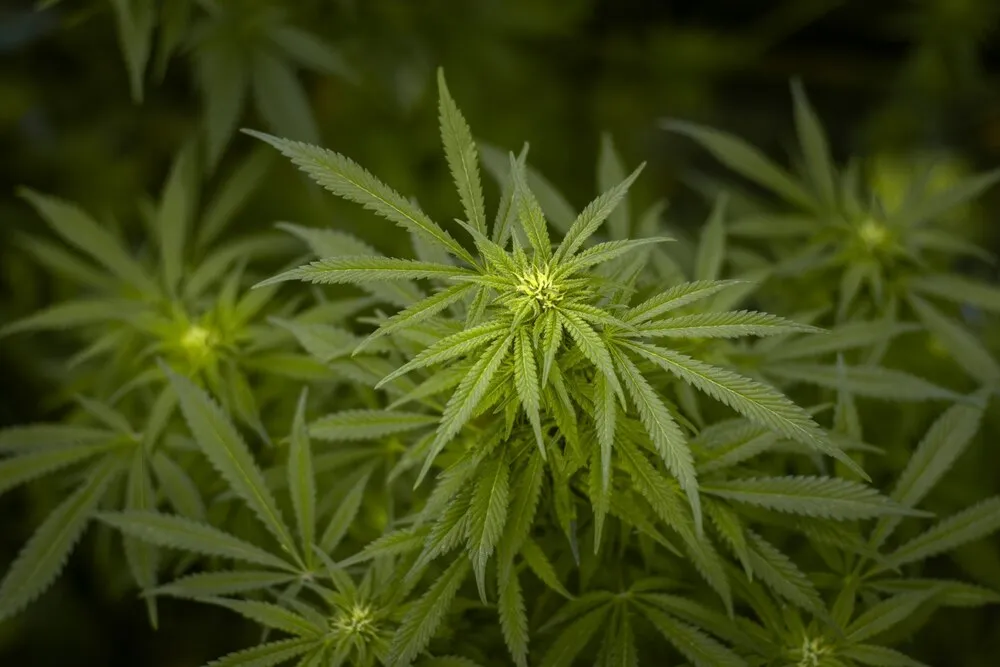
When the aim of the game as a grower is to produce as much bud as possible, knowing how and when the cola forms, along with genetic influences and environmental factors, will give an advantage once harvest time comes around, as explained below.
The flowering stage and development of the main cola
Once you flower your cannabis plants and switch your timers to 12/12, the plants will stretch as tall as possible in preparation for flower and begin producing thousands of white pistils. When a cannabis plant is not exposed to pollen, then the white fuzzy female pistils will slowly develop from week three onwards.
Weeks 1 - 3
This is known as the stretching phase, when cannabis plants produce high levels of growth hormones and auxins. As cannabis plants are apically dominant, they will focus most of their energy on the main central cola. It is at the end of week 3 that a female cannabis plant produces female flowers. There will be no main cola or secondary colas forming on the plant yet.
Week 4 - 6
During this stage, the bracts of a cannabis plant will begin to form small, tear-shaped growth sites. This is usually the time when a grower increases the amount of Phosphorus and Potassium to help boost flower development. At this point, the axillary shoots are beginning to form together compactly. They will give a clear indication of where the colas will form on the main cola and secondary colas.
Week 7 - 9
By the final 3 weeks of flowering, the buds will become dense, take on a swollen appearance, and should have a hard-to-squeeze characteristic, ranging in width from 2 to 3 inches. By now, the central cola and secondary colas will be clear to see and, in some cases, can cause branches to topple over or downwards due to the weight of the cluster of buds, and should be supported using canes.
It is essential during the final 3 weeks of flowering to monitor temperature and humidity, check the buds daily for signs of mold, and ensure there is plenty of airflow around the colas.
Influence of genetics (indica vs sativa vs hybrid) on cola shape and density
Not every cannabis plant will look the same when it is time to harvest. Whilst this may be down to light intensity, flowering time, plant training, carbon dioxide levels, and nutrients, it is essential to know that genetics plays a massive role. There are three different types of cannabis plants, which are indica, sativa and hybrids.
Indica cannabis colas
- The colas will be shortest in length and width, with a compact and tight bud formation
- The main central cola of an indica will be around 40 - 60 cm in length
- The side branches will form colas that are typically 30 - 50 cm in length
- The bud-to-leaf ratio will be lowest when harvesting compared to hybrids and sativas
- Indica plants have a short flowering period, producing colas in 50-55 days
Sativa cannabis colas
- The colas are elongated, long, and less compact.
- The main central cola on a sativa can grow as long as 100 cm
- The side branches of a sativa plant will produce long colas
- The bud-to-leaf ratio of a sativa cola will be the highest compared to indica and hybrids
- Sativa cannabis plants will take between 70 and 90 days before fully forming
Hybrid cannabis colas
- Hybrids are a cross of indica and sativa cannabis plants
- They will typically produce the most significant yields and colas
- The colas will have a compact but not overly dense structure
- Colas on a hybrid cannabis plant will require between 55 and 70 days to form
Environmental factors that drive cola size and quality (light, nutrients, spacing)
Several factors determine the size of a cannabis plant's primary and secondary colas. They are light intensity, penetration, nutrients and the growth structure.
Lighting
Light intensity is essential for growing big buds and developing dense, compact colas. During the flowering stage, your PPFD levels need to be optimal, and the best way to measure them is with a PAR meter. You will want to aim for a PPFD level between 600 and 900 mol/m2/s and ensure the correct ratio of red to infrared.
Nutrients
During the flowering stage, when peak flower production occurs, cannabis plants prefer higher levels of Phosphorus and Potassium to produce fat, dense buds. Using a digital EC pen, aim for an EC level of 1.6-2.0 for organic crops and 1.8-2.4 for hydro.
Structure
The more direct light cannabis plants are exposed to indoors or outside, the more it plays a significant role in cola size and the overall yield. Plant training can significantly improve canopy spacing and cola production.
Growing Techniques to Encourage Large Colas
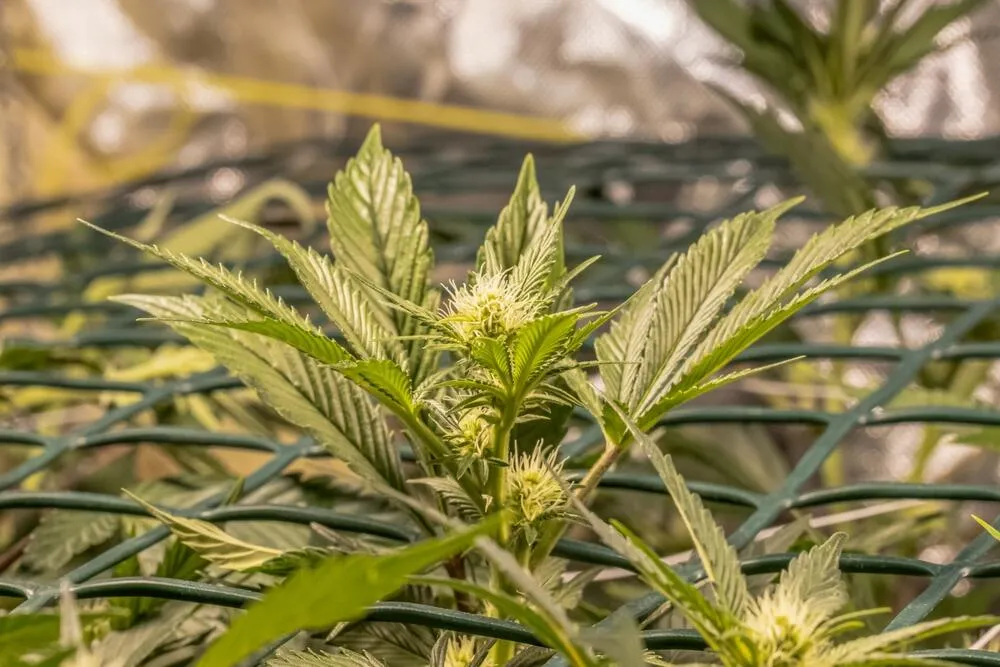
Cannabis is an apical dominant plant, which means that it will grow one main central cola, with shorter side branches, which produce the secondary colas. Applying plant training techniques at the correct times, combined with pruning and canopy management, can increase the number of bud sites and enhance cola production, as outlined below.
Training methods: topping, low-stress training (LST), screen of green (SCROG) to increase colas
During the vegetative phase, when cannabis plants focus their energy on roots, fan leaves, side branches, and axillary shoots, this is the optimal window for plant training. By simply applying training techniques, you can manipulate your canopy to produce plants capable of growing multiple top colas and many more secondary colas.
| Style of Training | How it affects the shape and strucrue |
| Topping | Topping is a method that involves removing the top of the crown growth site, resulting in 2 main colas. You can repeat this technique during vegetation and produce up to 32 crown shoots that can develop into primary colas. |
| LST | Low-Stress Technique is a simple, highly effective method for turning a plant’s shape and structure into a bushy, laterally dominant form. The smaller axillary shoots have a chance to grow much taller, resulting in larger secondary colas and significantly enhancing the final yield. |
| SCROG | Using a screen net, the canopy of a cannabis plant is systematically trained through a screen. SCROG can take a long time but produces a large canopy with optimal light spread and penetration. The growth beneath the screen is pruned away, allowing the plant to focus all its energy on a top-heavy harvest and colas. |
Pruning and canopy management to prioritise cola development
Pruning refers to the removal of small axillary growth sites and leaves. By removing them with a sharp scalpel, the remaining foliage can access the most light, reducing the risk of producing small, lower buds and colas. Pruning is often performed a week before flowering, or during the first 2 weeks of flowering.
Quality Indicators and Harvesting Colas
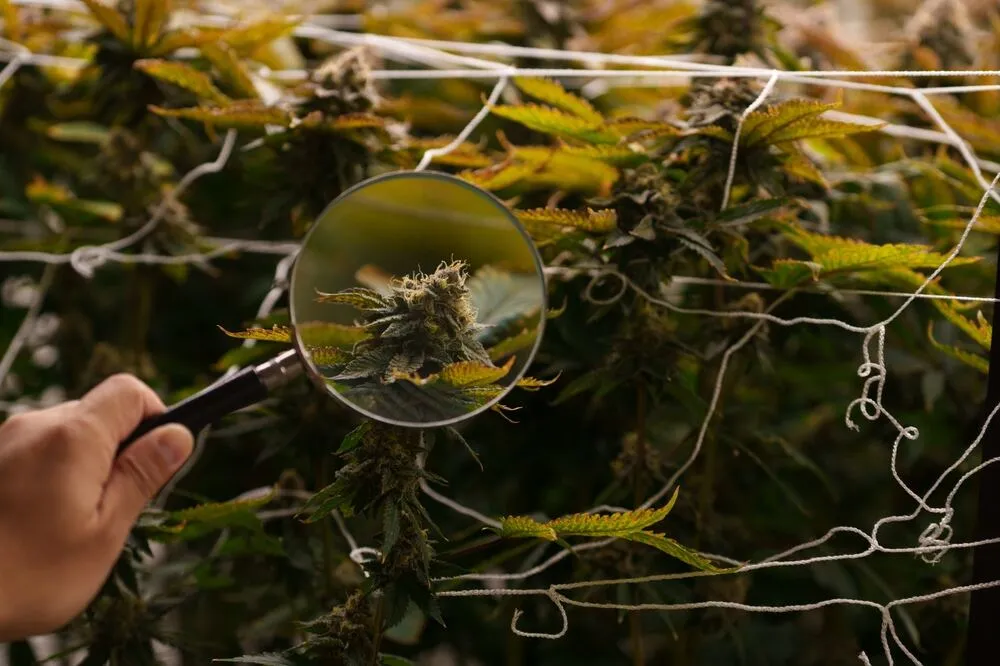
During the last 4 weeks of flowering, a grower becomes very excited and counts down the days until all their hard work and attention have paid off. As they watch their buds become more dense, and the colas begin to form into baseball bat size, they will monitor them every day in anticipation and most likely will be taking photos and videos for social media. Preparing to harvest your crop should be based on several factors, as explained below.
Visual signs of a healthy cola (density, trichome coverage, color)
Density
As long as you have been giving your plants the correct PPFD levels, have your environment dialled in, and have been feeding the right balance of nutrients, then your buds should be dense and complex to squeeze.
Not all buds will have the same characteristics, and the density value will depend on the genetics and phenotypes you are growing. If your buds are on the airy, fluffy side, there is a good chance the plants need more nutrients or higher light intensity.
Trichome Coverage
The trichomes on the calyces of the buds should now be in the pinnacle of development. Every bud should be frosty, as well as the smaller leaves closest to the buds, and in some cases, the fan leaves will be resinous.
Molding buds
Mold can infect a flowering cannabis plant due to poor airflow, high humidity levels, or cold temperatures. Once a cola has become moldy, there is not much you can do apart from carefully cutting the moldy parts out and throwing the infected buds away. Dense colas formed by chunky buds will be the most susceptible to mold.
Timing the harvest: when the cola is ready (pistil/ stigma color, trichome maturity)
Regardless of how big or small your colas are, you should always base the harvest window on several factors. The flowering time will serve as a guide for when to harvest; however, the essential signs are explained below.
- The pistils should be 85-90% brown or orange
- The trichome heads should be 80% milky and 25% amber
- Bracts should have a swollen and compact appearance
Why Colas Matter for Growers, Consumers & Medicinal Users
No one likes spending 12-14 weeks growing indoors to achieve a small harvest with few colas. Not only does a small harvest have a knock-on effect on how much bud you will have to keep you going until the next crop, but it can also devastate large commercial-scale facilities that are producing buds for coffeeshops, social clubs and medical dispensaries.
Yield implications: how colas affect overall harvest volume and efficiency
The bigger your plants are before flowering, the more they will play a significant role in the number of buds and the ratio of colas. A good grower should be able to harvest a large quantity of dried flowers without going over their budget as far as electricity is concerned, whilst maximizing the grow space potential. Large-scale commercial operations are target-driven, so they face significant pressure to produce a set number of buds to maintain profits.
- Small colas are a result of low bud production and yield
- The more colas present when flowering, the better
- Small-sized plants will typically produce a smaller number of colas
Potency and terpene concentration: what the cola means for flower quality
A well-formed and developed cola should be compact and need support using canes. When environmental conditions are on point, the cola will have maximum potency and terpene content, thanks to the abundant trichomes on the calyces. Remember that a cola consists of a high number of smaller-sized buds joined together, and the flower quality is determined by how each individual bud has matured.
Frequently Asked Questions About Colas
Not every grower is familiar with the term cola, so below are some frequently asked questions about cannabis colas.
Is the term “cola” reserved only for the top bud site?
No, cola refers to a cluster of smaller-sized buds, which are produced by the central apical bud known as the primary cola or the side branches, known as secondary colas.
Can too many colas be a disadvantage (mold risk, light penetration)?
Not necessarily; the most important factors are that the temperature, humidity, and airflow are optimal. Dense colas have a higher chance of becoming moldy; however, with the ideal amount of air flow and light, it does not put a grower at a disadvantage in achieving big yields.


