




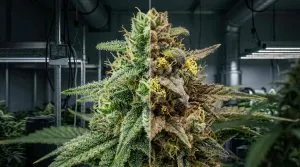
Aspergillus mold on cannabis is not simply a cosmetic problem. It is a serious cultivation, product-quality, and consumer-safety concern that can develop in the grow room, remain hidden through harvest, and spread during drying, curing, or storage. Understanding what causes Aspergillus in cannabis is the first step toward protecting your plants, because fungal spores thrive when excess moisture, poor airflow, contaminated materials, and improper postharvest conditions come together.
As an experienced grower, I focus on prevention rather than trying to rescue contaminated flower after mold appears. Clean cultivation spaces, stable humidity, good air circulation, careful plant handling, and proper drying practices all help reduce the risk of Aspergillus cannabis contamination. In this guide, you will learn how to prevent Aspergillus in cannabis, recognize possible warning signs, understand cannabis Aspergillus detection methods, and respond safely when you suspect mold in your crop.
Key Takeaways
- Aspergillus develops when spores meet favorable conditions. High humidity, trapped moisture, poor airflow, contaminated materials, and weak sanitation create the main risks.
- Dense cannabis flowers are especially vulnerable. Moisture can remain trapped inside colas during late flowering, drying, curing, and storage, even when the outside feels dry.
- Visual inspection cannot confirm the species. A. flavus, A. fumigatus, A. niger, and A. terreus may appear in different colors, but PCR, qPCR, culture, or mycotoxin testing is needed for reliable identification.
- Prevention is more effective than remediation. Clean equipment, stable humidity, consistent airflow, careful watering, and proper postharvest handling give you the best protection.
- Suspected cannabis should be isolated and never consumed. Do not smoke, vape, cook with, press, or extract moldy flower. Remove contaminated material, clean the grow area, and correct the conditions that allowed Aspergillus to develop.
- What is aspergillus mold on cannabis?
- What Causes Aspergillus in Cannabis?
- Cannabis Aspergillus Detection: How to Recognize Different Species
- What to Do if You Suspect Aspergillus in Your Cannabis
- How to Fix a Cannabis Plant With Aspergillus: Step-by-Step Guide
- How to Prevent Aspergillus in Cannabis: Step-by-Step Guide
- Conclusion
- Frequently Asked Questions About Aspergillus in Cannabis
What is aspergillus mold on cannabis?
Aspergillus mold on cannabis is a fungal contamination that can affect living plants, harvested buds, growing media, equipment, and stored flower. Aspergillus is not one individual mold but a large genus of filamentous fungi commonly found in soil, dust, decaying vegetation, and indoor air. Its microscopic spores move through ventilation systems, settle on surfaces, and enter grow rooms on clothing, tools, clones, and cultivation materials.
Finding Aspergillus spores in an environment does not necessarily mean your plants will become moldy. Contamination becomes more likely when spores settle on cannabis exposed to excess moisture, stagnant air, damaged tissue, or poor sanitation. In my experience, the highest-risk periods are late flowering, harvest, drying, curing, and storage because dense buds can hold moisture internally even when their surface feels dry.
Common aspergillus species found in cannabis
Cannabis Aspergillus testing commonly targets four species: Aspergillus flavus, Aspergillus fumigatus, Aspergillus niger, and Aspergillus terreus. AOAC International includes these species in its performance requirements for detecting Aspergillus in cannabis flower and manufactured cannabis products.
| Aspergillus species | Common characteristics | Potential concern |
| A. flavus | Often develops yellow-green colonies and grows on plant material and agricultural crops | Some strains can produce aflatoxins under suitable conditions |
| A. fumigatus | Produces small airborne spores that can be inhaled deeply into the respiratory system | It is a major cause of aspergillosis, particularly in vulnerable individuals |
| A. niger | Commonly associated with dark brown or black colonies | It can contaminate plant material and may cause opportunistic infections |
| A. terreus | Often produces cinnamon-brown or tan colonies | It can cause invasive infections and may be difficult to treat |
These descriptions can help you understand the species, but colony color is not a reliable identification method. Cannabis flower may contain fungal growth before you can see discoloration, and several molds can appear similar without laboratory analysis.
How aspergillus differs from other cannabis molds
Aspergillus is one of several types of cannabis mold, but it differs from bud rot and powdery mildew in how it develops and appears. Bud rot is usually caused by Botrytis cinerea. It commonly starts inside dense colas, where infected tissue turns brown or gray, becomes soft, and eventually breaks apart. Powdery mildew normally appears as white or pale gray patches across leaves, stems, and flower surfaces.
| Contamination | Typical appearance | Common starting point |
| Aspergillus | Powdery, dusty, or thread-like growth that may vary in color | Flower, growing media, stored buds, or contaminated surfaces |
| Bud rot | Brown or gray internal decay with soft, dying tissue | Inside dense or damaged colas |
| Powdery mildew | White, flour-like patches across plant surfaces | Leaves, petioles, stems, and exposed flowers |
| Cannabis trichomes | Clear, cloudy, or amber glands with recognizable stalks and rounded heads | Naturally develops across flowers and sugar leaves |
I use a magnifying lens when inspecting questionable flower. Healthy trichomes have defined stalks with rounded gland heads, while mold usually forms tangled filaments, web-like mats, or irregular dusty clusters. A guide showing what moldy weed looks like can help you compare suspicious growth with healthy cannabis flower. Magnification can reveal a warning sign, but only cannabis Aspergillus detection through validated laboratory testing can confirm the species.
Why aspergillus in cannabis can be dangerous
Aspergillus in cannabis is dangerous because contaminated flower may expose the consumer to spores through inhalation. Most healthy people breathe small quantities of Aspergillus spores without becoming ill, but people with weakened immune systems, chronic lung conditions, or previous lung disease face a greater risk of aspergillosis.
Certain Aspergillus species can also produce harmful mycotoxins when environmental conditions support their development. However, the presence of Aspergillus does not automatically confirm that mycotoxins are present. It means the flower requires proper assessment and should not be smoked, vaped, or consumed.
You cannot judge contaminated cannabis by smell or appearance alone. A clean-looking cola can still contain fungal material, while a dusty-looking surface may sometimes be harmless trichomes. When I suspect mold, I isolate the flower immediately rather than handling it repeatedly or trying to save the unaffected-looking portion. With Aspergillus mold on cannabis, caution protects both your crop and anyone who may eventually consume it.
What Causes Aspergillus in Cannabis?
Aspergillus in cannabis is mainly caused by excess moisture, poor airflow, contaminated growing materials, weak sanitation, and improper postharvest handling. Fungal spores are naturally present in soil, dust, compost, decaying vegetation, and indoor air, but they only become a serious problem when your grow room or harvested flower provides the warm, damp conditions they need to germinate.
In my experience, Aspergillus contamination rarely comes from one isolated mistake. It usually develops through several problems occurring at the same time, such as high humidity, overcrowded plants, wet growing media, dirty tools, or flower being dried too slowly. Dense cannabis buds are particularly vulnerable because moisture can remain trapped deep inside a cola even when the outside feels dry.
What Causes Different Aspergillus Species in Cannabis?
The four Aspergillus species most commonly targeted in cannabis testing are Aspergillus flavus, Aspergillus fumigatus, Aspergillus niger, and Aspergillus terreus. These species can enter a cultivation area through soil, air, water, tools, plant material, and organic debris, although each is commonly associated with slightly different sources.
| Aspergillus species | Common environmental sources | Conditions that support contamination |
| Aspergillus flavus | Soil, compost, decaying plant matter, grains, organic fertilizers, and crop debris | Warm conditions, damaged tissue, excess moisture, and poorly stored organic materials |
| Aspergillus fumigatus | Compost, potting media, dust, HVAC systems, and decomposing vegetation | Warm organic material, poor filtration, stagnant air, and heavy dust buildup |
| Aspergillus niger | Soil, dust, irrigation systems, damp walls, drains, and stored plant material | High humidity, condensation, standing water, and moist harvested flower |
| Aspergillus terreus | Soil, decomposing vegetation, growing media, and contaminated indoor surfaces | Warm, damp conditions, poor sanitation, and persistent organic residue |
These sources explain where contamination may originate, but they do not allow you to identify the species by sight. Several molds can produce similar colors and textures, while early Aspergillus growth may be invisible. Laboratory testing is the only dependable way to confirm which species is present.
High Humidity, Excess Moisture, and Poor Airflow
Effective grow room humidity control is one of the most important parts of preventing Aspergillus mold on cannabis. Excess moisture allows fungal spores to germinate, while weak airflow prevents damp air from moving away from leaves and flowers.
Common moisture problems include:
- Overwatering or constantly saturated growing media
- Standing runoff beneath pots
- Leaking irrigation lines
- Wet floors or blocked drains
- Foliar spraying during late flowering
- Condensation on walls, ducting, leaves, or equipment
- Plants positioned too closely together
Crowded plants create humid pockets inside the canopy. The air around a wall-mounted sensor may appear stable while moisture remains trapped between branches or inside thick buds. I place temperature and humidity sensors at canopy height and use more than one sensor in larger grow spaces. This gives a more accurate picture of the conditions your flowers are experiencing.
Nighttime humidity also requires close attention. When grow lights switch off, the temperature often falls quickly. Cooler air holds less moisture, so relative humidity rises and condensation may develop on leaves, flowers, ducting, and other cool surfaces.
Contaminated Soil, Water, Tools, and Plant Material
Aspergillus spores can enter your grow through soil, coco coir, compost, organic amendments, water, containers, irrigation equipment, clothing, shoes, and incoming clones. Following reliable cannabis watering practices also helps prevent saturated media and standing runoff from increasing moisture levels.
Organic growing materials require careful storage and handling. Organic does not mean sterile. Compost-rich media naturally contains fungi and other microorganisms, so bags should be kept sealed, dry, and raised off the floor. Leaving open media in a damp grow room increases the chance of contamination.
Reservoirs, irrigation lines, drains, humidifier tanks, and trays can also develop microbial buildup. Permanently wet media can also contribute to root rot on cannabis plants, so check the root zone whenever drainage has been poor.
Tools can transfer contamination directly between plants. Pruning shears, trimming scissors, gloves, support stakes, pots, trays, and harvest bins should be cleaned regularly, especially after contact with dead, damaged, or suspicious plant tissue.
How Aspergillus Enters and Spreads Through a Grow Space
Aspergillus spores can enter through ventilation systems, open doors, workers, pets, deliveries, dust, clothing, and new plant material. Once inside, circulation fans and HVAC systems can spread those spores across the room.
Poor handling can make the problem worse. Shaking plants, dry sweeping, blowing dust with compressed air, or carrying a contaminated plant through a clean room can release fungal particles into the air. Trimming and bucking dry cannabis can also create airborne organic dust that spreads contamination between work areas.
A well-planned indoor cannabis grow setup should provide sufficient extraction, filtration, air circulation, drainage, and access for cleaning. A grow room cannot be completely sterile, but it can be kept clean and controlled. I reduce contamination pressure by maintaining filters, limiting unnecessary traffic, wearing clean clothing, removing dead plant matter quickly, and working from healthy plants toward suspect plants.
What Causes Aspergillus During Each Cannabis Growth Stage?
The causes of Aspergillus change as cannabis moves through its life cycle. During the cannabis seedling stage, vegetative growth, flowering, harvest, and postharvest period, each stage creates different moisture, airflow, and handling risks.
| Cannabis stage | Main causes of Aspergillus contamination | Why the stage is vulnerable |
| Germination and seedlings | Overly wet media, dirty humidity domes, contaminated trays, and poor air exchange | Seedlings need moisture, but constantly saturated conditions encourage fungal growth |
| Vegetative stage | Overwatering, crowded foliage, dirty tools, contaminated clones, and poor sanitation | Rapid leaf and branch growth can reduce airflow through the canopy |
| Flowering stage | High humidity, dense colas, condensation, late foliar spraying, and weak airflow | Developing buds trap moisture between bracts and sugar leaves |
| Harvest | Wet plants piled in bins, dirty scissors, damaged flowers, and delayed drying | Freshly cut cannabis contains high levels of moisture and is easily contaminated during handling |
| Drying | Overloaded rooms, uneven airflow, high humidity, touching branches, and equipment failure | Moisture leaves flower slowly, giving fungal spores time to germinate |
| Curing | Flower sealed too early, poor moisture equalization, and excessive container humidity | Buds may feel dry outside while still holding moisture internally |
| Storage | Warm temperatures, humidity swings, dirty containers, and repeated opening | Condensation and unstable conditions can encourage existing spores to grow |
The cannabis flowering stage, particularly late bloom, is one of the highest-risk periods, followed by harvest, drying, and curing. In late bloom, large colas can hold moisture deep inside their structure. At harvest, wet plant material is cut, moved, and handled in large quantities. During curing, moisture travels from the center of the bud toward the surface, which can increase humidity inside a sealed container.
Reaching harvest without visible mold does not mean your cannabis is free from Aspergillus. Contamination can remain hidden inside dense flower or develop later when drying, curing, or storage conditions are poorly managed. For this reason, I treat the entire process from cultivation through final storage as one continuous mold-prevention system. Genetics cannot replace environmental control, but choosing mold-resistant cannabis strains may provide an additional advantage in humid climates or gardens that regularly struggle with moisture during flowering.
Cannabis Aspergillus Detection: How to Recognize Different Species
Cannabis Aspergillus detection begins with a careful inspection of your plants and harvested flower. Possible contamination may appear as powdery growth, unusual discoloration, fine fungal threads, deteriorating bracts, or dusty particles. When the symptoms are unclear, a broader cannabis leaf symptoms guide can help you rule out nutrient, watering, and environmental problems However, you cannot reliably identify Aspergillus or determine the exact species by appearance alone.
The four species most commonly targeted in cannabis laboratory testing are Aspergillus flavus, Aspergillus fumigatus, Aspergillus niger, and Aspergillus terreus. Each may produce different colony colors, but growing conditions, flower structure, lighting, and colony age can alter its appearance. Visual inspection helps you recognize a possible problem; laboratory testing confirms what is present.
How to Identify Aspergillus flavus on Cannabis
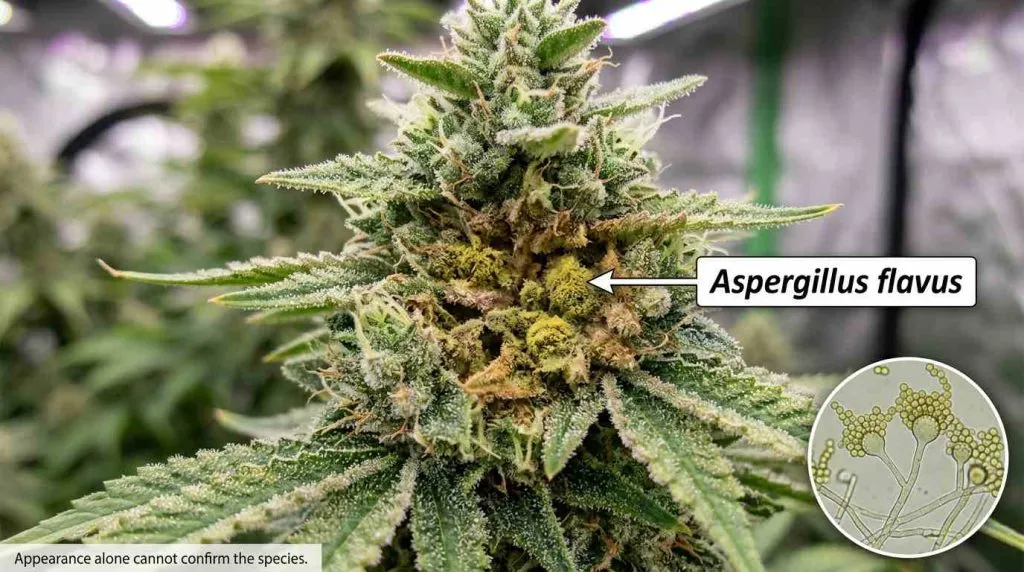
Aspergillus flavus may produce yellow-green, olive, or dusty green growth. On cannabis, it may develop around damaged bracts, dead plant material, or flower exposed to excess moisture during drying and storage.
Possible warning signs include yellow-green powder, fine fungal threads, damaged tissue, and a musty odor. This species deserves particular attention because some strains can produce aflatoxins under suitable conditions.
A green colony does not confirm A. flavus. A laboratory may use species-specific PCR or qPCR testing to detect its genetic material. Separate mycotoxin analysis is required to determine whether aflatoxins are present.
How to Identify Aspergillus fumigatus on Cannabis
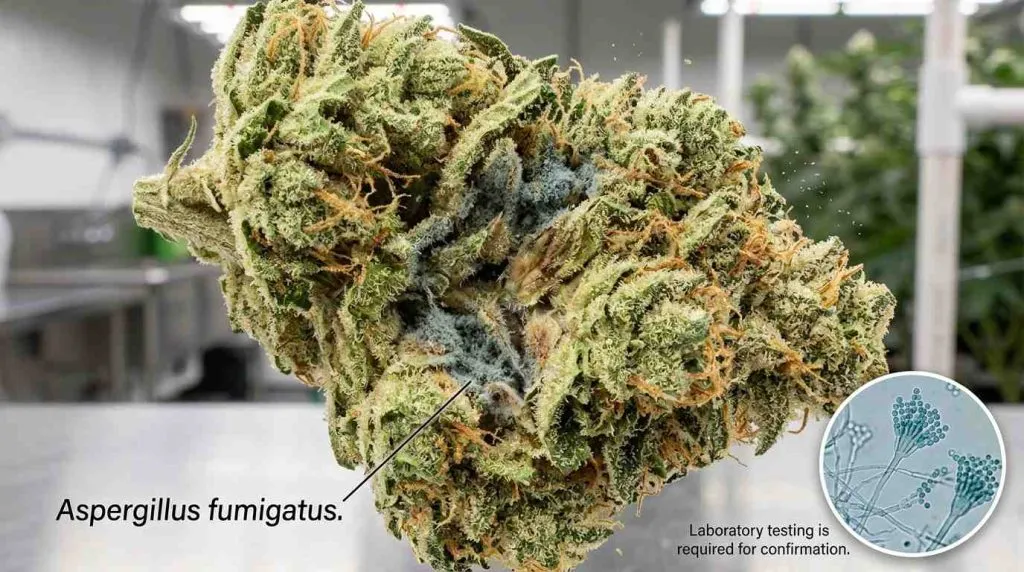
Aspergillus fumigatus may appear blue-green, gray-green, or smoky. Its colonies can look fine and dusty, while early contamination may remain hidden inside a dense cola.
You may notice smoky discoloration, fine powdery material, internal flower damage, or particles released when the bud is disturbed. Because its spores are small and easily airborne, avoid breaking apart suspicious flower near healthy plants.
PCR or qPCR testing can target A. fumigatus DNA and distinguish it from other visually similar molds. Culture-based testing may also detect viable colonies, although the result depends on the growth medium and incubation conditions used by the laboratory.
How to Identify Aspergillus niger on Cannabis
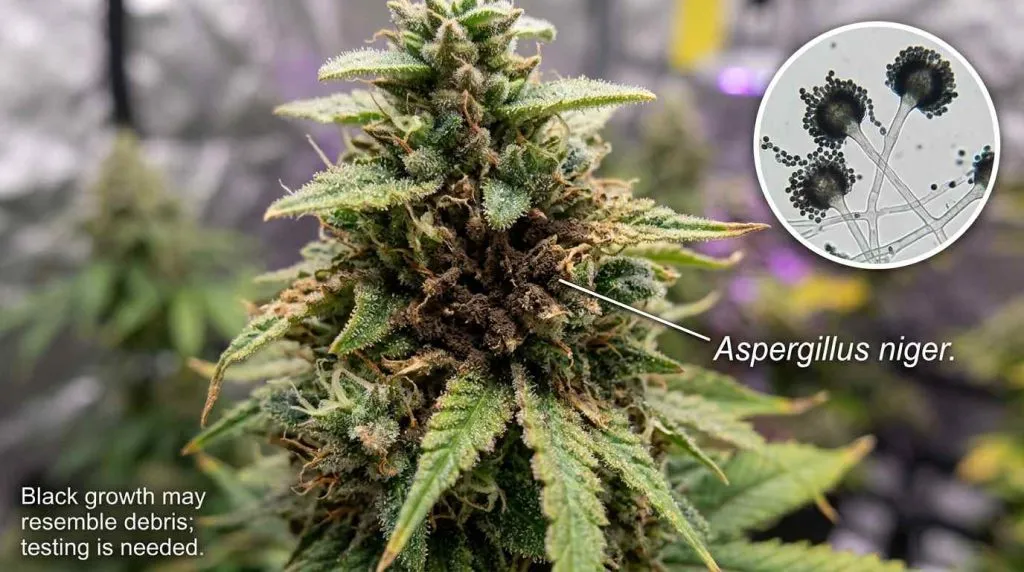
Aspergillus niger commonly forms dark brown or black powdery colonies. On cannabis flower, it may resemble soil, dust, insect debris, or naturally darkened plant tissue.
Look for soot-like deposits, black particles beneath sugar leaves, localized tissue deterioration, or dark material inside a storage container. Black coloration is only a warning sign and cannot confirm the species.
A laboratory can use species-specific molecular testing to identify A. niger. Culture analysis may also produce recognizable dark colonies, but trained interpretation is still required because other fungi can develop similar pigmentation.
How to Identify Aspergillus terreus on Cannabis
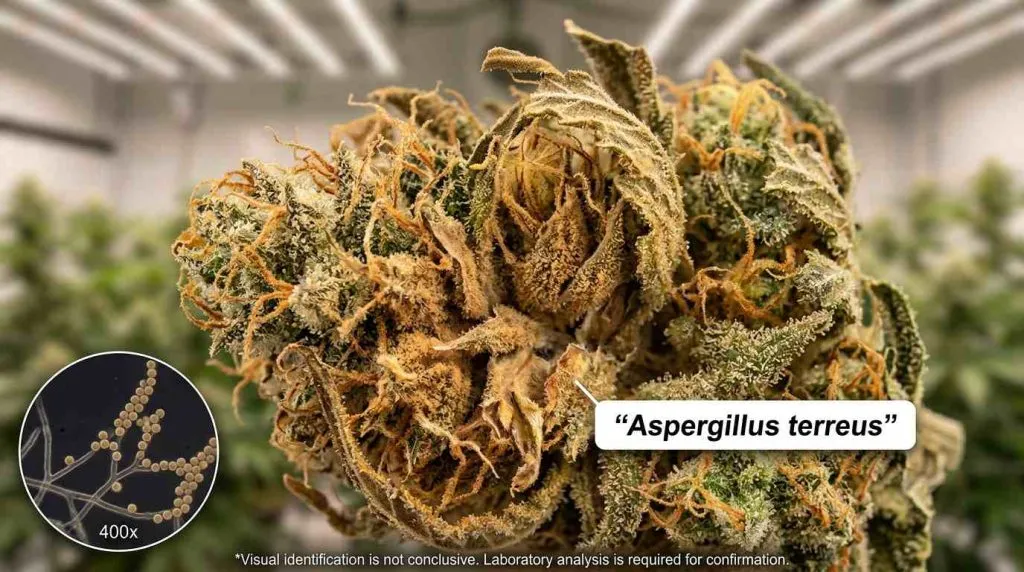
Aspergillus terreus may produce tan, cinnamon, light brown, or yellow-brown growth. These colors can blend into mature pistils, dried bracts, or naturally aging flower, making visual identification particularly difficult.
Possible signs include cinnamon-colored powder, fine brown filaments, damaged bracts, and similar discoloration appearing across several buds. Laboratory PCR or qPCR testing provides more reliable species-level detection than color or microscopy alone.
| Aspergillus species | Possible appearance | Main identification difficulty | Laboratory confirmation |
| A. flavus | Yellow-green, olive, or dusty green | Resembles other green molds | Species-specific PCR or qPCR; separate aflatoxin testing |
| A. fumigatus | Blue-green, gray-green, or smoky | Early growth may remain hidden | PCR, qPCR, or culture-based testing |
| A. niger | Dark brown, black, or soot-like | Resembles soil, debris, or dead tissue | PCR, qPCR, or interpreted fungal culture |
| A. terreus | Tan, cinnamon, or yellow-brown | Blends into mature or damaged flower | Species-specific PCR or qPCR |
General Signs of Aspergillus Mold on Cannabis
Regardless of species, common warning signs include powdery deposits, irregular fungal threads, fuzzy patches, unusual colors, soft bracts, internal tissue damage, and musty odors. Condensation inside curing containers or flower that releases a suspicious cloud of dust also requires attention.
Use bright lighting and a jeweler’s loupe or digital microscope. Healthy trichomes have defined stalks with rounded gland heads, while mold usually forms tangled filaments, web-like mats, or irregular dusty clusters.
Do not shake, squeeze, or smell suspicious flower closely. I wear gloves, isolate the material, and inspect it away from healthy plants to reduce the spread of airborne spores.
How Laboratory Testing Confirms Aspergillus
Laboratory testing is the only dependable way to confirm Aspergillus in cannabis. PCR and qPCR methods detect genetic targets associated with specific species. Culture-based tests place a prepared sample on growth media to determine whether viable fungi develop under controlled conditions.
Total yeast and mold testing measures the wider microbial population but may not identify individual Aspergillus species. Mycotoxin testing is a separate analysis that checks for compounds such as aflatoxins; it does not replace species detection.
Representative sampling matters because contamination may occur in isolated areas of a plant or harvest. One clean-looking cola cannot represent an entire crop. Follow the laboratory’s instructions for collecting, packaging, and transporting samples.
Visual inspection can alert you to possible Aspergillus mold on cannabis, but it cannot provide a final diagnosis. When contamination is unclear, keeps returning, or may affect a medically vulnerable consumer, professional laboratory testing is the safest method of confirmation.
What to Do if You Suspect Aspergillus in Your Cannabis
If you suspect Aspergillus in your cannabis, stop handling the affected plant or flower and isolate it immediately. Do not shake, trim, squeeze, or smell the material closely because disturbing it may release fungal spores into the air.
Place harvested flower or branches in a sealed bag or container labeled “do not use,” then move them away from clean cannabis. If the suspected contamination is on a living plant, isolate it in place when possible rather than carrying it through the grow room. I also separate any gloves, scissors, trays, or containers that may have touched the affected material.
Do Not Consume Suspected Moldy Cannabis
Never smoke, vape, cook with, press, wash, or extract cannabis that may contain Aspergillus mold. Heat does not provide dependable home remediation, and removing the visible patch does not make the remaining flower safe. Fungal structures may extend deeper into the bud than you can see.
Anyone with a weakened immune system, chronic respiratory condition, or existing lung disease should take particular care. Seek medical advice if exposure is followed by concerning respiratory symptoms.
Inspect the Crop and Remove Contaminated Material
Check nearby plants and buds under bright light without handling them unnecessarily. Record the affected cultivar, room location, humidity history, recent equipment failures, clone source, and growing-media batch. This information can help you identify whether the contamination came from a damp microclimate, infected plant material, or poor postharvest conditions.
Discard visibly contaminated buds, damaged tissue, and material that had direct contact with the mold. Do not compost it inside or near your cultivation area.
Clean the Grow Space and Correct the Cause
Seal waste before removing it, then clean tools, trays, glass, walls, and other nonporous surfaces with a suitable product used according to its label. Replace damp filters or porous materials that cannot be cleaned properly.
Inspect HVAC filters, drains, dehumidifiers, irrigation systems, leaks, and hidden condensation. I also review environmental records for humidity spikes and nighttime temperature drops. Once you identify the likely cause, improve airflow, reduce plant crowding, add canopy-level sensors, strengthen sanitation, or adjust drying and curing practices to prevent Aspergillus from returning.
How to Fix a Cannabis Plant With Aspergillus: Step-by-Step Guide
You cannot reliably remove Aspergillus from contaminated cannabis flowers and make them safe to consume. Once fungal growth enters a dense cola, it may extend beyond the visible area. Your goal is to stop the contamination from spreading, remove unsafe material, and protect the remaining crop.
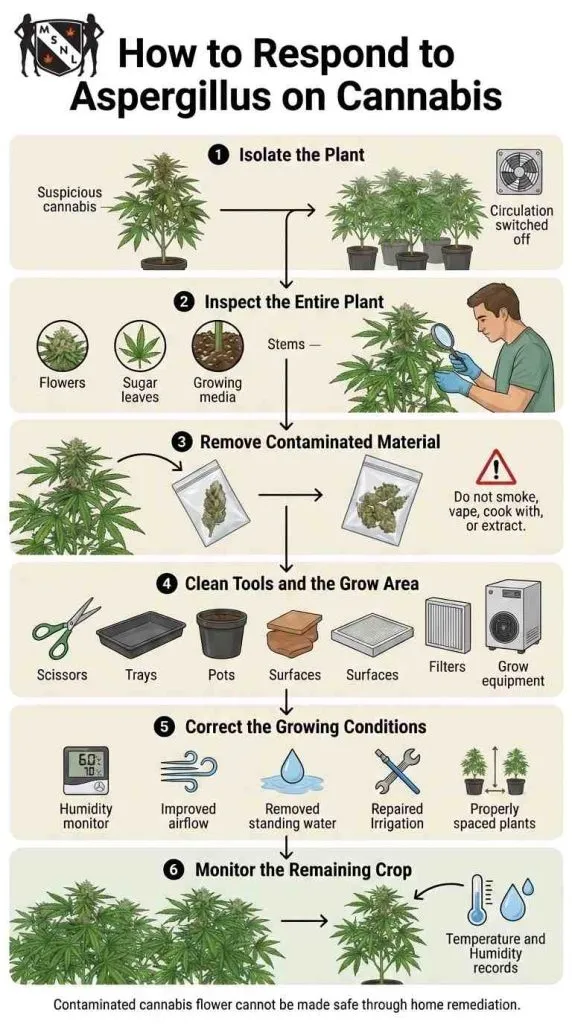
Step 1: Isolate the Plant
Turn off nearby circulation fans before moving anything. Isolate the affected plant in place when possible, as carrying it through the grow room can spread airborne spores. Keep it away from healthy plants and stop unnecessary handling.
Step 2: Inspect the Entire Plant
Wear disposable gloves and inspect the flowers, sugar leaves, stems, and growing medium under bright light. Look for powdery deposits, fuzzy threads, unusual discoloration, soft bracts, internal decay, and musty odors.
Do not shake, squeeze, or smell suspicious buds closely. Examine nearby plants for similar symptoms.
Step 3: Remove Contaminated Material
If mold is limited to leaves or nonflowering tissue, carefully remove the affected material using clean tools. Place it directly into a sealed bag.
If Aspergillus is visible inside a cola or across several flowers, discard the affected branches or entire plant. Do not cut away the visible patch and keep the rest of the bud. Never smoke, vape, cook with, or extract contaminated cannabis.
Step 4: Clean Tools and the Grow Area
Seal contaminated waste before removing it from the room. Clean shears, trays, pots, supports, floors, walls, and other nonporous surfaces with an appropriate disinfectant used according to its label.
Replace damp filters and discard porous materials that cannot be cleaned thoroughly.
Step 5: Correct the Growing Conditions
Lower excess humidity, improve airflow through the canopy, remove standing runoff, and repair leaks. Add sensors at canopy height and check for nighttime humidity spikes or condensation.
Reduce overcrowding and remove dead plant material promptly.
Step 6: Monitor the Remaining Crop
Inspect nearby plants daily and record temperature, humidity, watering, and equipment performance. I treat any new powdery growth or internal bud damage as a reason to isolate the plant immediately. Acting early gives you the best chance of protecting the unaffected portion of your crop.
How to Prevent Aspergillus in Cannabis: Step-by-Step Guide
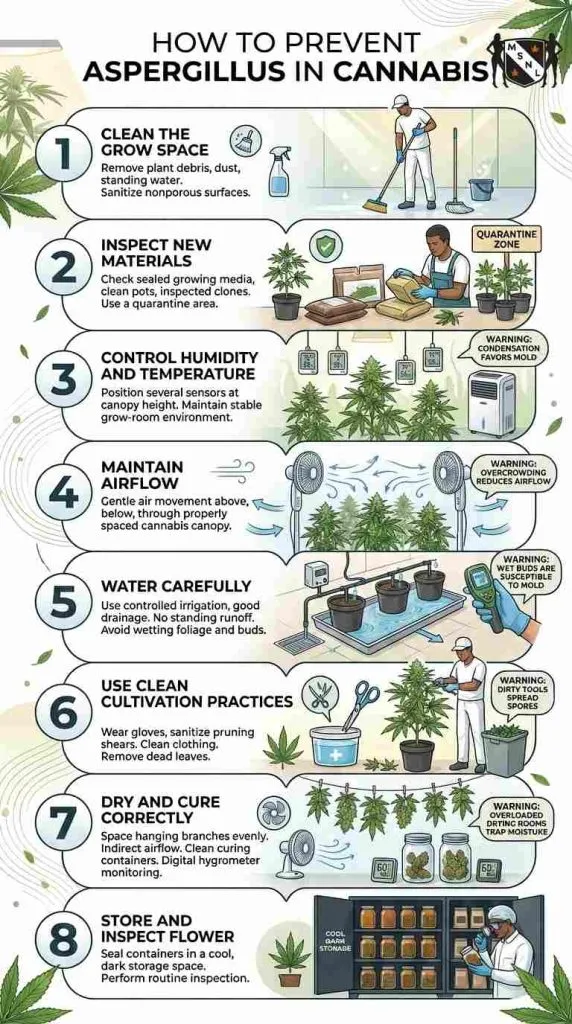
| Step | Title | Key Actions |
| Overview | Prevention Approach | Preventing Aspergillus is easier than treating contamination. Risks arise from excess moisture, stagnant air, organic debris, and poor handling. Prevention should be continuous from setup through storage. |
| Step 1 | Clean the Grow Space Before Planting | Remove debris, old media, dust, and standing water. Clean all surfaces and equipment. Pay attention to drains, HVAC filters, humidifiers, and reservoirs where moisture can accumulate. |
| Step 2 | Inspect Growing Materials and Incoming Plants | Check all materials before use. Store media properly. Quarantine new clones and inspect for damage, pests, or fungal growth. Use separate tools for quarantined plants. |
| Step 3 | Control Humidity and Temperature | Monitor temperature and humidity consistently. Use sensors at canopy height and multiple sensors in large rooms. Watch for humidity spikes after lights off and condensation risks. |
| Step 4 | Maintain Consistent Airflow | Use fans to circulate air evenly without direct force. Space plants properly and remove dead foliage. Prevent dense growth that traps moisture. Combine airflow with proper moisture control. |
| Step 5 | Water Carefully and Remove Excess Moisture | Avoid overwatering and ensure proper drainage. Remove runoff and fix leaks. Limit foliar spraying during late flowering to prevent trapped moisture in buds. |
| Step 6 | Use Clean Cultivation Practices | Maintain hygiene by washing hands and cleaning tools. Remove plant debris promptly. Avoid spreading spores through improper handling. Work from healthy plants to questionable ones. |
| Step 7 | Dry and Cure Cannabis Correctly | Dry plants in a controlled environment with proper spacing and airflow. Avoid overcrowding. Begin curing only after even drying. Monitor humidity in containers and watch for signs of excess moisture. |
| Step 8 | Store and Inspect the Finished Flower | Learning how to keep weed fresh for longer will help you choose suitable containers and avoid the temperature and humidity fluctuations that can increase mold risk during storage. Regularly inspect for mold signs and isolate any suspicious material. |
Stable environmental conditions are central to Aspergillus prevention. Growing indoor cannabis seeds gives you greater control over humidity, temperature, airflow, and plant spacing, although the grow room still needs to be monitored carefully.
Conclusion
Aspergillus mold on cannabis is preventable when you understand how contamination develops and manage each stage of cultivation. Spores exist in soil, dust, air, and organic materials, but spread more easily with high humidity, excess moisture, poor airflow, contaminated equipment, and weak postharvest practices.
Treat prevention as an ongoing process. Keep grow spaces clean, inspect clones and materials, monitor canopy conditions, and remove standing water or dead plant matter. Maintain these practices through harvest, drying, curing, and storage, when dense flowers are vulnerable to trapped moisture.
Visual checks can reveal powdery growth, discoloration, damaged bracts, musty odors, or fine threads. However, species like A. flavus, A. fumigatus, A. niger, and A. terreus cannot be identified by color alone. PCR, qPCR, culture, and mycotoxin testing offer reliable results.
If contamination is suspected, isolate the material and avoid using it. Consistent sanitation and careful handling support safer, higher-quality cannabis.
Frequently Asked Questions About Aspergillus in Cannabis
What does Aspergillus mold look like on cannabis?
Aspergillus mold on cannabis may appear as powdery, dusty, fuzzy, or thread-like growth. Depending on the species, it can look yellow-green, blue-green, gray, black, tan, or brown. However, color alone cannot confirm Aspergillus because other molds, plant damage, and debris can look similar. Laboratory testing is required for accurate identification.
Can you smoke cannabis contaminated with Aspergillus?
No. You should not smoke, vape, cook with, press, or extract cannabis that may contain Aspergillus. Removing the visible mold does not make the remaining flower safe because fungal growth may extend deeper into the bud. Heat is also not a dependable home method for removing spores or harmful fungal compounds.
What humidity causes Aspergillus in cannabis?
Aspergillus becomes more likely when cannabis remains in a warm, humid environment with poor airflow. There is no single humidity level that guarantees contamination because temperature, flower density, surface moisture, and exposure time also matter. Monitor humidity at canopy level, prevent condensation, and avoid allowing moisture to remain trapped inside dense colas.
How can you prevent Aspergillus during drying and curing?
Prepare and clean the drying room before harvest, space branches properly, and maintain gentle, indirect airflow. Avoid piling wet flower in bins or overcrowding drying racks. Only begin curing once the buds have dried evenly, and monitor the humidity inside each container. Condensation, unusually soft flower, or a rapid humidity increase means the buds need further drying.
Can laboratory testing identify Aspergillus in cannabis?
Yes. PCR and qPCR tests can detect genetic material from specific species such as Aspergillus flavus, A. fumigatus, A. niger, and A. terreus. Culture-based testing checks whether fungi grow under controlled laboratory conditions, while mycotoxin testing looks for harmful compounds such as aflatoxins. Representative sampling is important because one clean bud may not reflect the condition of an entire crop.


