




Keeping weed fresh starts with protecting your cannabis from the conditions that cause it to deteriorate after harvest. Heat, light, oxygen, and excess moisture can affect the potency, aroma, and texture of your buds, even after proper drying and curing. An airtight glass jar stored somewhere cool and dark is one of the most reliable ways to preserve flower quality.
Whether you're storing a small stash or several batches from your latest harvest, knowing how to keep weed fresh can help you avoid unnecessary quality loss. This guide covers the best storage methods, ideal temperature and humidity levels, and practical tips for preserving cannabis over time.
Key Takeaways
- Start with properly dried and cured buds. Storing cannabis before it reaches suitable moisture levels increases the risk of fungal growth.
- Choose the right container. Airtight glass jars are ideal for everyday storage, while Mylar bags and vacuum sealing offer alternatives.
- Maintain suitable storage conditions. Aim for approximately 60–70°F (15.5–21°C) and 58–62% relative humidity for properly dried flower.
- Take extra care with long-term storage. Limit air exposure, avoid crushing buds, and protect cold containers from condensation when opening.
- Inspect your cannabis regularly. Check for unusual moisture, changes in aroma, and visible contamination to identify storage problems early.
- Why is Proper Cannabis Storage Important?
- Best Ways to Keep Weed Fresh: Step-by-Step Guide
- Best Containers for Keeping Weed Fresh
- Ideal Temperature and Humidity for Cannabis Storage
- How Long Does Weed Stay Fresh?
- How to Keep Weed Fresh for Long-Term Storage
- How to Keep Pre-Rolled Joints and Blunts Fresh
- Common Weed Storage Mistakes to Avoid
- Conclusion
- Frequently Asked Questions
- References
Why is Proper Cannabis Storage Important?
Proper cannabis storage helps preserve the potency, aroma, and quality of your buds after drying and curing. Heat, light, and oxygen can accelerate the breakdown of cannabinoids, while volatile terpenes gradually escape, reducing the distinctive scent of each strain.
THC can degrade into cannabinol (CBN) over time. A 2019 study published in Forensic Science International found that temperature, light exposure, and storage duration significantly influence this process.
Moisture also matters. Excess humidity encourages mold growth, while overly dry flower becomes brittle and loses its desirable texture.
Grower tip: Pay attention to changes in bud aroma and texture when assessing stored cannabis. For more guidance, learn how to identify weed that has expired.
Best Ways to Keep Weed Fresh: Step-by-Step Guide
The best way to keep weed fresh is to store properly prepared buds in an airtight container, away from heat and sunlight. Follow these five steps to protect your cannabis after harvest.
Step 1 — Start With Properly Dried and Cured Cannabis
Before storage, your buds must complete the drying process and curing stage.
Drying removes excess moisture, while curing allows the remaining moisture to distribute more evenly throughout the flower. Sealing damp buds can encourage fungal growth, while excessively dry flowers become brittle and lose their desirable texture.
Check that your cannabis has reached suitable moisture levels before storage. Humidity packs cannot replace proper drying or curing.
Step 2 — Choose an Airtight Container
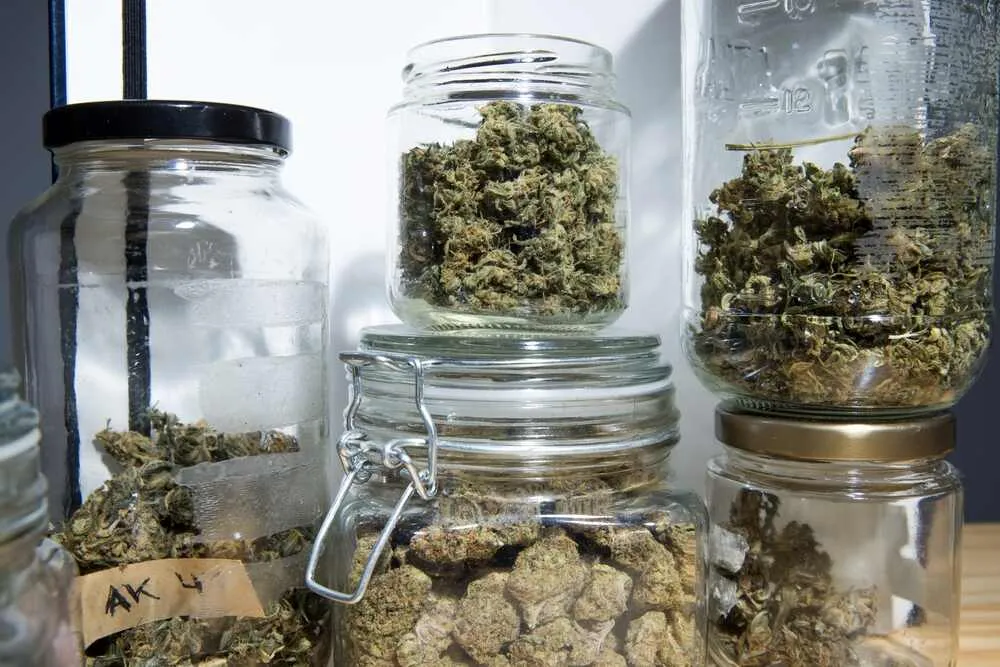
Choose a clean, dry Mason jar with an intact seal. Select a size that accommodates your buds without compression or excessive empty space.
Choose a clean, dry jar that accommodates your buds without crushing them. Avoid oversized containers, which leave unnecessary air space around the flower.
Amber glass provides additional light protection, although clear glass works well when kept in darkness.
Grower tip: I recommend checking the rubber seal before using an older Mason jar. A damaged or loose gasket can allow unwanted air exchange, even when the lid appears closed.
Step 3 — Find a Cool, Dark Storage Location
Store your sealed jars in a cupboard, drawer, or cabinet where temperatures remain relatively stable.
Avoid direct sunlight, nearby heat sources, and areas experiencing frequent temperature changes.
A cool indoor location is generally suitable for everyday storage. You do not need refrigeration to maintain good storage conditions.
Step 4 — Maintain Stable Humidity
Select a 58% or 62% two-way humidity pack appropriate for your quantity of flower. Monitor the jar with a small digital hygrometer and replace the pack according to the manufacturer's instructions.
A two-way humidity pack can help maintain this range, while a small hygrometer allows you to check the humidity inside your container.
| Storage tool | How to use it |
| Two-way humidity pack | Select a 58% or 62% RH pack sized for the quantity of flower |
| Digital hygrometer | Place inside the jar to monitor relative humidity |
| Replacement humidity pack | Change when the manufacturer indicates it is no longer effective |
Follow the pack manufacturer's instructions and avoid homemade moisture sources such as bread or fruit peel, which can introduce contamination.
Step 5 — Limit Air Exposure and Check Your Buds
Keep storage jars closed between uses to reduce unnecessary oxygen exposure. If you access your cannabis regularly, transfer a small quantity into a separate container for everyday use.
Label each batch with its strain name and storage date to make tracking easier.
Periodically inspect your buds for unexpected dampness, unusual smells, or visible fungal growth. Handle the flowers gently to avoid breaking the delicate, resin-rich trichomes covering their surfaces.

Best Containers for Keeping Weed Fresh
The best container for keeping weed fresh depends on storage duration, available space, and how well the packaging protects cannabis flower from external conditions.
A 2024 study published in Analytical and Bioanalytical Chemistry compared cannabis stored in brown glass bottles, plastic containers, and open trays. Glass better retained the original profile of volatile compounds under the conditions tested, although cannabinoid changes still occurred.
| Storage container | Best suited for | Main limitation |
| Airtight glass jar | Everyday storage | Clear glass provides limited light protection |
| Amber glass jar | Storage requiring additional light protection | Higher purchase cost |
| Mylar bag | Compact storage and transport | Performance depends on material and seal quality |
| Vacuum-sealed bag | Extended storage with reduced air exposure | Pressure can compress delicate flowers |
| Cannabis humidor | Dedicated storage with humidity management | Requires maintenance and monitoring |
| Ordinary plastic bag | Temporary storage | Limited protection against air exchange |
Grower tip: When choosing Mylar bags, check the material thickness and sealing method. A poorly sealed bag can compromise storage conditions regardless of its light-blocking properties.
Ideal Temperature and Humidity for Cannabis Storage
Cannabis storage conditions influence the rate of chemical degradation and the physical condition of dried flower. Temperature and moisture should be assessed separately because they affect cannabis in different ways.
| Storage factor | Recommended range | Why it matters |
| Temperature | 60–70°F (15.5–21°C) | A practical household range that limits exposure to excessive heat |
| Relative humidity (RH) | Approximately 58–62% | Helps maintain moisture balance in properly dried buds |
| Water activity (aw) | 0.55–0.65 | Indicates moisture available within the flower |
A 2022 study by Meija et al. examined 14 cannabinoids across temperatures from −20°C to 40°C, demonstrating that degradation rates depend on temperature. The recommended household range is therefore a practical guideline, not an absolute preservation threshold.
Humidity also requires careful measurement. ASTM D8197-22 specifies a water activity of 0.55–0.65 for dried cannabis flower.
Unlike a hygrometer, which measures humidity in the surrounding air, a water-activity meter assesses moisture availability within the product. These values are related at equilibrium, but a jar humidity reading alone cannot confirm product safety.
How Long Does Weed Stay Fresh?
Properly stored cannabis can retain desirable qualities for several months, although there is no guaranteed freshness period. Shelf life varies according to the flower's initial condition, chemical composition, and storage history.
Importantly, cannabis can look intact even after its cannabinoid and terpene profiles have changed. Appearance alone cannot establish how much THC remains, and laboratory testing is necessary to determine its current potency accurately.
For a detailed explanation of shelf life, deterioration, and warning signs, read our guide on whether weed expires.

How to Keep Weed Fresh for Long-Term Storage
For extended storage, the main consideration is selecting a method that limits gradual deterioration without damaging the flower. Vacuum sealing and controlled cold storage offer different benefits, depending on how long you intend to preserve your harvest. Have a look at our guide to keeping weed potent.
Is Vacuum Sealing Weed a Good Idea?
Vacuum sealing is useful for long-term cannabis storage because it removes much of the air from the packaging, reducing the oxygen available for oxidation.
However, excessive suction can flatten buds and damage delicate trichomes.
For better results:
- Use food-safe vacuum bags with a reliable heat seal.
- Select a gentle vacuum setting to avoid crushing flowers.
- Check the seal for leaks before putting the package away.
- Keep sealed portions separate so you only open what you need.
Grower tip: I recommend using smaller vacuum-sealed portions rather than one large package. This allows you to access individual batches without opening your entire supply.
Should You Refrigerate or Freeze Weed?
Cold storage can slow cannabinoid degradation, but refrigeration and freezing cannabis require careful handling.
Household refrigerators can expose poorly sealed cannabis to moisture and surrounding food smells. Freezing also makes trichomes more vulnerable to breaking away during handling.
If you choose either method, use airtight, moisture-resistant packaging. When removing cannabis from cold storage, allow the unopened container to reach room temperature before breaking the seal. This helps prevent condensation from forming on the cold buds.
How to Keep Pre-Rolled Joints and Blunts Fresh
Pre-rolled joints and blunts need storage that protects their shape and prevents the wrapping material from becoming excessively dry or damp.
A rigid pre-roll tube or case with individual compartments is useful for preventing bent joints, crushed filters, and damaged wraps.
Blunts made with tobacco-based wraps may have different moisture requirements from joints made with conventional rolling papers.
Grower tip: Avoid packing pre-rolls tightly together. Leaving enough room to remove each roll without squeezing it helps prevent loose ends and damaged filters.
Common Weed Storage Mistakes to Avoid
Even suitable storage equipment can cause problems when used incorrectly. The following mistakes are worth avoiding, particularly when storing several harvested batches.
| Storage mistake | Potential problem | What to do instead |
| Using containers with cleaning residue | Residual chemicals can contaminate the flower | Rinse thoroughly and allow containers to dry completely |
| Storing cannabis near perfumes or strong-smelling products | Unwanted scents may affect the flower's aroma | Choose a location away from scented products |
| Using conventional cigar humidors | Cedar interiors and high humidity settings may be unsuitable | Use a cannabis-specific humidor |
| Relying on inaccurate humidity readings | Incorrect measurements can hide unsuitable conditions | Check hygrometer accuracy periodically |
One mistake that deserves particular attention is attempting to salvage contaminated flower.
If you find suspected fungal growth, isolate the affected batch and avoid consuming it. Removing visible patches does not reliably eliminate contamination.
For detailed identification advice, read our guide explaining what contaminated cannabis looks like and how to spot fungal growth.
Conclusion
Knowing how to keep weed fresh helps you protect the quality of your harvest well beyond the curing stage. Choose storage conditions that suit your needs, check your buds periodically, and avoid unnecessary handling. Good storage habits help you get more from the time and effort invested in your cannabis.
Frequently Asked Questions
Can You Keep Weed Fresh Without a Humidity Pack?
Yes. A humidity pack is optional when cannabis has been properly dried and the storage environment remains stable. However, if your buds become brittle or the humidity fluctuates, a two-way pack can help maintain a more consistent moisture level.
Can You Make Dry Weed Fresh Again?
Overly dry cannabis can regain some moisture through controlled rehydration, improving its texture and making buds less brittle. However, lost terpenes and degraded cannabinoids cannot be restored. Avoid adding water directly, as uneven moisture distribution can encourage fungal growth.
Does Grinding Weed Make It Lose Freshness Faster?
Yes. Grinding increases the surface area exposed to oxygen and releases aromatic compounds from damaged plant tissue and trichomes. Whole buds generally retain their original characteristics better during extended storage. I recommend grinding only what you intend to use.
Should You Burp Cannabis Jars After Curing?
No. Once cannabis has completed curing and reached suitable moisture levels, routine burping is unnecessary. Opening jars regularly is part of managing certain curing methods, not preserving finished flower. During storage, open containers only when accessing or inspecting your buds.
References
- Spadafora, N. D., et al. (2024). The influence of drying and storage conditions on the volatilome and cannabinoid content of Cannabis sativa L. inflorescences. Analytical and Bioanalytical Chemistry, 416, 3797–3809. Investigates how drying techniques and storage containers affect cannabinoids and volatile compounds in cannabis flower.
- Meija, J., McRae, G., Miles, C. O., & Melanson, J. E. (2022). Thermal stability of cannabinoids in dried cannabis: A kinetic study. Analytical and Bioanalytical Chemistry, 414, 377–384. Examines the influence of storage temperature on cannabinoid degradation over periods of up to one year.
- Zamengo, L., et al. (2019). The role of time and storage conditions on the composition of hashish and marijuana samples: A four-year study. Forensic Science International, 298, 131–137. Evaluates changes in THC and CBN under different temperature and light conditions over four years.

