




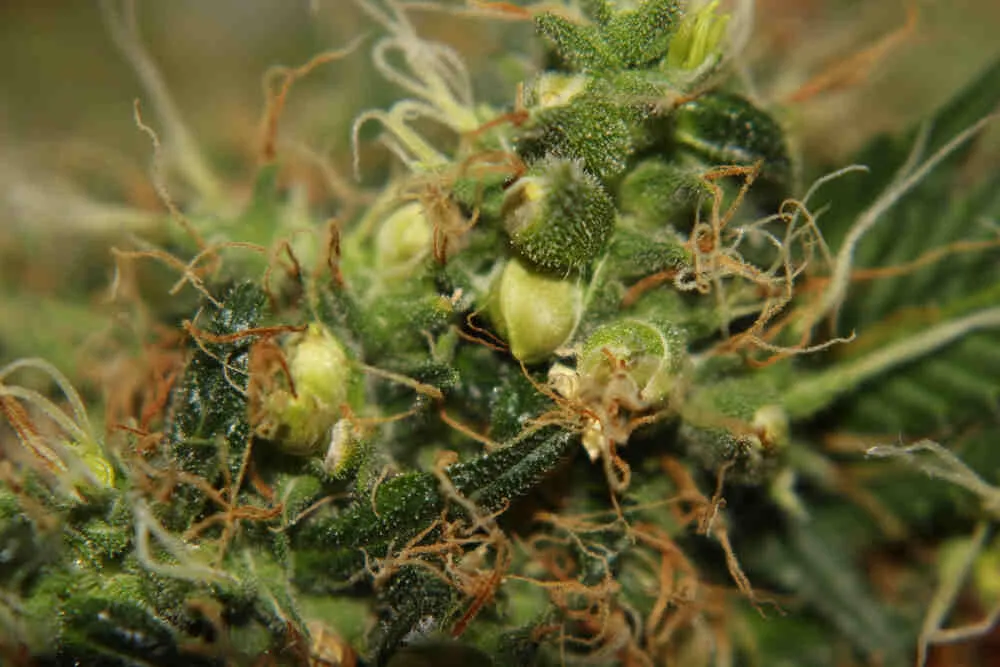
The early signs of a hermie plant are usually round pollen sacs or yellow, banana-shaped anthers, known as nanners, appearing alongside female flowers. A hermie cannabis plant can still produce buds, but once pollen is released, those flowers may become seeded and nearby females can be affected too.
The problem is that some normal female structures can look surprisingly similar to male growth, especially during early flowering. Swollen bracts, stipules, and fresh flower growth are often mistaken for signs that a plant has turned hermie.
In this guide, I'll show you how to identify a hermie cannabis plant early, what commonly causes intersex growth, what to do if you find it, and how to reduce the risk in future grows.
Key Takeaways
- The main early signs of a hermie plant are round pollen sacs and exposed yellow or pale-green nanners.
- Female bracts, stigmas, and stipules are normal growth and can easily be mistaken for male structures.
- Hermie traits usually become visible once flowering begins, although they can also appear later in bloom.
- Genetics and severe or repeated environmental stress can both contribute to intersex growth.
- Catching hermie growth early gives you a better chance of limiting unwanted pollination and protecting the rest of the crop.
- What is a Hermie Cannabis Plant?
- What Are the Early Signs of a Hermie Plant?
- When Do Hermie Signs Appear?
- What Can Be Mistaken for a Hermie Plant?
- What Causes a Cannabis Plant to Turn Hermie?
- What Should You Do If You Find a Hermie Plant?
- Can a Hermie Plant Pollinate Itself?
- How to Reduce the Risk of Cannabis Plants Turning Hermie
- Do Hermie Plants Still Produce Buds?
- Conclusion
- Frequently Asked Questions
What is a Hermie Cannabis Plant?
A hermie cannabis plant is a plant that develops both female flowers and pollen-producing male structures on the same plant. Growers will often call this a “hermie,” while the more technical terms are hermaphroditic or intersex expression.
A normal female cannabis plant produces flowers with bracts and visible stigmas, while a male develops pollen-producing flowers instead of buds. If you're still learning the difference, knowing how to tell if a cannabis plant is male or female before flowering makes spotting unusual sex expression much easier. A hermie sits somewhere in between. It may produce normal female flowers but also develop round pollen sacs or exposed yellow anthers, often called nanners.
That distinction matters because a hermie can release pollen and fertilize its own flowers or nearby female plants. Once pollination happens, the plant starts putting more energy into seed production rather than continuing to develop seedless flowers.
For growers, the important point is simple: a hermie is not the same as a male plant. It is a female-flowering plant that has also developed male reproductive structures.
What Are the Early Signs of a Hermie Plant?
The earliest signs of a hermie plant are round pollen sacs or yellow, banana-shaped anthers developing alongside female flowers. Pollen sacs usually appear around the nodes or flower sites, while nanners tend to push directly out of developing buds. Both are pollen-producing structures and should be taken seriously if you are trying to keep a crop seedless.
The tricky part for new growers is that early male structures can be small and easy to confuse with normal female growth. This is why knowing exactly what you are looking for makes such a difference.
Round Pollen Sacs
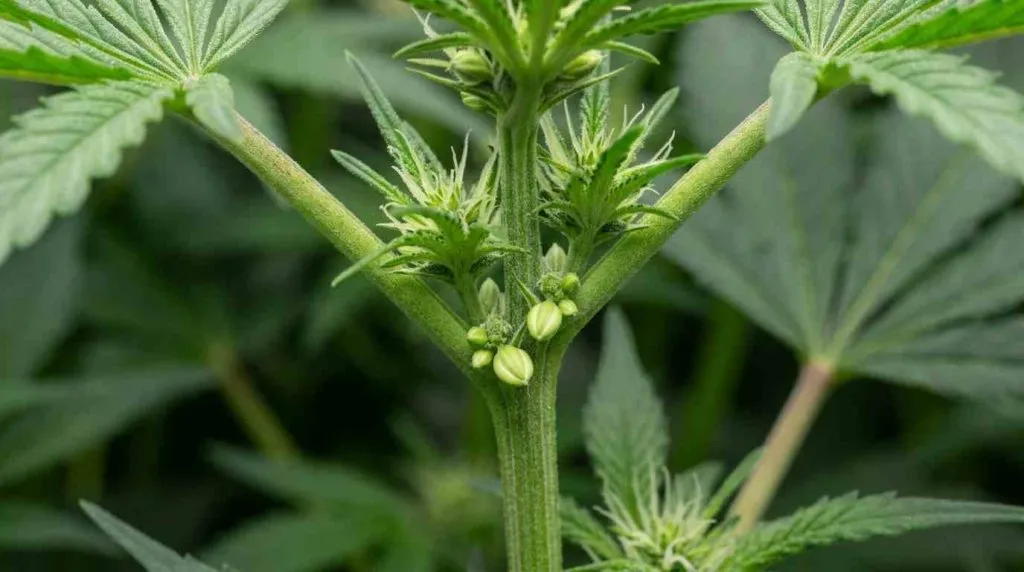
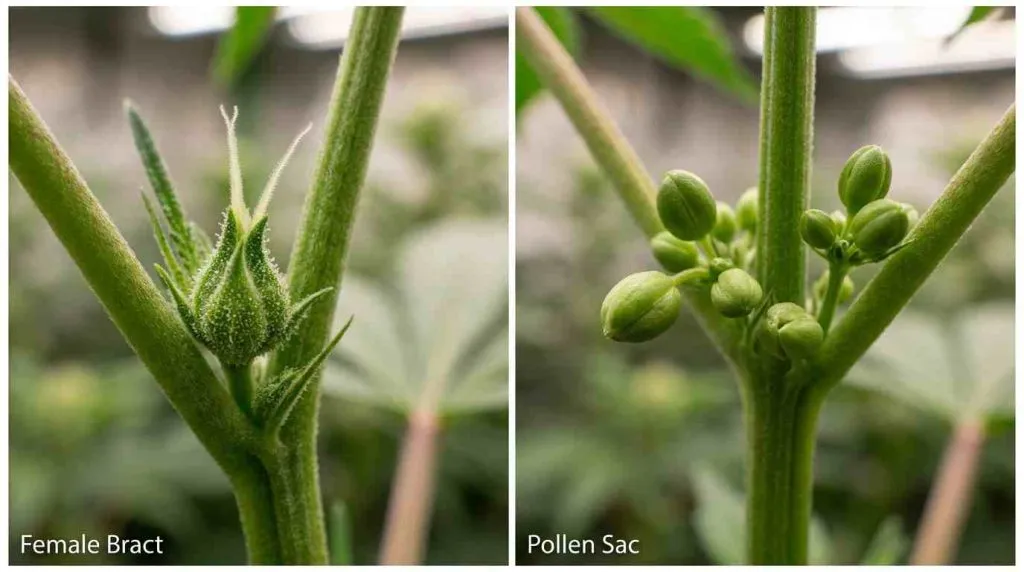
Pollen sacs are one of the easiest early signs of a hermie cannabis plant to recognize once you know their shape.
They usually start as small, smooth structures that are round or slightly oval. You will often find them around the nodes, where branches meet the main stem. If you're not familiar with this part of the plant, our guide to cannabis nodes and internodes explains exactly where to look. Unlike female flowers, pollen sacs do not have white stigmas growing from them. Understanding the difference between cannabis pistils and stigmas can make this distinction much easier for new growers.
Early on, you may only see one or two. As they mature, more can appear and form small clusters. If left long enough, the sacs open and release pollen.
Don't confuse a single rounded structure with a confirmed hermie without taking a closer look. Female bracts can swell as flowers develop, and from the wrong angle they can look surprisingly similar.
Yellow Nanners
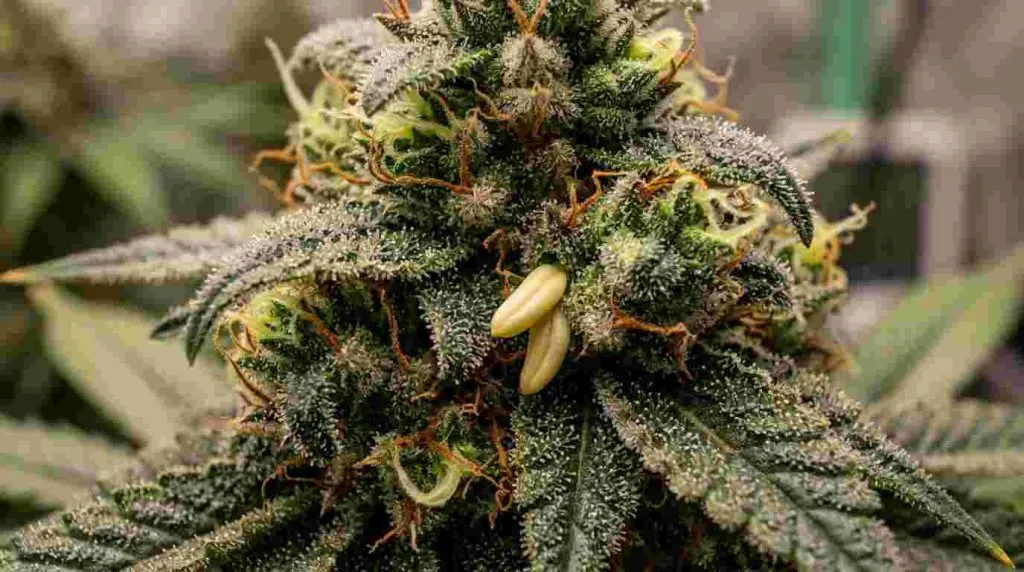
The other major sign to watch for is a nanner, short for banana.
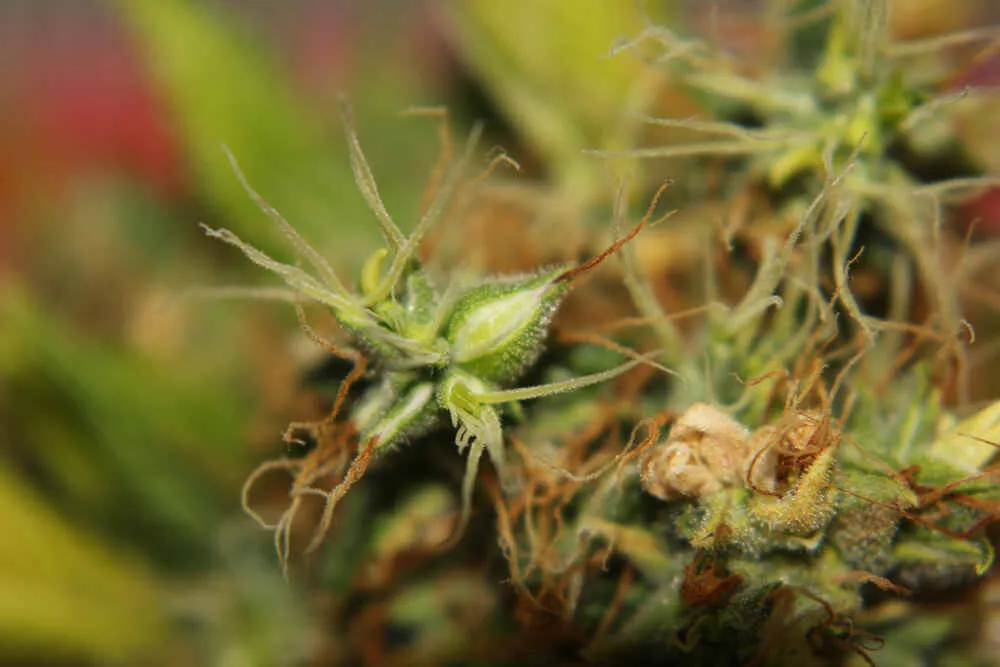
These are exposed anthers that usually appear yellow, cream, or pale green and have the thin, curved shape that gives them their nickname. Unlike a normal pollen sac, which holds the pollen-bearing structures inside, a nanner is already exposed.
Nanners normally grow directly from the bud rather than hanging from the plant like a cluster of round pollen sacs. They can appear individually or several at a time, and they are often easier to miss once flowers become dense.
Because the anther is exposed, a visible nanner may already be capable of releasing pollen. Don't assume you have several days to deal with it.
Where to Check for Early Hermie Growth
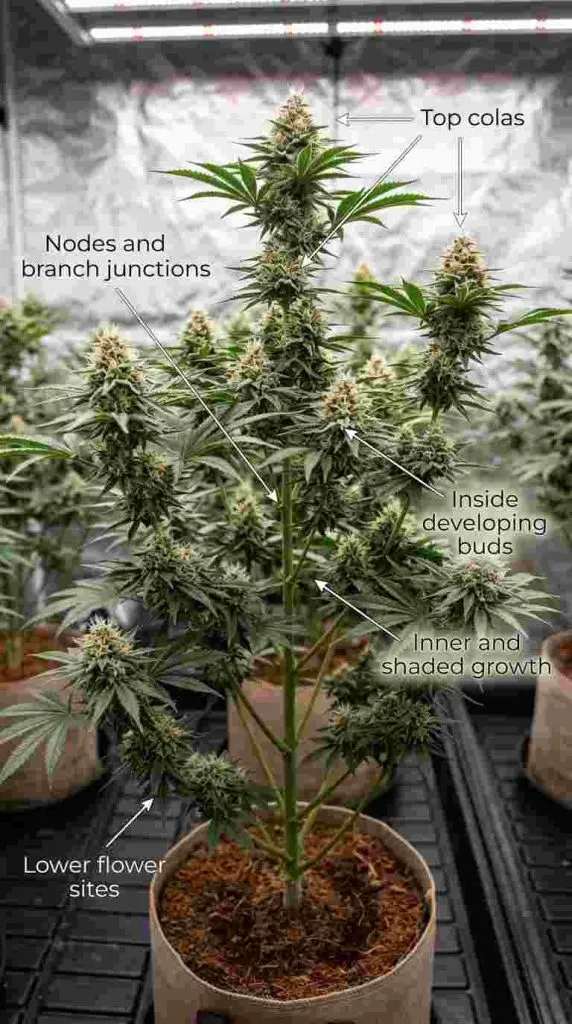
Start your inspection at the nodes and branch junctions, then work your way around the lower and inner flower sites. These areas are easy to overlook, especially once the canopy fills out.
You should also look closely inside developing buds for yellow nanners. Don't just check the biggest top colas. Small pollen-producing structures can appear lower down or in shaded parts of the plant where they are harder to spot.
Grower Tip: Use good lighting and inspect each flowering plant from more than one angle. I like to start low and work upward, checking the nodes first before looking through the buds. A small pollen sac tucked behind a branch is much easier to catch when you follow the same inspection pattern every time.
When Do Hermie Signs Appear?
During the vegetative stage, there is usually no reliable visual way to tell that a cannabis plant will later develop intersex flowers. A plant can look completely healthy through veg and still show male reproductive growth once flowering begins.
The first dependable signs normally appear when the plant starts producing reproductive structures. That is why the transition into flower is the point where growers need to pay closer attention. Once sex expression begins, any unexpected male growth becomes much easier to identify.
Early Flower
Early flower is the most important inspection period because this is when pollen sacs can begin to show around the nodes and developing flower sites.
At this stage, the structures are often small, so missing them is easy if plants are only checked from above. A plant that develops several sacs early in flowering has more time to release pollen and affect the rest of the crop, which makes early detection especially important.
Grower Tip: Check flowering plants regularly during the first few weeks after the light cycle changes. Catching a problem at this stage gives you far more control than finding it after pollen has already been released.
Mid to Late Flower
Hermie signs can also appear later, particularly as buds become larger and denser. This is when nanners are more likely to show from inside the flowers.
Do not stop checking plants just because they looked clean earlier in bloom. A plant can develop intersex growth later in the cycle, so inspections should continue right up to harvest.
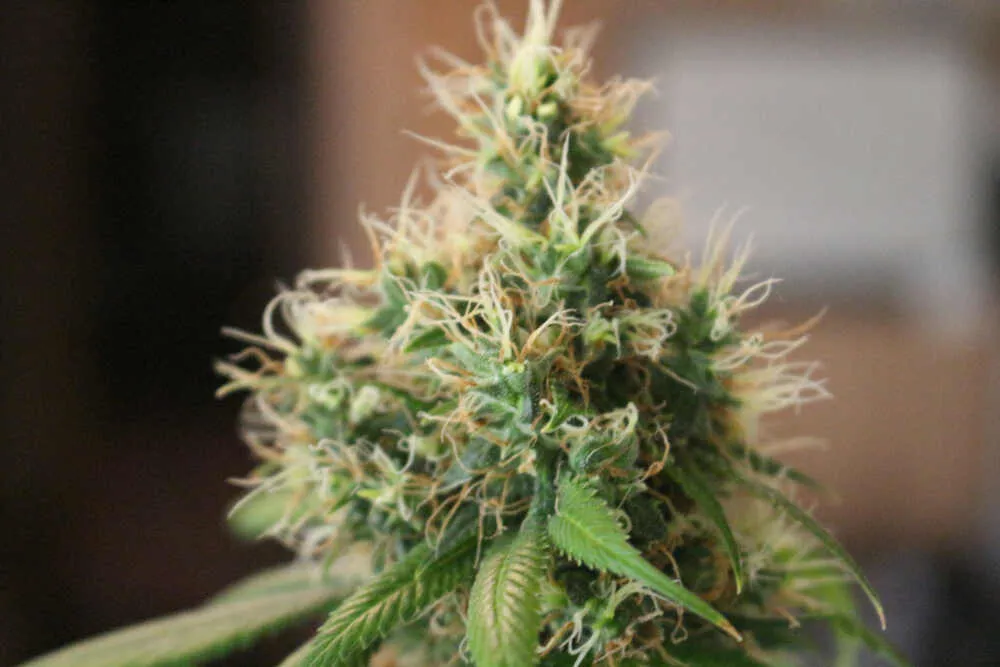
What Can Be Mistaken for a Hermie Plant?
Not every unusual-looking growth is a sign of hermaphroditism. New growers often mistake normal female flower structures for male growth, especially during early flowering when everything is still small.
Swollen Female Bracts
A swollen female bract can look surprisingly similar to an immature pollen sac at first glance. Both can appear as small, rounded structures around the nodes and flower sites.
The difference is usually in the shape and what is growing from it. Female bracts tend to be more pointed or teardrop-shaped, and they often have one or two stigmas emerging from them. Pollen sacs are smoother and more rounded, with no stigmas.
A swollen bract on its own is not evidence that a plant has turned hermie. Look at the surrounding growth before making a call.
Stigmas and Stipules
The fine white hairs growing from female flowers are stigmas and are a normal part of female flower development. For a closer look at how these structures fit together, see our guide to cannabis bud anatomy.
Stipules can also cause confusion. These are the thin, pointed green growths that appear around the nodes. They are completely normal and can be present on both male and female plants.
Neither stigmas nor stipules indicate hermaphroditism by themselves.
| Growth | Main Feature | Hermie Sign? |
| Pollen sac | Smooth, round structure with no stigmas | Yes |
| Nanner | Thin, yellow or pale-green exposed anther | Yes |
| Female bract | Pointed or teardrop-shaped, often with stigmas | No |
| Stipule | Thin, pointed green growth at the node | No |
Grower Tip: If you are unsure, do not remove the plant straight away. Give the structure a closer look under good light and compare its shape with nearby female growth before deciding what it is.
What Causes a Cannabis Plant to Turn Hermie?
A cannabis plant can develop hermaphroditic traits because of a combination of genetic susceptibility and environmental stress. We cover these triggers in more detail in our guide to what causes a cannabis plant to hermie. Some plants are naturally more prone to intersex expression, while others may only show it after being pushed too hard during flowering.
Stress does not automatically make a cannabis plant turn hermie. Two plants can experience the same problem and respond differently, which is why genetics and growing conditions both matter.
Research supports the idea that hermaphroditic expression in cannabis is not caused by one factor alone. A 2026 review in Plants found that cannabis sex expression is influenced by a combination of genetics, hormones, developmental stage, and environmental conditions. The researchers also identified lighting irregularities, disruption of the dark period, temperature changes, and other environmental stresses as factors associated with unstable sex expression. Read the research.
Genetics
Some cultivars and breeding lines are more likely to develop intersex flowers than others. If that tendency is already present in the genetics, environmental stress can make it more likely to show during flowering.
This is one reason experienced growers pay attention to how consistently a cultivar performs across several grows rather than judging it from a single plant.
Light and Environmental Stress
For photoperiod cannabis, interruptions to the dark period are one of the main environmental problems to avoid during flowering. Following a consistent cannabis light schedule helps prevent unnecessary changes during this stage. Light leaks, timers switching on at the wrong time, or repeatedly changing the light schedule can interfere with normal flowering.
Extreme heat can also place plants under unnecessary stress. The same applies to major swings in temperature or humidity, particularly when conditions change repeatedly rather than for a short period.
Root, Water and Physical Stress
Problems below the soil line can put just as much pressure on a plant as poor conditions above it. Severe overwatering, prolonged underwatering, damaged roots, and extreme nutrient problems can all place a plant under significant stress and may contribute to intersex expression in susceptible plants.
Physical damage matters too. Training methods such as topping, super cropping, and heavy defoliation can be useful when timed correctly, but high-stress autoflower cannabis training should be used carefully once flowering is underway.
Grower Tip: Don't panic over one hot day or a missed watering. The bigger concern is severe or repeated stress, especially during flowering. Fix problems early and aim to keep conditions as stable as possible.
Late Flowering
Some cannabis plants may produce a small number of anthers very late in flower as they approach the end of their life cycle. This can happen even when the plant has grown normally up to that point.
Late-flower intersex growth is different from a plant producing large numbers of male flowers early in bloom, so timing should always be considered when assessing what is happening.
What Should You Do If You Find a Hermie Plant?
What you do next depends on how early the male growth appears, how much of it there is, and whether pollen has already been released. A plant showing multiple pollen sacs early in flower needs a different response from one showing a single nanner a few days before harvest.
The main goal is to limit the chance of pollen reaching the rest of the crop.
If You Find Pollen Sacs Early
Multiple pollen sacs appearing early in flower present the highest risk because they have plenty of time to mature, open, and spread pollen.
If a plant is heavily affected, the safest option is usually to isolate or remove it from the grow area. Be careful when moving it. Fans and other airflow can carry loose pollen around the room, so avoid shaking branches or handling mature sacs unnecessarily.
If only a very small number of immature sacs are present, some growers remove them and monitor the plant closely. This takes regular checking, and there is always a chance that more will develop.
If You Find One or Two Nanners Late
Finding an isolated nanner close to harvest does not always mean the entire plant has to come down immediately.
If harvest is near, you may choose to carefully remove the affected growth and keep a close eye on the surrounding buds. The risk is still there, and more nanners can appear, so this only makes sense if you are prepared to inspect the plant frequently.
Grower Tip: If you remove a nanner, work carefully and avoid brushing it across nearby flowers. Treat any exposed pollen-bearing structure as if it may already be capable of releasing pollen.
If Pollen Has Already Been Released
Once a pollen sac has opened, assume nearby female flowers may have been exposed. Inspect the rest of the crop over the following weeks for swelling bracts and other signs that cannabis buds have been pollinated.
At this point, removing the original source can prevent further pollen release, but it cannot undo pollination that has already happened.
| What You Find | Recommended Action |
| Multiple pollen sacs early in flower | Isolate or remove the plant where practical |
| One or two late nanners | Carefully remove and monitor closely |
| Nanners repeatedly returning | Consider removing the plant |
| Open pollen sacs | Assume pollen may have spread and inspect nearby plants |
| Developing seeds | Pollination has likely already occurred |
Can a Hermie Plant Pollinate Itself?
Yes. If a hermie cannabis plant produces viable pollen, it can fertilize flowers on the same plant. If you want to understand how cannabis pollen behaves in more detail, our guide to collecting, storing, and using cannabis pollen covers the subject in depth. This is known as self-pollination, and it can lead to seeds developing within the buds.
Research has confirmed that pollen produced by hermaphroditic cannabis flowers can be viable. In a study published in Frontiers in Plant Science, researchers observed pollen germination from hermaphroditic flowers and confirmed that the pollen was capable of fertilizing female flowers and producing seeds. Read the research.
The pollen does not necessarily stay on one plant either. It can also reach nearby females, especially in an indoor grow where circulating fans move air around the room. Outdoors, wind can carry pollen away from the original plant and increase the area at risk.
How likely pollination is depends partly on distance and airflow. A female growing directly beside a pollen-producing plant is at greater risk than one farther away, while strong air movement can move pollen through a grow space surprisingly quickly.
How to Reduce the Risk of Cannabis Plants Turning Hermie
You cannot completely prevent intersex growth, but stable genetics and consistent growing conditions can reduce the risk.
Start With Stable Genetics
Choose well-selected seeds from reputable breeders that test their lines for consistent sex expression. Understanding the differences between feminized, regular, and autoflower cannabis seeds can also help you choose genetics that suit the way you want to grow. Genetics are not a guarantee, but stable breeding stock gives growers a better starting point.
Keep Flowering Conditions Stable
During flowering, keep the dark period uninterrupted and check timers, tent seams, and equipment lights for leaks. Avoid large swings in temperature, humidity, and watering.
Avoid Severe Stress
Complete heavy training before flowering where possible. Topping, super cropping, aggressive defoliation, and branch damage can place unnecessary stress on plants if carried out too late or too heavily.
Inspect Plants Regularly
Continue checking plants throughout flowering so any intersex growth is caught early.
Grower Tip: Keep a basic grow log covering temperature, humidity, watering, feeding, and training. If the same cultivar repeatedly develops intersex growth, those records can help you separate environmental problems from a possible genetic tendency.
Do Hermie Plants Still Produce Buds?
Yes. A hermie cannabis plant can continue producing female flowers and buds. The main concern is that pollination can lead to seeds developing inside those flowers.
How much this affects the finished crop depends on when pollination occurs and how widespread it is. A plant pollinated early in flowering has more time to develop mature seeds, while a small amount of late pollination may have less impact before harvest.
Pollinated flowers may also produce lower cannabinoid yields than unpollinated, seedless flowers, although the effect varies with genetics and growing conditions. A 2022 study comparing pollinated and unpollinated Cannabis sativa flowers found differences in cannabinoid composition between the two groups. Pollination did not eliminate cannabinoid production, but some cannabinoid levels and precursor compounds were reduced in pollinated flowers. The study used the hemp cultivar Finola, so the results should not be treated as identical across every cannabis cultivar. Read the research.
Grower Tip: Don't judge the whole crop simply because you find one hermie trait. What matters most is whether pollen was released, how much of the plant was affected, and how much flowering time remained.
Conclusion
Catching a hermie early is mostly about knowing your plants well enough to recognize growth that should not be there. Once flowering begins, regular inspection gives you the best chance of spotting intersex growth before pollen reaches the rest of the crop.
Genetics matter, but so does the environment you provide. Keep flowering conditions stable, avoid unnecessary stress, and don't rush to remove a plant until you've confirmed what you're looking at. A careful diagnosis is always better than mistaking normal female growth for a problem.
Frequently Asked Questions
Can Feminized Seeds Turn Hermie?
Yes. Feminized seeds are bred to produce genetically female plants, but that does not mean intersex growth is impossible. Some plants may develop pollen-producing structures if they have a genetic tendency toward hermaphroditism or experience significant environmental stress.
Good breeding and stable flowering conditions help reduce the risk, which is why seed quality still matters when growing feminized genetics.
Can Autoflower Cannabis Plants Turn Hermie?
Yes. Autoflowers can develop hermaphroditic traits just like photoperiod cannabis plants.
The main difference is that autoflowers do not depend on a change in daylight hours to begin flowering, so Because autoflowers do not rely on a shorter photoperiod to trigger flowering, dark-period interruptions are generally less significant than they are for photoperiod plants. Severe environmental or physical stress can still affect sex expression. Genetics, excessive heat, root problems, physical damage, and other severe stresses can still contribute to intersex expression.
Can You Still Harvest a Hermie Plant?
Yes, although the result depends heavily on when hermie growth appeared and whether pollination took place.
A plant that develops a small amount of intersex growth close to harvest may still produce usable buds. If pollen was released much earlier, however, expect more seed development and a greater effect on the finished flower.
Can You Smoke Buds From a Hermie Plant?
Hermie buds are still cannabis flowers, and the presence of seeds does not automatically make them unusable. The main drawback is quality. Pollinated flowers can contain seeds and may not develop in the same way as unpollinated, seedless buds.
Always assess the finished flowers for normal quality and condition rather than judging them solely because the plant showed hermie growth.
Are Seeds From a Hermie Plant Worth Growing?
Seeds produced through self-pollination can be genetically female. One controlled cannabis study found that seeds produced by hermaphroditic flowers developed into genetically female plants.
That does not automatically mean every seed from a hermie plant is a good choice for the next grow. If the parent repeatedly showed unwanted intersex expression, growers looking for predictable plants may prefer genetics that have been selected and tested for stable sex expression.
References
- Richards, C. D., Ryu, B.-R., Gim, G.-J., & Park, S.-H. (2026). Hermaphroditism in Cannabis sativa L.: Impacts, Inducers, and Industry Implications. Plants, 15(11), 1643. https://doi.org/10.3390/plants15111643
- Punja, Z. K., & Holmes, J. E. (2020). Hermaphroditism in Marijuana (Cannabis sativa L.) Inflorescences – Impact on Floral Morphology, Seed Formation, Progeny Sex Ratios, and Genetic Variation. Frontiers in Plant Science, 11, 718. https://doi.org/10.3389/fpls.2020.00718
- Todd, J., Song, H., & Van Acker, R. (2022). Does pollination alter the cannabinoid composition and yield of extracts from hemp (Cannabis sativa L. cv. Finola) flowers? Industrial Crops and Products, 183, 114989. https://doi.org/10.1016/j.indcrop.2022.114989


