




If you have spotted pollen sacs or yellow nanners on a flowering female, you may be dealing with a hermie cannabis plant. In simple terms, this means the plant has developed male reproductive structures alongside female flowers.
So, what causes a cannabis plant to hermie? The answer is usually a combination of genetics, environmental stress, and changes in sex expression during flowering. Light disruptions, extreme temperatures, root stress, nutrient problems, physical damage, pests, and late flowering can all contribute, although no single factor guarantees that a plant will hermie.
This guide explains how to identify a hermie plant, what causes hermaphroditic growth, what to do if you find male flowers, and how to reduce the risk of unwanted pollination.
Key Takeaways
- A hermie cannabis plant develops female flowers alongside male pollen-producing structures.
- Genetics can influence how likely a plant is to show unstable sex expression.
- Stress from light, heat, watering, roots, nutrients, damage, pests, or disease may increase the risk.
- Pollen sacs and nanners are the main signs to look for during flowering.
- Early detection and consistent growing conditions can help reduce the chance of unwanted pollination.
- What is a Hermie Cannabis Plant?
- What Does a Hermie Cannabis Plant Look Like?
- What Causes a Cannabis Plant to Hermie?
- What Should You Do If a Cannabis Plant Hermies?
- How to Prevent Cannabis Plants From Herming
- Can You Smoke a Hermaphrodite Cannabis Plant?
- Are Seeds From a Hermie Plant Worth Growing?
- Hermie vs Male Cannabis Plant: What Is the Difference?
- Conclusion
- Frequently Asked Questions
What is a Hermie Cannabis Plant?
A hermie cannabis plant develops both female flowers and male reproductive structures. Growers may also describe this as hermaphroditic or intersex expression.
This matters because male structures can release pollen and fertilize the same plant or nearby females, leading to seed development.
A hermie is different from a normal male plant. If you're unsure how to distinguish the two, learn how to tell if a cannabis plant is male or female before flowering Male plants primarily produce pollen-producing flowers, while hermies develop female flowers alongside male structures such as pollen sacs or exposed anthers known as nanners.
What Does a Hermie Cannabis Plant Look Like?
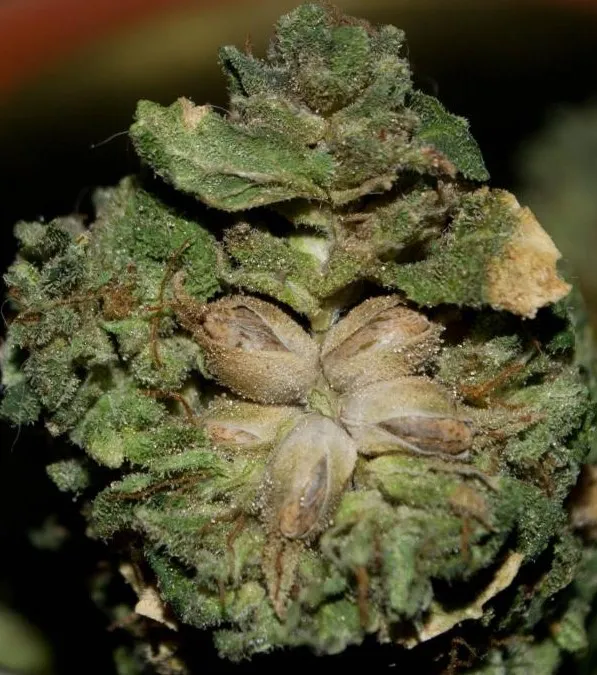
The main signs are male pollen sacs or nanners appearing on a flowering female plant. The main signs are male pollen sacs or nanners appearing on a flowering female plant. Our guide to the early signs of a hermie plant covers what these changes can look like as flowering progresses.
Male Pollen Sacs
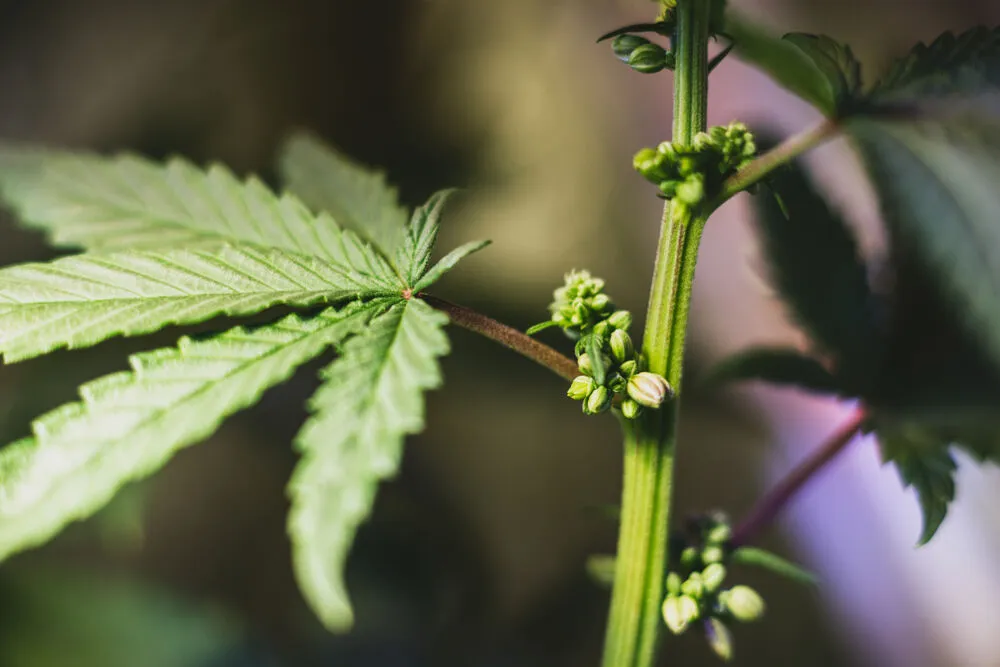
Pollen sacs are small, round or oval structures that usually form around nodes or flower sites. As they mature, they open and release pollen.
Female flowers are different because they usually develop fine stigmas extending from the calyx.
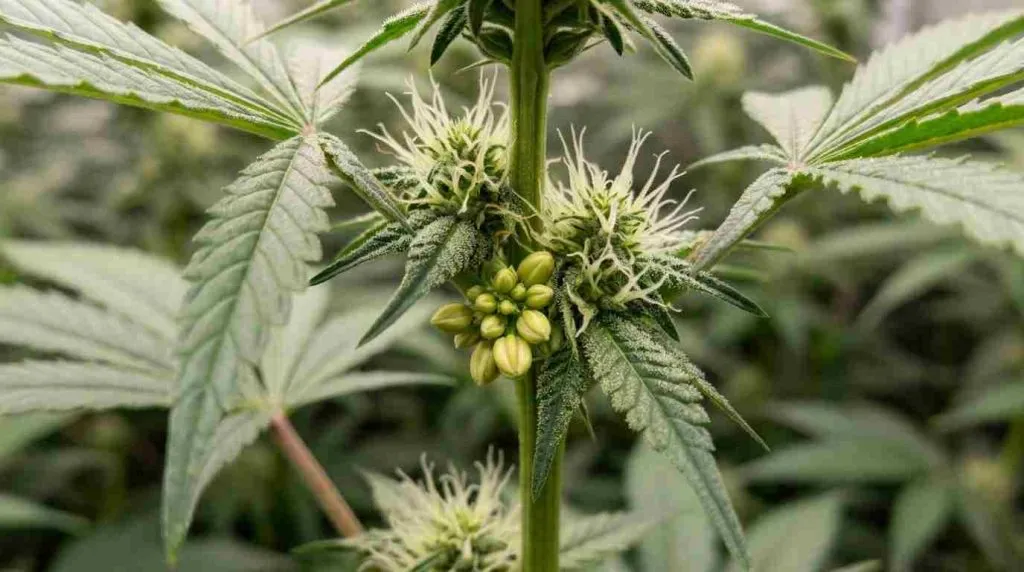
Nanners
Nanners are exposed anthers that often look like small yellow, cream, or pale green bananas. They usually emerge directly from the bud and can be harder to spot than pollen sacs.
Because the anther is already exposed, nanners may release pollen without a visible sac opening first.
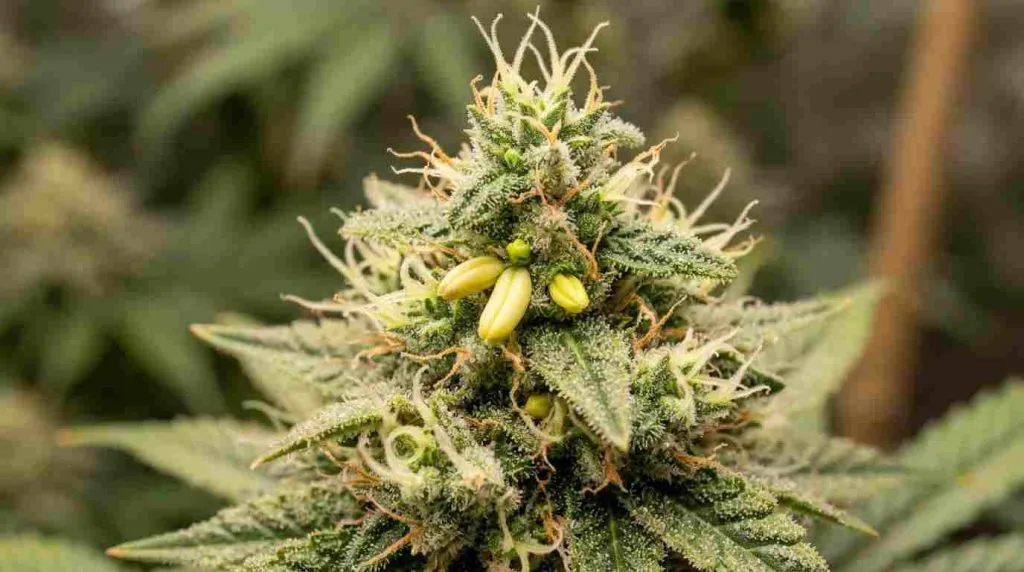
Grower Tip: Check dense buds under good lighting, as nanners can be partly hidden inside the flower.
Where to Check for Pollen Sacs and Nanners
Inspect:
- Nodes where branches meet the main stem
- Lower and inner flower sites
- Dense buds
- Areas around damaged branches
- Flowers approaching maturity
If you find one suspicious structure, inspect the rest of the plant and nearby plants carefully.
What Causes a Cannabis Plant to Hermie?
A cannabis plant can develop male flowers because of genetics, environmental stress, or changes late in flowering. Not every stressed plant will hermie, as sex expression varies between plants.
What the research says: A 2026 review of cannabis hermaphroditism found that sex expression is influenced by interacting genetic, hormonal, developmental, and environmental factors. This supports the idea that herming is usually context-dependent rather than being caused by one single type of stress. Read the study.
Genetic Predisposition
Genetics influence how stable a plant's sex expression remains. Understanding how feminized cannabis seeds are made also helps explain how breeders manage sex expression when producing seed. Some plants are more likely to produce male flowers under stress, which is why breeders generally select against repeated unwanted intersex traits.
For growers who want female plants for flower production, feminized cannabis seeds reduce the likelihood of getting male plants, although female plants can still develop unwanted male structures under some conditions.
Light Schedule Disruptions
Irregular light schedules or repeated interruptions during the dark period may increase the risk of herming in susceptible plants. Following a consistent cannabis light schedule can help reduce unnecessary flowering stress.
Grower Tip: Use a reliable timer and check the grow space for unexpected light during the dark period.
Temperature Stress
Prolonged heat, cold, or large temperature swings can add stress during flowering. Keeping temperatures reasonably stable helps reduce this risk.
Water and Root Stress
Severe drying, overwatering, poor drainage, or root damage can place prolonged stress on the plant. Aim for consistent watering and a healthy, well-drained root zone.
Nutrient and pH Problems
Severe nutrient deficiencies, overfeeding, or unsuitable root-zone pH can contribute to plant stress. These should be treated as possible contributing factors rather than guaranteed causes of herming.
Physical Damage and Excessive Training
Broken branches, heavy pruning, and repeated high-stress training can add unnecessary stress during flowering. Complete major training earlier and avoid stacking stressful techniques once buds are developing.
Pests and Disease
Serious pest or disease problems can weaken a plant and add to its overall stress. Learn how to identify and manage common cannabis pests and diseases before damage becomes severe.
Late Flowering and Over-Maturity
Some female plants produce isolated nanners late in flowering, particularly when kept beyond their normal harvest window. Harvest according to flower maturity rather than deliberately leaving plants well past their intended harvest point.
What Should You Do If a Cannabis Plant Hermies?
What you do depends on how many male structures are present, whether pollen has been released, and how close the plant is to harvest. The main goal is to reduce the chance of unwanted pollination.
If You Find a Few Male Flowers
If only a few unopened pollen sacs are present, isolate the plant if possible and carefully remove them. Check the entire plant for additional male growth and continue inspecting it regularly.
Grower Tip: Avoid shaking or handling the plant roughly, especially if any pollen sacs look mature.
If Pollen Sacs Are Widespread
If male flowers are appearing across several branches, removing the plant from the flowering area is usually the safest option when protecting nearby females is the priority.
Trying to remove large numbers of pollen sacs individually increases the chance that some will be missed or disturbed.
If Nanners Appear Close to Harvest
A few nanners appearing near normal harvest time may not require the same response as widespread pollen sacs earlier in flowering.
Carefully remove accessible nanners, inspect the rest of the buds, and consider how close the plant is to its intended harvest window before deciding whether to continue.
If Pollen Has Already Been Released
If pollen has already escaped, inspect nearby female plants and learn how to tell if cannabis buds have been pollinated as flowering continues.
Remove the affected plant if it is still releasing pollen, and clean the grow area, tools, and equipment before the next crop. Pollen exposure does not guarantee that every nearby flower has been fertilized, but it does increase the risk.
What the research says: Research on hermaphroditic cannabis flowers has confirmed that exposed male anthers can produce pollen capable of fertilizing female flowers and forming viable seeds. This is why even limited pollen release can become a problem in a crop intended to remain seedless. Read the study.
How to Prevent Cannabis Plants From Herming
You cannot completely eliminate the chance of a cannabis plant herming, but you can reduce the risk by keeping genetics, environment, and plant stress under control.
Step 1: Start With Stable Genetics
Choose seeds from a reputable breeder or seed bank that selects for stable sex expression. Good genetics cannot prevent every case of herming, but they give you a stronger starting point.
Avoid using plants for breeding if they repeatedly produce unwanted male flowers under normal growing conditions.
Step 2: Keep Growing Conditions Consistent
Once flowering begins, avoid sudden changes to the plant's environment.
Check that:
- Light timers are working correctly
- Dark periods are not being regularly interrupted
- Temperatures stay reasonably stable
- Plants are watered consistently without prolonged drying or waterlogging
- Feeding and root-zone pH remain within a suitable range
Small fluctuations are normal. The goal is to avoid repeated or severe stress.
Step 3: Avoid Excessive Stress During Flowering
Complete major pruning and high-stress training before flowering where possible.
Once buds are developing, avoid unnecessary branch damage, aggressive pruning, or several stressful techniques at the same time. Continue normal plant care, but keep interventions controlled.
Grower Tip: If a plant is already recovering from heat, watering, or nutrient stress, give it time to recover before carrying out additional training.
Step 4: Inspect Plants Regularly
Check your plants throughout flowering so you can catch male structures before they become a bigger problem.
Pay particular attention to:
- Nodes and branch junctions
- Lower and inner flower sites
- Dense buds
- Areas around damaged branches
Look for round pollen sacs or yellow nanners. If you spot either, inspect the entire plant and nearby females before deciding what action to take.
Regular checks will not prevent herming itself, but they can greatly reduce the chance of unnoticed pollen spreading through the grow.
Can You Smoke a Hermaphrodite Cannabis Plant?
Yes. A hermaphrodite cannabis plant can still produce usable flower.
The main issue is pollination rather than the plant being a hermie itself. If pollen reaches the female flowers, the buds may develop seeds and contain less usable flower material.
As with any harvest, only use flower that is free from mold, pests, contamination, or other quality problems.
Are Seeds From a Hermie Plant Worth Growing?
Seeds produced by a hermie plant can be viable, but the results may be less predictable.
If the parent showed unwanted intersex traits, there is a risk that some offspring may also be prone to unstable sex expression. This does not mean every seed will hermie, but it is one reason breeders usually select plants that remain sexually stable under normal growing conditions.
For a more predictable grow, seeds from deliberately selected and tested breeding stock are generally the better option.
Hermie vs Male Cannabis Plant: What Is the Difference?
A male cannabis plant and a hermie can both produce pollen, but they are not the same.
| Feature | Male Cannabis Plant | Hermie Cannabis Plant |
| Female flowers | Usually absent | Present |
| Pollen-producing structures | Present | Present |
| Can release pollen | Yes | Yes |
| Can pollinate female plants | Yes | Yes |
| Female buds develop | No | Yes |
A hermie is therefore identified by the presence of female flowers alongside male reproductive structures such as pollen sacs or nanners.
Conclusion
A hermie cannabis plant can develop male reproductive structures because of genetics, environmental stress, or changes late in flowering. While you cannot remove every risk, spotting pollen sacs or nanners early gives you more control over the situation.
If male flowers appear, base your response on how widespread they are, whether pollen has already been released, and how close the plant is to harvest. Regular inspections during flowering are one of the simplest ways to reduce the chance of unwanted pollination spreading through the grow.
Frequently Asked Questions
Can feminized cannabis seeds turn hermie?
Yes. Feminized seeds are bred to produce female plants, but they can still develop male reproductive structures if sex expression becomes unstable. Genetics and environmental stress can both play a role.
Can autoflower cannabis plants hermie?
Yes. Autoflowering affects when a plant begins flowering, but it does not prevent unwanted male flower development.
Can a hermie turn back into a female plant?
Once a plant has produced male structures, removing visible pollen sacs or nanners does not guarantee that no more will appear. Continue checking the plant throughout flowering if you decide to keep it.
Will one nanner pollinate an entire grow?
Not necessarily. The risk depends on whether viable pollen was released, how close other plants are, airflow, and how receptive nearby flowers were at the time.
Should I remove a hermie plant immediately?
It depends on the severity. A plant with widespread pollen sacs poses a much greater pollination risk than one with a single late-flowering nanner. If protecting nearby female plants is the priority, removing heavily affected plants is usually the safer option.
References
- Richards, C. D., Ryu, B.-R., Gim, G.-J., & Park, S.-H. (2026). Hermaphroditism in Cannabis sativa L.: Impacts, Inducers, and Industry Implications. Plants, 15(11), 1643. https://doi.org/10.3390/plants15111643
- Punja, Z. K., & Holmes, J. E. (2020). Hermaphroditism in Marijuana (Cannabis sativa L.) Inflorescences – Impact on Floral Morphology, Seed Formation, Progeny Sex Ratios, and Genetic Variation. Frontiers in Plant Science, 11, 718. https://doi.org/10.3389/fpls.2020.00718


