




If you want to know how to tell if cannabis buds are pollinated, the clearest sign is finding developing seeds inside the flowers. Earlier signs of a pollinated cannabis plant can include darkening or shriveling stigmas, swollen bracts, and firm, seed-like lumps forming within the buds. However, brown or orange stigmas alone do not confirm pollination because they also change naturally as flowers mature.
This guide explains the main signs of pollinated buds, what pollinated cannabis looks like, how to confirm seed development, what causes unwanted pollination, and what growers can do if they discover their cannabis has been pollinated.
Key Takeaways
- Developing seeds are the clearest sign that a cannabis flower has been pollinated.
- Darkening or shriveling stigmas can be an early clue, but they do not confirm pollination.
- Swollen bracts may indicate that a seed is beginning to develop inside.
- Pollen can come from male plants or pollen-producing structures on female plants.
- Once fertilization has occurred, it cannot be reversed, although identifying the pollen source may help reduce further exposure.

- What Happens When a Cannabis Plant Is Pollinated?
- How to Tell If Cannabis Buds Have Been Pollinated
- How Soon Can You Tell If Cannabis Has Been Pollinated?
- What Causes Cannabis Buds to Become Pollinated?
- Pollinated vs Unpollinated Cannabis Buds
- Does Pollination Affect THC, Terpenes and Bud Quality?
- What Should You Do If Your Cannabis Buds Are Pollinated?
- Can You Use Pollinated or Seeded Cannabis Buds?
- How to Reduce the Risk of Unwanted Pollination
- Conclusion
- Frequently Asked Questions
What Happens When a Cannabis Plant Is Pollinated?
Pollination begins when cannabis pollen reaches the receptive stigma of a female flower. If fertilization is successful, the plant starts developing seeds inside the bracts rather than focusing only on flower production.
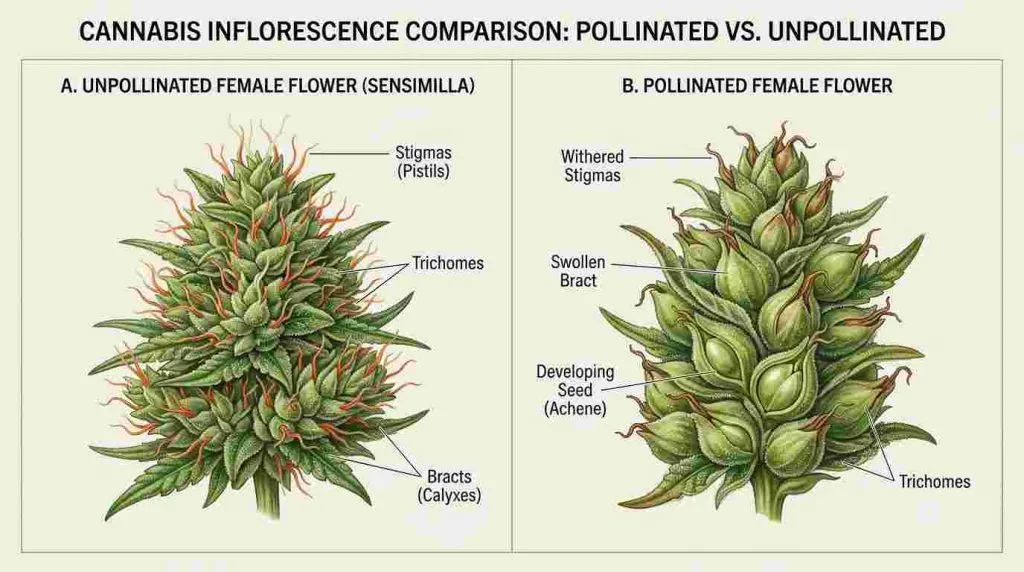
As seeds form, the flower’s development changes because the plant is now supporting reproduction. Bracts may swell, stigmas can change appearance, and the overall structure of the bud may become less uniform as seeds mature.
Seedless cannabis flower is commonly called sinsemilla, meaning it has not been fertilized and does not contain developed seeds. Pollination is useful when breeding cannabis or producing seeds, but growers aiming for seedless flower generally want to prevent it.
Grower Tip: If you are growing for seedless flower, keep known pollen sources well away from flowering females and check plants regularly for unexpected male flowers.
How to Tell If Cannabis Buds Have Been Pollinated
The clearest way to tell if cannabis buds have been pollinated is to look for developing seeds. Earlier changes can provide clues, but they should not be used alone to diagnose pollination. When checking a plant, look at several signs together and compare them with normal flower development.
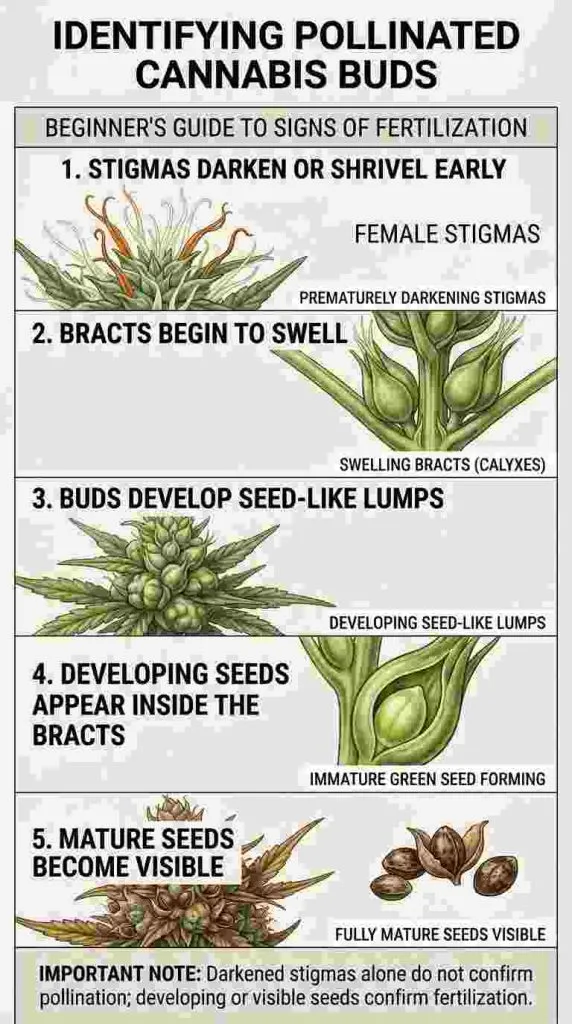
Stigmas Darken or Shrivel Earlier Than Expected
Stigmas are the fine, hair-like structures that extend from female cannabis flowers. Growers often confuse cannabis pistils and stigmas, but the stigma is specifically the pollen-receiving part of the flower.
After pollination, some stigmas may darken, curl, or shrivel earlier than expected. However, this does not confirm pollination. Stigmas naturally change from white to orange, red, or brown as flowers mature, while heat, physical contact, and other stresses can also affect their appearance.
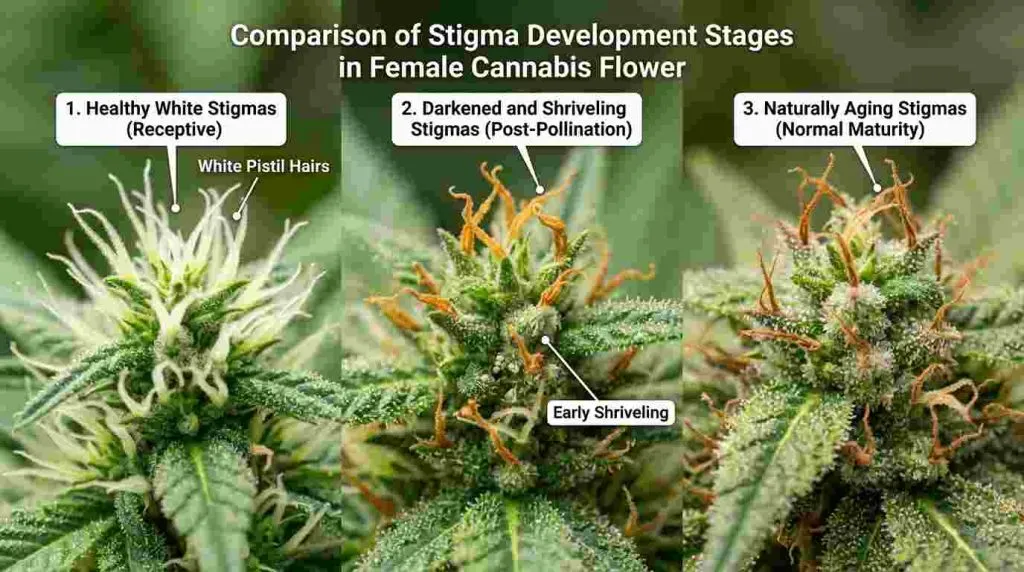
Grower Tip: Don't assume a bud is pollinated simply because its white hairs have turned brown. Look for swelling and seed development before drawing a conclusion.
Bracts Begin to Swell
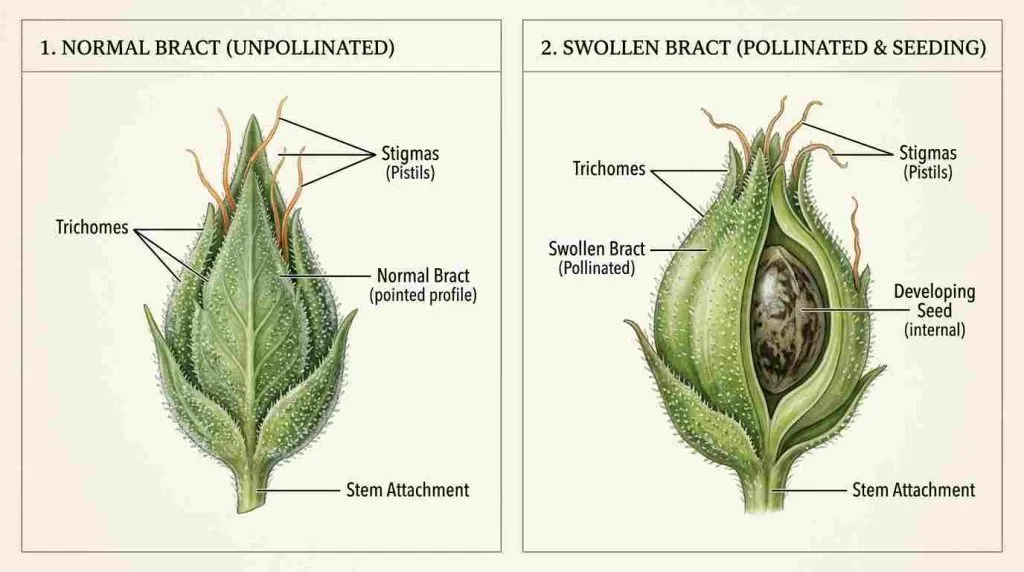
A bract is one of the small structures that make up cannabis bud anatomy, surrounding and protecting the female flower's reproductive parts. After successful fertilization, a seed can begin developing inside, causing individual bracts to become noticeably swollen.
Some swelling is normal as cannabis flowers mature, so compare several areas of the plant. A single enlarged bract is a reason to inspect more closely, but swelling by itself does not prove pollination.
Buds Develop Seed-Like Lumps
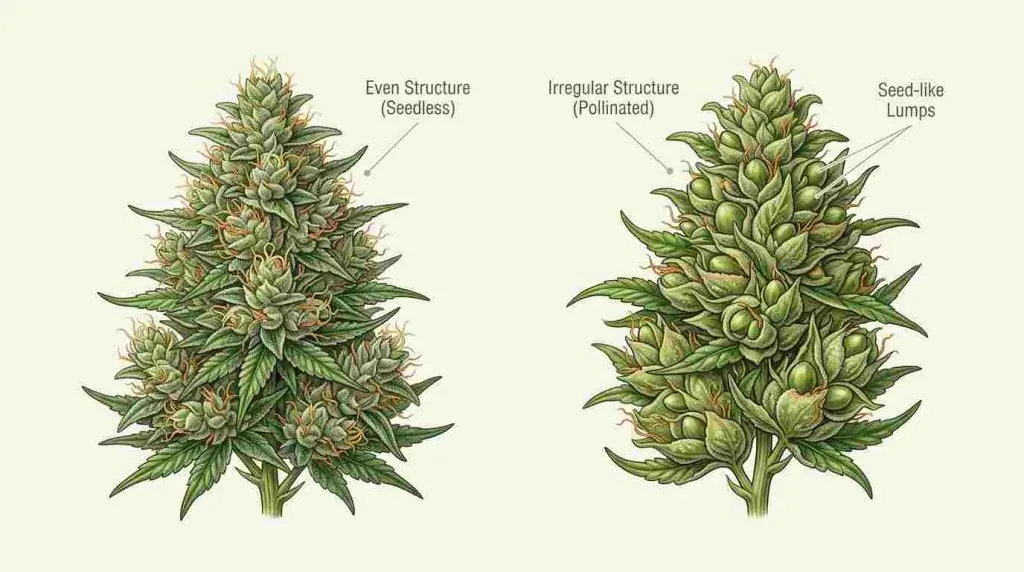
As seeds grow, pollinated buds can become less even in appearance. You may notice rounded, firm areas within the flower where individual seeds are developing.
These uneven, seed-like lumps are one of the stronger visual clues, particularly when they appear alongside noticeably swollen bracts.
Developing Seeds Appear Inside the Bracts
Finding a developing seed inside a swollen bract is clear evidence that fertilization has taken place. Immature cannabis seeds are usually smaller, softer, and lighter in color than fully mature seeds. They may appear pale, cream, or greenish before gradually becoming harder and darker.
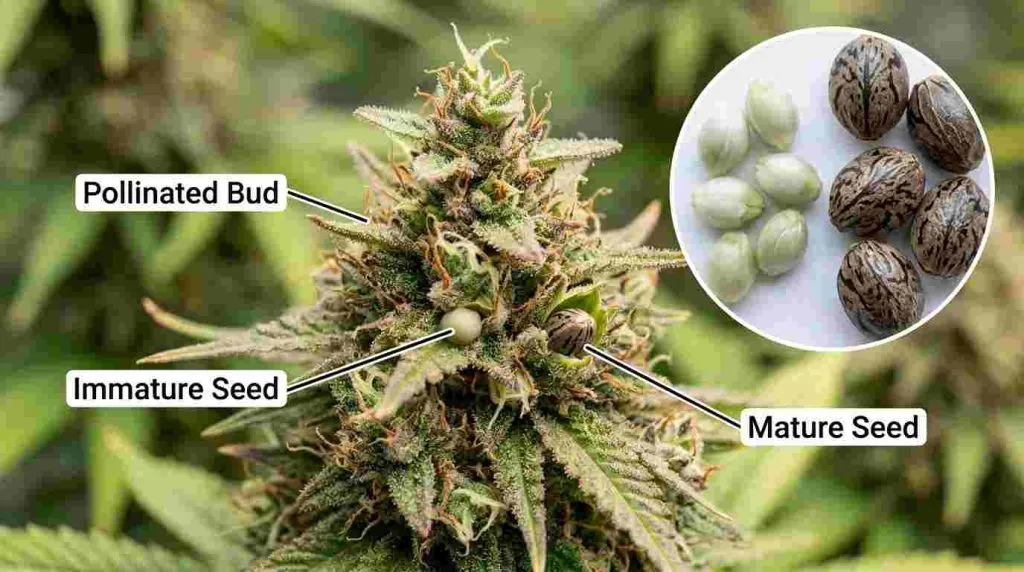
Mature Seeds Become Visible
As seed development continues, seeds become larger, firmer, and easier to identify within the bud. Mature seeds are typically hard and darker in color than immature seeds.
Visible mature seeds provide clear confirmation that the flower was pollinated.
| Sign | What It Suggests | Confirms Pollination? |
| Darkening stigmas | Pollination or normal flower maturity | No |
| Shriveling stigmas | Possible response to pollination or stress | No |
| Swollen bracts | Possible seed development | No, not alone |
| Seed-like lumps | Developing seeds may be present | Strong indication |
| Developing seed inside a bract | Fertilization has occurred | Yes |
| Mature visible seeds | Seed development is complete or advanced | Yes |
How Soon Can You Tell If Cannabis Has Been Pollinated?
There is no exact number of days or weeks after pollination when the signs will become obvious. Timing depends on when pollen reached the flower, how mature the flower was at the time, how much of the plant was exposed, and how far seed development has progressed.
Early changes to the stigmas, such as unexpected darkening or shriveling, may raise suspicion, but they are not reliable enough to confirm pollination on their own. As more time passes, swelling around individual bracts and developing seeds become easier to identify.
What Causes Cannabis Buds to Become Pollinated?
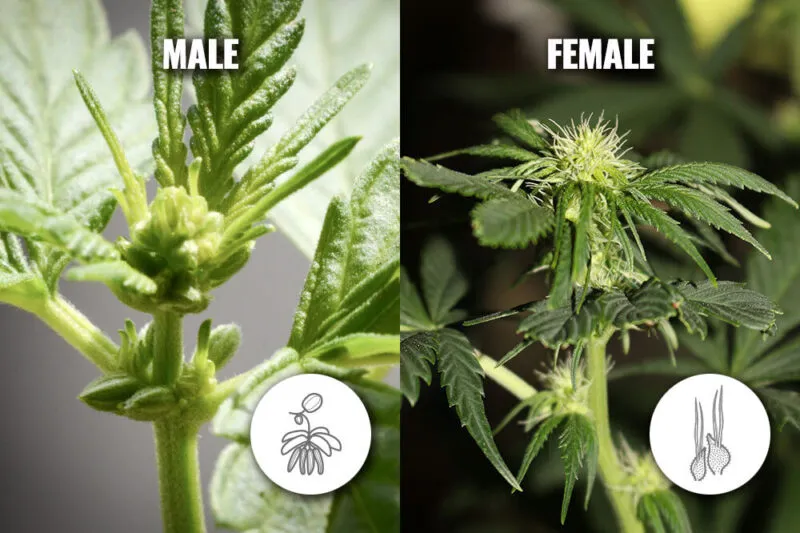
Cannabis buds become pollinated when pollen reaches a receptive female flower. In most grows, that pollen comes from a male plant, pollen-producing flowers on a female plant, or pollen carried into the growing area.
Male Cannabis Plants
Male cannabis plants develop pollen-producing flowers rather than the resinous female flowers most growers aim to harvest. Once their pollen sacs open, pollen can spread to receptive female flowers and trigger seed development. Once pollen sacs open, pollen can spread quickly and reach nearby flowering plants. If you are growing regular seeds, learning how to identify male cannabis plants early can help reduce accidental pollination.
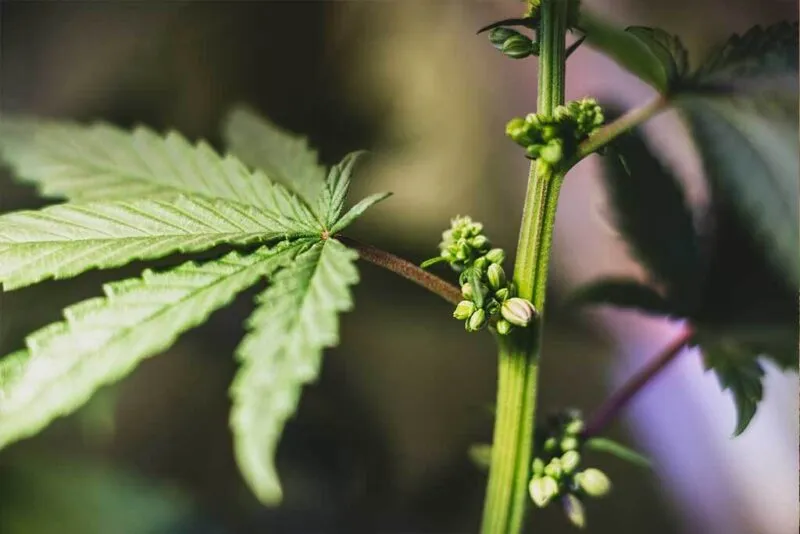
Pollen-Producing Flowers on Female Plants
Female plants can sometimes develop male reproductive structures. These may include exposed anthers commonly called nanners because of their yellow, banana-like appearance. Nanners can release pollen, but finding one does not automatically mean the surrounding buds have already been pollinated.
If you see them, it is worth understanding what causes a cannabis plant to hermie and checking nearby flowers carefully.
Pollen Carried Into the Growing Area
Cannabis pollen is light and can be moved by wind or carried indoors on clothing, hair, tools, and equipment.
Grower Tip: If you work around male plants or stored pollen, change clothes and clean your tools before entering a flowering room.
Pollinated vs Unpollinated Cannabis Buds
Pollinated and unpollinated cannabis buds can look similar at first, which is why it is important not to diagnose pollination from one early visual change alone. Stigmas naturally darken as flowers mature, and bracts can also swell during normal development.
The main difference is that a pollinated flower begins producing seeds after fertilization, while an unpollinated flower continues developing without seed formation. As those seeds develop, the bud may become more uneven, with swollen bracts or firm, seed-like areas.
| Feature | Unpollinated Buds | Pollinated Buds |
| Seeds | None | Developing or mature seeds may be present |
| Bracts | Normal flower development | May become noticeably swollen |
| Stigmas | Naturally change as the flower matures | May darken or shrivel earlier |
| Flower structure | Relatively even | May develop seed-like lumps |
| Reproductive activity | Continued flower development | Seed development |
| Confirmation | No developing seeds | Developing or mature seed confirms fertilization |
Does Pollination Affect THC, Terpenes and Bud Quality?
Once fertilization occurs, the plant begins putting more of its reproductive resources into developing seeds. This change can affect the way the surrounding flower continues to develop.
Pollination can reduce cannabinoid accumulation and may alter cannabis terpene production, although the effect varies by cultivar, the timing of pollination, and how much of the plant is affected. That means pollinated buds can still contain THC, other cannabinoids, and terpenes, but their overall profile may differ from comparable seedless flowers.
Seed development can also reduce usable flower weight. Heavily seeded buds also contain a greater proportion of seed material, reducing the amount of usable seedless flower in the harvested weight.
Grower Tip: If only part of a plant appears pollinated, assess the affected buds separately rather than assuming the entire crop will develop the same way.
What Should You Do If Your Cannabis Buds Are Pollinated?
Once a flower has been fertilized, the process cannot be reversed. However, finding a few pollinated buds does not automatically mean the entire crop needs to be discarded. The next step is to work out where the pollen came from and how much of the grow may have been affected.
Find the Source of the Pollen
Check the grow for male plants, male flowers, exposed anthers or nanners, and any other possible pollen source. Finding the source early can help reduce further exposure.
Work Out How Widespread the Pollination Is
One pollinated flower does not always mean every bud has been affected. Inspect several branches, plants, and areas of the grow for swollen bracts or developing seeds before judging the extent of the problem.
Prevent Further Exposure
Where practical, remove or isolate the pollen source and avoid moving pollen around the growing area on clothing, tools, or equipment.
Grower Tip: Check unaffected-looking plants as well as the obvious problem areas, as early pollination signs can be easy to miss.
Can You Use Pollinated or Seeded Cannabis Buds?
Pollinated cannabis flower is not automatically unusable. Seeded buds can still contain THC, other cannabinoids, and terpenes, although their overall quality may differ from comparable seedless flower.
The main difference is that part of the plant's reproductive effort has gone into producing seeds. Heavily seeded buds may therefore contain less usable flower material, while pollination can also affect cannabinoid and terpene accumulation. The extent of these changes varies depending on the cultivar, when pollination occurred, and how heavily the flowers were seeded.
Grower Tip: Judge affected buds by their actual seed content and flower quality rather than assuming all pollinated material will be the same.
How to Reduce the Risk of Unwanted Pollination
Identify Male Plants Early
If you are growing regular cannabis seeds, male plants can appear naturally, so learning how to identify male cannabis plants early can help reduce accidental pollination. Removing males before pollen sacs open lowers the risk of accidental pollination.
Monitor Flowers for Unexpected Pollen-Producing Structures
Continue inspecting female plants throughout flowering for male flowers or exposed anthers known as nanners. Understanding what causes a cannabis plant to hermie can help you recognize conditions that may increase this risk.
Keep Pollen Sources Separate
Keep male plants and any pollen used for breeding well away from areas where you want to produce seedless flower. Clean tools and change clothing after handling pollen.
Start With Feminized Seeds When Male Plants Aren't Wanted
Growing feminized cannabis seeds greatly reduces the likelihood of conventional male plants, but flowering plants should still be checked for unexpected pollen-producing structures.
Conclusion
Darkening or shriveling stigmas can be an early clue that pollination has occurred, but they are not proof on their own. Swollen bracts give you more reason to inspect the flower closely, while finding a developing seed confirms fertilization. If you spot pollination, check the rest of the grow and identify the pollen source as soon as possible so you can reduce the risk of further flowers being affected.
Frequently Asked Questions
How can you tell for sure if a cannabis bud has been pollinated?
A developing or mature seed confirms that fertilization occurred. Changes such as darkened stigmas, swollen bracts, or seed-like lumps may suggest pollination, but these signs can also occur during normal flower development. Inspecting inside a noticeably swollen bract for a forming seed gives you much stronger evidence that fertilization has occurred.
Do brown pistils mean a cannabis plant has been pollinated?
No. Brown, orange, or red stigmas do not automatically mean a cannabis plant has been pollinated. Growers often call these structures pistil hairs, and they naturally darken and curl as flowers mature. Heat, physical contact, and other stresses can also change their appearance. Look for additional signs, especially swollen bracts and developing seeds, before assuming pollination has occurred.
How long after pollination do cannabis seeds start forming?
Seed development begins after successful fertilization, but there is no single point when it becomes clearly visible. How quickly you notice changes depends on the maturity of the flower, when pollination occurred, and the cultivar. Early stigma changes may appear first, while developing seeds become easier to identify as they grow inside the bracts.
Can only one branch of a cannabis plant become pollinated?
Yes. Pollination can be localized if pollen reaches only certain flowers or branches. This is why finding one seeded bud does not necessarily mean the whole plant has been pollinated. Check flowers across different branches and nearby plants to understand how far the pollen may have spread.
Can a female cannabis plant pollinate itself?
Yes, if a genetically female plant develops functional male flowers or exposed anthers, often called nanners. These structures can release pollen capable of fertilizing female flowers on the same plant or nearby plants. Their presence does not prove pollination has already happened, but it does create a potential pollen source that should be monitored carefully.


