




Cannabis pollen is essential for breeding because it allows growers to fertilize selected female plants and produce seeds with traits from both parents. However, collecting and using pollen successfully requires careful timing, storage, and control to prevent unwanted pollination.
This guide explains how cannabis pollen for breeding works, what a pollen sac on a weed plant looks like, and how marijuana pollen is collected, stored, and used. You'll also learn how controlled pollination produces seeds, how pollen viability can be protected, and how breeding with pollen from reversed female plants is used to produce feminized cannabis seeds.
Key Takeaways
- Cannabis pollen carries the male genetic material needed to fertilize female flowers and produce seeds.
- Mature pollen sacs swell and open when they are ready to release pollen, making timing important during collection.
- Cannabis pollen should be kept dry, cool, dark, and sealed to help maintain viability during storage.
- Controlled pollination can target a single branch or a whole plant, depending on how many seeds the breeder wants to produce.
- Feminized seed breeding uses pollen from a genetically female plant rather than a natural male, allowing breeders to produce predominantly female offspring.
What is Cannabis Pollen and How Does It Work?
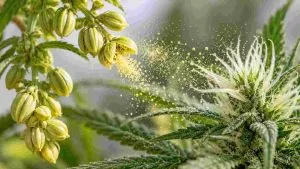
Cannabis pollen is the fine, powdery material released by male cannabis flowers. Its role is to carry genetic material to a receptive female flower so fertilization can take place. For breeders, cannabis pollen is what makes controlled seed production possible.
How Cannabis Pollen Fertilizes Female Flowers and Produces Seeds
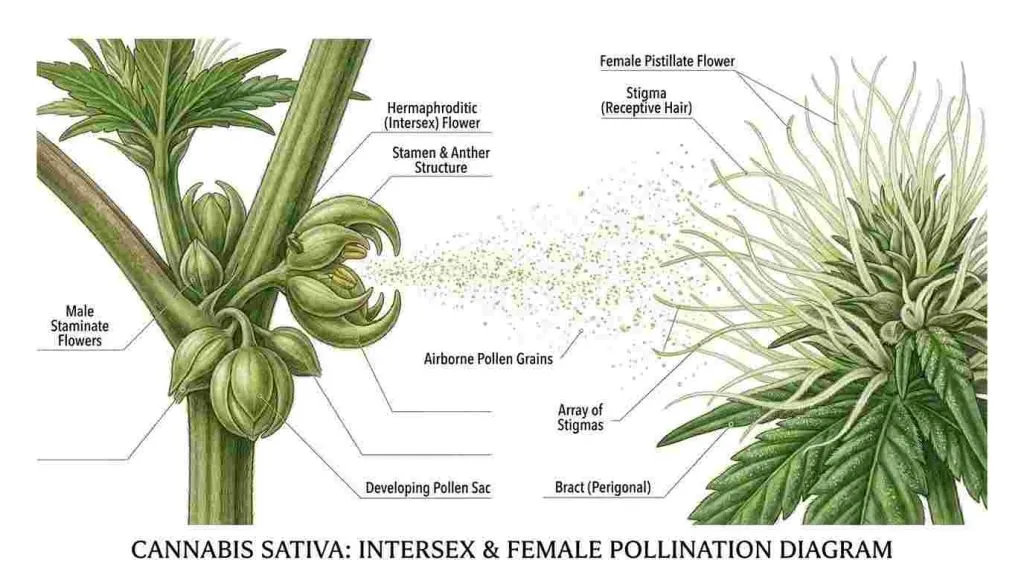
When cannabis pollen lands on the white pistils of a receptive female flower, it can germinate and deliver male genetic material into the flower. Once fertilization occurs, the plant begins directing more energy toward seed development rather than producing seedless flowers.
The resulting seeds contain genetics from both parent plants, which is why breeders carefully choose which plants they pollinate.
Grower tip: Keep pollen-producing plants well separated from unpollinated females. Cannabis pollen is extremely light and can spread through air movement, clothing, tools, or hands.
What Does a Pollen Sac on a Weed Plant Look Like?
A pollen sac on a weed plant is a small, rounded structure that develops at the nodes where branches meet the main stem. Male plants usually form clusters of these sacs rather than the white pistils seen on female pre-flowers. If you are unsure what you are looking at, learning how to tell if a cannabis plant is male or female before flowering can help you identify the differences before pollen is released.
As pollen sacs mature, they swell and eventually open, releasing a fine yellow or pale powder. Learning to recognize them early is important when breeding cannabis or trying to prevent accidental pollination.
How to Collect Cannabis Pollen for Breeding
Collecting cannabis pollen successfully starts before the first pollen sac opens. The goal is to choose a suitable donor, keep it away from unpollinated females, and collect clean, dry pollen without introducing moisture or plant debris.
How to Choose a Male Cannabis Plant for Breeding
Choose a healthy male plant that shows the traits you want to carry into the next generation. Growers working with regular cannabis seeds can select from both male and female plants, making them particularly useful when choosing parents for a breeding project. Breeders commonly assess structure, branching, growth rate, aroma from stem rubs, flowering timing, and overall plant health. These parent-selection decisions are an important part of creating your own cannabis strain, especially when you want particular traits to carry into later generations.
Avoid selecting weak, diseased, or heavily stressed plants simply because they produce pollen early. A male contributes roughly half of the genetics to the resulting seeds, so pollen donor selection matters.
When Cannabis Pollen Sacs Are Ready to Harvest
Immature pollen sacs are tight and closed. As they mature, they become fuller and begin to loosen before opening.
| Pollen sac stage | What to look for |
| Immature | Small, firm, tightly closed sacs |
| Nearly ready | Swollen sacs beginning to loosen |
| Releasing pollen | Open sacs producing pale yellow powder |
Collecting too early may give you little usable pollen, while waiting too long increases the chance of pollen escaping into the grow area.
How to Isolate a Male Plant and Prevent Accidental Pollination
Move the selected male to a separate enclosed space before pollen sacs begin opening. This is particularly important when growing regular cannabis seeds, because male plants need to be identified and managed before they can pollinate females unintentionally. Avoid sharing fans between male and female growing areas because airborne pollen can travel easily.
Change clothes and wash your hands after handling a pollen-producing plant before returning to unpollinated females.
Grower tip: Work with pollen after tending to your female plants, not before. This reduces the chance of carrying stray pollen into the flowering room.
How to Collect, Clean and Dry Cannabis Pollen
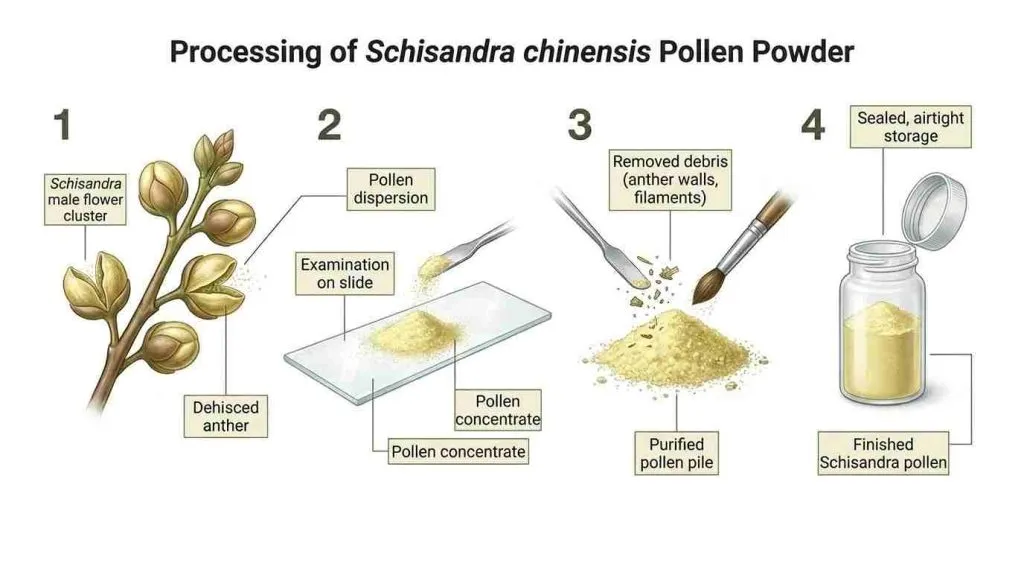
Place clean paper beneath mature pollen sacs and gently tap or shake the flowering branches so released pollen falls onto the surface. Remove visible plant material with clean tweezers or a fine screen.
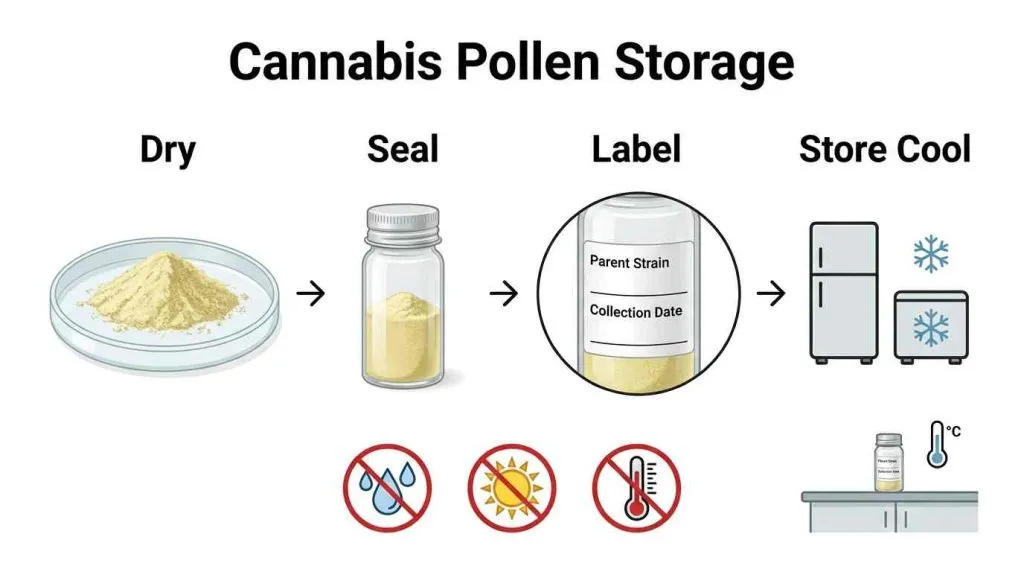
Allow collected marijuana pollen to dry in a cool, dark, low-humidity location before storage. Even small amounts of moisture can reduce pollen viability and increase the risk of mold, so only package pollen once it is completely dry.
How to Store Cannabis Pollen and Maintain Viability
Cannabis pollen loses viability over time, so storage is about protecting it from moisture, heat, light, and repeated temperature changes. The better it is handled after collection, the better the chance it remains usable for future breeding.
Why Moisture, Heat and Light Can Damage Cannabis Pollen
Fresh pollen is sensitive to poor storage conditions. Moisture can cause pollen to deteriorate quickly, while heat speeds up the loss of viability. Direct light and repeated temperature changes can also reduce storage life.
For new growers, the main rule is simple: keep cannabis pollen dry, cool, dark, and sealed.
How to Store Cannabis Pollen Step by Step
Step 1: Make Sure the Pollen Is Dry
Only store pollen after excess moisture has been removed. Trapping moisture inside a container can shorten its usable life.
Step 2: Place It in a Sealed Container
Transfer the marijuana pollen into a small airtight container and label it with the donor plant and collection date.
Step 3: Keep Moisture Out
Use a dry container and avoid opening it unnecessarily. A separate desiccant can help manage humidity inside the storage area.
Step 4: Choose the Right Storage Method
| Storage need | Approach |
| Using soon | Keep cool, dry, dark, and sealed |
| Short-term storage | Keep refrigerated in a sealed container |
| Longer storage | Keep properly dried and frozen |
Step 5: Avoid Repeated Temperature Changes
Store pollen in smaller portions when possible. This prevents the whole supply from being repeatedly removed from cold storage.
How to Handle Stored Marijuana Pollen Before Use
When taking cannabis pollen from cold storage, leave the sealed container closed until it reaches room temperature. Opening it while still cold can cause condensation to form and expose the pollen to moisture.
Grower tip: Label every container with the parent plant and date. This makes it much easier to track different pollen samples during a breeding project.
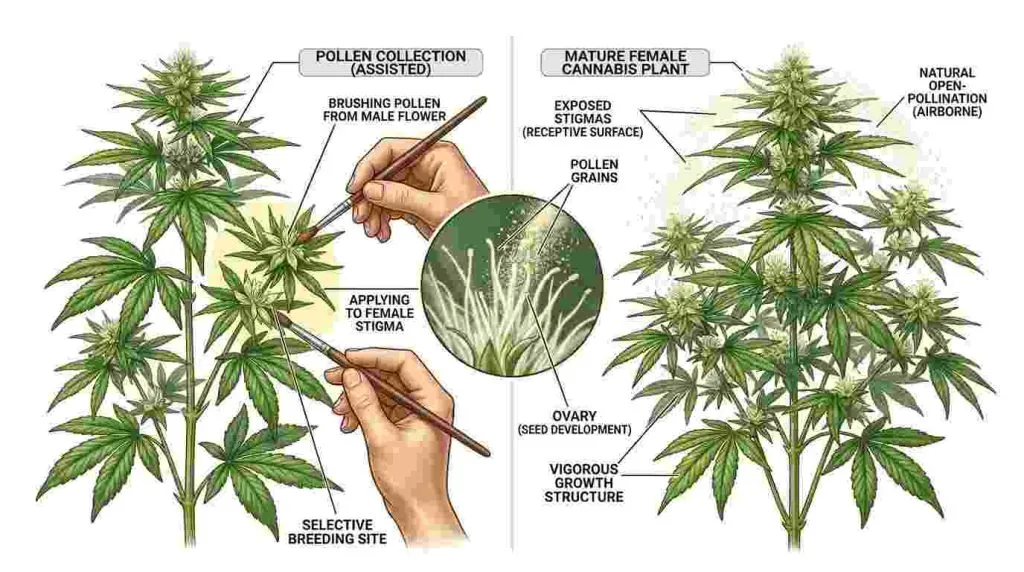
How to Pollinate a Female Cannabis Plant
Pollination should be controlled carefully so pollen reaches only the flowers you want to breed. The process starts with identifying receptive female flowers and ends with allowing enough time for seeds to mature.
Step 1: Check That Female Flowers Are Ready
Look for fresh white pistils on developing female flowers. These are the structures that receive pollen.
Avoid relying on an exact flowering day, as different cultivars develop at different rates.
Step 2: Decide Whether to Pollinate One Branch or the Whole Plant
Targeting one branch allows a breeder to produce a smaller seed batch while leaving the rest of the plant unpollinated.
Whole-plant pollination is used when seed production is the main goal.
| Method | Best suited for |
| Single branch | Small breeding test or limited seed production |
| Whole plant | Larger seed production |
Step 3: Apply Pollen to the Chosen Flowers
Bring the stored cannabis pollen to room temperature before opening its container.
Apply it only to the selected female flowers, keeping the process as controlled as possible to reduce unintended spread.
Step 4: Keep Pollen Away From Other Plants
Separate the pollinated plant or branch from unpollinated females. Cannabis pollen can travel on airflow, clothing, hands, and tools.
Grower tip: Handle unpollinated plants before working with pollen, then clean your hands, clothes, and equipment afterward.
Step 5: Watch for Signs of Successful Pollination
After fertilization, pistils may darken and recede while the flower gradually begins forming seeds. Our guide to how to tell if cannabis buds have been pollinated covers the other changes growers can watch for as seed development begins.
These changes are useful indicators, but seed development takes time and should not be judged immediately.
Step 6: Allow the Seeds to Mature
Cannabis seeds usually need several weeks to develop fully after pollination.
Mature seeds tend to become firmer and darker, while immature seeds are often pale, soft, or poorly formed.
Avoid harvesting too early, as underdeveloped seeds may have lower viability.
Cannabis Pollen and Feminized Seed Breeding
Feminized seed breeding uses pollen from a genetically female plant rather than pollen from a natural male. This allows breeders to produce seeds that are expected to develop as female plants.
Male Cannabis Pollen vs. Pollen From a Reversed Female Plant
A natural male cannabis plant carries XY sex chromosomes, so its pollen can contribute either an X or Y chromosome. When that pollen fertilizes a female, the resulting seeds can develop into male or female plants.
A reversed female remains genetically XX but produces pollen-bearing flowers. This principle is central to how feminized cannabis seeds are made, because the resulting pollen does not contribute a Y chromosome. Because that pollen does not carry a Y chromosome, it can be used with another female plant to produce feminized seeds. Research has confirmed that masculinized female cannabis plants can produce viable pollen capable of fertilization.
Can You Pollinate a Plant Grown From Feminized Seeds?
Yes. A female plant grown from a feminized seed can still be pollinated normally. “Pollinating feminized seeds” is therefore slightly misleading; the grower is actually pollinating the female flowers produced by the plant, not the seed itself.
How Feminized Cannabis Seeds Are Produced Through Pollination
Feminized breeding involves producing pollen on a genetically female parent and using that pollen to fertilize receptive female flowers. The resulting seeds inherit female sex chromosomes from both parents and are therefore overwhelmingly female.
Grower tip: Keep detailed records of both parent plants. Feminization controls the expected sex of the offspring, but it does not guarantee other traits such as height, flowering time, potency, or yield.
Conclusion
Cannabis pollen plays a central role in controlled breeding, allowing growers to combine selected parent plants and produce new seeds. Successful breeding depends on recognizing mature pollen sacs, collecting clean pollen, storing it correctly, and keeping pollination controlled.
For new growers, careful labeling and isolation are especially important because marijuana pollen can spread easily and affect unintended plants. Feminized seed breeding follows the same basic pollination process but uses pollen produced by a genetically female plant. Understanding these differences makes it easier to plan breeding projects and keep accurate records of each cross.
Frequently Asked Questions
How Long Does Cannabis Pollen Stay Viable?
Cannabis pollen viability depends on how it is collected, dried, and stored. Heat and moisture can shorten its usable life quickly, while properly dried pollen kept under cold, stable conditions can remain viable for longer. Storage time should never be treated as guaranteed.
Can You Freeze Cannabis Pollen?
Yes, cannabis pollen can be frozen for longer-term storage, but it should be thoroughly dry and sealed against moisture first. When removing it from cold storage, allow the sealed container to reach room temperature before opening it to reduce condensation.
Can You Pollinate Just One Branch of a Cannabis Plant?
Yes. Breeders sometimes target a single branch when they want a smaller seed batch while leaving the rest of the plant unpollinated. Careful pollen control is important because stray pollen can spread to other flowers.
What Does a Pollen Sac on a Weed Plant Look Like?
A pollen sac on a weed plant usually appears as a small, rounded structure that develops around the nodes. Male plants often produce clusters of sacs, which swell before opening and releasing fine pollen.
Can Feminized Cannabis Plants Be Pollinated?
Yes. A female plant grown from feminized seed can still be pollinated and produce seeds. When people refer to pollinating feminized seeds, they usually mean pollinating the female plant that grew from the feminized seed, not pollinating the seed itself.


