




Learning how to create your own weed strain starts with understanding the basics of cannabis breeding. It involves choosing suitable parent plants, making a controlled cross, growing the resulting seeds, and selecting the offspring that best match your breeding goals.
You might be aiming for a particular aroma, cannabinoid profile, flowering time, plant structure, or yield. Whatever the goal, creating a cannabis strain takes more than crossing two plants once. Good breeding requires careful selection, accurate records, and several generations of evaluation if you want the results to become more consistent.
This guide explains how to breed cannabis step by step, from selecting male and female plants and controlling pollination to harvesting seeds, stabilizing a new strain, and tracking your progress over time.
Key Takeaways
- Start with a clear breeding goal. Decide which traits you want to preserve or improve before selecting parent plants.
- Choose both parents carefully. Male and female plants contribute genetic material to the next generation, so both matter.
- Control pollination. Isolating plants, labeling crosses, and handling pollen carefully helps maintain accurate parentage.
- Expect variation. Offspring from the same cannabis cross can express different traits, particularly in early generations.
- Stabilization takes time. Repeated selection and breeding across several generations can make your target traits appear more consistently.

- Understanding Cannabis Genetics and Breeding Basics
- Selecting Male and Female Plants for Desired Traits
- The Role of Phenotypes and Genotypes in Strain Development
- How to Cross Cannabis Strains Effectively
- Harvesting and Storing Seeds Safely
- Stabilizing Your New Cannabis Strain
- Costs Involved in Creating Your Own Weed Strain
- Legal and Ethical Considerations in Cannabis Breeding
- Tips for Successful Cannabis Breeding
- Conclusion
- Frequently Asked Questions
Understanding Cannabis Genetics and Breeding Basics
Before you start crossing plants, it helps to understand what you can and cannot control through breeding. Every cannabis plant carries genetic information inherited from its parents, but that does not mean every seed from the same cross will grow into an identical plant.
Breeders usually start with a goal, such as higher THC levels, a particular terpene profile, shorter flowering times, heavier yields, compact growth, or better resistance to environmental stress. The challenge is finding parent plants that carry those traits and then seeing how reliably they appear in their offspring.
Two terms you will come across often are genotype and phenotype. Genotype refers to the genetic information a plant carries, while phenotype is the way those genetics are expressed under particular growing conditions. This is why plants from the same cross can still differ in height, aroma, flowering time, potency, and structure.
| Breeding Term | What It Means |
| Genetics | The inherited information passed from parent plants to their offspring |
| Genotype | The genetic makeup carried by an individual plant |
| Phenotype | The traits you can observe as genetics interact with the growing environment |
| Selection | Choosing plants that best match the traits you want to carry forward |
Grower Tip: Decide what you are trying to improve before making your first cross. Trying to select for too many traits at once makes it harder to judge which plants are actually moving your breeding project in the right direction.
Selecting Male and Female Plants for Desired Traits
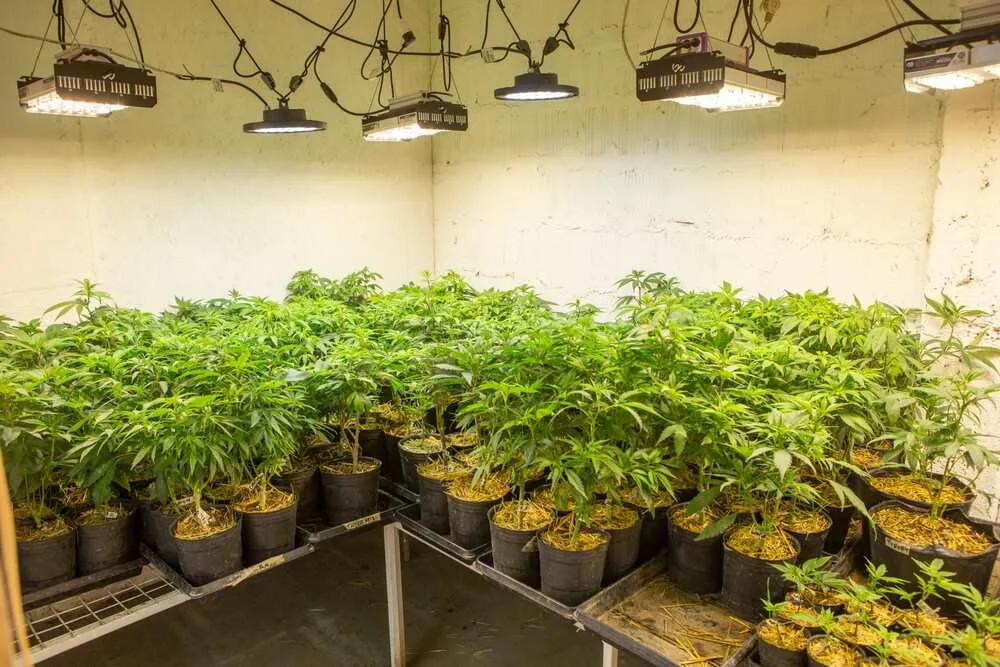
Good breeding starts with choosing the right parents. Both male and female plants contribute genetic material to the offspring, so both need careful selection.
Female plants are easier to judge for flower structure, cannabinoid content, resin, and terpene profile. Male plants are usually assessed by traits such as structure, branching, internodal spacing, aroma, flowering behavior, health, and the performance of their offspring.
| Trait | What to Look For |
| Structure | Strong branching, suitable height, and useful internodal spacing |
| Flowering time | Plants that finish within your target timeframe |
| Cannabinoids | THC, CBD, and other cannabinoid levels where testing is available |
| Terpenes | Clear aromas that match your breeding goal |
| Plant health | Plants that remain healthy under normal growing conditions |
| Consistency | Traits that appear reliably rather than only once |
Keep notes on growth, flowering time, aroma, structure, and any recurring weaknesses. These records make it much easier to compare potential parents later.
Grower Tip: Focus on two or three priority traits. Trying to select for everything at once makes progress harder to measure.
The Role of Phenotypes and Genotypes in Strain Development
After making a cross, growers need to see how the offspring express their genetics. Plants from the same F1 generation can still differ in height, aroma, flowering time, potency, yield, and flower structure.
Compare each plant against your original breeding goal rather than simply keeping the most impressive-looking example. Growing offspring under similar conditions also makes it easier to tell genetic differences from environmental effects.
A breeding line becomes more useful when desirable traits continue appearing across later generations. When working with a hybrid strain, expect some variation rather than identical plants.
Grower Tip: Keep light, nutrients, pot size, and temperature as consistent as possible when comparing offspring.
How to Cross Cannabis Strains Effectively
Crossing cannabis involves transferring pollen from a selected male to receptive flowers on a selected female. Good pollen control and accurate labeling are essential if you want to know exactly which plants produced each batch of seeds.
Preparing Parent Plants for Breeding
Separate male and female plants
Keep males in a separate enclosed space before the pollen sacs open. Pollen can spread through moving air, clothing, tools, and ventilation.
Collect male pollen
Watch for mature, swollen pollen sacs and collect and store cannabis pollen before applying it to the selected female. Label each sample with the male parent and collection date.
Wait for receptive female flowers
Pollinate once healthy flowers with fresh stigmas have developed. The exact timing varies, so use flower development rather than relying on a fixed week. The cannabis flowering stage guide can help you identify this point.
Grower Tip: Label the pollinated branch with the male parent, female parent, and pollination date before applying pollen.
Controlled Pollination Techniques
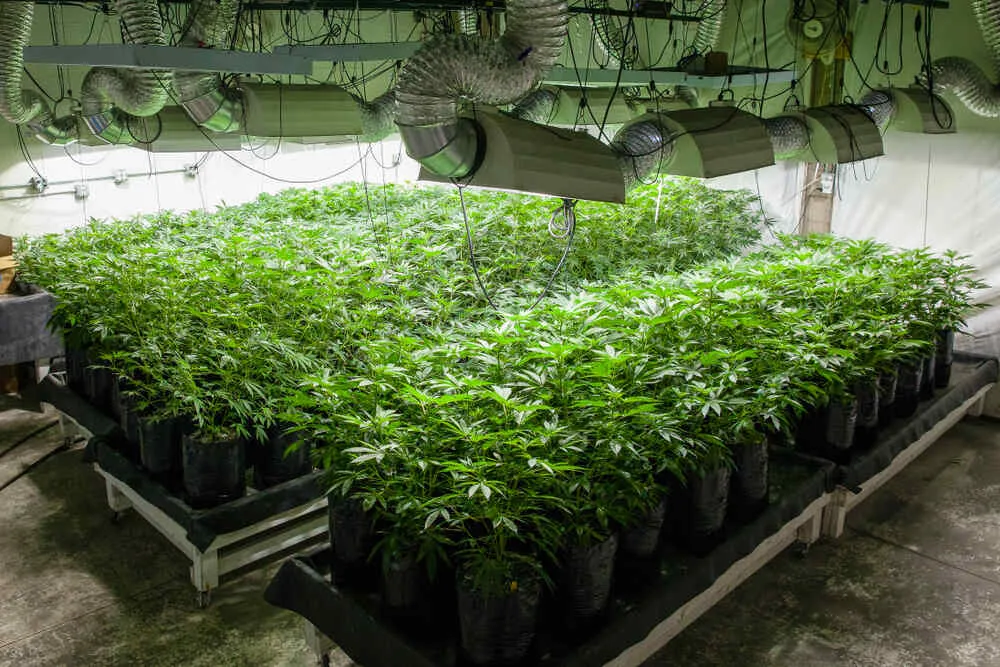
Controlled pollination lets you fertilize selected flowers while reducing the risk of stray pollen reaching the rest of the plant.
- Collect the pollen: Once the male pollen sacs are mature, collect the pollen into a clean paper bag or container. Keep it dry and clearly labeled so you know which male it came from.
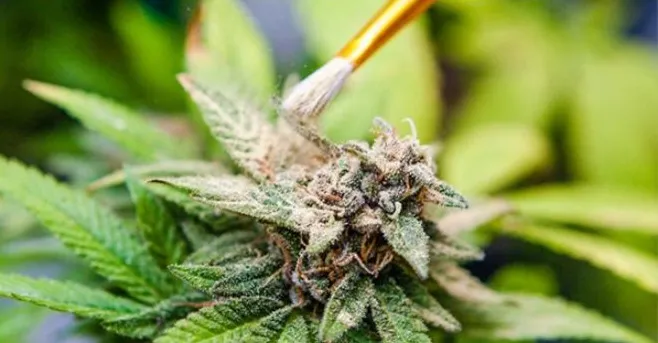
- Apply it to the female: Use a small paintbrush to lightly apply pollen to the stigmas on a selected female branch. Work carefully and avoid disturbing the pollen more than necessary.
After pollination, keep the treated branch clearly marked so you can track the cross and identify the seeds later.
Grower Tip: Turn off fans before handling pollen and clean your tools, hands, and clothing afterward. Cannabis pollen spreads easily, and even a small amount can reach flowers you did not intend to pollinate.
Harvesting and Storing Seeds Safely
After pollination, give the seeds enough time to fully develop before harvesting. Removing them too early can leave you with immature seeds that are less likely to perform well later. Once mature, careful harvesting and storing cannabis seeds safely will help protect their condition and viability for future use.
Harvesting Mature Seeds
Cannabis seeds usually need several weeks to mature after pollination, although the exact timing varies by cultivar and growing conditions.
Instead of relying on a fixed number of days, look for physical signs of maturity. Fully developed seeds are usually firm, darker in color, and may show mottled or striped markings. The surrounding bract can also begin to dry or split as the seed finishes developing.
Once the seeds are mature, remove them carefully to avoid cracking the shell.
Drying Cannabis Seeds
Freshly harvested seeds should be allowed to dry before storage. Keep them in a cool, dark, well-ventilated area and spread them out so moisture can escape evenly.
Avoid sealing freshly harvested seeds straight into an airtight container. Trapped moisture can encourage mold or rot and reduce storage life.
Storing Cannabis Seeds
Once the seeds are fully dry, store them in an airtight container away from heat, light, and excess moisture. A cool, stable environment helps protect seed viability over time.
Silica gel or another suitable desiccant can help control moisture inside the container. For longer-term storage, some growers use a refrigerator, provided the seeds are sealed properly and protected from repeated temperature and humidity changes.
Grower Tip: Label every batch with the parent plants and harvest date before it goes into storage. Once you are working with several crosses, accurate labels are just as important as the seeds themselves.
Stabilizing Your New Cannabis Strain
Creating a new cross is only the first stage. Stabilization is the process of selecting and breeding plants over several generations so the traits you want appear more consistently in the offspring.
A stabilized line should show less unwanted variation in characteristics such as plant structure, flowering time, aroma, cannabinoid profile, and yield. This does not mean every seed will produce an identical plant, but results should become more predictable as selection continues.
Why Stabilization Matters
Early-generation crosses can produce plants with noticeably different traits. That variation gives you options to select from, but it also means the results may be inconsistent.
By repeatedly choosing plants that match your breeding goals, you can gradually narrow that variation and improve consistency across later generations.
Two common approaches are:
| Method | How It Works | Main Purpose |
| Backcrossing | Selected offspring are crossed back to one of the parent lines | Helps retain or reinforce traits associated with that parent |
| Line breeding | Selected related plants are bred together over successive generations | Gradually improves consistency within the line |
Backcrossing can be useful when you want to preserve characteristics from a particular parent, while line breeding allows you to keep selecting plants that best match your overall breeding goal.
How to Stabilize a Cannabis Strain Step by Step
- Set your breeding goals
Decide which traits matter most before selecting plants. Keep the list focused, such as flowering time, structure, aroma, cannabinoid profile, or yield.
- Grow and compare the offspring
Grow plants from your cross under similar conditions and record how each one performs. Keeping light, nutrients, container size, and environment consistent makes comparisons more useful.
- Select the best candidates
Choose plants that most closely match your original goals. Avoid selecting a plant based on one impressive trait if the rest of its characteristics do not suit the line you are developing.
- Make the next cross
Use line breeding, backcrossing, or another suitable breeding method to produce the next generation. Label every cross clearly so you can track its parentage.
- Evaluate the next generation
Grow the resulting seeds and compare them for the same target traits. Look at structure, flowering time, yield, resin production, cannabinoid levels, and terpene profile.
- Repeat your selection
Continue breeding the plants that best match your goals. Over successive generations, fewer plants should fall outside the characteristics you are selecting for.
- Test the consistency
Grow another group of seeds from the later generation and check whether the target traits continue to appear reliably. Larger populations give you a better picture of how consistent the line really is.
Grower Tip: Keep detailed records for every generation. Parentage, flowering time, structure, aroma, cannabinoid results, and other observations make it much easier to see whether your breeding line is genuinely becoming more consistent.
Costs Involved in Creating Your Own Weed Strain
The cost of creating your own cannabis strain depends on how many plants you work with, the equipment you already own, and how many generations you plan to grow. A small home breeding project can be kept fairly simple, while larger programs may require separate grow spaces, environmental controls, testing, and more plant material.
Initial Setup Costs
If you already grow cannabis, you may own much of the equipment you need. Breeding can add extra costs because male and female plants often need to be kept apart before controlled pollination.
| Cost Area | What You May Need |
| Lighting | Suitable grow lights for each growing space |
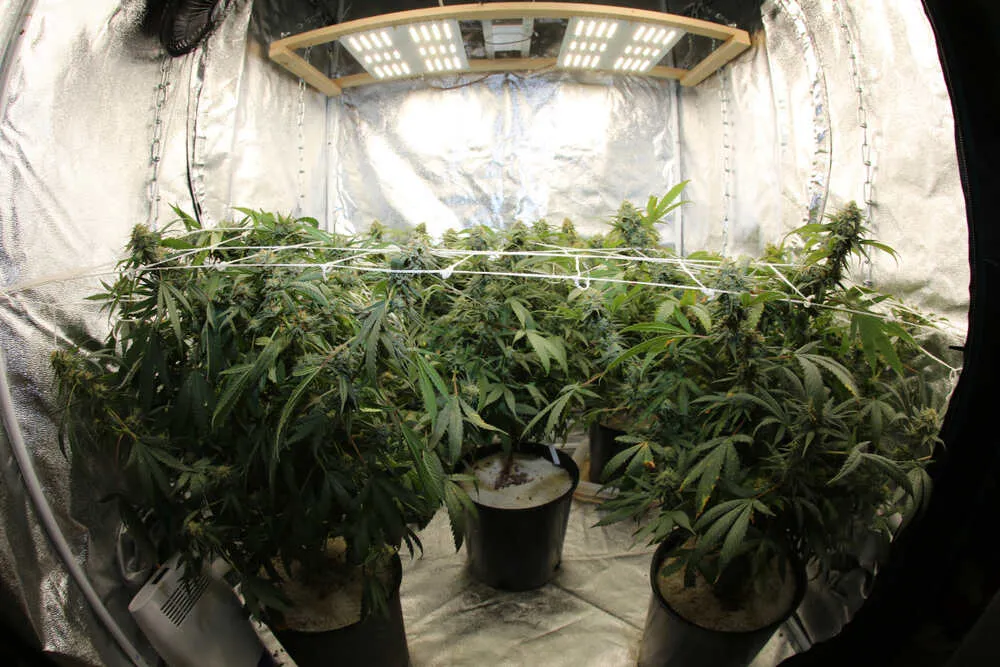
| Separate spaces | Extra tents or enclosed areas for isolating breeding plants |
| Environmental control | Fans, timers, humidifiers, dehumidifiers, and temperature controls where needed |
| Parent stock | Seeds or clones selected for the traits you want to work with |
| Containers and media | Pots and your chosen soil or hydroponic setup |
The biggest expense is often not one piece of equipment, but the need to keep plants growing through several generations.
Ongoing Breeding Costs
Once the setup is running, budget for electricity, water, nutrients, growing media, pest control, and replacement equipment. Larger populations also use more space and supplies, but they give you more plants to compare during selection.
You should also plan for seed labeling and storage. Keeping each cross properly separated and recorded becomes increasingly important once you are working with several generations.
Testing and Other Costs
Laboratory testing can add another expense if you want confirmed cannabinoid or terpene data rather than relying only on aroma, appearance, and plant performance. More advanced breeding programs may also use genetic testing, although this is not essential for a small home project.
Grower Tip: Work out your breeding goal and available space before buying extra equipment. A smaller, well-documented project is usually more useful than growing more plants than you can properly evaluate.
Legal and Ethical Considerations in Cannabis Breeding
Before starting a breeding project, check the laws that apply where you live. Cannabis rules can differ by country, state, province, and city, and may cover plant limits, home cultivation, seed production, and commercial breeding.
- In the USA, cannabis laws vary by state, and local rules may add further restrictions.
- Across the EU, cultivation and seed laws differ between countries, particularly when breeding for sale or distribution.
- In Canada, adults may be allowed to grow cannabis under federal rules, although provincial and local restrictions can also apply.
If you plan to sell seeds or breeding stock, check whether licensing, testing, packaging, or other commercial requirements apply.
Breeding Responsibly
Good breeding practice is also about keeping accurate records and being honest about what you have produced.
- Record parentage accurately: Keep clear breeding notes so the origins of each cross can be traced.
- Do not overstate stability: Early-generation or lightly tested crosses should not be presented as highly uniform.
- Reduce waste: Use efficient lighting, reuse suitable equipment, and avoid growing more plants than you can properly evaluate.
- Describe traits honestly: Base claims about flowering time, cannabinoid content, aroma, or performance on observations or testing rather than assumptions.
Grower Tip: Laws can change, so recheck current local rules before starting a new breeding cycle or sharing seeds with anyone else.
Tips for Successful Cannabis Breeding
Good breeding comes down to clear goals, careful records, and consistent evaluation. These habits will help you make better decisions from one generation to the next.
1. Keep Detailed Breeding Records
Record the parent plants, growth traits, flowering time, aroma, cannabinoid results, and any weaknesses you notice. Good notes make it much easier to compare generations and avoid repeating mistakes.
Grower Tip: Use a spreadsheet or breeding journal and give every plant or cross a clear ID.
2. Stay Consistent With Your Selection
Do not change your breeding goals every generation. Decide which traits matter most and keep judging plants against the same criteria.
Consistency in your environment matters too. Similar lighting, feeding, and growing conditions make plant-to-plant comparisons more meaningful.
3. Use Lab Testing Where It Adds Value
Appearance and aroma can tell you a lot, but laboratory testing can confirm cannabinoid and terpene profiles that cannot be judged accurately by eye.
Testing is especially useful when potency, CBD content, or a specific terpene profile is part of your breeding goal.
4. Start at a Manageable Scale
Work with enough plants to compare differences, but do not grow more than you can properly label, monitor, and evaluate. A smaller, well-organized project will usually teach you more than a larger one with poor records.
5. Learn From Other Breeders
Experienced breeders can help you understand selection methods, common mistakes, and how particular traits behave across generations. Breeding forums, grower communities, and mentors can all be useful sources of practical knowledge.
Grower Tip: Treat outside advice as a starting point, not a shortcut. Keep your own records and judge your breeding line by what you observe in your plants.
Conclusion
Creating your own cannabis strain takes careful parent selection, controlled pollination, and consistent evaluation across multiple generations. A single cross can produce interesting offspring, but developing a more predictable line requires patience and clear breeding goals.
Keep accurate records, grow plants under similar conditions, and select only those that best match the traits you want to preserve. New breeders should start with a manageable number of plants so each one can be properly monitored and compared. Over time, careful selection and good record-keeping will help you develop a cannabis strain that more consistently reflects the goals you set at the beginning.
Frequently Asked Questions
How long does it take to create your own cannabis strain?
You can produce seeds from an initial cannabis cross within one breeding cycle, but developing a more consistent strain takes much longer. Most breeding projects require several generations of growing, selecting, crossing, and evaluating offspring before the desired traits begin appearing reliably.
How many generations does it take to stabilize a cannabis strain?
There is no fixed number of generations that guarantees stability. The time required depends on the genetics you start with, the traits you are selecting for, population size, and the breeding method used. Some characteristics may become more consistent relatively quickly, while others require several generations of careful selection.
Do you need regular cannabis seeds for breeding?
Regular cannabis seeds are commonly used for traditional breeding because they can produce both male and female plants. This gives breeders access to males for pollen collection and females for seed production.
Other breeding methods can also be used, including techniques involved in producing feminized seeds, but regular seeds remain a straightforward starting point for growers learning conventional cannabis breeding.
Can you breed two female cannabis plants together?
Yes, but one female must be induced to produce viable pollen. That pollen can then be used to fertilize another female plant. This approach is commonly used when producing feminized seeds because the pollen-producing plant does not contribute a male sex chromosome.
It requires a different process from traditional male-to-female breeding and careful selection of parent plants.
How do you know when a cannabis strain is stable?
A cannabis strain is becoming more stable when plants grown from seed begin showing the breeder's target traits with greater consistency across multiple generations.
Look for reduced variation in characteristics such as flowering time, structure, aroma, cannabinoid profile, and yield. No seed population is guaranteed to produce completely identical plants, so stability is better judged by consistency across a group rather than a single plant.


