




A cannabis bud may look like one solid flower, but its structure is far more complex. Each weed bud is made up of tightly packed female flowers containing bracts, stigmas, ovules, sugar leaves and resin-producing trichomes. Together, these structures influence how the bud develops, reproduces, produces resin and ultimately looks at maturity.
Understanding cannabis bud anatomy can help growers recognize what they are seeing during flowering and distinguish commonly confused structures such as bracts and calyxes or pistils and stigmas. This guide explains the different parts of a cannabis bud, what each part does, how trichomes produce cannabinoids and terpenes, and why bud structure, density and color can vary between plants.
Key Takeaways
- A cannabis bud is not one individual flower; it is a cluster of closely packed female flowers and supporting structures known botanically as an inflorescence.
- The main parts of bud anatomy include bracts, stigmas, ovules, trichomes and sugar leaves, with each serving a different biological purpose.
- Glandular trichomes produce and store much of the cannabinoids and terpenes associated with cannabis resin, with capitate-stalked trichomes especially abundant on mature female flowers.
- Cannabis buds can vary in density, shape, color and trichome coverage because of genetics and growing conditions, and appearance alone does not reliably indicate potency.
- Understanding the different parts of a weed bud helps growers identify flower development, pollination, trichome maturity and the structures that make up a mature cannabis flower.
- What is a Cannabis Bud?
- What Are the Different Parts of a Cannabis Bud?
- Cannabis Trichome Anatomy and Resin Production
- What Do Clear, Cloudy and Amber Trichomes Mean?
- Why Do Cannabis Buds Look Different?
- Cannabinoids and Terpenes Inside Cannabis Buds
- Final Thoughts on Cannabis Bud Anatomy
- Frequently Asked Questions About Cannabis Buds
What is a Cannabis Bud?
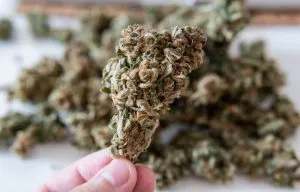
A cannabis bud is the dense cluster of female flowers that develops during the reproductive stage of the plant's life cycle. If you have ever wondered what a weed bud actually is, it is not one large flower. What growers call a "bud" is an inflorescence made up of many small flowers and supporting structures packed closely together.
Within a mature cannabis bud are bracts, stigmas, glandular trichomes and small sugar leaves. These structures perform different jobs, from reproduction and protecting the ovule to producing and storing cannabinoids and terpenes. Resin-producing glandular trichomes are particularly abundant across female flowers and their bracts, which is one reason female inflorescences are the main focus for growers cultivating cannabis for flower.
Cannabis Flower vs Cannabis Inflorescence
The terms flower, bud and inflorescence are often used interchangeably by growers, but botanically they do not mean exactly the same thing.
A cannabis flower is an individual reproductive unit. On an unpollinated female plant, each small flower contains reproductive structures surrounded by a bract, with two visible stigmas extending outward.
An inflorescence is a group of these flowers arranged together along a stem or branch. As flowering progresses and individual flowers develop close together, they create the larger structure growers recognize as a cannabis bud or cola. Botanical research describes the female Cannabis sativa inflorescence as a highly branched compound structure rather than a single oversized flower.
| Term | What It Means | What a Grower Sees |
| Flower | An individual reproductive structure | A small bract with protruding stigmas |
| Inflorescence | A cluster of multiple flowers | The developing mass of flowers along a branch |
| Cannabis bud | Common grower term for the mature female inflorescence | The dense, resin-covered flower that develops during flowering |
| Cola | A concentrated cluster of buds/flowers at the end of a branch | A large flowering top, particularly the main cola |
Grower tip: Under magnification, a cannabis bud becomes much easier to understand. Instead of seeing one solid mass of flower, you can distinguish individual bracts, stigmas, sugar leaves and resin glands packed together.
How and Where Cannabis Buds Form
Cannabis buds develop at flowering sites along the plant's stems and branches, particularly around the nodes on a cannabis plant, where branches and leaves meet the main stem. Flower clusters also form at branch tips, with the uppermost growing point often developing into the largest main cola.
As a female plant enters the cannabis flowering stage, individual flowers begin appearing around these sites, followed by increasing bract and trichome development. As flowering continues, more flowers and bracts develop closely together, the inflorescences expand, and glandular trichomes become increasingly prominent across the floral tissue.
On photoperiod cannabis plants, a shorter day length triggers major changes in shoot architecture that lead to concentrated inflorescence development. Plants grown from autoflower cannabis seeds differ because flowering is driven primarily by plant age and genetics rather than requiring a change to a 12/12 light cycle.
Not every bud site develops identically. Genetics have a major influence on flower structure, while light exposure, plant architecture and growing conditions can affect how individual bud sites develop. Upper flowers with good access to light will often develop differently from heavily shaded lower sites.
Grower tip: During early flowering, inspect both the nodes and branch tips rather than watching only the main cola. Tracking how flower sites develop across different parts of the canopy can help you spot uneven growth, poor light penetration or reproductive changes before they become more obvious later in flowering.
What Are the Different Parts of a Cannabis Bud?
While wider cannabis plant anatomy includes roots, stems, branches and leaves, a mature bud is made up of many smaller floral and leaf structures packed closely together. The main parts of cannabis bud anatomy include bracts, stigmas, ovules, trichomes, sugar leaves and the flower clusters growers commonly call colas.
Each part has a different purpose. Some are involved in reproduction, others protect the flower, and some produce or store the cannabinoids and terpenes associated with cannabis resin. Understanding these structures can help growers identify female flowers, recognize pollination and inspect developing buds more accurately.
| Part of the Cannabis Bud | What It Is | Purpose in the Plant | Why Growers Notice It |
| Bract | Small structure surrounding an individual female flower | Protects the reproductive structures inside | Makes up much of the visible bud and carries many glandular trichomes |
| Stigma | Fine hair-like part of the female reproductive structure | Captures pollen | Helps identify female flowers and changes appearance during development |
| Ovule | Reproductive structure inside the ovary | Can develop into a seed after fertilization | Seed development indicates successful pollination |
| Trichomes | Tiny glandular structures on the flower surface | Produce and store specialized plant compounds | Contain much of the cannabinoids and terpenes found in resin |
| Sugar leaves | Small leaves growing among the flowers | Continue contributing to photosynthesis | Often become coated in trichomes and are usually trimmed after harvest |
| Cola | Dense cluster of flowers at the end of a branch | Not a separate organ; it is a concentrated flower cluster | Forms the prominent flowering tops seen on mature plants |
Bracts and Calyxes: What's the Difference?
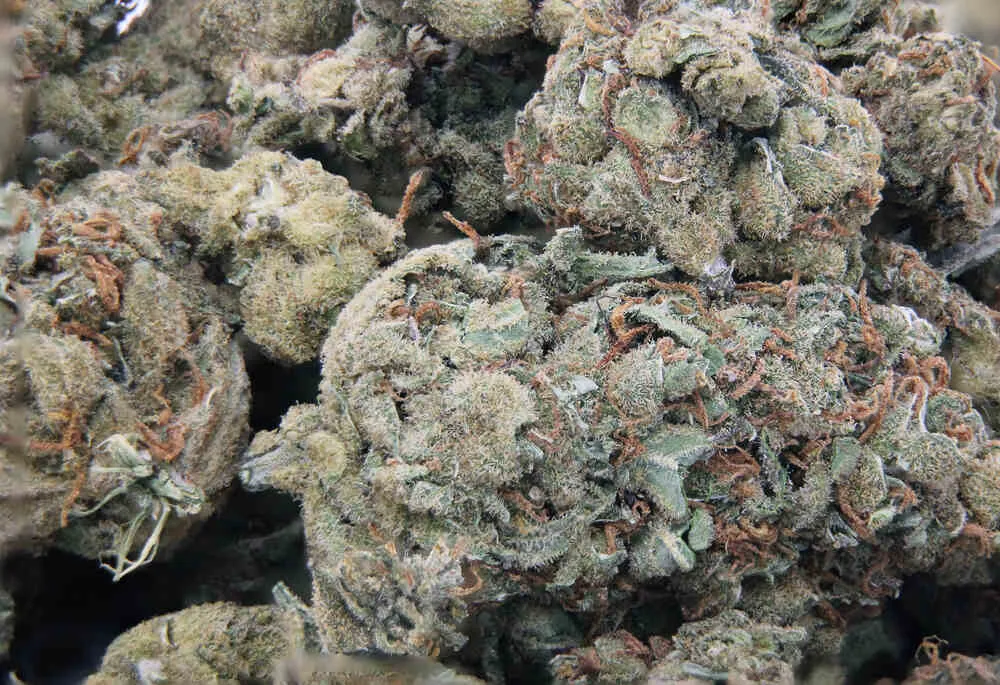
Bracts and calyxes are two of the most commonly confused terms in cannabis bud anatomy. Growers often call the small, swollen, teardrop-shaped structures that make up much of a mature bud "calyxes." Botanically, these visible structures are more accurately described as bracts, or more specifically perigonal bracts.
Think of the bract as a small protective covering around an individual female flower. It surrounds the reproductive structures inside and becomes heavily populated with glandular trichomes as flowering progresses. This makes the bracts one of the most resin-rich parts of a mature cannabis bud.
The word calyx remains widely used in cannabis cultivation, but it should not simply be treated as another scientific name for the visible bract. The actual flower contains greatly reduced floral tissue known as the perianth, and botanical terminology around this area is more complex than traditional grower language suggests.
For beginners, the simplest distinction is:
- Bract: the visible, resin-covered, teardrop-shaped structure surrounding the female flower.
- Calyx: a term commonly used by growers for the bract, although this is not botanically precise.
Grower tip: If you see a swollen, resin-covered structure with two stigmas emerging from it, you are most likely looking at a bract, even if another grower or guide calls it a calyx.
Pistils, Stigmas and Ovules
The fine hairs protruding from female cannabis flowers are frequently called pistils, but understanding the difference between stigmas and pistils is important: the visible hairs themselves are actually stigmas.
The distinction is easier to understand when each structure is considered separately:
- Pistil: the overall female reproductive structure.
- Stigmas: the exposed hair-like structures that receive pollen.
- Ovule: the reproductive structure inside the ovary that can develop into a seed after fertilization.
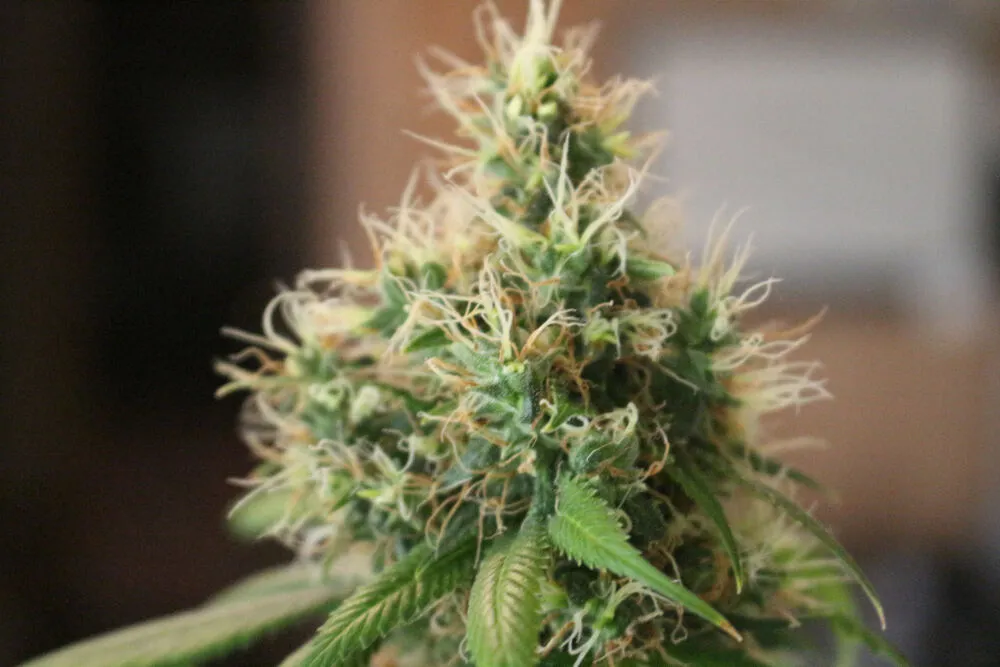
Stigmas normally emerge pale white or cream-colored during early flowering and may gradually become darker, curling inward as the flower develops. Their biological purpose is reproduction: their surface is adapted to intercept pollen.
If compatible pollen reaches the stigma and fertilization occurs, the ovule inside the flower can develop into a cannabis seed.
For growers, these structures are useful because they help identify female flowers and provide visible clues about flower development and possible pollination.
Grower tip: Do not judge harvest readiness from stigma color alone. Stigmas can darken naturally with age, but heat, physical contact, environmental stress and pollination can also change their appearance.
Trichomes
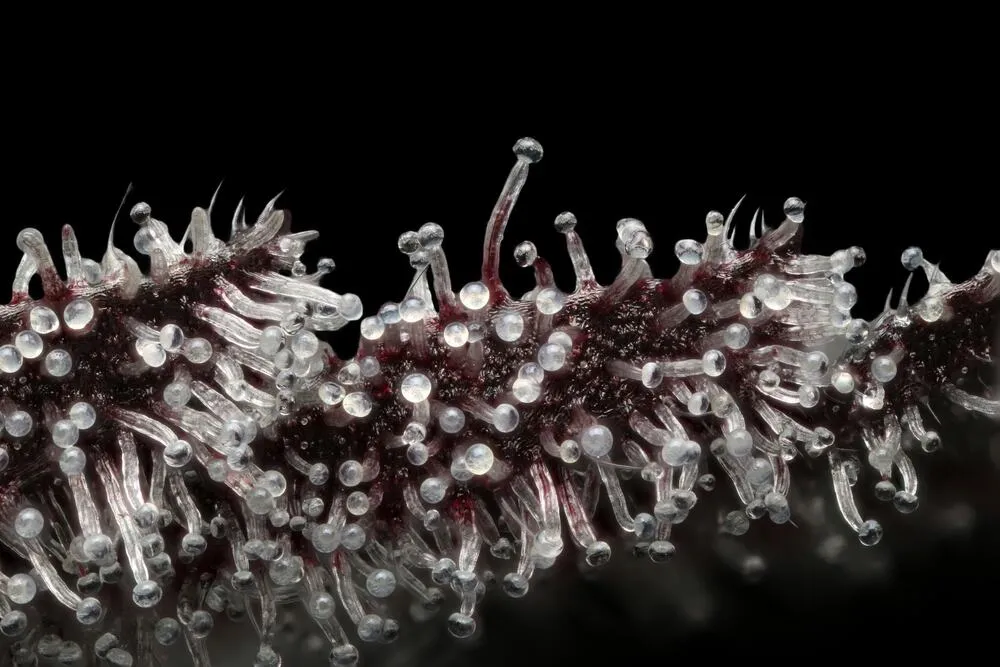
Cannabis trichomes are the tiny structures that create the frosted or crystalline appearance seen across many mature buds. They are particularly abundant on female flower bracts and are major sites of cannabinoid and terpene production. Their structure, different types and role in resin production are explained in more detail below.
Sugar Leaves
Sugar leaves are the small leaves that grow within cannabis flowers. They continue to photosynthesize during flowering and often become coated with glandular trichomes, giving them their characteristic "sugary" appearance.
These trichomes can contain cannabinoids and terpenes, although their concentration may differ from the surrounding flower bracts. After harvest, protruding sugar leaves are commonly trimmed from dried buds, although there are several uses for sugar leaves once they have been removed.
Colas and Bud Sites
A bud site is an area where cannabis flowers develop, typically around nodes and branch tips. When many individual flowers cluster closely together at the end of a branch, they form what growers call a cola on a cannabis plant.
The largest cluster at the top of the main stem is known as the main cola, while secondary branches can develop smaller colas. A cola is not a separate plant organ; it is a dense collection of flowers, bracts, stigmas, sugar leaves and trichomes.
Cannabis Trichome Anatomy and Resin Production
Glandular trichomes are microscopic resin-producing structures found across cannabis, with especially high concentrations on female flowers and bracts. They produce and store cannabinoids and terpenes and are commonly grouped into three types: capitate-stalked, capitate-sessile and bulbous trichomes.
| Trichome Type | Structure | Common Location | Role in Resin Production |
| Capitate-stalked | Large glandular head on a visible stalk | Mature female bracts and flowers | Major source of cannabinoids and terpenes |
| Capitate-sessile | Rounded head on a very short stalk | Leaves and floral tissue | Produces cannabinoids and terpenes, generally at lower levels than stalked glands |
| Bulbous | Very small rounded gland | Above-ground plant surfaces | Makes a comparatively small contribution to cannabinoid production |
Capitate-Stalked Trichomes
Capitate-stalked trichomes are the prominent mushroom-shaped glands seen on mature cannabis buds. They consist of a stalk topped by a rounded glandular head containing specialized secretory cells.
These cells produce metabolites that accumulate beneath the outer cuticle, creating the swollen resin head visible under magnification. Capitate-stalked trichomes become especially abundant on female flower bracts and are the most significant of the three types for cannabinoid and terpene production.
Grower tip: Heavy visible trichome coverage does not automatically indicate a specific THC level. Trichome density and chemistry vary between genetics and plant tissues.
Capitate-Sessile Trichomes
Capitate-sessile trichomes also have a rounded glandular head but sit much closer to the plant surface because their stalk is very short.
They occur on leaves and floral tissues and produce cannabinoids and terpenes, although mature capitate-stalked trichomes generally have greater secretory capacity. Research also indicates that trichome structure can change as cannabis flowers develop, so the distinction is more complex than simply comparing size.
Bulbous Trichomes
Bulbous trichomes are the smallest glandular trichomes found on cannabis. They have a tiny rounded gland and occur across several above-ground plant surfaces.
Although they contribute to resin production, their cannabinoid output is considerably lower than that of larger capitate trichomes. They are also difficult to examine without substantial magnification.
Why Trichomes Produce Cannabinoids and Terpenes
Cannabinoids and terpenes are specialized plant compounds produced within glandular trichomes. Secretory cells manufacture these compounds before they accumulate in the resin-filled glandular head.
One important cannabinoid precursor is cannabigerolic acid (CBGA), which can be converted through enzymatic pathways into compounds such as THCA and CBDA. Terpenes are produced through separate biosynthetic pathways and also accumulate within glandular trichomes.
These compounds are thought to contribute to the plant's protection against environmental pressures such as herbivores and excessive light. For growers, it is important to distinguish the structure from its contents: the trichome is the gland, while resin is the cannabinoid- and terpene-rich material produced and stored within it.
What Do Clear, Cloudy and Amber Trichomes Mean?
As cannabis trichomes mature, their gland heads can change from clear to cloudy or milky and eventually amber. Growers commonly use these changes as one indicator when deciding when to harvest cannabis, but trichome color should not be treated as an exact measure of THC or a guaranteed harvest formula.
| Trichome Appearance | What It Generally Means |
| Clear | Earlier stage of trichome development |
| Cloudy/milky | More advanced maturity |
| Amber | Later-stage aging and chemical change |
Clear trichomes are transparent and common while flowers are still developing. As they mature, many become cloudy or milky as the gland changes internally. With further aging, some turn amber or brown and may eventually shrink or deteriorate.
It is normal to see more than one color on the same cannabis bud because individual trichomes do not all develop at exactly the same rate.
Claims that a specific cloudy-to-amber ratio guarantees maximum THC or a particular type of effect should be treated cautiously. Genetics, plant age and flower position can all influence trichome development.
Grower tip: Examine trichomes on the flower bracts, not only the sugar leaves. Check several buds from different parts of the plant to get a more representative picture of maturity.
Male vs Female Cannabis Flower Anatomy
Male and female cannabis flowers have different structures because they perform different roles in reproduction. Female flowers receive pollen and can produce seeds, while male flowers produce and release pollen.
| Feature | Female Cannabis Flower | Male Cannabis Flower |
| Primary role | Receives pollen and can produce seeds | Produces and releases pollen |
| Visible feature | Fine protruding stigmas | Pollen-producing anthers |
| Main structures | Ovary, ovule and stigmas | Stamens and anthers |
| Flower formation | Develops into dense flower clusters | Usually forms looser clusters |
| Trichomes | Abundant on female floral bracts | Less prominent |
Female Cannabis Flowers
Female flowers contain an ovary and ovule, with fine stigmas extending outward to capture pollen. Each flower is closely surrounded by a bract that becomes increasingly covered with glandular trichomes as flowering progresses.
When female flowers remain unpollinated, they continue developing without producing mature seeds and form the resin-rich cannabis buds growers typically associate with flowering plants.
Male Cannabis Flowers
Male cannabis flowers contain stamens and anthers, which produce pollen. They usually form looser clusters than female flowers, and the anthers open when mature to release pollen.
The easiest way to identify male and female cannabis plants is by their reproductive structures: female flowers develop protruding stigmas, while male flowers develop pollen-producing structures.
Grower tip: Use the reproductive structures to identify flower sex rather than relying on plant height, leaf shape or branching, as these traits can vary significantly between genetics.
Seeded Cannabis Buds vs Sinsemilla
The difference between seeded cannabis buds and sinsemilla comes down to fertilization.
Sinsemilla means "without seed" and describes female cannabis flowers that remain unfertilized. Seeded buds develop when pollen reaches a receptive stigma, fertilization occurs and the ovule begins developing into a seed.
| Feature | Sinsemilla Bud | Seeded Bud |
| Fertilization | Does not occur | Occurs |
| Seeds | No mature seeds develop | Seeds develop inside the flowers |
| Plant resources | Remain focused on unfertilized flower development | Resources are also directed toward seed development |
| Flower chemistry | Commonly favored for flower production | Can change following substantial fertilization |
Research indicates that fertilization can alter cannabinoid and terpene concentrations as the plant redirects resources toward seed development. The exact effect varies with genetics and the extent of pollination.
Sinsemilla is therefore not a separate type of cannabis plant. It simply describes unfertilized, seedless female flowers.
Grower tip: If seeds unexpectedly appear inside cannabis buds, pollination has occurred during flowering. Learning how to tell if buds are pollinated can help you identify other signs before mature seeds become obvious. The pollen may have come from a male plant or from pollen-producing flowers elsewhere in the grow.
Why Do Cannabis Buds Look Different?
Cannabis buds vary in shape, density, color and resin coverage. Genetics provide the basic blueprint, while growing conditions influence how these traits develop. This means two cultivars grown in the same environment can still produce noticeably different buds.
Dense vs Airy Cannabis Buds
Dense buds have tightly packed flowers and bracts, while airy cannabis buds have a more open flower structure. Genetics are a major influence, although light exposure, plant development and environmental conditions can also affect flower density.
| Bud Structure | Appearance | Common Influence |
| Dense | Tightly packed flowers and bracts | Genetics and growing conditions |
| Airy | More open flower structure | Genetics, light exposure and environment |
Cannabis Bud Colors
Most cannabis buds are predominantly green because of chlorophyll, but they can also develop purple, red, orange and other shades.
Purple and reddish colors are associated with anthocyanins, which help explain why some cannabis buds turn purple when the genetics allow these pigments to develop. Temperature can affect their expression in genetically capable plants, but cold conditions will not make every cultivar turn purple.
Orange and brown areas often come from aging stigmas, while the frosted appearance of mature buds comes mainly from glandular trichomes.
How Genetics Influence Bud Structure
Genetics influence characteristics such as flower shape, density, pigmentation, trichome coverage and chemical profile. Some cultivars naturally develop compact flower clusters, while others produce longer or more open structures.
Growing conditions can modify these traits, but they cannot completely override the plant's genetic potential.
Broad claims such as "indica buds are dense" and "sativa buds are airy" are therefore oversimplified, particularly with modern cannabis genetics.
Which Parts of a Cannabis Bud Are Used?
The main part retained after harvest is the female flower cluster, particularly its trichome-rich bracts and surrounding floral tissue. These areas contain high concentrations of glandular trichomes where cannabinoids and terpenes are produced.
Sugar leaves are often trimmed because they contain more leafy material, although resin-covered trim may be kept separately. Large cannabis fan leaves and stems are generally removed because they are not part of the main flower, although the leaves still perform important functions while the plant is growing.
| Plant Part | Usually Retained With Bud? | Main Reason |
| Bracts and flower tissue | Yes | Rich in glandular trichomes |
| Sugar leaves | Partially | Can carry substantial resin |
| Fan leaves | No | Primarily photosynthetic tissue |
| Stems | No | Structural support |
| Seeds | Only after fertilization | Develop from fertilized ovules |
Cannabinoids and Terpenes Inside Cannabis Buds
Much of the chemical profile of a cannabis bud is produced within glandular trichomes. Two important groups of compounds are cannabinoids and terpenes.
Cannabinoids contribute to the plant's chemical profile, while terpenes are major contributors to its aroma. Their concentrations vary significantly between genetics.
Major Cannabinoids
Fresh cannabis primarily produces cannabinoids in their acidic forms. For example, THCA is the precursor of THC in cannabis, while CBDA is the precursor of CBD. Heat and time can cause these compounds to undergo decarboxylation, creating their neutral forms.
| Cannabinoid | Key Point |
| THCA / THC | THCA is the main precursor of THC |
| CBDA / CBD | CBDA is the precursor of CBD |
| CBGA / CBG | CBGA is an important cannabinoid precursor |
| CBCA / CBC | CBCA can decarboxylate into CBC |
| CBN | Commonly associated with oxidation and degradation of THC |
Genetics largely determine which cannabinoids dominate a particular cultivar, which is why high THC cannabis seeds are selected from genetics associated with higher THC potential.
Common Cannabis Terpenes
Terpenes in weed are aromatic compounds also found across many other plants and are major contributors to the aroma of cannabis buds. Common cannabis terpenes include:
| Terpene | Common Aroma |
| Myrcene | Earthy, musky |
| Limonene | Citrus |
| Pinene | Pine |
| Beta-caryophyllene | Peppery, spicy |
| Linalool | Floral |
| Humulene | Woody, earthy |
| Terpinolene | Herbal, floral, citrus-like |
Terpene profiles vary between cultivars and can also change during flower development and post-harvest handling.
What Does the Research Say About the Entourage Effect?
The entourage effect is the hypothesis that cannabinoids, terpenes and other cannabis compounds may interact to produce effects that differ from individual compounds used alone.
Although widely discussed, it has not been conclusively established as a predictable effect. Research has identified possible interactions between some cannabis compounds, but findings remain mixed.
Final Thoughts on Cannabis Bud Anatomy
Understanding cannabis bud anatomy makes it much easier to see what is actually happening inside a mature flower. A cannabis bud is not a single structure, but a cluster of female flowers containing bracts, stigmas, ovules, trichomes and sugar leaves, with each part performing a specific biological role.
Genetics strongly influence bud shape, color, density and chemical profile, while growing conditions can affect how those characteristics are expressed. Trichomes are particularly important because they produce and store much of the cannabinoids and terpenes associated with cannabis resin.
Knowing the different parts of a cannabis bud also helps growers avoid common misconceptions, such as confusing bracts with calyxes, calling stigmas pistils, or assuming that dense, purple or heavily frosted buds are automatically more potent.
Frequently Asked Questions About Cannabis Buds
What is a cannabis bud made of?
A cannabis bud is a cluster of female flowers made up of structures such as bracts, stigmas, ovules, trichomes and sugar leaves. Multiple flowers develop closely together to form the dense flowering clusters commonly called buds or colas.
What is the most resin-rich part of a cannabis bud?
Female flower bracts are among the most densely covered parts of the bud with glandular trichomes. These trichomes produce and store cannabinoids and terpenes, which make up much of the resin found on mature cannabis flowers.
Are cannabis pistils and stigmas the same thing?
No. The visible hair-like structures on female cannabis flowers are stigmas. They form part of the female reproductive structure commonly referred to as the pistil. Their biological role is to capture pollen.
Why do cannabis buds have different colors?
Cannabis bud color is influenced mainly by genetics and plant pigments. Green comes largely from chlorophyll, while purple and reddish shades are associated with anthocyanins. Orange and brown areas commonly come from aging stigmas. Color alone does not indicate potency.
What is the difference between a cannabis bud and a cola?
A cannabis bud generally refers to a cluster of female flowers, while a cola is a larger concentration of those flowers developing together at the end of a branch. The largest flowering cluster at the top of the main stem is commonly called the main cola.


