




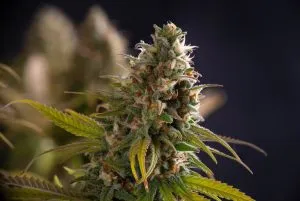
A cannabis cola is the dense cluster of flowers that develops along the main stem or side branches of a cannabis plant during flowering. Growers may also call it a marijuana cola or weed cola, but the meaning is the same: a group of individual flowers packed closely together into one larger flowering site.
The final size and structure of a cola depend on genetics, light exposure, temperature, humidity, nutrition, watering, and canopy management. Understanding how a cola bud develops can help growers identify healthy flower growth, spot problems such as airy buds or mold, and recognize when a mature cola is nearing harvest.
In this guide, we explain cannabis cola anatomy, the difference between a cola, bud, and nug, how colas form through flowering, and what growers can do to encourage healthier, better-developed flower clusters.
Key Takeaways
- A cannabis cola is a cluster of individual female flowers that develop closely together along a stem or branch.
- The terms cannabis cola, marijuana cola, and weed cola all refer to the same basic flowering structure.
- An untrained plant usually develops one main cola and several secondary colas, while training can create multiple prominent flowering sites.
- Genetics largely determine cola bud shape and density, while light, environment, nutrition, and watering influence how well the flowers develop.
- A mature cola usually shows swollen bracts and strong trichome coverage, but harvest timing should be based on overall flower and trichome maturity rather than stigma color alone.
What is a cannabis cola?
A cannabis cola is one part of cannabis plant anatomy: a cluster of flowers that develops closely together along the end of a stem or branch during flowering. Rather than being one oversized bud, a cola is made up of multiple individual flowers that swell and pack together as the plant matures.
An untrained cannabis plant will usually produce one dominant main cola at the top of the plant, with smaller secondary colas forming on the lateral branches. Training techniques such as topping, low-stress training (LST), and SCROG can redistribute growth and encourage several prominent flowering sites.
Cannabis cola vs bud vs nug: what is the difference?
Although the terms are often used interchangeably, they describe slightly different things.
| Term | Meaning |
| Cola | A cluster of cannabis flowers growing closely together |
| Bud | An individual flower or smaller section of a cola |
| Nug | Informal term for a trimmed piece of dried cannabis flower |
| Main cola | The dominant flower cluster at the top of the main stem |
| Secondary cola | A flower cluster developing on a lateral branch |
A large cola bud may look like one continuous flower, but understanding cannabis bud anatomy shows that it consists of many smaller flowers packed closely together. After harvest, drying, and trimming, these larger flower clusters are usually separated into smaller buds or nugs.
What is the difference between a main cola and secondary colas?
The main cola, also called the apical cola, develops at the highest point of an untrained cannabis plant. Because cannabis shows apical dominance, this growing tip often becomes the largest single flower cluster and usually receives strong direct light.
Secondary colas form on the side branches. Their size depends on genetics, canopy structure, light exposure, and overall plant health, so they are not automatically lower quality than the main cola.
Training can change this structure. Topping creates multiple leading shoots, while LST and SCROG help spread the canopy so several colas receive similar light levels.
Grower tip: Aim for an even canopy rather than one oversized main cola. Better light distribution across several flowering sites can improve overall canopy efficiency and reduce underdeveloped lower growth.
Why growers use the terms cannabis cola, marijuana cola and weed cola
Cannabis cola, marijuana cola, and weed cola all refer to the same basic flower cluster. “Cannabis cola” is the clearest term for cultivation and plant anatomy, while “marijuana cola” and “weed cola” are more informal variations.
Growers may also use terms such as main cola, top cola, or secondary cola when describing where these flower clusters develop on the plant.
Cannabis cola anatomy: what makes up a cola bud?
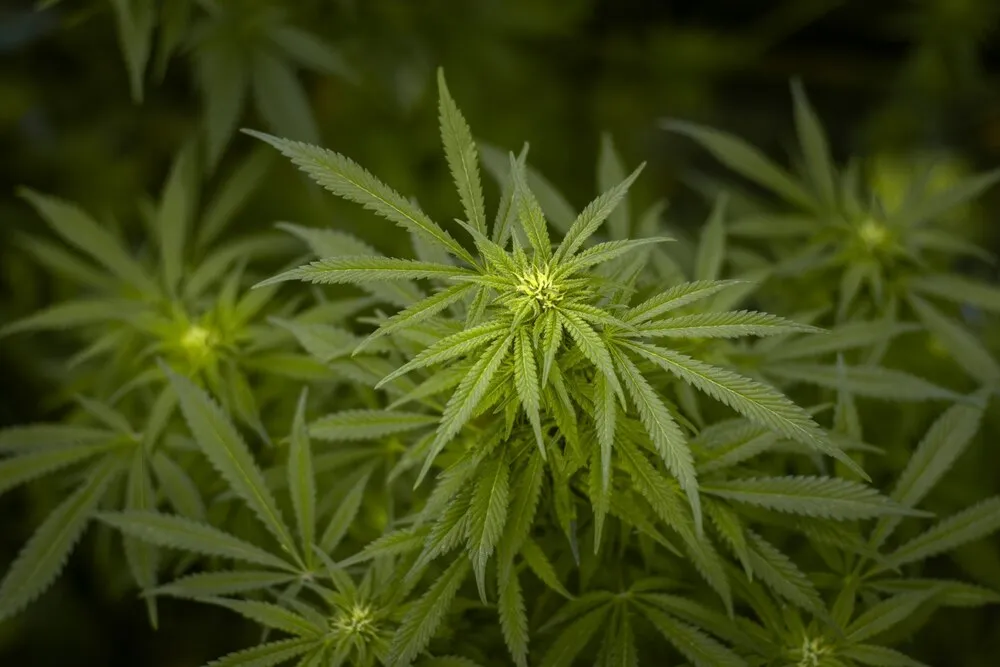
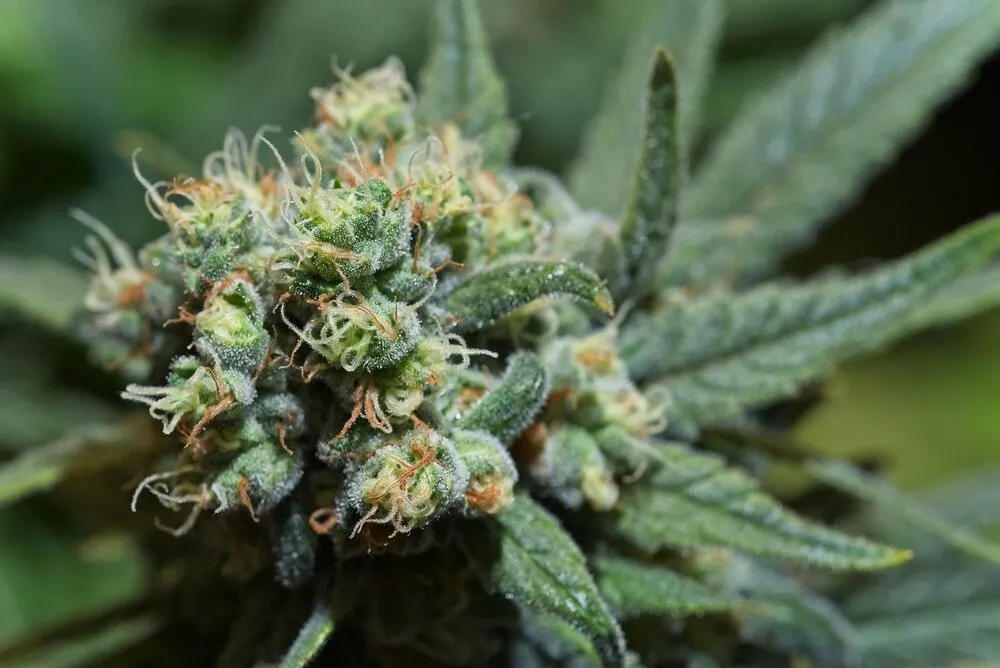
A cannabis cola is made up of many tightly packed female flowers. As they develop, bracts swell, stigmas emerge, and resin-producing trichomes become concentrated across the flower surface and nearby sugar leaves.
| Part | Role in the cannabis cola |
| Bract | Tear-shaped structure surrounding the female flower |
| Calyx | Term growers often use for the swollen bract, although the two are not botanically identical |
| Pistil | Female reproductive structure containing the ovary |
| Stigmas | Hair-like, pollen-receptive structures extending from the flower |
| Trichomes | Glands that produce and store cannabinoids and terpenes |
| Sugar leaves | Small leaves growing around and between the flowers |
Bracts, calyxes, pistils and stigmas
The bracts are the swollen, tear-shaped structures that make up much of a mature cannabis flower and often carry heavy trichome coverage.
Growers commonly refer to these structures as calyxes, although botanically the calyx and bract are not the same structure.
Inside the flower is the pistil, which contains the ovary. The difference between cannabis pistils and stigmas is important here: two stigmas extend outward and act as pollen-receptive surfaces. They are usually white when young and often turn orange, brown, or reddish as flowering progresses.
Grower tip: Stigma color can indicate flower development, but it should not be used alone to judge harvest timing. Check trichome maturity and overall flower development as well.
Trichomes, resin and sugar leaves
Cannabis trichomes are tiny glandular structures found in high concentrations on the bracts and nearby sugar leaves. They produce and store much of the plant's cannabinoids and cannabis terpenes, which contribute to the aroma of mature flowers.
As a mature cola develops, trichome heads generally progress from clear to cloudy or milky, with some becoming amber later in flowering. The timing varies between cultivars.
Sugar leaves are the small leaves that grow between the flowers. Unlike larger cannabis fan leaves, they often develop substantial trichome coverage and are usually trimmed around the finished buds after harvest.
How individual cannabis flowers develop into a cola
During early flowering, small female flowers begin appearing around the cannabis nodes and growing tips. As flowering continues, new flowers and bracts develop closely together along the flowering shoot.
The flowers remain separate structures but become so tightly packed that a mature cannabis cola can appear to be one continuous bud.
Genetics, light exposure, environment, and plant health all influence the final shape and density. Some cultivars naturally develop short, compact colas, while others produce longer or more open flower clusters, so density alone is not a reliable measure of quality.
How and when do cannabis colas form?
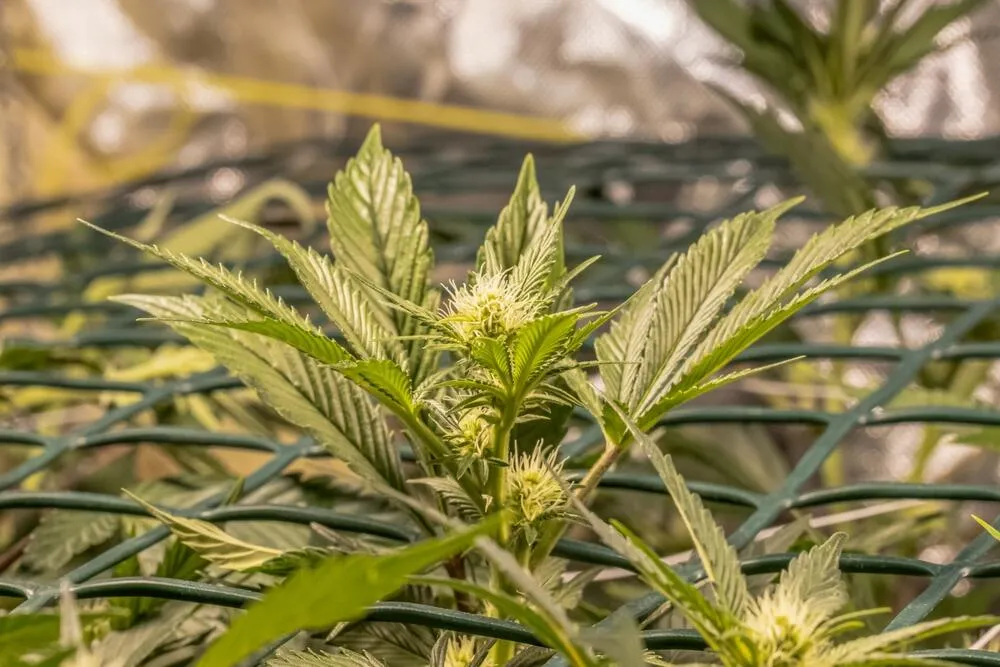
Cannabis colas develop gradually throughout flowering as individual female flowers form, swell, and become tightly packed along the stems. The exact timing depends on genetics and flowering length, but most plants move through recognizable early, mid, and late flowering stages.
| Stage | Cola development | Grower focus |
| Early flowering | Initial flower sites and white stigmas appear | Maintain an even canopy and stable environment |
| Mid flowering | Bud sites expand and begin joining into visible colas | Optimize light, airflow, and balanced nutrition |
| Late flowering | Bracts swell and colas gain most of their final weight | Monitor humidity, trichomes, and mold risk |
Early flowering: where cannabis cola development begins
During early flowering, small female flowers begin appearing around the nodes and growing tips. White stigmas become visible, but the plant may still be stretching and the eventual colas will not yet have their mature shape.
For photoperiod plants, this stage begins after the light cycle is changed to induce flowering. Autoflowers enter flowering naturally according to their genetics and age.
Grower tip: Use early flowering to establish an even canopy. Once flowers begin developing heavily, aggressive training can place unnecessary stress on the plant.
Mid flowering: how individual buds develop into larger colas
During mid flowering, new flowers and swollen bracts accumulate around each flowering site. The spaces between individual buds gradually fill in, making the developing cannabis cola look larger and more continuous.
This is when light exposure, airflow, temperature, and balanced nutrition become particularly important. Poor light penetration can leave lower flower sites underdeveloped, while excessive humidity around increasingly dense colas can encourage fungal problems.
Grower tip: Check that air can move through and around the canopy rather than blowing directly at one flower site. Dense growth may need selective pruning to improve light penetration and airflow.
Late flowering: what does a mature cola look like?
During late flowering, most vertical growth has slowed and the plant directs more resources toward flower development. Bracts become swollen, resin production increases, and the mature cola reaches much of its final size and density.
Common signs of maturity include increased trichome coverage, swollen bracts, and the orange hairs on cannabis buds becoming more noticeable as the stigmas darken. However, stigma color alone should not determine harvest timing.
Trichomes viewed under magnification generally change from clear toward cloudy or milky as the flowers mature, with some becoming amber later. Genetics and the intended harvest window affect the exact appearance.
Dense colas also hold more moisture, making late flowering an important time to monitor humidity and inspect flowers for mold or bud rot.
How cola development differs between photoperiod and autoflower cannabis plants
The basic process of cannabis cola development is similar in photoperiod and autoflower plants, but flowering begins differently.
Photoperiod cannabis starts flowering in response to longer uninterrupted periods of darkness. Indoors, growers typically trigger this by changing the light schedule to around 12 hours of light and 12 hours of darkness.
Plants grown from autoflowering cannabis seeds do not require this change; they begin flowering automatically according to age and genetics, often while continuing some vegetative growth.
Because autoflowers usually have a shorter overall life cycle, growers have less time to recover from major stress or poorly timed training. Photoperiod plants provide greater control over how long they remain vegetative before cola development begins.
Grower tip: With autoflowers, complete high-stress training early, if it is used at all. For photoperiod plants, use the vegetative period to build the canopy structure you want before switching to flowering.
What determines cannabis cola size, density and quality?
Cannabis cola size and structure are shaped by genetics first, then influenced by light, environment, nutrition, watering, and canopy management. Bigger is not always better; a healthy cola should develop according to the cultivar's natural structure without signs of stress, mold, or poor flower formation.
| Factor | Effect on cola development |
| Genetics | Sets the potential size, shape, and natural density |
| Light | Influences flower development and canopy consistency |
| Temperature and humidity | Affect growth, moisture loss, and mold risk |
| Airflow | Helps control humidity around dense flowers |
| Nutrition and watering | Support healthy flower growth when kept balanced |
How genetics influence cola shape and structure
Genetics have the strongest influence on the natural appearance and yield potential of a cannabis cola. Growers prioritizing production can start with high-yield cannabis seeds, although final results still depend on phenotype and growing conditions. Some cultivars produce short, compact flower clusters, while others form longer, more open colas with greater spacing between flowers.
Modern hybrids vary widely, so indica or sativa labels alone are not reliable predictors of final cola size or density. Cultivar and phenotype are more useful indicators.
Grower tip: Compare plants with the expected structure of the specific cultivar rather than assuming every healthy plant should produce rock-hard colas.
Light intensity, PPFD and canopy position
Adequate light helps flowering sites develop fully, while shaded lower branches often produce smaller, less developed buds.
For many indoor grows, flowering PPFD commonly falls around 600–900 µmol/m²/s, although the ideal level depends on genetics, CO₂, temperature, and the lighting system.
An even canopy helps distribute light across multiple colas instead of concentrating it on one top flower.
Grower tip: Measure PPFD at canopy level and check several positions rather than relying on the reading directly beneath the center of the light.
Temperature, humidity and airflow around developing colas
Stable temperature and humidity support healthy flower development, but dense colas can trap moisture, increasing the risk of mold and bud rot. In humid environments, mold-resistant cannabis seeds can provide a useful genetic advantage, although good airflow and humidity control are still essential.
High humidity combined with poor airflow increases the risk of bud rot and mold, particularly during late flowering. Air should move through the canopy without constantly blasting flowers from close range.
As colas become denser, growers should monitor humidity around the canopy rather than relying only on a sensor positioned elsewhere in the room.
Nutrients and watering during cola development
Flowering plants need balanced nutrition, but adding excessive phosphorus, potassium, or fertilizer will not automatically produce larger colas. Overfeeding can create nutrient stress and reduce flower quality.
Watering also matters. Repeated overwatering can reduce root-zone oxygen and affect cannabis root health, while severe underwatering can slow growth and stress developing flowers.
Grower tip: Follow plant response, substrate conditions, and appropriate EC or pH targets for your growing system rather than increasing nutrients simply because flowering has begun.
Why some cannabis colas are dense while others are airy
Airy colas are not always a sign of poor growing. Some cultivars naturally produce looser flower structures, while others develop dense, compact buds.
When genetics are not the cause, loose flowers can be associated with insufficient light, excessive heat, environmental stress, root problems, or unbalanced nutrition.
Cola density should never be judged in isolation. Flower development, resin production, aroma, and cannabis leaf appearance can all provide useful clues about overall plant health.
How to grow bigger, healthier cannabis colas
Healthy cannabis colas depend on good canopy structure, even light exposure, airflow, and well-timed training. The goal is to develop productive flower sites without overcrowding or unnecessary plant stress.
| Technique | Main benefit |
| Topping | Creates multiple dominant flowering shoots |
| LST and SCROG | Improve light distribution across the canopy |
| Pruning | Removes weak, shaded growth |
| Plant support | Prevents heavy branches from bending or breaking |
| Airflow management | Reduces mold risk around dense flowers |
Topping cannabis plants to produce multiple main colas
Topping removes the dominant growing tip during vegetative growth, allowing the shoots below it to become leading branches. This can create several prominent colas instead of one main central cola.
Allow enough recovery time before flowering and avoid topping stressed plants.
Using LST and SCROG to improve light distribution and cola development
Low-stress training (LST) bends and secures branches to create a wider, flatter canopy. SCROG uses a screen to spread growth across the available space.
Both techniques help expose more flowering sites to direct light, encouraging more consistent cola development across the canopy.
Pruning and canopy management for larger cola buds
Removing weak, shaded lower shoots helps concentrate growth in better-lit flowering sites while improving airflow.
Prune gradually and avoid aggressive removal once flowering is well established.
Grower tip: Focus on keeping strong branches with good light exposure rather than trying to retain every potential bud site.
Supporting heavy cannabis colas during late flowering
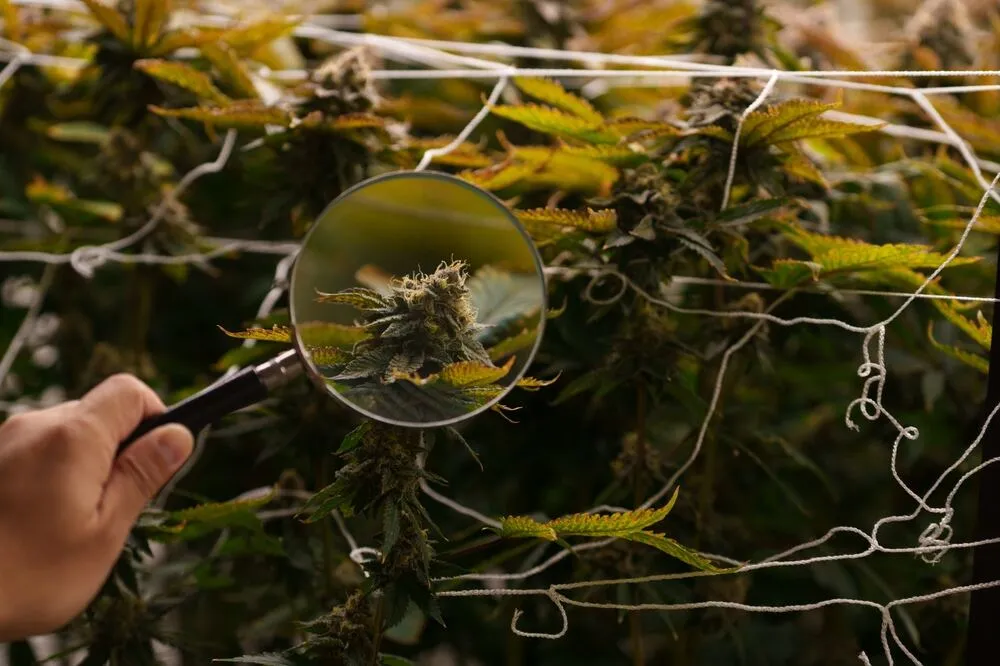
Large colas can become heavy enough to bend branches as flowering progresses. Stakes, trellis netting, or plant supports can keep flowers upright and reduce the risk of damaged stems.
Add support before branches begin collapsing to avoid unnecessary disturbance late in flowering.
How to prevent mold and bud rot in dense colas
Dense colas can trap moisture, increasing the risk of mold and bud rot. Maintain good airflow, avoid overcrowding, and inspect larger flowers regularly.
Brown or gray tissue, unusual softness, or dying leaves emerging from inside a cola can indicate bud rot. Affected flowers should be removed rather than consumed.
Grower tip: Check inside dense colas as well as the outer surface, as bud rot can begin internally.
How to tell when a cannabis cola is mature and ready to harvest
A mature cannabis cola typically has swollen bracts, strong trichome coverage, and stigmas that have darkened from their earlier white appearance.
Under magnification, trichomes generally progress from clear to cloudy or milky, with amber heads appearing as maturity advances. Avoid relying on fixed percentages, as genetics and the desired harvest window affect the ideal timing.
Grower tip: Check trichomes on the flower bracts rather than sugar leaves, which can mature sooner and give a misleading impression of readiness.
Conclusion
A cannabis cola is a cluster of tightly packed flowers that develops along the main stem or side branches during flowering. Its final size, density, and quality depend on genetics, light exposure, plant health, environment, and canopy management.
Growers can encourage healthier colas by creating an even canopy, maintaining good airflow, avoiding overfeeding, and supporting heavy branches during late flowering. When harvest approaches, use trichome maturity and overall flower development rather than relying on a single visual sign.
Understanding how colas form and mature makes it easier to identify healthy flower development, spot problems early, and manage the plant more effectively through flowering.
Frequently asked questions about cannabis colas
Is a cannabis cola the same as a bud?
Not exactly. A cannabis cola is a cluster of multiple flowers growing closely together, while a bud usually refers to an individual flower or smaller section of that cluster. After drying and trimming, large colas are commonly separated into smaller buds or nugs.
Can one cannabis plant produce multiple colas?
Yes. An untrained plant usually develops one main cola and several secondary colas. Training methods such as topping, LST, and SCROG can create a flatter canopy with several prominent flowering sites.
Is the main cola always the biggest?
The main cola is often the largest flower cluster on an untrained plant because it grows at the dominant apical tip and usually receives strong light. However, genetics and plant training can produce several colas of similar size.
What does a mature cannabis cola look like?
A mature cola typically has swollen bracts, strong trichome coverage, and stigmas that have darkened from their earlier white color. Trichomes usually become increasingly cloudy or milky as the flowers mature, with some amber heads appearing later.
Are dense cannabis colas better than airy colas?
Not necessarily. Genetics strongly influence flower density, so some healthy cultivars naturally produce more open colas. When loose flowers are unexpected, factors such as low light, excessive heat, root stress, or nutrient imbalance may be involved. Density should be judged alongside resin production, flower development, aroma, and overall plant health.


