




What is THCP, and how does it differ from THC? THCP (tetrahydrocannabiphorol) is a naturally occurring cannabinoid found in trace amounts in cannabis plants. First identified in 2019, it attracted scientific attention because laboratory studies found that it binds more strongly to CB1 receptors than delta-9 THC.
Although THCP is often described as 33 times stronger than THC, this claim refers to receptor binding affinity, not proven effects in humans. Research into THCP remains limited, particularly regarding its potency, safety and biological activity.
This guide explains what THCP is, how it differs from THC and what current scientific research tells us about this lesser-known cannabinoid.
Key Takeaways
- What is THCP? A naturally occurring cannabinoid first identified in cannabis in 2019.
- THCP vs THC: THCP has a seven-carbon side chain, compared with THC's five-carbon side chain.
- THCP potency: Laboratory studies found stronger CB1 receptor binding, but not 33 times greater human potency.
- THCP effects: Human clinical research remains limited, so its effects and safety profile are not fully established.
- Natural occurrence: THCP has been identified in trace amounts in cannabis, but concentrations across different strains remain poorly understood.
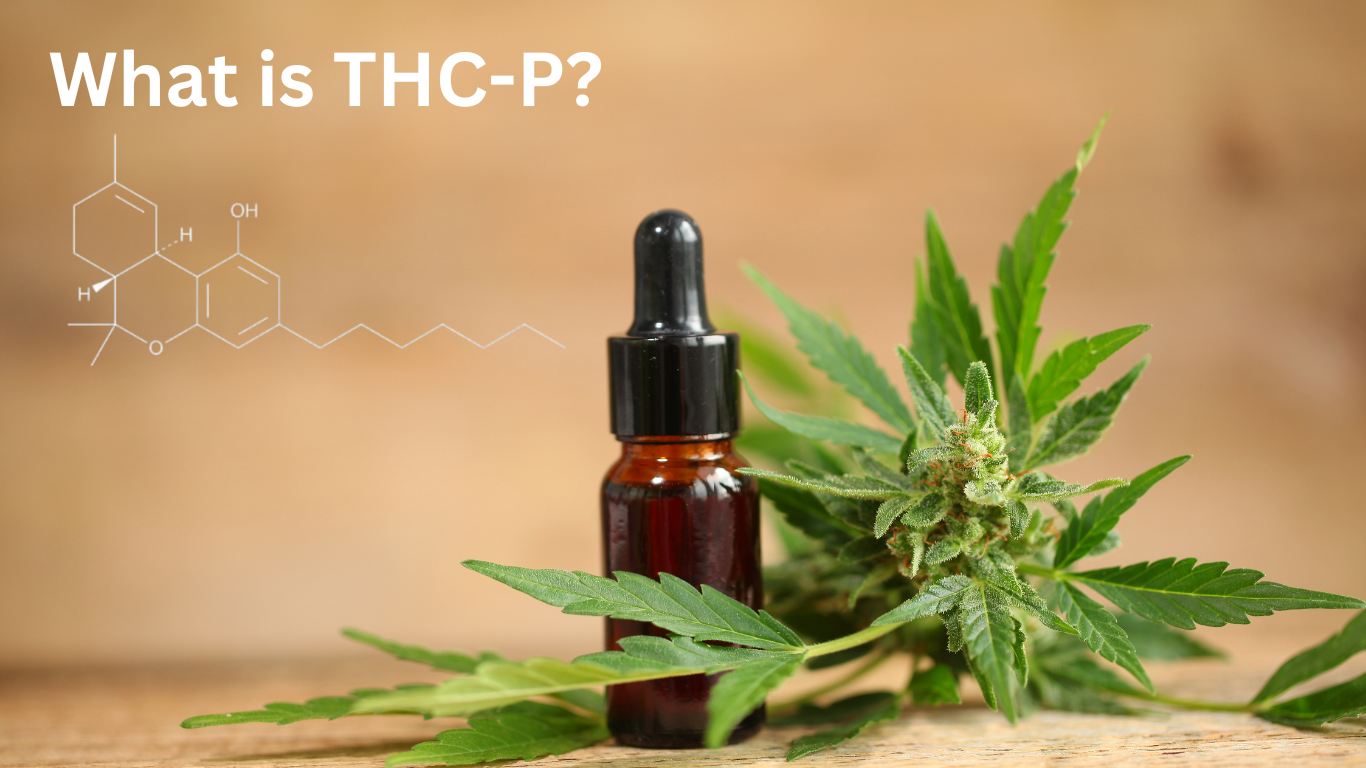
What is THCP?
THCP is a phytocannabinoid, meaning it originates from the cannabis plant rather than being produced naturally by the human body.
Researchers identified THCP while examining the chemical composition of cannabis using advanced analytical techniques.
In their original 2019 study published in Scientific Reports, Citti and colleagues identified THCP alongside another cannabinoid called cannabidiphorol (CBDP).
THCP has a chemical structure similar to delta-9 THC, but its alkyl side chain contains seven carbon atoms rather than five. This difference influences how the compound interacts with cannabinoid receptors.
Does THCP Occur Naturally in Cannabis?
Yes. THCP occurs naturally in cannabis, although the original researchers identified it in trace concentrations.
Cannabinoids are primarily produced in glandular trichomes, the small resin-producing structures found on cannabis flowers.
These structures also produce many of the compounds responsible for the plant's chemical profile, including cannabis terpenes.
However, naturally occurring THCP concentrations are not well documented across different cannabis varieties. A strain with high THC levels cannot automatically be assumed to contain high THCP levels.
How is THCP Different From THC?
THCP and delta-9 THC share a similar chemical structure but differ in their molecular composition, receptor binding and natural abundance.
| Feature | THCP | Delta-9 THC |
| Chemical structure | Seven-carbon side chain | Five-carbon side chain |
| Natural occurrence | Trace quantities identified | Common major cannabinoid |
| CB1 receptor affinity | Higher in laboratory testing | Lower in the cited comparison |
| Human effects | Limited clinical evidence | More extensively studied |
| Medical research | Preliminary | Established clinical research exists |
Both cannabinoids interact with the endocannabinoid system, although THCP's precise effects in humans remain less understood.
Is THCP Really 33 Times Stronger Than THC?
One of the most common claims about THCP is that it produces effects 33 times stronger than THC.
This interpretation is misleading.
In the original 2019 research, scientists found THCP had approximately 33 times greater binding affinity for CB1 receptors than delta-9 THC in laboratory testing.
Receptor binding affinity does not directly measure how strong a psychoactive experience will be.
The researchers also observed THC-like effects in mice, including reduced movement, changes in body temperature and altered pain responses.
However, these findings cannot establish an equivalent potency difference in humans.
How Does THCP Work in the Body?
THCP interacts with the endocannabinoid system, a network of receptors and signalling compounds involved in several physiological processes.
Two important receptors are:
- CB1 receptors: Found primarily throughout the brain and central nervous system, where they influence processes involving memory, appetite, movement and pain signalling.
- CB2 receptors: Found in various tissues, particularly cells associated with immune function.
Laboratory studies demonstrate that THCP binds strongly to both receptor types, particularly CB1.
This helps explain its potential psychoactive activity, although further human research is needed to understand how receptor binding translates into actual effects.

What Are the Effects of THCP?
Research into THCP remains limited, with most findings coming from laboratory and animal studies rather than human clinical trials.
A 2019 study by Citti and colleagues found that THCP binds more strongly to CB1 receptors than delta-9 THC and produces THC-like responses in mice. However, these findings do not establish its effects or potency in humans.
| Research area | Current findings |
| Receptor activity | Strong CB1 and CB2 binding observed |
| Animal studies | THC-like responses recorded in mice |
| Human effects | Insufficient clinical evidence |
| Medical applications | No established clinical benefits |
Further research is needed to understand how THCP affects humans and how it differs from other cannabinoids.
What Are the Potential Side Effects of THCP?
THCP's safety profile is not yet established due to limited human research.
A 2025 case report by Greer and colleagues described psychiatric symptoms and a suicide attempt following reported THCP consumption. However, the patient's medical history and the limitations of a single case prevent researchers from establishing THCP as the sole cause.
| Area | Current evidence |
| Short-term effects | Limited human research |
| Long-term safety | Not established |
| Psychiatric effects | Individual case reports; causation uncertain |
| Interactions and dosing | Insufficient clinical evidence |
These findings highlight gaps in current knowledge rather than confirming specific side effects or medical outcomes.
How is THCP Found in Commercial Products?
THCP occurs naturally in trace quantities in cannabis but can also be produced through laboratory chemical processes.
A 2024 study by Caprari and colleagues examined three commercial products advertised as containing THCP.
| Product | Research findings |
| Cannabis flower | THCP and other cannabinoids detected |
| Gummies | Trace THCP alongside other cannabinoids |
| Vape cartridge | THCP detected alongside additional compounds |
Researchers identified differences between measured THCP concentrations and product labels, along with other cannabinoids associated with laboratory production.
As only three products were examined, the findings cannot represent all commercial THCP products.
Is THCP Legal?
THCP's legal status varies by country, local regulations and product composition.
In the United States, legislation introduced changes to the federal hemp definition established under the 2018 Farm Bill.
According to an October 2026 Congressional Research Service analysis, certain cannabinoid restrictions are scheduled to take effect on November 12, 2026, followed by broader hemp-definition changes on December 11, 2026.
State laws may differ, and THCP's natural occurrence does not automatically determine the legal status of products containing it.
Current official regulations should be consulted for individual jurisdictions.

Conclusion
THCP is a naturally occurring cannabinoid that has attracted scientific interest because of its chemical structure and strong receptor binding in laboratory studies. However, this does not establish that it is 33 times more potent than THC in humans.
Although researchers have identified THCP in cannabis and commercial products, its effects, safety and natural concentrations remain poorly understood. Further clinical research is needed to establish how THCP differs from better-studied cannabinoids.
Frequently Asked Questions
Is THCP the Same as THCA?
No. THCA (tetrahydrocannabinolic acid) is the natural acidic precursor of delta-9 THC, while THCP is a separate cannabinoid with a longer carbon side chain. They have different chemical structures and properties.
Is THCP a Cannabinoid or a Terpene?
THCP is a cannabinoid. Cannabinoids interact with receptors in the endocannabinoid system, while terpenes are compounds that contribute to the aroma of cannabis and many other plants.
What Is the Difference Between THCP and CBDP?
THCP and CBDP were both identified in the same 2019 research. Both have seven-carbon side chains, but their chemical structures differ. Their biological properties remain subjects of ongoing research.
Can You Identify THCP in Cannabis by Appearance?
No. The appearance, aroma and colour of cannabis flowers cannot reliably establish their THCP content. Identifying individual cannabinoids requires appropriate laboratory analysis.
How Do Scientists Measure THCP in Cannabis?
Researchers use analytical techniques such as liquid chromatography combined with mass spectrometry to identify and measure THCP. These methods can distinguish closely related cannabinoids that would otherwise be difficult to identify.
References
- Citti, C., et al. (2019). A novel phytocannabinoid isolated from Cannabis sativa L. with an in vivo cannabimimetic activity higher than Δ9-tetrahydrocannabinol: Δ9-Tetrahydrocannabiphorol. Scientific Reports, 9, 20335. https://doi.org/10.1038/s41598-019-56785-1
- Caprari, C., et al. (2024). Δ9-Tetrahydrocannabiphorol: Identification and quantification in recreational products. Forensic Chemistry, 40, 100595. https://doi.org/10.1016/j.forc.2024.100595
- Greer, D., Atherton, J., & Girgis, J. (2025). Psychosis and suicide attempt following a single use of delta-9-tetrahydrocannabiphorol: A case report. Psychiatry and Clinical Neurosciences Reports, 4(1), e70060. https://doi.org/10.1002/pcn5.70060

