




If you want to know how to grow purple weed, the first thing to understand is that color starts with genetics. Cannabis can turn purple when pigments called anthocyanins become visible in the buds, leaves, or stems, with some strains naturally producing far more pigmentation than others. Growing conditions can also influence how strongly these colors appear, particularly during flowering.
So, why does weed turn purple, and can you control it? The right genetics, plant maturity, temperature, and overall health can all affect purple expression, but there is no reliable way to force every cannabis plant to change color. In this guide, we'll explain how weed gets purple, how to make weed purple naturally, which parts of the plant can change color, and which growing techniques should be avoided.
Key Takeaways
- Genetics is the biggest factor: Some cannabis strains are naturally more capable of producing purple buds because they contain genetics associated with higher anthocyanin expression.
- Anthocyanins create purple coloration: These natural plant pigments can produce purple, red, blue, and magenta shades in cannabis flowers, leaves, and stems.
- Growing conditions influence color: Cooler late-flowering conditions can encourage purple expression in suitable genetics, but extreme cold should be avoided.
- Purple does not always mean healthy: Purple stems or leaves can sometimes result from environmental or nutrient stress, so growers should consider the plant's overall condition.
- Purple weed is not automatically stronger: Flower color does not determine THC content, potency, or quality, so plant health, maturity, cannabinoids, and terpenes remain more important.
Why Does Weed Turn Purple?
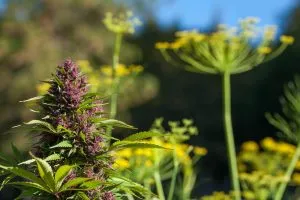
Weed turns purple when natural plant pigments called anthocyanins become visible in the leaves, stems, or flowers. Genetics plays the biggest role in deciding how much purple a cannabis plant can produce, while growing conditions can influence how strongly those colors are expressed.
This is why two plants grown in the same room can finish with completely different colors. One may develop deep purple buds while another stays mostly green, even when temperature, lighting, feeding, and watering are similar.
Anthocyanins and Chlorophyll
Cannabis gets most of its familiar green color from chlorophyll, the pigment plants use to absorb light for photosynthesis. Anthocyanins are a different group of pigments that can produce red, blue, magenta, and purple tones.
Research into Cannabis sativa has identified anthocyanins in purple leaves, stems, petioles, and flowers, with cyanidin-based pigments playing an important role in cannabis coloration.
During much of the plant's life, green chlorophyll can overpower these other colors. Purple shades may become easier to see as the plant matures and pigment levels change, particularly in genetics already capable of producing high concentrations of anthocyanins.
| Plant pigment | Main visible color | Role in purple cannabis |
| Chlorophyll | Green | Can mask other pigments when levels are high |
| Anthocyanins | Purple, red, blue | Responsible for much of the purple coloration |
| Carotenoids | Yellow, orange | Can become more noticeable as green coloration fades |
Grower tip: Don't assume a fading green leaf will automatically turn purple. The plant needs the genetic ability to produce enough anthocyanin for strong purple coloration to appear.
Genetics vs Growing Conditions
If you're wondering why weed turns purple, genetics should be the first thing you look at. Different cannabis varieties show large differences in anthocyanin production, and studies have found that genes involved in the anthocyanin pathway are more active in heavily pigmented cannabis plants.
Growing conditions still matter, but they work mainly by influencing a trait the plant already has. Temperature, light, plant maturity, and overall health can all affect how visible purple pigmentation becomes.
This also explains why purple color can vary between phenotypes of the same strain. One plant may produce dark purple flowers while another stays green or shows color only on its leaves and stems.
For growers trying to grow purple weed, the most reliable starting point is choosing purple cannabis strains from genetics known for strong flower coloration rather than trying to force a naturally green plant to change color. Environmental adjustments can help bring out existing purple traits, but they cannot reliably create them where the genetic potential is absent.
What Parts of Cannabis Can Turn Purple?
Purple coloration can appear across several parts of a cannabis plant, including the flowers, leaves, stems, and petioles. Where the color develops matters because purple leaves or stems do not necessarily mean the finished buds will also turn purple.
| Plant part | What purple coloration can indicate |
| Buds and bracts | Strong genetic expression of purple flower color |
| Sugar leaves | Anthocyanin expression close to the developing flowers |
| Fan leaves | Genetics, maturity, cooler conditions, or natural late-flower fade |
| Stems and petioles | Genetics or, in some cases, environmental or nutritional stress |
Buds and Bracts
For growers looking for genuinely purple weed, coloration within the flower itself is the most important trait.
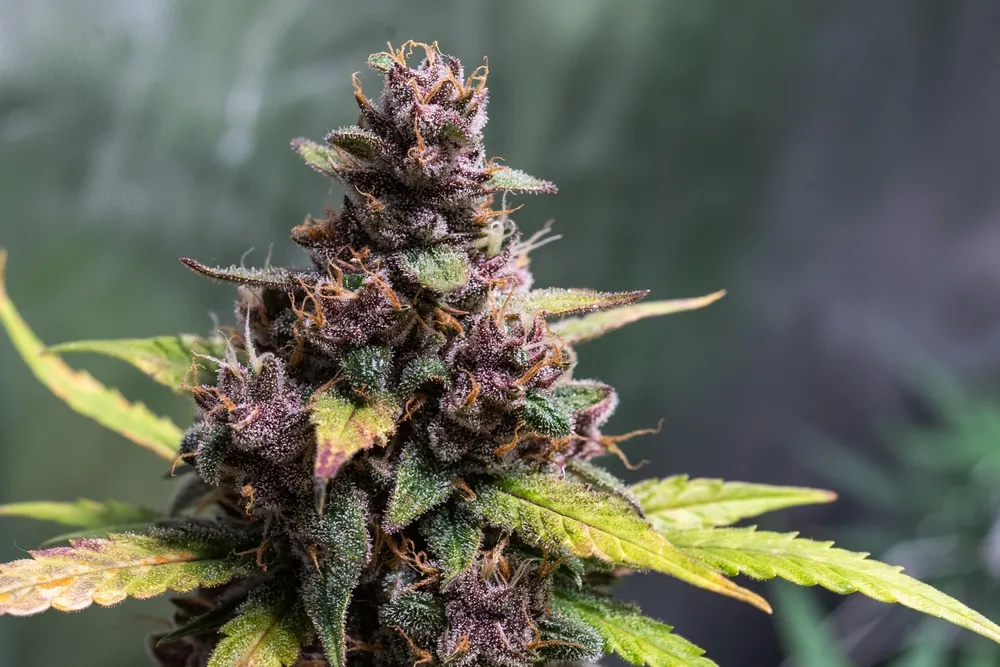
The small bracts that make up much of the visible bud can develop shades ranging from light pink and magenta to deep violet or almost black. When anthocyanins are concentrated within these flower tissues, much of that color can remain visible after harvesting, drying, and curing.
Purple bracts are primarily linked to genetics, although the environment can affect how strongly the color develops.
Grower tip: Look at the flower tissue itself rather than judging a plant by the surrounding leaves. Purple foliage can make a plant look highly colored even when the dried buds finish mostly green.
Sugar and Fan Leaves
Sugar leaves often show purple tones because they sit close to the flowers and can express similar pigmentation. Larger fan leaves can also change from green to purple, red, or other darker shades as a plant matures.
However, purple leaves alone do not guarantee purple buds.
Late-flowering color changes can also occur as chlorophyll levels decrease, so growers should consider the overall health of the plant rather than assuming every color change is desirable.
Stems and Petioles
Cannabis stems and petioles, the small stalks connecting leaves to the main branches, can also turn purple.
Some strains naturally develop purple or reddish stems, making this a normal genetic trait. However, similar discoloration can sometimes appear alongside cold stress, intense light, or nutrient problems.
For that reason, purple stems should not be used as proof that a plant will eventually produce purple flowers.
Grower tip: If purple stems appear alongside slow growth, damaged leaves, or unusual spotting, check the growing environment and plant health before assuming the color is genetic.
How to Grow Purple Weed and Encourage Natural Color
If you want to grow purple weed, focus on genetics first and environmental conditions second. Purple color cannot be reliably forced into every cannabis plant, so the aim is to choose genetics capable of producing anthocyanins and then create healthy conditions that allow those colors to develop naturally.
| Step | What to do | Why it matters |
| 1 | Choose purple-capable genetics | Genetics has the biggest influence on flower color |
| 2 | Grow the plant under stable conditions | Healthy plants can express their natural traits properly |
| 3 | Introduce cooler nights in late flower | Cooler temperatures may encourage anthocyanin expression |
| 4 | Keep feeding balanced | Nutrient stress can cause discoloration rather than healthy purple color |
| 5 | Watch the flowers, not just the leaves | Purple leaves do not guarantee purple buds |
Step 1: Start With Purple-Capable Genetics
The first step is choosing a strain known for producing purple flowers.
Strains such as Granddaddy Purple, Purple Kush, Purple Punch, and Purple Haze are commonly associated with purple coloration, although individual plants can still vary.
Even seeds from the same strain may produce different phenotypes. One plant might develop dark violet flowers while another stays mostly green.
If color is important to you, prioritize strains known for producing purple pigmentation directly in the buds rather than varieties that only develop colorful leaves.
Grower tip: Genetics gives you the potential for purple flowers. Growing conditions can help bring that potential out, but they cannot reliably create it from nothing.
Step 2: Keep Conditions Stable Through Early Growth
Do not try to make the plant purple during the seedling stage. During the cannabis vegetative stage, concentrate on healthy development with consistent watering, appropriate nutrition, good airflow, suitable lighting, and stable temperatures.
Keeping stress low gives the plant the best chance to enter flowering in good condition.
Purple coloration is mainly a secondary characteristic. Strong root development, healthy leaves, and steady growth should come first.
Step 3: Allow Temperatures to Drop Slightly in Late Flower
Once the plant reaches the later stages of flowering, moderately cooler nighttime temperatures can encourage purple coloration in suitable genetics.
Research has shown that temperature can affect anthocyanin accumulation in purple cannabis genetics, although there is no single temperature that guarantees purple buds.
The important point is to make any temperature changes gradually.
Avoid suddenly exposing plants to extreme cold. Temperatures that are too low can slow development and reduce flower growth rather than improve color.
Grower tip: Think of cooler nights as a way to enhance existing purple traits, not as a method for forcing a green plant to change color.
Step 4: Maintain Balanced Nutrition
Continue feeding according to the plant's needs during flowering.
Do not deliberately starve the plant of nitrogen or other nutrients simply to make the leaves fade. Cannabis nutrient deficiencies can create red, yellow, or purple discoloration, but this is a sign of plant stress rather than healthy genetic color expression.
Maintain appropriate pH and watch for unusual spotting, leaf damage, or stalled growth.
Step 5: Check Where the Purple Color Is Developing
As flowering progresses, look closely at the buds and bracts rather than judging the plant by its leaves alone.
Purple sugar leaves and fan leaves can make a plant appear highly colored while the flowers themselves remain green.
If the bracts begin developing purple, violet, or magenta tones, the coloration is more likely to remain visible in the finished buds after harvesting and drying.
Grower tip: Let the plant finish naturally. Healthy flower development should always take priority over trying to achieve the darkest possible purple color.
What Not to Do to Make Weed Purple
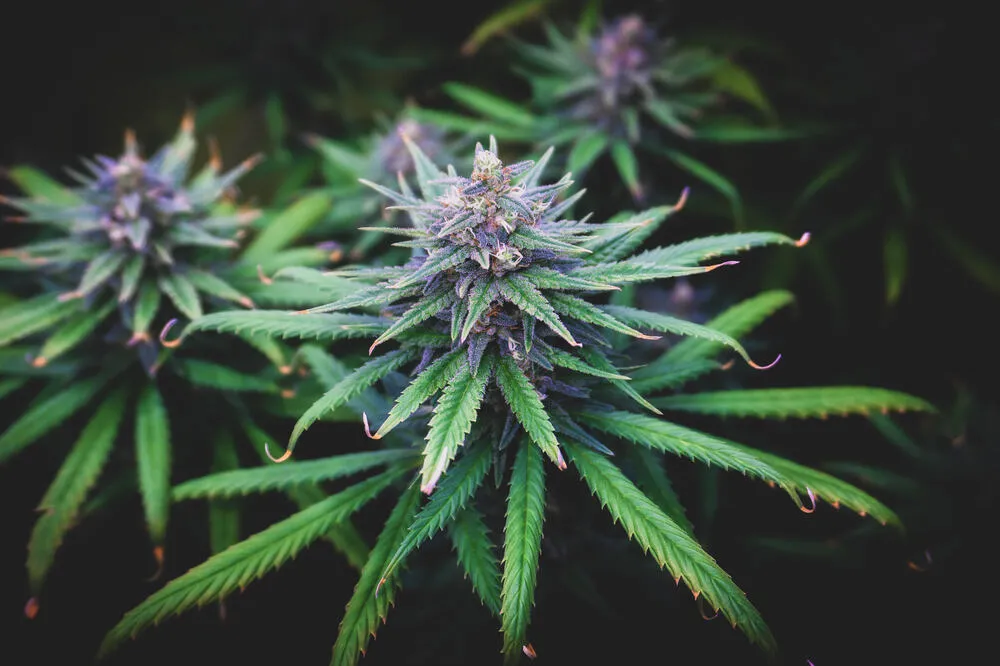
Trying to force cannabis to turn purple through extreme stress can do more harm than good. Purple coloration is mainly controlled by genetics, so aggressive techniques will not reliably turn a naturally green plant purple.
| Method | Why to avoid it |
| Ice or freezing water | Can shock the root zone without guaranteeing purple flowers |
| Nutrient starvation | Causes deficiencies and unhealthy discoloration |
| Extreme cold | Can slow plant development and damage tissue |
| Deliberate pH stress | Can interfere with nutrient uptake and plant health |
Don’t Use Ice or Freezing Water
Some growers suggest putting ice around the roots or using very cold water to mimic frost and make cannabis turn purple.
This is not a reliable way to produce purple buds.
Sudden root-zone temperature changes can stress the plant, while any discoloration that follows does not necessarily mean anthocyanin levels have increased in the flowers.
If a plant has purple-capable genetics, color should develop naturally under suitable conditions without deliberately shocking the roots.
Grower tip: Avoid judging a technique by color alone. A stressed plant can change color while also showing slower growth or declining health.
Don’t Starve the Plant of Nutrients
Nutrient deficiencies can cause cannabis leaves and stems to change color, but this should not be confused with healthy purple pigmentation.
For example, deficiencies or nutrient imbalances may produce red or purple stems alongside yellowing, spotting, damaged leaves, or poor development.
Deliberately withholding nutrients to force a plant to fade can therefore make it harder to distinguish natural purple expression from a plant health problem.
The better approach is to maintain appropriate nutrition and let the plant’s genetics determine its final color.
Don’t Create Extreme Cold or pH Stress
Cooler conditions can influence anthocyanin expression in some purple-capable cannabis genetics, but extreme cold is different.
Excessively low temperatures can stress plant tissue and interfere with normal development. Going colder does not automatically produce darker purple buds.
The same applies to pH. Deliberately pushing the root zone outside its normal range in an attempt to change flower color can affect nutrient availability and create deficiency symptoms instead.
If your goal is to make weed purple, avoid techniques that compromise plant health. Strong purple coloration should be treated as a genetic trait to encourage naturally, not a stress response that needs to be forced.
Why Isn’t My Weed Turning Purple?
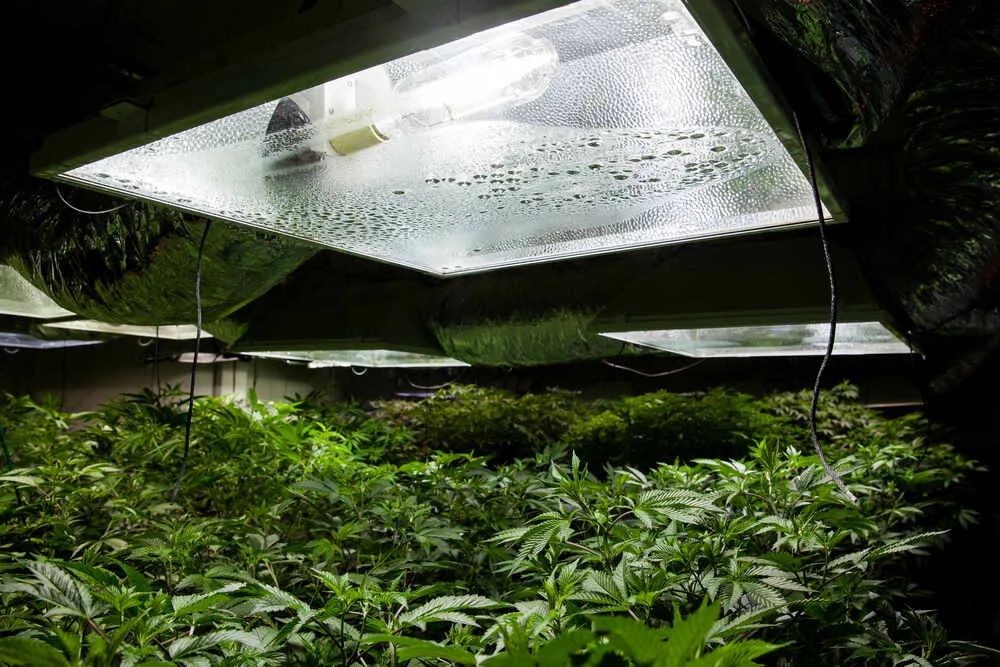
If your cannabis plant is staying green, it does not necessarily mean you are doing anything wrong. Purple coloration depends heavily on genetics, and even strains known for purple flowers can vary from one phenotype to another.
Before changing your grow conditions, look at the plant's genetics, flowering stage, temperature, and overall health.
| Possible reason | What to look for |
| Genetics | Healthy green plant with little or no purple coloration |
| Too early | Plant is still in early or mid-flowering |
| Warm conditions | Little difference between daytime and nighttime temperatures |
| Plant stress | Purple color alongside spotting, yellowing, damaged leaves, or slow growth |
The Genetics Don’t Support Strong Purple Color
Genetics is usually the first thing to consider.
Even within a strain associated with purple cannabis, individual plants can express color differently. One phenotype may develop dark purple bracts while another remains mostly green under the same growing conditions.
If the plant is healthy, flowering normally, and still not changing color, it may simply lack strong purple expression.
Trying to force the color by creating colder temperatures or nutrient stress is unlikely to change its underlying genetics.
Grower tip: If purple buds are important to you, choose genetics with a consistent history of purple flower expression rather than relying on growing conditions to create the color.
It’s Too Early
Purple coloration often becomes more noticeable as the cannabis flowering stage progresses.
During early and mid-flower, chlorophyll can still dominate the plant's appearance. As the plant moves closer to maturity, changes in pigment levels may make underlying reds, blues, and purples easier to see.
For this reason, don't assume a plant will stay green simply because it has not turned purple halfway through flowering.
Some plants show their strongest colors only during the final stages before harvest.
Your Environment Is Staying Warm
Temperature can influence how strongly anthocyanins are expressed in purple-capable genetics.
If daytime and nighttime temperatures remain consistently warm, purple coloration may be less noticeable than it would be under moderately cooler late-flowering conditions.
This does not mean you should suddenly chill the grow space. Extreme temperature drops can create stress without guaranteeing darker flowers.
Instead, maintain a stable environment and allow any normal day-to-night temperature difference to develop gradually.
The Plant Is Showing Stress Instead
Not every purple stem or leaf is a desirable genetic trait.
Cold damage, nutrient problems, root-zone issues, and other forms of stress can produce visible cannabis leaf symptoms, including purple or reddish discoloration alongside yellowing, spotting, or damaged leaves.
Watch for signs such as:
- Yellowing or spotted leaves
- Dry or damaged leaf edges
- Slow or stalled growth
- Wilting
- Unusual discoloration appearing alongside other symptoms
Healthy purple pigmentation generally develops without the plant showing obvious signs of decline.
Grower tip: Look at the whole plant rather than color alone. If purple coloration appears alongside damaged leaves or poor growth, investigate plant health before trying to encourage more color.
Does Purple Weed Mean Higher Potency or Better Quality?
Purple weed is not automatically more potent or higher quality than green cannabis. The purple color comes mainly from anthocyanins, while cannabis potency is determined by its cannabinoid profile, including compounds such as THC and CBD.
This means a strain with dark purple buds can have a lower THC level than a completely green strain. Color alone cannot tell you how strong the effects will be.
The same applies to overall quality. When assessing cannabis quality, look beyond appearance and consider cannabinoid content, terpene profile, trichome maturity, and bud structure and density.
- Cannabinoid content
- Terpene profile and aroma
- Trichome coverage and maturity
- Flower development
- Bud structure
- Plant health
- Harvest timing
- Drying and curing quality
Purple coloration can make cannabis visually distinctive, especially when the bracts themselves develop deep violet, red, or magenta tones. However, this is primarily a genetic and pigment-related trait rather than evidence that the finished flower is stronger or better.
Well-grown purple cannabis should still be judged using the same standards as any other strain. Healthy flower development, mature trichomes, strong aroma, and proper drying and curing are much more useful indicators of quality than color alone.
Grower tip: Don’t chase purple color at the expense of plant health. A healthy green plant can produce better-quality flower than a purple plant that has been stressed through cold temperatures, poor nutrition, or other extreme growing conditions.
Conclusion
Learning how to make weed purple starts with understanding that color is mainly controlled by genetics. Anthocyanins create the purple, red, and blue shades seen in some cannabis plants, while growing conditions influence how strongly those colors appear.
If you want to grow purple weed, start with genetics known for purple flower expression, maintain healthy growth, and allow moderate temperature changes late in flowering rather than trying to force color through extreme stress.
Purple buds can look impressive, but color should never take priority over plant health, flower development, or harvest quality. A healthy plant grown under stable conditions will always be more important than achieving the darkest possible purple shade.
Frequently Asked Questions About Purple Weed
Can You Make Any Weed Strain Turn Purple?
No. Genetics largely determine whether cannabis can develop strong purple coloration. Environmental conditions may enhance anthocyanin expression in purple-capable plants, but they cannot reliably make a genetically green strain produce purple buds.
When Does Weed Usually Turn Purple?
Purple coloration often becomes more noticeable during the later stages of flowering as the plant matures. Some strains develop color earlier, while others may stay green until close to harvest or never show strong purple pigmentation at all.
Does Cold Weather Make Weed Turn Purple?
Cooler temperatures can encourage anthocyanin expression in some genetically capable cannabis plants, but cold alone does not guarantee purple buds. Excessive or sudden cold can stress the plant and interfere with healthy flower development.
Why Are My Cannabis Stems Purple but My Buds Are Green?
Purple stems can be caused by genetics, temperature, lighting, or plant stress. They do not automatically mean the flowers will turn purple. Check overall plant health before assuming purple stems are evidence of purple-flowering genetics.
Do Purple Cannabis Buds Stay Purple After Drying?
Purple color within the flower can remain visible after drying and curing, although the shade may become darker or less vivid. Buds with purple bracts generally retain more color than plants where pigmentation appears only on the surrounding leaves.


