




Choosing the best cannabis strains for tropical climates means understanding how heat, humidity and heavy rainfall can affect plant growth. While some tropical cannabis strains are adapted to warm environments, prolonged moisture can increase the risk of bud rot and other fungal diseases.
The most suitable cannabis strains for humid climates depend on their flowering time, plant structure and ability to cope with local weather conditions. From traditional sativa genetics to fast-flowering and autoflowering varieties, each offers different advantages.
This guide explains what to look for when choosing cannabis strains for wet climates, compares suitable varieties and explores how tropical daylight and humidity influence flowering and plant health.
Key Takeaways
- Climate matters: Tropical, subtropical and hot, dry regions present different challenges for cannabis plants.
- Strain characteristics: Flower density, branching structure and flowering time are more useful indicators than indica or sativa labels alone.
- Fungal resistance: Some strains have breeder-reported resistance, but no variety is guaranteed to avoid bud rot.
- Flowering behaviour: Photoperiod cannabis responds to daylength, while autoflowers begin flowering independently of seasonal light changes.
- Strain selection: The best cannabis strains for tropical and humid climates are those whose growing characteristics suit local rainfall and weather patterns.
- What Makes Tropical Climates Challenging for Cannabis?
- How Does High Humidity Affect Cannabis Plants?
- How to Identify Cannabis Strains Suitable for Humid Conditions
- Best Cannabis Strains for Tropical and Wet Climates
- Are Sativa Strains Better for Tropical Climates?
- How Does Daylight Near the Equator Affect Flowering?
- Autoflowering vs Photoperiod Cannabis in Rainy Climates
- Why Bud Structure and Airflow Matter for Fungal Disease
- Conclusion
- Frequently Asked Questions
- Are fast-flowering cannabis strains better for rainy climates?
- Does a mould-resistant cannabis strain prevent bud rot?
- Is flowering time the same as the total growing period?
- References
What Makes Tropical Climates Challenging for Cannabis?
Tropical climates generally remain warm throughout the year, but rainfall and humidity can vary considerably between regions. Some experience heavy rain during specific months, while others receive frequent rainfall throughout the year.
For cannabis growers, the main challenge is not necessarily high temperatures. It is the combination of moisture, limited drying periods and unpredictable weather, particularly during flowering.
Tropical, subtropical and hot, dry climates present different growing conditions.
| Climate | Typical conditions | Main challenge |
| Tropical | Year-round warmth, often with high humidity or seasonal heavy rainfall | Prolonged moisture and increased fungal disease risk |
| Subtropical | Hot summers, cooler winters and variable rainfall | Seasonal changes in temperature, daylight and moisture |
| Hot and dry | High temperatures, low humidity and limited rainfall | Heat stress and water shortages |
A subtropical coastline with frequent summer storms may experience more fungal problems than a tropical region with a pronounced dry season. This is why local weather patterns matter more than climate classifications alone.
For a closer comparison, read about growing cannabis in subtropical and temperate climates and growing cannabis in hot and dry climates.
How Does High Humidity Affect Cannabis Plants?
Humidity refers to the amount of water vapour in the air. When relative humidity is very high, moisture evaporates more slowly, and plants may lose less water through their leaves.
This can affect transpiration, the process through which plants release water vapour. Prolonged wet conditions can also leave flowers damp and increase the risk of fungal infection.
Corredor-Perilla and colleagues (2025) investigated humidity in a CBD-dominant cannabis variety under controlled conditions. Plants exposed to 78–98% relative humidity produced 71% less flower biomass and began flowering approximately three weeks later than those grown at 37–58% relative humidity.
These findings demonstrate how extreme humidity can affect cannabis development, although the results apply to the variety and conditions tested rather than every outdoor strain.
The cannabis VPD guide explains how temperature and humidity influence the movement of moisture between plants and the surrounding air.
How to Identify Cannabis Strains Suitable for Humid Conditions
When choosing the best cannabis strains for humid climates, look beyond THC percentages, advertised yields or whether a variety is described as indica or sativa.
A strain's physical characteristics and flowering behaviour provide more useful information about how it may respond to wet weather.
Four characteristics are worth comparing:
- Flower structure: Dense, tightly packed flowers can hold moisture within their tissues. More open flower formations may allow better air movement, although neither structure guarantees resistance to fungal disease.
- Plant structure: Widely spaced branches allow air to circulate more easily around leaves and developing flowers. Crowded plants can retain humid air for longer periods.
- Flowering time: Shorter-flowering varieties may have less exposure to seasonal rainfall, provided their flowering period aligns with a suitable weather window.
- Climate suitability and resistance: Breeder descriptions can help identify potential candidates, but claims of fungal resistance should be supported by documented growing observations or independent testing where available.
It is also important to distinguish between heat tolerance and humidity tolerance. A cannabis strain suited to hot, dry conditions may not perform equally well in a warm environment with frequent rainfall.
Grower Tip: Check when your local rainy season begins and how long it usually lasts. Compare those dates with the strain's estimated flowering period, rather than assuming that a fast-flowering variety will automatically finish before heavy rainfall.
Traditional tropical genetics can provide a useful starting point, but individual characteristics remain important. The guide to choosing cannabis seeds explains what else to look for when comparing varieties.
Best Cannabis Strains for Tropical and Wet Climates
The following varieties offer different characteristics suited to warm environments. Their suitability for consistently wet conditions varies.
Flowering periods and heights are breeder estimates. Resistance descriptions refer to breeder claims unless independent evidence is available.
| Strain | Flowering time | Height | Climate suitability and resistance |
| Purple Thai Feminized | 8–10 weeks | 180–220 cm | Tropical; no documented resistance rating |
| Durban Poison Regular | 8–10 weeks | 180–220 cm | Tropical/subtropical; breeder-reported resistance |
| Maui Wowie Feminized | 8–10 weeks | 180–220 cm | Warm/temperate; breeder-reported resistance |
| GG4 Fast Flowering | 6–8 weeks | 100–180 cm | Tropical/subtropical; breeder-reported resistance |
| Thai Stick Feminized | 12–14 weeks | 180–220 cm | Warm, humid conditions; long flowering period |
| Durban Poison Autoflower | About 8 weeks flowering | 60–100 cm | Tropical/subtropical; breeder-reported resistance |
Purple Thai Feminized
Purple Thai Feminized combines Highland Oaxacan Gold and Chocolate Thai genetics.
It has an advertised flowering period of 8–10 weeks and a tall growth pattern. The breeder lists tropical climates as suitable, making it a candidate for growers interested in traditional sativa-influenced genetics.
However, tropical suitability should not be confused with established resistance to fungal disease.
Durban Poison Regular
Durban Poison Regular combines South African landrace-influenced genetics with Dutch Skunk.
It flowers in approximately 8–10 weeks and is listed for tropical, subtropical and warm environments.
The breeder reports fungal resistance, although independent testing for this specific variety has not been supplied. As a regular seed variety, it may produce male or female plants.
Read the Durban Poison strain profile for more background.
Maui Wowie Feminized
Maui Wowie Feminized is associated with Hawaiian genetics and warm growing conditions.
Its flowering period is approximately 8–10 weeks, with tall growth reaching around 180–220 cm.
The breeder describes fungal resistance, although its listed climate suitability focuses on warm, temperate and Mediterranean conditions rather than specifically tropical environments.
It is worth comparing for warm locations, but prolonged rainfall remains a concern.
GG4 Fast Flowering
GG4 Fast Flowering is a photoperiod hybrid with an advertised flowering period of 6–8 weeks.
Its shorter flowering window may be useful where seasonal rainfall makes longer-flowering varieties less practical.
However, GG4 develops dense flowers that can retain moisture. Its breeder-reported resistance does not remove the risk of fungal infection.
The fast-flowering cannabis guide explains how these varieties differ from traditional photoperiod plants.
Thai Stick Feminized
Thai Stick Feminized combines traditional Thai genetics with Californian Skunk influence.
Its tall structure and warm-climate heritage make it relevant to tropical growing, but its 12–14-week flowering period requires a longer suitable weather window.
It is less practical where prolonged rainfall is expected during late flowering.
Learn more about the origins of Thai Stick.
Durban Poison Autoflower
Durban Poison Autoflower provides a compact alternative, reaching approximately 60–100 cm.
The breeder lists around eight weeks of flowering and approximately 12 weeks from seed to harvest.
It is described as suitable for tropical and subtropical conditions, with reported fungal resistance. Its daylength-independent flowering offers flexibility when comparing seasonal growing periods.
Are Sativa Strains Better for Tropical Climates?
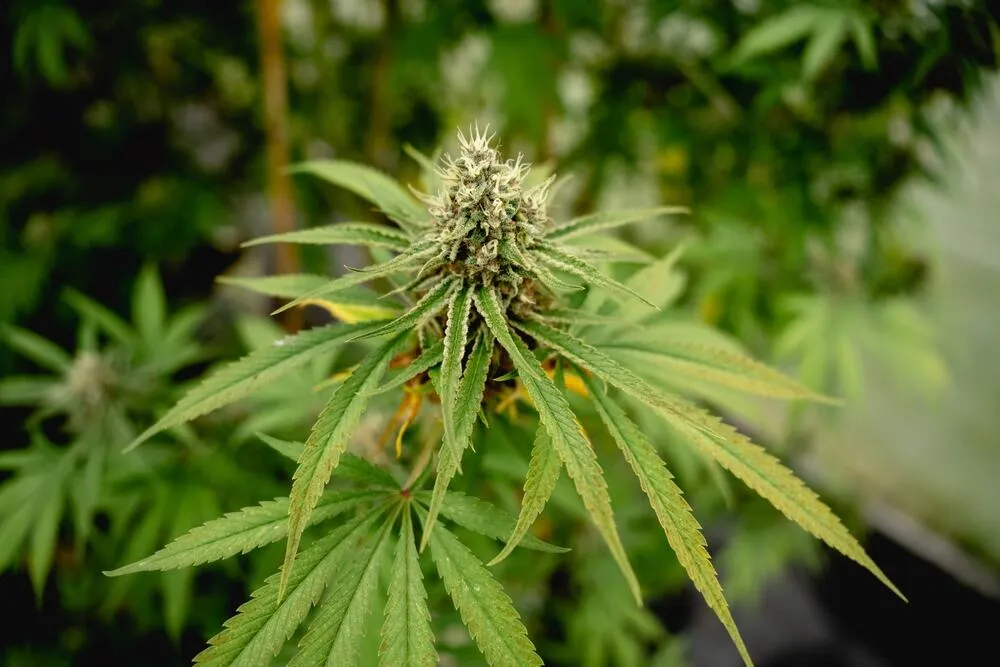
Many traditional cannabis varieties from tropical regions, including Thailand, Colombia and parts of Africa, are associated with tall growth, narrow leaves and widely spaced branches. These characteristics are commonly found in sativa-type plants.
Some of these varieties develop more open structures, allowing air to move between branches and flowers. This can be an advantage in humid environments where moisture may remain trapped within crowded plants.
However, modern cannabis genetics have been extensively crossbred. Not every sativa-dominant variety has an open structure, and some indica-dominant hybrids may also be suitable for tropical conditions.
The differences between indica, sativa and hybrid cannabis explain why these classifications are not reliable indicators of individual growing characteristics.
When comparing strains, pay more attention to their expected height, branching pattern, flower density and documented climate suitability.
Grower Tip: Look for plants with enough space between branches and flowering sites for air to circulate. An open structure may reduce trapped moisture, although it does not guarantee resistance to fungal disease.
Traditional landrace cannabis strains provide examples of genetic populations that developed under different regional growing conditions.
How Does Daylight Near the Equator Affect Flowering?
Near the equator, daylight remains close to 12 hours throughout the year. This differs from regions farther north or south, where the length of the day changes considerably between summer and winter.
Most photoperiod cannabis varieties begin flowering when nights become sufficiently long. However, the amount of uninterrupted darkness needed to trigger flowering varies between genetics.
In equatorial conditions, some varieties introduced from higher latitudes may begin flowering earlier than expected, sometimes before reaching their usual size. Traditional equatorial cannabis populations can have different flowering responses that suit their native environments.
This is different from true autoflowering.
Leckie and colleagues (2024) identified a mutation in the CsPRR37 gene associated with daylength-independent flowering in cannabis. The study helps explain how inherited genetic differences can allow certain plants to flower without the usual short-day trigger.
Growing a photoperiod variety near the equator does not change its genetics or turn it into an autoflower.
The photoperiod cannabis guide explains how daylight influences flowering and why responses differ between varieties.
Autoflowering vs Photoperiod Cannabis in Rainy Climates
Both autoflowering and photoperiod cannabis can grow in tropical environments, but their flowering characteristics create different considerations during rainy seasons.
Photoperiod plants depend on their genetic response to daylength, while autoflowers begin flowering independently of seasonal daylight changes.
| Characteristic | Photoperiod cannabis | Autoflowering cannabis |
| Flowering trigger | Depends on daylength and genetics | Independent of seasonal daylength |
| Growing period | Varies with genetics and environmental conditions | Generally has a shorter lifecycle |
| Plant height | Includes compact and tall varieties | Often smaller, although height varies |
| Rainy-season suitability | Flowering may overlap with heavy rainfall | Shorter lifecycle may offer more flexibility |
| Fungal resistance | Depends on individual genetics | Depends on individual genetics |
Autoflowers may be worth considering where the period of favourable weather is relatively short. Their predictable flowering trigger can make it easier to estimate when plants will reach maturity.
Photoperiod varieties offer a wider range of plant structures and flowering characteristics, including genetics originating from tropical regions.
The most suitable choice depends on local rainfall patterns and the individual cultivar rather than seed type alone.
The autoflower versus photoperiod guide explains their differences in more detail.
Why Bud Structure and Airflow Matter for Fungal Disease
High humidity and prolonged wet weather can increase the risk of fungal diseases affecting cannabis flowers. One of the most common is bud rot, usually caused by Botrytis cinerea.
This fungus can infect flower tissues and spread internally before obvious damage becomes visible.
Dense flowers are particularly concerning because their tightly packed structure can retain moisture and restrict air movement. Even when the surrounding air feels relatively dry, conditions inside a flower may remain humid.
Buirs, Lung and Punja (2025) investigated bud rot in greenhouse-grown cannabis. They found that humidity inside developing flowers was higher than in the surrounding environment.
Their experiments also showed that improved air circulation reduced bud rot incidence by 66–92% under the greenhouse conditions tested. These findings demonstrate the importance of airflow, although the same results cannot be guaranteed outdoors.
Early signs of bud rot may include:
- Small leaves within flowers turning brown or dying.
- Brown or grey areas developing inside flower clusters.
- Soft, decaying plant tissue.
- Visible grey fungal growth.
Grower Tip: Inspect developing flowers regularly during prolonged wet weather, particularly dense flower clusters. Brown, decaying tissue or visible fungal growth may indicate infection. Affected flowers should not be consumed.
For further information, read how to identify and prevent bud rot and the guide to fungal diseases affecting cannabis.
Conclusion
Choosing the best cannabis strains for tropical and humid climates starts with understanding local rainfall, temperature and daylight. Tropical genetics, fast-flowering hybrids and autoflowers offer different characteristics, but no variety is guaranteed to resist fungal disease.
Rather than relying on strain classifications or advertised resistance, compare flowering times, plant structure and documented climate suitability. Matching these characteristics to local conditions provides a more reliable basis for choosing cannabis seeds.
Frequently Asked Questions
Can cannabis grow outdoors year-round in tropical climates?
Some tropical regions have conditions that allow multiple growing periods. However, seasonal rainfall, daylight and the flowering behaviour of individual strains can affect their suitability.
Does high humidity affect cannabis yields?
It can. Research has shown that extremely high humidity can reduce flower biomass and delay flowering in certain cannabis varieties. The response depends on genetics and environmental conditions.
Are fast-flowering cannabis strains better for rainy climates?
They can be useful where the period of suitable weather is short. However, their flowering time must align with local rainfall patterns, and shorter flowering does not guarantee fungal resistance.
Does a mould-resistant cannabis strain prevent bud rot?
No. Resistance indicates reduced susceptibility under certain conditions, not immunity. Persistent moisture and favourable conditions for fungal growth can still lead to infection.
Is flowering time the same as the total growing period?
No. For photoperiod cannabis, flowering time generally excludes earlier growth stages. Autoflowering descriptions may refer to flowering duration or the entire lifecycle, so check which measurement is provided.
References
- Corredor-Perilla, I. C., Kwon, T.-H., & Park, S.-H. (2025). Elevated relative humidity significantly decreases cannabinoid concentrations while delaying flowering development in Cannabis sativa L. Frontiers in Plant Science, 16, 1678142.
https://doi.org/10.3389/fpls.2025.1678142 - Leckie, K. M., et al. (2024). Loss of daylength sensitivity by splice site mutation in Cannabis pseudo-response regulator. The Plant Journal, 118(6), 2020–2036.
https://doi.org/10.1111/tpj.16726 - Buirs, L., Lung, S., & Punja, Z. K. (2025). The epidemiology and management of Botrytis cinerea causing bud rot on greenhouse cultivated cannabis (Cannabis sativa L.). Canadian Journal of Plant Pathology, 47(5), 443–463.
https://doi.org/10.1080/07060661.2025.2478250

