




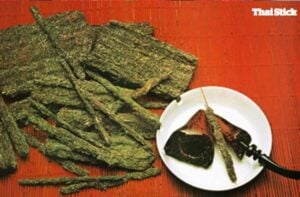
Thai Stick is one of the most famous names in cannabis history, but there is often confusion over what it actually refers to. If you are wondering what is a Thai Stick or what are Thai Sticks, the original product came from Thailand and was made by securing locally grown cannabis flower around a thin stick.
Thai Sticks became especially well known in the United States during the 1970s, when high-quality Thai cannabis gained a reputation for its distinctive appearance and strong effects. The term later became associated with Thai genetics, which is why Thai Sticks weed and Thai Sticks cannabis can now refer to both the historic product and modern strains using the name.
This guide explains where original Thai Stick came from, what it was made from, why it became famous, and how modern versions compare with the originals.
Key Takeaways
- Original Thai Stick came from Thailand, with the best-documented 1970s trade linked to northeastern Thailand.
- Thai Stick originally described a cannabis preparation, not one standardized strain.
- Traditional versions were made from Thai cannabis flower secured around a thin bamboo or wooden stick.
- Thai Stick became internationally famous during the 1960s and 1970s, particularly in the United States.
- Modern Thai Stick strains and cannagars may be inspired by the original product but are not necessarily genetically identical to it.
- What is a Thai Stick?
- Where Did Original Thai Stick Come From?
- What Was Original Thai Stick Known For?
- How Did Thai Stick Become Famous in the 1970s?
- Was Original Thai Stick Dipped in Opium?
- What Happened to Original Thai Stick?
- Does Original Thai Stick Still Exist Today?
- How to Make Your Own Thai Stick
- Conclusion
- Frequently Asked Questions About Thai Stick
What is a Thai Stick?
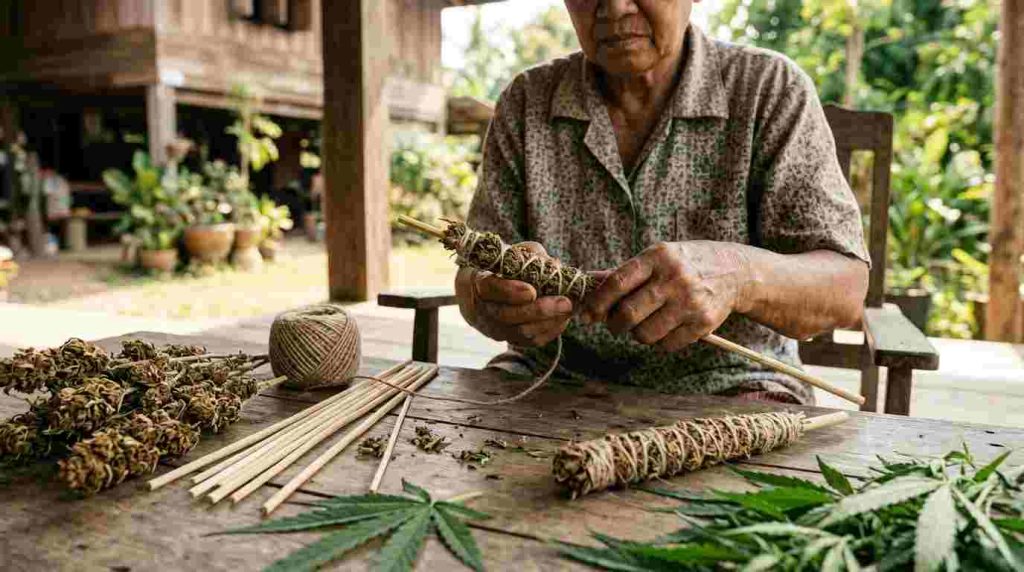
A Thai Stick is a traditional cannabis product from Thailand made by securing dried flower around a thin bamboo or wooden stick with plant fiber or string. The method created its distinctive long, narrow shape and made the flower easier to package and transport.
Originally, Thai Stick described the finished product rather than one specific strain. It became especially well known outside Thailand during the 1960s and 1970s.
What Are Thai Sticks Made From?
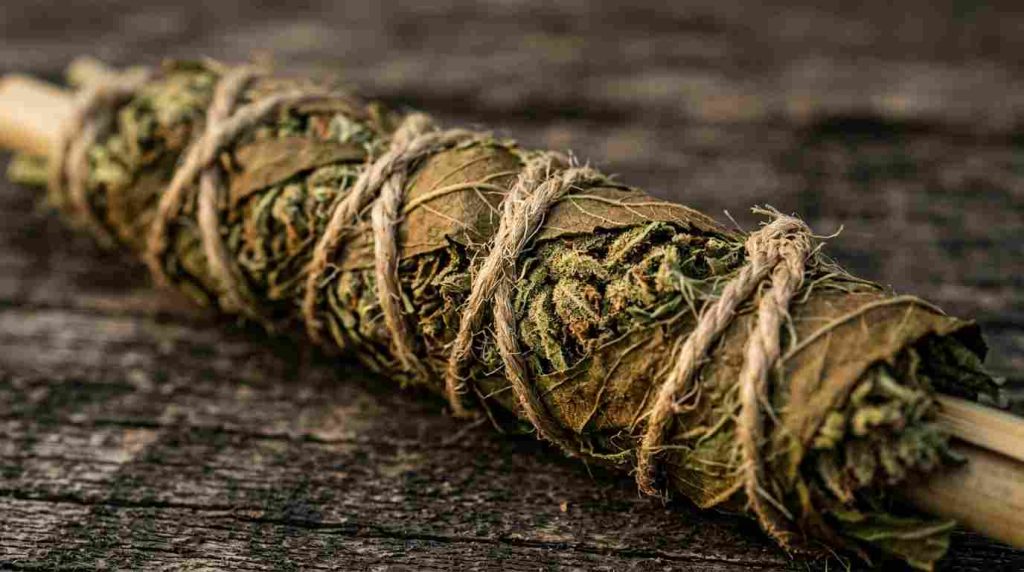
Traditional Thai Sticks used locally grown Thai cannabis, a narrow stick, and natural fiber. Some versions were also wrapped in cannabis leaves.
| Component | Purpose |
| Thai cannabis flower | Main body |
| Bamboo or wooden stick | Shape and support |
| Hemp or plant fiber | Held the flower in place |
| Cannabis leaves | Optional outer wrap |
Hash oil, kief, concentrates, and opium were not defining ingredients of authentic Thai Stick.
The flower generally came from locally adapted Thai cannabis populations, often described as landrace strains.
Grower Tip: A modern cannabis cigar can copy the Thai Stick shape without containing Thai genetics.
Is Thai Stick a Strain or a Cannabis Product?
Historically, Thai Stick was a cannabis product, not one standardized strain.
The name later became associated with the cannabis inside the sticks, which is why some modern seed lines now use the Thai Stick name.
| Term | Meaning |
| Traditional Thai Stick | Thai flower prepared around a narrow stick |
| Thai Stick strain | Modern genetics sold under the Thai Stick name |
So searches for Thai Sticks weed or Thai Sticks cannabis may refer either to the traditional product or modern genetics.
Where Did Original Thai Stick Come From?
Original Thai Stick came from Thailand, with the best-documented 1970s trade linked to farms in the northeast. Peter Maguire and Mike Ritter's Thai Stick: Surfers, Scammers, and the Untold Story of the Marijuana Trade traces cannabis shipments from northeastern Thailand to the United States. (JSTOR)
It is difficult to identify one exact village or province as the birthplace of Thai Stick.
Why Is Thai Stick Associated With Northeastern Thailand?
Northeastern Thailand supplied much of the cannabis involved in the major 1970s export trade. Traditional Thai cannabis was well adapted to tropical growing conditions and is commonly associated with the tall, narrow-leaf growth seen in Sativa cannabis strains
Historical accounts describe increasingly organized supply routes carrying cannabis from northeast Thailand to international markets. (JSTOR)
What Type of Thai Cannabis Was Originally Used?
Traditional Thai Sticks were made from locally cultivated Thai cannabis populations rather than one uniform cultivar.
A recent genetic study of 50 Thai cannabis samples placed Thai Stick and Green Thai Stick in different genetic groups, showing how much variation can exist among plants carrying similar regional names. (ThaiJO)
Thai-grown cannabis also shows variation in cannabinoid content. A study of 372 Thai cannabis samples found substantial differences in THC, CBD, and CBN levels depending on the crop, growing season, and environmental conditions. (PubMed)
For growers, the key point is that original Thai Stick used regionally adapted Thai genetics, commonly associated with tall growth, narrow leaves, and long flowering periods.
What Was Original Thai Stick Known For?
Thai Stick became known for its unusual appearance, strong aroma, and reputation for powerful effects.
What Did Original Thai Stick Look Like?
Original Thai Stick had a long, narrow shape created by binding flower around a central stick. Premium examples were also described as aromatic and relatively low in seeds. (JSTOR)
Traditional versions did not depend on added concentrates or extracts.
Why Was Thai Stick Considered So Potent?
Thai Stick gained its reputation at a time when most cannabis in the US was imported and quality varied considerably. Well-prepared Thai flower could therefore stand out significantly. Pasted text
Reliable THC testing from genuine 1970s Thai Sticks is limited, so historic potency claims should be treated cautiously. If you're comparing old and modern potency claims, our guide to what is considered high THC. explains how THC percentages are interpreted today. Research on Thai-grown cannabis shows considerable variation in cannabinoid levels. (PubMed)
Compared with today's high THC strains, it is more accurate to say Thai Stick was considered exceptionally potent for its era.
How Did Thai Stick Become Famous in the 1970s?
Thai Stick became internationally famous as Thai cannabis reached the United States in larger quantities during the 1970s.
Thai Stick and the Vietnam War Era
American servicemen and surfers were among the groups who encountered Thai cannabis and helped build its reputation outside Thailand.
Maguire and Ritter describe the trade growing from smaller GI-linked networks into a much larger commercial operation during the 1970s.
How Thai Stick Reached the United States
As demand grew, smugglers developed trans-Pacific routes connecting Thai suppliers with American buyers. Surfers and sailors played an important role because they had the boats and experience needed for long-distance transport.
By the mid-1970s, Thai Stick had become a valuable imported cannabis product in the US.
Was Original Thai Stick Dipped in Opium?
Opium was not a defining ingredient of traditional Thai Stick.
Historian Peter Maguire has described routine opium-dipping as an urban myth. Some adulterated products may have existed, but the traditional product was primarily Thai cannabis flower prepared around a stick. (Columbia University Press)
Where Did the Opium-Dipped Thai Stick Story Come From?
The story likely grew from Thai Stick's strong reputation, its Southeast Asian origin, and word-of-mouth accounts from the 1970s.
What Happened to Original Thai Stick?
The international trade declined during the late 1970s and 1980s.
Why Did the Original Thai Stick Trade Decline?
Stricter drug laws, greater enforcement, changing trafficking routes, and the growth of domestic cannabis production all contributed to the decline of the old Thai Stick supply networks. (JSTOR)
Does Original Thai Stick Still Exist Today?
Thai cannabis genetics still exist, but proving that a modern product is identical to 1970s Thai Stick is difficult.
Are Modern Thai Stick Strains the Same as the Originals?
Not necessarily. Modern Thai Stick strains may descend from Thai landrace strains, but decades of selection and cannabis breeding can change their characteristics significantly.
Grower Tip: Check a breeder's stated lineage rather than assuming the strain name proves direct descent from historic Thai Stick.
Thai Stick vs Modern Cannagars
| Feature | Original Thai Stick | Modern Cannagar |
| Cannabis used | Traditional Thai flower | Any strain |
| Origin | Thailand | Produced worldwide |
| Concentrates | Not essential | Often added |
| Purpose | Traditional preparation | Modern cannabis cigar |
Modern cannagars may copy the shape and preparation style, but they do not need to contain Thai genetics.
How to Make Your Own Thai Stick
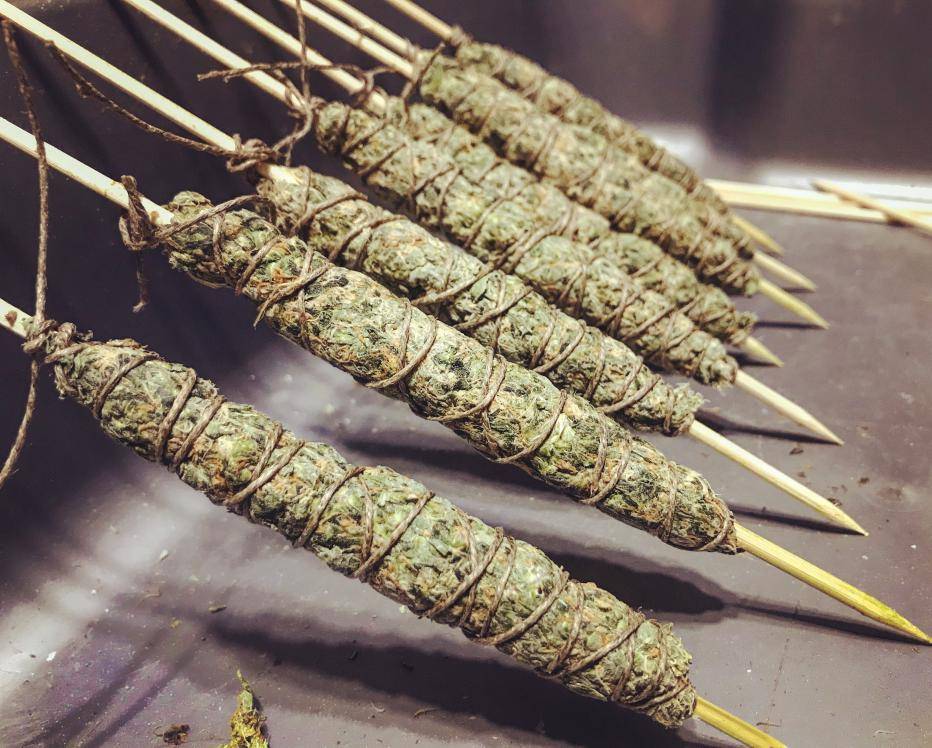
Making a Thai Stick takes patience because the flower needs time to compress and hold its shape. The basic method is simple: pack cured cannabis around a central stick, bind it tightly, wrap it in cannabis leaves, then allow it to set before removing the stick.
Traditional Thai Sticks were made from cured flower wrapped around bamboo and secured with plant fiber. Starting with properly dried cannabis is important because excess moisture can increase the risk of mold once the flower is compressed. Modern versions sometimes add cannabis concentrates or kief, but these are optional rather than essential.
What You Need
- 2–4 grams of cured cannabis flower
- Thin bamboo skewer or similar smooth stick
- Hemp wick or soft natural twine
- 2–3 fresh cannabis fan leaves
- Parchment paper
- Airtight container or vacuum-seal bag
- Cannabis concentrate or kief, optional
Grower Tip: Choose properly dried and cured flower. Buds that are still damp increase the risk of mold once they are tightly compressed.
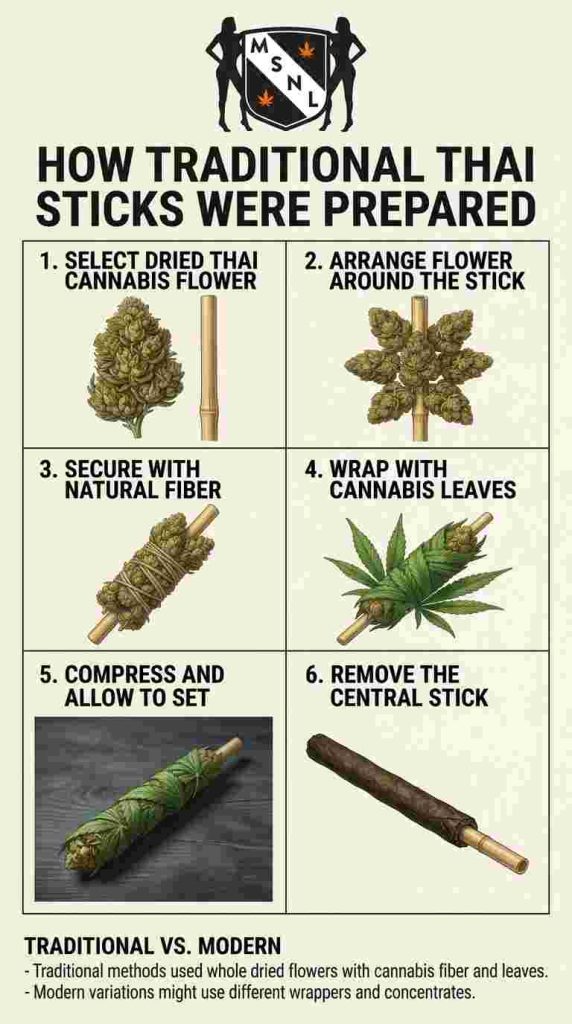
Step 1: Prepare the Bamboo Stick
Use a clean, smooth bamboo skewer around the thickness you want for the central airflow channel. Avoid sharp or splintered sticks that could tear the flower or leaves.
Some modern recipes coat the skewer with cannabis oil, but this is optional. The flower can be compressed around a clean stick without adding anything.
Step 2: Pack the Flower Around the Stick
Break larger buds into manageable pieces without grinding them.
Press the flower firmly around the bamboo stick, working from one end to the other. Aim for an even cylinder around 4–6 inches long.
Fill any gaps as you go so the finished Thai Stick has a consistent thickness.
Step 3: Bind the Flower
Starting at one end, wrap hemp wick or soft twine firmly around the flower.
The goal is to compress the buds against the central stick without cutting into them. Keep the spacing between each wrap fairly even.
Step 4: Compress the Thai Stick
Wrap the bound flower in parchment paper and place it inside an airtight bag or vacuum-seal it.
Leave it in a cool, dark place so the compressed flower begins to hold its shape. If you're unfamiliar with post-harvest moisture control, read our beginner's guide to curing cannabis before sealing compressed flower for an extended period.
Check it regularly. If you notice excess moisture, condensation, or an unusual smell, unwrap it and allow the flower to dry before continuing.
Step 5: Remove the Binding
Carefully remove the Thai Stick from the bag and unwrap the parchment paper.
Slowly unwind the hemp wick while keeping the compressed flower attached to the bamboo stick. If parts begin to loosen, gently press them back into place.
Step 6: Wrap It With Cannabis Leaves
Lay out a clean cannabis fan leaf and wrap it tightly around the compressed flower.
Add a second leaf if needed to fully cover the surface. Fresh but not soaking-wet leaves work best because they are flexible enough to wrap without tearing.
Modern Thai Sticks may also include a thin layer of cannabis concentrate or kief between the flower and outer leaves, although this is optional.
Step 7: Bind and Set the Outer Wrap
Wrap the Thai Stick with hemp wick again to hold the fan leaves firmly in place.
Cover it with fresh parchment paper and return it to an airtight container or vacuum-seal bag.
Allow it to sit until the outer leaves have dried around the flower and the entire stick feels firm.
Step 8: Remove the Bamboo Stick
Once the Thai Stick has fully set, remove the parchment and binding.
Gently twist the bamboo stick before slowly sliding it out from the center. The channel it leaves behind runs through the middle of the compressed flower.
If the Thai Stick begins to break apart, it needs more time to set before the skewer is removed.
Step 9: Check the Finished Thai Stick
Before storing or using it, inspect the whole surface.
It should:
- feel firm rather than wet or spongy
- hold its shape without the binding
- have no visible mold
- have no musty or ammonia-like odor
Grower Tip: Don't rush the setting stage. Dense, compressed flower traps moisture more easily than loose buds, so starting with properly cured cannabis and checking it regularly is more important than following an exact number of curing days.
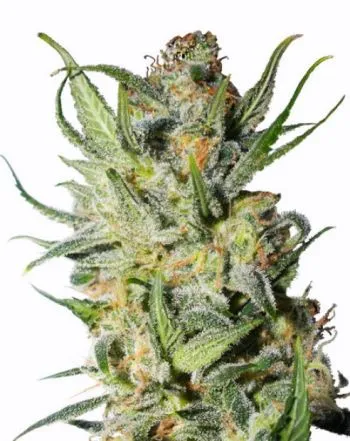

| THC % | Up to 18% |
|---|---|
| Flowering Time | 12-14 Weeks |
| Outdoor harvest | Early October |
| Yield | 300-400gr/m² |
| Height | Tall: 180cm-220cm |
| CBD Content | <1% |
| Seed Type | Feminized |
| Genetics | Californian Skunk x Thai Genetics |
| Taste | Tobacco, Woody, Earthy |
| Terpene | Caryophyllene, Myrcene, Limonene |
Conclusion
Original Thai Stick came from Thailand and became internationally famous during the 1970s, particularly through cannabis grown in the northeast of the country and exported to the United States.
Historically, Thai Stick was a way of preparing cannabis rather than one standardized strain. Traditional versions used locally cultivated Thai flower secured around a narrow stick, while modern products may use the name for seed lines, cannabis cigars, or products inspired by the original method.
For growers, the main takeaway is that authentic Thai Stick history is tied to traditional Thai cannabis populations, not one fixed genetic profile or guaranteed THC level.
Frequently Asked Questions About Thai Stick
What Is a Thai Stick?
A Thai Stick is a traditional cannabis product made by binding cannabis flower around a thin bamboo or wooden stick. The name originally described the preparation method rather than a single strain.
What Are Thai Sticks Made From?
Traditional Thai Sticks were made from Thai cannabis flower, a central stick, and plant fiber or string. Some versions were also wrapped in cannabis leaves. Concentrates and opium were not essential ingredients.
Where Does Thai Stick Weed Come From?
Thai Stick comes from Thailand, with the best-documented 1970s export trade linked to cannabis farms in northeastern Thailand.
Is Thai Stick a Sativa?
Traditional Thai cannabis is commonly associated with tall, narrow-leaf plants often described as sativa. However, the term is a broad horticultural label rather than a precise genetic classification.
Can You Still Get Original Thai Stick Today?
Thai-derived genetics and Thai Stick-style products still exist, but confirming that a modern product is genetically identical to the Thai Stick exported in the 1970s is difficult.
References
- Maguire, P., & Ritter, M. (2014). Thai Stick: Surfers, Scammers, and the Untold Story of the Marijuana Trade. Columbia University Press. https://www.jstor.org/stable/10.7312/magu16134
- Tipparat, P., Natakankitkul, S., Chamnivikaipong, P., & Chutiwat, S. (2012). Characteristics of cannabinoids composition of Cannabis plants grown in Northern Thailand and its forensic application. Forensic Science International, 215(1–3), 164–170. https://pubmed.ncbi.nlm.nih.gov/21636228/
- Noopayan, P. et al. Unraveling the genetic diversity of local Thai Cannabis strains using Inter-Simple Sequence Repeat (ISSR) molecular markers. Thai Journals Online. https://www.tci-thaijo.org/en/articles/health01-291816
- Columbia University Press. Interview with Peter Maguire, author of Thai Stick: Surfers, Scammers, and the Untold Story of the Marijuana Trade. https://cupblog.org/2013/11/21/interview-with-peter-maguire-author-of-thai-stick-surfers-scammers-and-the-untold-story-of-the-marijuana-trade/


