




Fast flowering seeds are an option for growers who want shorter flowering periods without losing the flexibility of photoperiod cannabis. Many fast flowering strains complete flowering in approximately 6–8 weeks, making them appealing to those looking for earlier harvests or shorter indoor growing cycles. However, faster flowering does not necessarily mean faster growth from seed to harvest.
Understanding how fast flowering cannabis seeds work, how they differ from autoflowers and what influences their development can help you choose suitable genetics. This guide explains their benefits, flowering times and limitations, alongside seven fast flowering strains worth considering.
Key Takeaways
- Fast flowering seeds produce cannabis plants bred or selected for shorter flowering periods, often around 6–8 weeks.
- Fast flowering strains generally remain photoperiod-sensitive, meaning flowering depends on suitable light conditions.
- Fast flowering cannabis may finish earlier than conventional varieties, but the total growing time still depends on vegetative development.
- Earlier harvests may benefit growers with short outdoor seasons and those planning consecutive indoor crops.
- The fastest flowering strains are not always the most suitable. Genetics, plant structure and environmental conditions are equally important when choosing seeds.
- What Are Fast Flowering Seeds?
- How Do Fast Flowering Strains Work?
- Fast Flowering vs Autoflowering vs Standard Photoperiod Seeds
- How Long Do Fast Flowering Strains Take to Flower?
- Benefits and Limitations of Fast Flowering Seeds
- Can Fast Flowering Seeds Allow Multiple Harvests?
- Fast Flowering Cannabis Indoors and Outdoors
- Seven Fast Flowering Cannabis Strains Worth Considering
- How to Choose Fast Flowering Cannabis Seeds
- Conclusion
- Frequently Asked Questions
- References
What Are Fast Flowering Seeds?
Fast flowering seeds produce cannabis varieties that have been bred or selected to finish flowering sooner than many conventional photoperiod cultivars. The description covers both specially developed fast versions and naturally quick-finishing photoperiod lines.
Some fast versions use autoflower genetics, followed by selection for photoperiod-sensitive plants. Other quick-finishing cultivars do not need autoflower ancestry. Understanding what a photoperiod plant is explains how growers can influence flowering onset indoors.
There is no universal standard for the label fast flowering. A breeder's stated flowering time, and how that period is measured, are more informative than the label alone.
How Do Fast Flowering Strains Work?
Inherited traits and day length influence flowering. Breeders can select plants that respond to changing light earlier or finish reproductive development sooner.
How Genetics Influence Flowering
In some breeding projects, photoperiod plants are crossed with autoflowers. Selective cannabis breeding over subsequent generations is needed because a single cross cannot guarantee predictable flowering in every offspring.
Toth et al. (2022) identified separate genetic regions associated with early flowering and photoperiod-insensitive flowering in Cannabis sativa. Dowling et al. (2024) later identified another region involved in photoperiod insensitivity. Together, the studies show that flowering behaviour cannot be reduced to one simple genetic switch.
Starting Earlier Is Not the Same as Finishing Faster
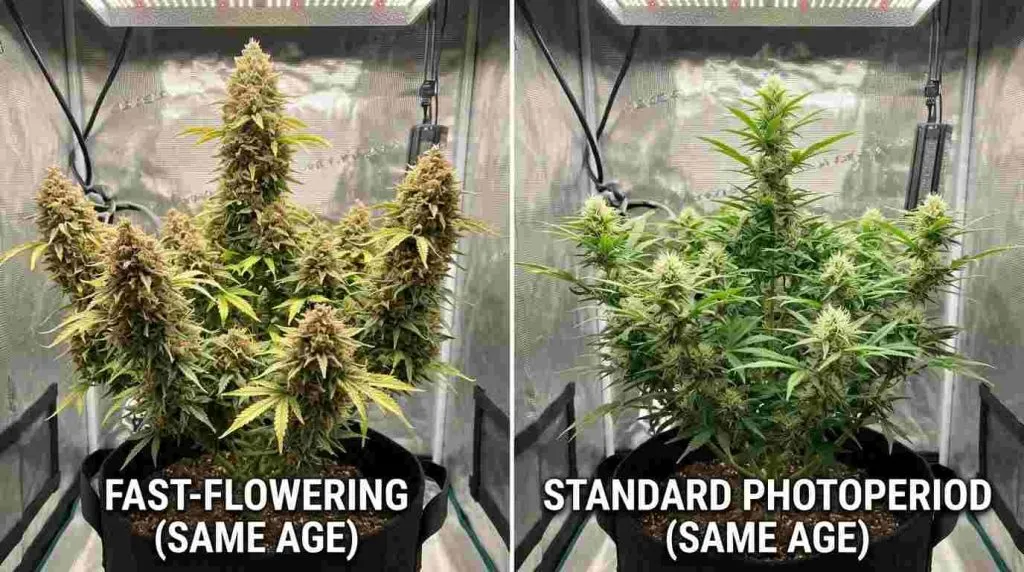
An early-flowering plant may begin forming flowers sooner as outdoor days shorten. A faster-finishing plant may take less time between flowering onset and maturity. These characteristics can occur together, but they are not interchangeable.
A plant that begins flowering early outdoors may therefore finish after another that starts later.
Fast Flowering vs Autoflowering vs Standard Photoperiod Seeds
Both fast flowering and autoflowering seeds are associated with shorter schedules, but they differ in their flowering trigger. The distinction between autoflowers and photoperiod plants is worth understanding before comparing seed packets.
| Feature | Fast flowering photoperiod | Autoflower | Standard photoperiod |
| Flowering trigger | Short-day response | Mainly developmental age | Short-day response |
| Indicative flowering period | Often 6–8 weeks | Varies by cultivar | Often 8–12+ weeks |
| Vegetative duration indoors | Can be extended | Usually limited | Can be extended |
| Time from seed to harvest | Depends on vegetative period | Often around 8–12 weeks | Depends on vegetative period |
| Taking cuttings | Possible | Possible, but less practical | Possible |
| Main distinction | Shorter flowering period | Age-dependent flowering | Flexible growth period |
The ranges overlap: a quick standard photoperiod can finish before a slower fast version. These labels do not determine yield or THC concentration.
How Long Do Fast Flowering Strains Take to Flower?
Many commercial fast versions are listed at 6–8 weeks of flowering. This is a breeder estimate, not the total time from germination. The complete cannabis growing timeline also includes establishment and vegetative growth.
Some breeders count from a light-schedule change; others count from visible flowers. Individual plants also mature at different rates.
Research by Alter et al. (2024) shows that photoperiod affects cannabis inflorescence development and plant architecture. It supports the biological importance of short-day conditions, but does not validate a particular commercial strain's advertised flowering time.
Grower Tip: Before comparing two seven-week varieties, check when each breeder starts counting. Otherwise, identical figures may describe different periods of development.
Does Fast Flowering Mean Faster Growth Overall?
No. A fast-finishing plant need not germinate or grow leaves faster. Photoperiod varieties can spend different lengths of time in vegetative growth, affecting the total lifecycle.
Benefits and Limitations of Fast Flowering Seeds
A shorter flowering period can offer practical benefits.
Earlier Potential Harvests
A fast-finishing cultivar may reach maturity before a slower one grown in comparable conditions. Breeder dates remain estimates, so the signs of cannabis harvest readiness matter more than the calendar alone.
Less Time in the Flowering Stage Indoors
Fewer weeks of flowering may reduce electricity use for lights and climate control, depending on equipment and total crop time.
Reduced Exposure to Late-Season Weather
Earlier finishing may be valuable when growing cannabis in colder climates, where autumn rain and falling temperatures can affect late crops. Less exposure to persistent damp weather may also reduce opportunities for fungal diseases to develop, but it does not make a cultivar inherently disease-resistant.
Photoperiod Flexibility
Unlike most autoflowers, photoperiod-sensitive fast versions can remain in vegetative growth under suitable lighting. They can also be propagated through cuttings; the principles of cloning cannabis plants apply to these varieties.
Can Fast Flowering Seeds Allow Multiple Harvests?
Shorter flowering can save time across consecutive indoor crops, but whether that permits another complete harvest depends on the whole schedule. A controlled cannabis grow room makes seasonal conditions less of a constraint, though it does not eliminate time needed between crops.
| Stage | Standard photoperiod example | Fast flowering example |
| Vegetative growth | 4 weeks | 4 weeks |
| Flowering | 9 weeks | 7 weeks |
| Harvest and preparation | 2 weeks | 2 weeks |
| Total cycle | 15 weeks | 13 weeks |
These are illustrative calculations. Two weeks are saved per cycle, but an additional annual harvest is not guaranteed.
Outdoors, earlier finishing does not automatically permit a second crop. Latitude, changing daylight, remaining warmth and the requirements of photoperiod-sensitive plants can prevent another full cycle.
Grower Tip: Compare complete crop-to-crop time rather than flowering weeks alone. A two-week saving during flowering is less useful if the other stages take longer than expected.
Fast Flowering Cannabis Indoors and Outdoors
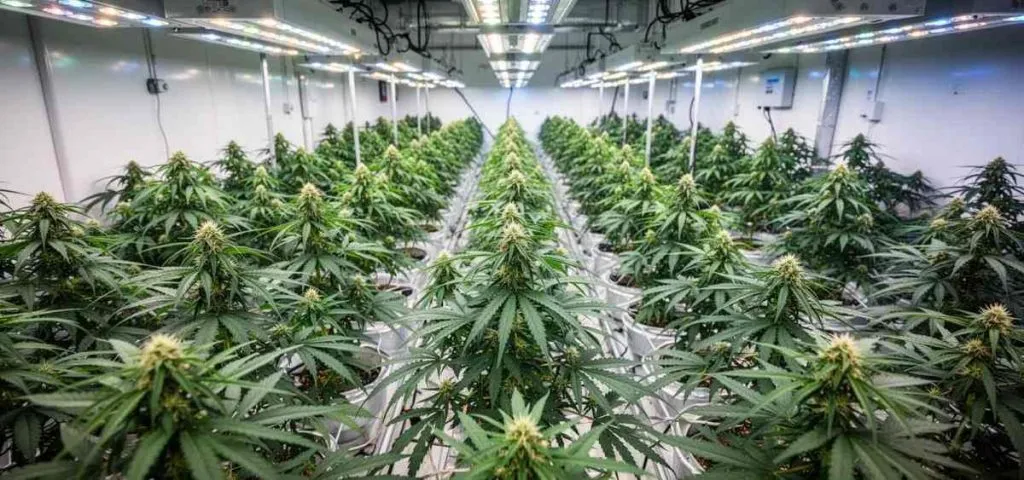
Indoors, growers can control lighting, but fast versions still need suitable cannabis light schedules for flower development. Space and climate control also matter.
Outdoors, latitude and seasonal daylight affect flowering onset. An advertised harvest month may not apply to another location, even where temperatures are similar.
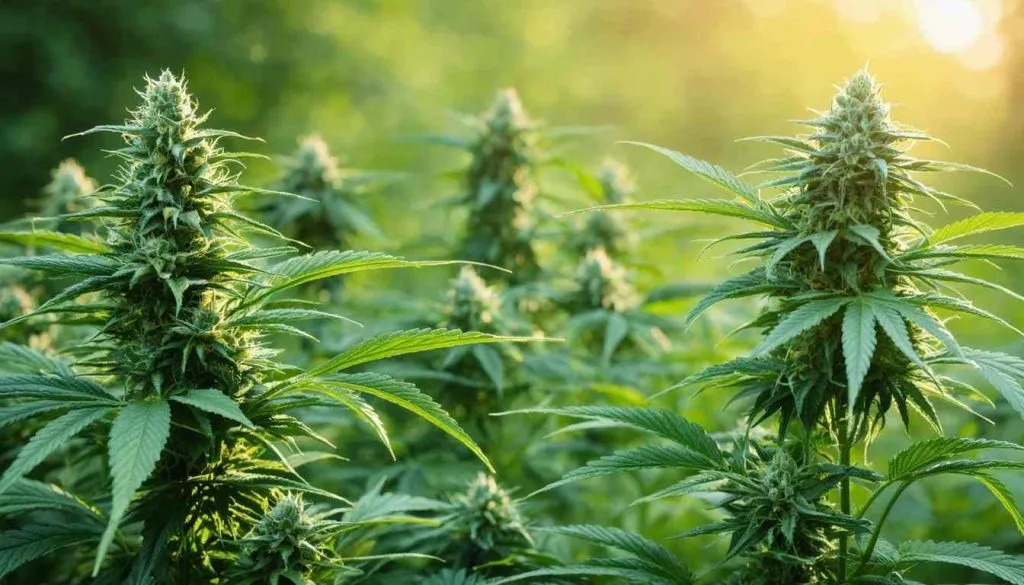
Seven Fast Flowering Cannabis Strains Worth Considering
The fastest flowering strains are not always the most suitable. These seven MSNL varieties are all listed at roughly 6–8 weeks; their genetics and growth traits provide better points of comparison.
1. Girl Scout Cookies Fast Flowering
Girl Scout Cookies Fast Flowering is listed as a 60% indica-dominant hybrid. The breeder describes medium-height plants of around 100–180 cm, with indoor yield potential of 400–500 g/m². It offers an indica-leaning alternative to the sativa-dominant varieties below.
2. Gelato Fast Flowering
Gelato Fast Flowering combines Gelato with Killer Kush Auto genetics. Its 50/50 indica-to-sativa balance is paired with a sweet, fruity and earthy aroma profile; the breeder lists beta-caryophyllene, limonene and humulene among its main terpenes. Plants are reported at 100–180 cm, with an indoor yield estimate of 500–600 g/m².
3. Amnesia Fast Flowering
Amnesia Fast Flowering is an 80% sativa-dominant hybrid developed from Amnesia genetics and a selected hybrid. Compared with longer-flowering sativa cultivars, its shorter reported window may be appealing. Indoor yield potential is listed at 400–500 g/m².
4. Blue Cinderella 99 Fast Flowering
Blue Cinderella 99 Fast Flowering combines Cinderella 99 and Blueberry genetics. Reported as 80% sativa dominant, it is nevertheless described as medium-height, with yields of up to 500 g/m². Its Cinderella 99 and Blueberry background distinguishes it from Amnesia Fast.
5. Bruce Banner Fast Flowering
Bruce Banner Fast Flowering is bred from Bruce Banner and an early-finishing hybrid. The breeder lists a 65% indica-dominant balance, medium height of around 100–180 cm and a diesel-led aroma with earthy and fruity notes. Its estimated indoor yield is 500–600 g/m².
6. OG Kush Fast Flowering
OG Kush Fast Flowering is an indica-dominant line associated with Lemon Thai, Pakistani and Chemdawg genetics in the breeder description. Its classic OG background distinguishes it from newer hybrid lines; indoor yield potential is listed at 500–600 g/m².
7. Power Plant Fast Flowering
Power Plant Fast Flowering is listed as a balanced 50/50 indica-to-sativa hybrid. It is described as medium height (100–180 cm), with estimated indoor yields of 500–600 g/m².
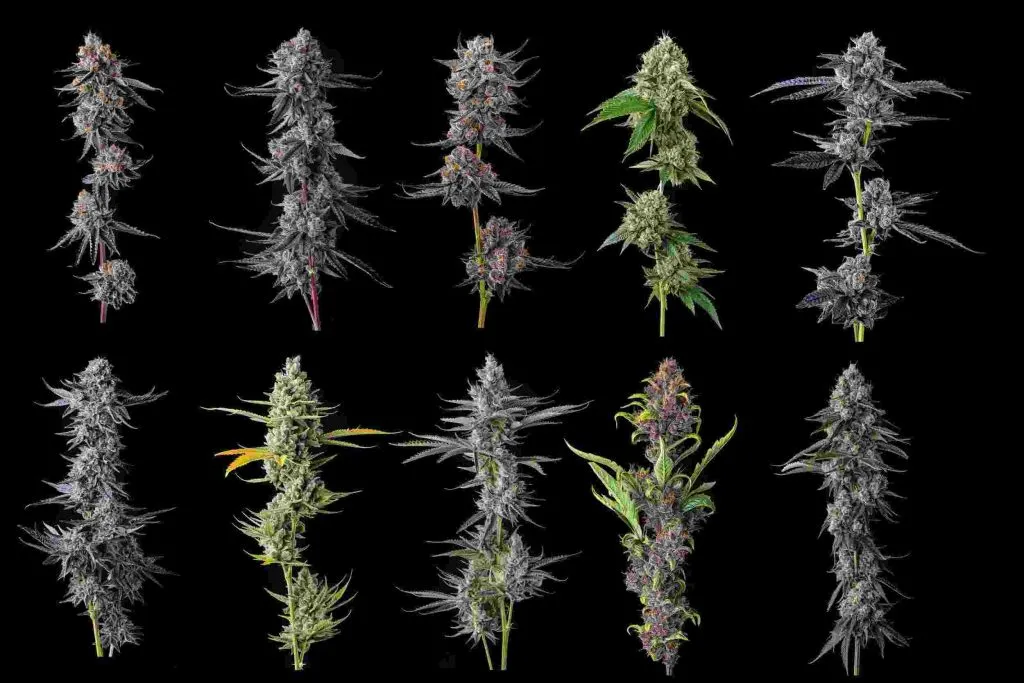
Fast Flowering Strain Comparison
| Strain | Genetic balance | Reported flowering | Indoor yield potential |
| Girl Scout Cookies Fast | 60% indica | 6–8 weeks | 400–500 g/m² |
| Gelato Fast | 50/50 hybrid | 6–8 weeks | 500–600 g/m² |
| Amnesia Fast | 80% sativa | 6–8 weeks | 400–500 g/m² |
| Blue Cinderella 99 Fast | 80% sativa | 6–8 weeks | Up to 500 g/m² |
| Bruce Banner Fast | 65% indica | 6–8 weeks | 500–600 g/m² |
| OG Kush Fast | Indica dominant | 6–8 weeks | 500–600 g/m² |
| Power Plant Fast | 50/50 hybrid | 6–8 weeks | 500–600 g/m² |
All specifications are taken from breeder listings. Actual flowering time, plant size and yields vary with genetics and conditions. The table is not a ranking from fastest to slowest.
How to Choose Fast Flowering Cannabis Seeds
When choosing the right cannabis seeds, first compare expected height, genetic background and suitability for the intended environment. Two varieties with the same flowering estimate can have noticeably different growth patterns.
Indica and sativa ancestry are broad descriptions, not reliable measurements of height or potency. Compare the cultivar's own reported characteristics.
Grower Tip: A strain listed at eight weeks may be a better choice than one listed at six if its plant structure and environmental requirements are a closer match. The shortest advertised time is not always the most useful specification.
Disadvantages of Fast Flowering Strains
Plants sold under the same variety name may mature at slightly different times because of genetic and environmental variation. Breeder flowering windows are estimates, not deadlines.
Shorter flowering also cannot guarantee higher THC, greater yields or disease resistance.
Conclusion
Fast flowering seeds offer growers the opportunity to shorten flowering times while retaining the flexibility of photoperiod cannabis. Although many fast flowering strains finish in approximately 6–8 weeks, actual harvest times depend on genetics, plant development and growing conditions.
The quickest-finishing variety is not always the most suitable. Comparing plant structure, flowering duration and environmental requirements helps growers make informed decisions rather than relying on speed alone.
Explore the available fast flowering cannabis seeds to compare different genetics and find varieties suited to your growing requirements.
Frequently Asked Questions
Are All Fast Flowering Seeds Feminized?
No. Fast flowering describes how a plant develops rather than its sex. Although many commercial fast versions are sold as feminized seeds, regular seeds can also carry early-flowering traits. The differences between feminized and regular cannabis seeds relate to the types of plants they are bred to produce, not their flowering speed.
Are Fast Flowering Strains the Same as Semi-Autoflowers?
Not necessarily. Some breeders use semi-autoflower to describe plants that begin flowering under longer daylight periods than conventional photoperiod varieties. However, terminology varies between breeders. Check whether a cultivar remains photoperiod-sensitive rather than assuming both terms describe identical flowering behaviour.
Will Seeds Produced by Fast Flowering Strains Have the Same Characteristics?
Not always. Seeds produced from fast flowering cannabis can inherit different combinations of traits from their parents. Flowering behaviour may vary between offspring, particularly when the parent plants are genetically diverse. Consistent flowering characteristics require appropriate breeding and selection.
Do Fast Flowering Seeds Require Special Nutrients or Soil?
No. Fast flowering genetics do not automatically require a different growing medium or nutrient formulation. Plant requirements depend on the cultivar, developmental stage and growing environment. A shorter flowering period alone does not determine nutrient demand or soil suitability.
Can Fast Flowering Cannabis Seeds Be Stored for Long Periods?
Yes. Fast flowering seeds can be stored using the same principles as other cannabis seeds. Keeping seeds in cool, dry and dark conditions with minimal temperature fluctuations helps preserve viability. However, germination rates can decline over time, depending on initial seed quality and storage conditions.
References
- Toth, J. A., Stack, G. M., Carlson, C. H., & Smart, L. B. (2022). Identification and mapping of major-effect flowering time loci Autoflower1 and Early1 in Cannabis sativa L. Frontiers in Plant Science, 13, 991680. https://doi.org/10.3389/fpls.2022.991680
- Dowling, C. A., et al. (2024). A FLOWERING LOCUS T ortholog is associated with photoperiod-insensitive flowering in hemp (Cannabis sativa L.). The Plant Journal, 119(1), 383–403. https://doi.org/10.1111/tpj.16769
- Alter, H., et al. (2024). Inflorescence development in female cannabis plants is mediated by photoperiod and gibberellin. Horticulture Research, 11(11), uhae245. https://doi.org/10.1093/hr/uhae245

