




Cloning cannabis is a practical way to reproduce a plant you already know performs well. Instead of starting from seed, cannabis plant cloning uses a cutting from an established plant and encourages it to grow its own roots. This gives the new plant the same genetic starting point as the parent.
Learning how to clone a cannabis plant is useful for growers who want to preserve a favorite phenotype, maintain known plant sex, or produce more plants from selected genetics. However, successful cannabis clones depend on more than simply taking a cutting. Clean tools, a healthy mother plant, the correct rooting environment, and careful moisture control all play an important role.
In this guide, you’ll learn how to clone cannabis step by step, how to prepare cuttings, how to root cannabis clones, when to transplant them, and how to avoid common cloning problems.
Key Takeaways
- Start with a healthy mother plant. Only take cannabis clones from plants showing healthy growth with no obvious pests, disease, or severe stress.
- Take clean, well-prepared cuttings. Use a sanitized sharp blade and choose healthy branches with several nodes.
- Control the rooting environment. Fresh clones need high humidity, gentle light, stable temperatures, and a moist not waterlogged rooting medium.
- Give roots time to develop. Cannabis clones commonly begin rooting within around 7–21 days, depending on the cultivar and growing conditions.
- Transplant based on root development, not age. Wait until healthy roots are visible and the clone can handle lower humidity before moving it into its next growing medium.
What is a Cannabis Clone?
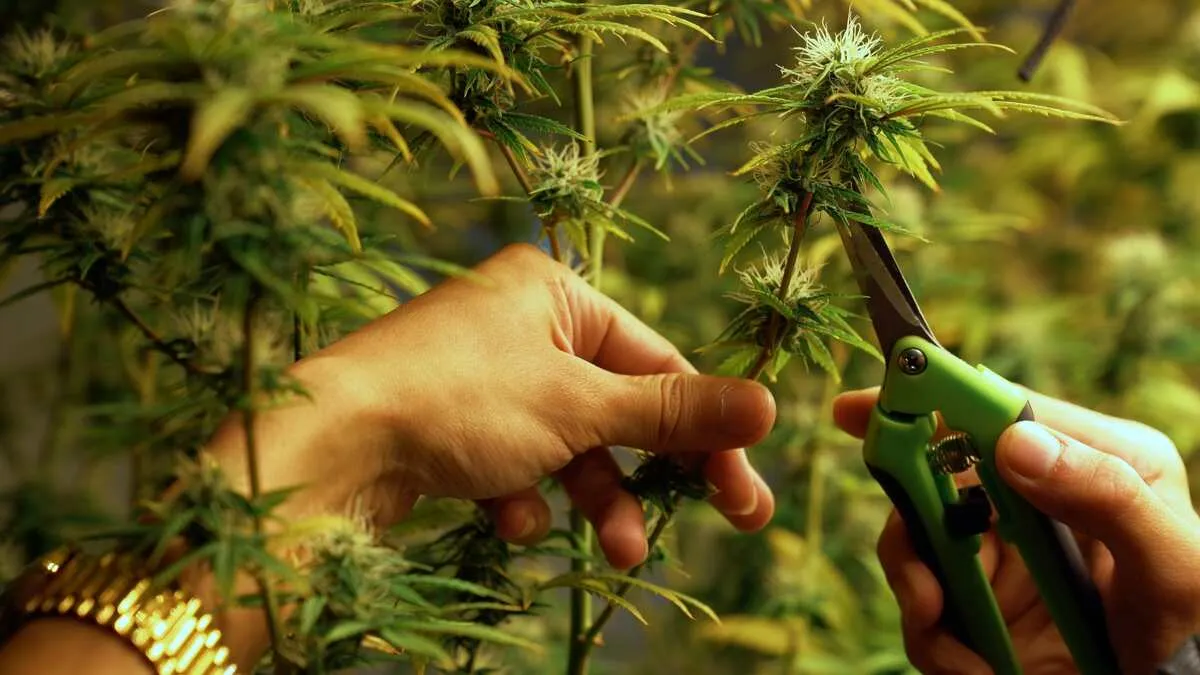
A cannabis clone is a cutting taken from an established cannabis plant and encouraged to develop its own roots. Unlike growing from seed, cloning lets you reproduce a specific plant you already know performs well.
The new plant has the same genetic starting point as the plant it came from. However, that does not mean every clone will grow exactly the same. Light, temperature, nutrition, watering, root health, and other growing conditions can all affect how the plant develops.
How Cannabis Cloning Works
To make a clone, a healthy branch is cut from a selected parent plant, prepared, and placed into a rooting medium. Once new roots form, the cutting can be grown as an independent plant.
Growers often clone a particular phenotype, meaning an individual plant that shows desirable traits such as structure, aroma, flowering time, or yield. Preserving selected plants can also be useful when creating your own weed strain, as it allows growers to keep desirable parent traits available for future breeding.
Why Growers Clone Cannabis Plants
Cloning allows growers to preserve a plant they want to grow again. It also removes uncertainty around plant sex because a cutting taken from a female plant will remain genetically female. If you are selecting a mother from seed, learning how to tell if a cannabis plant is male or female before flowering can help you identify suitable plants before taking clones.
Growers keeping selected plants for breeding may also want to learn how cannabis pollen is collected, stored, and used when choosing and working with parent plants.
Grower Tip: Only take cuttings from healthy, pest-free plants. Starting with weak or unhealthy growth can make successful rooting much harder.
What Do You Need to Clone a Cannabis Plant?
Successful cloning starts with healthy plant material and a clean setup. You do not need complicated equipment, but each item has a specific job in helping fresh cuttings stay hydrated and develop roots.
Choosing a Healthy Mother Plant
Choose a healthy mother plant with strong growth, no visible pests, and no signs of disease, nutrient problems, or intersex growth. If you notice unusual pollen sacs or other suspicious growth, check the early signs of a hermie before using that plant for cloning. Avoid taking clones from plants that are wilted, heavily stressed, or recovering from damage.
Look for healthy branches with several nodes and fresh growth. Taking cuttings from a plant you already know performs well also helps preserve the phenotype you want to keep. Growers starting mother plants from regular seeds may also want to understand the benefits of growing regular cannabis seeds, particularly when selecting plants for cloning or breeding.
Grower Tip: Inspect the underside of leaves and around the nodes before taking cuttings. Pests or disease carried into a propagation tray can quickly affect multiple clones.
Essential Cannabis Cloning Equipment
Use clean, sanitized tools and fresh propagation materials each time you clone. Dirty blades, trays, or domes can increase the risk of contamination.
| Equipment | What It Is Used For |
| Sharp, sanitized blade | Makes a clean stem cutting |
| Rooting hormone | Supports early root development |
| Rooting medium | Holds the cutting while roots form |
| Propagation tray | Keeps clones organized and supported |
| Humidity dome | Helps maintain high humidity around fresh cuttings |
| Gentle grow light | Provides low-intensity light while clones root |
Keep your equipment ready before taking the first cutting so fresh clones can be placed into their rooting environment immediately.

How to Clone a Cannabis Plant Step by Step
Once your equipment is prepared, work carefully and keep cuttings from drying out. Cannabis clones have no established root system when first removed from the mother plant, so clean cuts, quick handling, and the right environment all improve the chances of successful rooting.
Taking and Preparing the Cutting
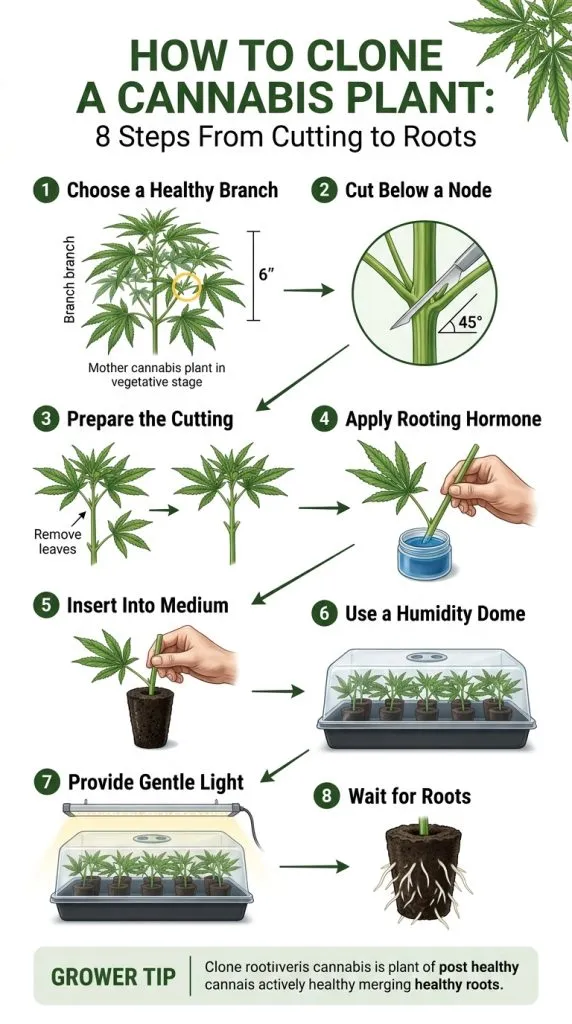
Step 1: Take clones during vegetative growth.
The best time to take cannabis clones is while the mother plant is actively growing in the vegetative stage. If your mother plant was started from regular seed, make sure its sex has been confirmed before committing space to multiple cuttings. Our guide to sexing marijuana plants explains the main signs to look for. Vegetative cuttings usually root more easily because they do not need to switch back from flowering growth.
Flowering cannabis plants can be cloned, but the process is slower. These cuttings may produce unusual leaf growth while returning to vegetative growth, so cloning during flowering is generally better reserved for situations where a valuable plant would otherwise be lost.
Step 2: Choose a healthy branch.
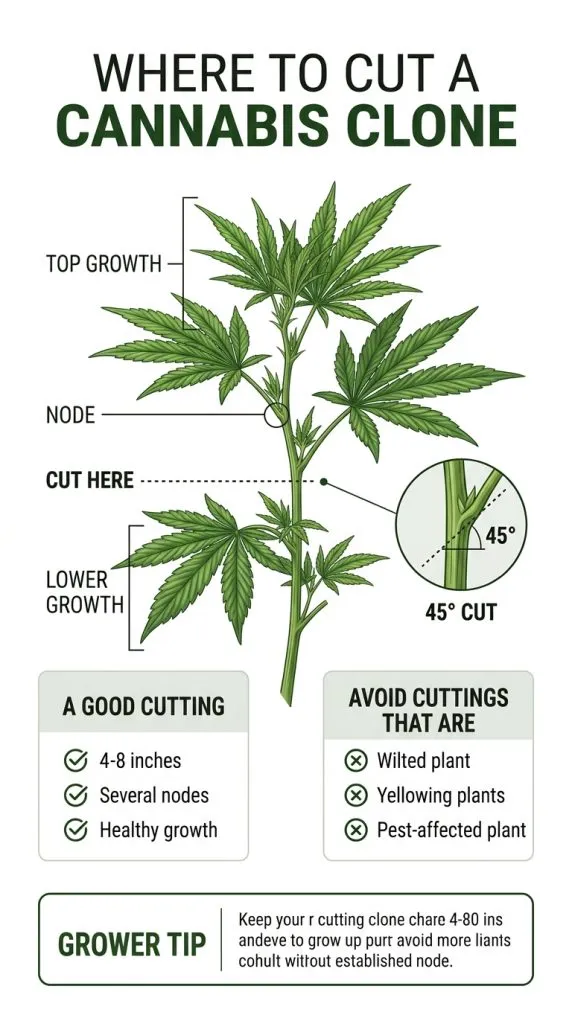
Select a healthy cutting around 4–8 inches long with several nodes and fresh upper growth. Avoid weak, damaged, yellowing, or pest-affected branches.
Step 3: Make the cut.
Using a sanitized sharp blade, cut the stem just below a node at roughly a 45-degree angle. Make one clean cut rather than crushing or repeatedly trimming the stem.
Grower Tip: A common mistake is making several small cuts to tidy the stem. Aim for one clean final cut with a sharp blade to minimize unnecessary tissue damage.
Step 4: Prepare the clone.
Remove growth from the lower part of the stem while leaving healthy leaves near the top. This exposes a section of stem that can be placed into the rooting medium without burying foliage.
Grower Tip: Prepare your rooting medium before taking cuttings so the exposed stem can be planted promptly rather than left sitting in dry air.
Applying Rooting Hormone and Planting the Clone
Step 5: Apply rooting hormone.
Dip the lower end of the prepared stem into rooting gel or powder according to the product instructions. Rooting hormone is not essential in every cloning setup, but it can support faster and more consistent root development.
Avoid dipping cuttings directly into the main container of rooting hormone. Pour out a small amount first to reduce the risk of contamination.
Step 6: Plant the cutting.
Make a small hole in your pre-moistened rooting medium, insert the stem gently, and close the medium around it. Do not force the stem into a dense plug, as this can damage the fresh cut.
Setting Up the Propagation Environment
Step 7: Place the clone in the propagation tray.
Move the planted cutting into a clean propagation tray and humidity dome. Fresh cannabis clones lose moisture through their leaves before roots develop, so relatively high humidity helps reduce early water loss.
Step 8: Provide gentle light.
Place the tray in its propagation area under low-intensity light. The temperature, humidity, light cycle and watering requirements for rooting are covered below.
How to Root Cannabis Clones Successfully
Once a cutting has been planted, the next goal is to encourage new roots without putting the clone under unnecessary stress. Until roots develop, cannabis clones cannot take up water as efficiently as established plants, so temperature, humidity, light, and moisture all need to stay relatively stable.
Temperature, Humidity and Lighting
Keep the propagation area around 72–80°F (22–27°C). Temperatures that are too low can slow rooting, while excessive heat can increase water loss and create favorable conditions for mold.
Fresh cuttings generally benefit from 80–90% relative humidity during the earliest stage of rooting. As roots begin to develop, gradually increase ventilation and lower humidity so the clone can adjust to normal vegetative conditions.
Use gentle lighting rather than placing fresh clones directly under intense grow lights. An 18/6 light cycle works well for maintaining vegetative growth while roots develop.
Watering and Rooting Medium
The rooting medium should remain evenly moist but never saturated. Rockwool, propagation plugs, coco-based plugs, and other suitable media can all work when they provide a good balance of moisture and oxygen.
Do not automatically water every day. Check the medium first.
Grower Tip: A constantly soaked rooting cube can reduce oxygen around the stem and increase the risk of stem rot. Moist is the goal, not dripping wet.
How Long Cannabis Clones Take to Root
Cannabis clones commonly begin producing roots within 7–21 days, although rooting speed varies by cultivar, cutting health, and environment.
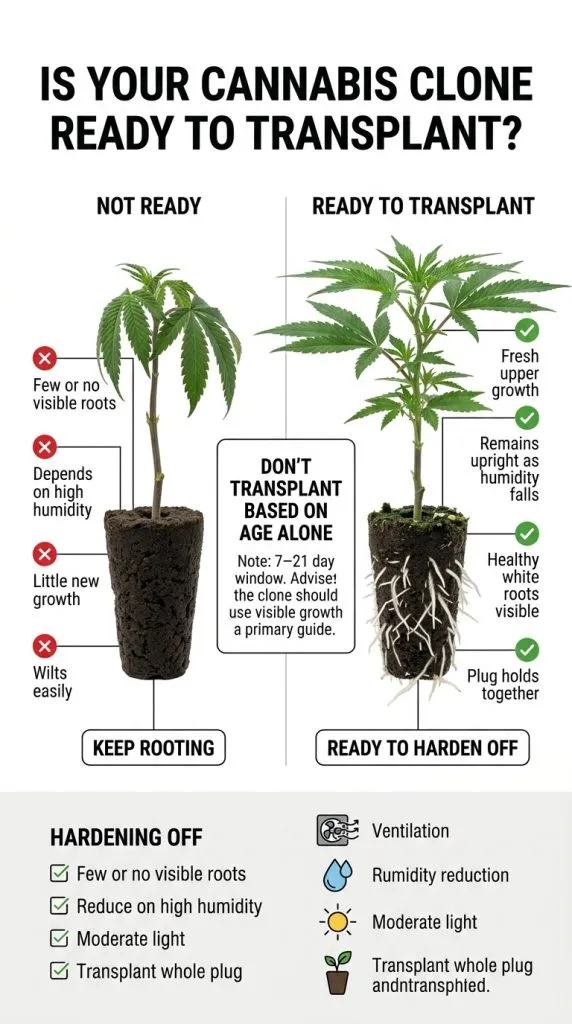
Do not transplant based on age alone. Wait until you can see healthy roots emerging from the rooting medium and the clone is maintaining upright, active growth.
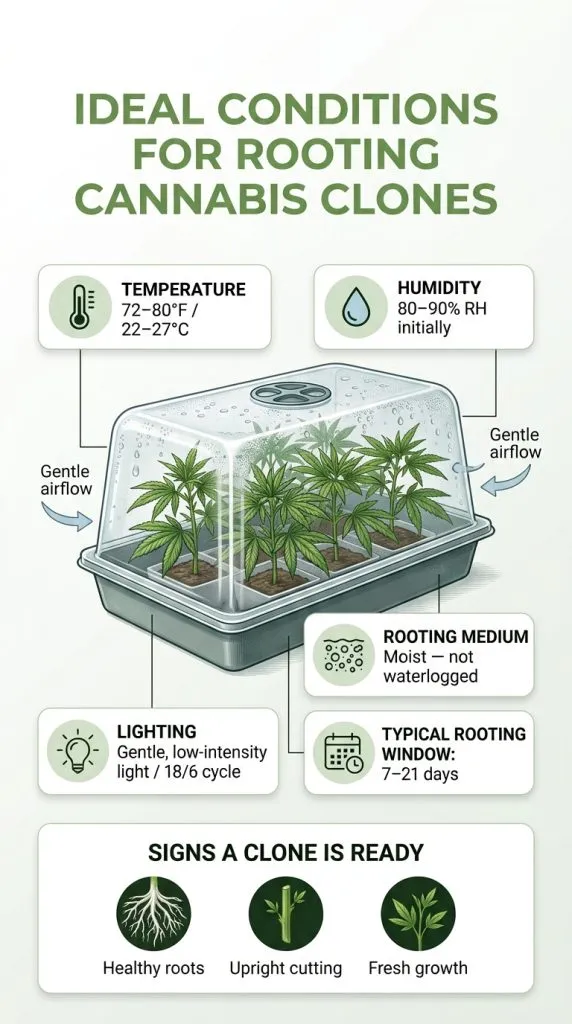
| Condition | Useful Starting Range | What to Avoid |
| Temperature | 72–80°F | Cold conditions or excessive heat |
| Humidity | 80–90% initially | Sudden drops or constant condensation |
| Lighting | Gentle light, 18/6 cycle | High-intensity light |
| Rooting medium | Evenly moist | Waterlogged or completely dry |
| Rooting time | Around 7–21 days | Transplanting before roots develop |
When and How to Transplant Cannabis Clones
Transplant cannabis clones only after they have developed a functional root system. Moving them too early can slow growth because the cutting may not yet be able to absorb enough water and nutrients from the new growing medium.
Signs a Clone Is Ready to Transplant
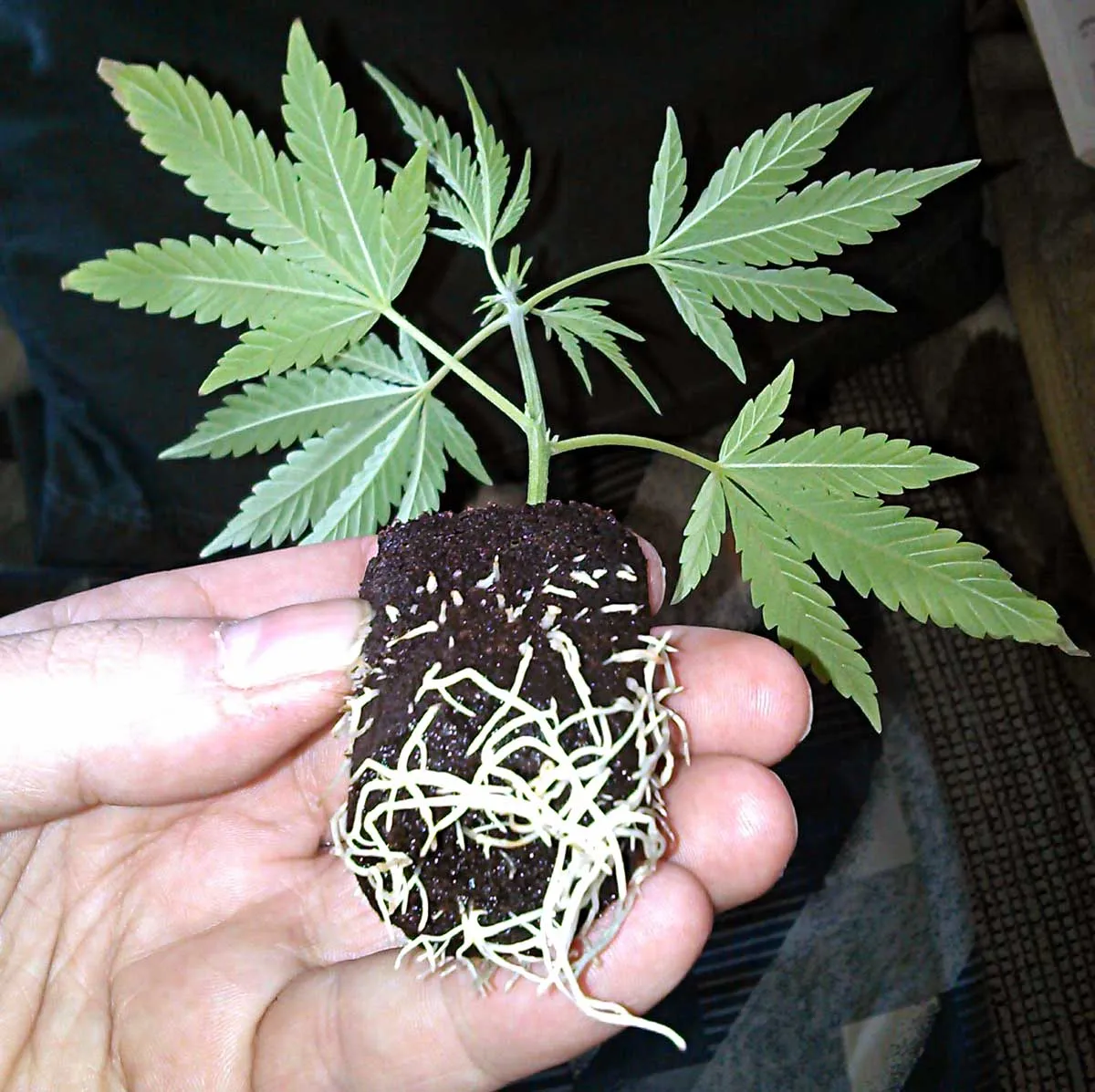
Look for healthy white roots growing from the sides or bottom of the rooting plug. The clone should also remain upright without relying on very high humidity and may begin producing fresh growth at the top.
Avoid judging readiness by the number of days since the cutting was taken. Some cannabis clones simply root faster than others.
Hardening Off and Transplanting
Before transplanting, gradually expose rooted clones to lower humidity by opening or removing the humidity dome for increasingly longer periods. This helps the young plant adjust before moving into normal vegetative conditions.
Once acclimated, transplant the entire rooting plug into your chosen soil, coco, or other growing medium. Water enough to settle the medium around the roots without completely saturating it.
Grower Tip: Keep lighting moderate immediately after transplanting and increase intensity gradually as the clone establishes new roots.
Common Cannabis Cloning Problems
Cannabis cloning problems are often linked to environmental stress, excess moisture, poor sanitation, or unhealthy starting material. Checking the clone and its rooting environment daily makes it easier to correct problems before they become severe.
Wilting, Yellow Leaves and Slow Rooting
Slight wilting immediately after taking a cutting can occur because the clone does not yet have roots to replace lost moisture. Persistent wilting may point to low humidity, excessive light, heat, or a rooting medium that has become too dry.
Some older leaf yellowing can occur while a cutting establishes roots, but widespread or rapidly worsening discoloration deserves attention. Slow rooting can result from low temperatures, poor cutting health, excessive moisture, or unsuitable propagation conditions.
Grower Tip: Resist the temptation to repeatedly pull a cutting from its plug to check for roots. Doing so can damage delicate new root growth.
Mold, Stem Rot, Pests and Pathogens
Constantly saturated rooting media and excessive humidity with poor airflow can encourage mold and stem rot. Keep the medium moist rather than waterlogged and gradually improve ventilation as clones establish.
Sanitation is equally important. Contaminated blades, trays, or other equipment can transfer pathogens between plants, while cuttings taken from unhealthy mother plants may carry existing pests or disease into the cloning area.
Inspect mother plants before taking clones and sanitize cutting tools between plants. If a clone develops spreading mold, severe stem rot, or obvious pest activity, isolate it from healthy cuttings to reduce the chance of the problem spreading through the propagation tray.
Conclusion
Learning how to clone a cannabis plant gives growers a way to preserve a favorite phenotype and produce new plants from known genetics. Successful cannabis cloning comes down to starting with healthy plant material, making clean cuts, maintaining stable humidity and temperature, and giving each cutting time to develop roots. Keep your setup clean, avoid overwatering, and wait for visible root growth before transplanting.
Frequently Asked Questions
Can You Clone a Clone?
Yes. A healthy cannabis clone can be used as a mother plant once it has established strong roots and vegetative growth. Cuttings taken from clones retain the same genetic starting point as the original plant. There is no fixed number of generations after which clones automatically stop performing well, but plant health, pests, pathogens, and repeated stress can affect long-term performance.
Can You Clone Autoflower Cannabis Plants?
Technically, yes, but cloning autoflower cannabis plants is usually impractical. Autoflowers begin flowering according to age rather than a change in the light cycle. A cutting therefore continues along the same limited timeline as its parent and does not restart vegetative growth from the beginning. For most growers, starting another autoflower from seed is more practical than cloning one.
How Long Do Cannabis Clones Take to Root?
Cannabis clones commonly develop roots within 7–21 days, although some may take longer. Rooting speed depends on the cultivar, health of the cutting, temperature, humidity, moisture, and rooting medium. Rather than transplanting on a set day, look for healthy white roots emerging from the propagation plug and signs of fresh growth.
Why Are My Cannabis Clones Wilting?
Fresh cannabis clones may wilt slightly because they do not yet have roots capable of replacing moisture lost through their leaves. Persistent wilting can indicate low humidity, excessive light or heat, a dry rooting medium, or poor cutting health. Check the entire propagation environment before adding more water, as overwatering can create additional problems.
How Do You Know When a Cannabis Clone Is Ready to Transplant?
A cannabis clone is usually ready to transplant when healthy roots are visible around the sides or bottom of the rooting plug. It should remain upright as humidity is gradually reduced and may begin producing new growth. Do not transplant based only on how many days have passed; wait until the cutting has developed a functional root system.


