




Learning how to sex cannabis plants is an important skill when growing regular seeds. Identifying male and female cannabis plants early gives you time to manage them before flowering progresses, especially when your goal is to prevent unwanted pollination.
The most useful visual clues come from the reproductive growth that appears as plants mature. However, not every difference in height, shape, or growth pattern can reliably tell you whether a plant is male or female.
In this guide, I’ll show you how to identify cannabis plant sex, where and when to check for the first signs, and five practical methods you can use from early pre-flower inspection through to mature confirmation.
Key Takeaways
- Pre-flowers are the most useful visual sign: Developing reproductive structures provide a far better indication of cannabis plant sex than height or overall plant shape.
- Check several nodes: Male and female pre-flowers develop around the nodes, and comparing several areas reduces the chance of misidentification.
- Know the main male and female signs: Male plants form pollen sacs, while female pre-flowers commonly develop fine white stigmas.
- Growth structure is only a clue: Taller plants, wider internodal spacing, or denser branching cannot confirm whether cannabis is male or female.
- There are other ways to identify sex: Clone sexing and cannabis DNA sex testing can be useful when visual identification is not suitable or early results are needed.
- What Does It Mean to Sex a Cannabis Plant?
- When Can You Tell if a Cannabis Plant Is Male or Female?
- Where to Look for Signs of Cannabis Plant Sex
- Male vs Female Cannabis Plants: Quick Comparison
- Tip #1: Check the Pre-Flowers at the Nodes
- Tip #2: Use a Clone to Determine Plant Sex
- Tip #3: Look at Height and Growth Structure — But Only as a Clue
- Tip #4: Use Cannabis DNA Sex Testing
- Tip #5: Confirm Sex From Mature Reproductive Structures
- Can You Tell if a Cannabis Seed Is Male or Female?
- What Should You Do With a Male Cannabis Plant?
- What if a Cannabis Plant Shows Both Male and Female Flowers?
- Common Mistakes When Sexing Cannabis Plants
- Conclusion
- Frequently Asked Questions
What Does It Mean to Sex a Cannabis Plant?
Sexing a cannabis plant means identifying whether it is male or female from the reproductive structures it develops.
This is particularly important when growing regular cannabis seeds, as regular seeds can produce either sex. Growers aiming for seedless flower normally identify and separate males before pollen is released. Breeders, on the other hand, may keep selected males because their pollen is needed to produce seeds.
Feminized seeds greatly reduce the likelihood of growing male plants, but knowing how to recognize reproductive structures is still a useful growing skill.
The key is to base your decision on structures that actually indicate plant sex rather than assumptions about height, leaf shape, or general appearance.
When Can You Tell if a Cannabis Plant Is Male or Female?
You cannot reliably determine the sex of a cannabis plant from the seed. The plant first needs to reach enough maturity for reproductive growth to appear.
With photoperiod cannabis, pre-flowers can develop during vegetative maturity before the light cycle is changed for flowering. Male plants sometimes show their sex earlier than females, but genetics and growing conditions affect timing, so this should never be treated as a fixed rule.
Autoflowering cannabis develops differently. Flowering is primarily triggered by age rather than a change to a 12/12 light schedule, so signs of sex appear as the plant naturally moves into its flowering phase.
If you want a more detailed breakdown of early timing, see our guide to identifying male and female cannabis plants before flowering.
Grower Tip: If you cannot identify a structure confidently, give the plant more time. Guessing too early is one of the easiest ways to remove the wrong plant.
Where to Look for Signs of Cannabis Plant Sex
Start by inspecting the nodes, the points where side branches meet the main stem. On a maturing plant, the upper and middle nodes are usually good places to look for developing reproductive growth.
Check several nodes rather than relying on a single structure. Very young growth can be difficult to identify, even with experience.
Two structures are especially important to tell apart:
Stipules
Stipules are small, pointed growths found at the nodes of both male and female cannabis plants. They are part of normal plant anatomy and do not reveal sex.
Pre-Flowers
Pre-flowers develop close to the stipules and are part of the plant's reproductive growth. Once sufficiently developed, they can show whether a plant is male or female.
A small loupe or magnifying glass can make early structures much easier to inspect.
Male vs Female Cannabis Plants: Quick Comparison
Here is a quick reference for the main visual differences:
| Feature | Male Cannabis Plant | Female Cannabis Plant |
| Early reproductive growth | Small round or oval structures | Small teardrop-shaped structures |
| White stigmas | No | Usually |
| Main mature structure | Clusters of pollen sacs | Flower clusters with bracts and stigmas |
| May show earlier | Sometimes | Sometimes later |
| Can height confirm sex? | No | No |
| Best way to confirm visually | Reproductive structures | Reproductive structures |
Tip #1: Check the Pre-Flowers at the Nodes
The most reliable way to visually sex a cannabis plant is to identify developing pre-flowers.
What Male Cannabis Pre-Flowers Look Like
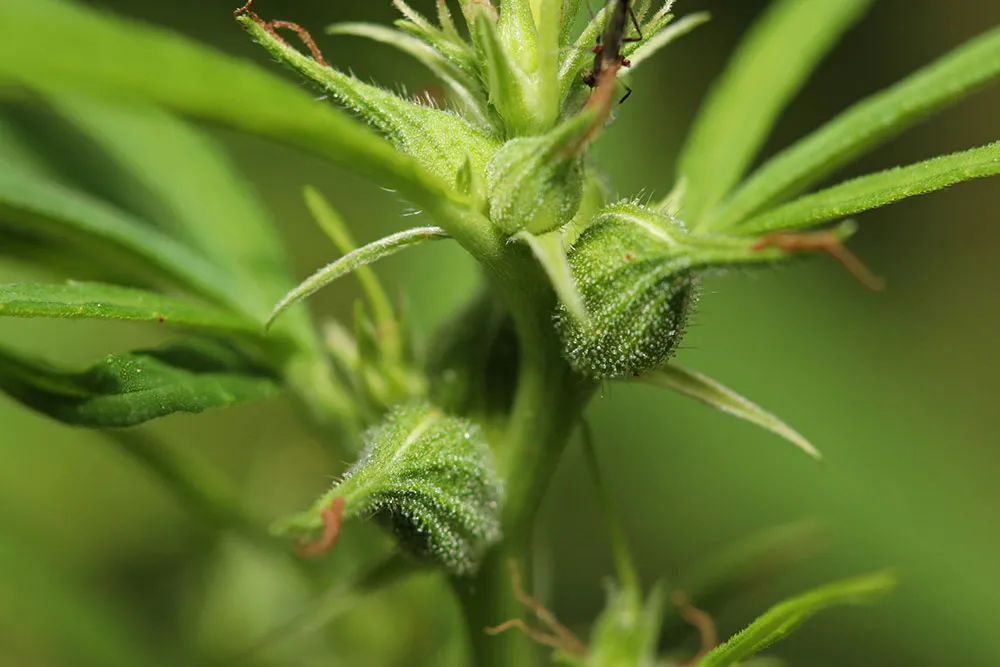
Male pre-flowers usually begin as small round or oval growths. As they develop, they form pollen sacs.
Look for:
- Rounded structures without white stigmas.
- Individual sacs becoming more defined over time.
- Multiple sacs beginning to group together as maturity approaches.
A very young male structure can be difficult to distinguish at first, which is why checking more than one part of the plant matters.
If you are growing for seedless flower, the important point is to identify males before mature pollen sacs open.
What Female Cannabis Pre-Flowers Look Like
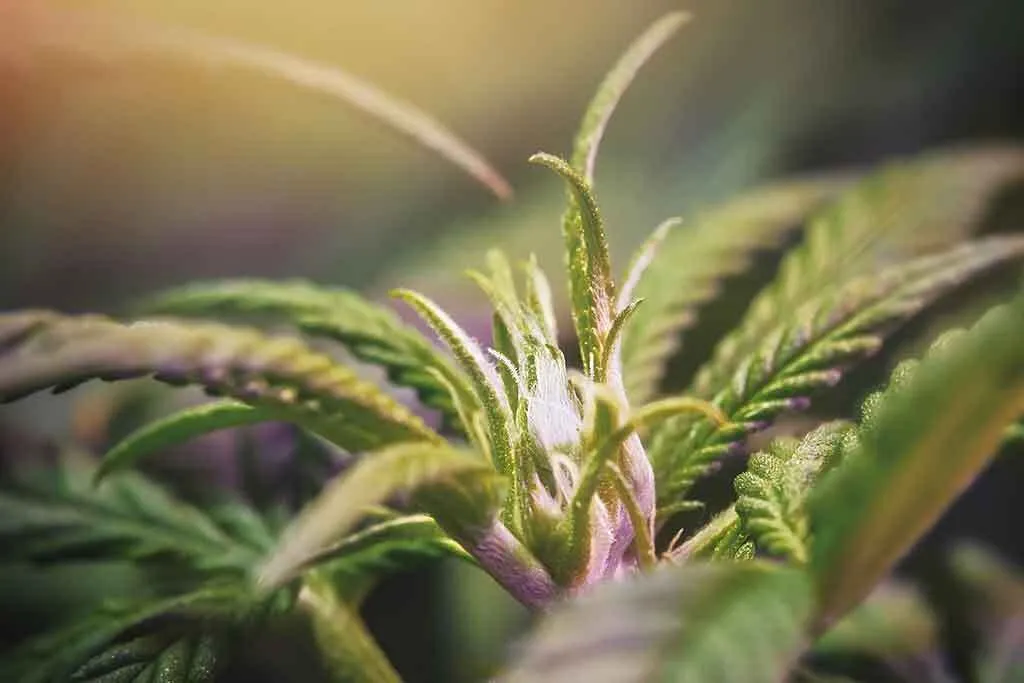
Female pre-flowers tend to have a small teardrop-shaped appearance. As they develop, one or two fine white stigmas commonly emerge.
These white hairs are often called pistils in everyday grower language, but technically they are stigmas, which form part of the female reproductive structure.
You can read more about the distinction in our guide to cannabis pistils and stigmas.
How to Check Pre-Flowers
Use a simple process:
- Inspect several upper and middle nodes.
- Look beside the stipules for developing reproductive growth.
- Use magnification if the structures are very small.
- Compare more than one node before making a decision.
- Recheck the plant after a few days if the structures are still unclear.
Grower Tip: Do not remove a plant because one tiny growth “looks male.” Wait until the structure is developed enough to identify properly.
Tip #2: Use a Clone to Determine Plant Sex
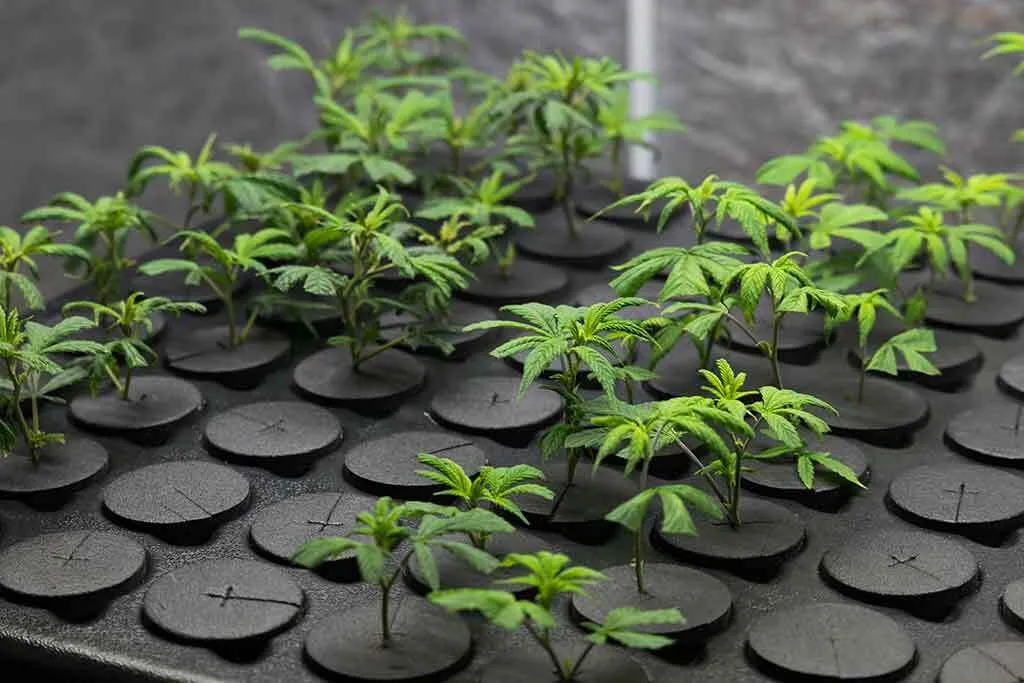
Another option is to take a cutting from the plant and flower the clone while keeping the original plant in vegetative growth.
A clone shares the same genetics as its donor, so its genetic sex will match the original plant.
How to Sex a Cannabis Plant Using a Clone
- Take a healthy cutting from the plant.
- Label it so it can be matched to the donor.
- Root the cutting.
- Once established, place the clone under a flowering photoperiod, typically 12 hours of light and 12 hours of darkness.
- Wait for reproductive structures to develop.
- Match the result back to the donor plant.
For the full cloning process, see our cloning marijuana plants guide.
When Clone Sexing Makes Sense
Clone sexing can be useful when you want to keep a photoperiod plant in vegetative growth while finding out its sex.
The tradeoff is that it requires:
- Extra growing space.
- Time for the cutting to root.
- Careful labeling.
- A separate flowering environment.
For a small grow, waiting for natural pre-flowers is often easier.
Grower Tip: Label the cutting before it leaves the donor plant. Once several identical-looking clones are mixed up, the result is no longer useful.
Tip #3: Look at Height and Growth Structure — But Only as a Clue
Growth habit can sometimes give you a reason to inspect a plant more closely, but it cannot confirm sex.
Male plants can sometimes:
- Grow taller.
- Develop wider spacing between nodes.
- Appear less densely branched.
Female plants can sometimes:
- Develop denser branching.
- Stay somewhat shorter.
The problem is that all of these traits are also affected by genetics, phenotype, lighting, container size, nutrition, training, temperature, and other environmental conditions.
Two female plants can have completely different structures, and a tall plant is not automatically male.
Treat these differences as observations rather than a sexing method.
Grower Tip: If one plant grows differently from the rest, inspect its reproductive growth more closely. Never remove it based on structure alone.
Tip #4: Use Cannabis DNA Sex Testing
Cannabis DNA sex testing can identify genetic sex before obvious visual signs appear.
The process generally involves collecting a small leaf sample from a young plant and sending it to a laboratory or specialist testing service.
A 2025 study by Riera-Begue et al., published in Planta, tested a PCR-based method for distinguishing XX and XY cannabis plants. The method was tested across more than 500 samples from multiple hemp cultivars and crosses, with the researchers reporting 100% accuracy in their dataset.
How Cannabis DNA Sex Testing Works
The exact procedure depends on the provider, but growers normally:
- Collect a small leaf sample.
- Label it with the corresponding plant ID.
- Send the sample for analysis.
- Receive a result identifying genetic sex.
This can be useful when growing larger numbers of regular plants because males can be identified before much space, time, or equipment has been devoted to them.
Is DNA Sex Testing Worth It?
For most home growers, DNA testing is optional rather than necessary. Waiting for natural reproductive growth costs nothing and is usually practical with a small number of plants.
DNA testing makes more sense when:
- Growing many regular plants.
- Space is limited.
- Early identification has practical value.
- The cost of testing is justified by the grow setup.
Sample handling and accurate labeling matter, and the quality of the result depends on the testing provider.
Tip #5: Confirm Sex From Mature Reproductive Structures
If early pre-flowers were too small to identify confidently, the difference becomes much clearer once flowering develops.
At this stage, you are confirming sex from mature reproductive growth rather than subtle early signs.
Mature Male Cannabis Plants
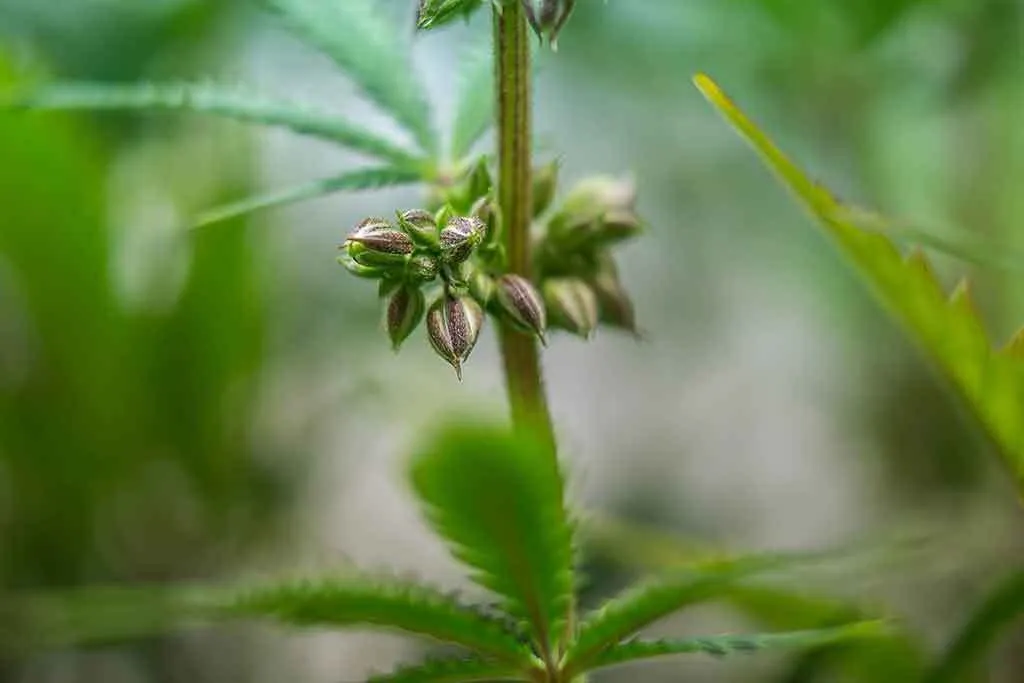
Males develop groups of rounded pollen sacs that become increasingly obvious as flowering progresses. Eventually, mature sacs open and release pollen.
Clusters of hanging or grouped sacs are a clear male characteristic.
Mature Female Cannabis Plants
Female plants build flower sites containing bracts and visible stigmas. These develop into increasingly dense flower clusters as flowering continues.
Once these structures are well developed, male and female plants are normally easy to tell apart.
The drawback is timing. If preventing pollination is the goal, waiting for fully mature reproductive structures leaves much less room for error.
Grower Tip: Use mature flowers to confirm a doubtful plant, not as your preferred time to start checking.
Can You Tell if a Cannabis Seed Is Male or Female?
No reliable visual method can tell you whether a cannabis seed will grow into a male or female plant.
Seed characteristics such as:
- Shape.
- Size.
- Color.
- Surface markings.
- Roundness.
- Pointed ends.
- The position where the root emerges.
do not reliably indicate sex.
These methods have circulated among growers for years, but they should not be used to decide which seeds to keep or discard.
Plant sex becomes identifiable after growth begins, either through reproductive structures or genetic testing.
What Should You Do With a Male Cannabis Plant?
What you do with a male depends on why you are growing.
Growing for Seedless Flower
If seedless female flower is the goal, separate confirmed males before their pollen sacs open.
Take extra care with males that already have well-developed sacs. Moving or handling mature plants unnecessarily can increase the chance of pollen being released.
Growing for Breeding
Male plants have an important role in breeding. A selected male can provide pollen for controlled crosses with chosen female plants.
Breeding males should be kept isolated from females you do not intend to pollinate so that pollen stays under control.
What if a Cannabis Plant Shows Both Male and Female Flowers?
A plant can occasionally develop both male and female reproductive structures.
If you see something unusual, inspect the whole plant instead of judging it from one node. Look for female flower growth alongside pollen-producing structures.
The practical concern is pollen. Male reproductive structures can still release it and fertilize surrounding female flowers. A study by Adal et al. (2021), published in Planta, showed that genetically female cannabis plants can develop male flowers under certain conditions. The researchers identified changes in gene expression associated with male flower development, helping explain why sex expression in cannabis can be more complex than simply male or female appearance.
If you find both types of growth, check the plant regularly and decide how to manage it based on whether seed production is part of your goal.
Common Mistakes When Sexing Cannabis Plants
Most mistakes come from deciding too early or relying on the wrong sign.
| Common Mistake | Better Approach |
| Trying to sex a seed by appearance | Wait for plant development or use genetic testing |
| Mistaking stipules for pre-flowers | Look for reproductive growth beside the stipule |
| Checking only one node | Compare several nodes |
| Assuming tall plants are male | Use structure only as a clue |
| Removing plants too early | Recheck unclear growth after further development |
| Waiting for pollen sacs to open | Inspect plants regularly before full flowering |
Conclusion
The best way to sex cannabis plants at home is to learn what reproductive growth looks like and check plants regularly as they mature. Pre-flowers provide the earliest practical visual signs, while cloning or DNA testing can help in situations where earlier identification is useful.
Plant height, shape, and seed appearance should never be treated as proof.
Once you know where to look and what the structures mean, separating male and female plants becomes much easier.
Frequently Asked Questions
How Early Can You Sex a Cannabis Plant?
There is no single week that applies to every plant. Genetics, growth rate, and growing conditions all affect when reproductive structures become visible. Start inspecting mature vegetative plants for pre-flowers and recheck them regularly if the first structures are unclear.
What Are the First Signs of a Male Cannabis Plant?
One of the first reliable signs is the appearance of small round or oval reproductive structures that develop into pollen sacs. They appear around the nodes and do not produce the fine white stigmas associated with female pre-flowers.
What Are the First Signs of a Female Cannabis Plant?
Female pre-flowers tend to form small teardrop-shaped structures. As they mature, one or two fine stigmas commonly emerge. These reproductive structures provide a much better indication of sex than plant height or branching pattern.
Do Male Cannabis Plants Always Grow Taller Than Females?
No. Males can sometimes grow taller or develop wider internodal spacing, but these traits are heavily influenced by genetics and growing conditions. Height should only prompt closer inspection; it should not be used to determine sex.
Can You Tell if a Cannabis Seed Is Male or Female?
No reliable visual test can determine plant sex from a cannabis seed. Seed size, shape, color, markings, and germination position do not provide dependable evidence. Sex becomes identifiable after the plant develops or through genetic testing.
References
Riera-Begue, A., Toscani, M., Malik, A., Dowling, C. A., Schilling, S., & Melzer, R. (2025). A simple and reliable PCR-based method to differentiate between XX and XY sex genotypes in Cannabis sativa. Planta, 262, 87. https://doi.org/10.1007/s00425-025-04804-z Springer
Adal, A. M., Doshi, K., Holbrook, L., & Mahmoud, S. S. (2021). Comparative RNA-Seq analysis reveals genes associated with masculinization in female Cannabis sativa. Planta, 253, 17. https://doi.org/10.1007/s00425-020-03522-y


