




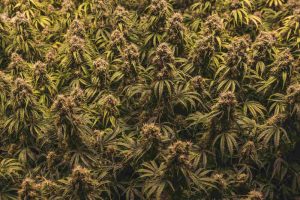
The Sea of Green cannabis method, usually shortened to SOG, is an indoor growing approach that uses several smaller plants to create a level canopy instead of relying on a few large plants. By keeping vegetative growth relatively short, growers can fill the available space sooner and potentially achieve faster harvest cycles without changing the strain’s actual flowering time.
A SOG weed setup can work well where height and floor space are limited, but plant spacing, strain choice, airflow, and canopy management all matter. This guide explains how the Sea of Green weed method works, how to set up a SOG grow step by step, which strains are best suited to it, and how SOG compares with other cannabis training methods such as LST and SCROG.
Key Takeaways
- Good spacing is essential in a Sea of Green cannabis grow. Plants still need enough room for airflow, watering, inspection, and healthy development.
- SOG cannabis uses several smaller plants to create an even canopy rather than growing a few large plants.
- The main time-saving benefit comes from a shorter vegetative stage, which can support faster harvest cycles without shortening the plant’s flowering period.
- SOG is often grouped with cannabis training methods, but it is mainly a plant-density and canopy-management technique rather than a method based on heavy bending or cutting.
- Compact plants with predictable stretch and strong central growth are generally easier to manage. Many indica strains suit the SOG method, although individual plant traits matter more than the indica label alone.
- What is the Sea of Green (SOG) Cannabis Method?
- What are the Disadvantages of Sea of Green?
- How to Use the Sea of Green Method Step by Step
- How Long Should Cannabis Veg in a SOG Grow?
- Does Sea of Green Increase Yield?
- Can You Use the Sea of Green Method With Autoflowers?
- What Strains Are Best for SOG Cannabis?
- SOG vs. LST vs. SCROG
- Is the Sea of Green Method Right for You?
- Conclusion
- Frequently Asked Questions
What is the Sea of Green (SOG) Cannabis Method?
The Sea of Green (SOG) cannabis method is an indoor growing technique that uses several smaller plants to fill the available canopy space instead of growing a few large plants. The aim is to keep the vegetative stage relatively short, then move photoperiod plants into flowering once they have established enough growth to form an even canopy.
Rather than allowing plants to develop lots of side branches, SOG growers usually focus on one main central cola and remove lower growth that receives little light. This helps concentrate productive growth near the top of the canopy.
How quickly plants are moved into flowering depends on the strain, starting size, plant density, and available space. Growers using photoperiod cannabis seeds have direct control over this timing because flowering begins after the light cycle is changed.
Is SOG a Cannabis Training Method?
SOG is often grouped with cannabis training methods, but it is better described as a canopy and plant-density strategy. Techniques such as low-stress training shape individual plants by bending branches, whereas SOG relies mainly on growing more compact plants and limiting the time they spend in vegetative growth.
Some pruning may still be used to remove weak lower branches, but extensive bending or topping is not required for a basic SOG setup.
What Are the Benefits of SOG Cannabis?
The main advantage of SOG cannabis is that growers can fill an indoor canopy without waiting for a small number of plants to become large. This can reduce the time spent in vegetative growth and make efficient use of a fixed grow area.
SOG does not automatically increase yield or make cannabis flower faster. Its advantage comes from managing space and time differently.
Shorter Vegetative Growth and Faster Harvest Cycles
Photoperiod plants are normally kept in vegetative growth until they reach the desired size. With SOG, growers generally switch to a 12/12 flowering light schedule earlier because several smaller plants can cover the canopy more quickly.
This shortens the vegetative part of the grow, although the strain will still need its normal flowering period.
Efficient Use of Indoor Grow Space
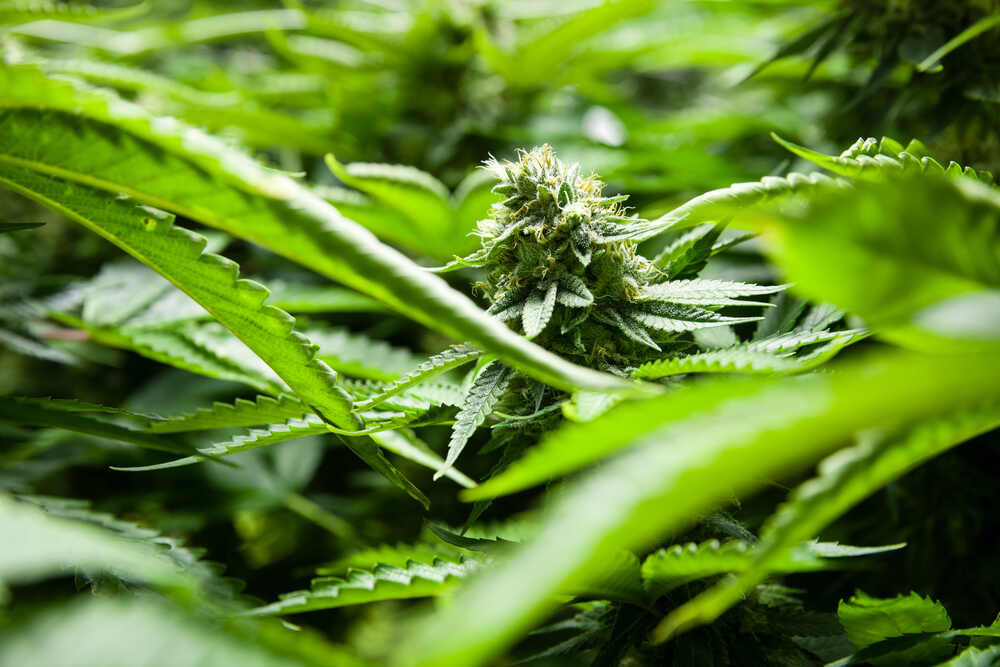
Several smaller plants can spread productive growth across the available light footprint without requiring the height or width needed by large individual plants.
Grower Tip: More plants are not always better. Leave enough room to water, inspect, and maintain airflow around every plant.
More Uniform Canopy Coverage
When plants have similar height and growth habits, SOG can produce a level canopy with the main flowering sites positioned close to the light. This helps reduce situations where tall plants shade shorter ones.
| Benefit | How SOG Helps |
| Shorter vegetative stage | Several small plants can fill the canopy sooner than a few large plants |
| Efficient use of space | Compact plants make use of the available indoor footprint |
| Even canopy | Similar-sized plants can keep main flowering sites at a comparable height |
| Controlled plant height | Shorter vegetative growth helps limit overall plant size |
| Faster grow cycles | Less time in vegetative growth can reduce the total time between harvests |
What are the Disadvantages of Sea of Green?
The Sea of Green method can make good use of indoor space, but managing several plants in a compact area also creates extra work. Before using SOG cannabis, growers should consider plant numbers, airflow, humidity, and how easily every pot can be reached.
Higher Plant Counts
SOG normally uses more plants than methods built around a few larger plants. This means more containers to water, inspect, and maintain. Growers should also check local laws because legal plant limits can make a traditional SOG setup impractical in some areas.
Airflow and Humidity
A dense Sea of Green cannabis canopy can restrict air movement if plants become overcrowded. Moist air trapped between leaves can increase the risk of mold and other problems, particularly during flowering. Good spacing and consistent air circulation are therefore important.
Watering and Access
Closely positioned pots can make plants in the middle or back of the grow space difficult to reach. Poor access can lead to uneven watering or make early signs of cannabis plant problems easier to miss.
Grower Tip: Avoid packing plants so tightly that you cannot inspect, water, or manage airflow around the center of the canopy.
How to Use the Sea of Green Method Step by Step
The Sea of Green method works best when you plan the canopy before the plants become large. Your aim is to grow several smaller plants at a similar height, keep the vegetative stage relatively short, and fill the available light footprint without overcrowding the grow space.
1. Choose a Suitable Cannabis Strain
Start with a strain that stays relatively compact and does not stretch excessively after flowering begins. Plants with similar height, structure, and flowering times are easier to manage together.
Indica and indica-dominant strains are often suited to SOG because many naturally develop a shorter, stockier structure. However, do not choose by the indica or sativa label alone. Check the expected height, flowering time, and stretch of the specific strain.
2. Start With Seeds or Clones
You can build a SOG grow from either seeds or clones.
| Starting Method | Why Use It for SOG? | What to Watch For |
| Seeds | Easy to obtain and gives you more strain choice | Plants may differ slightly in height and growth rate |
| Clones | Plants from the same mother are usually more uniform | You need healthy, established cuttings |
If growing from seed, use the same strain throughout the canopy where possible. This makes it easier to keep the plants at a similar height.
3. Choose Pot Size and Plant Density
Place each plant in its own container rather than sharing root space. SOG usually uses smaller pots than a grow based around a few large plants, but there is no universal pot size or plant count.
Before placing the pots, check that you can:
- reach every plant for watering;
- inspect the center of the canopy;
- leave space for air to move between plants;
- remove individual pots if a problem develops.
Do not pack plants together simply because there is unused floor space.
4. Establish Healthy Young Plants
Allow seedlings to develop several sets of true leaves and a healthy root system before pushing them toward flowering.
Keep light, watering, and temperature consistent during this stage. If a plant is noticeably weak, stretched, or stressed, correct the problem before continuing.
New growers can follow our guide to growing cannabis from seed for more detail on the early stages.
5. Keep the Canopy Even
Arrange the plants so their growing tips sit at roughly the same height.
During early vegetative growth, reposition or rotate pots if one side of the canopy is developing faster than another. If individual plants become much taller than the rest, they can shade neighboring plants once flowering starts.
Your aim is a flat layer of growing tips rather than a canopy with large height differences.
6. Switch Photoperiod Plants to Flower
Once the plants are healthy and the canopy is close to filling the available space, change photoperiod plants to a 12 hours light/12 hours dark schedule.
Do not wait until the plants have filled every gap. Most photoperiod cannabis continues growing upward after flowering begins, sometimes called the flowering stretch.
How much stretch occurs depends on the strain, so allow enough vertical and horizontal space for the plants to expand.
7. Remove Unproductive Lower Growth
As the upper canopy develops, inspect the lower part of each plant.
Small shoots and branches that remain heavily shaded are unlikely to receive as much useful light as the top of the plant. Removing some weak lower growth can help keep the lower canopy less crowded.
Use clean tools and avoid removing large amounts of healthy growth at once. Our guide to pruning cannabis explains how to remove plant material safely.
8. Manage Airflow and Humidity
Once the canopy becomes dense, check airflow every day.
Make sure air can move:
- across the top of the canopy;
- between neighboring plants;
- underneath the foliage.
Pay particular attention to plants in the middle of the SOG setup because these are often harder to inspect.
Also check that leaves are not remaining wet or pressed tightly together for long periods.
Grower Tip: Test your layout before flowering by reaching every pot and the center of the canopy. If you cannot easily water, inspect, or remove a plant, increase the spacing before the plants become larger.
How Long Should Cannabis Veg in a SOG Grow?
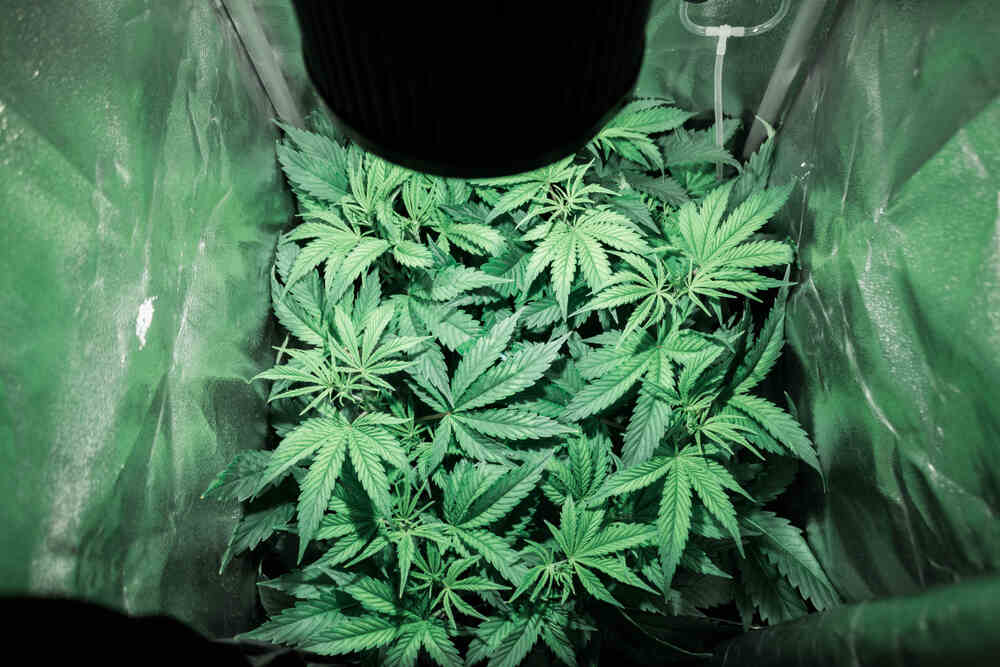
There is no fixed vegetative time for a SOG cannabis grow. The goal is to move photoperiod plants into flowering once they are healthy, established, and close to filling their allocated canopy space.
In many SOG setups, the vegetative stage is kept shorter than in a grow using only a few large plants. However, seedlings usually need more time to establish than rooted clones.
What Affects Vegetative Time in SOG?
The right timing depends on:
- the strain and how much it stretches;
- whether you start from seeds or clones;
- plant density;
- pot size;
- available grow space.
Grower Tip: Use plant health and canopy coverage as your guide rather than switching to flower after a fixed number of days.
Does Sea of Green Increase Yield?
The Sea of Green method can help growers use their available canopy efficiently, but it does not guarantee a bigger harvest.
SOG works by spreading several smaller plants across the grow area so productive flowering sites receive good light without requiring a long vegetative period. Final yield still depends on strain, lighting, plant health, nutrition, environment, and how well the canopy is managed.
Yield per Plant vs. Yield per Grow Area
Individual SOG plants will often produce less than a large plant that has spent longer in vegetative growth. The important measurement is the combined yield from the entire grow area, not the yield from each plant.
Growers interested in improving production should also see our guide to increasing cannabis yields.
Can You Use the Sea of Green Method With Autoflowers?
You can grow autoflower seeds in a SOG-style setup, but the process differs from traditional photoperiod SOG.
Autoflowers begin flowering according to their age rather than a grower-controlled change to a 12/12 light schedule. This means you cannot decide exactly when to end their vegetative growth.
How Autoflower SOG Differs From Photoperiod SOG
With photoperiod plants, growers can keep plants in vegetative growth until the canopy reaches the desired size and then trigger flowering by changing the light cycle.
Autoflowers do not give you this control. If using several autos together, choose plants with similar expected height and lifecycle so the canopy develops as evenly as possible.
Grower Tip: Avoid relying on heavy training to correct an uneven autoflower canopy later. Their limited vegetative period gives stressed plants less time to recover.
What Strains Are Best for SOG Cannabis?
The best strains for Sea of Green cannabis are generally plants that stay manageable, develop a strong main flowering site, and grow at a similar rate to neighboring plants.
For a beginner, consistency is more useful than choosing the tallest or highest-yielding strain. A canopy containing plants with very different heights and flowering times becomes harder to light and manage.
Are Indica Strains Good for the SOG Method?
Many indica seeds and indica-dominant strains suit SOG because they commonly have shorter, bushier growth and less stretch than many sativa-dominant varieties.
However, indica genetics alone do not make a strain suitable for SOG. Always check the characteristics of the individual strain.
What Plant Traits Work Best in a SOG Grow?
Look for:
- compact to medium height;
- moderate flowering stretch;
- a strong central cola;
- similar flowering times;
- predictable growth;
- limited excessive side branching.
Using the same strain across the canopy can also make it easier for a new grower to keep plant height, feeding, and harvest timing consistent.
SOG vs. LST vs. SCROG
SOG, LST, and SCROG all aim to make better use of the available grow space, but they achieve this in different ways. The main differences are the number of plants used, how much training each plant receives, and how long plants normally spend in vegetative growth.
SOG vs. LST
SOG cannabis uses several smaller plants with a relatively short vegetative period. Low-stress training usually involves fewer plants and uses gentle bending and tying to spread branches outward.
LST gives growers more control over the shape of individual plants, while SOG focuses on filling the canopy with multiple compact plants.
SOG vs. SCROG
SCROG uses a screen or net to spread branches horizontally across the grow area. It generally uses fewer, larger plants that spend longer in vegetative growth.
SOG does not require a screen. Instead, multiple smaller plants are positioned close together to create an even canopy.
| Method | Typical Plant Number | Main Technique | Vegetative Time | Best Suited To |
| SOG | Higher | Multiple smaller plants | Shorter | Filling a canopy quickly |
| LST | Low to moderate | Bending and tying branches | Variable | Shaping individual plants |
| SCROG | Lower | Training branches through a screen | Usually longer | Filling space with fewer plants |
Is the Sea of Green Method Right for You?
The Sea of Green method can work well, but it is not automatically the best option for every indoor grow. Your available space, plant limits, experience, and ability to manage several plants should all influence the decision.
When SOG Makes Sense
SOG may suit you if you have limited vertical space, want to keep vegetative growth relatively short, and can comfortably water and inspect several plants. It can also suit growers who want a simple canopy without extensive branch training.
When Another Training Method May Be Better
Choose LST or SCROG if you need to keep plant numbers low or prefer working with a few larger plants. These methods also give you more control over how individual plants spread across the grow space.
Conclusion
The Sea of Green cannabis method uses several smaller plants to create an even indoor canopy while keeping vegetative growth relatively short. For new growers, success depends less on packing in as many plants as possible and more on choosing suitable strains, maintaining consistent plant height, and leaving enough room for watering and airflow.
SOG can be a useful option when you want to make efficient use of limited indoor space, but it is not the right method for every grow. Consider your plant limits, available space, strain choice, and ability to manage several plants before deciding whether SOG fits your setup.
Frequently Asked Questions
How many cannabis plants do you need for Sea of Green?
There is no fixed number of plants required for a SOG grow. Plant count depends on your grow-space size, container size, strain, and how much room each plant needs as it develops. The aim is to create even canopy coverage without overcrowding the plants.
Start with a layout that still allows you to reach every container and inspect the center of the canopy.
Do you need to top cannabis plants for SOG?
No. Topping is not required for the traditional Sea of Green method. SOG normally aims to produce compact plants with a strong central flowering site, so allowing the main stem to continue growing can work well.
Topping cannabis creates several main growing tips and is better suited to setups where growers want to spread individual plants across more horizontal space.
How long does a Sea of Green grow take?
There is no single SOG grow time because flowering length depends on the strain. What SOG can shorten is the vegetative stage, as growers do not need to wait for a few plants to become large before flowering.
Once flowering begins, the plants still need their normal flowering period. Check the expected flowering time of your chosen strain when planning the complete grow cycle.
Is Sea of Green suitable for beginner growers?
Yes, but beginners need to be comfortable managing several plants at the same time. The basic SOG concept is straightforward, but watering, canopy management, airflow, and plant inspection can become more demanding as plant numbers increase.
For a first SOG weed grow, using one strain throughout the space can make differences in height, feeding needs, and harvest timing easier to manage.
Is Sea of Green better than SCROG?
Neither method is better for every grow. SOG generally uses more smaller plants and a shorter vegetative period, while SCROG normally uses fewer plants that are trained horizontally through a screen.
SOG may suit growers who want shorter vegetative growth and limited vertical height. SCROG may be more practical where plant numbers are restricted or when you prefer to train a few larger plants across the available space.


