




Cannabis trichomes are the tiny structures responsible for the frosty resin coating that develops across cannabis flowers and surrounding leaves. For growers, they offer much more useful information than appearance alone. Trichomes are where many cannabinoids and terpenes are produced and stored, while changes in their structure and color can provide valuable clues about flower development.
Understanding the different types of trichomes, how they form and what influences their development can help growers make better decisions throughout flowering and harvest. In particular, recognizing the main cannabis trichome stages—from clear through cloudy to amber provides a practical way to assess maturity without relying solely on breeder flowering estimates.
This guide explains the science behind cannabis trichomes, how to examine them correctly, what affects resin production and how to protect these delicate glands through harvest, drying, curing and storage.
Key takeaways
- Cannabis produces several types of trichomes, with capitate-stalked glands responsible for much of the resin found on mature female flowers.
- Trichome color reflects maturity rather than exact potency, so clear, cloudy and amber heads should be treated as developmental indicators rather than THC measurements.
- Visible frost does not automatically mean higher THC, as cannabinoid concentration also depends heavily on genetics and activity within the glandular trichomes.
- Stable flowering conditions support resin development, while excessive light, heat, pests, nutrient problems and other stresses can interfere with healthy flower production.
- Trichomes remain vulnerable after harvest, making careful handling, controlled drying and curing, and suitable storage important for preserving cannabinoids and aromatic terpenes.
- What are cannabis trichomes? Understanding the plant’s resin glands
- Key differences between glandular and non-glandular trichomes
- The different types of trichomes on cannabis plants
- Cannabis trichome stages: clear, cloudy and amber
- How genetics, stress, nutrients and light affect trichome production
- How cannabis trichomes influence potency, aroma, and flower quality
- Using trichomes to know when to harvest cannabis
- Conclusion
- Frequently asked questions about cannabis trichomes
What are cannabis trichomes? Understanding the plant’s resin glands
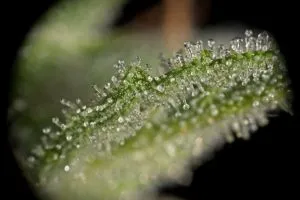
Cannabis trichomes are microscopic structures that develop across the surface of the plant, with the most resin-rich glandular trichomes becoming especially abundant on flowers and nearby leaves as flowering progresses. They are responsible for much of the sticky, frosted appearance associated with mature cannabis buds.
For growers, trichomes matter because glandular trichomes produce and store many of the compounds that influence a plant's cannabinoid content, aroma and flavor. They also form part of the plant's natural defense system.
What trichomes are and where they form on cannabis plants
The word trichome describes small hair-like or gland-like structures found on the surface of many plants. Cannabis produces several types, but the glandular trichomes concentrated around female flowers are the most relevant to growers because they contain resin rich in cannabinoids and aromatic compounds.
Under magnification, larger glandular trichomes often resemble tiny mushrooms, with a stalk supporting a rounded glandular head. This head contains secretory cells that produce and accumulate resin.
Trichomes can be found on several parts of a cannabis plant, including:
- Flowers and bracts
- Sugar leaves surrounding the buds
- Fan leaves
- Stems and other above-ground tissues
The highest concentration of large resin-producing trichomes is generally found around developing female flowers.
Grower tip: A heavily frosted plant may indicate abundant trichome development, but visible resin coverage alone does not tell you the plant's THC percentage. Genetics, trichome maturity and cannabinoid production all influence the final chemical profile.
How trichomes produce cannabinoids, terpenes and flavonoids
Inside glandular trichomes, specialized cells synthesize and store resin containing cannabinoids, terpenes and flavonoids. These compounds contribute to the plant's chemistry, scent, flavor and pigmentation.
| Compound group | Examples | Main relevance to growers |
| Cannabinoids | THCA, CBDA, CBGA, THC, CBD, CBG | Contribute to the plant's cannabinoid profile and change as flowers mature |
| Terpenes | Myrcene, limonene, pinene, linalool, caryophyllene | Produce much of the distinctive citrus, floral, earthy, pine and spicy aroma associated with different cultivars |
| Flavonoids | Cannflavins and other plant flavonoids | Contribute to pigmentation and may also influence the plant's overall chemical profile |
Cannabinoids are produced largely in their acidic forms within fresh cannabis. For example, a THC-dominant plant primarily produces THCA, which can later convert to THC through decarboxylation when exposed to sufficient heat.
Terpenes are volatile aromatic compounds that give different cultivars their recognizable scent profiles. Depending on genetics, a plant may develop citrus, fruit, pine, floral, earthy, spicy or fuel-like aromas. You can read more about how these compounds develop in our guide to terpenes in cannabis.
Flavonoids are another group of plant compounds found in cannabis. They contribute to pigmentation and plant chemistry, although their role should not be confused with that of cannabinoids or terpenes.
Together, these compounds make glandular trichomes one of the most important structures for growers to monitor as flowers develop and approach maturity.
Key differences between glandular and non-glandular trichomes
Cannabis produces both glandular and non-glandular trichomes, but they serve different functions. Glandular trichomes are especially important to growers because their resin-producing heads contain many of the cannabinoids and terpenes associated with mature cannabis flowers. Non-glandular trichomes are hair-like structures that primarily contribute to the plant's physical protection.
Individual trichomes are best examined under magnification, although dense glandular trichome coverage can give mature buds their visible frosted appearance.
| Feature | Glandular trichomes | Non-glandular trichomes |
| Structure | Usually have a glandular head that produces and stores resin | Hair-like structures without a resin-producing glandular head |
| Main role | Produce and store cannabinoids, terpenes and other plant compounds | Provide a physical protective barrier on the plant surface |
| Resin production | Yes | Not a significant source of cannabis resin |
| Plant defense | Resin and secondary compounds can help deter insects and other threats | Hair-like structures can make plant tissue less accessible to insects and herbivores |
| Where they occur | Most abundant around female flowers and nearby leaves, with some types also present elsewhere on the plant | Found across leaves, stems and other plant tissues |
| Importance to growers | Used to assess resin development and flower maturity | Less useful for judging cannabinoid production or harvest timing |
For growers, glandular trichomes are the structures to focus on when checking resin production and cannabis trichome maturity. Their size, abundance and appearance change as flowers develop, which becomes particularly important when assessing the different trichome stages later in flowering.
Grower tip: Do not judge harvest readiness simply by how frosty a plant looks from a distance. Use magnification to examine the glandular heads themselves, as their maturity cannot be assessed accurately from overall resin coverage alone.
Cannabis trichomes vs pistils: What’s the difference?
Trichomes and pistils and stigmas are all visible on flowering cannabis, but they perform very different roles. Cannabis trichomes are microscopic glandular structures that produce and store resin, while the hairs growers commonly call pistils are actually stigmas, part of the female flower's reproductive structure.
| Feature | Trichomes | Pistils/stigmas |
| Appearance | Tiny clear, cloudy or amber glands | Fine white hairs that often darken as flowers mature |
| Main role | Produce and store resin containing cannabinoids and terpenes | Help capture pollen during reproduction |
| Harvest use | Trichome maturity is a useful harvest indicator | Color changes can support assessment but should not be used alone |
| Magnification | Usually required for accurate inspection | Easily visible without magnification |
Grower tip: Orange or brown stigmas do not necessarily mean a plant is ready to harvest. Check trichome maturity and overall flower development before making the final decision.
The different types of trichomes on cannabis plants
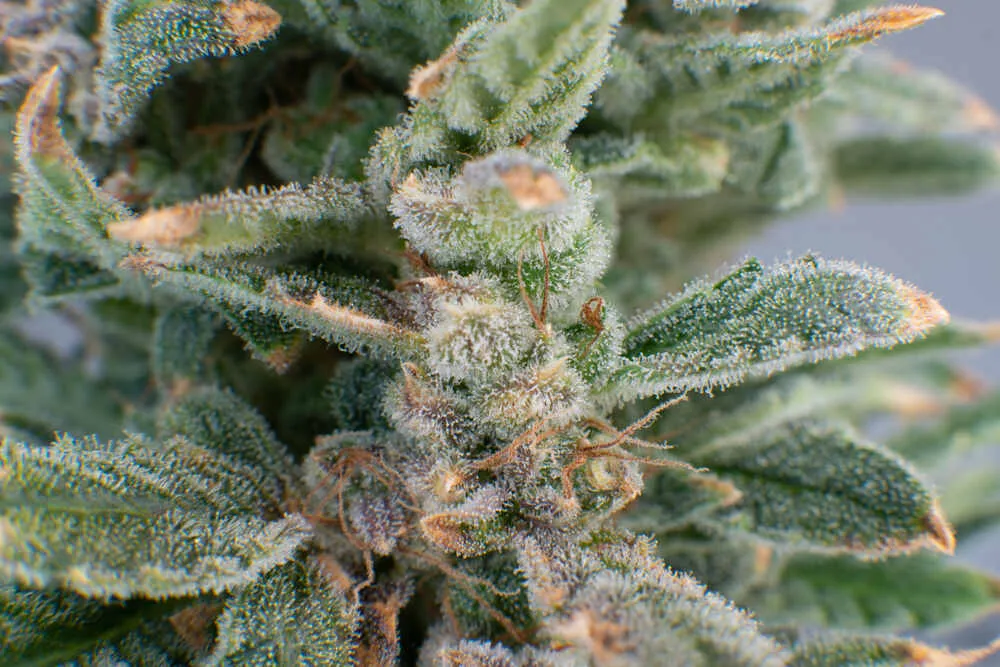
The frosted appearance of mature cannabis flowers comes primarily from glandular trichomes, which produce and store resin containing cannabinoids and terpenes. Three main types of glandular trichomes are commonly recognized on cannabis: bulbous, capitate-sessile and capitate-stalked trichomes.
Their size, structure, location and contribution to resin production differ as the plant develops.
| Type of cannabis trichome | Structure | Where commonly found | Importance to growers |
| Bulbous | Very small glandular head on a short base | Leaves, stems and flowering tissues | Produce some specialized compounds but contribute less resin than capitate trichomes |
| Capitate-sessile | Rounded glandular head supported by a very short stalk | Leaves, bracts and developing flowers | Produce and store cannabinoids and terpenes; common during earlier flower development |
| Capitate-stalked | Large glandular head elevated on a multicellular stalk | Most abundant around mature female flowers and bracts | Major source of cannabinoid- and terpene-rich resin in mature flowers |
Bulbous trichomes: structure, size and role
Bulbous trichomes are the smallest of the three glandular trichome types. Research examining cannabis bracts has measured their glandular heads at approximately 15–30 micrometers in diameter, making them difficult to identify without strong magnification.
They occur across several above-ground plant tissues and can produce cannabinoid precursors and other specialized compounds. However, their small size means they contribute less to the visible resin coverage of mature flowers than the larger capitate trichomes.
Capitate-sessile vs capitate-stalked trichomes
Capitate-sessile trichomes have a rounded secretory head positioned close to the plant surface on a short stalk. They occur on leaves and developing female flowers and contain secretory cells involved in cannabinoid and terpene production.
Capitate-stalked trichomes become much more prominent as female flowers mature. Their enlarged glandular head is raised above the plant surface by a longer stalk, creating the mushroom-like appearance growers commonly see under magnification.
Research into cannabis flower development has also shown that the distinction between sessile and stalked trichomes is not always fixed. Sessile-capitate trichomes are more prevalent during earlier flower development, while stalked-capitate trichomes become increasingly abundant as bracts mature. This suggests that some sessile trichomes may develop into the stalked form during flowering.
Why capitate-stalked trichomes matter for cannabinoid production
Capitate-stalked trichomes are particularly important because they become abundant on mature female flowers and produce large quantities of cannabinoid- and terpene-rich resin. Their glandular heads contain more secretory cells than sessile trichomes, giving them greater capacity for producing and storing these compounds.
However, more visible trichomes do not automatically mean higher THC levels. Genetics, trichome maturity and the metabolic activity inside the glands all influence cannabinoid concentration. A heavily frosted plant can therefore have excellent resin coverage without necessarily being more potent than a less visibly resinous cultivar.
Grower tip: Use visible frost as an indication of resin development rather than a measurement of potency. Laboratory testing is required to determine the actual cannabinoid content of harvested flowers.
Does more trichome coverage mean higher THC?
A heavily frosted cannabis plant may have abundant glandular trichomes, but more visible trichomes do not automatically mean higher THC. Potency also depends on genetics, cannabinoid production within the glands and flower maturity.
This means two cultivars can have similar visible resin coverage while producing different THC levels. Likewise, a particularly frosty flower is not necessarily more potent than one with less obvious trichome coverage.
For growers, visible frost is best used as an indication of resin production, not as a THC measurement. Accurate cannabinoid percentages require laboratory testing.
Grower tip: Grower tip: If potency is a priority, start with high THC cannabis seeds with a documented cannabinoid profile rather than choosing plants by frost alone.
Cannabis trichome development stages and what they mean for growers
Cannabis trichomes develop progressively rather than suddenly appearing at a particular week of flowering. Glandular trichomes can already be present on plant tissues before mature flowers form, but resin-producing trichomes become increasingly prominent around the female flowers as flowering progresses.
There is no universal week when visible trichome production begins. Genetics, plant age and flower development all influence how quickly glandular trichomes form and mature.
How trichomes develop from early growth through flowering
During vegetative growth, cannabis can already produce bulbous and sessile glandular trichomes on leaves and other tissues. The large capitate-stalked trichomes associated with resinous buds become much more important once female flowers begin developing.
During earlier flower development, bracts commonly contain more sessile-capitate trichomes. As the flowers mature, stalk formation increases and capitate-stalked trichomes become more abundant. Research has also found that trichomes at several developmental stages can occur on the same flower at the same time.
This is why growers should not rely on statements such as “trichomes appear in week three” as a fixed rule. Instead, monitor how the flowers and glandular heads develop throughout bloom.
Grower tip: Start inspecting developing flowers with magnification once visible resin production increases. Check several buds rather than a single flower, as trichome development can vary across the canopy. Later in flowering, the change from clear to cloudy and amber glandular heads provides another useful way to assess trichome maturity.
Cannabis trichome stages: clear, cloudy and amber
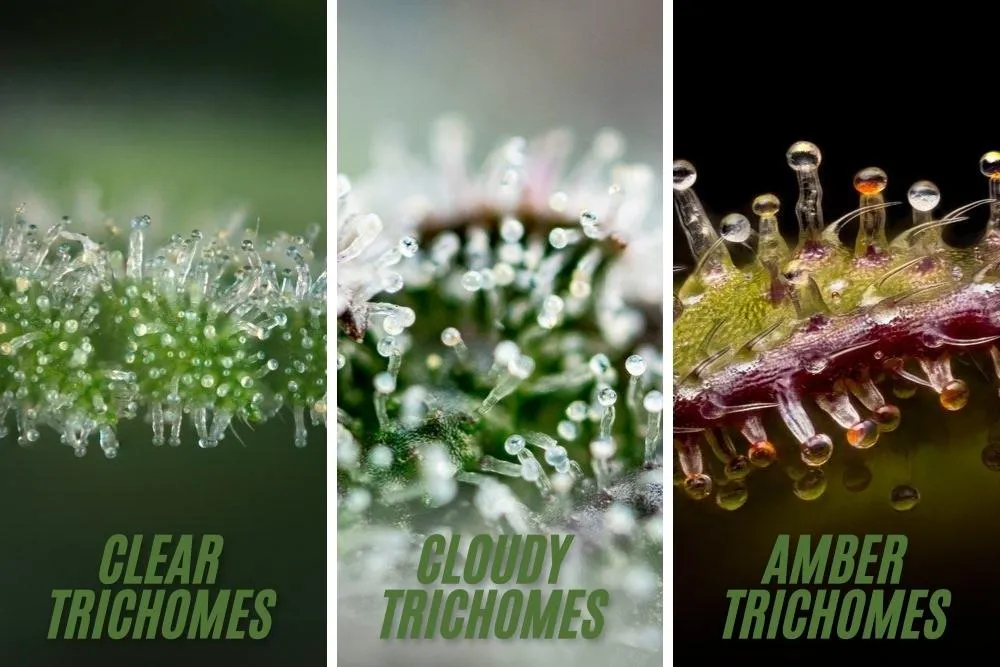
Under magnification, cannabis trichome stages can usually be identified by changes in the glandular head from clear to cloudy or milky, then amber as it ages. Growers use these color changes to help assess flower maturity and harvest timing.
Trichome color is a useful guide, but it cannot determine exact THC levels or guarantee a particular effect.
| Trichome stage | Appearance | What it indicates |
| Clear | Transparent or glass-like | Earlier trichome development; flowers generally need more time |
| Cloudy/milky | Opaque or white | Advanced resin and cannabinoid maturity; commonly associated with the main harvest window |
| Amber | Yellow, gold or brown | Later-stage maturity and trichome aging |
Clear trichomes
Clear trichomes are generally immature, with translucent glandular heads. If most trichomes remain clear, the flowers will usually benefit from more time before harvest.
Avoid relying on fixed timelines such as waiting another 7–14 days. Trichome maturity varies between cultivars and growing conditions, so inspect the plant regularly instead.
Cloudy or milky trichomes
As trichomes mature, their heads become cloudy or milky. This stage is associated with advanced cannabinoid and resin development and is commonly used as an important harvest indicator.
However, cloudy trichomes cannot tell you the exact THC level of a plant. Laboratory testing is required for accurate cannabinoid measurements.
Amber trichomes
Amber trichomes represent a later stage of maturity as the glandular heads begin to age. Increasing amber coloration can therefore indicate that flowers are moving beyond their earlier maturity stages.
There is no universal rule that 25% amber trichomes represents the ideal harvest point, nor does amber coloration guarantee a more sedative effect. Growers can use the ratio of cloudy to amber trichomes as one practical harvest reference alongside overall flower maturity and cultivar characteristics.
Grower tip: Check trichomes on the flower bracts rather than relying on sugar leaves alone. Inspect several buds from different parts of the canopy before deciding when to harvest.
How genetics, stress, nutrients and light affect trichome production
Cannabis trichome production is strongly influenced by genetics, while light, nutrition and environmental conditions affect how well a plant expresses that potential. Rather than trying to stress plants into producing more resin, growers should prioritize healthy, consistent flowering conditions.
| Factor | Effect on trichome and resin production |
| Genetics | Determines much of a cultivar's potential for trichome density and cannabinoid production |
| Stress | Excessive heat, pests, disease and other severe stress can disrupt growth and flower development |
| Nutrients | Balanced nutrition supports the metabolic processes required for healthy flowers and resin production |
| Light | Adequate intensity supports photosynthesis, flower development and cannabinoid production; excessive light can cause stress |
Genetics
Genetics are one of the biggest influences on how resinous a cannabis plant can become. Different cultivars naturally vary in trichome density, size and cannabinoid profile, which is why choosing the right cannabis seeds is the starting point when resin production is one of your growing goals.
Stress
Severe or prolonged stress can reduce plant performance and interfere with flower and resin development. Excessive heat, pest infestations, disease and poor environmental control should therefore be corrected rather than deliberately used to increase trichome production.
Nutrients
Cannabis needs balanced mineral nutrition throughout flowering to support healthy metabolism and bud development. Both deficiencies and excessive feeding can stress the plant, so avoid increasing fertilizer simply to chase greater resin production.
Light intensity
The intensity and placement of cannabis grow lights influence photosynthesis, flower development and cannabinoid production, but more light is not always better. Insufficient light can restrict flower development, while excessive PPFD can stress the canopy if environmental conditions cannot support it.
How cannabis trichomes influence potency, aroma, and flower quality
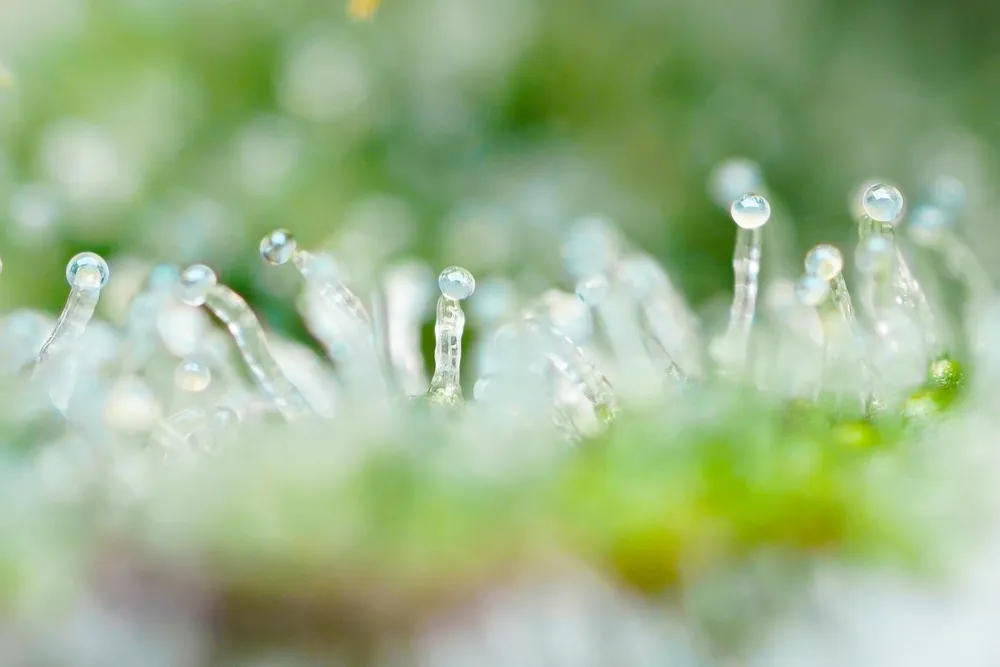
Glandular cannabis trichomes produce and store much of the cannabinoid- and terpene-rich resin found on mature flowers. This makes them important to cannabinoid content, aroma and flavor, although visible frost alone cannot determine potency.
Trichomes and cannabinoids
Fresh cannabis contains cannabinoids mainly in acidic forms such as THCA, CBDA and CBGA, which are produced within glandular trichomes. Their concentrations vary according to genetics, plant development and growing conditions.
Trichome maturity can help growers assess flower development, but laboratory testing is required to accurately measure THC, CBD and minor cannabinoids.
How terpenes influence aroma and flavor
Terpenes produced within glandular trichomes create much of the citrus, fruity, floral, earthy, pine, spicy and fuel-like aromas associated with different cultivars. Genetics largely determine the terpene profile, while growing conditions, drying, curing and storage influence how well these volatile compounds are preserved.
Cannabinoids and terpenes are sometimes linked through the proposed entourage effect, although research has not established that particular combinations reliably produce specific effects.
How growers can protect cannabis trichomes
Stable conditions throughout the cannabis flowering stage help plants develop healthy flowers and preserve resin. There is no universal temperature, grow room humidity or PPFD setting that maximizes trichome production across every cultivar.
| Factor | Grower approach |
| Light | Provide sufficient grow light without causing bleaching or canopy stress |
| Temperature | Avoid prolonged heat stress during flowering |
| Humidity/VPD | Balance temperature and humidity levels while controlling mold risk |
| Airflow | Maintain gentle circulation around flowering plants |
| Monitoring | Regularly check environmental conditions and plant responses |
Grower tip: Avoid increasing light intensity simply to chase more resin. Excessive PPFD can stress plants instead of improving flower quality.
Common causes of trichome damage
Mature trichome heads are delicate and can be damaged or degraded by:
- Excessive heat
- Rough handling or squeezing flowers
- Prolonged exposure to light after harvest
- Poor storage conditions
- Excessive heat, oxygen or moisture during storage
How to preserve trichomes after harvest
During drying cannabis, handle harvested flowers by their stems where possible and minimize contact with resin-covered surfaces.
When curing cannabis, store flowers loosely in clean, airtight containers in a cool, dark place. This helps limit exposure to heat, oxygen and light, which can degrade cannabinoids and terpenes.
THC can gradually oxidize during storage, with CBN forming as one degradation product, while volatile terpenes can be lost through evaporation and oxidation.
Grower tip: Gentle handling and controlled drying, curing and storage are essential for preserving the trichomes developed during flowering.
Using trichomes to know when to harvest cannabis
The flowering time supplied by a breeder is a useful estimate, but plants do not always mature on an exact schedule. Checking cannabis trichomes alongside overall flower development gives growers a more practical way to determine when to harvest cannabis.
How to inspect cannabis trichomes
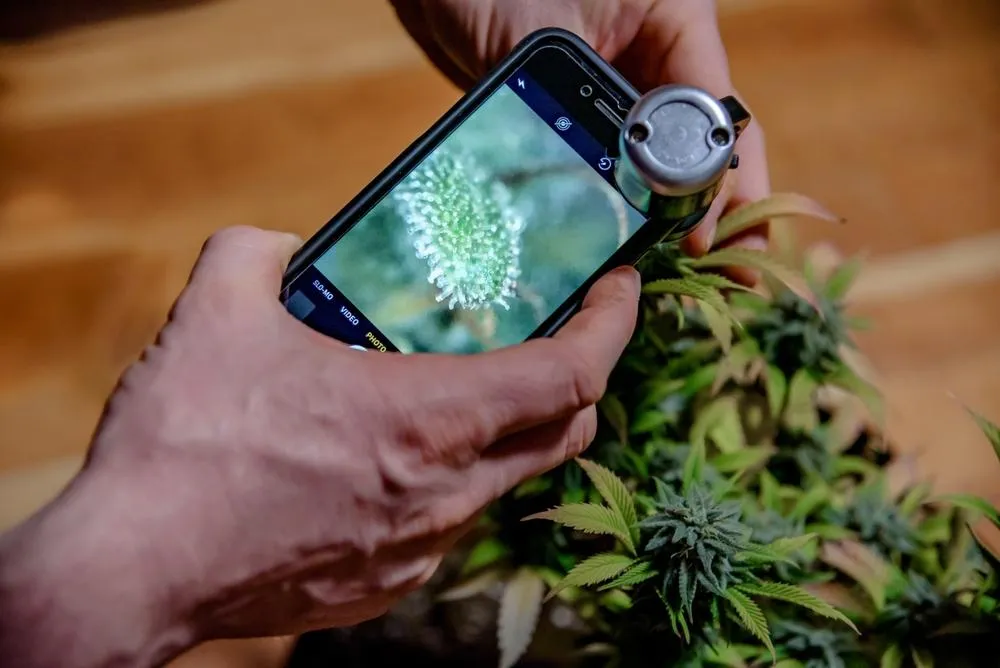
Trichome heads are too small to assess accurately with the naked eye. A jeweler's loupe, handheld microscope, digital microscope or suitable macro lens can make the clear, cloudy and amber stages much easier to distinguish.
| Inspection method | Best use |
| Jeweler's loupe | Quick checks directly on the plant |
| Handheld microscope | Detailed inspection of individual trichome heads |
| Digital microscope | Enlarged viewing and taking comparison photos |
| Macro phone lens | Convenient checks when image quality is sufficient |
Around 30–60x magnification is generally enough to assess trichome color. Higher magnification can reveal more detail but is not necessary for deciding when to harvest.
Check the trichomes on the flower bracts, rather than relying on sugar leaves alone, as leaves may mature at a different rate. Inspect several buds from the upper, middle and lower canopy to get a more representative picture of plant maturity.
Where should you check cannabis trichomes?
For the most useful harvest reading, examine trichomes on the flower bracts rather than relying mainly on sugar leaves. Trichomes on surrounding leaves can mature at a different rate and may give the impression that the plant is further along than the flowers themselves.
Check several buds from different parts of the canopy instead of judging the entire plant from one cola. Comparing upper, middle and lower flowers gives you a better picture of overall maturity.
Grower tip: Avoid repeatedly touching flowers while inspecting them. Use a loupe or microscope to check several bracts and compare the ratio of clear, cloudy and amber glandular heads before deciding when to harvest.
How trichome maturity helps determine the harvest window
Do not base the harvest decision on a single trichome or an exact cloudy-to-amber percentage. Different maturity stages commonly appear on the same flower at the same time.
As a practical guide:
- Mostly clear trichomes generally indicate more maturation is needed.
- Predominantly cloudy trichomes are commonly associated with mature flowers approaching the main harvest window.
- Increasing amber trichomes indicate later-stage maturity.
There is no scientifically established rule that 90–100% cloudy or 75% cloudy and 25% amber produces a specific type of effect. Genetics, cannabinoid and terpene profiles, plant maturity and post-harvest handling all influence the characteristics of the finished flower.
Grower tip: Compare several bud sites every few days as harvest approaches. Use trichome maturity together with flower development and the breeder's estimated flowering time rather than relying on any one indicator.
Conclusion
For growers, cannabis trichomes provide a window into what is happening on the surface of developing flowers. Learning how these resin glands form, mature and respond to growing conditions makes it easier to evaluate plant development without relying on appearance alone.
The key is to treat trichomes as one piece of the bigger picture. Genetics, plant health, flower maturity and post-harvest handling all contribute to the final quality of a crop. By observing plants carefully and protecting their delicate resin glands through harvest, drying and curing, growers can preserve more of the characteristics their cultivar was capable of producing.
Frequently asked questions about cannabis trichomes
What is the difference between trichomes and cannabis resin?
Trichomes are the glandular structures found on the surface of cannabis plants, while resin is the sticky material produced and stored within glandular trichomes. This resin contains cannabinoids, terpenes and other plant compounds.
Why are cannabis trichomes sticky?
Glandular cannabis trichomes contain resin rich in oily plant compounds. As resin accumulates around mature flowers, it creates the sticky texture associated with resinous cannabis buds.
Can you see cannabis trichomes without magnification?
Dense trichome coverage can be visible to the naked eye as a frosty or crystalline coating on flowers and nearby leaves. However, individual glandular heads and their condition are much easier to examine under magnification.
Do male cannabis plants produce trichomes?
Yes. Trichomes can occur on male and female cannabis plants and on several types of plant tissue. However, the dense populations of large resin-producing glandular trichomes valued by growers are particularly associated with female flowers.
Do cannabis trichomes continue changing after harvest?
The compounds stored in trichomes can continue to change after harvest. Heat, oxygen and light can contribute to cannabinoid degradation and terpene loss during drying, curing and storage, which is why careful post-harvest handling remains important.


