




Understanding cannabis plant anatomy helps growers make better decisions throughout the entire growing process. This guide explains the main parts of a cannabis plant—what they are, what they do, and why they matter in real-world growing situations. From roots and stems to flowers and reproductive structures, knowing how each part functions makes it easier to train plants, take cuttings, and identify plant sex before pollination becomes an issue. It also helps growers spot potential problems earlier and respond with confidence. The sections below break cannabis anatomy down in a clear, beginner-friendly way, setting the groundwork for healthier plants and more controlled grows.
Article Summary
- Core Plant Structure: An overview of the main parts of a cannabis plant and how they support growth and development.
- Roots, Stems, and Leaves: How water, nutrients, and light are absorbed and moved throughout the plant.
- Nodes and Growth Points: Where branches, flowers, and cuttings form, and why these areas matter for training and cloning.
- Male vs Female Plants: How reproductive structures differ and when growers can identify plant sex.
- Flowers and Resin Production: A clear explanation of buds, colas, and trichomes and their role in plant development.
| Plant Part | Found On | Primary Role |
| Roots | Male & Female | Absorb water and nutrients from the grow medium |
| Stem | Male & Female | Supports the plant and transports nutrients |
| Nodes | Male & Female | Growth points for branches, flowers, and preflowers |
| Fan Leaves | Male & Female | Capture light and power photosynthesis |
| Bracts | Female | Form the structure of buds |
| Pistils / Stigmas | Female | Receive pollen for reproduction |
| Colas | Female | Clusters of developing flowers |
| Trichomes | Female (mostly) | Protective resin-producing structures |
| Pollen Sacks | Male | Release pollen for fertilization |
Roots
Roots are the foundation of every cannabis plant, regardless of whether it’s male or female. They’re responsible for absorbing water and nutrients from the growing medium and delivering them to the rest of the plant. When root health is compromised, growth above the surface almost always suffers too—often showing up as drooping leaves, slow development, or nutrient deficiencies.
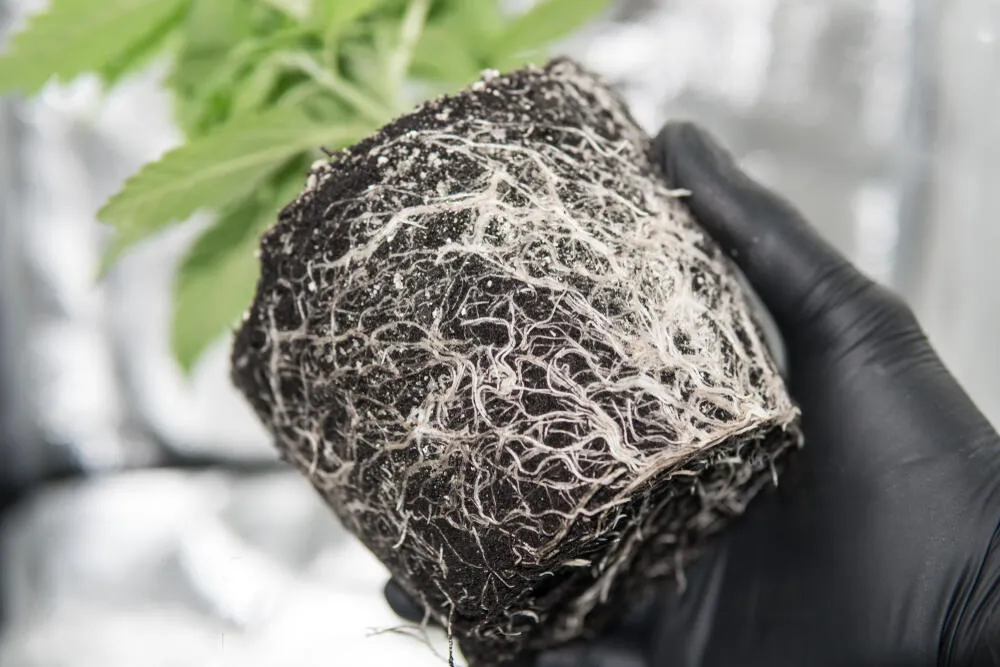
Cannabis plants develop one main taproot shortly after germination. This primary root grows downward and anchors the plant. From it, a network of secondary roots spreads outward, forming a fibrous system that does most of the nutrient and water uptake. As the plant matures, this network becomes more complex and efficient, provided it has enough space and oxygen.
Best practice tip: Avoid damaging roots during transplanting. Handle seedlings gently, transplant early rather than late, and choose containers that allow good drainage and airflow to support healthy root expansion.
Stems
The stem acts as both the support structure and transport system of the cannabis plant. It carries water and nutrients upward from the roots while also distributing sugars produced by the leaves to developing branches and flowers. A strong, healthy stem allows the plant to support its own weight as it grows taller and begins producing flowers.
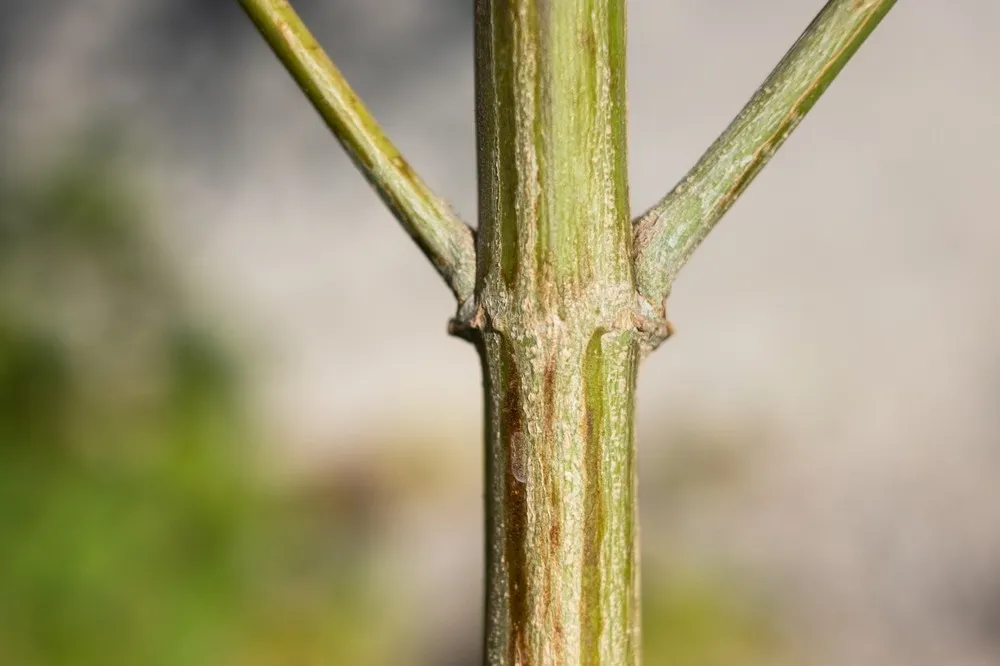
Early in growth, cannabis stems are flexible and soft. As the plant matures, they thicken and become more rigid, especially on well-grown plants with adequate light and airflow. Thicker stems are often associated with better overall vigor, as they can support heavier branching and larger flower sites later in the grow.
Stems are also central to plant training techniques. Bending, tying, or cutting the main stem can redirect growth hormones and encourage a wider, more even canopy. Understanding how stems respond to stress and recovery helps growers train plants effectively without causing long-term damage.
Stipules
Stipules are small, thin, pointed growths that appear at the base of each node where a branch meets the main stem. They are present on both male and female cannabis plants and usually show up early in vegetative growth. In appearance, they often look like tiny green or brown daggers or spikes extending outward from the node.
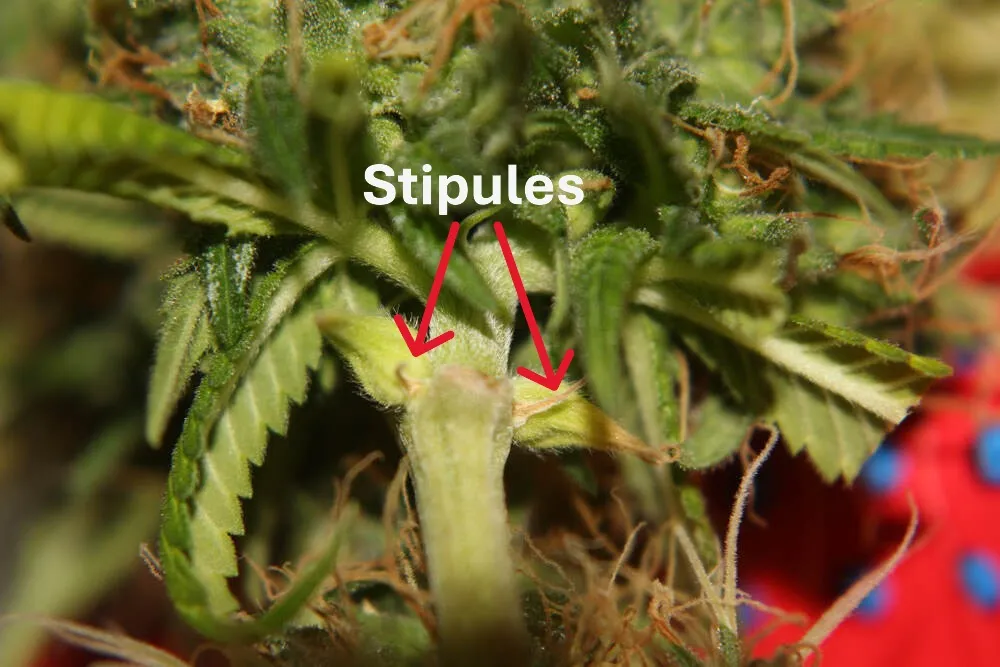
One common source of confusion is mistaking stipules for preflowers. While they appear in the same general area, stipules are not involved in reproduction and cannot be used to determine plant sex. They remain small, do not change shape, and do not develop into flowers or pollen sacs.
The exact function of stipules in cannabis is not fully understood. In other plant species, similar structures can help protect new growth, but in cannabis they are best viewed as a normal, harmless feature of healthy development.
Fan Leaves
Fan leaves are the primary energy producers of the cannabis plant. Found on both male and female plants, these large, multi-fingered leaves absorb light and convert it into usable energy through photosynthesis. This process fuels all growth, from root development to branch formation and flower production.
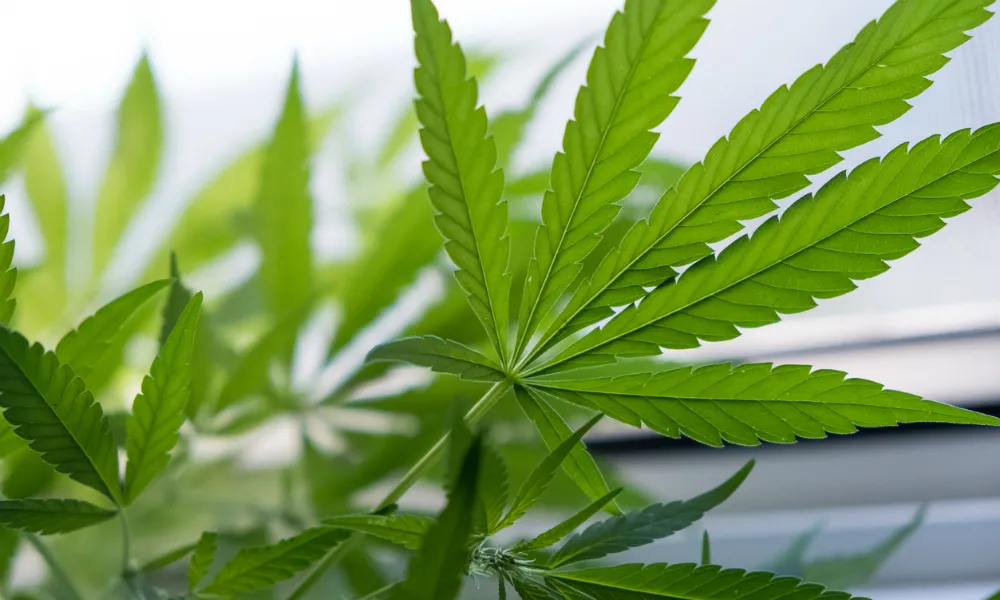
In addition to capturing light, fan leaves help regulate moisture and gas exchange. Tiny openings called stomata are located on the upper and lower surfaces of each leaf. These open and close in response to environmental conditions, helping the plant manage water loss and oxygen intake. Poor airflow or improper humidity can interfere with this process, which is why environmental control plays such a big role in plant health.
Fan leaves are sometimes removed through defoliation to improve light penetration and airflow. This should be done carefully and in moderation, as removing too many leaves can slow growth and stress the plant.
Leaf shape can also offer visual clues. Indica-leaning plants typically have broader, wider leaves, while sativa-leaning plants tend to produce longer, narrower ones.
Female and Male Marijuana Plants
Male and female marijuana plants share the same basic structure during early growth, which is why sexing isn’t possible in the seedling stage. The differences become visible later, usually when plants enter the early flowering phase and begin forming preflowers at the nodes.
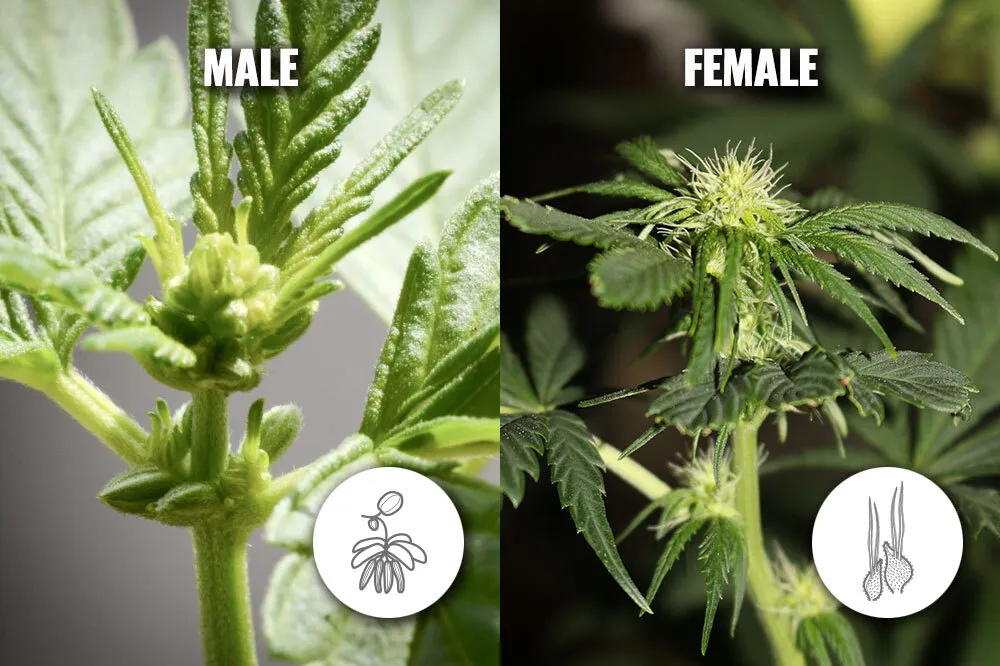
Understanding these differences is important for growers because male plants do not produce buds. Instead, their role is reproduction. Female plants, when left unfertilized, focus their energy on producing flowers, which is the goal for most growers.
Because both sexes look nearly identical in vegetative growth, knowing where to look and what to look for helps prevent accidental pollination. Early identification allows growers to remove male plants in time or isolate them for breeding purposes.
In the sections below, we’ll break down the specific reproductive parts found on female and male plants and explain how they differ in appearance and function.
| Feature | Female Plant | Male Plant |
| Produces buds | Yes | No |
| Reproductive structure | Pistils & bracts | Pollen sacks |
| Visible hairs | Yes (stigmas) | No |
| Role in growing | Flower production | Pollination / breeding |
| Common grower action | Keep | Remove (unless breeding) |
Bract and Calyx
On female cannabis plants, the bract is the small, teardrop-shaped structure where flowers develop. Bracts are green, tightly packed, and become increasingly covered in resin as the plant matures. When people refer to cannabis “buds,” they are mainly describing clusters of bracts grouped closely together.
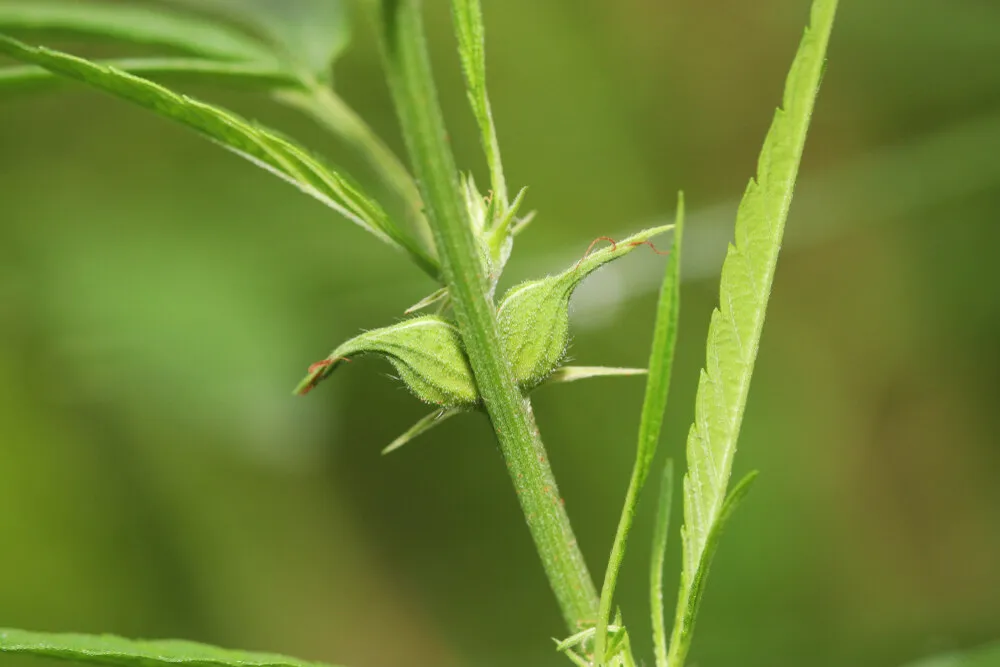
Inside each bract is the calyx, a thin internal layer that surrounds and protects the ovule. The calyx itself is not usually visible to the naked eye, which is why these two terms are often confused. In everyday growing, bract is the more useful term, as it describes the visible part of the flower that continues to swell during flowering.
As flowering progresses, bracts stack on top of one another, forming dense bud sites along the branches and main stem. Healthy bract development is a good visual indicator that a female plant is focusing its energy on flower production rather than seed formation.
Stigma and Pistil
The pistil is the primary reproductive structure of the female cannabis plant, and it is made up of several parts. The most visible are the stigmas, which appear as fine, hair-like strands extending from the bract. These strands are often white or light-colored early in flowering and gradually darken as the plant matures into a vibrant orange as seen in the example below.
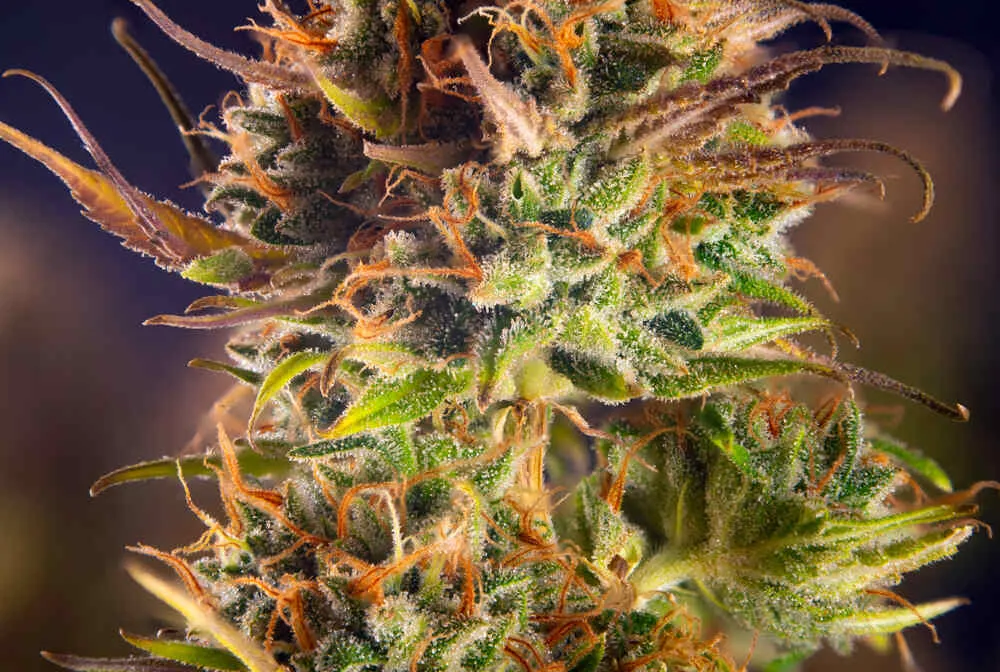
Stigmas are designed to catch pollen released by male plants. If pollination occurs, the plant redirects energy toward seed production. If pollination does not occur, the female continues focusing on flower development instead. This distinction is why growers typically remove male plants unless breeding is the goal.
As flowering progresses, pistils can change in color, curl inward, or recede slightly into the bract. These changes are normal and influenced by genetics, environment, and plant maturity rather than a single factor.
Colas
As female flowers continue to develop, individual bud sites begin to cluster together along the branches. These dense groupings are known as colas. A cannabis plant can produce multiple colas, but the largest is usually the main cola, which forms at the very top of the plant.
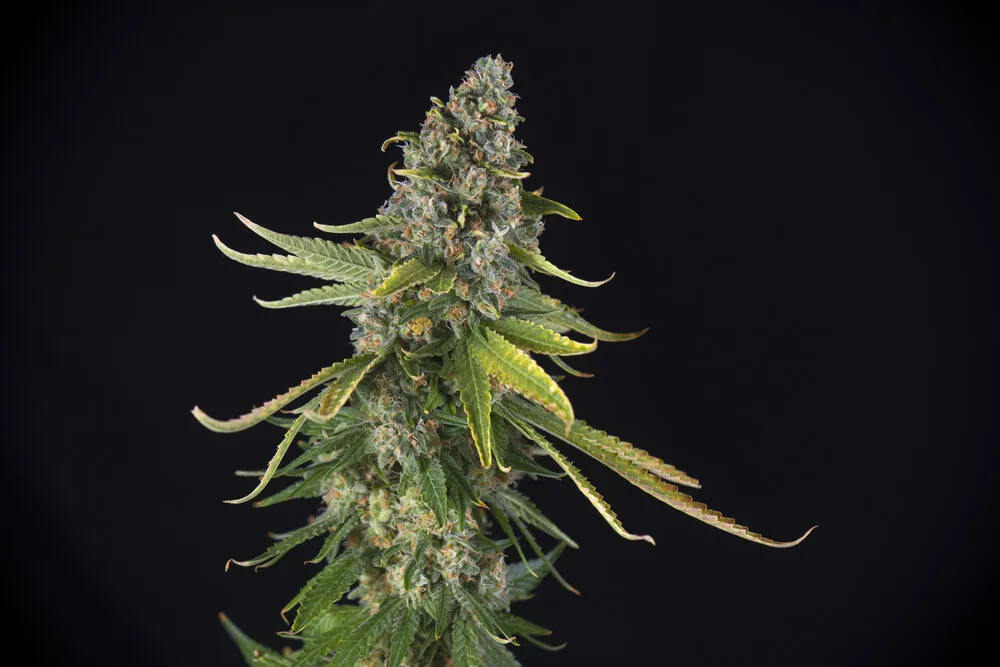
Cola size and structure are influenced by genetics, light exposure, and training techniques. Plants that receive even light across the canopy tend to produce more uniform secondary colas, while untrained plants often focus most of their energy on the main one. This is why topping and low-stress training are commonly used to redistribute growth and reduce dominance of the top cola.
Colas are made up of tightly stacked bracts and leaves, and as they mature, they become heavier and more compact. Proper airflow and spacing around colas are important to reduce moisture buildup and support healthy flower development.
Trichomes
Trichomes are tiny, crystal-like structures that form on the surface of cannabis flowers and nearby leaves. Their original role is protective, helping shield the plant from pests, UV exposure, and environmental stress. They are genetically determined and become more visible as flowering progresses.
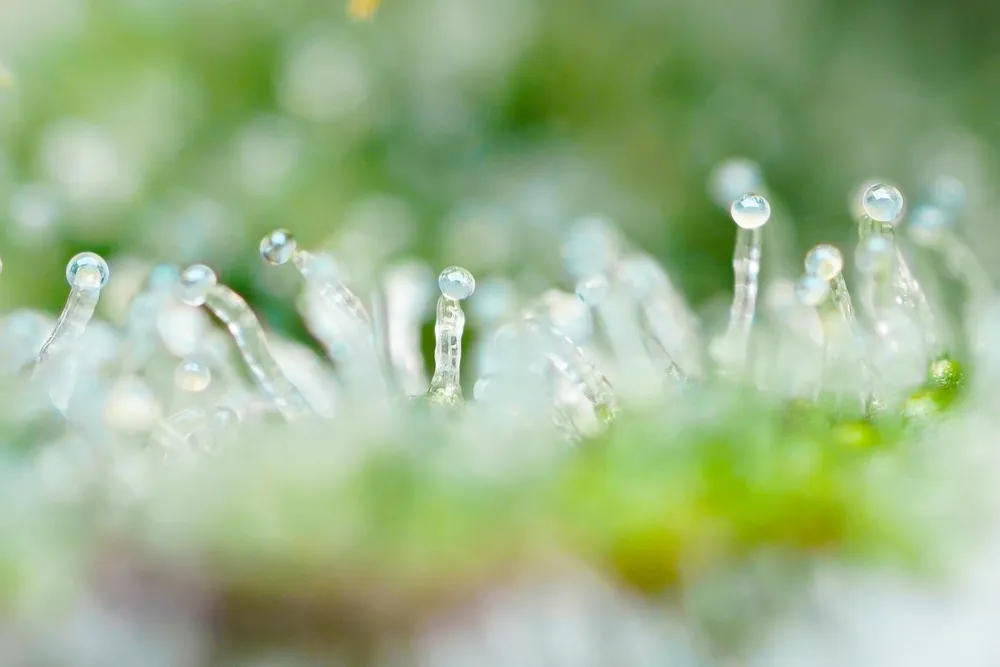
Most trichomes appear as small stalks topped with a rounded gland. Inside these glands are compounds the plant produces naturally, including cannabinoids and aromatic compounds. Trichome density, size, and distribution vary between strains and are influenced by both genetics and growing conditions.
As plants mature, trichomes change in appearance, often shifting from clear to cloudy and then darker in color. Growers commonly observe these changes to better understand plant development, though timing and interpretation can vary depending on the cultivar and environment.
Pollen Sacks
Pollen sacks are found only on male cannabis plants and are part of the plant’s reproductive system. They develop at the nodes and are attached to the stem by a thin filament. In botanical terms, these structures are part of the stamen, which is made up of the anther (pollen sac) and filament.
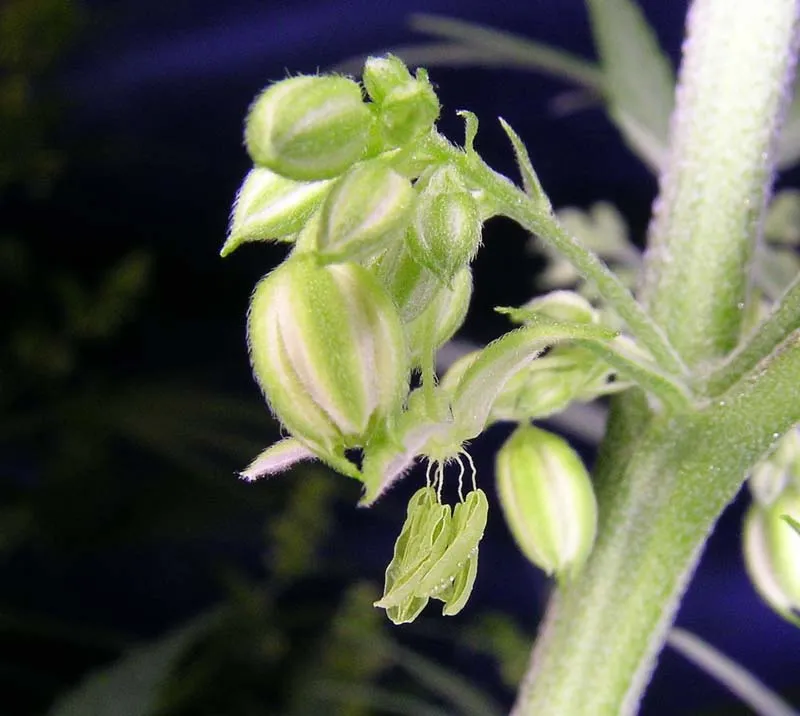
In appearance, pollen sacks are small and rounded, often compared to tiny balls or eggs. They usually appear in clusters and become more noticeable as the plant matures. Unlike female preflowers, pollen sacks do not produce hair-like stigmas.
When a male plant reaches maturity, the pollen sacks open and release pollen into the air. This pollen can travel easily and fertilize nearby female plants. For growers focused on flower production, this is something to avoid, which is why male plants are typically removed as soon as they’re identified.
Hermaphrodite Plants
Hermaphrodite cannabis plants develop both male and female reproductive parts on the same plant. This can happen due to genetics or as a response to stress during the growing cycle. Common stress factors include light interruptions during flowering, extreme temperatures, physical damage, or prolonged environmental instability.
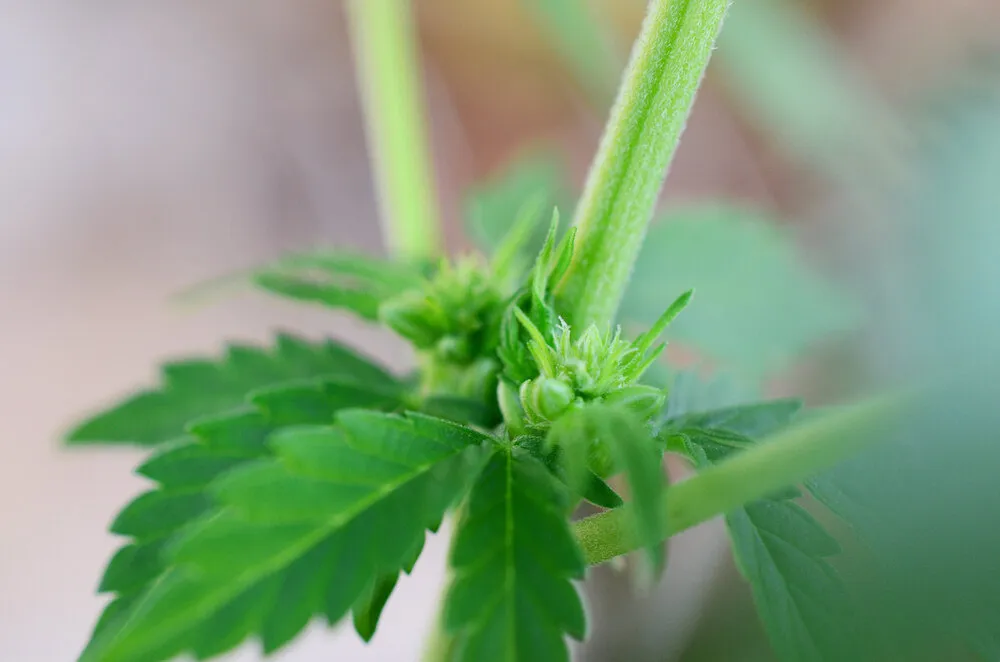
The risk with hermaphrodite plants is self-pollination. Even a small number of pollen sacks can release enough pollen to seed nearby flowers, reducing overall flower quality and consistency. Because of this, its important to know how to spot hermaphrodite plants early on.
Best practice guidance:
- Regular inspection: Check flowering plants closely, especially around nodes and lower branches.
- Early intervention: If male structures appear, many growers remove the plant to protect the rest of the crop.
- Stress reduction: Maintain stable lighting, temperature, and airflow to lower the risk of hermaphrodite development.
Final Summary
Understanding cannabis plant anatomy gives growers a practical advantage at every stage of the grow. Knowing how roots, stems, nodes, and leaves function makes it easier to train plants correctly, take healthy cuttings, and spot early signs of stress. Recognizing the differences between male, female, and hermaphrodite plants helps prevent unwanted pollination and protects flower development.
By learning what each plant part does and how it changes during growth, growers can make more informed decisions, reduce mistakes, and respond quickly when something looks off. Whether you’re growing for experience, breeding, or general plant health, anatomy knowledge forms the foundation for better results.
Frequently Asked Questions
What part of the cannabis plant produces buds?
Buds form on female plants and are made up mainly of bracts stacked closely together along branches and at the top of the plant.
Can you tell plant sex from leaves?
No. Leaves alone do not indicate sex. Sex is determined by looking for preflowers at the nodes during early flowering.
What are nodes used for when cloning cannabis?
Nodes are ideal locations for taking cuttings because new growth forms there, increasing the chances of successful rooting.
Do male cannabis plants produce buds?
Male plants do not produce buds. They develop pollen sacks instead, which are used for breeding.
What causes cannabis plants to become hermaphrodite?
Hermaphrodite traits can be genetic or triggered by stress such as heat stress, light leaks, , or physical damage during flowering.


