




Cannabis growers often confuse pistils and stigmas because the terms are frequently used interchangeably, even though they describe different parts of the female flower. Understanding the difference helps growers identify plant sex earlier, monitor flowering progress more accurately, and avoid mistakes when assessing harvest timing. Pistils are the full female reproductive structure, while stigmas are the hair-like tips responsible for catching pollen. Knowing how these structures develop during flowering can also help growers spot pollination, hermaphrodite traits, and overall bud maturity. This guide explains how pistils and stigmas function, how they differ, and what their changes can tell growers throughout the cannabis life cycle.
Key Takeaways
- Pistils are the full female reproductive organs, while stigmas are the hair-like tips that collect pollen.
- White pistils commonly appear during early flowering and are one of the first signs that a cannabis plant is female.
- Pistils typically darken from white to orange or brown as flowering progresses and buds mature.
- Pollinated pistils often change color and shrink within 24–48 hours after contact with male pollen.
- Male cannabis plants develop rounded pollen sacs instead of white pistils or stigmas.
- Pistil color alone should not determine harvest timing, as trichome maturity and bract swelling are also important indicators.
- Key Takeaways
- Understanding Cannabis Flower Anatomy
- What Is a Pistil on a Cannabis Plant?
- What Are Stigmas on Cannabis Plants?
- Stigmas vs Pistils: Key Differences Explained
- Stigmas and Pistils During the Flowering Cycle
- Stigmas, Pistils, and Cannabis Sex Identification
- How Understanding Stigmas and Pistils Helps Growers
- FAQ
Understanding Cannabis Flower Anatomy
Before we get right into it and talk about pistils and stigmas, it is a good idea to analyse the reproductive parts of a cannabis plant. Hence, you are familiar with the anatomical structure first. Below is an overview of male and female reproductive structures.
Overview of male and female cannabis plant reproductive structures
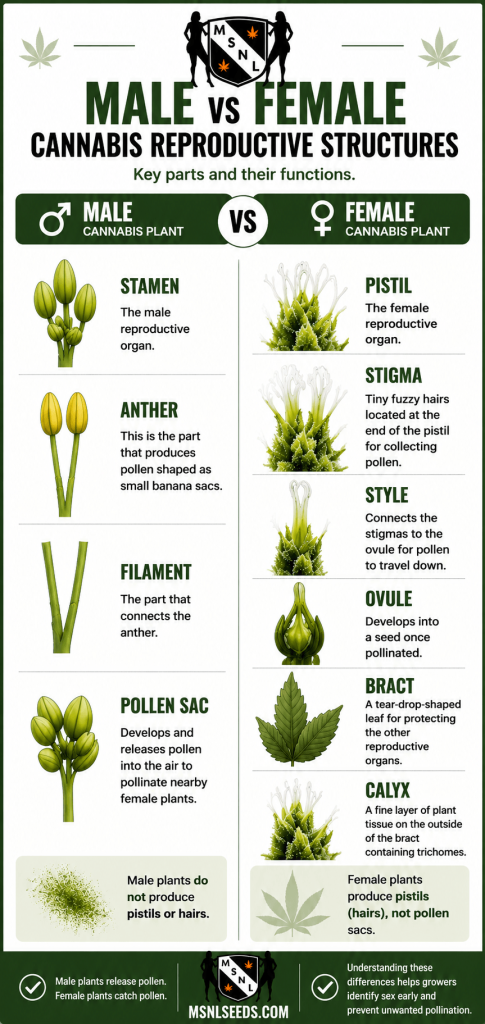
Male cannabis plants do not produce hairs and pistils and instead are composed of a stamen, anther and filament. The job of the male reproductive part is to develop pollen sacs and disperse the pollen into the air to pollinate a nearby female cannabis plant.
- Stamen: The stamen represents the male reproductive organ
- Anther: This is the part that produces the pollen shaped as small banana sacs
- Filament: The part that connects the anther
Female cannabis reproductive structures consist of pistils, a stigma, an ovule, bracts and calyxes. The role of the female flower is to catch airborne pollen and pollinate the pistil, creating a seed; however, producing seedless female plants is the goal for a home grower. Below is a list of the different parts of the female cannabis plant.
- Stigma: Tiny fuzzy hairs located at the end of the pistil for collecting pollen
- Style: Connects the stigmas to the ovule for pollen to travel down
- Pistils: The white hairs that appear as pre-flowers and during bud development
- Ovule: Develops into a seed once pollinated
- Bract: A tear-drop-shaped leaf for protecting the other reproductive organs
- Calyx: A fine layer of plant tissue on the outside of the bract containing trichomes
| Male Cannabis Structures | Function | Female Cannabis Structures | Function |
| Stamen | Male reproductive organ | Pistil | Female reproductive organ |
| Anther | Produces pollen | Stigma | Captures airborne pollen |
| Filament | Supports the anther | Style | Connects stigma to ovary |
| Pollen Sac | Releases pollen into the air | Ovule | Develops into a seed after pollination |
| — | — | Bract | Protects reproductive structures |
| — | — | Calyx | Outer tissue coated in trichomes |
What Is a Pistil on a Cannabis Plant?
Pistils are tiny, hair-thin parts of the female flower that first appear late into the vegetative stage and develop in abundance from week 3 onwards of the flowering period. Below is a breakdown of the parts that make up the pistil and the role of the pistil in cannabis reproduction.
Parts of the pistil: stigma, style, and ovary explained
The pistils of a female cannabis plant are made up of three parts. The stigma, style and ovary work in harmony to collect pollen from the air and fertilise the ovule. The stigma is located at the tip of the pistil. It is connected to a tube-like structure through which pollen passes downward into the ovary, where the ovule is found.
The role of the pistil in cannabis reproduction
Pistils play a major role in cannabis reproduction, allowing the plant to produce a new generation of progeny in seed form. Whilst on one hand they will determine if your plant is female, they are also on the plant to act like a pollen trap. In the same way, any other flower relies on pollinators such as birds, bees, bugs and the wind to fertilise the ovary, cannabis plants are exactly the same.
- Pistils will determine if your plant is either male or female
- They first appear late in vegetation or early flowering
- Growers use their colour as a guide to when to harvest
- They change colour during the flowering period to orange or brown
- Once pollinated, the pistils turn orange or brown within 24 hours
What Are Stigmas on Cannabis Plants?
When you look at a female pistil, you are also looking at the stigma. This is because the stigma, an extension of the pistil, is located at the tip of the white hair and serves as the first point of contact for male pollen. Below is an explanation of the stigma's physical appearance, biological function and why many growers mistake stigmas for pistils.
Physical appearance of cannabis stigmas
You would need to use a magnification tool to be able to see the stigma of a female cannabis plant properly. They are tiny, white, fibrous hairs that act as a pollen trap, creating a hairy coating over the pistil. Stigmas consist of hundreds of tiny hairs emerging from the outer layer of the pistil.
Biological function of stigmas in pollination
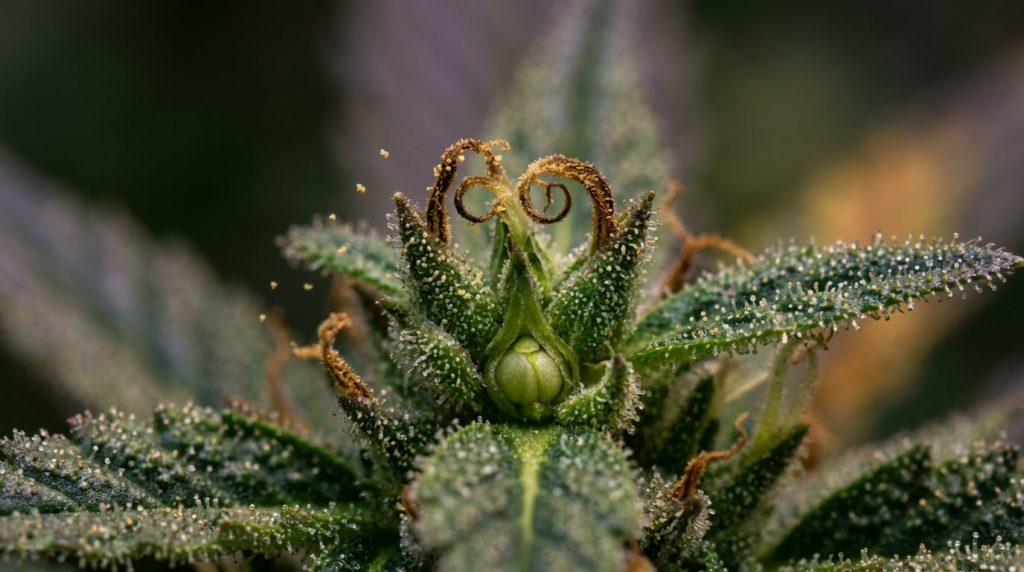
The easiest way to think about the function of stigmas in pollination is to imagine the pistil, stigma, style, and ovule working as a team to transport the male pollen into the ovary. Once it is inside the ovary of the female flower, the ovule can become fertilised. When a female cannabis plant is left to flower and not pollinated, it produces a seedless crop known as sinsemilla.
Why stigmas are often mistaken for pistils
If you do not know the anatomical breakdown of a cannabis plant, then you could easily get stigmas mistaken for pistils, and vice versa. Technically, pistils and stigmas are one entity, even though they are made up of two separate parts. In the same way, bracts and calyxes are often classed as the same thing; you could easily be forgiven for thinking the same about stigmas and pistils.
Stigmas vs Pistils: Key Differences Explained
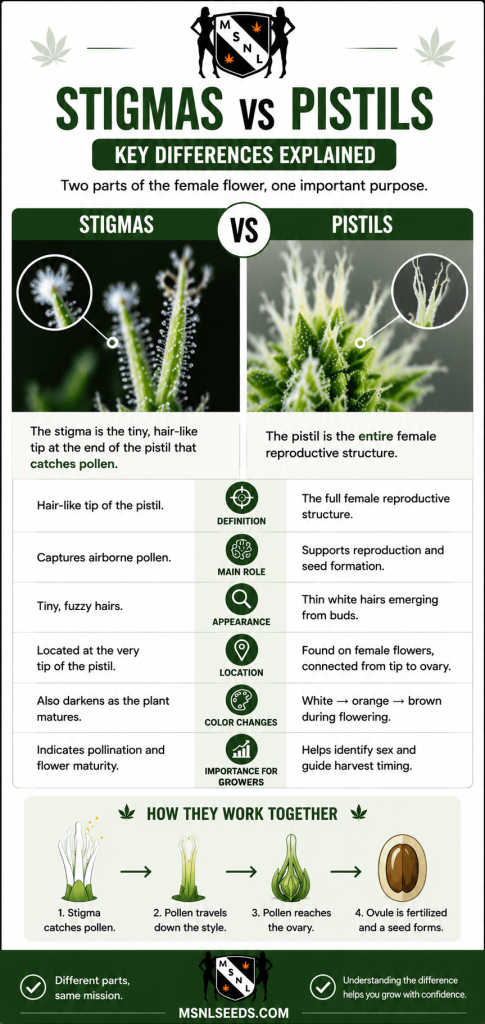
The pistil is the entire female reproductive part, whilst the stigma represents the tip of the pistil. Below is a breakdown of the structural differences between stigmas and pistils, explaining their functional differences regarding cannabis reproduction.
Structural differences between stigmas and pistils
- The stigma is located at the tip of the pistil and is a cluster of tiny hairs
- Pistils connect the stigma and the ovary together
- Stigmas have a fuzzy appearance designed to capture pollen
Functional differences in cannabis reproduction
When cannabis plants reproduce, they will rely on the pistils, stigma and ovary to act as one independent unit. Its function is to allow the stigma to trap pollen dust from the air, pass the pollen down the style and make its way to the ovule, where it will become fertilised.
| Feature | Pistils | Stigmas |
| Definition | Full female reproductive structure | Hair-like tip of the pistil |
| Main Role | Supports reproduction and seed formation | Collects pollen |
| Appearance | Thin white hairs emerging from buds | Tiny fuzzy fibers at the pistil tip |
| Location | Found on female flowers | Located at the end of pistils |
| Colour Changes | White to orange or brown during flowering | Also darken as the plant matures |
| Importance for Growers | Helps identify sex and harvest timing | Indicates pollination and flower maturity |
Stigmas and Pistils During the Flowering Cycle
The first signs of pistils are a breakthrough moment for cannabis home growers. The sight of a pistil during late vegetation or during the first few weeks of 12/12 confirms that the plants being grown are female. During the flowering cycle, pistils form in abundance, so below is a breakdown of what to expect during the early and late stages of flowering, and what stigma and pistil changes indicate.
As pistils begin forming during early flowering, maintaining stable genetics and consistent flowering traits becomes increasingly important for growers aiming for predictable results. Many growers choose feminized cannabis seeds to reduce the chances of male plants appearing during this stage and to simplify sex identification throughout the flowering cycle.
Early flowering stage: pistil and stigma emergence
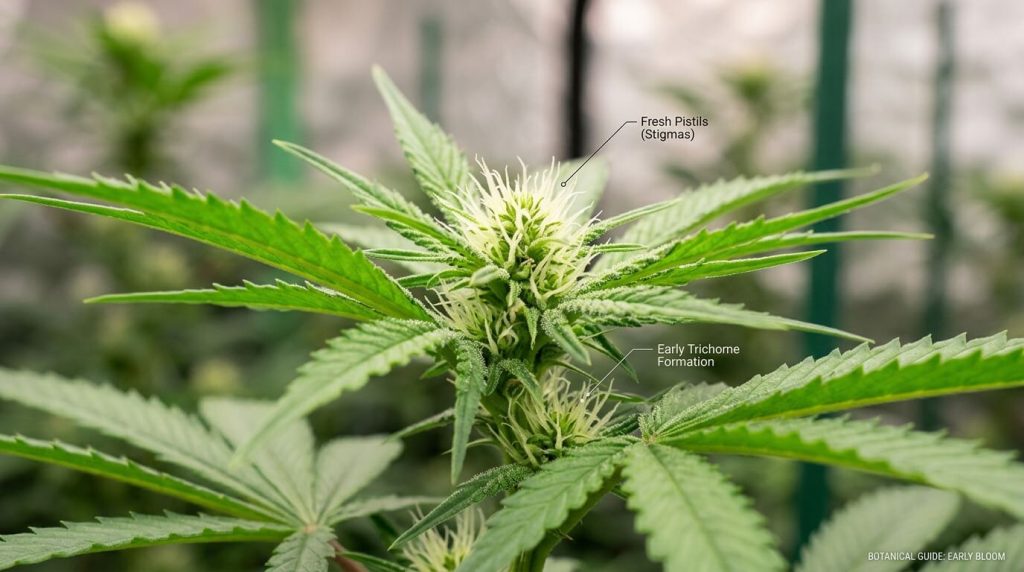
The very first petals and stamens will grow between the leaf stipule and node. It can be difficult to identify them at first, but only during the earliest stages of bloom do they become easier to see, growing between each node and the axillary growth shoot. By week 3-4 of the flowering period, there will be thousands of pistils forming that are capable of producing hundreds or thousands of seeds, depending on the size of the plant in question.
- At this stage, the buds have not started to develop
- The pistils do not contain any cannabinoids or terpenes
- The emergence of pistils indicates the earliest stage of bloom
Late flowering and pistil maturity
As cannabis buds develop from week 3 onwards of 12/12, the pistils will start to produce small-sized bracts with calyxes. Over the next 5-6 weeks, buds will begin to develop, resulting in a cluster of bracts coated in trichomes. As buds form during the final 2-3 weeks and the bracts become more swollen and compact, the end of the pistil will begin to wrap around the bract and calyx.
What stigma and pistil changes indicate about plant age
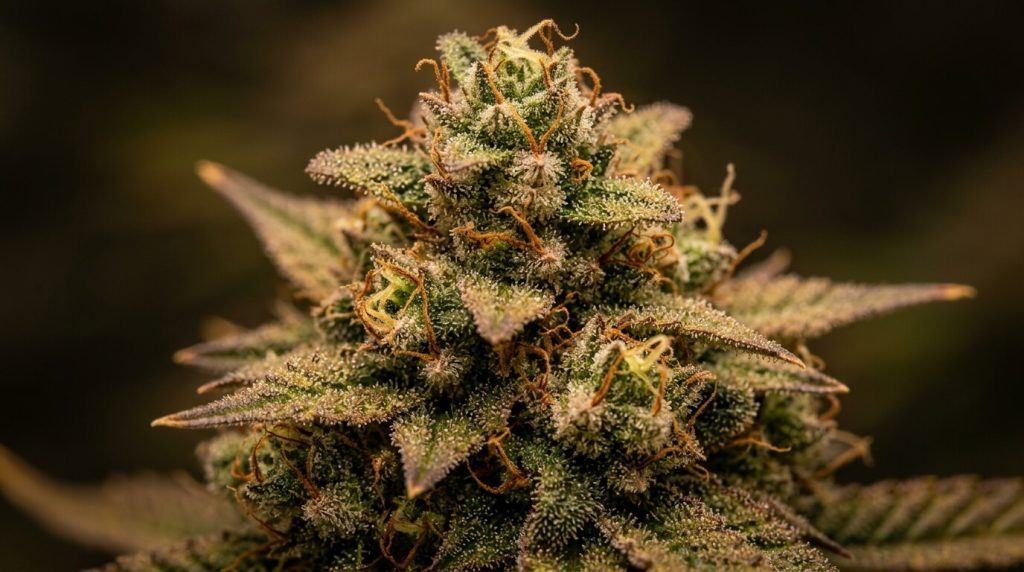
The pistils on your plants serve as a guide to the plant's age and how close you may be to harvesting. Cannabis plants that have compact buds and white pistils emerging from the buds will be several weeks away from turning from bright white to either brown or orange. Once 90% of the pistils have turned orange or brown, you should be close to harvesting your plants; however, pistil colour is only one of many factors to be considered.
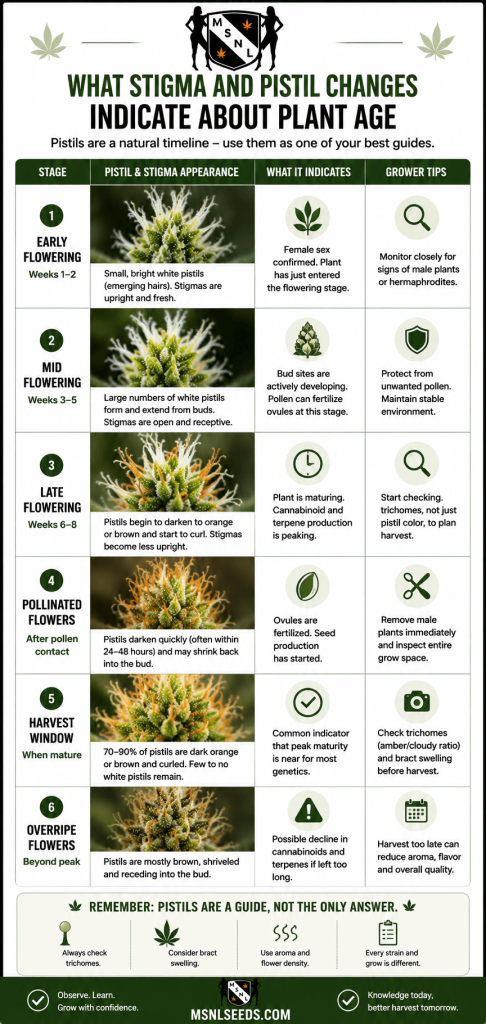
- Trichomes should also be checked to see the colour of the trichome head
- How swollen the bracts have become will also be a clear indicator
- Trichome development should also be taken into consideration
- How many white to brown or orange hairs play a major role in plant age
| Flowering Stage | Pistil Appearance | What It Typically Indicates |
| Early Flowering | Small bright white hairs appear | Female plant sex confirmed |
| Mid Flowering | Large numbers of white pistils form | Bud sites actively developing |
| Late Flowering | Pistils darken to orange or brown | Plant approaching maturity |
| Pollinated Flowers | Pistils darken and curl quickly | Seed production has started |
| Harvest Window | 70–90% darkened pistils with swollen bracts | Common indicator harvest may be near |
| Overripe Flowers | Pistils shriveled and receding | Potential decline in flower quality |
Stigmas, Pistils, and Cannabis Sex Identification
If you are growing cannabis using regular sexed seeds, then you will need to rely on pistils to know if you have male or female plants. Having a thorough understanding of pistils and their function will be advantageous for confirming sex, identifying differences between male and female reproductive parts, and detecting hermaphrodite traits in a plant.
When growing from regular cannabis seeds, learning how to identify pistils and pollen sacs early can help prevent unwanted pollination before male plants mature. Growers looking for a simpler cultivation process often prefer feminized seeds, which are bred to produce female plants more consistently under normal growing conditions.
How pistils confirm female cannabis plants
Before feminised cannabis seeds took over the industry, and growers did not need to worry about sexing plants, you were expected to know what pistils were. The reason is that pistils indicate you have a female plant, so you don't need to worry about throwing the plant out or about male pollen or unwanted pollination.
Differences between pistils and male pollen sacs
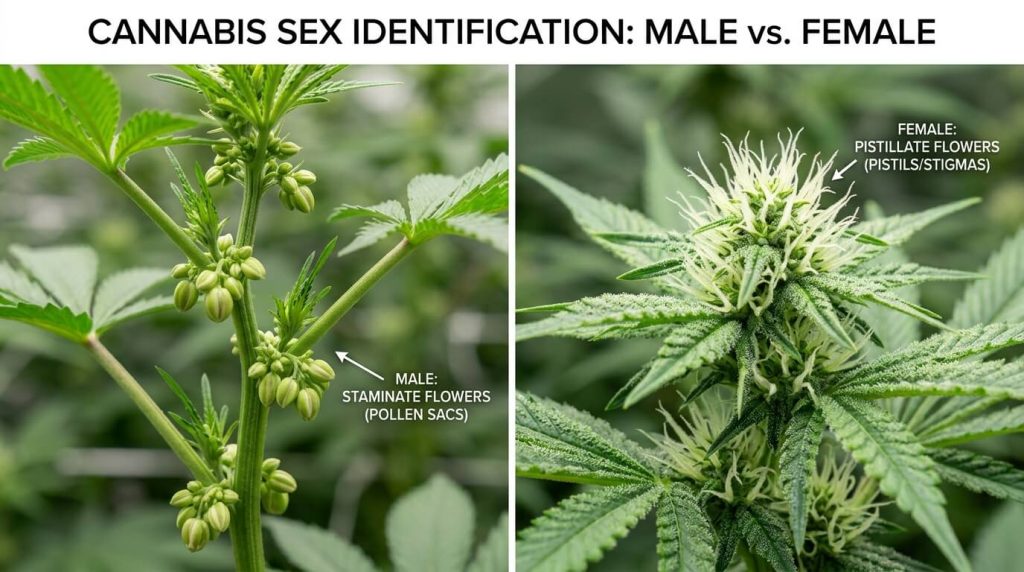
Once you switch your timer to 12/12 and induce flowering, it will be a matter of weeks before the sex of your plant is determined. When examining your plants and checking carefully between the nodes, you will either see white, thin hairs or rounded balls appearing in small clusters.
- Male flowers will appear around week 3 and develop quickly
- Small pollen sacs begin to form and start opening up from day 30 onwards
- Immature male pollen sacs will appear smooth and rounded
- By week 5 onward, pollen sacs will be fully open, ready to drop pollen
Hermaphrodite plants and abnormal pistil development
Whilst on one hand, pistils usually indicate you have a female sex plant, you do need to double-check that you do not have unstable genetics that can produce male and female flowers, or abnormal pistil development.
When this happens, plants exhibit hermaphrodite traits and produce a seeded crop.
Not only can a hermie plant pollinate every other female in your grow room, but the seeds they produce will also contain hermaphrodite traits and should be thrown away.
How Understanding Stigmas and Pistils Helps Growers
Pistils represent much more than whether you have male or female plants, and with experience, can help you monitor flower development and prepare for the optimal harvest date. Understanding how pistil development and maturity can guide harvesting will help achieve a perfect harvest.
Understanding how pistils develop and mature can help growers make better decisions throughout flowering, from monitoring bud development to planning harvest timing. Choosing high-yielding cannabis genetics with stable flowering traits can also make it easier to observe consistent pistil formation, trichome production, and overall flower structure during cultivation.
Monitoring flowering progress more accurately
During the flowering period, plants produce auxins and other hormones to grow as tall as possible, then focus on producing buds. Pre-flowers will develop after week 2 of the flowering period and shift in colour from white to brown or orange during the final 2 weeks. The golden rule is to only harvest once the pistils have changed colour.
Improving plant sex identification
The sight of pistils will let you know that you have female plants. Of course, you must always check for male flowers as well and throw away any hermaphrodites. Pistils are the only way you can identify a female, and the more experience you have, the easier sex identification becomes. When growing feminized cannabis seeds, all of the plants should be female and produce only pistils.
Avoiding misinformation when diagnosing plant health
There is a lot of bro science out there, and as a beginner-level grower, it can be difficult to know what is right and wrong. When diagnosing plant health problems, it's important to rely on accurate information rather than myths or assumptions. Learning how to identify common cannabis nutrient deficiencies can help you troubleshoot issues more effectively and keep your plants healthy throughout the grow cycle
FAQ
Are pistils and stigmas the same thing?
Not exactly. The pistil is the full female reproductive structure of the cannabis flower, while the stigma is the hair-like tip attached to the pistil that collects pollen.
What do pistils look like on a cannabis plant?
Pistils appear as thin white hairs emerging from the nodes and developing buds of female cannabis plants. As flowering progresses, they commonly darken to orange or brown.
When do pistils first appear on cannabis plants?
Pistils usually appear during late vegetative growth or within the first 1–3 weeks after switching to a 12/12 flowering light cycle, depending on genetics and growing conditions.
Can pistils be used to identify female cannabis plants?
Yes. The appearance of white pistils is one of the earliest signs that a cannabis plant is female. Male plants develop rounded pollen sacs instead of hairs.
Why do cannabis pistils turn orange or brown?
Pistils naturally darken as the plant matures during flowering. They may also change color quickly after pollination, environmental stress, or physical damage.
Do orange pistils mean cannabis is ready to harvest?
Not always. Pistil color can help indicate maturity, but growers should also check trichome development, bud density, and swollen bracts before harvesting.
What happens if stigmas collect pollen?
Once stigmas catch viable pollen, the pollen travels through the pistil to fertilize the ovule, leading to seed production instead of seedless buds.
Can hermaphrodite cannabis plants produce pistils?
Yes. Hermaphrodite plants can produce both pistils and male pollen sacs at the same time, which increases the risk of unwanted pollination in the grow space.
Do pistils contain cannabinoids or terpenes?
Pistils themselves contain very low levels of cannabinoids and terpenes. Most cannabinoids and aromatic compounds are produced in the trichomes covering the buds and bracts.
Why are stigmas important during flowering?
Stigmas play a key role in reproduction by trapping airborne pollen. Their appearance and color changes also help growers monitor flowering progress and plant maturity.


