




Permanent Marker is an indica-dominant cannabis strain known for its high THC potential, unusual marker-like aroma and dense, resin-covered flowers. Created from Biscotti, Sherb Bx1 and Jealousy genetics, this modern hybrid has gained attention for its sweet, floral taste and reported balance of uplifting and relaxing effects.
In this Permanent Marker strain review, I'll explain what makes this variety different, what you can expect from its potency and aroma, and how its plants develop. You'll also learn about its flowering time, growing characteristics and the challenges to consider before choosing this strain.
Key Takeaways
- A distinctive strain: Permanent Marker stands out for its unusual aroma, combining sweet candy, floral notes and a sharp scent similar to marker ink.
- Strong effects: Its high THC potential is associated with an uplifting experience that may develop into deeper physical relaxation.
- Dense, resin-rich flowers: Expect compact buds with a thick coating of trichomes, sometimes displaying green and purple shades.
- Medium-sized plants: Permanent Marker typically develops spreading branches, with an advertised flowering period of 8–10 weeks.
- Some growing experience helps: Its dense flowers require attention in damp conditions, making it better suited to growers who understand basic plant care.

- Permanent Marker Strain Information
- What is the Permanent Marker Strain?
- Permanent Marker Genetics and Origins
- Is Permanent Marker Indica or Sativa?
- What Does Permanent Marker Smell and Taste Like?
- How to Grow Permanent Marker: Step-by-Step Guide
- Is Permanent Marker a Good Strain for Beginners?
- Conclusion
- Frequently Asked Questions About Permanent Marker
- References
Permanent Marker Strain Information
| Characteristic | Details |
| Strain type | Indica-dominant hybrid |
| Genetics | (Biscotti S1 × Sherb Bx1) × Jealousy F2 |
| THC content | High; up to 35% advertised |
| CBD content | Typically below 1% |
| Flowering time | 8–10 weeks advertised |
| Plant height | Approximately 100–180 cm |
| Indoor yield | 500–600 g/m² advertised |
| Outdoor harvest | October in the Northern Hemisphere |
| Growing difficulty | Moderate to advanced |
| Climate | Warm, relatively dry conditions |
| Aroma | Sweet, floral, gassy and marker-like |
| Commonly reported terpenes | Myrcene, caryophyllene and limonene |
| Seed type | Feminized photoperiod |
These figures describe advertised characteristics of the seed selection. Actual plant development, flower production and potency can differ.
What is the Permanent Marker Strain?
Permanent Marker is a modern cannabis hybrid recognised for its strong aroma, high resin production and distinctive flower appearance.
The strain reached the wider cannabis market in 2022 and received recognition in High Times' Best Strains of 2022 coverage. It later received a Strain of the Year award in 2023.
What makes Permanent Marker interesting is its unusual combination of sweet and sharp aromas. While many modern hybrids produce fruity or dessert-like scents, Permanent Marker has a noticeably chemical-like character that resembles ink from a permanent marker.
Permanent Marker Genetics and Origins
Permanent Marker comes from three established genetic lines:
- Biscotti S1: Contributes dessert-like aromas and dense flower characteristics.
- Sherb Bx1: Adds sweet, creamy and floral traits.
- Jealousy F2: Contributes pungent aromas and characteristics associated with modern Gelato-related hybrids.
For beginners, S1 refers to a self-pollinated genetic generation, while Bx1 means a plant has been crossed back to a parent line. F2 describes a second filial generation.
If you're unfamiliar with the Biscotti parent, our Biscotti strain guide explains its main characteristics.
Is Permanent Marker Indica or Sativa?
Permanent Marker is commonly described as a 70% indica and 30% sativa hybrid.
This advertised classification reflects its indica-dominant identity rather than a laboratory measurement of its genetic composition.
Its flowers tend to be dense, while the plant generally develops a medium-height structure with side branches. However, appearance alone cannot reliably establish whether a strain will produce stimulating or relaxing effects.
What Does Permanent Marker Smell and Taste Like?
Permanent Marker is best known for its unusual combination of sweet, floral and chemical-like aromas. Unlike strains dominated by fruit or earthy scents, it has a sharp, pungent character that makes it distinctive.
Permanent Marker Aroma
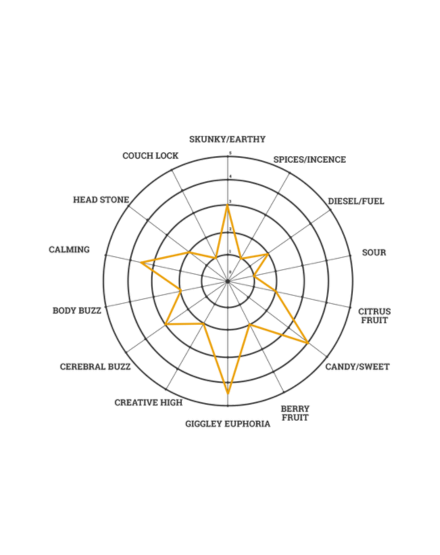
Permanent Marker produces a strong scent that combines sweet candy, floral notes and a sharp smell resembling marker ink.
Once the flowers are broken apart, deeper gassy and earthy notes may become noticeable. Some samples also carry hints of grape and creamy fruit, adding to the overall aroma.
Permanent Marker Taste
Permanent Marker offers a sweet, creamy taste with floral and slightly fruity notes. These are often followed by earthy undertones and a mild, woody finish.
Some samples produce a stronger gassy character, while others lean towards sweeter candy-like notes.
Proper drying and curing can influence the final taste. Our guide to curing weed explains how this process affects the aroma and quality of cannabis flowers.
Permanent Marker Terpenes
Permanent Marker's aroma comes partly from its terpene profile. Three commonly reported terpenes are myrcene, caryophyllene and limonene.
| Terpene | Aroma | Contribution to the scent |
| Myrcene | Earthy, herbal | Adds deeper, earthy notes |
| Caryophyllene | Peppery, spicy | Contributes a warm, spicy character |
| Limonene | Citrus | Adds a sharper, citrus-like scent |
The balance of these terpenes varies between flower samples. Other aromatic compounds may also contribute to Permanent Marker's distinctive chemical-like scent.
What Are the Effects of Permanent Marker?
Permanent Marker is commonly reported to produce a combination of mental uplift and physical relaxation. Some consumers describe an initial feeling of happiness, increased conversation and a more active state of mind.
As the experience develops, the effects are often described as more calming, with a heavier sensation throughout the body. This progression is one reason Permanent Marker appeals to people who enjoy potent indica-dominant hybrids without an exclusively sedating experience.
However, its effects depend on individual tolerance, THC concentration and the amount consumed. Higher doses may cause unwanted reactions such as anxiety, dizziness or impaired coordination, particularly among less experienced consumers.
What Does Permanent Marker Look Like?
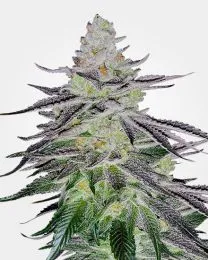
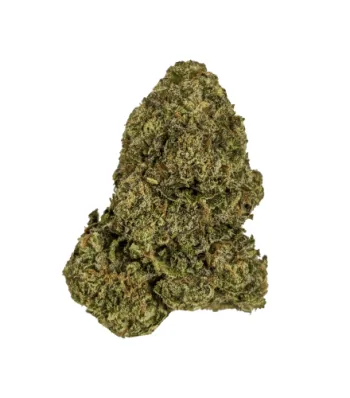
Permanent Marker is known for its dense, compact flowers with a thick covering of resin-producing trichomes.
The buds commonly display deep green shades, with some phenotypes developing dark purple patches. Bright orange pistils run between the flowers, while a heavy layer of trichomes gives the surface a frosted appearance.
The flowers often form tight clusters rather than loose, airy structures. This compact appearance is characteristic of many indica-dominant hybrids, although individual Permanent Marker plants can show differences in bud shape and colour.
Its thick resin coverage and distinctive appearance make Permanent Marker an easily identify the strain when its characteristic aroma is also present.
| THC % | Up to 35% |
|---|---|
| Flowering Time | 8–10 Weeks |
| Outdoor harvest | October |
| Yield | 500–600 g/m² |
| Indica/Sativa | Indica Dominant |
| Height | Medium: 100–180 cm |
| Difficulty | Advanced |
| CBD Content | Less than 1% |
| Climate | Arid, Mediterranean |
| Seed Type | Feminized |
| Genetics | (Biscotti x Sherb Bx) x Jealousy |
| Effects | Calming, Relaxing, Uplifting |
| Taste | Floral, Sweet, Candy |
| Terpene | Myrcene, Caryophyllene, Limonene |
How to Grow Permanent Marker: Step-by-Step Guide
Permanent Marker is a photoperiod cannabis strain with medium-height growth, spreading branches and dense, resin-covered flowers. Plants typically reach an advertised height of 100–180 cm, with flowering taking approximately 8–10 weeks.
I would class Permanent Marker as a moderate-to-advanced strain. Its manageable height is an advantage, but its compact flowers and response to damp conditions require attention.
Step 1: Choose a Suitable Growing Environment
Permanent Marker is associated with warm, relatively dry climates. Both indoor and outdoor environments can support its development, although the growing conditions will influence plant health.
Before choosing a location, consider the following:
- Indoor growing: Check the available height and width to accommodate the mature plant.
- Outdoor growing: Assess seasonal temperatures, rainfall and periods of prolonged damp weather.
- Air movement: Look for areas where moisture may collect around dense foliage.
- Growing space: Allow for branches that may extend beyond the central stem.
The main concern with Permanent Marker is moisture collecting around its tightly packed flowers, which can increase the risk of fungal disease.
Step 2: Check Early Seedling Development
Permanent Marker begins as a seedling, producing two rounded seed leaves before its first true leaves emerge.
During this early stage, the plant establishes its roots and develops the main stem.
Look for these signs of normal development:
- New leaves appearing from the growing tip.
- A central stem becoming more established.
- Additional leaves developing at each node.
- Small side branches forming as the plant matures.
A node is where leaves and branches meet the main stem. Young plants may develop at different rates, even when grown from seeds of the same strain.
Step 3: Assess Plant Height and Branching
Permanent Marker generally develops an upright main stem with several outward-growing branches.
Its advertised mature height is 100–180 cm, although individual phenotypes may remain more compact or grow taller.
During the vegetative stage of cannabis, pay attention to how the plant develops its structure.
| Plant feature | What to expect |
| Main stem | Upright growth supporting the plant |
| Side branches | Branches extending from the main stem |
| Internodes | Spaces between nodes |
| Plant structure | Medium height with spreading branches |
| Flowering stretch | Additional growth during early flowering |
Permanent Marker may increase in height when flowering begins. The amount of growth depends on the individual plant and its environment.
Step 4: Identify the Start of Flowering
Permanent Marker is a photoperiod variety, meaning the duration of light and darkness influences its transition from vegetative growth to flowering.
As the plant enters the flowering stage, several changes become visible:
- Small reproductive structures appear around the nodes.
- Female flowers develop fine, hair-like pistils.
- Flower clusters begin forming along the branches.
- Resin-producing trichomes become more visible as flowers mature.
Pistils are the fine structures that emerge from female flowers, while trichomes are small glands that produce cannabinoids and terpenes.
Step 5: Monitor Flower Development
Permanent Marker has an advertised flowering period of approximately 8–10 weeks.
As flowering progresses, the buds generally become more compact and develop a thick coating of resin. Green flowers are common, while some phenotypes display purple patches and orange pistils.
Pay particular attention to flower density. Tightly packed buds can retain moisture, particularly during prolonged periods of damp weather.
Not every plant develops identical flowers. Differences in bud shape, density and appearance are common between phenotypes.
Step 6: Check for Common Growing Problems
Permanent Marker can present challenges during plant development, particularly when environmental conditions are unsuitable.
| Potential issue | What to look for |
| Excess moisture | Persistent dampness or signs of fungal growth |
| Environmental stress | Damaged leaves or unusual growth patterns |
| Uneven development | Differences in height and branch growth |
| Heavy flowers | Branches bending under developing buds |
| Phenotype variation | Differences in plant shape and flower appearance |
Some differences are a normal result of genetic variation rather than a sign of poor plant health.
Step 7: Assess Flower Maturity and Harvest Expectations
Permanent Marker seed selections advertise indoor yields of approximately 500–600 g/m². Outdoor harvests are commonly listed around October in the Northern Hemisphere.
As flowers mature, resin coverage becomes more noticeable, while the strain's characteristic sweet, floral and chemical-like scent may become stronger.
However, visible flower development cannot confirm THC concentration or determine an exact harvest date.
I would treat the advertised flowering period and yield as general expectations, since actual results depend on phenotype, growing conditions and plant health.
Is Permanent Marker a Good Strain for Beginners?
Permanent Marker may appeal to new growers because of its medium height and branching structure. However, its dense flowers and sensitivity to prolonged damp conditions can make it more challenging than some beginner-friendly varieties.
Understanding plant development, environmental stress and differences between phenotypes can help you assess whether this strain suits your experience.
If you're comparing seed types, feminized cannabis seeds are bred to produce female plants at a high rate, although individual plants may still develop differently.
You can also check the advertised characteristics of Permanent Marker Feminized Seeds when comparing available selections.
Overall, Permanent Marker is better suited to growers who already understand basic plant development and can identify changes in plant health.
Conclusion
Permanent Marker is an indica-dominant hybrid that stands out for its high THC potential, unusual marker-like aroma and dense, resin-covered flowers. Its combination of Biscotti, Sherb Bx1 and Jealousy genetics gives it a distinct identity among modern cannabis strains.
I would recommend Permanent Marker to those who appreciate strong, complex aromas and want to learn more about modern hybrid genetics. Its medium height may appeal to growers with limited space, although its compact flowers and environmental requirements make some previous experience useful.
Overall, Permanent Marker offers an interesting combination of potency, distinctive plant characteristics and flower quality, making it a strain worth considering for those comparing modern cannabis varieties.
Frequently Asked Questions About Permanent Marker
Why is Permanent Marker called Permanent Marker?
The name comes from its unusual scent, which resembles permanent marker ink. This sharp, chemical-like aroma combines with sweet candy, floral and gassy notes to give the strain its distinctive character.
Is Permanent Marker the same as Purple Octane?
No. Permanent Marker and Purple Octane are closely related cannabis varieties with similar genetic backgrounds. However, they are separate selections and can differ in aroma, appearance and other characteristics.
Can Permanent Marker plants develop different phenotypes?
Yes. Permanent Marker seeds can produce plants with differences in branch structure, flower appearance and aroma. These variations occur because individual seeds inherit different combinations of genetic traits.
What makes Permanent Marker different from Jealousy?
Jealousy is one of Permanent Marker's parent strains. Both are associated with high THC potential and pungent aromas, but Permanent Marker is particularly known for its sharp, marker-like scent and sweet floral character.
Can Permanent Marker be used for breeding?
Yes. Permanent Marker genetics may be used in breeding projects to explore traits such as distinctive aromas, resin production and flower structure. However, offspring will not necessarily inherit every characteristic of the parent plants. Genetic selection and variation influence the results.
References
- High Times (2022). The Best Strains of 2022. Includes Permanent Marker among the notable cannabis strains of 2022.
- Russo, E. B. (2011). Taming THC: Potential Cannabis Synergy and Phytocannabinoid-Terpenoid Entourage Effects. British Journal of Pharmacology, 163(7), 1344–1364. Scientific research discussing cannabinoids, terpenes and their potential interactions.


