




Blue Cheese Cannabis is an indica-dominant hybrid that combines the sweet, fruity character of Blueberry with the pungent, savory funk of UK Cheese. That pairing gives the strain its distinctive aroma, while its compact-to-medium structure and manageable flowering stretch make it suitable for both indoor and outdoor growing.
Several breeders now offer their own versions of Blue Cheese, so THC levels, flowering times, plant height and yield can vary. For that reason, it is better to look at the strain's common characteristics rather than treat every Blue Cheese plant as identical.
Big Blue Cheese is a closely related strain, but the addition of Big Bud genetics changes its growth and production traits enough to make it a separate cultivar rather than another version of Blue Cheese.
In this review, I'll cover Blue Cheese genetics, potency, terpenes, flavor and effects, along with its growth pattern, training response, flowering behavior and potential challenges.
Key Takeaways
- Blue Cheese Cannabis is usually indica-dominant, with genetics based on Blueberry and UK Cheese.
- THC levels vary by breeder, with many versions falling somewhere between the high teens and mid-20% range.
- The terpene profile is commonly led by myrcene, limonene and caryophyllene, giving the strain its earthy, fruity and spicy character.
- Blue Cheese is generally easy to moderate to grow, with a compact-to-medium structure and manageable flowering stretch.
- Different phenotypes can lean more toward Blueberry or Cheese, so aroma, structure, flowering time and final appearance may vary between plants.
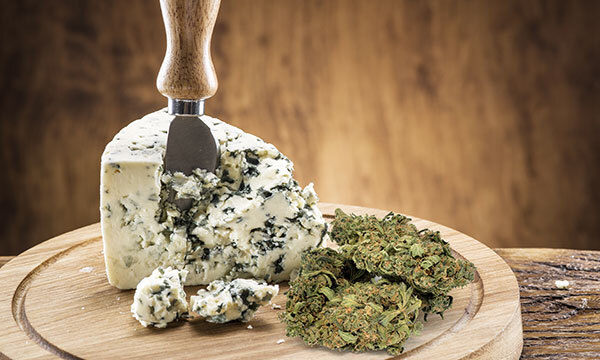
Getting to Know Blue Cheese Cannabis
Blue Cheese is generally bred from Blueberry and UK Cheese, although the exact genetic makeup can vary depending on the breeder.
That combination places it naturally among both Blue cannabis seeds and Indica cannabis seeds. Blueberry contributes the sweeter fruit character, while Cheese brings the sharper skunk and savory notes.
It is worth paying attention to the breeder when buying Blue Cheese seeds. Several versions now share the same name, and specifications such as THC, flowering time, height and yield are not identical across all of them.
Blue Cheese Strain at a Glance
| Trait | Blue Cheese |
| Genetics | Blueberry × UK Cheese/Cheese |
| Original breeder | Commonly associated with Big Buddha Seeds |
| Strain type | Indica-dominant hybrid |
| THC | Commonly around 18–26%, depending on breeder |
| CBD | Generally low |
| Main terpenes | Myrcene, limonene, caryophyllene |
| Flavor | Blueberry, cheese, earth, skunk, spice |
| Effects | Relaxing, euphoric, sleepy, hungry |
| Flowering time | Around 7–10 weeks |
| Height | Short to medium |
| Yield | Moderate to high |
| Difficulty | Easy to moderate |
| Outdoor harvest | Generally fall |
Where Blue Cheese Gets Its Character
What Are the Parent Strains of Blue Cheese?
Blue Cheese brings together two very different cannabis lines.
Blueberry is known for its sweet fruit character and tends to pass on compact growth, broader leaves and, in some phenotypes, blue or purple coloring. UK Cheese comes from the other end of the aroma spectrum, bringing strong skunk, earth and the pungent character that gave the strain its name.
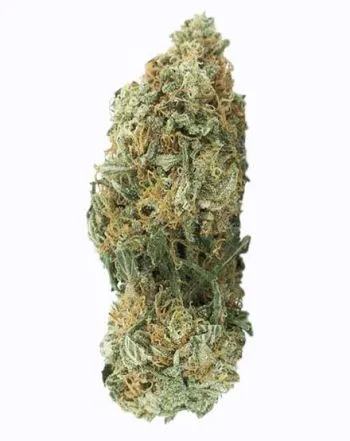
You can often see that split between individual plants. One phenotype may smell noticeably fruity, while another leans much harder into Cheese.

| THC % | Up to 18% |
|---|---|
| Flowering Time | 8-10 Weeks |
| Outdoor harvest | End Of September |
| Yield | 500-600gr/m² |
| Indica/Sativa | Sativa Dominant |
| Height | Medium: 100cm-180cm |
| Difficulty | Easy |
| CBD Content | <1% |
| Climate | Temperate |
| Seed Type | Feminized |
| Genetics | Blueberry x UK Cheese x Big Bud |
| Effects | Calming, Relaxing |
| Taste | Blue Cheese, Cheese, Blueberry |
| Terpene | Limonene, Myrcene, Caryophyllene |
Potency, Terpenes and That Cheese-and-Berry Profile
How Strong Is Blue Cheese Cannabis?
Blue Cheese usually sits in the moderate-to-high THC range. Depending on the breeder, published levels can range from around 18% into the mid-20s.
That does not mean every plant will hit the figure printed on the packet. Cannabinoid levels can vary with phenotype, lighting, plant health and harvest timing.
CBD is usually low, so Blue Cheese is primarily grown for its THC content rather than as a balanced THC-to-CBD cultivar.
What Does Blue Cheese Smell and Taste Like?
This is where Blue Cheese earns its reputation.
The first thing you will often notice is sweet fruit, particularly blueberry or mixed berries. Behind that comes the savory side: Cheese, skunk and earth, sometimes with a mild spicy finish.
Different phenotypes shift the balance. Some are almost dessert-like, while others smell much sharper and funkier.
Typical notes include:
- Blueberry
- Sweet fruit
- Cheese
- Skunk
- Earth
- Spice
The aroma usually becomes much stronger toward the end of flowering, so discretion can become an issue indoors.
What Are the Main Blue Cheese Terpenes and Effects?
Myrcene, limonene and caryophyllene are commonly associated with Blue Cheese.
In simple terms, myrcene is often linked with earthy and musky aromas, limonene contributes brighter citrus notes, and caryophyllene can add peppery spice.
The effects are commonly described as relaxing, euphoric and appetite-stimulating, with heavier amounts sometimes feeling more sedating.
As with any strain, your experience can vary according to dose, tolerance and the individual plant.
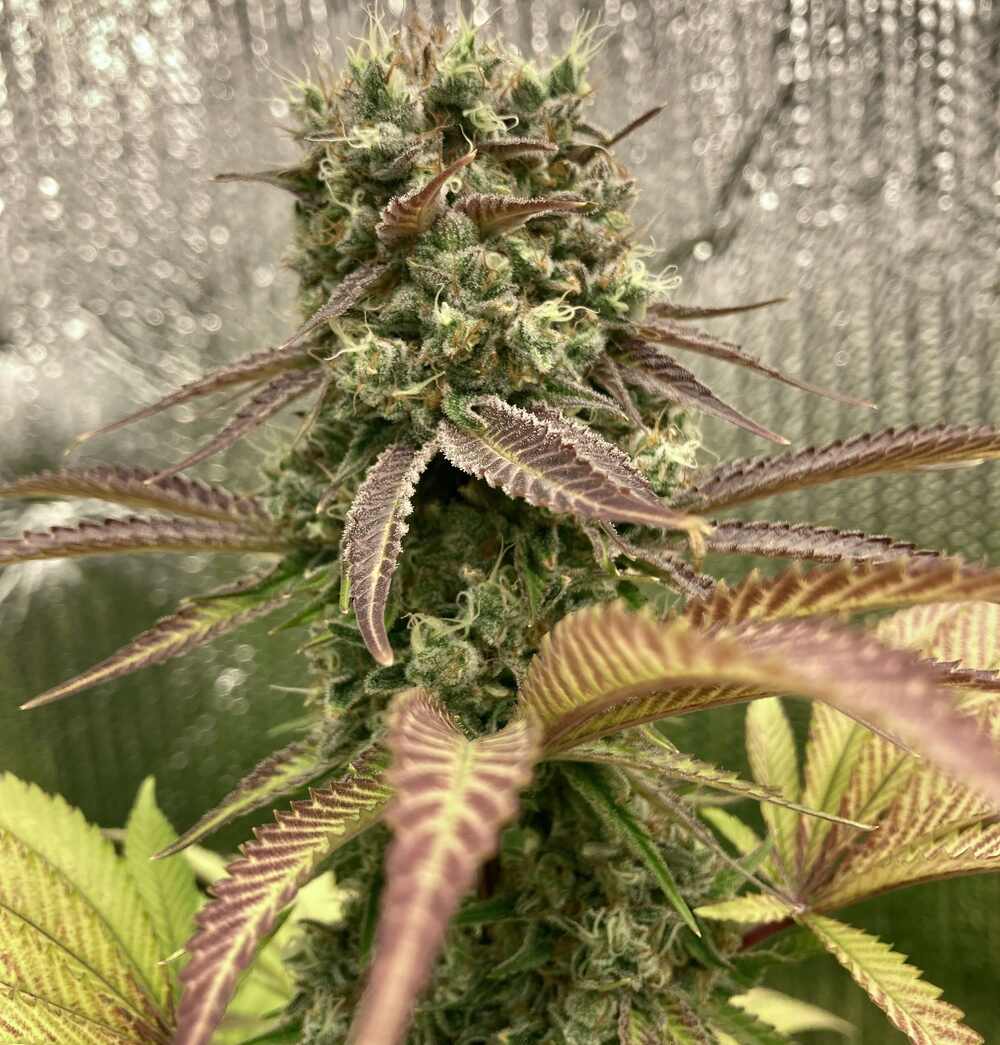
What Blue Cheese Is Like to Grow
Blue Cheese works well indoors and outdoors, but I particularly like its structure for controlled indoor spaces. It generally gives you enough branching to build a productive canopy without becoming difficult to contain.
If you mainly grow inside, it is also worth comparing it with other indoor cannabis seeds.
Is Blue Cheese Easy to Grow?
Blue Cheese is generally easy to moderate in terms of difficulty.
You do not need to throw every advanced technique at it. Give the plant stable conditions, enough root space and sensible canopy management, and it tends to stay fairly cooperative.
For a new grower, the main lesson is not to overmanage it. Good plant structure and a steady environment will usually get you further than constantly adjusting nutrients or training branches every few days.
Plant Structure, Height and Flowering Stretch
Most Blue Cheese plants grow short to medium in height with a reasonably bushy structure.
Lateral branches can develop into productive flowering sites, so I prefer to open the plant up rather than allowing everything to crowd around the main stem.
Flowering stretch is usually manageable. You still need to account for extra height after the light cycle changes, but this is not normally a strain that suddenly doubles or triples in size without warning.
Training Blue Cheese Plants
Blue Cheese responds well to basic canopy training.
Useful options include:
- Topping to encourage several main branches
- LST to spread growth horizontally
- SCROG to create an even canopy
- Selective pruning to remove weak growth from shaded areas
If you are new to shaping plants, our guide to low-stress training explains how to spread branches without major stress.
For growers who want more main growth points, our guide to topping cannabis plants covers the technique in more detail.
I prefer to do the main structural work during vegetative growth and keep intervention lighter once flowering is underway.
Flowering Time, Yield and Outdoor Harvest
Most Blue Cheese photoperiod plants finish flowering in roughly 7–10 weeks, depending on the genetics.
Yield varies too much between breeder versions to give one figure that means much. Plant size, lighting, training and the environment all play a part.
Outdoors, harvest usually falls in autumn. If you grow somewhere with wet weather later in the season, pay attention to the expected finish date before choosing your seeds.
Our Big Blue Cheese Feminized is a related option bred from Blueberry, UK Cheese and Big Bud. It flowers in around 8–10 weeks and has been selected with heavier production in mind.
Climate, Airflow and Flowering Aroma
Blue Cheese prefers a stable environment rather than extremes.
As flowers develop, keep air moving through the middle of the plant as well as across the top of the canopy. Dense flowers can hold moisture, so good circulation becomes increasingly useful later in bloom.
Our guide to cannabis growing temperatures is useful if you want a better idea of how temperature requirements change through the grow.
Odor is another consideration. Cheese genetics can become seriously pungent, particularly during the final weeks. If you are growing indoors, decent extraction and carbon filtration are worth having in place before the smell arrives. Our guide to controlling cannabis odor indoors covers the main options.
Phenotypes and Potential Growing Challenges
The main variation you will notice between Blue Cheese phenotypes is usually in structure and aroma.
Some plants stay squat and lean heavily toward sweet berry notes. Others grow a little taller and produce a much stronger Cheese or skunk smell.
You may also see differences in:
- Branching
- Internodal spacing
- Flower density
- Flowering speed
- Color
- Aroma balance
I would work with the individual plant rather than trying to make every phenotype behave identically.
The main practical issue is dense flower development late in bloom. Give the canopy enough space and keep the surrounding environment under control, particularly if your grow room tends to run humid.
Common Questions About Blue Cheese
Is Blue Cheese indica or sativa?
Blue Cheese is generally an indica-dominant hybrid. Exact percentages can differ between breeder versions.
How tall does Blue Cheese grow?
Most Blue Cheese plants stay short to medium in height. Vegetative time, container size, phenotype and training all affect final size.
How long does Blue Cheese take to flower?
Most photoperiod versions flower for around 7–10 weeks. Check the breeder's expected finish time for the seeds you are growing.
Is Blue Cheese easy to grow?
Blue Cheese is usually considered easy to moderate. Its height is manageable, it responds well to training and it does not normally require complicated techniques.
How much does Blue Cheese yield?
Yield can range from moderate to high, but there is no reliable universal figure. Genetics, light intensity, plant size and overall grow conditions all influence the final harvest.
Is Blue Cheese Worth Growing?
Blue Cheese has stuck around for good reason. It combines the sweetness of Blueberry with the pungent character of Cheese in a plant that is generally straightforward to handle.
From a grower's perspective, its biggest strengths are the manageable height, useful side branching and relatively short flowering period. Keep the canopy open, avoid overcrowding and pay attention to the environment as the flowers thicken.
If you enjoy old-school genetics with a fruitier twist, Blue Cheese remains an interesting strain to grow and an easy one to recognize once that unmistakable aroma starts developing.


