




White Widow is a well-known cannabis strain recognised for its frosty buds, earthy aroma and hybrid genetics. Originating in the Netherlands during the 1990s, it combines Brazilian sativa and South Indian indica ancestry.
The White Widow strain is known for its THC content, resin production and manageable growth. This guide covers its genetics, effects, taste and growing characteristics, alongside popular varieties such as White Widow Max, White Widow Skunk and White Widow Autoflower.
Key Takeaways
- Strain history: Discover how White Widow became one of the most recognised cannabis strains during the 1990s.
- Effects and aroma: Learn about its commonly reported effects, earthy scent and distinctive taste.
- Appearance: Understand what gives White Widow its signature frosty, resin-covered flowers.
- Growing characteristics: Explore its growth stages, flowering period and common challenges for beginners.
- White Widow varieties: Compare the original White Widow with Max, Skunk and autoflowering versions to understand their differences.
- What is the White Widow Strain?
- White Widow History and Genetics
- Is White Widow Indica or Sativa?
- How Strong is White Widow? THC and CBD Levels
- Which White Widow Variety Is Right for You?
- How Does White Widow Grow?
- What Are the Different White Widow Strains?
- Is White Widow a Good Strain for Beginners?
- Conclusion
- Frequently Asked Questions About White Widow
- References
What is the White Widow Strain?
White Widow is a classic cannabis hybrid recognised for its resin-coated flowers and earthy aroma.
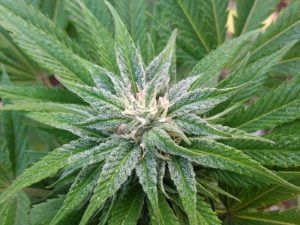
Its name comes from the dense layer of trichomes covering mature buds, giving them a frosty appearance. The flowers are usually green, with orange or brown pistils visible between the resin-covered leaves.
Classic White Widow is generally classified as sativa-dominant, although it displays characteristics associated with both indica and sativa ancestry.
The following specifications describe White Widow Feminized.
| Characteristic | White Widow Feminized |
| Genetics | Brazilian Sativa × South Indian Indica |
| Classification | Sativa-dominant hybrid |
| THC | Up to 18% |
| CBD | Below 1% |
| Flowering time | 8–10 weeks |
| Height | 100–180 cm |
| Indoor yield | 400–500 g/m² |
| Difficulty | Easy |
| Aroma | Woody, earthy and spicy |
These are advertised figures. Individual plants may differ in size, development and chemical composition.
White Widow History and Genetics
White Widow became widely known during the 1990s, when Dutch cannabis breeding was attracting international attention.
Its traditional ancestry combines a Brazilian sativa with a resin-producing South Indian indica. Both are commonly linked to landrace cannabis strains, populations that developed over generations within particular geographical regions.
The exact origins remain disputed, with different accounts describing how the original plants were obtained and crossed.
White Widow became associated with the 1995 Cannabis Cup and subsequently appeared in seed catalogues and coffee shops across the Netherlands.
As its popularity grew, different breeders developed their own selections. This explains why modern White Widow varieties can share the original name while showing different characteristics.
Is White Widow Indica or Sativa?
White Widow is traditionally described as approximately 60% sativa and 40% indica, making it a sativa-dominant hybrid.
However, these percentages are breeding descriptions rather than precise genetic measurements.
Some White Widow plants develop relatively upright growth with longer branches. Others display broader leaves, shorter internodal spacing and a more compact structure.
Research suggests that commercial indica and sativa classifications do not consistently represent distinct genetic or chemical groups.
I find it more useful to consider the individual seed selection and its advertised characteristics rather than relying entirely on an indica or sativa percentage.


| THC % | Up to 18% |
|---|---|
| Flowering Time | 8–10 Weeks |
| Outdoor harvest | Early October |
| Yield | 400–500 g/m² |
| Indica/Sativa | Sativa Dominant |
| Height | Medium: 100–180 cm |
| Difficulty | Easy |
| CBD Content | Less than 1% |
| Climate | Sub Tropical, Tropical, Warm |
| Seed Type | Feminized |
| Genetics | Brazilian Sativa x South Indian Indica Landrace |
| Effects | Uplifting |
| Taste | Woody, Spicy, Earthy |
| Terpene | Myrcene, Caryophyllene, Pinene |
How Strong is White Widow? THC and CBD Levels
White Widow is known for its moderate to high THC content, although potency differs between the original strain and its related varieties.
Classic White Widow Feminized is advertised at up to 18% THC, with CBD levels below 1%. It retains the traditional Brazilian sativa and South Indian indica ancestry, while White Widow Max includes additional indica genetics and is advertised at up to 24% THC.
White Widow Skunk and the autoflowering varieties have their own genetic characteristics, growing patterns and advertised potency.
Does White Widow Max Have More THC Than Original White Widow?
Yes. White Widow Max Feminized and Regular are both advertised at up to 24% THC, compared with 18% for classic White Widow Feminized.
White Widow Max is also associated with denser flowers and higher advertised yield potential. However, THC percentages are product estimates rather than guaranteed results. Actual potency varies between individual plants and requires laboratory testing for confirmation.
White Widow Strain Comparison Table
The following table compares the eight White Widow varieties available from MSNL, including their advertised THC content, mature height, flowering time and indoor yield.
| White Widow Variety | THC (Up To) | Height | Flowering Time | Indoor Yield |
| White Widow Feminized | 18% | 100–180 cm | 8–10 weeks | 400–500 g/m² |
| White Widow Regular | 18–19%* | 180–220 cm | 8–10 weeks | 400–500 g/m² |
| White Widow Max Feminized | 24% | 100–180 cm | 8–10 weeks | 500–600 g/m² |
| White Widow Max Regular | 24% | 100–180 cm | 8–10 weeks | 500–600 g/m² |
| White Widow Skunk Feminized | 18% | 100–180 cm | 8–10 weeks | 400–500 g/m² |
| White Widow Skunk Regular | 18% | 100–180 cm | 8–10 weeks | 400–500 g/m² |
| White Widow Autoflower | 18% | 60–100 cm | 6–8 weeks | 200–300 g/m² |
| White Widow Max Autoflower | 18–19%* | 60–100 cm | 6–8 weeks | 400–500 g/m² |
Some product summaries advertise 19% THC, while their specification tables list 18%. These differences should be confirmed before publication. All figures are advertised estimates rather than guaranteed results. Flowering time does not include the complete growing cycle.
White Widow Effects: What Can You Expect?
Classic White Widow is commonly associated with uplifting, relaxing and sociable effects. Some consumers report mental stimulation followed by physical relaxation, although experiences vary.
The related varieties have slightly different reported characteristics:
- White Widow Max: Often described as having stronger, more physically relaxing effects, alongside higher advertised THC levels.
- White Widow Skunk: Associated with a combination of uplifting and relaxing sensations.
- White Widow Autoflower: Shares many of the reported characteristics of the original strain, although its chemical composition may differ.
Effects depend on THC concentration, the amount consumed and individual tolerance. Possible unwanted effects include dry mouth, dizziness, anxiety and impaired coordination.
What Does White Widow Smell and Taste Like?
White Widow has an earthy, woody and spicy aroma, often accompanied by pine and herbal notes.
These characteristics are partly associated with cannabis terpenes, aromatic compounds produced by the plant.
| Terpene | Associated Aroma |
| Myrcene | Earthy and herbal |
| Caryophyllene | Peppery and woody |
| Pinene | Pine-like and fresh |
Classic White Widow is commonly associated with earthy and spicy notes, while White Widow Skunk adds a more noticeable skunky character. White Widow Max is generally described as having a similar earthy aroma to the original.
The exact terpene profile depends on the individual plant and requires laboratory testing for confirmation.
What Does White Widow Look Like?
White Widow gets its name from the dense coating of cannabis trichomes covering its flowers. These resin glands create the frosty appearance associated with the strain.
Classic White Widow generally develops green flowers with orange or brown pistils and a thick layer of pale resin.
The different varieties display some differences in plant structure:
- White Widow Max: Associated with dense flowers and substantial resin production.
- White Widow Skunk: Usually develops a bushy structure with multiple side branches.
- White Widow Autoflower: Has a compact growth pattern, with an advertised height of 60–100 cm.
- White Widow Max Autoflower: Also reaches approximately 60–100 cm but has higher advertised yield potential.
Appearance varies between individual plants. Although resin production is a recognisable White Widow characteristic, visible trichomes do not reliably indicate THC potency.
Which White Widow Variety Is Right for You?
The original White Widow is a useful starting point for understanding the strain's traditional genetics, moderate height and characteristic aroma.
White Widow Max offers higher advertised THC levels and yield potential, while White Widow Skunk introduces additional genetic influences and a more pronounced skunky scent.
Regular seeds can produce male or female plants, making them relevant to breeding projects. Feminized seeds are bred to produce predominantly female plants.
The autoflowering varieties offer a more compact alternative, with automatic flowering and a different growth cycle from photoperiod selections.
When comparing White Widow varieties, consider their genetics, advertised potency, mature height and flowering characteristics rather than relying on the strain name alone.
How Does White Widow Grow?
White Widow is an easy-to-grow photoperiod strain known for its medium height, strong branching and dense, resin-rich flowers. Classic White Widow typically reaches 100–180 cm, with an advertised flowering period of 8–10 weeks.
Growing Environment and Climate
White Widow is suited to warm, tropical and subtropical climates. Indoor environments offer greater control over light, temperature and moisture, while outdoor plants depend on seasonal conditions.
Cold weather can slow development, and prolonged humidity may increase the risk of fungal problems, particularly around dense flowers.
Seedling and Early Growth
White Widow seedlings develop their first leaves before establishing a central stem and root system. As growth continues, larger leaves appear and the first side branches begin forming.
Growth rates can differ between individual plants. Minor differences in size and leaf shape are common during early development.
Vegetative Stage, Height and Branching
During the vegetative stage, White Widow develops a sturdy main stem with several side branches.
Classic feminized selections have an advertised height of 100–180 cm, although some phenotypes grow taller as flowering begins.
The plant's branching structure can create a broad canopy, making its eventual width worth considering alongside its height.
White Widow Flowering Time
White Widow is a photoperiod strain, meaning changes in day length trigger flowering. Classic varieties typically flower within 8–10 weeks.
During this period, flower clusters develop along the branches and gradually become denser.
Outdoor harvest is generally estimated for early October in suitable Northern Hemisphere climates, although local conditions can affect maturity.
Resin Development and Flower Maturity
White Widow is known for its heavy trichome production. As flowers mature, resin glands become more visible, creating the frosty appearance associated with the strain.
Pistils may darken and flowers become denser during maturation. However, appearance alone cannot confirm THC content.
Common Growing Challenges
Although White Widow has an easy difficulty rating, growers should be aware of several characteristics:
- Humidity: Dense flowers can retain moisture, increasing the risk of fungal problems.
- Height and branching: Some plants develop wider canopies or additional height during flowering.
- Environmental stress: Changes in temperature and light can affect plant development.
- Phenotype variation: Individual plants may differ in structure, growth rate and flowering time.
The cannabis pests and diseases guide explains common plant health problems and how to identify them.
What Are the Different White Widow Strains?
Several White Widow varieties are available, each with different genetics, growth characteristics or seed formats.
Original White Widow
Original-style White Widow retains the traditional Brazilian sativa and South Indian indica ancestry.
It is available as feminized and White Widow Regular.
Feminized seeds are bred to produce predominantly female plants. Regular seeds can develop into male or female plants, making them relevant to breeding and genetic selection.
{{block class="FishPigExtend\Wordpress\Block\Product\Related" sku="WW010"}}
{{block class="FishPigExtend\Wordpress\Block\Product\Related" sku="WW-F010"}}
White Widow Max
White Widow Max combines White Widow ancestry with additional indica genetics.
It is advertised with THC levels up to 24%, medium height and higher yield potential than classic White Widow.
Both feminized and White Widow Max Regular seed formats are available.
{{block class="FishPigExtend\Wordpress\Block\Product\Related" sku="WWM010"}}
{{block class="FishPigExtend\Wordpress\Block\Product\Related" sku="WWM-F010"}}
{{block class="FishPigExtend\Wordpress\Block\Product\Related" sku="WWMA-F005"}}
White Widow Skunk
White Widow Skunk is a related hybrid associated with White Widow, Skunk and Northern Lights breeding lines.
Its reported characteristics include woody, spicy and skunky aromas, dense foliage and strong branching.
The range includes White Widow Skunk Feminized and White Widow Skunk Regular.
Their published genetic descriptions differ, so the two formats should not automatically be treated as identical selections.
{{block class="FishPigExtend\Wordpress\Block\Product\Related" sku="WS010"}}
{{block class="FishPigExtend\Wordpress\Block\Product\Related" sku="WWS-F010"}}
White Widow Autoflower
Autoflowering varieties contain ruderalis-derived genetics, allowing them to begin flowering according to maturity rather than seasonal daylight changes.
White Widow Autoflower is advertised at 60–100 cm tall, with THC up to 18%.
White Widow Max Autoflower offers a similar compact height with higher advertised yield potential.
Both have a listed flowering period of 6–8 weeks, which should not be confused with their complete lifecycle.
{{block class="FishPigExtend\Wordpress\Block\Product\Related" sku="WWMA-F005"}}
{{block class="FishPigExtend\Wordpress\Block\Product\Related" sku="AW-F050"}}
Is White Widow a Good Strain for Beginners?
White Widow is generally considered suitable for beginners because of its medium height, easy difficulty rating and relatively short flowering period.
Its structure is less extreme than that of some tall, long-flowering varieties. However, dense flowers and environmental sensitivity still deserve attention.
Feminized seeds offer a predominantly female plant selection, while regular seeds are relevant to growers interested in breeding.
Autoflowering varieties provide smaller alternatives with different flowering characteristics.
For beginners, I would compare the advertised plant size, flowering behaviour and growing difficulty of each selection rather than assume all White Widow varieties perform identically.
Conclusion
White Widow remains a well-known cannabis strain thanks to its traditional Brazilian and Indian ancestry, resin-coated flowers and earthy aroma.
Classic White Widow offers medium height, an advertised flowering period of 8–10 weeks and a recognisable hybrid profile. Related varieties such as White Widow Max, White Widow Skunk and White Widow Autoflower provide different genetics, seed formats and growing characteristics.
Understanding these differences helps you compare the available selections without relying solely on the White Widow name.
Frequently Asked Questions About White Widow
Why is White Widow Called White Widow?
White Widow gets its name from the thick coating of resin glands covering its flowers. These tiny trichomes create a white, frosty appearance, particularly as the buds mature.
Are All White Widow Seeds the Same Genetics?
No. While many White Widow varieties share the original Brazilian sativa and South Indian indica ancestry, breeding selections can differ. White Widow Max, White Widow Skunk and autoflowering versions contain additional genetic influences.
What Is the Difference Between White Widow and White Rhino?
White Rhino is a related cannabis strain traditionally associated with White Widow ancestry and additional indica genetics. It is generally described as having a more compact structure and heavier indica characteristics, although its exact lineage depends on the breeding selection.
Can White Widow Plants Have Different Phenotypes?
Yes. White Widow plants can display different phenotypes, even when grown from seeds of the same variety. Differences may include leaf shape, branch spacing, flower density and aroma. These variations reflect how genetics interact with environmental conditions.
Is White Widow the Same as Black Widow?
White Widow and Black Widow are closely related names associated with the strain's early breeding history. Black Widow is commonly described as a continuation of an original White Widow breeding line, although modern seed selections sold under these names are not necessarily genetically identical.
References
- Watts, S., McElroy, M., Migicovsky, Z., et al. (2021). Cannabis labelling is associated with genetic variation in terpene synthase genes. Nature Plants. Examines the relationship between commercial cannabis classifications, genetic differences and terpene production.
- Smith, C. J., et al. (2022). The phytochemical diversity of commercial Cannabis in the United States. Examines differences in cannabinoid and terpene composition between commercial cannabis samples.
- National Academies of Sciences, Engineering, and Medicine (2017). The Health Effects of Cannabis and Cannabinoids: The Current State of Evidence and Recommendations for Research. National Academies Press. Reviews scientific evidence concerning cannabis effects, potential health benefits and risks.

