




Cannabis pests can appear in almost any grow, but spotting them early can prevent minor damage from developing into a larger problem. Common cannabis plant pests such as spider mites, thrips, aphids, fungus gnats, and caterpillars leave different clues, including stippling, webbing, leaf scarring, holes, sticky residue, or insects around the growing medium.
The challenge is that many symptoms associated with common cannabis pests can also resemble nutrient deficiencies, disease, or environmental stress. Correct identification therefore requires more than looking at a yellow or damaged leaf.
This guide explains how to recognize the most common cannabis pests, where to look for signs of an infestation, how pest damage affects plant health, and how to distinguish pests from common cannabis diseases. It also covers practical prevention measures growers can use to reduce the risk of pests and infections becoming established.
Key takeaways
- Look for physical evidence before diagnosing pests. Insects, eggs, webbing, honeydew, droppings, feeding marks, and larvae provide stronger evidence of a pest infestation than discolouration alone.
- Inspect more than the upper leaf surface. Check leaf undersides, stems, new growth, flowers, and the growing medium because different marijuana pests occupy different parts of the plant.
- Pest damage can resemble other cannabis problems. Nutrient deficiencies, mould, disease, excessive light, heat, and watering problems can all cause symptoms similar to pest damage.
- Pests can affect the entire plant. Infestations can damage photosynthetic leaf tissue, roots, new growth, and developing flowers, with young or heavily affected plants generally facing the greatest risk.
- Regular inspection is one of the best preventive habits. Clean growing conditions, stable environmental conditions, and routine plant checks make it easier to identify cannabis pests and diseases before they spread.
What Are the Most Common Cannabis Pests?
The cannabis pests growers encounter vary between indoor and outdoor environments. Indoor infestations are often introduced on plants, clothing, equipment, or growing media, while outdoor cannabis is naturally exposed to a broader range of insects.
| Cannabis pest | Main warning sign | Where to check |
| Spider mites | Pale stippling and webbing | Leaf undersides |
| Thrips | Silver streaks and dark specks | Leaves |
| Aphids | Honeydew and insect clusters | New growth |
| Fungus gnats | Small flies around damp soil | Growing medium |
| Broad mites | Twisted new growth | Young leaves |
| Hemp russet mites | Curling and brittle growth | Upper plant |
| Whiteflies | White insects that scatter | Leaf undersides |
| Caterpillars | Holes and dark droppings | Leaves and flowers |
| Scale insects | Raised stationary bumps | Stems |
| Mealybugs | White cotton-like clusters | Branch joints |
| Leaf miners | Winding trails in leaves | Leaf tissue |
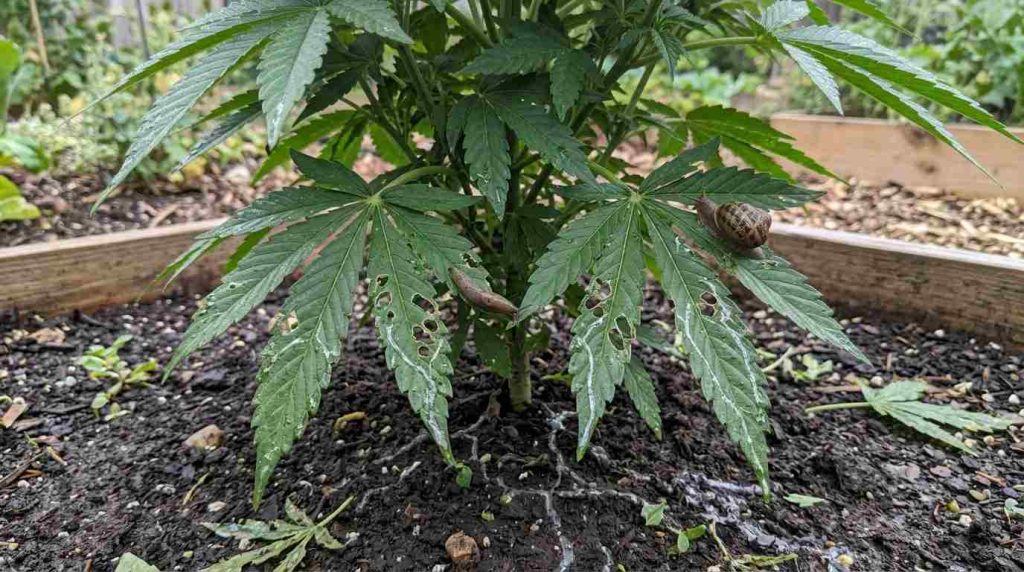
| Slugs and snails | Holes and slime trails | Lower growth |
Spider Mites
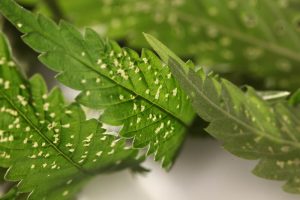
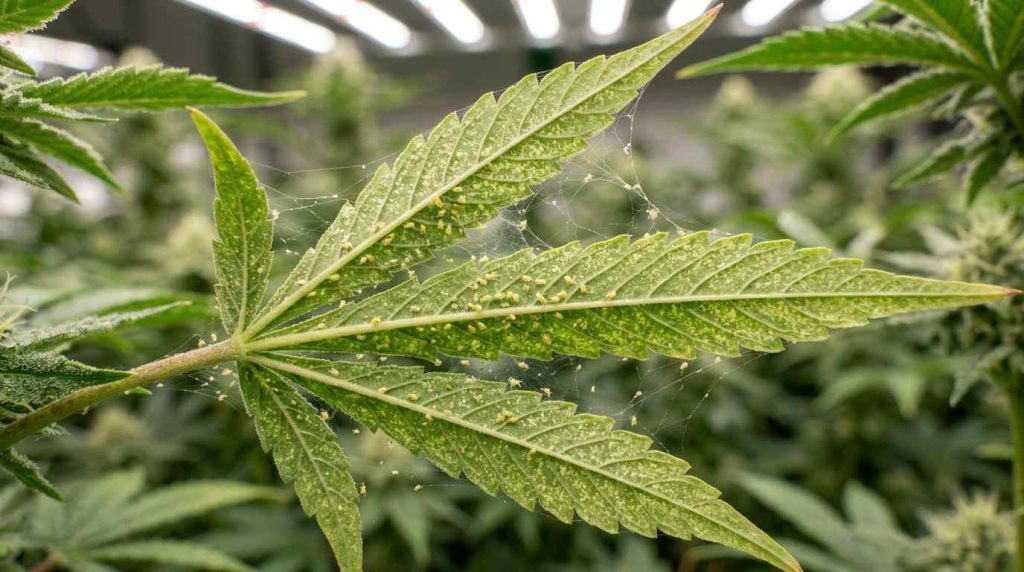
Spider mites are tiny sap-feeding arachnids that usually live on the undersides of leaves. Early damage appears as clusters of pale or yellow pinpricks known as stippling. Larger infestations can cause bronzing, leaf decline, and fine webbing between leaves or stems.
Thrips
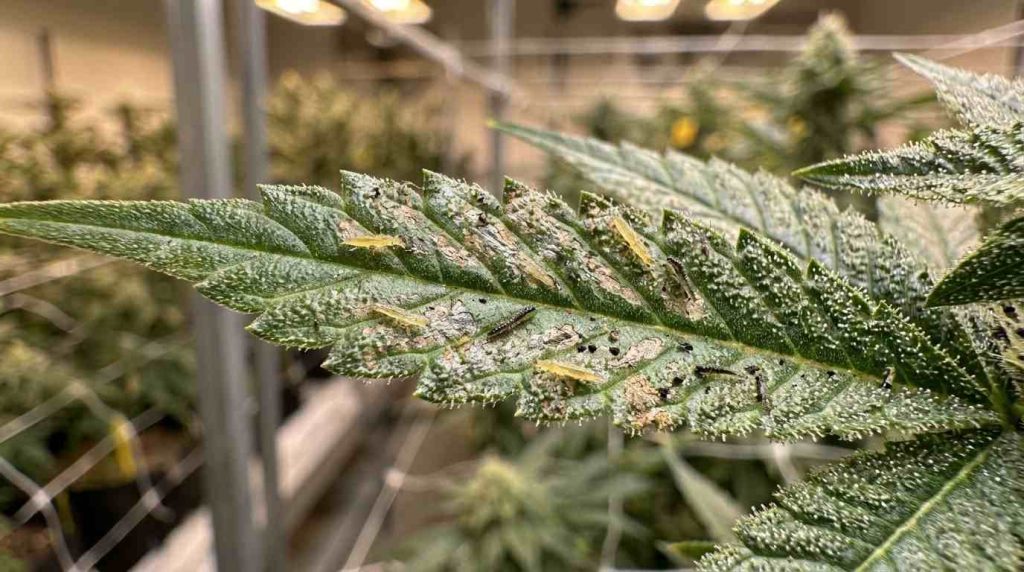
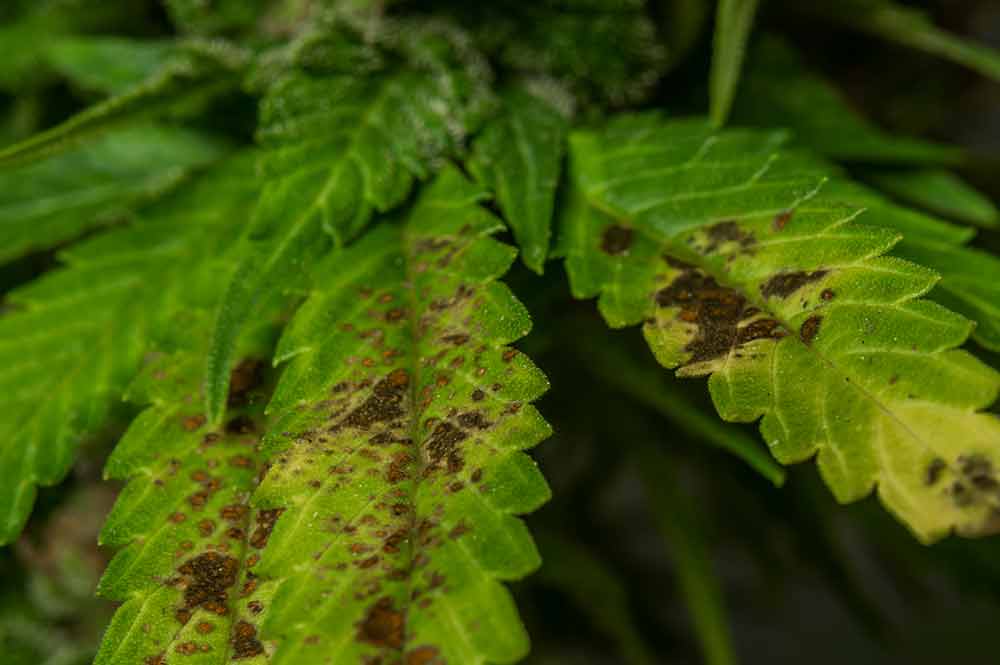
Thrips are narrow, fast-moving insects that feed by damaging the surface of leaves. Their feeding commonly produces irregular silver, white, or bronze streaks, often accompanied by tiny dark droppings.
Unlike spider mite stippling, thrips damage tends to appear as larger scraped or scarred patches.
Aphids
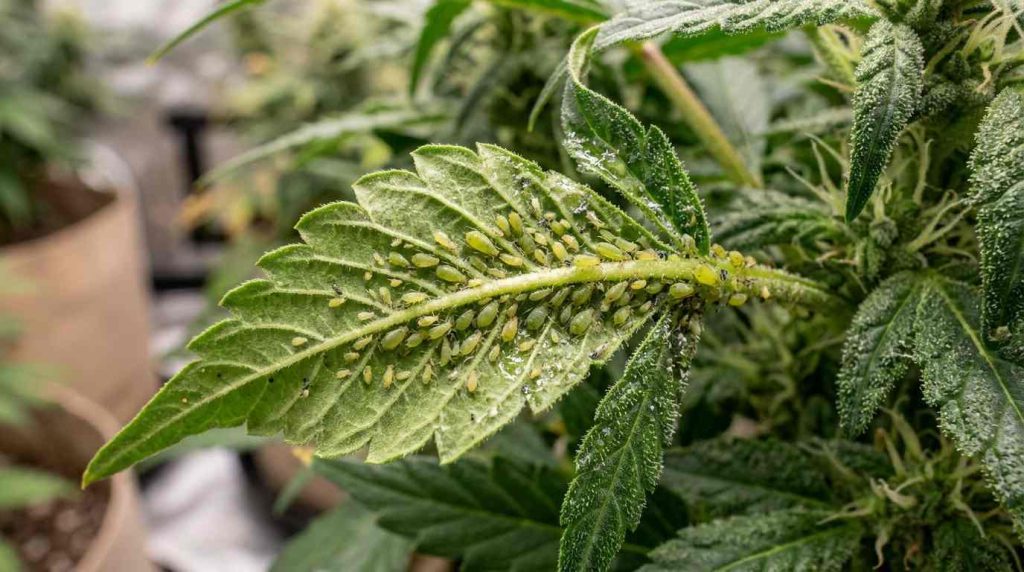
Aphids are small, soft-bodied insects that gather around tender shoots, stems, and leaf undersides. They feed on plant sap and can contribute to curling, yellowing, and slowed new growth.
A particularly useful sign is sticky honeydew, which can coat foliage and attract ants. Dense clusters around developing shoots can also make aphids relatively easy to confirm.
Fungus Gnats
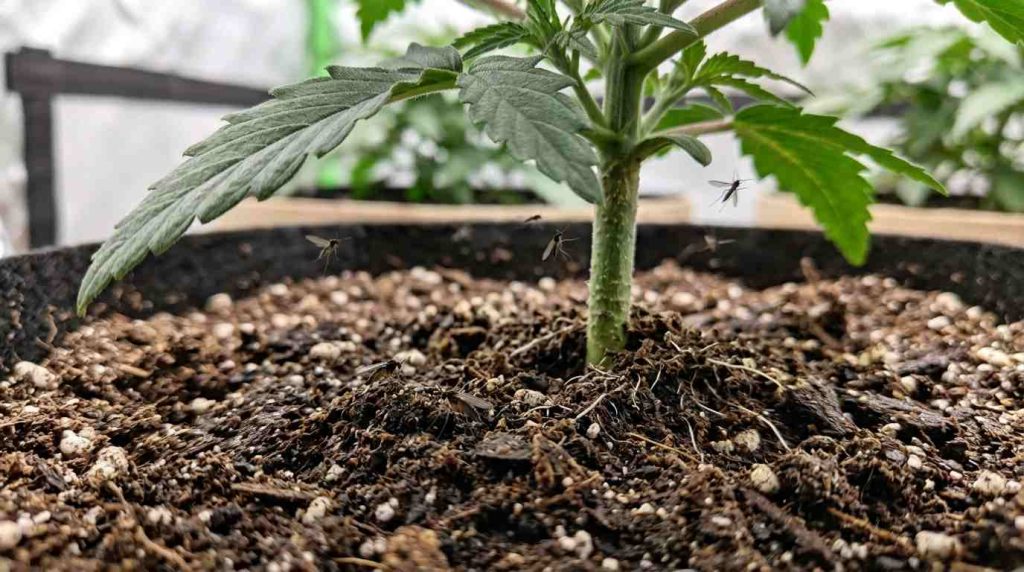
Fungus gnats are small dark flies commonly found around damp growing media. Adults are usually noticed near the soil surface, while their larvae live within the root zone.
Persistent activity can indicate that the growing medium is remaining wet for extended periods. Large larval populations may interfere with young roots and contribute to weaker development.
Broad Mites
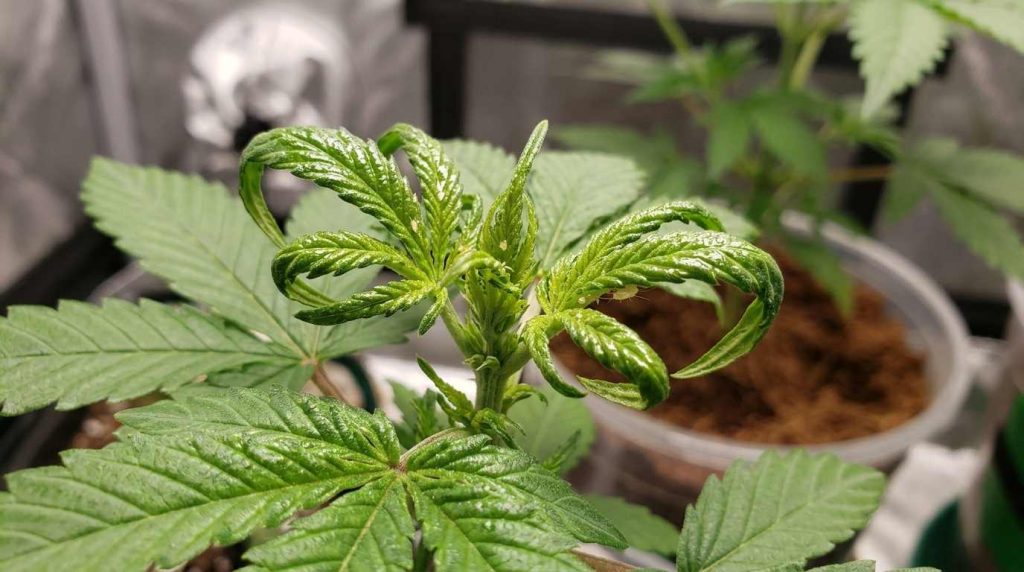
Broad mites are microscopic and are usually identified by the unusual growth they cause rather than by seeing the pest itself.
Symptoms are concentrated around young tissue and can include glossy, twisted, blistered, or distorted leaves. Because these signs can resemble heat, pH, or nutrient problems, close inspection is important before reaching a diagnosis.
Hemp Russet Mites
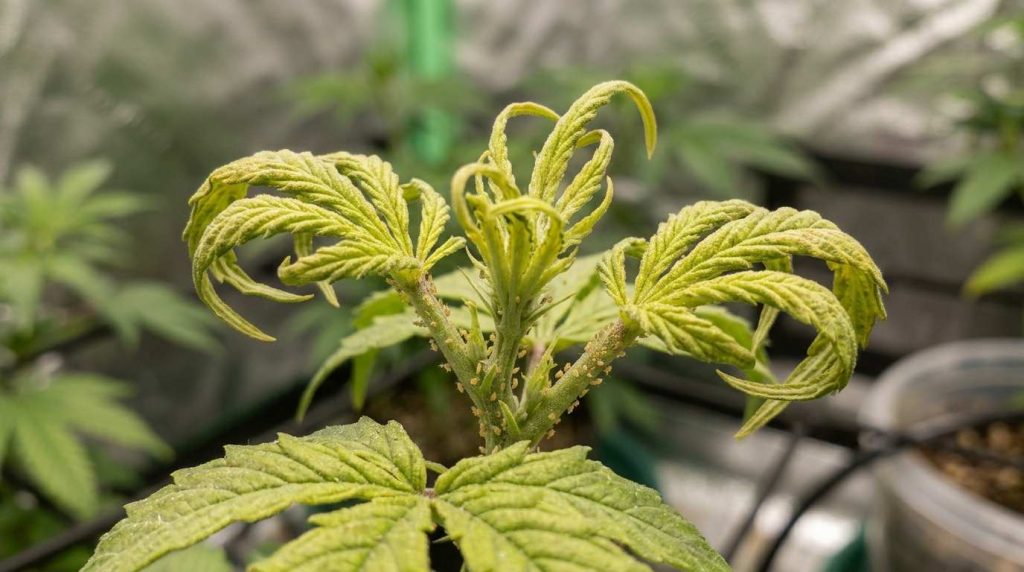
Hemp russet mites are extremely small pests that can affect stems, petioles, leaves, and developing growth.
Possible signs include curled leaf edges, dull colouration, brittle tissue, and distorted upper growth. Heavy infestations may create yellow or beige discolouration that can be confused with other cannabis plant problems.
Whiteflies
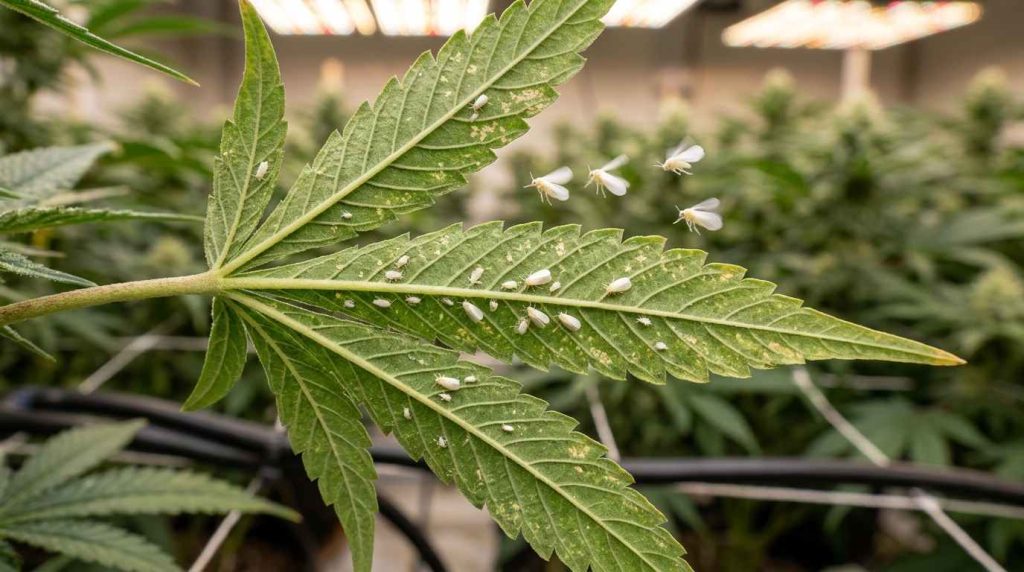
Whiteflies are tiny white winged insects commonly found under leaves. When disturbed, adults often fly up together before settling back onto the plant.
Like aphids, they feed on plant sap and may contribute to yellowing, weakened growth, and honeydew deposits.
Caterpillars and Inchworms
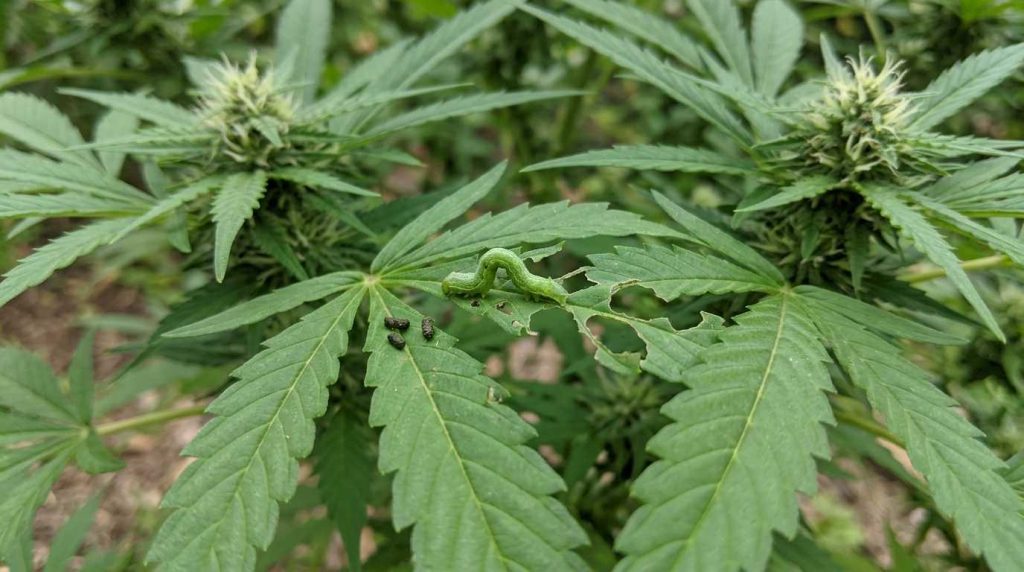
Caterpillars and inchworms are primarily outdoor cannabis pests. Their feeding creates irregular holes, chewed leaf edges, and missing plant tissue.
Dark pellet-like droppings, known as frass, are an important identification clue. Caterpillars may also enter dense flowers, making regular inspection especially important later in the growing cycle.
Scale Insects
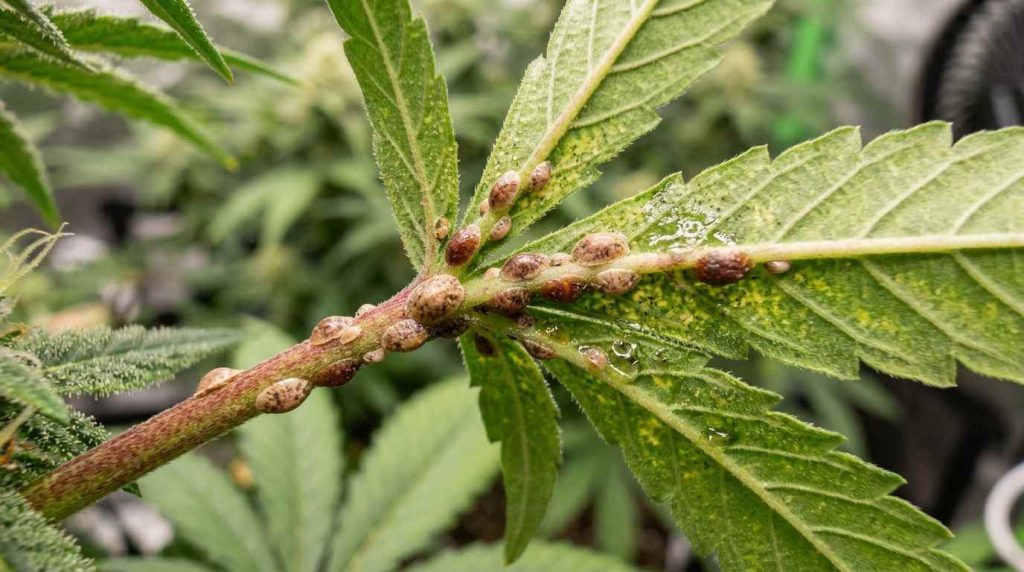
Scale insects often look like small oval or shell-like bumps attached to stems or leaves. Many become relatively stationary once established, which can make them easy to mistake for part of the plant.
They feed on plant fluids and may cause yellowing, weaker growth, and sticky honeydew.
Mealybugs
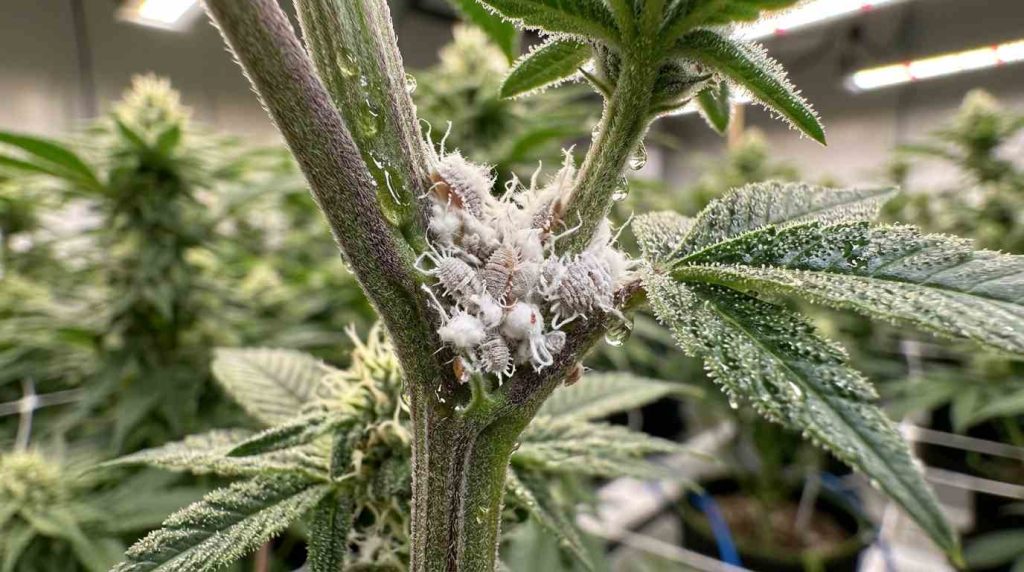
Mealybugs are sap-feeding insects covered in a distinctive white waxy coating. Colonies can resemble small pieces of cotton gathered around branch joints and protected crevices.
Honeydew, ants, and sooty mould may also indicate their presence. The existing MSNL guide notes that branch joints are common hiding places.
Leaf Miners
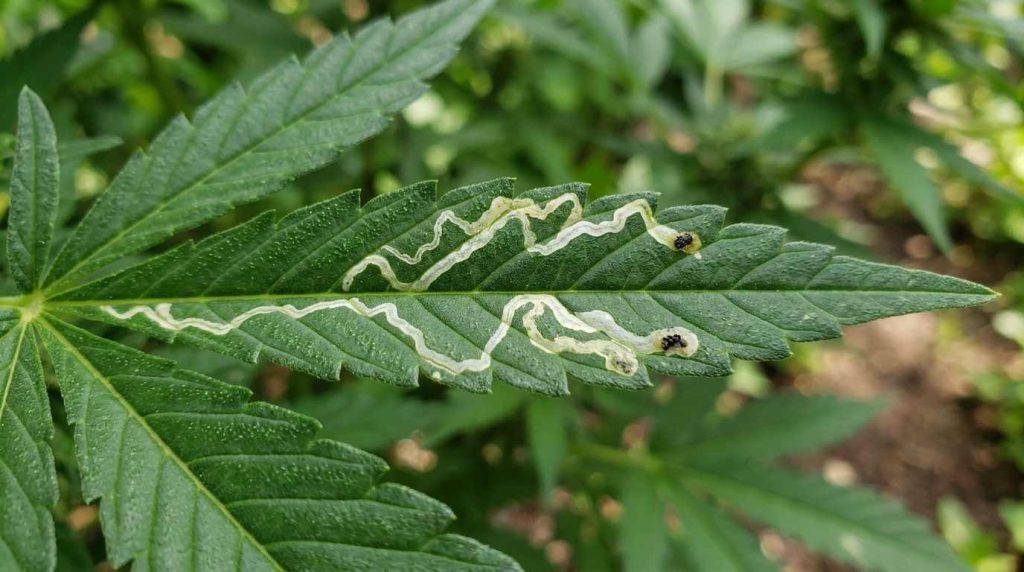
Leaf miners are insect larvae that feed inside leaf tissue. Their damage creates winding white or yellow trails that are easy to distinguish from surface-feeding pests.
The pest itself may remain hidden inside the leaf even when the feeding trail is clearly visible.
Slugs and Snails
Slugs and snails mainly affect outdoor cannabis plants and are most active in damp conditions. They leave irregular holes, chewed leaf edges, and occasionally severe damage to young plants.
How to Identify Cannabis Plant Pests
Pest symptoms can resemble nutrient, watering, and environmental problems, so diagnosis should rely on physical evidence. Inspect leaves, stems, new growth, and the root zone for insects, eggs, webbing, droppings, honeydew, or feeding damage.
Check Leaves, Stems and New Growth for Signs of Pest Damage
Start where symptoms are most visible. Look for stippling, silver streaks, holes, chewed edges, sticky residue, or distorted growth. Check stems, petioles, and young shoots, as some cannabis pests favor tender tissue or protected branch joints.
Focus on the damage pattern rather than colour alone. Irregular feeding marks are more suggestive of pests than general yellowing.
Grower tip: Inspect plants under bright white light because coloured grow lights can hide subtle spotting and discolouration.
Inspect the Undersides of Leaves, Soil and Root Zone
Turn over affected leaves and check along veins and petioles for insects, eggs, webbing, or shed skins. Many sap-feeding pests remain underneath foliage and can be missed during a quick canopy inspection.
Also inspect the growing medium. Small flies repeatedly appearing around damp soil may indicate fungus gnats, whose larvae develop in the root zone.
Use Magnification and Sticky Traps to Confirm a Pest Infestation
A hand lens or loupe can reveal mites, eggs, and larvae that are difficult to see unaided. Sticky traps help detect and monitor flying pests around the canopy and growing medium.
Use these tools alongside visible plant symptoms rather than relying on either method alone.
| What to inspect | What to look for | What it indicates |
| Leaves | Stippling, streaks, holes | Feeding damage |
| Leaf undersides | Pests, eggs, webbing | Foliage infestation |
| Stems and new growth | Clusters or distortion | Pests targeting young tissue |
| Growing medium | Small flying insects | Possible root-zone pests |
| Magnification | Mites, eggs, larvae | Confirms very small pests |
| Sticky traps | Flying insects | Pest presence and activity |
How Cannabis Pests Affect Plant Health and Growth
The impact of an infestation depends on the pest, population size, plant age, and how long feeding continues. Damage can affect leaves, roots, new growth, and developing flowers.
Leaf Damage, Discolouration and Reduced Photosynthesis
Pests that feed on leaves can cause stippling, scarring, yellowing, curling, bronzing, and premature leaf loss. As damage spreads, the plant has less healthy leaf tissue available for photosynthesis.
Minor damage may have little effect on an established plant, while a widespread infestation can reduce healthy canopy growth.
Root Damage, Slowed Growth and Plant Stress
Root-zone pests can damage fine roots involved in water and nutrient uptake. High populations of fungus gnat larvae, for example, can affect young roots and contribute to slower development, particularly in seedlings.
Because poor watering, drainage, and root disease can produce similar symptoms, root damage should not be diagnosed from slow growth alone.
Flower and Bud Damage During Later Growth
Pests remain a risk during flowering. Caterpillars can feed directly on flowers, while mites, thrips, and aphids may continue damaging nearby foliage and developing tissue.
Dense flowers can also conceal pests, droppings, and damaged material. Regular inspection becomes particularly important for outdoor plants exposed to a wider range of marijuana pests.
How to Tell Cannabis Pest Damage From Other Plant Problems
Cannabis plants can show similar symptoms in response to pests, nutrient deficiencies, disease, and environmental stress. The key difference is that pest problems usually produce evidence of feeding or the pest itself.
Cannabis Pest Damage vs Nutrient Deficiencies
Nutrient deficiencies tend to produce recognizable patterns of discolouration or tissue damage. Pest feeding is often less uniform and may be accompanied by insects, eggs, webbing, honeydew, or droppings.
Grower tip: Before changing a nutrient program because of spotted leaves, inspect both sides of affected foliage under magnification.
Cannabis Pest Damage vs mould and Disease
Diseases may cause lesions, wilting, rot, or visible fungal growth without signs of insect feeding. Powdery mildew, for example, produces a powder-like coating, whereas spider mite damage appears as stippling and, in established infestations, webbing.
Look for the defining physical signs rather than diagnosing from discolouration alone.
Cannabis Pest Damage vs Heat, Light and Watering Stress
Environmental problems usually follow a pattern connected to their cause. Light or heat stress often affects the upper canopy, while watering issues can cause broader drooping or root-zone symptoms.
Pest damage is often more localized or irregular. If no insects, eggs, webbing, droppings, honeydew, or feeding marks are present, check temperature, light intensity, watering practices, and root conditions before concluding that pests are responsible.
Common Cannabis Diseases and Infections
Cannabis diseases can affect leaves, roots, stems, and flowers at different stages of growth. Fungi and oomycetes account for many common problems and may cause visible mould, tissue decay, wilting, or root damage.
Accurate identification is important because yellowing, wilting, spotting, and slowed growth can also result from pests, nutrient deficiencies, or environmental stress. Look at where symptoms begin, how they spread, and whether fungal growth, rotting tissue, or abnormal roots are present.
| Cannabis disease | Main warning signs | Commonly affected area |
| Powdery mildew | White powdery patches | Leaves and flowers |
| Botrytis/bud rot | Brown tissue and gray mold | Flowers |
| Fusarium | Wilting and vascular discoloration | Roots and stems |
| Root rot | Brown, deteriorating roots | Root zone |
Powdery Mildew
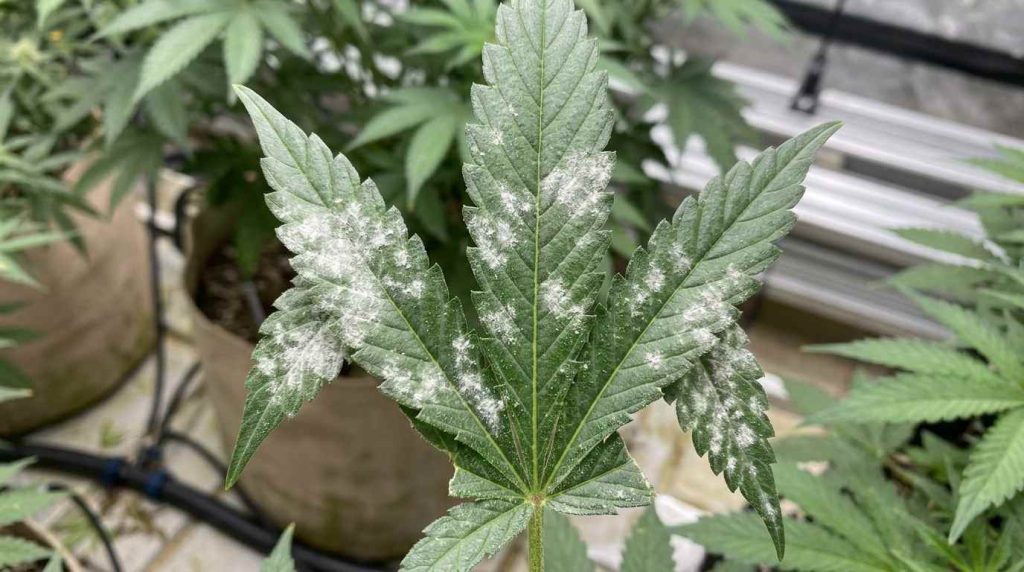
Powdery mildew is a fungal disease recognized by white, powder-like patches that usually develop on leaf surfaces and can spread to petioles and flower bracts. As colonies expand, larger areas of foliage may become covered.
The white appearance comes from fungal growth and spores on the plant surface rather than feeding damage from an insect. Cannabis and hemp can be affected by several powdery mildew fungi, including Golovinomyces species.
Grower tip: Don't confuse powdery mildew with spider mite webbing or dried residue. Powdery mildew forms distinct powdery colonies across plant tissue.
Botrytis and Bud Rot
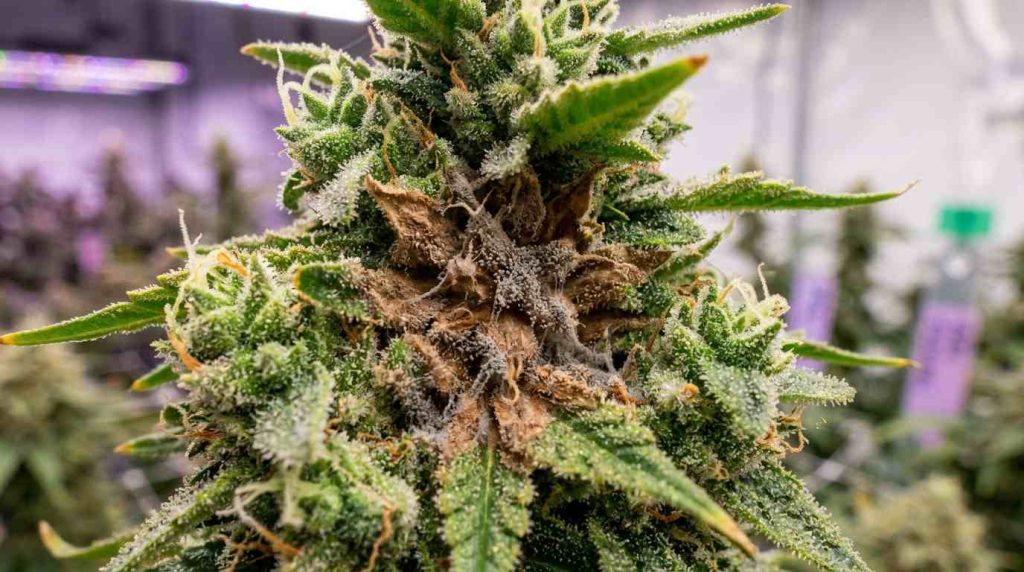
Botrytis and Bud Rot, commonly called gray mould or bud rot, primarily affects cannabis flowers. Early signs can include localized browning and dying flower tissue before the decay progresses deeper into the bud. Gray fungal growth may become visible as the infection develops.
Dense flowers and humid conditions can create favorable conditions for Botrytis, making flowering plants particularly vulnerable. Importantly, Botrytis is a separate disease from powdery mildew; one does not develop into the other.
Fusarium
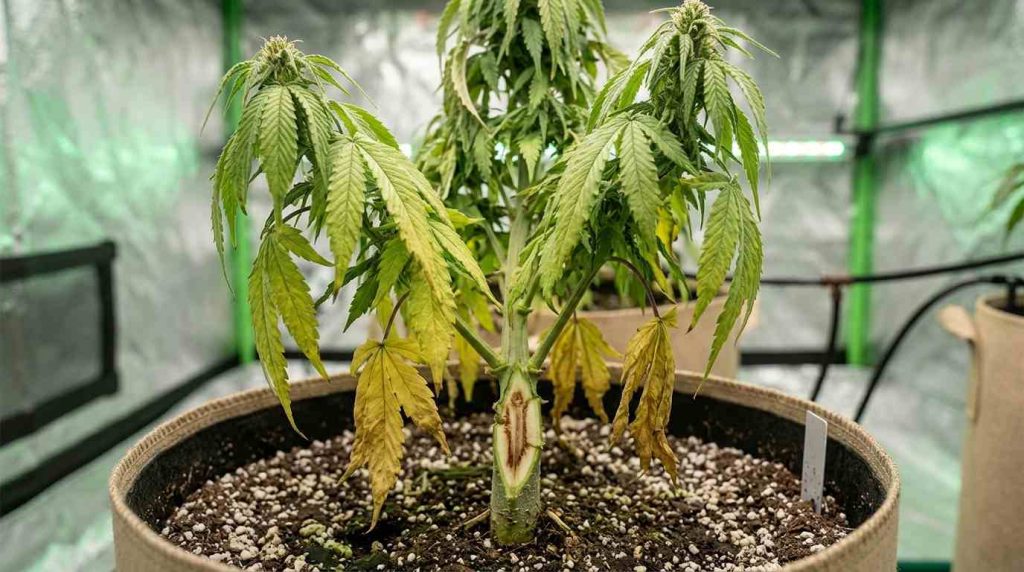
Fusarium includes soilborne fungi capable of causing wilt and root or stem disease in cannabis. Infection commonly begins through the roots and can interfere with the vascular tissue responsible for moving water through the plant.
Possible signs include lower-leaf yellowing, stunted growth, wilting, and progressive browning. A useful diagnostic clue for Fusarium wilt is brown or dark discolouration inside the vascular tissue of the lower stem or upper taproot.
Wilting alone is not enough to confirm Fusarium because watering problems and other root diseases can produce similar symptoms.
Root Rot
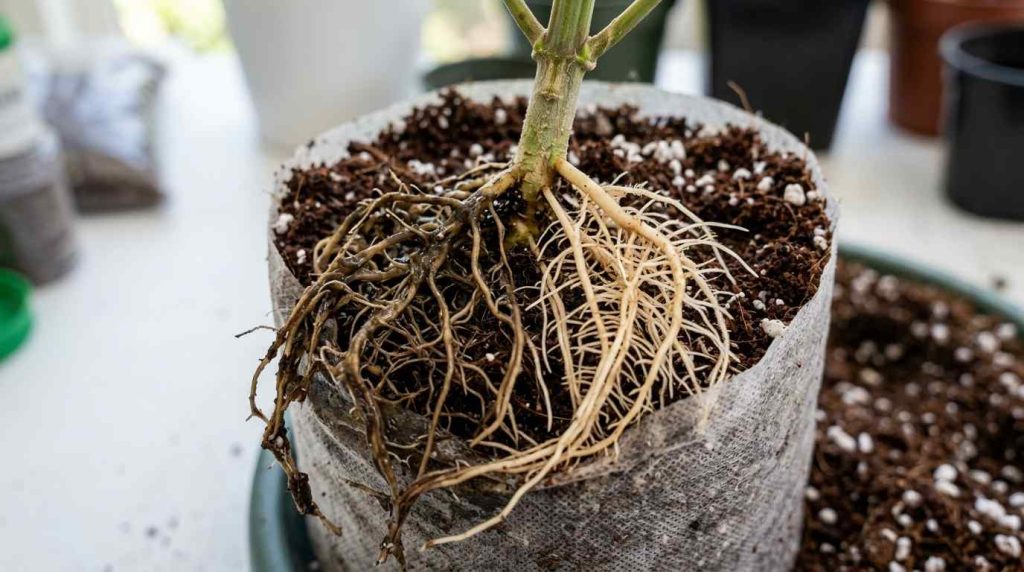
Root rot is a broad term rather than one single cannabis disease. Root and crown problems can involve pathogens such as Pythium, Fusarium, Phytophthora, and Rhizoctonia.
Affected roots may become brown, discoloured, soft, or deteriorated instead of maintaining healthy root structure. Above ground, growers may notice slowed development, yellowing, wilting, or poor overall plant performance.
Because these symptoms can resemble overwatering or nutrient problems, examining the roots and growing conditions is essential before diagnosing root rot.
Conclusion
Early identification makes cannabis pests and diseases easier to manage. Inspect leaves, stems, new growth, flowers, and the root zone regularly for insects, webbing, discolouration, mould, unusual damage, or changes in growth.
Do not diagnose a problem from one symptom alone. Yellow leaves, spots, curling, and slow growth may result from pests, disease, nutrient problems, or environmental stress. Look for physical evidence and consider where symptoms appear before deciding what is affecting the plant.
Clean growing areas, stable environmental conditions, and routine monitoring can reduce the risk of common cannabis pests and infections. When you identify a specific problem, consult a dedicated guide for accurate management information.
Frequently Asked Questions About Cannabis Pests and Diseases
What Are the Most Common Pests on Cannabis Plants?
Some of the most common cannabis pests include spider mites, thrips, aphids, fungus gnats, broad mites, hemp russet mites, whiteflies, caterpillars, scale insects, mealybugs, leaf miners, slugs, and snails. Indoor and outdoor growers may encounter different pests depending on the growing environment.
How Can I Tell if My Cannabis Plant Has Pests?
Inspect both sides of the leaves, stems, new growth, flowers, and growing medium. Look for insects, eggs, webbing, sticky honeydew, droppings, holes, stippling, silver streaks, or distorted growth. A loupe or hand lens can help confirm very small cannabis plant pests, while sticky traps can reveal flying insects.
What Are the First Signs of Cannabis Pests?
Early signs depend on the pest but commonly include small spots on leaves, unusual streaking, curling, damaged new growth, holes, sticky residue, or small insects around the plant. Changes that appear irregularly across individual leaves or branches deserve closer inspection.
How Can I Tell Pest Damage From a Nutrient Deficiency?
Pest damage is often irregular and accompanied by physical evidence such as insects, eggs, webbing, droppings, honeydew, or feeding marks. Nutrient deficiencies are more likely to follow recognizable patterns across particular areas of the plant. Inspect damaged foliage carefully before changing the feeding program.
How Can I Prevent Cannabis Pests and Diseases?
Prevention starts with good grow-room hygiene and regular plant inspections. Keep tools and growing areas clean, inspect new plants before introducing them to the garden, avoid consistently wet growing media, and maintain appropriate temperature, humidity, and airflow. Early detection is particularly important because small pest or disease problems are easier to contain before they spread throughout the garden.


