




Gorilla Cookies Cannabis is a sativa-dominant hybrid known for combining high THC potential, heavy resin production and a rich mix of earthy, spicy and slightly sweet flavors. Bred from Gorilla Glue #4 and Girl Scout Cookies, it brings together two well-known genetic lines with a reputation for dense flowers, strong branching and bold terpene profiles.
For growers, Gorilla Cookies is appealing because it can produce well without becoming overly difficult to manage. Plants usually stay within a medium height range, respond well to LST, topping and SCROG, and flower in around 8–10 weeks. In this Gorilla Cookies strain review, you will learn about its genetics, THC levels, terpenes, flavor, effects and, most importantly, how to grow Gorilla Cookies successfully indoors or outdoors.
Key Takeaways
- Gorilla Cookies Cannabis is a sativa-dominant hybrid bred from Gorilla Glue #4 and Girl Scout Cookies genetics.
- THC can reach up to 24%, while CBD typically remains below 1%, placing it firmly in the high-potency range.
- The flavor profile is earthy, spicy and nutty, with pine and lighter sweet notes supported by terpenes such as caryophyllene, limonene and pinene.
- Gorilla Cookies is relatively easy to grow and responds well to LST, topping and SCROG because of its productive lateral branching.
- Plants usually flower in 8–10 weeks and can reach around 100–180 cm, with indoor yield potential of 600+ g/m² under suitable conditions.
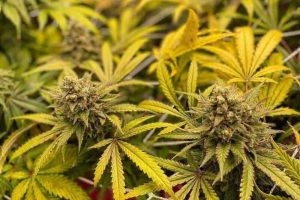
What is Gorilla Cookies Cannabis?
Gorilla Cookies is a sativa-dominant hybrid bred from two well-established cannabis lines. Plants generally stay within a medium height range but produce enough lateral growth to make training worthwhile.
One of its more obvious traits is resin production. As flowering progresses, the buds can develop substantial trichome coverage, something you would expect from a cultivar carrying Gorilla and Cookies genetics.
With THC listed at up to 24%, it also sits comfortably within the broader range of high THC cannabis seeds. That potency is appealing, but it should not overshadow the growing characteristics. Gorilla Cookies is also interesting because its branching makes it relatively easy to shape indoors.
You can find the photoperiod version as Gorilla Cookies Feminized.
Is Gorilla Cookies Indica or Sativa?
The Gorilla Cookies cultivar covered here is a sativa-dominant hybrid.
You can see some of that influence in its vertical growth and branching, but it does not normally develop the extreme height associated with traditional equatorial sativas. This makes it easier to handle in a grow tent.
Other breeders may classify their Gorilla Cookies differently. Some use different Cookies selections or introduce autoflowering genetics, so I would not apply one indica-to-sativa ratio to every plant carrying the name.
If you specifically prefer plants with more upward growth and open branching, you can also compare it with other sativa cannabis strains.

Gorilla Cookies Genetics and Origins
Understanding the parent plants helps explain why Gorilla Cookies develops the way it does.
What Are the Parent Strains of Gorilla Cookies?
The version reviewed here is bred from Gorilla Glue #4 × Girl Scout Cookies.
Gorilla Glue #4 Feminized contributes the Gorilla side of the cross. GG4 is associated with heavy trichome production, pungent aromas and substantial branching.
Girl Scout Cookies Feminized contributes the Cookies influence, bringing sweeter and spicier aromatic traits alongside dense flower development.
This pairing also has some chemical support behind the family resemblance. A published study examining terpene chemotypes found Gorilla Glue #4 and several Cookies cultivars, including Girl Scout Cookies and Thin Mints, within a β-caryophyllene-dominant group. The study also found differences between the Gorilla and Cookies samples, showing why related genetics can still produce distinct terpene profiles (Mudge et al., 2019).
Gorilla Cookies also fits naturally within the wider selection of Cookies seeds.
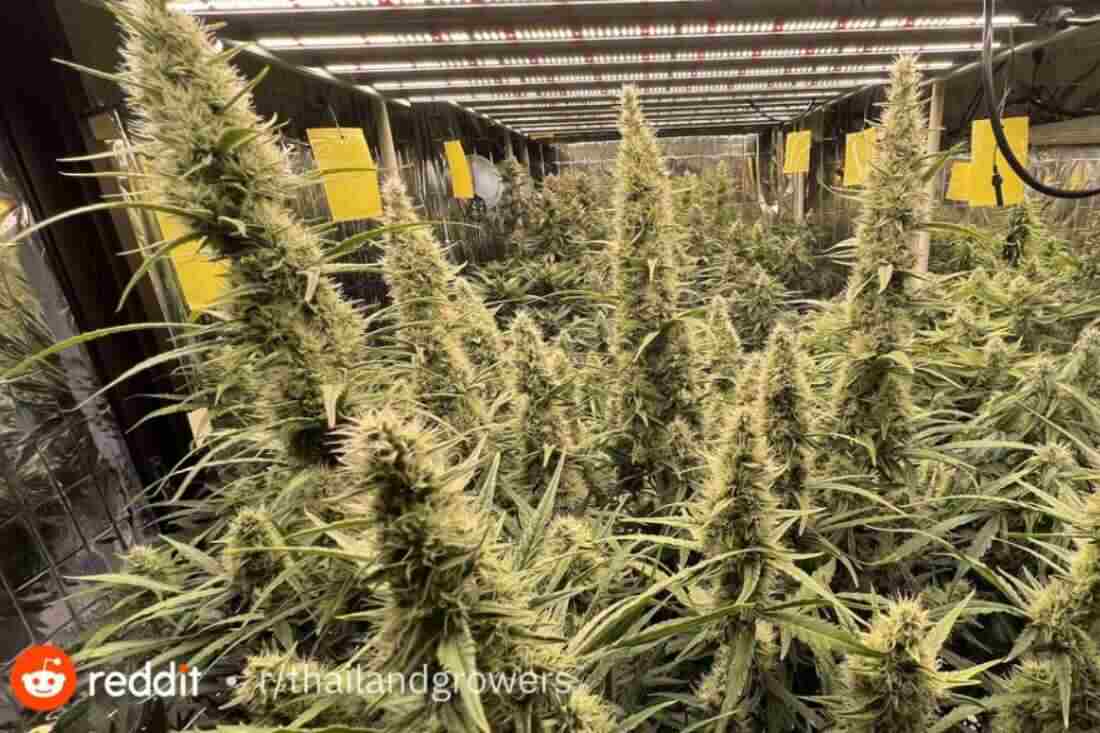
Gorilla Cookies THC, Terpenes, Flavor and Effects
Gorilla Cookies is a high-THC strain with a terpene profile that combines earthy, spicy and nutty notes with touches of pine and sweetness. The Gorilla side of its genetics brings much of the heavier, pungent character, while the Cookies influence adds a softer sweet and spiced edge.
How Strong Is Gorilla Cookies?
Gorilla Cookies can produce up to 24% THC, while CBD typically remains below 1%. That puts it firmly on the stronger side and means new or occasional consumers may want to approach it carefully.
The important word here is up to. THC content is not fixed simply because two plants share the same genetics. Light intensity, nutrition, environmental conditions, harvest timing and phenotype can all affect cannabinoid production.
Even flowers taken from different plants in the same crop may test differently. I would therefore use 24% as a guide to the strain's potential rather than expecting every harvest to reach that figure.
What Does Gorilla Cookies Smell and Taste Like?
Gorilla Cookies has a fairly complex aroma. It is not as dessert-heavy as the Cookies name might suggest. Instead, the first impression tends to lean toward earth, spice and nuts, followed by fresher pine and lightly sweet notes.
The main terpenes associated with this cultivar are:
- Caryophyllene – peppery, woody and spicy
- Limonene – citrusy and slightly sharp
- Pinene – fresh, herbal and pine-like
Together, these terpenes help explain why Gorilla Cookies can smell earthy and pungent while still carrying brighter notes underneath.
There is also some useful research behind the connection. Published analysis of commercial cannabis has found both Gorilla Glue and Girl Scout Cookies samples containing substantial levels of β-caryophyllene, although their complete terpene profiles were different (Booth et al., 2020).
In practice, you should still expect some variation between plants. One phenotype may lean heavily toward spice and earth, while another can bring out more pine, citrus or sweetness.
What Are the Effects of Gorilla Cookies?
Gorilla Cookies is commonly described as starting with a more upbeat, cerebral effect before becoming increasingly relaxing.
At lower amounts, you may notice the brighter side first, with users often reporting an uplifted or euphoric feeling. As the amount increases, the heavier physical side can become more noticeable, particularly with flowers testing toward the upper end of the THC range.
That combination gives Gorilla Cookies a fairly balanced reputation despite its sativa-dominant classification.
Effects vary considerably from person to person, though. Your tolerance, the amount consumed, cannabinoid content and individual response all matter, so terms such as uplifting, euphoric and relaxing should be treated as commonly reported experiences rather than guaranteed effects.
How to Grow Gorilla Cookies Cannabis
Gorilla Cookies is relatively straightforward to grow, but you will get better results if you manage its shape early rather than letting the plant grow naturally until flowering.
I would focus on three things from the start: keeping the canopy open, controlling height and giving each main branch enough light. Gorilla Cookies develops useful lateral growth, so it responds well to training and can fill an indoor space efficiently without needing a long vegetative period.
Step 1: Give the Plant Enough Space
Gorilla Cookies usually reaches around 100–180 cm, depending on how long you keep it in vegetative growth and how aggressively you train it.
Indoors, avoid filling your available height before switching to flowering. The plant can continue stretching during the first few weeks of bloom, so leave enough room between the canopy and your lights.
I prefer to encourage horizontal growth early. Spreading branches outward gives more bud sites direct access to light and reduces the chance of one dominant main cola shading the rest of the plant.
Step 2: Build an Even Canopy During Vegetative Growth
Once the plant has established several healthy nodes, start shaping it.
LST is usually the easiest method. Bend the taller branches outward and secure them gently so shorter shoots can grow toward the same height. This creates a flatter canopy and exposes more flowering sites.
You can also use topping if the plant is growing strongly. Removing the main tip encourages several leaders rather than one central stem.
For wider indoor setups, SCROG works particularly well because Gorilla Cookies produces enough side branching to fill a screen effectively.
If you are new to this technique, the low-stress training guide explains how to bend and secure branches without causing unnecessary damage.
Step 3: Set Up the Right Indoor Environment
Gorilla Cookies can be grown indoors or outdoors, but indoor growers have more control over the conditions that matter most during flowering.
Focus on:
- Good air exchange
- Constant airflow through the canopy
- Stable temperature
- Controlled humidity
- Even light coverage
- Enough space between plants
As flowers become denser, moisture can become trapped between buds, leaves and crowded branches. This is where poor airflow can lead to trouble.
Keep the center of the plant reasonably open and avoid allowing weak lower shoots to build up beneath the main canopy. If humidity becomes difficult to control, our guide to identifying mold on cannabis explains the early warning signs to look for.
Step 4: Prepare Outdoor Plants for the Season
Outdoors, Gorilla Cookies prefers warm, temperate or Mediterranean-style conditions.
Choose a location with:
- Plenty of direct sunlight
- Free-moving air around the plant
- Well-draining soil or growing media
- Enough space for branches to spread
Avoid planting in low, sheltered areas where damp air tends to sit around the foliage.
Outdoor harvest usually falls around October, although your exact timing will depend on latitude, weather and phenotype. Rather than harvesting by the calendar alone, watch flower development and trichome maturity.
Step 5: Manage the Flowering Stretch
Once you switch a photoperiod Gorilla Cookies plant to a flowering light cycle, expect continued vertical growth during the early part of bloom.
This is why I like to complete most of the main training beforehand.
During the first couple of flowering weeks:
- Keep spreading branches where necessary
- Tuck shoots back under a SCROG net
- Remove weak growth that receives very little light
- Keep the canopy level
After that, avoid repeatedly bending or reshaping major branches unless there is a clear reason.
The cannabis flowering stage guide explains how stretch, bud formation and ripening normally progress during bloom.
Step 6: Support the Flowers as They Gain Weight
Gorilla Cookies flowers for approximately 8–10 weeks.
As the buds become heavier, some branches may start to lean. Use stakes, plant ties or a support net if needed rather than waiting until branches are already bending under the weight.
This also helps maintain spacing between flowering sites and keeps air moving through the plant.
Step 7: Keep Humidity Under Control Late in Flowering
Late flowering is where I would pay the most attention to airflow and moisture.
Dense buds can hold humidity, particularly if the canopy has been allowed to become overcrowded. Keep air moving above and below the canopy and remove only the leaves or weak shoots that genuinely block airflow.
Do not over-defoliate simply to make the plant look tidy. Healthy leaves still support photosynthesis, so the aim is better airflow rather than stripping the plant bare.
Step 8: Treat Yield Figures as a Target, Not a Promise
Indoor Gorilla Cookies can produce 600+ g/m² under good conditions, but actual yield depends on your setup.
The biggest influences are:
- Light intensity
- Root space
- Plant health
- Training
- Environmental stability
- Number of flowering sites
- Length of vegetative growth
Instead of chasing a specific gram figure, focus on building a healthy canopy with evenly lit bud sites. If the plant has good structure, sufficient light and stable conditions, yield usually takes care of itself.
Step 9: Control Odor Before It Becomes a Problem
Gorilla Cookies can become noticeably pungent during flowering.
If you are growing indoors and discretion matters, set up odor control before bloom rather than waiting until the smell becomes strong. A properly sized carbon filter and extractor fan are usually the most practical solution.
By the middle and later stages of flowering, the combination of earthy, spicy and pine-like aromas can become quite noticeable.
Overall, Gorilla Cookies is not a difficult plant to manage. The main job is to shape it early, control stretch and maintain good airflow as the flowers become denser. Do that well and the plant is much easier to handle from vegetative growth through harvest.
Is Gorilla Cookies Worth Growing?
Gorilla Cookies has plenty going for it if you want a potent Gorilla-and-Cookies hybrid without dealing with an unusually difficult plant.
Its branching makes training worthwhile, its medium height suits many indoor setups and its flowering period is manageable. On the other hand, dense flowers mean airflow and humidity deserve attention, while the aroma can become difficult to hide indoors.
For me, the attraction is the balance. You get high THC potential and resin-heavy flowers without needing an advanced cultivation setup, provided you manage the canopy rather than letting it become overcrowded.
Conclusion
Gorilla Cookies is a strong choice for growers who want a modern hybrid with high THC potential, heavy resin production and a manageable growth pattern. Its Gorilla Glue #4 and Girl Scout Cookies genetics give it a useful mix of branching, dense flowers and earthy, spicy flavors with some sweeter notes underneath.
From a growing point of view, the strain responds well to LST, topping and SCROG, while its medium height makes it suitable for many indoor setups. The main areas to watch are stretch, humidity, airflow and branch support during flowering.
It is not completely hands-off, but it is approachable enough for less experienced growers while still offering plenty for more advanced growers to work with.
Frequently Asked Questions About Gorilla Cookies Cannabis
Is Gorilla Cookies indica or sativa?
The Gorilla Cookies cultivar covered here is a sativa-dominant hybrid. However, other breeders may offer versions with slightly different genetic ratios, so the exact indica-to-sativa balance can vary between seed lines.
How strong is Gorilla Cookies?
Gorilla Cookies can reach up to 24% THC, with CBD typically below 1%. Actual potency can vary depending on phenotype, growing conditions, harvest timing and post-harvest handling.
How tall does Gorilla Cookies grow?
Gorilla Cookies usually reaches around 100–180 cm. Indoor growers can keep plants more compact with LST, topping or SCROG, while outdoor plants may reach the upper end of that range when given more root space and a longer vegetative period.
How long does Gorilla Cookies take to flower?
The photoperiod version of Gorilla Cookies normally flowers in around 8–10 weeks. Outdoor plants are generally ready around October, although local climate and seasonal conditions can affect the final harvest date.
Is Gorilla Cookies easy to grow?
Gorilla Cookies is considered relatively easy to grow. It responds well to training and is not excessively tall, but growers should still manage airflow, humidity and canopy density carefully as the buds become heavier and more compact during flowering.
References
Mudge, E. M., Murch, S. J. & Brown, P. N. Chemometric Analysis of Cannabinoids and Terpenes in Cannabis. Research into cannabis terpene chemotypes found Girl Scout Cookies, Thin Mints and Gorilla Glue #4 within a β-caryophyllene-dominant group while identifying chemical differences between the Cookies and Gorilla groups.
https://pmc.ncbi.nlm.nih.gov/articles/PMC5436332/
Booth, J. K. et al. Terpenes/Terpenoids in Cannabis: Are They Important? Review of cannabis terpene chemistry including data showing β-caryophyllene as a major terpene reported in Gorilla Glue and Girl Scout Cookies samples.
https://pmc.ncbi.nlm.nih.gov/articles/PMC8489319/
Pavlovic, R. et al. A Comprehensive Phytochemical Analysis of Terpenes, Polyphenols and Cannabinoids, and Micromorphological Characterization of Commercial Cannabis Varieties. Chemical analysis found Gorilla Glue material rich in (E)-caryophyllene while also demonstrating variation between cannabis samples and analytical methods.
https://pmc.ncbi.nlm.nih.gov/articles/PMC9003298/


