




Autoflowers have a limited amount of time to build healthy roots, stems, and foliage before they move into flowering, so a slowdown in growth can have a noticeable effect on the final plant. A stunted autoflower may remain unusually small, develop new leaves slowly, or struggle to build the structure needed for a productive flowering stage. Problems can begin with autoflower seedlings or appear later due to watering, root health, lighting, temperature, nutrients, pH, or training stress. Knowing what healthy growth should look like makes it much easier to spot stunting early, identify the likely cause, and give the plant the best chance to recover.
Key Takeaways
- Slow or stopped growth is the main sign of stunting. Look for little change in plant height, undersized new leaves, short internodal spacing, or noticeably slower development.
- Autoflower seedlings are especially sensitive to early setbacks. Watering problems, poor root conditions, and environmental stress during the first few weeks can restrict growth before the plant has established itself.
- Check the root zone first when growth suddenly slows. Overwatering, underwatering, poor drainage, and restricted roots can all interfere with healthy development above the growing medium.
- Stable indoor conditions help prevent unnecessary stress. Consistent lighting, temperature, humidity, feeding, and pH give autoflower plants a better environment for steady growth.
- Early action matters with autoflowers. Because their life cycle cannot simply be extended to replace lost vegetative time, identifying and correcting the cause of stunting as soon as possible can reduce its impact on plant size and yield.
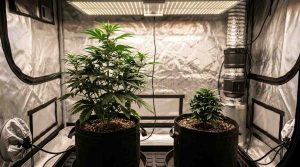
What is a stunted autoflower?
A stunted autoflower means that for some reason, your plants cease growth and appear to grow extremely slowly during vegetation and, in a worst-case scenario, during bloom. It does not matter if you have the best grow light in the world and plenty of nutrients available to the plants; stunted growth results in small plants and low yields. Below are different possible causes of stunted growth with autoflowering plants.
- Overwatering, underwatering
- Root problems
- Lighting issues
- Temperature or environmental stress
- Nutrient deficiencies, nutrient burn or pH issues
- Training mistakes and inducing stress
- Poor genetics and low resistance levels
Stunted plants can grow back once the cause of the issue has been diagnosed; however, it can cost you time during the recovery process. As time is so important when growing autoflowering cannabis plants, losing a week of much-needed growth and development can be a major issue. Let’s find out how to tell if your auto has stunted and the different signs and symptoms for each stage of growth.
How to tell if your autoflower has stunted
Without a lot of experience, it can be challenging to know if you have a growth problem and your autos are stunted. One day your plants are growing just fine, and another day, they seem different and don’t seem to be growing. Autoflowering cannabis plants can experience stunted growth during the seedling, vegetative, and flowering stages as explained below.
| Growth stage | Signs of stunted growth | What you may notice |
| Autoflower seedlings | Very slow new growth, thin stems, delayed true leaves | Seedlings stay unusually short and foliage remains small or undeveloped |
| Vegetative stage | Slow new growth, little increase in height, short internodal spacing | The plant stops building the size and structure expected before flowering |
| Flowering stage | Slower flower development, discoloured or curling leaves | Buds remain smaller and less compact, with reduced overall production |
Stunted growth in the seedling stage
This can occur much more easily than you think, and the signs to look out for are no new vertical growth or very slow growth. The foliage may appear discoloured, and leaves may appear to curl or twist. The stem will feel weak, hollow and lack vigour. Your seedlings can bounce back under the right conditions and produce a good amount of vegetative growth.
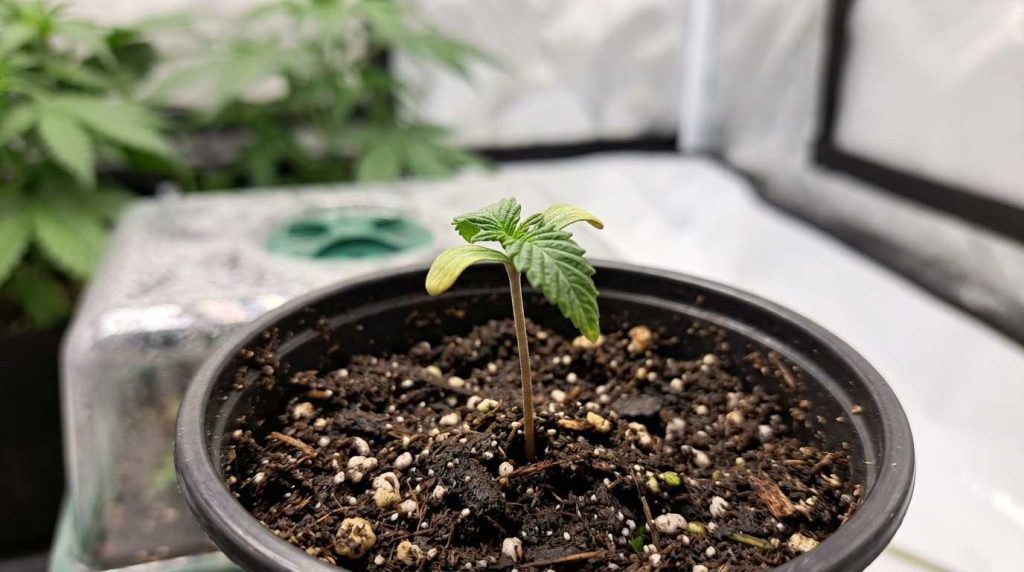
- Seedlings will have thin and weak stems
- The first true leaves may take longer to develop
- Seedlings may grow very short
- The foliage is small and seems undeveloped
Stunted growth in the vegetative stage
Stunted growth during the vegetative period with autos can be devastating, and commonly caused by repotting. This is when you need to develop a bushy plant with 5-6 internodes. Plants will appear to produce new growth at a much slower rate; plants may appear short and produce short internodal spacing.
- New top growth seems slow
- Plant height does not appear to increase
- Internodal spacing is short
Stunted growth in the flowering stage
Autos can experience many issues during the flowering stage, and one of the worst ones is stunted growth. Flowering cannabis plants can become stunted and develop much smaller buds, resulting in a significantly lower yield. Leaves can appear discoloured and may wilt or curl.
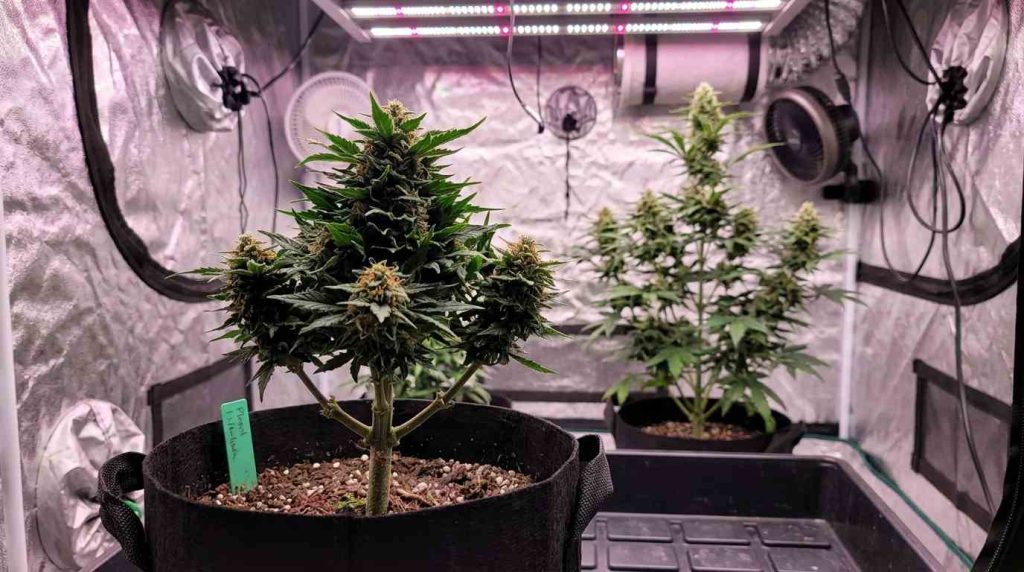
- Resin production will be less
- The buds will be less compact
- The yield will be negatively affected
Common causes of stunted growth in autoflowers
There will be many different reasons why your autos have decided to stop growing and produce new foliage or flowers at a slow rate. The growing environment will usually be the deciding factor.
Below are the common causes of stunted autos, ranging from watering, repotting and root-related issues, lighting, temperature and the impact of environmental stress, nutrient and pH management, training recovery and how poor genetics may be responsible.
| Possible cause | Signs to look for | Area to investigate |
| Overwatering | Drooping leaves, yellowing older leaves, heavy or soggy soil | Watering frequency and drainage |
| Underwatering | Dry or brittle leaves, pale foliage, very dry soil | Water volume and frequency |
| Root problems | Brown or yellow roots, soft root fibers, unpleasant odor or slime | Root-zone conditions |
| Lighting problems | Bleached tops, excessive heat or abnormal stretching | Light intensity, distance and heat |
| Temperature or humidity stress | Wilting, drooping or stressed growth | Grow-room temperature and humidity |
| Nutrient or pH problems | Yellowing, spots, distorted growth or burnt leaf tips | Feeding strength and root-zone pH |
| Training stress | Growth slows following heavy or late training | Timing and severity of training |
Re-potting autos
Anytime I ever grew autoflowering cannabis plants in the past, I made sure that I germinated directly into the chosen growing medium. Then I let the plant fill the pot. Autos do not seem to react well to being repotted. Unlike autos that thrive whenever they get more space and fresh soil to grow into, autos actually slow down growth.
I have seen plants before this happened, and can testify that repotting autos at any stage can be problematic and cause growth to cease to a minimum for a week or so. Instead, get into the habit of planting the seeds and letting your autos fill as many of the pots as possible and develop that all-important root zone which determines height, stature and size.
- 30-50L fabric felt pots are advised when growing 1-2 large-sized autos
- 7.5L pots work well for SOG setups that involve growing 9 or more plants
Overwatering, underwatering or root problems
Watering-related issues are most often the primary cause of nutrient deficiencies or stunted growth with autos. Underwatering or overwatering can result in root problems that ultimately lead to stunted growth and minimal flower development.
| Sign | Overwatered autoflower | Underwatered autoflower |
| Leaves | Drooping or clawed | Wilting, dry or brittle |
| Leaf colour | Older leaves may begin yellowing | Leaves may become pale or yellow |
| Leaf texture | Generally soft and drooping | Thin, weak, dry or brittle |
| Growing medium | Soggy and heavy | Dry and dusty |
Signs of overwatered autoflowering cannabis plants
- Wilting and clawed fan leaves
- Leaves droop downwards
- Older leaves begin yellowing
- The soil is soggy and heavy
Signs of underwatered autoflowering cannabis plants
- Wilting and clawed fan leaves
- Thin and weak leaf texture
- Brittle and dry leaves
- Pale yellowing leaves
- The soil is dry and dusty
Signs of root problems
- Roots have a brown or yellow colour
- The root fibres are brittle, soft and break easily
- There is a rotting egg odour
- A slimy layer has formed on the roots
Lighting, temperature or environmental stress
Keeping your growing environment in the optimal zone for autoflowering plants to thrive is a major part of any successful indoor harvest. This covers lighting, temperature, humidity and limiting environmental stress.
Signs of lighting issues
- The grow lights are creating too much heat, raising temperatures
- The grow light is too close to the top of the canopy
- The plants are suffering from white tops due to light burn
- The grow light is too far away, causing plants to stretch
Signs of temperature and humidity-related issues
- Plants are suffering from heat stress and begin to wilt and droop
- Cold temperatures cause plants to stretch and become tall
- High humidity during flowering can cause buds to mould
- Low humidity during the first 5 weeks will cause dry plants
Nutrient deficiencies, nutrient burn or pH issues
How and when you feed your autos will play a major role in how well they grow and develop into frosty and beautiful plants. Nutrient deficiencies, nutrient burn, and pH-related issues causing nutrient lockout will cause major setbacks and result in temporary stunted growth.
Signs of nutrient deficiencies
- Yellowing leaves
- Red/purple stems
- Pale leaves
- Overly dark green
- Brown rusty spots
- Yellowing between the leaf veins
- Dry and crispy leaves
Signs of nutrient burn
- Brown crispy leaflet tips
- Thin and dry leaf surface
- Dark and shiny foliage
Signs of pH-related issues
- Yellowing leaves
- Brown spot
- Distorted leaf growth
Training mistakes
When you are planning to train your autoflowering cannabis plants, you have to always take into consideration that autos have a short time frame to recover. Once an auto surpasses days 30-35, it will begin to stretch and produce pre-flowers. Being too heavy-handed when training, or simply missing the optimal window and training too late, can cause autos to become stunted.
- Always give your autos plenty of recovery time after training
- LST is the most effective way to increase yields without causing stress
- Super cropping too late will cause flowering plants to become stunted
- Avoid topping and FIMming after day 30
Less commonly, poor genetics
On the rare occasion that you have your growing environment perfectly set up, your pH and EC levels are spot on, the light intensity and distance are optimal, but your autos are stunted. Poor breeding practices and genetics are hardwired to produce low-quality crops that are usually dwarf-sized and not even worth the time or energy!
Can stunted autoflowers recover?
When you notice that your autos have become stunted and new foliage or bud development seems very slow, the next thing you need to do is try to save the auto. Nobody wants to take the time and energy to grow a miniature plant that did not get the chance to fully develop to its true potential.
Below are the best practices to bring an auto back after stunting, times when recovery may be out of the question and what it means for your plant and overall yield.
What are the best practices to save a stunted autoflower?
If I were to try to save a stunted autoflowering cannabis plant, the first thing I would need to do is to diagnose the root cause. Is it because of nutrients, watering, pH, temperature, training mistakes or a root issue?
Once I was able to prevent the issue from happening again, I would allow the auto to grow back; however, I would make a judgment call to decide if the final yield will be worth it, or if I should grow new seeds out…
When does recovering a stunted autoflower become unlikely?
Again, based on my experience, you have to make an executive decision. In some cases the plants may be big enough where the yield, whilst lower than expected, will still be substantial. Plants that have ceased growth at 40-60 cm high may not be worth keeping, and may be a waste of soil, nutrients, and electricity.
What will that mean for my plant?
Unfortunately, stunted growth is never a good thing. When every week is a chance for your plants to grow and develop into their full potential, stunted growth can pull the handbrake on your crop. Below highlights what stunted growth means for your plant.
- Plant height may become stunted and not exceed 60cm
- The buds will be smaller and less developed
- Yields will be much lower
- The stunted plant is now taking up space and using light
- You need to decide if the plant is worth keeping
How to prevent autoflowers from stunting?
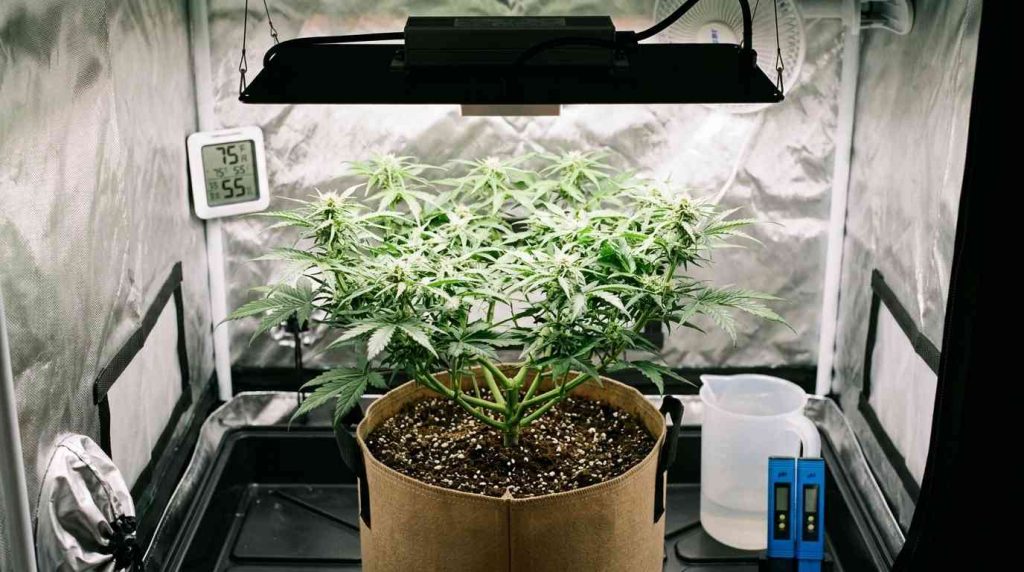
Preventing autos from becoming stunted and underperforming helps reduce the risk of ending up with short, dwarf-sized plants and lower yields. The best approach is to create healthy growing conditions from the start and deal with potential problems before they slow development. Follow the steps below to prevent autoflowers from stunting when growing indoors.
| If you notice... | Check first | Then investigate |
| Growth suddenly slows | Watering and root-zone condition | Temperature, lighting, and nutrients |
| Leaves droop | Moisture level of the growing medium | Heat and root health |
| Leaf tips become brown | Feeding strength | pH and watering |
| Plants stretch excessively | Grow-light position | Temperature |
| New growth becomes distorted | Root-zone pH and feeding | Environmental stress |
| Growth slows after training | Timing and severity of training | Allow the plant time to recover |
Step 1: Get your watering routine right
Correctly watering your autoflowering plants and finding the right balance between drying times and feeding will promote healthy growth and development while keeping the root zone well-oxygenated.
I recommend using a watering jug so you can measure the same amount each time and a digital pH pen to check pH levels. I find that lifting the pots is an effective way to judge when to water. Once they feel very light and the soil is close to dry, slowly resaturate the growing medium.
Avoid both overwatering and underwatering. Overwatering can be prevented by waiting until the pot feels light before watering again, while using a consistent volume of water can help prevent plants from becoming too dry.
Step 2: Prevent root problems
Healthy roots are essential for healthy growth above the soil. If root problems develop, it will not be long before the leaves, stems, and overall growth of the plant begin to show signs of stress.
If you notice roots becoming brown or yellow and feeling thin and mushy, then you have a pathogen. Root problems can be easily fixed in hydroponic systems using 10% hydrogen peroxide.
When growing in soil, avoid overwatering and make sure the growing medium provides excellent drainage and can dry out quickly between waterings. Small pots can also cause plants to become root-bound and stunted, so avoid unnecessarily restricting the root zone. Instead of repotting autos later, plant them inside a large pot from the beginning.
Step 3: Set your grow light correctly
Lighting problems can quickly place autoflowers under stress. If you do not have a PAR meter and are unsure how far away to position your grow light, a good rule is to keep the lights around 18–24 inches above the top of the canopy.
You can also place the back of your hand underneath the light to determine whether it feels uncomfortably hot or cool.
Watch the upper parts of the plant carefully. Light stress can cause the tops of the colas to bleach albino white and is one primary cause of stunted growth during flowering. If you notice bleached tops or early signs of light stress, raise the grow light.
Step 4: Control temperature and environmental stress
Maintaining a stable growing environment will help prevent unnecessary stress. High temperatures above 28 degrees Celsius can be harmful to cannabis plants and cause heat stress and overtranspiration.
Environmental problems such as wind burn, light burn, heat stress, and cold temperatures can all stunt autoflowers. As a general preventative measure, do not allow temperatures to exceed 26 degrees Celsius or fall below 18 degrees Celsius.
I recommend installing a digital hygrometer inside the grow room so you can monitor temperature and humidity at any time and respond quickly when conditions move outside your intended range.
Step 5: Manage nutrients and pH carefully
Nutrient deficiencies, nutrient toxicity, nutrient burn, and pH-related problems can all interfere with healthy autoflower development.
These issues can be managed using a pH pen and an EC meter. If you want to stay on the safe side, follow the nutrient manufacturer's recommended ratios rather than assuming that feeding more will produce better results.
Giving your plants more nutrients than they need will do more harm than good and can result in stunted growth. Keep the pH within the optimal range for nutrient uptake and availability, and when growing hydroponically, use an EC meter to check that you are not over-fertilising.
Step 6: Time your training carefully
When training autoflowers, always consider how much time the plant has available to recover. I would advise planning any training between weeks 3–4 and becoming more cautious once the plant passes day 30.
LST autoflowers can actually be applied at any time without negative side effects, while super cropping and FIMming carry a higher risk and should be approached carefully.
If you want to train your plants to increase yields but are concerned about potentially stunting them, opt for the simple but highly effective tying-down method known as low-stress training (LST). If growth slows following training, consider the timing and severity of the technique and allow the plant time to recover before applying additional stress.
Step 7: Check your autoflowers regularly
Preventing stunting is much easier when problems are identified early. Regularly check watering, root health, grow-light position, temperature, humidity, nutrient strength, and pH while also paying attention to changes in new growth.
If growth suddenly slows, leaves begin to droop, leaf tips turn brown, plants stretch excessively, or new growth becomes distorted, use those symptoms to determine which part of the growing environment needs attention first. Correcting potential problems early gives your autoflowers the best opportunity to continue developing without unnecessary setbacks.
Conclusion
A stunted autoflower is usually a sign that something in the growing environment is limiting healthy development. Watering problems, root stress, lighting, temperature, nutrient issues, pH problems, and poorly timed training can all slow growth, so the first step is to identify the most likely cause rather than changing several things at once.
Because autoflowers move through their life cycle quickly, catching problems early matters. Regularly checking new growth, soil moisture, root-zone conditions, temperature, humidity, lighting, and feeding gives you a better chance of correcting small issues before they become major setbacks.
The key to preventing stunting is consistency. Give your autoflowers enough root space, avoid extremes in watering and feeding, maintain a stable indoor environment, and be cautious when applying training. When the plant has the right conditions from the start, it has more opportunity to develop steadily through the seedling, vegetative, and flowering stages.
Frequently Asked Questions
How do I know if my autoflower is stunted?
A stunted autoflower will usually show very slow or stopped growth compared with its previous development. You may notice that the plant is not gaining height, new leaves are developing slowly, internodal spacing remains very short, or foliage appears small, pale, twisted, or underdeveloped. The exact signs can vary depending on whether stunting happens during the seedling, vegetative, or flowering stage.
Can a stunted autoflower recover?
Yes, a stunted autoflower can recover if the cause is identified and corrected early enough. The plant may begin producing healthy new growth once problems with watering, lighting, temperature, nutrients, pH, roots, or training have been resolved. However, autoflowers have a limited growing period, so time lost during recovery can still reduce the final size and yield.
What is the most common cause of stunted autoflowers?
Watering and root-zone problems are among the most common causes of stunted growth. Both overwatering and underwatering can interfere with healthy root development and nutrient uptake. If growth slows, check the moisture level of the growing medium first, then look at root health, temperature, lighting, nutrients, and pH before making unnecessary changes.
Will a stunted autoflower still produce buds?
A stunted autoflower can still flower and produce buds, but the final yield may be lower because the plant has had less time and healthy growth available to build its structure. Stunting during the flowering stage can also result in smaller, less developed buds. How much the final harvest is affected will depend on when the problem occurred and how quickly the plant recovered.
Should I train an autoflower that has already been stunted?
If an autoflower is already struggling, it is usually better to allow it to recover before adding more stress. Heavy or poorly timed training can slow growth further, especially once flowering is approaching. If training is still appropriate, low-stress training is generally the gentler option, but the condition, size, and stage of the plant should always be considered first.


