




Nutrient burn in cannabis happens when the root zone contains more fertiliser than a plant can safely use. The earliest warning is usually a small yellow or brown mark at the tip of a leaf, but continued overfeeding can lead to crispy margins, stalled growth, root stress, and weaker flower development.
New growers often make the problem worse by assuming that more nutrients will produce faster growth or larger yields. In practice, cannabis performs best when nutrient strength is matched to the plant's size, growth stage, genetics, and growing medium. Soil, coco coir, and hydroponic systems also hold and deliver nutrients differently, so the same treatment will not work in every grow.
This guide explains how nutrient burn develops, how to distinguish it from similar cannabis problems, and how to correct the root zone without causing unnecessary stress. You will also learn how to adjust feeding in soil, coco, and hydro, monitor EC and pH, and prevent excess nutrients from building up again.
Key Takeaways
- Nutrient burn is usually caused by overfeeding or fertiliser salts accumulating in the root zone.
- Yellow or brown leaf tips are often the first warning, but diagnosis should also consider recent feeding, EC, pH, and symptom progression.
- Mild nutrient burn may only require a weaker feed; flushing is not necessary in every case.
- Soil, coco coir, and hydroponic systems require different methods for correcting excess nutrients.
- Damaged leaves will not heal, so recovery should be judged by healthy new growth and the absence of fresh burnt tips.

What is Nutrient Burn in Cannabis?
Nutrient burn in cannabis occurs when a plant receives more nutrients than it can safely absorb and use. Instead of promoting faster growth, excess fertiliser causes dissolved mineral salts to build up around the roots, making it harder for the plant to take up water and essential nutrients. The first signs usually appear as burnt or yellow leaf tips, but if the problem is left untreated, it can spread throughout the plant and significantly reduce both growth and yields.
Nutrient burn is one of the most common mistakes made by new cannabis growers because it often comes from good intentions. Many assume that feeding more nutrients will produce larger plants and heavier harvests, but cannabis only benefits from nutrients within a specific range. Once that threshold is exceeded, the growing medium becomes increasingly concentrated with salts, placing the root system under stress.
Although nutrient burn can affect cannabis grown in soil, coco coir, or hydroponic systems, the severity and recovery process depend on the growing medium. Plants grown in coco and hydroponics generally respond much faster to changes in nutrient concentration, while soil offers a greater buffer against overfeeding. Understanding what causes nutrient burn is the first step toward correcting the problem before it impacts plant health and flower production.
What Causes Nutrient Burn?
The primary cause of nutrient burn is overfeeding. Applying nutrients at a higher concentration than the plant requires increases the amount of dissolved salts surrounding the roots. As these salts accumulate in the root zone, they can eventually contribute to nutrient lockout, making it difficult for the plant to absorb certain elements even when they're present.
This happens because water naturally moves from areas with a lower concentration of dissolved minerals to areas with a higher concentration. When the root zone becomes overloaded with fertiliser salts, the plant must work harder to pull water into its roots. In severe cases, water movement slows dramatically, causing leaf tips to dry out and develop the characteristic burnt appearance.
Bottled mineral nutrients are the most common cause of nutrient burn because they provide readily available nutrients that plants absorb quickly. Small measuring errors, feeding too frequently, or combining multiple additives can rapidly increase the electrical conductivity (EC) of the nutrient solution beyond what the plant can tolerate. This is especially common during the vegetative and early flowering stages when growers are tempted to accelerate growth with stronger feedings.
Why Nutrient Burn Is Harmful to Cannabis Plants
Nutrient burn affects much more than the appearance of the leaves. As salt concentrations increase, water uptake becomes less efficient, leaving the plant under constant stress. The root system may become damaged over time, reducing its ability to absorb both water and nutrients effectively.
Excess nutrients can also contribute to nutrient lockout, where certain elements become difficult for the plant to absorb despite being present in the growing medium. As deficiencies begin to develop alongside nutrient toxicity, growth slows, new leaves become smaller, and flower production can stall. During flowering, this often results in reduced bud size, lower resin production, and decreased overall yields.
The sooner nutrient burn is identified and corrected, the greater the chance of limiting long-term damage. While burnt leaf tissue will not recover, healthy new growth usually resumes once the root zone returns to a balanced nutrient level.
Which Plants Are Most at Risk?
Any cannabis plant can develop nutrient burn, but some are considerably more susceptible than others. If you're new to growing, starting with autoflower seeds can make it easier to learn proper feeding techniques because they generally stay compact and complete their life cycle quickly. Fast-growing plants can also be vulnerable because growers often increase nutrient strength too aggressively in an attempt to support rapid development.
Plants grown in coco coir and hydroponic systems generally face a higher risk than those grown in soil because nutrients are delivered directly to the roots with little natural buffering. Soil-grown plants tend to tolerate minor feeding mistakes more easily, although nutrient burn can still occur in heavily amended or "hot" soils and when liquid fertilisers are applied too frequently.
Following an aggressive feeding schedule is another common cause of nutrient burn. Feeding at full manufacturer strength from the start, combining multiple nutrient additives, or increasing nutrient concentrations before the plant shows it needs more can quickly overload the root zone.
Grower Tip: Start feeding cannabis plants at around one-quarter to one-half of the manufacturer's recommended strength and increase nutrient levels gradually based on healthy growth, rather than following the maximum dosage on the feeding chart from day one.
How to Identify Nutrient Burn in Cannabis
Identifying nutrient burn early can make the difference between a quick recovery and weeks of slowed growth. While the first symptoms may seem minor, nutrient burn follows a fairly predictable progression if nutrient levels remain too high. Learning how these symptoms develop and where they appear on the plant will help you diagnose the problem before it affects yields.
When inspecting your plants, don't focus on a single damaged leaf. Instead, look for patterns across the canopy, consider when you last increased nutrient strength, and observe whether the symptoms are spreading to healthy new growth.
How Nutrient Burn Develops
Nutrient burn rarely appears overnight. In most cases, the damage develops gradually over several days as excess fertiliser salts accumulate around the roots. Understanding this progression makes it much easier to distinguish nutrient burn from other cannabis problems.
| Stage | What you'll see | What it means |
| Stage 1 – Early warning | Leaves become unusually dark green and the very tips begin turning pale yellow. | The plant is receiving more nutrients than it currently needs. This stage is usually easy to correct. |
| Stage 2 – Developing nutrient burn | Leaf tips become brown and dry, the burn spreads along the margins, and some leaves begin to claw downward. | Excess salts are restricting water uptake, and the plant is becoming stressed. Reduce nutrient levels before the damage worsens. |
| Stage 3 – Severe nutrient burn | Large sections of leaves become crispy, growth slows significantly, sugar leaves may burn, and bud development begins to stall. | The root zone is under significant stress, which can eventually affect cannabis roots if left untreated. |
One important point to remember is that burnt leaf tissue will never turn green again. Once a leaf tip has died, it stays damaged. The goal is not to repair old leaves, but to stop the damage from spreading and encourage healthy new growth.
Grower Tip: A couple of slightly burnt leaf tips after increasing feed strength is not always a disaster. Many experienced growers consider this the upper limit of feeding. However, if more leaves develop burnt tips after the next feeding, the nutrient concentration is too high and should be reduced.
Identifying Nutrient Burn at Different Growth Stages
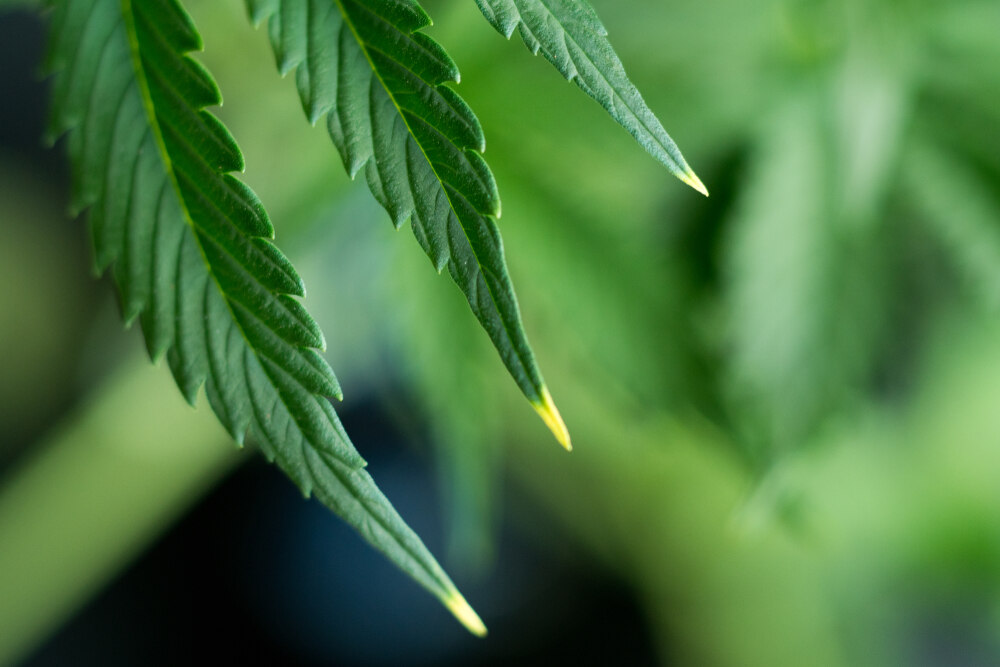
The symptoms of nutrient burn vary depending on the plant's stage of growth, which is why it is important to consider where the plant is in its lifecycle before making a diagnosis.
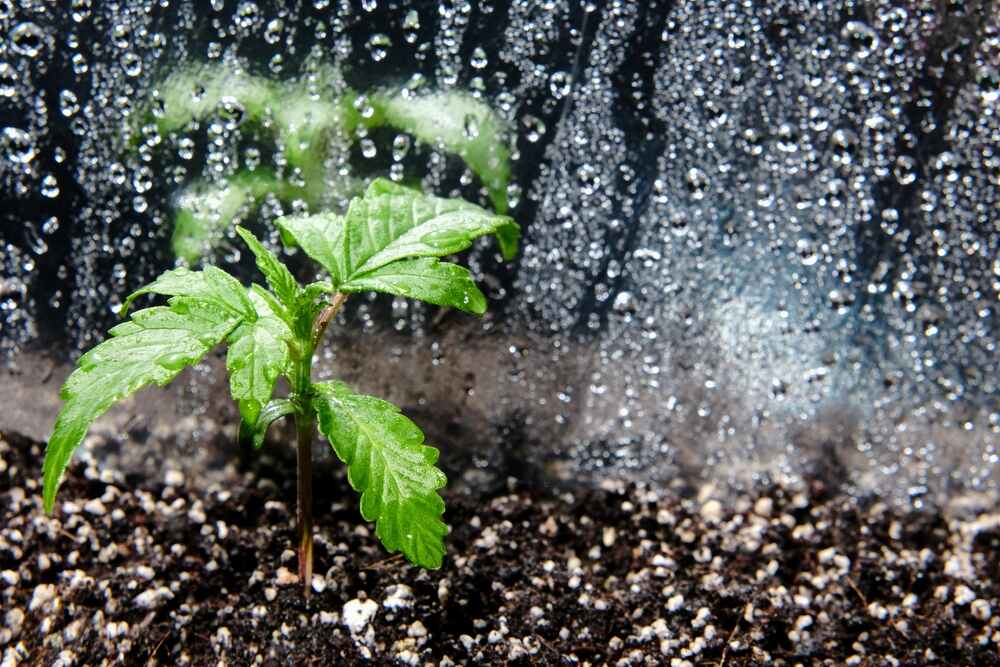
Seedlings are extremely sensitive to nutrients because their root systems are still developing. Even lightly fertilised growing media can cause burnt tips and noticeably slow growth. At this stage, plants usually appear small, with tiny brown tips forming on the first true leaves.
During the vegetative stage, nutrient burn often begins with overly dark green fan leaves. Soon after, the tips develop a yellow or brown discolouration that gradually spreads along the leaf edges. If nutrient levels remain too high, leaves may begin curling downward into a slight claw shape while new growth becomes smaller than expected.
In the flowering stage, nutrient burn becomes more costly. Plants need a steady supply of nutrients to build dense flowers, but excessive feeding can reduce water uptake and slow bud development. Sugar leaves surrounding the flowers may become brown and crispy, while bud growth slows and resin production may decline if the problem persists.
Regardless of growth stage, nutrient burn is usually first noticed on mature fan leaves before becoming more widespread as the root zone becomes increasingly concentrated with fertiliser salts.
Grower Tip: Don't judge recovery by looking at damaged leaves. Always inspect the newest growth. Healthy new leaves are the best sign that nutrient levels have returned to a safe range.
Nutrient Burn vs. Other Cannabis Problems
Several common cannabis problems produce similar symptoms, making misdiagnosis one of the biggest mistakes new growers make. Before reducing nutrients or flushing the growing medium, compare your plant's symptoms with the conditions below.
| If you see... | It's more likely... | How to tell the difference |
| Burnt leaf tips that gradually spread after increasing nutrient strength | Nutrient burn | Usually follows recent feeding and is often accompanied by dark green foliage and high EC levels. |
| Pale or yellow leaves with green veins or distinct deficiency patterns | Common cannabis nutrient deficiencies | Deficiencies follow recognizable nutrient-specific patterns rather than beginning at the leaf tips. |
| Bleached or white leaves directly beneath the grow light | Light burn | Damage is concentrated on the upper canopy closest to the light source. |
| Leaf edges curling upward ("tacoing") during hot conditions | Heat stress | Usually occurs alongside high canopy temperatures or poor airflow rather than recent overfeeding. |
| Extremely dark green leaves with severe downward clawing but little tip burn | Nitrogen toxicity | Dark foliage and clawing are more pronounced than burnt leaf tips, particularly during vegetative growth. |
| Mixed deficiency symptoms despite regular feeding | pH lockout | Root-zone pH is outside the optimal range, preventing nutrient uptake even though nutrients are present. |
When diagnosing nutrient burn, don't rely on leaf appearance alone. Think about what has changed over the past week. Did you increase nutrient strength? Add a bloom booster? Switch nutrient brands? Skip checking EC or pH? The combination of recent growing conditions and the progression of symptoms will almost always provide a more reliable diagnosis than a single damaged leaf.
An experienced grower looks for trends, not isolated imperfections. By regularly inspecting your plants and understanding how nutrient burn develops, you'll be able to identify the problem early and correct it before it has a significant impact on plant health or harvest quality. the water out in a bucket for a day or two before using it. This will give the chlorine a chance to evaporate.
How to Fix Nutrient Burn in Cannabis
Once you've identified nutrient burn, resist the urge to immediately flush your plants or start making multiple changes at once. The most successful growers diagnose the problem first, then choose the least disruptive solution. Mild nutrient burn can often be corrected by simply reducing nutrient strength, while severe cases may require flushing or replacing the nutrient solution. The goal is always the same: restore a healthy root zone so the plant can absorb water and nutrients normally again.
Step 1: Stop Feeding and Assess the Problem
Before making any corrections, stop adding nutrients until you've confirmed what caused the problem. Nutrient burn is usually the result of excessive fertiliser salts accumulating around the roots, but treating every burnt leaf as nutrient burn can create new problems if the diagnosis is wrong.
Start by reviewing your recent feeding routine. Ask yourself:
- Did you recently increase nutrient strength?
- Have you started using a bloom booster or additional supplement?
- Have you been feeding more frequently than usual?
- Did the symptoms appear shortly after the last feeding?
If the answer to one or more of these questions is yes, nutrient burn becomes much more likely.
Next, check your nutrient solution and root zone.
Measure the EC of your nutrient solution to see how concentrated it is. If you've also collected runoff from a soil or coco grow, compare the runoff EC with the EC of the solution going into the pot. A noticeably higher runoff EC usually indicates that fertiliser salts have accumulated in the growing medium.
Check the pH as well. Incorrect pH doesn't directly cause nutrient burn, but it can restrict nutrient uptake and create deficiency-like symptoms. Many growers mistakenly respond by adding even more nutrients, which increases EC and makes the problem worse.
Finally, determine how severe the nutrient burn actually is.
| Severity | Symptoms | What to do |
| Mild | A few burnt leaf tips but healthy new growth | Reduce nutrient strength and continue monitoring. Flushing is usually unnecessary. |
| Moderate | Burn spreading along leaf edges, clawing, slower growth | Correct the root zone and reduce nutrient concentration. |
| Severe | Crispy leaves, stalled growth, affected sugar leaves or buds | Act quickly to reduce excess salts before more root damage occurs. |
Grower Tip: Don't flush simply because you see one or two burnt tips. If the damage isn't spreading and new growth remains healthy, you've probably reached the plant's feeding limit rather than causing serious nutrient burn.
Step 2: Correct the Root Zone
Once you've confirmed nutrient burn, the next step is reducing the amount of available fertiliser around the roots. How you do this depends entirely on the growing medium.
| Growing Medium | Best approach |
| Soil | Reduce or pause bottled nutrients. Flush only if significant salt buildup is suspected. |
| Coco Coir | Lower nutrient strength and monitor runoff EC until salt levels return to normal. |
| Hydroponics | Dilute or replace the nutrient reservoir with a weaker solution. |
Soil
Soil naturally buffers nutrients better than coco or hydro, so mild nutrient burn rarely requires aggressive flushing.
If only the leaf tips are burnt and growth is continuing normally, skip the next feeding and irrigate with properly pH-adjusted water at the plant's normal watering time. Monitor the newest growth over the following several days before making any further changes.
If runoff EC is extremely high or the plant has been heavily overfed over several irrigations, flushing can help remove excess fertiliser salts. Apply enough pH-adjusted water when flushing cannabis to produce steady runoff.
Avoid repeatedly flushing the same container. Saturated soil contains less oxygen, and keeping the root zone constantly wet can slow recovery.
Coco Coir
Coco should be managed differently because it behaves differently from soil. If you're unsure which medium suits your grow, compare hydro vs soil growing methods.
Rather than switching to plain water for several days, reduce the EC of your nutrient solution and irrigate until you achieve 10–20% runoff. Measure both the input and runoff EC. If runoff remains significantly higher than the solution you're feeding, excess salts are still present in the root zone.
Continue feeding at the reduced strength until runoff EC begins moving closer to the input EC and healthy new growth appears.
Hydroponics
Hydroponic systems respond quickly to nutrient adjustments because the roots are constantly exposed to the nutrient solution.
Start by measuring reservoir EC and pH. If EC is only slightly higher than your target, dilute the reservoir by adding fresh water and then adjust the pH.
If EC is much too high, or multiple nutrient additives have recently been introduced, replacing the reservoir is usually the better option. Refill it with a fresh nutrient solution mixed at a lower strength before monitoring plant response over the next several days.
As the plants recover, monitor both water consumption and EC. If the water level drops while EC continues rising, the nutrient solution is still stronger than the plants require.
Grower Tip: When increasing nutrients again, don't jump straight back to your previous feeding schedule. Increase EC gradually over several irrigations while watching the newest leaves for fresh burnt tips.
How Long Does Recovery Take?
One of the biggest mistakes new growers make is expecting damaged leaves to recover. They won't. Once leaf tissue has become brown and crispy, it is permanently damaged.
Instead, judge recovery by looking at the newest growth.
Signs that your plant is recovering include:
- No new burnt leaf tips.
- Healthy green leaves emerging from the growing tip.
- Faster vegetative growth.
- Improved leaf posture.
- Normal flower development during bloom.
| Severity | Typical recovery time |
| Mild nutrient burn | Around 3–7 days before healthy new growth appears. |
| Moderate nutrient burn | Usually 1–2 weeks. |
| Severe nutrient burn | Two weeks or longer depending on root damage and flowering stage. |
Avoid removing damaged leaves immediately unless they are completely dead or restricting airflow. Even partially damaged leaves continue producing energy while green tissue remains.
Unfortunately, not every plant fully recovers. If nutrient burn has severely damaged the roots, growth has stopped for an extended period, or the plant is already late into flowering, yields may be permanently reduced. The sooner nutrient burn is identified and corrected, the better the chances of producing a healthy harvest.
Remember, recovery isn't measured by old leaves looking better. It's measured by healthy new growth and the complete absence of fresh nutrient burn symptoms.
How to Prevent Nutrient Burn in Future Grows
The easiest way to fix nutrient burn is to prevent it from happening in the first place. Experienced growers rarely push their plants to the maximum feeding level. Instead, they build nutrient strength gradually, monitor how each plant responds, and make small adjustments throughout the grow.
Think of nutrient management as a routine rather than a schedule. Before every feeding, ask yourself three simple questions:
- Does the plant actually need more nutrients?
- Is the root zone still healthy?
- Has the plant responded well to the previous feeding?
If the answer to any of these questions is "no," it's usually better to maintain or reduce nutrient strength rather than increase it.

Feed Conservatively
One of the biggest mistakes new growers make is following the nutrient manufacturer's feeding chart at full strength from the beginning. These charts should be treated as guidelines, not targets.
A safer approach is to build nutrient levels slowly.
| Plant stage | Recommended starting strength |
| Seedlings | Water only or 25% strength if required |
| Early vegetative growth | 25–50% of the manufacturer's recommendation |
| Established vegetative plants | Increase gradually only if growth remains healthy |
| Flowering plants | Increase cautiously based on plant response, not the feeding chart |
After each increase, give the plant several days before making another adjustment. Watch the newest leaves closely. If they remain a healthy green with no fresh burnt tips, the plant is coping well. If new tips begin yellowing or browning, you've likely reached the upper limit of what that plant can comfortably handle.
Never chase suspected deficiencies by immediately adding more nutrients. Similar symptoms can be caused by incorrect pH, salt buildup, overwatering, or root stress. Always identify the cause before increasing feed strength.
Grower Tip: Every strain feeds differently. A nutrient level that works perfectly for one cultivar may cause burnt tips on another. Let the plant guide your feeding decisions rather than trying to reach a specific EC or bottle dosage.
Monitor EC and pH Regularly
Checking EC and pH before each feeding is one of the simplest ways to prevent nutrient burn.
Use this routine every time you prepare nutrients:
- Mix your nutrients completely.
- Measure the EC to confirm the solution is not stronger than intended.
- Adjust the pH after all nutrients and additives have been mixed.
- Feed the plants.
- If growing in coco or hydro, periodically compare the runoff or reservoir EC with the input EC.
Runoff measurements are especially useful because they show what is happening around the roots rather than only what is going into the pot.
| If you measure... | What it usually means | Recommended action |
| Runoff EC close to input EC | Root zone is balanced | Continue the current feeding program |
| Runoff EC gradually increasing | Fertilizer salts are accumulating | Hold or slightly reduce nutrient strength |
| Runoff EC much higher than input EC | Excess nutrients have built up around the roots | Correct the root zone before increasing feed again |
| pH outside the recommended range | Nutrient uptake may become restricted | Correct pH before changing nutrient strength |
Don't make decisions from a single reading. Look for trends over several irrigations, as this provides a much more accurate picture of how the root zone is changing.
Grower Tip: Keeping a simple grow diary with EC, pH, feeding dates, and observations makes it much easier to spot developing problems before nutrient burn appears.
Match Feeding to the Growing Medium
Every growing medium holds and delivers nutrients differently, so your feeding routine should reflect that.
| Growing medium | Best feeding approach |
| Soil | Start with a light feed, especially if using nutrient-rich soil. Increase only after the plant has used the available nutrients. |
| Coco coir | Feed a balanced nutrient solution regularly and monitor runoff EC to prevent salt buildup. |
| Hydroponics | Check reservoir EC and pH frequently, topping up with water and replacing the solution when necessary. |
Growth stage is equally important.
Seedlings need very little nutrition because their root systems are still developing. Many seedlings growing in quality potting soil won't require additional fertiliser for the first week or two.
During the vegetative stage, increase nutrients gradually as growth accelerates, but only if the newest leaves remain healthy after each adjustment.
During the flowering stage of cannabis, nutrient burn becomes more expensive, avoid assuming that bigger buds require dramatically stronger feeds. Flowering plants often need additional nutrients, but increasing EC too aggressively is one of the most common causes of nutrient burn during bloom. Small, gradual increases are almost always safer than large jumps.
The best growers don't try to feed as much as possible. They feed only as much as the plant can comfortably use. By starting low, increasing gradually, monitoring EC and pH, and adapting your feeding routine to the growing medium, you'll greatly reduce the risk of nutrient burn while maintaining healthy growth from seedling through harvest.
Conclusion
Nutrient burn is a common cannabis grower issue but easy to prevent once causes understood. Most cases come from overfeeding rather than inexperience, and early warning signs help prevent minor leaf-tip burn from becoming root-zone damage. Successful growers feed based on plant response, not maximum bottle doses. Starting with conservative nutrient strength, monitoring EC and pH, and gradual adjustments supports healthy roots and consistent growth. If nutrient burn occurs, stay calm, diagnose before acting, correct root zone, and judge recovery by new growth. With a methodical approach, most plants recover and produce strong results.
Frequently Asked Questions
What Are the First Signs of Nutrient Burn in Cannabis?
The earliest signs of nutrient burn are unusually dark green leaves followed by pale yellow or brown leaf tips. As nutrient levels remain too high, the burnt area spreads along the leaf margins, and some leaves may begin to curl or claw downward.
Don't diagnose nutrient burn from a single damaged leaf. Look for fresh burnt tips appearing on new leaves after feeding, along with a recent increase in nutrient strength or high EC readings.
How Do You Fix Nutrient Burn in Cannabis?
Start by stopping your current feeding schedule and checking both EC and pH. Once you've confirmed nutrient burn, choose the correct treatment for your growing medium. Mild cases often improve by simply reducing nutrient strength, while more severe salt buildup may require flushing the growing medium or replacing the nutrient solution in hydroponic systems.
After correcting the root zone, reintroduce nutrients gradually and monitor the newest growth to ensure no additional burnt tips develop.
Should You Flush Every Plant With Nutrient Burn?
No. Flushing isn't always necessary and, in some cases, can create additional stress.
If only a few leaf tips are burnt and the damage isn't spreading, reducing nutrient strength is often enough. Flushing is generally more appropriate when there is evidence of significant salt buildup, such as high runoff EC, widespread leaf damage, or repeated overfeeding. The correct approach depends on whether you're growing in soil, coco coir, or hydroponics.
Can Nutrient Burn Kill a Cannabis Plant?
Mild nutrient burn rarely kills a cannabis plant, but severe or prolonged overfeeding can damage the root system, restrict water uptake, and significantly reduce growth and flower production.
If left untreated, severe nutrient burn may lead to extensive root damage, poor bud development, and reduced yields. Correcting the problem early gives plants the best chance of making a full recovery.
How Can You Prevent Nutrient Burn?
The best way to prevent nutrient burn is to build nutrient strength gradually instead of feeding at full strength from the start. Begin with a light feed, monitor EC and pH regularly, and increase nutrient levels only when the plant continues producing healthy new growth.
Treat feeding charts as guidelines rather than targets, keep records of your nutrient routine, and adjust your feeding program based on how each individual plant responds. This approach greatly reduces the risk of nutrient burn while encouraging healthy growth throughout the entire grow cycle.


